Xiaobo Li is a Professor in the Department of Bio-Medical Engineering at New Jersey Institute of Technology. Holding a Ph.D. in Computer Aided Geometric Design from the University of Birmingham and a B.S. in Automation from Nanjing University of Aeronautics, their research bridges computational methods with neuroimaging and psychiatric disorder analysis. Ph.D., University of Birmingham (Computer Aided Geometric Design, 2004) B.S., Nanjing University of Aeronautics (Automation, 1999) Dr. Li’s work focuses on applying machine learning and graph theory to understand brain network abnormalities in conditions like ADHD , schizophrenia , and traumatic brain injury . Their studies analyze structural-functional connectivity , reward processing , and gut-brain axis interactions using fMRI , fNIRS , and diffusion tensor imaging . Recent publications highlight their development of tools like the GAT-FD MATLAB toolbox for brain network analysis and their exploration of multimodal MRI in schizophrenia diagnosis. They also investigate the neurobiological effects of photobiomodulation and vision therapy interventions.
Gabriella Casalino is an Assistant Professor at the University of Bari Aldo Moro, Department of Computer Science, and a key researcher at CILAB - Computational Intelligence Lab. Her work focuses on Computational Intelligence methods for interpretable data analysis, particularly in eHealth, Data Stream Mining, and eXplainable Artificial Intelligence (XAI) within medical and educational domains. She has contributed to innovative approaches in smartphone-based health monitoring, fuzzy logic applications, and remote vital sign detection via photoplethysmography. Education : Ph.D. in Computer Science, with advanced training at institutions like Universitat de Girona and Université de Mons. Research Trends : Recent publications highlight applications of evolving granular computing, neuro-fuzzy systems, and explainable AI in hypertension prediction, bipolar disorder monitoring, and educational data analysis. Key subfields include remote health monitoring, medical data streams, and hybrid AI models. Grants : Research funded by AIRC (Italian Cancer Research Foundation), focusing on computational methods for healthcare challenges. Labs & Collaborations : Active in CILAB, collaborating on projects involving mHealth solutions, cardiovascular risk assessment, and intelligent educational systems.
Dr. Joshua T. Vogelstein is an Associate Professor in the Department of Biomedical Engineering at Johns Hopkins University, holding joint appointments in Biostatistics, Applied Mathematics & Statistics, Neuroscience, and Computer Science. He leads the NeuroData lab, focusing on big data science, machine learning, and connectomics. Education: PhD and MSE in Neuroscience and Applied Mathematics from Johns Hopkins (2009), BS in Biomedical Engineering from Washington University (2002). Notable achievements include co-founding the Open Connectome Project (acquired by APL) and Gigantum (acquired by NVIDIA). Recognized with the NSF CAREER Award (2020), F1000 Prime (2014), and multiple Johns Hopkins Discovery Awards. Research emphasizes statistical connectomics, network science, and applying AI to biomedical challenges. Key contributions include mapping the first insect brain connectome (Science 2023) and developing open-source tools like CloudReg and BrainLine. Collaborates with Microsoft Research and industry partners, co-founding ventures like Global Domain Partners and Mind-X. Advised over 60 trainees, teaches machine learning and data science. Promotes open science through NeuroData's ecosystem of tools and data. Current work explores organoid intelligence, prospective learning, and neural network dynamics.
Ji Ma is an Assistant Professor at the Lyndon B. Johnson School of Public Affairs at the University of Texas at Austin, with affiliate appointments at the Center for East Asian Studies, School of Information, and Asia Policy Program. He also serves as a Visiting Researcher at the Gradel Institute of Charity, University of Oxford. Dr. Ma received his PhD from Indiana University, establishing a foundation for his interdisciplinary work at the intersection of computational methods and social science. Dr. Ma's research centers on three interconnected streams: computational approaches to social science, knowledge production for evidence-based policymaking, and state-society relations in China. His work bridges advanced technologies with public affairs, developing innovative methods to analyze nonprofit sectors and civil society dynamics. He has pioneered the application of computational social science in nonprofit studies, creating valuable research infrastructure for the field. His recent publications show a clear trend toward integrating AI and computational methods with traditional social science questions. He has made significant contributions to understanding citation patterns in policy communities, consensus formation in academic fields, and the dynamics of state-society relations in China. His work often combines large-scale data analysis with theoretical insights from multiple disciplines. Dr. Ma actively contributes to teaching through courses like "Computational Social Science Methods" and "Data Management and the Research Life Cycle," helping students develop skills in data analysis and research methodology. His teaching emphasizes practical applications of computational methods in public affairs research. Among his notable projects are pracademia.one (an information aggregation platform), npoclass (a nonprofit classifier), and the Research Infrastructure of Chinese Foundations (RICF). These projects reflect his commitment to developing methodological tools that advance research in public administration and nonprofit studies, creating valuable resources for scholars worldwide.
Fraser King is an incoming Assistant Professor in the Department of Atmospheric and Oceanic Sciences (AOS) at the University of Wisconsin–Madison, starting in Winter 2026. He holds a PhD in Machine Learning and Remote Sensing of Precipitation from the University of Waterloo (2022) and is currently a postdoctoral research associate at NASA Goddard Space Flight Center. His research integrates machine learning with atmospheric physics to advance precipitation and snowfall retrieval, cloud microphysics, and climate modeling. He has held research positions at the University of Michigan and NASA Jet Propulsion Laboratory. His research interests include: Climate and Climate Change Radiation and Remote Sensing Synoptic Meteorology Atmospheric and Cloud Physics Large Scale Dynamics Machine Learning and Model Interpretability Arctic Snowfall Prediction His recent publications reflect a strong trend in applying deep learning (e.g., U-Net, CNNs) and unsupervised methods (PCA, t-SNE, UMAP) to radar and satellite data for precipitation and snow microphysics. Key themes include radar gap inpainting, melting layer detection, and dimensionality reduction for physical interpretation. His work bridges geoscience and AI, aiming for interpretable models that enhance physical understanding. Scientific awards and professional service include: Finalist for the 2023 Governor General's Gold Medal, University of Waterloo Associate Editor, Journal of Atmospheric and Oceanic Technology (AMS) Member, AMS Committee on Artificial Intelligence Applications to Environmental Science Executive Council Member, AGU Precipitation Technical Committee Executive Member, Eastern Snow Conference Research Board Fraser King has mentored students through research projects and led educational initiatives such as a 12-week course on machine learning for land cover classification. He has secured research experience through internships at Aquanty Inc. and multiple NASA-affiliated institutions. He founded MapsByFraser, a company combining cartography and satellite data, and has collaborated with Google's Quantum AI team. His technical skills span Python, deep learning frameworks, and high-performance computing platforms. He leads several major research projects: Towards Interpretable Physical Models : Using sparse autoencoders and nonlinear dimensionality reduction to interpret geoscience models. Microphysical Dimensionality Reduction : Applying PCA, t-SNE, and UMAP to identify physical modes in precipitation data. BlindPaint : A U-Net for radar gap inpainting in spaceborne systems. DeepPrecip : A deep learning model for surface precipitation retrieval. iPhone LiDAR : Using consumer smartphones for snow depth measurement via drones. NRCan Machine Learning Land Cover Classifier : Training ML models on Sentinel-2 data. Climate Model Calibration : Using ML to correct biases in snow-related climate variables. CloudSat Snowfall Validation : Validating high-latitude snowfall estimates. Snow Modelling : A Rust-based physical/temperature-index snow model.
Charles Ling is a Professor of Computer Science at Western University, holding the title of Science Distinguished Research Professor. He also serves as Director of the Data Mining and Business Intelligence Lab and Associate Scientist at the Lawson Health Research Institute. His academic background includes a B.Eng. (CS and EE) from Shanghai Jiao Tong University and MSc/PhD from the University of Pennsylvania (UPenn). Research interests span machine learning, deep learning, AI, and healthcare informatics, with notable contributions to the GlucoGuide diabetes management system. He has authored over 220 peer-reviewed papers and a book titled Crafting Your Research Future , focusing on academic career development. Awarded Fellow of the Canadian Academy of Engineering (CAE) and recipient of the First Prize for Best Clinical Research Presentation (2011). Active in grants (NSERC, FedDev, Mitacs) and organizational roles in top conferences (KDD, ICDM). Supervises 5 PhD and 4 MSc students, with notable advisees including Harry Zhang and Victor Sheng. Leverages AI in education to enhance children's cognitive abilities through video-based programs like Power Thinking , approved by Curriculum Services Canada. His work integrates machine learning with healthcare, finance, and software engineering.
Dr. Reihaneh Bidar is a Lecturer in Business Information Systems at the University of Queensland (UQ) Business School, part of the Faculty of Business, Economics, and Law. She is also an Associate Investigator at the Automated Decision-Making and Society (ADM+S) Centre. She holds a PhD from Queensland University of Technology’s School of Information Systems. Her research focuses on how organizations manage AI, automation, and digital integration, particularly the role of human-AI hybrids in work redesign. She emphasizes mitigating negative consequences of emerging technologies while enhancing organizational readiness for AI adoption. Her teaching spans undergraduate and postgraduate Information Systems programs, including courses on Business Analytics, Enterprise Architecture, IoT Systems, and Mobile App Development. She has developed and coordinated courses that bridge theory and practice for both bachelor’s and master’s students. Dr. Bidar’s work addresses challenges in digital collaboration and value co-creation in online networks. Notable contributions include a thought-leadership report with SAP Institute for Digital Government, which classified tasks based on risk levels to redesign public sector work. These approaches were adopted by the NSW Department of Planning, Housing, and Infrastructure for invoice processing. Her research interests further explore digital collaboration dynamics, crowdsourcing challenges, and service innovation. She collaborates with industry to translate academic insights into actionable strategies for inclusive AI and sustainable digital practices.
Travis B. Thompson, Ph.D. is an Assistant Professor in the Department of Mathematics and Statistics at Texas Tech University, leading the TM4 (Texas Tech Translational and Theoretical Mathematical Modeling and Machine Learning in Medicine) research group. His academic journey includes postdoctoral work at Rice University, Simula Research Laboratory, and the University of Oxford, focusing on mathematics applied to neurodegenerative diseases. Education: Ph.D. in Mathematics from Texas A&M University (2013) Dr. Thompson develops theoretical mathematical models and applies scientific computing and machine learning to study neurological pathologies, particularly Alzheimer’s disease. His work explores complex biological processes on networks, translational healthcare applications, and nutritional security implications. Current research trends integrate neuroimaging data with finite element simulations to model tau progression , amyloid beta dynamics , and glymphatic clearance in age-related diseases. Scientific awards and honors were not explicitly mentioned in the provided materials. Dr. Thompson’s interdisciplinary approach connects computational neuroscience with biomedical engineering , utilizing techniques like diffusion tensor imaging and level set methods to analyze pathological protein spread and brain tissue mechanics . The TM4 research group focuses on network neurodegeneration , personalized medicine , and machine learning diagnostics . Their work spans from microfluidic cancer detection to computational modeling of brain clearance mechanisms , addressing challenges in both neurodegenerative diseases and biomedical engineering through rigorous mathematical frameworks.
Dr. Almut Sophia Koepke is a junior research group leader and TUM Junior Fellow at the Technical University of Munich (TUM) and University of Tübingen. She leads the multi-modal learning research group focusing on video understanding through sound, vision, and text integration. University: Technical University of Munich School: TUM School of Computation, Information and Technology Department: Informatics 9 Academic Rank: Researcher Her research spans multi-modal learning, audio-visual foundation models, and cross-modal attention mechanisms. Key themes include: Advancing zero-shot learning through language-guided audio-visual models Developing explainable AI systems via attention pattern translation in VQA Exploring temporal understanding in video-adverb retrieval Building robust multi-modal representations for self-driving applications Recent publications analyze foundation model capabilities in audio-visual tasks (ICCV 2025), temporal reasoning (ACMMM 2024), and cross-modal attention frameworks (ECCV 2022). She co-organizes CVPR workshops on foundation model evaluations and serves as area chair/reviewer for major conferences.
Dr. Jennifer Bennett is an accomplished surgical pathologist specializing in gynecologic pathology at the University of Chicago Medicine. She serves as faculty in the Department of Pathology at the Pritzker School of Medicine, where she conducts cutting-edge research on gynecologic neoplasms and contributes significantly to diagnostic pathology. Dr. Bennett's educational background includes: Massachusetts General Hospital, Boston, MA - Robert E. Scully Fellow in Gynecologic Pathology (2014) Penn State Hershey Medical Center, Hershey, PA - Residency in Anatomic Pathology (2013) University of Florida College of Medicine, Gainesville, FL - MD in Medicine (2010) University of Florida, Gainesville, FL - BS in Biochemistry and Molecular Biology (2005) Her research program focuses on integrating morphological, immunohistochemical, and molecular features to better characterize gynecologic neoplasms. Dr. Bennett's primary expertise lies in uterine mesenchymal neoplasms and ovarian epithelial carcinomas, with particular contributions to understanding STK11 adnexal tumors, inflammatory myofibroblastic tumors of the uterus, and various rare gynecologic neoplasms. Her work bridges diagnostic pathology with molecular characterization, advancing how pathologists classify and understand tumor behavior. Analysis of Dr. Bennett's publication record reveals a clear progression from morphological descriptions to integrated molecular-pathological analyses. Her recent work (2022-2025) increasingly focuses on molecular markers like p16 as surrogates for CDKN2A deletion, ROS1 fusions in uterine tumors, and comprehensive genomic profiling of endometrial and ovarian carcinomas. This evolution reflects the broader shift in pathology toward precision medicine approaches. Among her notable achievements is the prestigious Robert E. Scully Fellowship in Gynecologic Pathology at Massachusetts General Hospital, recognizing exceptional promise in the field. Dr. Bennett maintains an extensive collaborative network, frequently publishing with Dr. Esther Oliva and other leading researchers in gynecologic pathology. Her work has been cited extensively, with several publications receiving over 30 citations. While specific grant information isn't detailed in the available text, her productive research output spanning multiple years suggests successful grant funding to support her laboratory investigations and clinical research. Based on her publication patterns and co-author networks, Dr. Bennett appears to lead or be a key member of a research team focused on advancing diagnostic criteria for gynecologic tumors through multidisciplinary collaboration with clinicians, molecular biologists, and other pathologists.
David Castañón is a Professor of Electrical and Computer Engineering (ECE) and Systems Engineering (SE) at Boston University. He holds a PhD from MIT (1976) and has held leadership roles including Department Chair of BU ECE (2010-2014) and President of the IEEE Control Systems Society (2008). His research focuses on stochastic control, optimization, game theory, and distributed computing, with applications in sensor management, inverse problems, and autonomous systems. Education: PhD, Massachusetts Institute of Technology (1976). Key affiliations include the Center for Information and Systems Engineering, the Rafik B. Hariri Institute for Computing, and the ALERT Department of Homeland Security Center of Excellence. He teaches courses such as EC702 Recursive Estimation and EC719 Statistical Learning Theory. Research interests span stochastic control, estimation theory, optimization algorithms, and multi-agent systems. Notable contributions include work on sensor management, cooperative operations, and inverse problem solutions for medical and security imaging. His work often integrates theoretical frameworks with practical applications in autonomous systems and distributed computing. Scientific achievements include IEEE Fellow status (2006), CSS Distinguished Member Award, and leadership roles in major conferences like the IEEE Conference on Decision and Control (2007 as General Chair). He has also served on the Air Force Advisory Board and the IEEE Society Review Committee. Grants and lab affiliations include the NSF Engineering Research Center for Subsurface Sensing (2001-2013) and the SENTRY DHS Center of Excellence (2021-present). His interdisciplinary collaborations bridge robotics, medical imaging, and security systems.
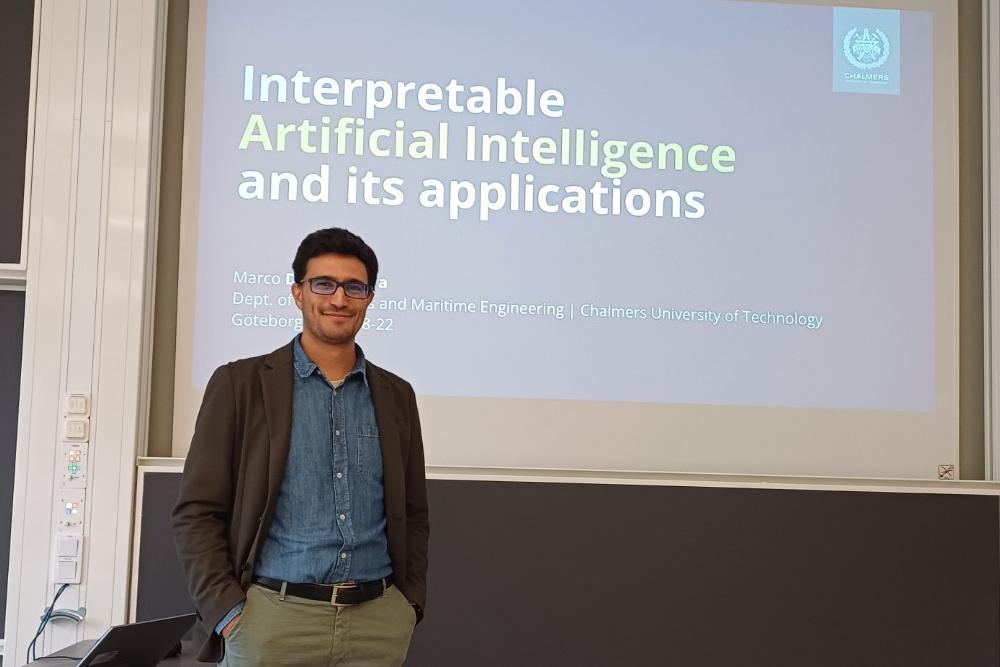
Marco L. Della Vedova is a Senior Lecturer in Applied Artificial Intelligence at Chalmers University of Technology, Sweden. He works in the Vehicle Engineering and Autonomous Systems division within the Department of Mechanics and Maritime Sciences, as part of Prof. Mattias Wahde's research group. Since 2025, he has served as Director of the Data Science and AI master's programme (MPDSC) at Chalmers, where he teaches courses including Introduction to Artificial Intelligence and Digitalization in Sports. Dr. Della Vedova earned his academic foundation at the University of Pavia, Italy, where he completed his BSc (2006), MSc (2009), and PhD (2013) in Computer Engineering. His doctoral research focused on "Real-Time Physical Systems and Electric Load Scheduling" under Prof. Tullio Facchinetti. During his PhD studies, he spent a year at U.C. Berkeley hosted by Prof. Francesco Borrelli at the Model Based Predictive and Distributed Control Lab. His research spans multiple AI domains with a strong emphasis on interpretability. Dr. Della Vedova develops interpretable methods for conversational AI, naturalness evaluation of forests using canopy height models, and geospatial applications. His work bridges theoretical AI with practical societal benefits, particularly in environmental monitoring, transportation systems, and orienteering. He has previously contributed to cloud computing, hate speech detection, and cyber-physical energy systems, demonstrating his interdisciplinary approach to AI research. Dr. Della Vedova's publication record reveals a consistent trajectory of impactful research across multiple domains of artificial intelligence. His recent work shows a strong focus on interpretability in AI systems, with significant contributions to natural language processing, geospatial analysis, and causal inference. The research demonstrates both theoretical depth and practical applications, particularly in environmental monitoring and social media analysis. His methodology often combines traditional machine learning approaches with novel interpretability techniques, creating bridges between complex AI systems and human understanding. Dr. Della Vedova has received several prestigious recognitions for his work: Best PhD thesis award from the Order of the Engineers of Bergamo (2013) Italian champion of Il Cervellone (2012) Top Italian performer in IEEEXtreme 6.0 programming competition (148th overall globally, 2012) Premio Arturo Schena award from Fondazione Credito Valtellinese (2010) With over 50 students supervised through bachelor's and master's theses, Dr. Della Vedova has established himself as a dedicated mentor in the AI community. His current PhD students include Minerva Suvanto working on interpretable NLP and Vivien Lacorre developing AI for railway infrastructure inspection. His supervision spans diverse topics from forest naturalness evaluation to hate speech detection and transportation optimization. Beyond formal supervision, he actively contributes to educational initiatives including serving as Director of Chalmers' Data Science and AI master's program and developing innovative teaching methods that connect theoretical concepts with real-world applications. Dr. Della Vedova is deeply embedded in both academic and professional communities. He leads the Applied Artificial Intelligence research group at Chalmers while maintaining strong connections with European research networks through projects like the ERASMUS+ EUrienteering initiative. His interdisciplinary approach is reflected in collaborations across computer science, environmental science, and social sciences. Notably, he applies his AI expertise to orienteering both as a researcher developing localization methods and as a licensed Event Advisor for the International Orienteering Federation, demonstrating how his professional and personal interests converge in innovative ways.
Prof. Dr. Gernot R. Müller-Putz is Head of the Institute of Neural Engineering and the Graz Brain-Computer Interface Lab at Graz University of Technology. He serves as Dean of the Faculty of Computer Science & Biomedical Engineering and holds editorial roles at Frontiers in Human Neuroscience IEEE Transactions in Biomedical Engineering Brain-Computer Interface Journal . With over 212 peer-reviewed publications and an h-index of 80, his research focuses on Brain-Computer Interfaces , Neuroprosthetics , and EEG-based Motor Control . His work investigates: Neural signal decoding for spinal cord injury rehabilitation Hybrid BCI systems with error processing Artificial sensory feedback mechanisms Machine learning applications in neural engineering VR-based neurofeedback environments Non-invasive multimodal biosignal recording Research trends show strong emphasis on EEG signal processing , BCI clinical applications , and neurotechnology integration . Scientific Awards : ERC Consolidator Grant (2015) Ludwig-Guttman Award (2017) CYBATHLON Best Paper (2019) State of Styria Research Award (2019) Förderstipendium (2013-2014) He advises 21 PhD students and has managed major projects like MoreGrasp (EU Horizon 2020) , Feel Your Reach (ERC) , and INTRECOM (EU EIC Pathfinder) . The Institute hosts the BCI Racing Team Mirage91 and offers international thesis opportunities.
Karianne Bergen is an Assistant Professor of Data Science and Earth, Environmental & Planetary Sciences at Brown University, with a courtesy appointment in Computer Science. She leads the Scientific Machine Learning (SciML) Research Group, affiliated with the Data Science Institute (DSI), DEEPS, and the SciAI Center. Her research focuses on scientific machine learning (SciML), including surrogate models for climate science, explainable AI (XAI), and foundation models. She holds a Ph.D. and M.Sc. in Computational and Mathematical Engineering from Stanford University and a B.Sc. in Applied Mathematics from Brown University. Her postdoctoral training included a Harvard University HDSI fellowship in Computer Science. Education: B.Sc. Applied Mathematics, Brown University (2009) M.Sc. Computational and Mathematical Engineering, Stanford University (2015) Ph.D. Computational and Mathematical Engineering, Stanford University (2018) Research Interests: Dr. Bergen’s work bridges machine learning and Earth sciences, emphasizing scalable methods for climate modeling and geophysical data analysis. Her group develops emulators for Antarctic ice sheet dynamics, XAI frameworks for climate data interpretation, and scientific foundation models for geoscience applications. Recent projects include GAN-based sea ice resolution enhancement and flow-based neural networks for sea level projections. Awards: Harvard Data Science Initiative Postdoctoral Fellowship (2018–2020) Stanford Graduate Fellowship in Science and Engineering (2011–2015) Outstanding Student Paper Award, American Geophysical Union (2015) Advising & Collaborations: She mentors PhD students in Earth, Environmental, and Planetary Sciences and collaborates with institutions like MIT-Lincoln Laboratory, SciAI Center, and international geoscience groups. Her lab includes postdocs (e.g., Hilarie Sit) and alumni from data science practicum programs. Labs/Teams: The SciML group at Brown University focuses on multidisciplinary projects at the intersection of AI and Earth sciences, with recent presentations at AGU Fall Meetings and the AI for Science Workshop at ICML.
Dr. HanQin Cai is the Paul N. Somerville Endowed Assistant Professor in the Department of Statistics and Data Science at the University of Central Florida (UCF), also serving as Director of the Data Science Lab. He holds a joint appointment with the Department of Computer Science. His research focuses on theoretical and algorithmic foundations of mathematical optimization, data science, and machine learning, with emphasis on non-convex algorithms, adversarial attacks, signal/image processing, and deep learning integration. He has secured NSF grants totaling over $2.6M, including a $121K single-PI grant and a $2.49M co-PI grant. His work has been recognized with the UCF OSCaR Award (2025) and IEEE Senior Member status (2024). Education: PhD in Applied Mathematical and Computational Sciences from University of Iowa (2018), with M.S. in Mathematics (2014) and M.C.S. in Computer Science (2017). Previously served as a Postdoc at UCLA Mathematics Department under Dr. Wotao Yin. Research highlights include: query-efficient zeroth-order optimization, robust signal processing with corrupted data, adversarial attacks on neural networks, and tensor-based methods for high-dimensional data analysis. His recent publications explore advanced techniques in matrix recovery, tensor decompositions, and explainable AI. Grants & Awards: NSF DMS-2304489 (2022–2025), NSF DUE-2321986 (2024–2029), UCF OSCaR Award, IEEE Senior Membership. Labs & Teams: Directs UCF's Data Science Lab, collaborates across disciplines in statistics, computer science, and engineering.