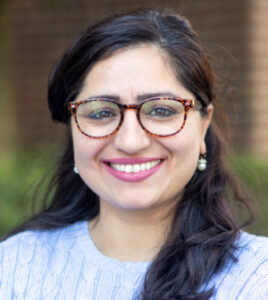
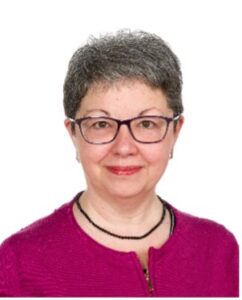
Dr. Szilvia Gellai is a Lecturer at the Department of German Studies, University of Vienna. She teaches courses on literary and cultural theories, modern German literature, and cultural technique research, including recent courses in Summer 2025 and Winter 2024. Academic Rank: Lecturer Department: German Studies University: University of Vienna Her research focuses on intersections between literature, architecture, and cultural theory, with particular emphasis on glass structures, domed cities, and postcolonial translation challenges. She explores psychoanalytic frameworks in literary analysis, gendered spatial dynamics, and network theories in both historical and contemporary contexts. Key Themes: Urban Studies, Science Fiction, Psychoanalytic Theory Recent Work: Arctic urbanism, Drone surveillance, 18th-century literary networks Methodological Interests: Diagrammatic analysis, Material culture studies, Interdisciplinary criticism Her publications span from 2013 to 2025, examining topics like technologized environments, network poetics, and medial landscapes. While no specific awards are documented in the materials, her scholarly output demonstrates sustained engagement with architectural metaphors and cultural networks in German literature.
Anne Fastrup is an Associate Professor in the Department of Arts and Cultural Studies at the Faculty of Humanities, University of Copenhagen, specializing in early modern European literary and cultural history. She teaches courses on 1650-1850 literature and theoretical/historical topics at both undergraduate and graduate levels, with expertise in contextualization methodologies and multilingual scholarship (fluent in English, French, Spanish, and German). Academic Background: 1982: Sprolig student, Kolding Gymnasium 1990: Diplôme d'études approfondies, Paris VII 1992: Cand.phil. in Literature, University of Copenhagen 1999: Ph.D. in Literature 2023: Dr.phil. (higher doctorate) defense on Orientalism in Early Modern European Literature Research Trajectory: Fastrup's scholarly work centers on 16th-18th century European literature with groundbreaking contributions to Orientalism studies across French, Spanish, and English contexts. Her recent pivot explores literary historiography of the Anthropocene and nature/culture metabolism , culminating in a major 2023 interdisciplinary project on agricultural history (1700-2023) involving ethnologists, anthropologists, and art historians. This evolution reflects her signature methodological approach: examining political dimensions of literary production through frameworks like sensibility culture and republicanism. Publication Trends: Analysis of her 49 research outputs reveals three distinct phases: (1) foundational work on Enlightenment sensibility (2001-2010), (2) mature scholarship on Orientalism and geopolitics (2013-2019), and (3) current integrative research bridging literary history with environmental humanities. Recent publications increasingly employ transnational perspectives while maintaining rigorous textual analysis of primary sources from Diderot to Radcliffe. Research Leadership: Principal Investigator: Natural-Cultural History of Agriculture project (2023-present) Co-PI: Islam in European Literature (3.5 million kr, Danish Research Council 2007) Co-PI: Cultures of Republicanism network (600,000 kr, 2008) Senior Advisor: SHM-Productions (London strategy consultancy, 2008-present) Public Engagement: Fastrup co-created the 2010 DR documentary series Hvide Slaver on Christian captives in Muslim lands (1500-1800), securing 250,000 kr for its digital platform. Her editorial work includes co-founding the Tidlig Moderne academic series (2005-present) and serving as series editor for Museum Tusculanum Press. She maintains active international collaboration through 20+ conference participations annually since 2001, notably at UCLA, Sorbonne, and Nordic academic networks.
Jose Palacios Ramirez is an Assistant Professor in the Department of Social and Human Sciences at Miguel Hernández University of Elche. He holds a PhD in Anthropology and Social Welfare from the University of Granada and is affiliated with the research group 'Culture, tourism and (cooperation for) development.' Research Interests: His work centers on three core areas: Political ecology and globalization Subjectivity and health (addiction, obesity) Anthropological theory Currently, he researches technology addiction among youth, examining socio-cultural dimensions of digital overuse. Publication Trends: Palacios' recent articles (2018–2025) focus on digital society, migration, health anthropology, and cultural theory. Key themes include technology addiction, immigrant vulnerability, gender empowerment, and sustainable heritage. His interdisciplinary approach blends qualitative methods with critical social theory.
Öznur YILMAZ ALTUN is an Assistant Professor in the Department of Sociology at Artvin Çoruh University's Faculty of Arts and Sciences, specializing in General Sociology and Methodology. She has been affiliated with the institution since 2015, initially as a Research Assistant before advancing to her current position. Her academic journey includes a Ph.D. from Sakarya University (2017-2022), a Master's from Yıldız Technical University (2014-2017), and a Bachelor's from Istanbul University (2009-2013). Her research encompasses diverse sociological domains, with emphases on: Environmental sociology, particularly climate change impacts and ecofeminism Cultural sociology, including taste cultures and class distinctions Identity studies exploring ethnicity, gender, and plural identities Social constructionism and phenomenological approaches Regional studies of the Black Sea and post-Soviet transformations She has led research projects such as 'Taste Cultures in Turkey: Intersections and Differentiations' (2022) and participated in 'Socio-Cultural Changes in Macahel Region' (2017). Her publications predominantly analyze societal responses to climate change, identity politics in multicultural contexts, and cultural consumption patterns. Öznur teaches courses including Social Psychology, Environmental Sociology, Sociology of Art and Literature, and Ottoman Social Structure. She maintains active scholarly engagement through international conferences across Europe and Turkey.
Dr. Shehnaz Haqqani serves as Assistant Professor of Religion in the Department of Religion at Mercer University's College of Liberal Arts and Sciences, where she has taught since fall 2018. Her expertise centers on Islam with specialized focus on gender dynamics, interfaith marriage, and the negotiation of tradition within contemporary Muslim contexts. Her academic credentials include: Ph.D. in Islamic Studies, University of Texas at Austin M.A. in Middle Eastern Languages and Cultures, University of Texas at Austin B.A. in Middle Eastern and South Asian Studies, Emory University Dr. Haqqani's research interrogates religious authority, Islamic feminism, and mechanisms of change within religious traditions. Her forthcoming monograph Feminism, Tradition and Change in Contemporary Islam: Negotiating Islamic Law and Gender (Oneworld Academic, 2024) analyzes how Muslim women engage with Islamic jurisprudence to advance gender equity. Current work examines Muslim women's interreligious marriages through historical and contemporary lenses, addressing tensions between scriptural interpretation and modern social realities. Her publication trajectory from 2015-2024 reveals consistent thematic evolution across Islamic studies, gender theory, and interfaith relations. Key scholarly contributions span Qur'anic hermeneutics on marriage, critiques of patriarchal structures in religious contexts, and pedagogical approaches to teaching Islam amid rising Islamophobia. Work appears in Journal of Qur’anic Studies , Critical Muslim , and edited volumes addressing Muslim marriage practices and political Islam. Major recognitions include: American Association of University Women Research Grant Mercer Seed Grant for Muslim women's interreligious marriage research Interfaith America's Racial Equity and Curricular Award Wabash Center Fellowship for Theology and Religion pedagogy As an educator, Dr. Haqqani teaches core courses including Abrahamic Religions (REL 170), Islamophobia (REL 355), and Islam and Gender (INT 301). She extends scholarly impact through hosting New Books Network's Islamic Studies podcast, facilitating critical engagement with emerging academic work. Current research initiatives focus on translating interfaith marriage findings into frameworks for interreligious cooperation.
Beth D. Cohen is a Professor at Western New England University School of Law with a distinguished scholarly career spanning nearly four decades. Her extensive publication record demonstrates deep engagement with legal writing pedagogy, criminal law, and family law, with significant contributions to legal education methodology. Her research portfolio includes: Legal writing instruction techniques and assessment methods Criminal law analysis through book reviews of judicial works Gender issues in family law, particularly name change procedures Legal ethics integration in first-year curricula Innovative teaching approaches connecting creative processes to legal writing Cohen's scholarly evolution shows a progression from traditional legal scholarship in the 1980s toward specialized legal education research. Her 2016 article "What Legal Writers Can Learn from Paint Nite" exemplifies her creative approach to teaching writing through analogies to recreational painting activities. This work, co-authored with Pat Newcombe, demonstrates her commitment to making legal writing instruction more accessible and engaging for students. Her publications reveal consistent themes of improving legal education quality, enhancing student writing skills, and connecting legal practice to broader humanistic values. The 2013 article "A Name of One's Own" highlights her attention to gender equity issues within legal procedures. Cohen maintains active involvement in law school administration and community outreach through initiatives like the "Mini-Law School" project, demonstrating her commitment to extending legal knowledge beyond traditional classroom settings.
Dr. Nancy Taber is a Professor in the Department of Educational Studies at Brock University and Program Director for Adult Education. She is affiliated with the Faculty of Education and serves as Co-Director of the Transforming Military Cultures (TMC) Research Network. A retired military officer and former Sea King helicopter navigator, Dr. Taber holds leadership roles in academic associations including past presidencies of the Canadian Association for the Study of Adult Education. Her research examines intersections of learning, gender, and militarism through feminist antimilitarist frameworks. Key areas include: Analysis of gender discrimination in military organizational cultures Representations of militarism in museums and popular culture Fiction-based methodologies exploring women's wartime experiences Her publications demonstrate consistent focus on critical military studies, gender pedagogy, and transformative learning. Recent works analyze museum representations of heroism, military policy reforms, and innovative methodologies using historical fiction. Significant thematic evolution shows increased emphasis on narrative approaches to complex gender-military dynamics. Awards and Honors: Top 20 Women in Defence 2022 (Esprit de Corps Magazine) 2022 International Adult and Continuing Education Hall of Fame inductee Dr. Taber leads graduate advisement and contributes to curriculum development across adult education programs. She currently explores war narratives through fiction writing, with her debut novel A Sea of Spectres forthcoming in 2024.
Sara Martín is a researcher affiliated with the Departament de Filologia Anglesa i de Germanística at the Universitat Autònoma de Barcelona. She leads the Group for the Representation of Conflict (SGR Research Group) and specializes in Gender Studies, particularly Masculinity Studies, applied to science fiction and popular culture. Her work bridges literary analysis with cultural critique, focusing on themes like patriarchal structures, posthumanism, and national identity. She has authored/co-edited multiple books, including Masculinity and Patriarchal Villainy in British Fiction and Detoxing Masculinity in Anglophone Literature and Culture . Her research spans science fiction narratives, documentary film, and Catalan literature, with a notable translation of Manuel de Pedrolo’s Mecanoscrit del segon origen . She actively contributes to academic discourse through edited volumes and articles analyzing masculinity, cultural representation, and historical allegory. Her recent work explores posthumanism, aging, and resilience in literature and media. Dr. Martín is involved in innovative teaching projects, such as producing e-books with students on fantasy and science fiction. Her publications reflect interdisciplinary collaboration, often intersecting literature with sociology, film studies, and philosophy. She has also engaged in public scholarship via interviews and essays, emphasizing the societal relevance of literary analysis.
Suzanne Solomon is a Visiting Research Fellow at the School of Literature, Drama and Creative Writing at the University of East Anglia (UEA). Her work bridges creative writing and critical literary analysis, with a focus on crime and noir fiction through a feminist lens. Research Interests: Suzanne specializes in crime fiction, particularly the evolution and reinterpretation of the femme fatale in US and UK noir literature. Her work is deeply informed by intersectional feminism, gender studies, and cultural critique, exploring how patriarchal structures shape female identity and representation in fiction. She combines scholarly analysis with creative practice, exemplified in her PhD thesis which includes both a critical dissertation and a novel, The Confidence . Recent Research Trends: Her recent publication analyzes the reclamation of the femme fatale in contemporary noir, arguing for her resurrection as a symbol of agency rather than victimhood. This reflects a broader trend in her work to challenge traditional gender roles in genre fiction. Scientific Awards: UEA American Library Scholarship (2020-21) UEA American Library Scholarship (2021-22) Advising and Grants: While no formal students are listed, Suzanne was supported by the UEA American Library Scholarship for two years, indicating competitive external funding for her doctoral research. There is no mention of supervisory roles or grant leadership in the provided text. Labs and Research Groups: Suzanne is affiliated with the School of Literature, Drama and Creative Writing at UEA. She is part of the UEA LDC Overview Network, suggesting engagement with literary and creative research communities at the university.
Therese Nordlund Edvinsson is a Senior Lecturer at Uppsala University's Department of Economic History and affiliated with the Center for the History of Entrepreneurship. Her academic qualifications include a PhD and Associate Professor status. She maintains an office at Ekonomikum (Kyrkogårdsgatan 10) in Uppsala. Her research explores: Transnational entrepreneurship and migration impacts Gender dynamics in historical business contexts Evolution of family businesses and corporate structures Social history of Swedish elites and domestic economies Cross-cultural business influences Her publications predominantly analyze historical business practices through lenses of gender, class, and transnational exchange, with recent work focusing on migrant entrepreneurs and male business networks. She maintains active engagement with the Center for the History of Entrepreneurship, focusing on historical business development patterns.
Cornelia Klinger is an Associate Professor in the Philosophical Seminar at the University of Tübingen. Her research focuses on Aesthetic Theory, Political Philosophy, History of Modern Theory, and Gender Studies in Philosophy. She has been affiliated with the University of Tübingen since 1993 as a Privatdozent and since 2003 as an Associate Professor. University of Tübingen Philosophical Seminar Her work explores intersections of gender, modernity, and political structures, analyzing concepts like patriarchy, care capitalism, and aesthetic ideology. She contributes to feminist theory, critical theory, and debates on Enlightenment and neoliberalism. Recent publications examine ambiguity in Western thought, gender hierarchies in late capitalism, and transformations of equality in modern society. Her articles often bridge historical philosophical analysis with contemporary feminist perspectives. Contact: cornelia.klinger@uni-tuebingen.de
Eric Zhao is a Professor of Strategy and Associate Dean for Research at Saïd Business School, University of Oxford, and holds a joint appointment at St Hugh’s College. His research bridges strategic management, organizational theory, and entrepreneurship, with a focus on optimal distinctiveness, societal institutions, and entrepreneurial resourcefulness. He previously served as visiting faculty at Stanford University and held the Samuel and Pauline Glaubinger Chair of Entrepreneurship at Indiana University. His research explores how organizations achieve optimal distinctiveness in competitive markets and investigates the role of societal institutions like patriarchy and social class in shaping entrepreneurial behavior. Key contributions include foundational work on competitive positioning and a solo-authored book on optimal distinctiveness. His work has been published in leading journals such as Strategic Management Journal and Organization Science . Teaching spans strategy, organization theory, and entrepreneurship across undergraduate, MBA, and executive programs. Awards include the Academy of Management Emerging Scholar Award in Entrepreneurship (2019) and Strategic Management Society Emerging Scholar Award (2022), making him the first scholar to receive top early-career honors in both strategy and entrepreneurship. Research themes include strategic positioning, societal institutions, entrepreneurial resourcefulness, and crisis resilience. Recent work examines international expansion signaling, cultural product innovation, and the double-edged effects of exemplar similarity in market entry strategies.
Linda Connolly is a Professor and Director of the Social Sciences Institute (MUSSI) at Maynooth University, where she has held a second-floor office in Iontas Building since at least 2017. Her career spans feminist theory, Irish revolutionary history, and gender justice advocacy. Roles: Director of Maynooth University Social Sciences Institute Committees: Chair of Athena SWAN Gender Equality Steering Group (2017–), Royal Irish Academy Social Sciences Committee (2015–2018) Her research focuses on: Irish women's movements 1917-1922 Gender-based violence in revolutionary periods Reproductive rights historiography Commemoration politics in Ireland Gender equality in academic institutions Key publication trends include: 2020 monograph on women's role in the Irish Revolution 2020 analysis of sexual violence in Civil War 2016 comparative studies on domestic labor 2015 work on Irish family structures Scientific awards include: Leading Athena SWAN gender equality initiatives Contributions to Royal Irish Academy Her advocacy combines: Historical accountability for institutional abuse Critique of male-dominated academic panels ('manels') Analysis of abortion rights evolution post-8th Amendment Leadership in commemorating marginalized women's histories
Peter Glick is a Professor in the Psychology Department at Lawrence University since 1985. His research focuses on gender stereotypes, ambivalent sexism, and cross-cultural social psychology. His recent work includes studies on: Cultural moderation of gender norms across 62 nations Linkages between workplace masculinity contests and organizational dysfunction Discriminatory practices stemming from beauty norms and gendered expectations Global patterns of sexism and their societal consequences Key trends in his publications (2014-2025) involve: Systematic analysis of hostile vs. benevolent sexism Application of stereotype content models to workplace dynamics Cross-cultural validation of gender inequality frameworks
Heidi Rademacher, PhD, is an Associate Professor in the Department of Sociology at the State University of New York at Brockport. Her research focuses on global gender dynamics, transnational social movements, and the intersection of globalization with institutional structures. She has published widely on topics such as corruption in NGOs, procedural justice in immigration systems, and feminist advocacy frameworks. Her work often bridges sociological theory with empirical analysis of global development challenges. Rademacher's recent publications (2023-2025) emphasize critical perspectives on systemic inequality, including studies on Pakistan’s frontline women, immigration court processes, and the sociology of development. Earlier work (2016-2020) explored transnational feminist movements and the environmental impacts of World Bank policies. She has held a consistent academic position at SUNY Brockport without any noted part-time status or retirement. No scientific awards or grants are explicitly listed in the provided texts. Her educational background and advising history remain unspecified in the current data, though her departmental role suggests active involvement in undergraduate pedagogy through methods like the '3-2-1 approach.'