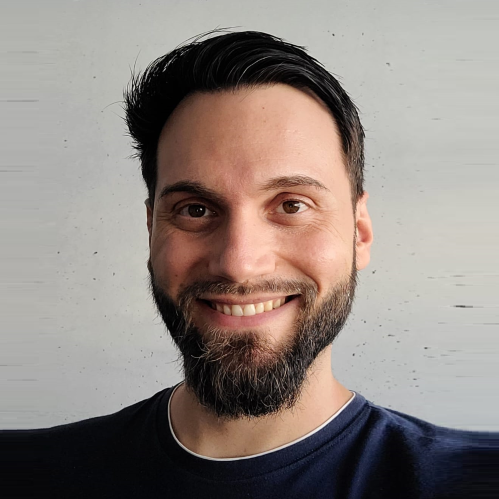
Professor Luca Borger is a Chair in Ecology and Biodiversity at Swansea University's School of Biosciences, Geography and Physics. He leads the Centre for Biomathematics and co-chairs the Movement Ecology Special Interest Group of the British Ecological Society. His research focuses on quantifying environmental impacts on biodiversity, integrating mechanistic processes like animal movement and demography into predictive models. Borger teaches ecological data analysis and movement ecology, and他曾是职业音乐家,后转向生态学领域。 **Research & Collaborations:** Borger's work spans movement ecology, behavioral ecology, and conservation, with publications on animal space use, energy-based movement models, and conservation strategies. He collaborates globally, including studies on jaguars, giant anteaters, and river fragmentation impacts. **Grants & Awards:**虽未明确列出奖项,但他的研究获得广泛资助,涉及生物数学、动物行为追踪技术开发等领域。他指导多名博士生研究课题,如红鹿导航、红颈岩袋鼠生态影响等。 **Labs & Teams:** He co-directs the Centre for Biomathematics and works with interdisciplinary teams on projects blending ecology, mathematics, and technology. His lab develops advanced biologging tools and analytical methods for high-resolution movement studies.
Dr. Hoam Chung is a Lecturer in the Department of Mechanical and Aerospace Engineering at Monash University, specializing in autonomous systems, model predictive control (MPC), and robotics. His research focuses on UAV navigation, human-swarm interaction, medical diagnostics through motion analysis, and optimization algorithms. He leads the Monash Unmanned Aerial Systems (MUAS) and Monash Connected Autonomous Vehicles (MCAV) teams, advancing projects like aerial perching for inspection and shared autonomy in multi-robot systems. Research interests: MPC theory, autonomous vehicles, medical motion diagnostics, semi-infinite optimization Key collaborations: BErkeley AeRobot (BEAR) project (2000–2009), projects with Soft Robotics and Multi-Robot Systems His work contributes to UN SDGs through advancements in sustainable transportation (SDG 9, 11) and health innovations (SDG 3). Recent studies include Parkinson’s disease detection via gait analysis and UAV-based agricultural monitoring.
Lars Drugge is a Professor at the Royal Institute of Technology (KTH) in the Department of Automotive Engineering and Technical Acoustics. His research focuses on smart, safe, and sustainable transportation solutions, including electrification, automation, and active vehicle systems. He explores crosswind stability, tire-wheel interactions, and driver-vehicle interfaces through experimental and simulation-based methods. Drugge leads courses such as Vehicle Dynamics and collaborates on advanced driving simulators to improve motion algorithms and reduce motion sickness in autonomous vehicles. His work integrates interdisciplinary approaches to optimize vehicle characteristics for energy efficiency and safety. Research highlights include developing Kalman filters for real-time crosswind load identification, investigating heat-insulated wheelhouses' impact on truck tires, and optimizing autonomous vehicle trajectories to mitigate motion sickness. Drugge's contributions span vehicle dynamics modeling, sensory feedback systems, and environmental sustainability in transportation. Education: Not explicitly detailed in text, inferred through academic role. Grants/Awards: None explicitly mentioned. Labs/Teams: Active in KTH's vehicle dynamics and simulator research groups.
Professor Reza Hoseinnezhad is a faculty member in the School of Engineering at RMIT University, Australia. His research focuses on advanced engineering systems, including robotics, artificial intelligence, and autonomous systems. His work spans domains such as multi-object tracking, sensor fusion, and control systems with applications in underwater vehicles, autonomous driving, and manufacturing. He actively supervises research projects in areas like electronic seatbelt systems, anomaly detection, and swarm tracking. Research interests include Electrical and Electronic Engineering, Artificial Intelligence, Mechanical Engineering, and Manufacturing Engineering. His contributions leverage statistical methods, machine learning, and optimization to solve complex engineering challenges. Recent projects emphasize robust filtering, adversarial attack defenses, and distributed information fusion in connected systems. Professor Hoseinnezhad’s publications address cutting-edge topics like geometrically-informed particle filters, reinforcement learning for quadrupedal robots, and defect detection via point pattern analysis. His work bridges theoretical advancements with practical industrial and safety applications.
Ángel Llamazares Llamazares is a Researcher at the Department of Electronics, University of Alcalá. His work focuses on robotics, autonomous systems, and sensor fusion technologies. He is affiliated with the Robesafe (Service Robotics and e-Safety) and former INVETT (Intelligent Vehicles and Traffic Technologies) research groups. He earned his PhD in 2017 with the thesis Laser-based detection and tracking of moving obstacles to improve perception of unmanned ground vehicles , supervised by Dr. Manuel Ocaña. His research spans topics like SLAM algorithms, obstacle detection, autonomous vehicle perception, and human-robot interaction. Key research areas include autonomous driving systems, multimodal sensor fusion (LiDAR/camera/RADAR), driver activity recognition, and robotics education through competitions. He has explored applications in traffic management, elderly care via voice assistants, and explainable AI for decision-making. Notable contributions include game-theoretic models for electric vehicle charging, modular autonomous driving software architectures, and fusion techniques for HD map validation. His work bridges theoretical advancements with real-world applications in safety-critical systems. Awards: None explicitly listed. Grants: Focus on robotics competitions and university-driven projects. Labs/Teams: Active in Robesafe and INVETT groups, collaborating on robotics competitions like Eurobot Spain to foster skill development among students.
Alberto Regadío Carretero is a Lecturer in the Department of Automática at the University of Alcalá, affiliated with the Space Research Group (SRG-UAH). His research focuses on signal processing for particle detection, cosmic ray physics, and the integration of advanced computing techniques like neural networks and IoT technologies into experimental instrumentation. He holds a PhD in Digital Signal Processing applied to particle detection, awarded in 2014. Education: PhD in Digital Signal Processing, University of Alcalá (2014) Thesis: Procesamiento digital de señal aplicado a la detección de partículas energéticas , supervised by Dr. Sebastián Sánchez Prieto and Dr. Jesús Tabero Godino Research Interests: His work bridges particle physics, space technology, and computational methods. Key areas include: Design of radiation detectors and data acquisition systems using FPGAs and IoT Analysis of cosmic ray spectra and atmospheric effects Application of machine learning (e.g., GANs, reservoir computing) to pulse detection and unfolding Hardware optimization for precision signal processing in space and high-energy environments Key Contributions: Recent work includes: Quantum computing approaches for exoplanet discovery Development of neutron monitors and trajectory tracking systems (e.g., MITO) Unfolding techniques for particle spectra using deep learning Awards & Grants: No specific awards or grants are mentioned in the text, but his involvement in projects like ORCA and the Space Research Group suggests active grant-based research. Lab & Team: He is part of the SRG-UAH Space Research Group, collaborating on projects such as the Antarctic Cosmic Ray Observatory (ORCA) and FPGA-based instrument development.
Salvador Sánchez Alonso is a Professor at the Department of Computer Languages and Systems, Universidad de Alcalá. He holds a PhD from Universidad Politécnica de Madrid (2005) under Dr. Miguel Ángel Sicilia Urbán. His research focuses on blockchain technology, cybersecurity, linked data, healthcare informatics, and educational technology. He actively contributes to the I4 research group (Intelligence, Innovation, Internet, and Information), exploring topics like privacy-preserving systems, social network analysis, and open data principles. His work bridges theoretical advancements with practical applications, such as predictive modeling for healthcare innovation, quality assessment of educational resources, and decentralized identity systems. Recent publications highlight innovations in quantum software measurement, KlimaDAO analysis, and ethical AI traceability. He has also explored the impact of political events on social networks and hospital resource management through predictive analytics. Key contributions include frameworks for metadata quality in digital repositories, interlinking educational data with the Web of Data, and applying blockchain for secure metadata deployment. His research often intersects interdisciplinary domains, emphasizing social data visualization and user-centric repository design.
Edward Gryspeerdt is a Lecturer in Atmospheric Physics at Imperial College London's Department of Physics (Faculty of Natural Sciences). His research focuses on cloud physics, aerosol impacts, and climate modeling. He leads studies on aerosol effects from shipping/aviation, using global climate models, satellite data, and ground observations. Key affiliations include the Earth Observation Network, Grantham Institute, Space Lab, and the Space and Atmospheric Physics Group. Research interests emphasize aerosol-cloud interactions, contrail formation, and anthropogenic impacts on climate systems. His work bridges satellite remote sensing with climate models to quantify radiative forcing and cloud feedback mechanisms. Current projects address challenges in detecting aerosol effects using satellite data and evaluating climate engineering proposals like marine cloud brightening. Recent publications analyze contrail detection limitations, ship track observations, and aviation climate impacts. He collaborates on global climate model intercomparisons and observational constraint methodologies. No scientific awards are explicitly listed, though his work contributes to major climate science initiatives.
Sanjiban Choudhury is an Assistant Professor at Cornell University's Ann S. Bowers College of Computing and Information Science and a Machine Learning Researcher at Aurora. He leads the PoRTaL group, focusing on interactive AI agents that self-align through few-shot human interactions. His research emphasizes reinforcement learning (RLHF), imitation learning (IRL), and foundation models for robotics, planning, and code generation. Key achievements include receiving the 2025 ONR Young Investigator Award for multistep robot task learning, the OpenAI Superalignment Award (2024), and a Google Research Award for LLM-based planning. His group develops modular robotics foundation models (MOSAIC), earning best paper awards at ICRA 2024 workshops. Research projects aim to bridge AI language models with robotic execution, enabling robots to interpret manuals/videos and perform complex tasks like engine repairs in hazardous environments. Lab members include doctoral students Gonzalo Gonzalez, Yuki Wang, Kushal Kedia, and master’s student Prithwish Dan. Ongoing work focuses on task super-alignment, human-robot transfer learning, and open-source training models for the robotics community. Current funding supports developing robots capable of fluid, multi-step tasks through integrated AI systems.
Nina Haltia serves as a University Research Fellow within the Department of Education at the University of Turku, Finland. Her institutional affiliation centers on analyzing Finnish higher education systems with a focus on equity, accessibility, and social dynamics. Her research interests prioritize educational equity through critical examination of open university tuition fees, transitions of non-traditional students into higher education, and labor market integration challenges for working-class graduates. She employs qualitative methodologies including small story analysis and narrative approaches to investigate graduate identity formation, institutional hierarchies, and social class impacts within Finnish academia. Analysis of her 2023-2025 publications reveals consistent thematic focus on systemic barriers in Finnish higher education. Key trends include empirical studies on how tuition fees affect perceptions of equal access, longitudinal tracking of working-class graduates' employment uncertainties, and deconstruction of graduate identity negotiation in competitive job markets. Her work consistently links micro-level student experiences to macro-level educational policy implications.
Prof. Johannes Reuter is a Professor in the Department of Control Engineering at Konstanz University of Applied Sciences and a member of the Institute for System Dynamics (ISD). He serves as Vice Dean and Dean of Studies for the Electrical Systems M.Eng. program. His expertise includes control engineering, tracking, and multi-sensor data fusion. Reuter holds a doctorate in Automatic Control and System Dynamics from Berlin Technical University. Before joining Konstanz in 2007, he worked at IAV GmbH, IAV Automotive Engineering (USA), and Eaton Corp.'s Innovation Center (USA). His research focuses on autonomous systems, maritime control, and optimization algorithms, with contributions to conferences like ICRA and journals such as the Journal of Ocean Engineering. He leads projects on energy-efficient autonomous vessels (Solgenia) and advanced control strategies for dynamic systems. Education: Studied Mathematics/Physics at Bielefeld University Electrical Engineering degrees from Bielefeld University of Applied Sciences and Berlin Technical University Doctorate in Automatic Control and System Dynamics, Berlin Technical University Research Interests: Reuter’s work bridges theoretical control engineering with practical applications, emphasizing autonomous systems, maritime robotics, and sensor data fusion. Key areas include model predictive control (MPC), trajectory optimization, and energy-efficient vessel design. His research often integrates advanced algorithms like MPPI (Model Predictive Path Integral) for stochastic systems and develops methods for extended object tracking using LiDAR and radar sensors. Publications: Recent work highlights energy-optimal vessel docking, trajectory planning with signal temporal logic, and extended object tracking. His articles reflect a focus on interdisciplinary solutions combining control theory, robotics, and sensor technology. Awards/Grants: No specific awards listed, but his work is supported through academic and industrial collaborations. Labs/Teams: Active in the Institute for System Dynamics (ISD), Konstanz, which focuses on control systems, signal processing, and dynamic optimization across robotics, marine systems, and energy management.
Tim McLain is a Professor in the Department of Mechanical Engineering at Brigham Young University (BYU), College of Engineering. He has been a core faculty member since 1995, advancing from Assistant to Associate and full Professor by 2007. He served as Department Chair from 2007 to 2013 and continues to lead research in unmanned aircraft systems and control theory. Research Interests: His work centers on the dynamics, guidance, control, and autonomy of unmanned aircraft systems (UAS). Key areas include cooperative control, vision-based navigation, state estimation, and precision landing for UAVs. His research integrates control theory with practical implementation in aerial robotics. The recent publications reflect a strong trend in autonomous UAV operations, particularly in GPS-denied environments, vision-based navigation, and cooperative mission planning. His work spans theoretical control design, real-time estimation, and experimental validation on small aerial platforms. He has also contributed to MEMS sensor integration and modeling. Scientific Awards: No specific awards are listed in the provided text. Advising and Grants: Dr. McLain has advised over 25 graduate students, primarily on UAV-related thesis topics. His research has likely been supported by grants from agencies such as AFRL and NSF, inferred from collaborations and research topics, though specific grants are not listed. Labs and Teams: He is affiliated with UAV research teams at BYU, collaborating closely with R. Beard and others on autonomous flight projects, including formation control, search missions, and cooperative surveillance.
Vicent Girbés Juan is an Associate Professor in the Department of Electronic Engineering at the School of Engineering, Universitat de València. His research is centered in the HRI Human-Robot Interaction Group, where he contributes to advanced robotics, intelligent vehicles, and human-centered automation systems. He earned his PhD from Universitat Politècnica de València in 2016 with a thesis on clothoid-based planning and control in autonomous and manual-assisted driving systems, supervised by Dr. Josep Tornero Montserrat and Dr. Leopoldo Armesto Ángel. His research interests span robotics, control systems, path planning for UAVs, visible light communication, haptic feedback in teleoperation, and educational innovation in engineering. He has published extensively on smooth trajectory generation, dual-arm robot control, sensor fusion, and V2V communications. His recent work shows a growing emphasis on integrating pedagogical innovation with engineering education, including flipped evaluation, peer assessment, and hackathon-based programming learning. His publications from 2021 to 2024 reveal a dual focus: advancing industrial robotics and intelligent transportation systems, while simultaneously innovating in teaching methodologies and student engagement in higher education. Key technical areas include clothoid-based 3D path planning, cautious Bayesian optimization, VLC positioning, and haptic-assisted teleoperation. He actively collaborates on interdisciplinary projects involving human-robot cooperation, industrial automation, and educational technology, reflecting a commitment to both technological advancement and pedagogical excellence. His email is vicent.girbes@uv.es .
Huijuan Wang serves as Associate Professor in the Multimedia Computing Group within the Department of Intelligent Systems at Delft University of Technology's Faculty of Electrical Engineering, Mathematics and Computer Science. With over 20 years of affiliation at TU Delft, she completed both her Master's degree and PhD at this institution before rising to her current faculty position. Her research focuses on temporal network analysis, higher-order network modeling, and information diffusion dynamics. Professor Wang investigates epidemic spreading models, network prediction algorithms, and complex system behaviors through both theoretical frameworks and practical applications. Her work bridges computer science, mathematics, and real-world network phenomena including urban systems and social dynamics. Analysis of her recent publications reveals a strong emphasis on temporal network properties, higher-order dependencies, and predictive modeling. Her research demonstrates consistent innovation in extracting diffusion backbones, measuring network dissimilarity, and developing memory-based prediction techniques for evolving networks. Co-founded Dutch Network Science Society (2018) Established Young Talent Prize recognizing emerging researchers Developed free community events fostering industry-academia collaboration Professor Wang actively mentors PhD candidates, emphasizing genuine interest in students' development as she experienced during her own doctoral studies. She champions initiatives promoting social safety, trust-building, and work-life balance within academic environments while leading efforts to establish processes addressing social safety concerns through cultural transformation.
G. Wadge is a prominent researcher affiliated with the Environmental Systems Science Centre at the University of Reading, UK. His work focuses on volcanology, geophysics, and remote sensing, particularly in monitoring volcanic activity using advanced radar technologies such as AVTIS. He has led and contributed to numerous studies on the Soufrière Hills Volcano in Montserrat, analyzing lava dome growth, mass wasting, and pyroclastic flow hazards. Institution: University of Reading Department: Environmental Systems Science Centre Research Focus: Volcanic Processes, Remote Sensing, Geophysical Monitoring His research interests include volcanology, geophysics, remote sensing, lava dome dynamics, radar imaging, and environmental monitoring . He has extensively studied the behavior of andesitic lava domes, particularly at Soufrière Hills, using ground-based radar and seismic data to quantify extrusion rates, talus formation, and pyroclastic flow volumes. His work bridges field observations with technical instrumentation development. The recent articles highlight a consistent focus on lava dome evolution, volcanic hazard assessment, and the use of millimeter-wave radar for all-weather volcano monitoring . These studies often combine topographic imaging with seismicity data to model mass redistribution during eruptions. The interdisciplinary nature of his work spans geophysics, instrumentation, and natural hazard mitigation. While no specific scientific awards are mentioned in the provided text, his sustained publication record in high-impact journals such as Journal of Geophysical Research and Geophysical Research Letters reflects significant scholarly contribution. Wadge has collaborated with institutions including the British Geological Survey, Lancaster University, and the Montserrat Volcano Observatory. His research is supported by NERC grants, indicating active funding and project leadership. He has advised or collaborated with multiple researchers and students, though specific names are not listed. His work includes both theoretical modeling and field deployment of novel sensors. He leads research on volcanic monitoring systems and hazard evaluation, particularly through the development and application of AVTIS. This instrument enables continuous topographic and thermal monitoring of volcanoes, even under cloudy conditions, making it invaluable for real-time hazard assessment.