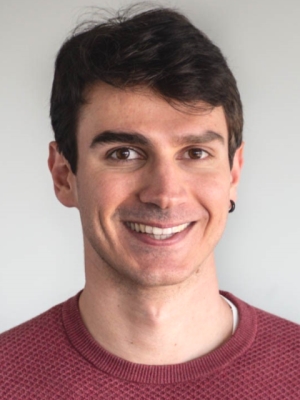
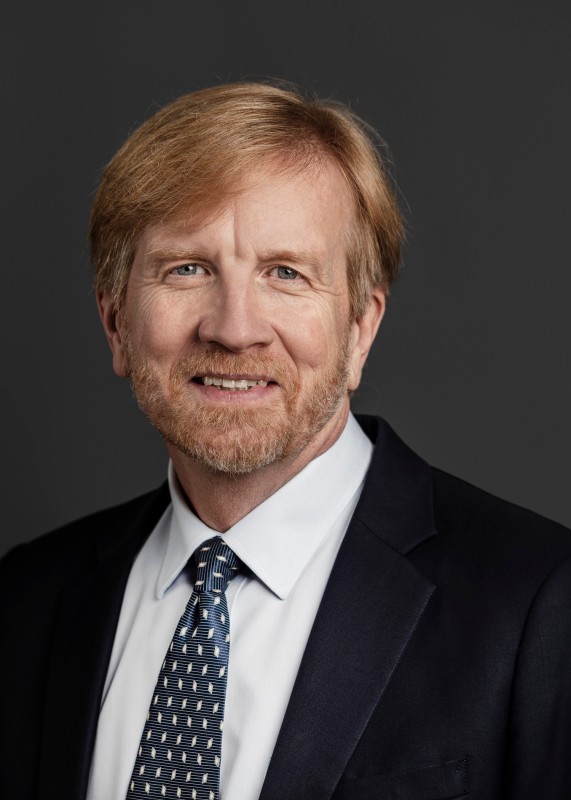
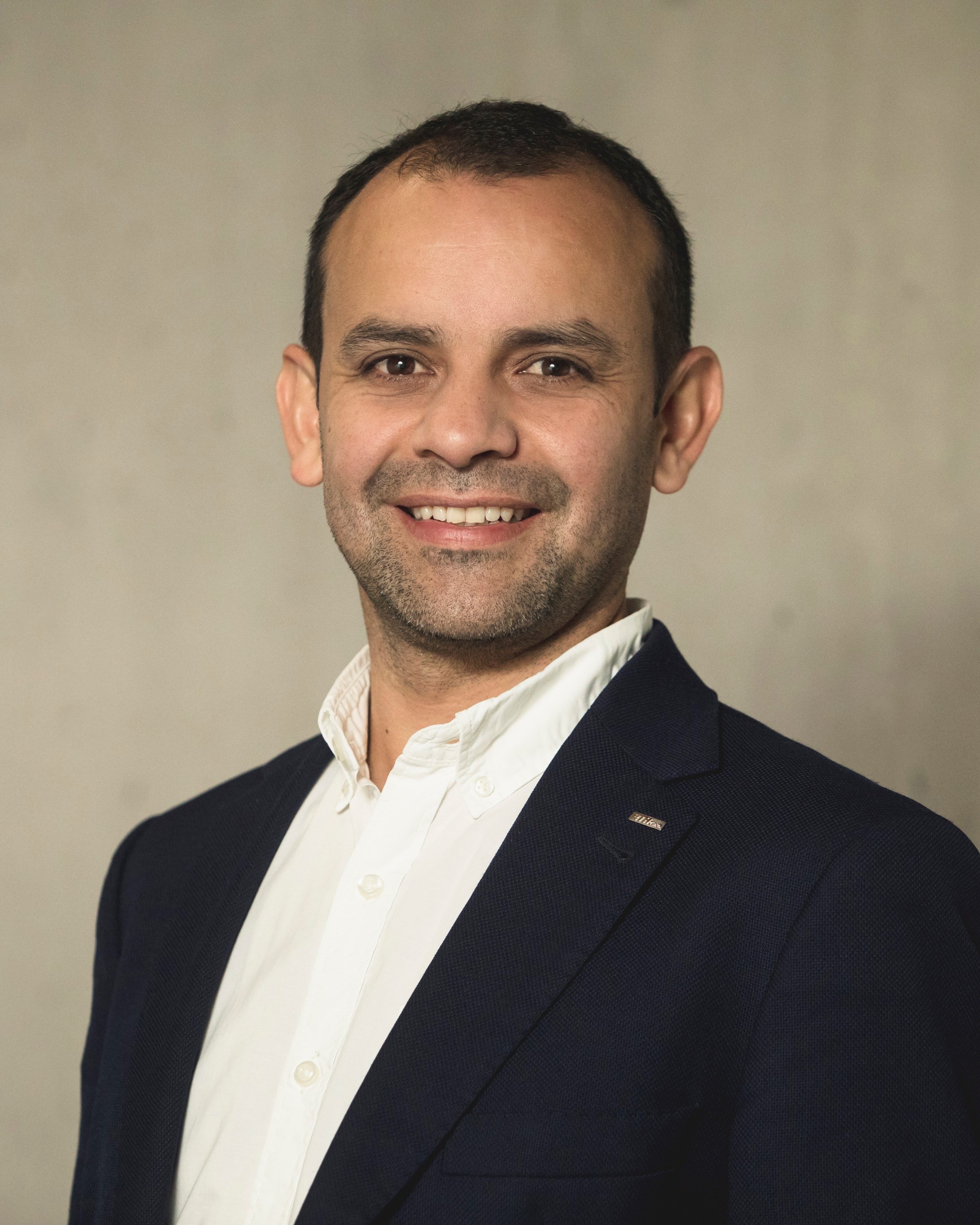
Dr. Iason Sideris is affiliated with ETH Zürich's Department of Neue Fertigungstechnologien (New Manufacturing Technologies), holding a Researcher position within the Professorship for Advanced Manufacturing. His work focuses on advancing additive manufacturing techniques, particularly in path planning optimization, temperature control, and material processing. He contributes to fields like Direct Energy Deposition, Wire-Arc Additive Manufacturing (WAAM), and data-driven finite volume methods. Key Research Areas: Additive Manufacturing, Thermal Modeling, Process Optimization, Materials Science Recent research emphasizes scalable path planning for temperature uniformity in AM processes, with publications addressing challenges in WAAM thermal management and real-time simulation methods. His work combines computational modeling with experimental validation to enhance manufacturing efficiency and material properties.
Prof. Dr. Melanie Zeilinger is an Associate Professor at the Department of Mechanical and Process Engineering at ETH Zurich, leading the Intelligent Control Systems group at the Institute for Dynamic Systems and Control. She holds a diploma in Engineering Cybernetics from the University of Stuttgart (2006) and a Ph.D. in Electrical Engineering from ETH Zurich (2011). Her postdoctoral research included stints at EPFL (2011–2012), a Marie Curie fellowship at UC Berkeley and the Max Planck Institute (2012–2015), and a professorship at the University of Freiburg (2018–2019). Her research focuses on learning-based control, distributed control systems, and robotics , with applications to medical devices (e.g., hydrocephalus shunts) and human-in-the-loop systems. She organizes the Conference on Learning for Dynamics and Control (L4DC) and contributes to initiatives like the "Algorithm on My Team" project. Her awards include the ETH Medal for her PhD thesis, a Marie-Curie IO Fellowship , and an SNF Assistant Professorship grant . She serves as an Associate Editor for IEEE Control Systems Letters and actively reviews for top journals/conferences like IEEE TAC, Automatica, and NeurIPS. Key projects include: VIEshunt: A smart ventricular shunt for hydrocephalus treatment, combining control systems and medical engineering. Autonomous Racing: Contextual tuning and safety-certified learning-based MPC for real-time obstacle avoidance. Data-Driven Control: Integrating Gaussian processes and state-space models into MPC frameworks for uncertain systems. Her work bridges control theory, machine learning, and robotics, addressing societal challenges such as healthcare and energy efficiency.
Bradley Nelson is a Full Professor of Robotics and Intelligent Systems at ETH Zürich since 2002, leading the Institute for Robotics and Intelligent Systems. He holds a Ph.D. in Robotics from Carnegie Mellon University (1995), with prior roles as Assistant Professor at the University of Illinois at Chicago (1995-1998) and Associate Professor at the University of Minnesota (1998-2002). His research focuses on microrobotics and nanorobotics for biomedical applications, including targeted drug delivery and medical robotics. He leads the Microrobotics Lab (MSRL) and chairs international workshops/conferences. Awards include IEEE and ASME Fellowships, and Best Paper accolades at major robotics venues. Research interests emphasize magnetic microrobot navigation, smart materials, and clinical translation of robotic systems. His work bridges engineering and medicine, addressing challenges like cerebral vasculature navigation for drug delivery. He has developed electromagnetically controllable catheters and telesurgery frameworks. Leadership roles include Head of the ETH Department of Mechanical and Process Engineering and Chairman of the ETH Electron Microscopy Center (EMEZ). Notable contributions include magnetically guided microcatheters, variable-stiffness catheters, and clinical-ready navigation systems. Ongoing projects explore magnetoelectric effects and biodegradable micromotors for environmental and biomedical uses. His lab collaborates with industry and academic partners globally to advance robotic solutions for healthcare challenges.
Claudia R. Binder is Full Professor at EPFL's School of Architecture, Civil and Environmental Engineering, leading the Laboratory for Human-Environment Relations in Urban Systems (HERUS) since 2016. Previously, she held professorships at the University of Munich (2011-2016), University of Graz (2009-2011), and University of Zurich (2006-2009). She served as Dean of EPFL's ENAC School from 2020-2023 and holds advisory roles with Swiss federal institutions including the Mercator Foundation since 2024. Her academic foundation includes a Biochemistry degree and PhD in Environmental Sciences from ETH Zurich, followed by postdoctoral research at the University of Maryland. This interdisciplinary background underpins her research approach spanning natural and social sciences. Professor Binder's work centers on urban sustainability transitions, examining urban metabolism dynamics through systems science frameworks. She investigates energy-food-transport interdependencies in cities using transdisciplinary methods that integrate material flow analysis, spatial modeling, and socio-technical assessments. Her research particularly emphasizes regulatory mechanisms and transformation drivers in human-environment systems, with case studies across Swiss and global urban contexts. Recent publications reveal evolving focus from foundational urban metabolism studies toward actionable transition strategies. Her 2024-2025 work increasingly addresses social tipping dynamics, circular decarbonization, and spatially explicit waste management, demonstrating methodological innovation through geo-referenced material flow analysis and participatory backcasting frameworks. Key thematic clusters include energy innovation diffusion, plastic waste governance, and demand-side flexibility in residential systems. She actively mentors 7 current PhD candidates while supervising 11 graduates since 2018, with research spanning urban metabolism modeling, sustainability assessment, and transition governance. Her leadership extends to Swiss National Science Foundation committees and National Research Program 71 on energy consumption management. At EPFL, she directs the HERUS laboratory which develops the Sustainability Solution Space methodology for urban assessment. The lab operates at the intersection of data science, environmental engineering, and social theory, maintaining strong field connections in Switzerland, Indonesia, and Germany for empirical validation of transition models.
Emilio Frazzoli is a Full Professor at ETH Zurich’s Department of Mechanical and Process Engineering. He leads the Institute for Dynamic Systems and Control and the Center for Sustainable Future Mobility, focusing on autonomous systems, robotics, and socio-technical control frameworks. Current affiliations: ETH Zurich (Dynamic Systems and Control, Sustainable Future Mobility) Research: Autonomous mobility-on-demand, game theory for resource allocation, and safety verification in multi-agent systems His work bridges robotics, control theory, and economics, with projects like the open-source AMoDeus simulation framework for autonomous taxis and karma-based resource allocation systems. Recent publications emphasize trustworthy AI, reproducibility in autonomous vehicle control, and human-robot interaction challenges. Notable projects include nuReality (VR-based pedestrian interaction studies) and CARSI II (context-driven vehicle interfaces).
Dr. Cesar Dario Cadena Lerma is a Lecturer at the Department of Mechanical and Process Engineering and a tenured Senior Scientist at the Institute of Robotics and Intelligent Systems (IRIS) at ETH Zurich. He leads the Perception, Mapping and Navigation team within the Robotics Systems Lab (RSL), co-founded and directs the ETH RobotX initiative focusing on educational robotics, and previously held roles at ETH Zurich's Autonomous Systems Lab, University of Adelaide, and George Mason University. His research focuses on robotics perception, particularly in SLAM (Simultaneous Localization and Mapping), semantic scene understanding, and robust perception systems for dynamic environments. Education: PhD in Computer Science and System Engineering from the University of Zaragoza, followed by postdoctoral research at George Mason University and The University of Adelaide. Professional roles include managing director of ETH RobotX and leadership in multi-modal mapping frameworks like maplab 2.0. Research interests emphasize integrating perception and learning in robotics, with a focus on semantic mapping, data association, place recognition, and navigation in unstructured environments. His work bridges traditional SLAM techniques with modern deep learning approaches to create robust, modular systems. Key contributions include the PHASER registration algorithm, SCIM obstacle avoidance framework, and C-Blox dense mapping system. Awards include the Best Paper Award at the 2017 IEEE International Symposium on Safety, Security, and Rescue Robotics. His articles span topics like semantic pointcloud filtering, volumetric mapping, and embodied domain adaptation. He collaborates widely, with over 50 peer-reviewed publications in top venues such as IEEE Robotics and Automation Letters and International Journal of Robotics Research.
Rachid Cherkaoui is a Senior Scientist at École polytechnique fédérale de Lausanne (EPFL), affiliated with the School of Engineering, specifically within the Department of Electrical Engineering. He is actively associated with research units SEL-ENS, EDEY-ENS, and DESL, contributing to the Distributed Electrical Systems Laboratory (DESL). His work focuses on advanced power system optimization, smart grids, and energy market modeling. Ph.D. in Electrical Engineering, EPFL, 1992 M.S. in Electrical Engineering, EPFL, 1983 Dr. Cherkaoui's research interests include electrical power and distribution systems, distributed generation, energy storage, electricity market deregulation, and power system vulnerability mitigation. His work bridges theoretical modeling and real-world applications, particularly in flexibility provision, grid resilience, and market integration of renewable energy. His recent publications (2020–2025) reflect a strong focus on smart grid technologies, energy storage integration, and market mechanisms. Key themes include optimal dispatch of hybrid systems, TSO-DSO coordination, frequency control, and stochastic optimization under uncertainty. His work is frequently published in top-tier journals such as IEEE Transactions on Power Systems and IEEE Transactions on Smart Grid. ABB Swiss Award '83 Senior Member, IEEE Member, CIGRE Task Forces C5-2 IEEE Swiss Chapter Officer since 2005 Dr. Cherkaoui actively supervises doctoral students and collaborates extensively with researchers like Mario Paolone. He has contributed to numerous projects funded by industry, CTI/Innosuisse, and Horizon 2020. His research includes experimental validation and real-time control systems, particularly in hydropower and battery storage applications. He is also involved in national and international energy strategy discussions, including Switzerland's path to carbon neutrality.
Christiane Barz is a Professor of Mathematics at the University of Zurich's Institute for Business Administration since 2016. Previously, she held academic roles at the UCLA Anderson School of Management, the Chicago Booth School of Business, and the Technical University (TU) Berlin. Her research focuses on stochastic dynamic systems, Markov decision processes, and their applications in revenue management. She emphasizes making mathematical tools accessible and practical for real-world problem-solving, particularly in optimizing decision-making under uncertainty. Education includes a degree in industrial engineering and a doctorate from the University of Karlsruhe (TH), Germany. Her career path includes postdoctoral research at the University of Chicago's Booth School of Business and roles as an Assistant Professor at UCLA. She combines academic excellence with balancing family life, advocating for gender equity in STEM fields. Her research explores risk-sensitive decision-making frameworks, dynamic pricing models for transportation and healthcare, and optimizing resource allocation in complex systems. Recent work includes applications in FlixBus, air cargo networks, and improving patient admission scheduling in hospitals. Barz's teaching philosophy prioritizes demystifying mathematics for students, encouraging critical engagement rather than fear of complexity. She collaborates with industry partners to apply operations research methods to real-world challenges, emphasizing both theoretical rigor and practical relevance.
Dr. Hongwei Wang is a Senior Researcher at Tencent AI Lab Seattle , specializing in applied machine learning for Natural Language Processing and Interconnected Systems . His work bridges Knowledge Graphs , Recommender Systems , and Graph Neural Networks , with a focus on large language models and retrieval-augmented generation. Ph.D. (2018), B.E. (2014) in Computer Science from Shanghai Jiao Tong University Postdoctoral Researcher : Stanford University (2019-2021), University of Illinois Urbana-Champaign (2021-2022) Dr. Wang’s research explores integrating Knowledge Graphs with Graph Neural Networks to enhance recommendation systems, language models, and information retrieval. His work spans Retrieval-Augmented Generation , Representation Learning , and GAN-based Graph Modeling , with recent papers on State-Space Exploration for LLM agents and Semantic Watermarking . His 15 most recent publications (2022-2024) focus on Retrieval Granularity , Interactive Memory , and Agent Systems , with keywords spanning Computer Science , Machine Learning , and Knowledge Graphs . Trends highlight advancements in Token-Level Semantic Matching , Schema-Guided Event Prediction , and Multi-Document Summarization . Scientific Awards: 2020 CCF Outstanding Doctoral Dissertation Award 2018 Google Ph.D. Fellowship Dr. Wang contributes to open-source projects like DKN and RippleNet , with 11 repositories on GitHub. He actively engages in Knowledge Graph Conferences (KDD, WWW, AAAI) and studies Chinese Classical Poetry and Film Arts .
Helen Oleynikova is a Lecturer at the Department of Mechanical and Process Engineering at ETH Zürich, where she is part of the Autonomous Systems Lab. She works on the intersection of perception and planning, particularly for micro-aerial vehicles. Her research focuses on real-time onboard mapping, planning, and localization using visual-inertial systems and signed distance fields. Research Interests: Helen's work spans robotics, autonomous systems, and computer vision, with a focus on enabling safe and efficient navigation in complex environments. She specializes in visual-inertial odometry, SLAM, 3D mapping using signed distance fields, and real-time path planning for MAVs. Her projects often involve embedded systems and FPGA-based high-speed vision for obstacle avoidance. Publication Trends: Her recent publications (2023–2019) show a consistent focus on real-time, onboard algorithms for autonomous navigation. Key themes include signed distance function maps, collision-free motion generation, global localization, and efficient exploration. She frequently publishes in top-tier robotics conferences such as ICRA and IROS, and journals like IEEE RA-L and Journal of Field Robotics. Professional Experience: Senior Researcher, Autonomous Systems Lab, ETH Zürich Senior Software Engineer, Isaac 3D Perception, Nvidia Senior Scientist, Microsoft Mixed Reality and AI Lab, Zürich Software Engineer, Google (StreetView) Contributor, Willow Garage (ROS, TurtleBot Arm) Education: PhD in Robotics, ETH Zürich (2019) MSc in Robotics, ETH Zürich BSc in Robotics, Olin College of Engineering (2011) Advising and Grants: While no formal students are listed, she has collaborated extensively with researchers at ETH Zürich and industry labs. Her work has been supported through institutional affiliations and industry research roles. She has contributed to open-source robotics software, particularly in ROS-based systems for manipulation and navigation. Labs and Teams: Helen is a key member of the Mobile Manipulation team at the Autonomous Systems Lab at ETH Zürich. She has also been involved in projects at Nvidia, Microsoft, Google, and Willow Garage, focusing on real-world deployment of autonomous systems.
Johannes Gräff is an Associate Professor at EPFL, affiliated with the Bioengineering Institute (BMI) under the School of Life Sciences (SV). He also serves as Director of the Neuroscience Doctoral Program (EDNE) and holds roles in the Synapsy Research Center (SRC). His research focuses on interdisciplinary applications of control systems, robotics, and data-driven optimization in bioengineering and manufacturing. Gräff leads the Prof. Gräff Unit (UPGRAEFF) and teaches courses on neuroscience and general biology. He advises multiple doctoral students and contributes to academic governance through roles in doctoral commissions and program management. His expertise spans adaptive control, Bayesian optimization, and closed-loop systems, with applications in precision engineering, additive manufacturing, and neuroscientific instrumentation. Gräff’s work bridges theoretical control methodologies with practical industrial and biomedical challenges, emphasizing safety and efficiency in automation. He oversees the Neuroscience Doctoral Program, guiding interdisciplinary research training, and maintains administrative responsibilities in EPFL’s academic and research structures. His lab (graefflab.epfl.ch) focuses on advancing technologies for autonomous systems and precision control in dynamic environments.
Stefana Parascho serves as Tenure Track Assistant Professor at the Swiss Federal Institute of Technology in Lausanne (EPFL) within the School of Architecture, Civil and Environmental Engineering (ENAC), specifically in the Institute of Architecture (IA). She leads the Laboratory for Creative Computation (CRCL) and concurrently heads the Diversity Office at ENAC, demonstrating dual commitments to technological innovation and institutional equity. Her research pioneers intersections of digital fabrication, robotics, and sustainable architecture, with particular focus on transforming construction waste into valuable resources. Through computational design and robotic assembly, she develops novel methodologies for upcycling concrete rubble and timber into structurally sound building components, directly addressing circular economy challenges in construction. Her work bridges theoretical frameworks with physical prototyping, emphasizing human-robot collaboration and material reintegration. Analysis of her recent publications reveals a cohesive trajectory toward waste valorization through digital processes, with concrete rubble masonry and timber reuse forming the core technical pillars. These investigations consistently integrate robotic fabrication, structural validation, and circular design principles across 15+ publications since 2023, establishing new paradigms for resource-efficient construction. As an academic advisor, she supervises four PhD candidates (Grangeot Maxence, Skevaki Eleni Maria, Vallat Gabriel Rémi, Wang Jingwen) while contributing to architectural education through courses like "Digital design and making: A critical introduction" that merge technical skill development with theoretical critique. Her leadership extends to the ENAC Teaching Committee and institutional diversity initiatives, reflecting comprehensive engagement with academic community development. Her operational base at CRCL (https://crcl.epfl.ch) provides the technical infrastructure for robotic experimentation, while her Diversity Office role (https://www.epfl.ch/schools/enac/about/diversity-office/) demonstrates parallel commitment to inclusive academic environments. This dual focus positions her at the forefront of both technological innovation and cultural transformation within architectural academia.
Maryam Kamgarpour is a Tenure Track Assistant Professor at École Polytechnique Fédérale de Lausanne (EPFL), School of Engineering. She previously held faculty positions at the University of British Columbia and ETH Zürich. Her work bridges stochastic control , multiagent learning , and game theory , focusing on safety-critical systems. Education: PhD in Engineering from UC Berkeley, BSc in Applied Science from University of Waterloo. Research Interests: Control under uncertainty, game theory, mechanism design, mixed-integer optimization, and applications to transportation, robotics, power grids, and healthcare. Her recent publications emphasize safe reinforcement learning , multirobot coordination , and stochastic trajectory planning , with applications to aircraft navigation and energy systems. She has received the European Union ERC Starting Grant, NASA High Potential Individual Award, and IEEE Transactions on Control of Network Systems Outstanding Paper Award. Scientific Awards: ERC Starting Grant (2016-2021) NASA High Potential Individual Award (2010) NASA Excellence in Publication Award IEEE Outstanding Paper Award (2022) PhD Students: Jordan Philip Christopher Maddux Anna Maria Ni Tingting Ren Kai Salizzoni Giulio Schlaginhaufen Andreas Vaishampayan Saurabh Dilip Vallat Gabriel Rémi Former EPFL student: Guo Baiwei
Malte Helmert is a Professor at the University of Basel in the Department of Mathematics and Computer Science. He previously worked at the University of Freiburg's Research Group on the Foundations of Artificial Intelligence from 2001 to 2011. His research focuses on intelligent problem-solving , particularly in automated planning , combinatorial search , constraint satisfaction , and NP-hard graph problems . Helmert has made significant contributions to classical planning, including the development of the Fast Downward planning system and its derivatives. Education : Diploma in Computer Science (M.Sc.) from the University of Freiburg (2001) Ph.D. in Computer Science from the University of Freiburg (2006) Research interests encompass the theoretical and practical aspects of automated planning, including heuristic search , optimal planning , abstraction techniques , and domain-independent planning . His work explores merge-and-shrink abstractions , landmark progression , and cost partitioning algorithms for classical planning systems. Recent publications analyze advancements in pseudo-Boolean proof logging , higher-dimensional potential heuristics , and correlation complexity in planning domains. These works often integrate mathematical modeling, algorithm design, and empirical benchmarking. Scientific awards include the AAAI Fellow (2021), EurAI Fellow (2020), multiple Best Paper Awards at ICAPS and SoCS conferences, and the Computers and Thought Award (2011). He also received the VDI-Förderpreis for his Master’s thesis. Software contributions include the Fast Downward planning system, MIPS (now maintained by Stefan Edelkamp), and COVER (a vertex cover solver). Helmert has organized tutorials at ICAPS and AAAI conferences on topics like landmark progression , abstraction heuristics , and LP-based heuristics .
Andrea Ronco is a Researcher affiliated with the Department of Rehabilitation Engineering at ETH Zürich. His work focuses on advancing sensor technologies and their applications in biomedical engineering, autonomous systems, and IoT. He leads research in mmWave radar systems for non-invasive vital sign monitoring, in-ear gesture recognition, and low-power embedded sensor solutions. Professional Affiliation: Staff of Professorship for Rehabilitation Engineering Research interests span radar technology optimization, real-time signal processing for healthcare, and robust sensor fusion for autonomous vehicles. His recent work emphasizes miniaturization and energy efficiency in wearable and embedded systems. Key contributions include TinyssimoRadar and In-ear-voice platforms that integrate advanced sensing with minimal power consumption. Ronco's publications address challenges in sensor robustness against environmental conditions and real-world deployment scenarios. His research outputs demonstrate expertise in interdisciplinary domains combining electrical engineering, machine learning, and biomedical applications. Current projects likely explore next-generation sensing modalities for wearable health monitoring and smart infrastructure systems.