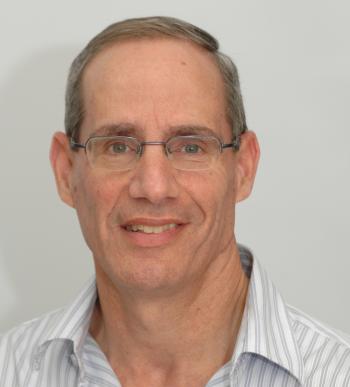
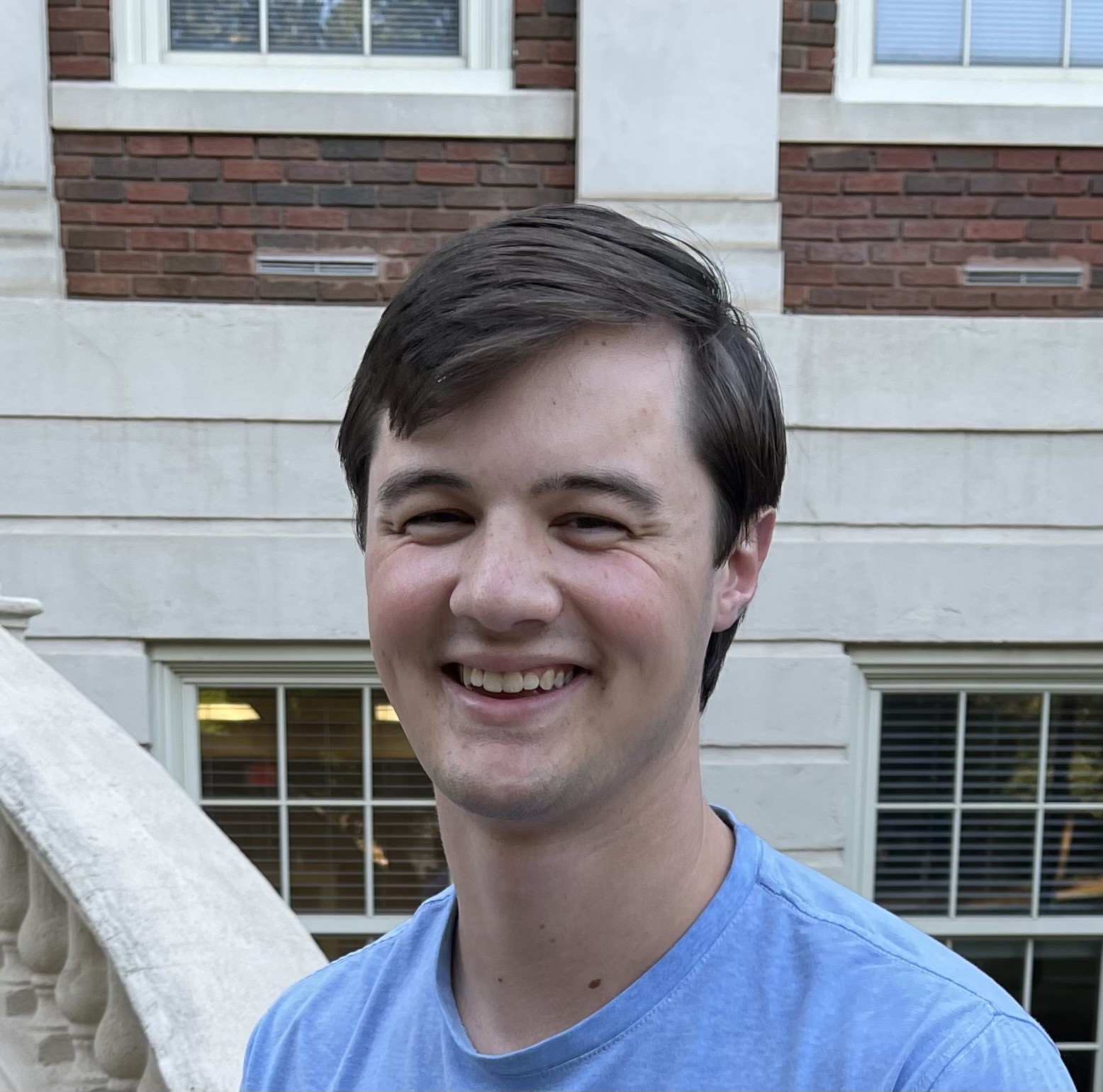
Victor Liu is a Research Professor and Lecturer in the Department of Computer Science and Engineering at the University of Michigan, affiliated with the College of Engineering. His work bridges complex systems analysis, software-defined networking (SDN), and telecommunications. Ph.D. in Computer Science from the University of Pittsburgh M.E. in Computer Science from Tsinghua University B.E. in Computer Science from Xi'an Jiaotong University Dr. Liu specializes in network survivability and optimization , with a focus on: Intent-Based Networking Self-Operating Networks Packet-Optical Integration Cross-Layer Network Resilience His publications from the last decade reveal a consistent focus on network reliability , spare capacity allocation , and SDN applications . Key themes include: Protection algorithms for dual-failure scenarios Optimization of packet-optical integrated networks Routing strategies for fiber-cut recovery SDN-driven network automation Telecom infrastructure resilience Failure recovery in multi-layer systems
Cynthia Sturton serves as Associate Professor and Peter Thacher Grauer Scholar in the Department of Computer Science at the University of North Carolina at Chapel Hill. She leads the Hardware Security @ UNC research laboratory focused on developing formal verification tools for hardware security analysis. Her educational background includes a Ph.D. (2013) and M.S. from UC Berkeley, and a B.S.Eng. from Arizona State University. Her research centers on hardware security, applied formal methods, and symbolic execution techniques for identifying security vulnerabilities in processor designs before fabrication. Sturton's research demonstrates consistent innovation in hardware security verification, particularly through tools like Sylvia (symbolic execution for Verilog) and SylQ-SV (SystemVerilog analysis with query caching). Her work bridges theoretical formal methods with practical security applications, addressing critical challenges like path explosion and security property generation at scale. Nominated for Best Paper award at IEEE/ACM MICRO 2018 Intel Hardware Security Academic Award, 2nd place ($50,000) at IEEE Symposium on Security and Privacy 2020 Selected as Top Picks in Hardware and Embedded Security 2021 She advises multiple graduate students including Rui Zhang and Calvin Deutschbein, and has secured significant research funding from NSF (Grants 1816637, 651276), Semiconductor Research Corporation, Intel, Google, and UNC Chapel Hill. Her Hardware Security @ UNC lab develops critical tools for security property generation and vulnerability detection in hardware designs.
Nicole Megow is a Professor holding the chair for Combinatorial Optimization in the Faculty of Mathematics and Computer Science at the University of Bremen since 2016. She is affiliated with several research clusters including Humans on Mars Initiative, Minds, Media, Machines, and Dynamics in Logistics. Her academic journey includes positions at TU Berlin, Max Planck Institute for Informatics, TU Darmstadt, and TU Munich. Professor Megow's research focuses on mathematical optimization, algorithm design and analysis, and operations research. Her specific interests span combinatorial and discrete optimization, efficient algorithms, scheduling theory, resource allocation, packing problems, network design, routing, and uncertainty models including online, stochastic, robust, and explorable approaches. Her work bridges theoretical foundations with practical applications in logistics and decision-making systems. Her recent publications demonstrate a strong trend toward integrating prediction models with traditional optimization frameworks, particularly in scheduling and matching problems. She has made significant contributions to understanding the role of uncertainty in optimization problems, developing algorithms that work effectively with incomplete or uncertain information. Her work spans multiple prestigious venues including Mathematical Programming, Algorithmica, SODA, STACS, and NeurIPS. Dissertation Award by the German Operations Research Society (2007) Berlin Science Award for Young Researchers (2013) Heinz Maier-Leibnitz Prize (2013) Listed among Germany's top 40 researchers below 40 (Capital, 2014, 2015) Professor Megow actively supervises PhD students and postdocs, including Max Stahlberg, Joes Biburger, Sarah Morell, Bart Zondervan, Zhenwei Liu, and Alexander Lindermayr. She serves on numerous program committees for major conferences including SODA, IPCO, and STOC, and holds editorial positions for several prestigious journals. Her current research projects include Optimization under Explorable Uncertainty (DFG funded), How robots learn how to use structure (seed grant from MMM research cluster), and Scheduling Invasive Multicore Programs Under Uncertainty (within TCRC 89).
Paul D. Brooks is a Professor in the Department of Geology/Geophysics at the University of Utah, where he has been a faculty member since July 2014. His research focuses on understanding water, energy, and biogeochemical cycling in seasonally snow-covered catchments, with increasing emphasis on predicting how climate and land use changes impact snow accumulation, ablation, and snowmelt-derived surface and ground water resources. His educational background includes a BS in Biology and Chemistry from Florida State University, followed by an MS in Ecohydrology (1991) and PhD in Biogeochemistry (1995), both from the University of Colorado, Boulder. Prior to his position at the University of Utah, Dr. Brooks was a Professor in the Department of Hydrology and Water Resources at the University of Arizona from December 2000 to June 2014. Dr. Brooks' research spans multiple disciplines within earth sciences, focusing primarily on hydrology, ecohydrology, and biogeochemical cycling in mountainous, snow-dominated environments. His work examines how climate change affects snowmelt processes, groundwater-surface water interactions, and water resource availability in the western United States. He employs a combination of field measurements, isotope hydrology, and modeling approaches to understand complex hydrological processes across multiple spatial and temporal scales. His research increasingly involves collaboration with stakeholders to translate scientific findings into practical water resource management applications. Analysis of Dr. Brooks' recent publications reveals a strong focus on groundwater-surface water interactions in snowmelt-dominated systems, with particular attention to how climate change affects streamflow generation processes. His work bridges fundamental hydrological science with practical water resource concerns, examining topics such as runoff efficiency, groundwater storage dynamics, and the impacts of land cover changes on hydrological processes. A significant portion of his recent research investigates the Western United States water resources under changing climate conditions. AGU Fellow (American Geophysical Union) Dr. Brooks actively mentors graduate students through thesis research (both PhD and Master's level) as evidenced by his teaching activities. His lab conducts research supported by various grants focused on understanding water resources in mountainous regions, particularly examining how climate change affects snowmelt hydrology and water availability. He collaborates extensively with researchers across multiple institutions, as demonstrated by his numerous co-authored publications with scientists from various universities and research organizations. Dr. Brooks leads research efforts through his lab at the University of Utah and is involved with the Wasatch Environmental Observatory, a mountain-to-urban research network in the semi-arid Western US. His work integrates field measurements across complex terrain to understand how topography, vegetation, and climate interact to control water, energy, and biogeochemical cycling in seasonally snow-covered environments.
Dr. Chenhao Ma is an Assistant Professor at the School of Data Science , The Chinese University of Hong Kong, Shenzhen , where he works on large-scale data management and data mining. Previously, he was a Postdoctoral Fellow at the University of Hong Kong (2021–2022) and earned his PhD in Computer Science from the University of Hong Kong (2021) and B.Eng. from Shandong University (2017). Current research focuses on graph computing (dense subgraph discovery, motif analysis, graph learning), AI+DB (Text-to-SQL, vector search), and traffic data mining (trajectory analysis, outlier detection). He has published over 40 papers in top venues including SIGMOD, PVLDB, KDD and received the ACM SIGMOD Research Highlight Award 2021 and Best of SIGMOD 2020 (4/458). Scientific Awards : ACM SIGMOD Research Highlight Award 2021 Best of SIGMOD 2020 (4/458) Presidential Young Fellow at CUHK-Shenzhen (2023) Hong Kong and China Gas Scholarship (2019-2020) Reaching Out Award (2019) HKU Postgraduate Scholarship (2017-2021) ACM-ICPC Gold Medal (2015) National Scholarship (2014, 2015) Advising and Research Team : He leads a team including Postdoc Dr. Yuanyuan Zeng, PhD students Lujie Ban, Yuwei Xu, and MPhil students Yi Yang, Yuyang Liang. Former mentees like Yichen Xu (PhD at Berkeley) and Jiayang Pang (Master at UC San Diego) have achieved academic placements. Professional Service : He has served as PC member/reviewer for VLDB, KDD, ICDE, WWW, NeurIPS, TKDE , and guest editor for Applied Sciences and Frontiers in Big Data . He chairs sessions at ICDE and VLDB.
Noa Pinter-Wollman is a Professor in the Department of Ecology and Evolutionary Biology at the University of California, Los Angeles, within the College of Life Sciences . Her work integrates field experiments, laboratory assays, computational modeling, and social network analysis to understand how individual variation among animals translates into emergent collective behavior, and how these dynamics intersect with conservation challenges. Research Focus: Mechanisms underlying collective decision-making in social insects (especially Argentine ants and harvester ants) Social network structure and its ecological consequences in endangered griffon vultures Interface between spatial ecology and social behavior, including impacts on disease transmission and conservation management Biomimetic insights from social animals to inform resilient human-designed systems Across 2023–2025, her team has produced a steady stream of high-impact articles that collectively advance four thematic pillars: (1) microbiome–behavior feedbacks in ants, (2) conservation technology for scavengers, (3) network-analytic methods for disentangling spatial versus social drivers of interaction, and (4) cooperative strategies that underlie invasion success in ants. The work is notable for integrating high-resolution tracking technologies with rigorous statistical modeling. Funding & Collaborations: Current NSF awards include the collaborative grant “ The causes and consequences of Higher Order Interactions (HOI) ” and prior support for “ Uncovering how links between social and spatial interactions affect ecological processes .” These grants foster interdisciplinary partnerships spanning ecology, computer science, and conservation practice. Laboratory & Team: The Pinter-Wollman Lab at UCLA houses graduate researchers, post-docs, and undergraduates who conduct integrative studies on ants, paper wasps, spiders, and vultures. The lab website ( https://pinter-wollmanlab.weebly.com ) provides protocols, data resources, and outreach materials that translate basic findings into actionable conservation guidance for wildlife managers.
Gérard Ben Arous is a Silver Professor of Mathematics at New York University's Courant Institute of Mathematical Sciences, where he has served as Director and Vice Provost for Science and Engineering Development since 2011. He holds a PhD in Mathematics from the University of Paris VII (1981) and has previously taught at the University of Paris-Sud, École Normale Supérieure, and the Swiss Federal Institute of Technology in Lausanne. His research focuses on probability theory, stochastic analysis, and their applications to physics and industrial problems, particularly exploring complex systems' long-time behavior and aging phenomena in disordered media. Education: PhD in Mathematics, University Paris 7, France (1981) M.Sc. in Statistics, University Paris-Sud Orsay, France (1979) B.S. in Mathematics, École Normale Supérieure (Paris), France (1978) His research interests bridge probability with partial differential equations, dynamical systems, and statistical mechanics. Key contributions include studies on random media, random matrices, and the interplay between complexity, disorder, and aging in physical systems. He has held leadership roles in academic institutions, including directing the mathematics departments at Orsay and École Normale Supérieure, and founded Lausanne's Bernoulli Center. Notable awards include Fellow of the Institute of Mathematical Statistics and the Montyon Prize from the French Academy of Sciences. His work is published in top journals like Annals of Probability and Communications in Pure and Applied Mathematics , and he co-edits Probability Theory and Related Fields . Ben Arous has advised numerous researchers and contributed to interdisciplinary projects, including studies on machine learning landscapes and financial mathematics. His lab focuses on stochastic modeling and its applications across disciplines.
Richard Kempter is a Full Professor at the Humboldt-Universität zu Berlin, where he leads the Theoretical Neuroscience research group within the Institute for Theoretical Biology, Department of Biology. His research focuses on the neural basis of learning and memory through computational and mathematical modeling of synapses, neurons, and neural networks. He is affiliated with several major research centers including the Bernstein Center for Computational Neuroscience, the Einstein Center for Neurosciences Berlin, and the CRC 1315 Memory Consolidation. Professor Kempter's research interests span theoretical and computational neuroscience with a particular focus on the neural mechanisms underlying learning and memory. His work employs biophysical modeling and mathematical analysis to study synaptic short- and long-term plasticity, the dynamics of single neurons, and the interaction of neurons in recurrently coupled networks. A key aspect of his research investigates how neural systems maintain a balance between learning susceptibility and stability against pathological activity patterns, with model systems including the hippocampus and early auditory system. His research group has made significant contributions to understanding hippocampal sharp wave-ripple events, phase precession in spatial navigation, auditory processing in barn owls, and memory consolidation mechanisms. The group's work combines theoretical approaches with computer simulations to unravel the computational principles of neural circuits, showing particular interest in how neural tissue remains susceptible to learning while maintaining robust stability against pathological activity patterns. Scholarship of the State of Bavaria (03/1994-12/1995) Emmy Noether Fellowship Part I (09/1999-08/2001), funded by the Deutsche Forschungsgemeinschaft Emmy Noether Fellowship Part II (01/2003-09/2008) Guest Professor , HU Berlin, Department of Biology (10/2008-03/2010) Professor Kempter has advised numerous PhD and Master's students throughout his career, with many continuing in neuroscience research. His group maintains strong connections with experimental laboratories to bridge computational models with empirical findings, particularly in hippocampal function and auditory processing. The Theoretical Neuroscience Lab participates in collaborative projects investigating memory consolidation and neural coding principles, contributing significantly to our understanding of how neural circuits implement computational principles underlying learning and memory.
Royce G. Yudkoff serves as the MBA Class of 1975 Professor of Management Practice of Entrepreneurial Management at Harvard Business School. He is also a General Partner and co-founder of ABRY Partners, LLC, a Boston-based private equity firm. At Harvard Business School, Yudkoff co-teaches two courses with Professor Richard Ruback: 'The Financial Management of Smaller Firms' and 'Entrepreneurship through Acquisition,' which focus on acquiring, financing, and operating smaller firms. Yudkoff's research interests center on entrepreneurial management, particularly the acquisition of small businesses. His work explores the practical aspects of finding, evaluating, negotiating, and financing the purchase of established businesses, providing an alternative path to entrepreneurship. He has co-authored the book HBR Guide to Buying a Small Business: Think Big, Buy Small, Own Your Own Company (2017) and the Harvard Business Review article 'Buying Your Way into Entrepreneurship' (2017), which established him as a leading expert in the search fund and small business acquisition space. His recent scholarly output has been remarkably prolific, with numerous case studies published in 2025 covering diverse business acquisition scenarios across various industries including manufacturing, healthcare, technology, and consumer products. These works examine critical aspects of business acquisition including valuation, due diligence, financial modeling, and post-acquisition management. Baker Scholar (Harvard Business School, 1980) Yudkoff has significant practical experience to complement his academic work. In 1989, he co-founded ABRY Partners, a private equity firm specializing in media, communications, and business information services. Over his career, the firm has completed over $27 billion in leveraged transactions involving approximately 450 properties. Yudkoff has also served on numerous private and public corporate boards, bringing real-world perspective to his teaching and research. His educational background includes graduating from Harvard Business School in 1980 as a Baker Scholar and earning honors as an undergraduate at Dartmouth College. This combination of academic excellence and practical business experience informs his approach to entrepreneurial education.
Noga Alon is a Professor of Mathematics at Princeton University, affiliated with the Mathematics Department. He is renowned for his contributions to Combinatorics, Graph Theory, and Theoretical Computer Science. His research emphasizes algebraic and probabilistic methods, with applications in circuit complexity and combinatorial geometry. Education & Affiliations Current position: Professor at Princeton University. Active in the Princeton Discrete Mathematics Seminar and has led conferences like the Noga60 Birthday Conference. Research Interests Focus areas include Combinatorics (e.g., Ramsey Theory, Graph Coloring), Theoretical Computer Science (e.g., Algorithms, Complexity), and probabilistic and algebraic methods in discrete mathematics. His work bridges combinatorial structures and algorithmic applications, with contributions to expander graphs, randomized algorithms, and extremal graph theory. Publications Over 300 papers, including foundational work on the probabilistic method, expander graphs, and combinatorial algorithms. Notable recent topics include graph coloring, path-finding algorithms (e.g., Color-coding), and spectral techniques for graph problems. Grants & Awards No specific grants or awards listed in available texts, though his academic stature implies prestigious recognition in combinatorics and computer science. Labs & Collaborations Involved in collaborative research through Princeton’s Mathematics Department and international conferences. Leads seminars and co-authors work with prominent researchers like M. Naor, J. Spencer, and others.
Raimund Seidel is a Professor in the Department of Computer Science at Universität des Saarlandes, leading the Chair of Theoretical Computer Science. He is actively involved in research and teaching, focusing on foundational aspects of algorithms and data structures, particularly in computational geometry. His primary research interests include theoretical computer science , design and analysis of efficient algorithms , geometric data structures , randomized algorithms , and combinatorial geometry . His work addresses fundamental problems such as planar point location, convex hull computation, and efficient encoding of triangulations. He also investigates geometric algorithms under the transdichotomous model, leveraging word-level parallelism. The selected publications reflect a long-standing contribution to computational geometry and data structure theory , with a focus on randomized methods and exact complexity analysis. His research combines theoretical rigor with practical implications for algorithm design. Award or honor not found in the provided text. Prof. Seidel has advised several students, including Alexander Malkis , Ralf Osbild , Udo Adamy , Christian Sohler , and others, many of whom have gone on to academic and research careers. No explicit information about grants or funding is available in the text. He leads a research group within the Department of Computer Science at Universität des Saarlandes, mentoring current staff such as László Kozma , Giorgi Nadiradze , and Lavinia Dinu . The group maintains active research in theoretical computer science and computational geometry.
Dr. Steven Friedenberg is an Associate Professor in the Department of Veterinary Clinical Sciences at the University of Minnesota's College of Veterinary Medicine. He holds dual appointments in the Center for Immunology and Comparative and Molecular Biosciences program. His clinical specialty is Emergency and Critical Care, with board certification as a Diplomate of the American College of Veterinary Emergency and Critical Care (ACVECC). Dr. Friedenberg's educational background includes a PhD from North Carolina State University, DVM from Cornell University, MS from The Ohio State University, BS from Yale University, and an MBA from Massachusetts Institute of Technology. His diverse educational path reflects his interdisciplinary approach to veterinary medicine and research. His research focuses on canine genetics and immunology, particularly breed-specific diseases. Key areas include whole genome sequencing, genetic basis of autoimmune disorders, and comparative models of human diseases. Current projects examine autoimmune hemolytic anemia in multiple dog breeds, reference genome development for Portuguese Water Dogs, and Addison's disease in Standard Poodles. His work often bridges veterinary and human medicine, contributing to UN Sustainable Development Goals related to health and well-being. Analysis of his recent publications (2024-2025) reveals a strong emphasis on genetic mechanisms underlying breed-specific disorders. His research spans narcolepsy in Dogo Argentinos, Chiari-like malformation in Cavalier King Charles Spaniels, hyperfibrinolysis in English Springer Spaniels, immune responses to rabies vaccination, and cystic fibrosis-like conditions in canine gallbladders. These studies demonstrate his expertise in connecting genetic mutations to clinical phenotypes across multiple canine breeds. Dr. Friedenberg currently leads five major research projects totaling $8 million in active funding, including NIH-funded research on autoimmune hemolytic anemia. His work has attracted significant attention with publications picked up by numerous news outlets and cited across scientific platforms. He is accepting PhD students and maintains an active research laboratory focused on canine genetics. His Canine Genetics Laboratory, located at 1988 Fitch Avenue, serves as the primary research hub for his team. The lab employs genomic approaches to understand the genetic basis of breed-specific diseases, with particular emphasis on translating findings to improve both canine and human health outcomes. Dr. Friedenberg collaborates extensively with researchers across multiple institutions and breed-specific foundations to advance understanding of inherited disorders in dogs.
David M. Ceperley is a Founder Professor in Physics and Research Professor at the University of Illinois at Urbana-Champaign, where he has been a faculty member since 1987. He maintains his office in the Engineering Sciences Building and is affiliated with the Department of Physics within the College of Engineering. His distinguished career has established him as a leading authority in computational quantum physics. Professor Ceperley received his BS in physics from the University of Michigan in 1971 and his Ph.D. in theoretical physics from Cornell University in 1976. Following postdoctoral appointments at the University of Paris and Rutgers University, he worked as a staff scientist at both Lawrence Berkeley and Lawrence Livermore National Laboratories before joining the UIUC faculty. From 1987 until 2012, he also served as a staff scientist at the National Center for Supercomputing Applications. Ceperley's research focuses on developing and applying quantum Monte Carlo methods to study quantum many-body systems. His most significant contribution is his calculation of the energy of the electron gas, which provides fundamental input for electronic structure calculations. He pioneered path integral Monte Carlo methods for quantum systems at finite temperature, particularly for superfluid helium and hydrogen under extreme conditions. His current research encompasses electron fluids, metalization of hydrogen at high pressure, temperature-dependent simulations of solids and liquids, and cold atom systems. Analysis of Ceperley's publication record reveals a consistent trajectory from foundational method development to increasingly complex applications in condensed matter physics. His recent work demonstrates a strong emphasis on high-pressure physics, particularly the behavior of hydrogen and related systems under extreme conditions. The integration of quantum Monte Carlo with other computational approaches represents a significant evolution in his research methodology. B. J. Alder CECAM Prize (2016) Member International Academy of Quantum Molecular Sciences (2013) Blue Waters Professor (2014) Center for Advanced Studies Professor (2009) Founder Professor of Engineering (2006) National Academy of Sciences (2005) Fellow, American Academy of Arts & Sciences (1999) Rahman Prize in Computational Physics (1998) Feenberg Medal (1994) Professor Ceperley has mentored numerous graduate students and postdoctoral researchers throughout his career, contributing significantly to the training of computational physicists. His research has been consistently supported by major funding agencies including the National Science Foundation and Department of Energy. He has taught courses including MSE 485 (Atomic Scale Simulations) and PHYS 460 (Condensed Matter Physics), demonstrating his commitment to education alongside research. His work has positioned him as a leader in computational quantum physics, developing methods that can find exact properties of many-body systems and apply them to diverse materials. His research group continues to advance computational techniques for studying materials under extreme conditions, with particular emphasis on high-pressure hydrogen physics and quantum phase transitions.
Blake Jackson is an Assistant Research Professor at the University of Connecticut's Department of Mathematics. His research focuses on algebraic and enumerative combinatorics, representation theory, and applications of machine learning to mathematical problems. He earned his Ph.D. from the University of Alabama under Kyungyong Lee and is currently mentored by Ralf Schiffler and Kyu-Hwan Lee at UConn. Education and Background: Bachelor's degree from Jacksonville State University, Alabama. Ph.D. in Mathematics from the University of Alabama (Tuscaloosa). Research Interests: Blake’s work spans cluster algebras, symmetric functions, quiver representations, and machine learning. Recent projects include geometric modeling of modules over path algebras, studying Banff/Louise quivers, c-vector geometry for mutation-infinite quivers, and using machine learning to explore quiver mutation-acyclicity. He is actively developing algorithms to find combinatorial bijections on Dyck paths related to q,t-Catalan numbers. Publications: His recent work combines theoretical mathematics with computational methods, focusing on geometric and algebraic structures in combinatorics. Machine learning techniques are increasingly central to his research, driven by promising results in quiver mutation analysis. Awards: No specific awards mentioned in the provided texts. Grants and Advising: While no grants are listed, Blake collaborates with leading researchers in algebraic combinatorics. He mentors students through his research projects, though no formal advisees are noted. Labs/Teams: His current work involves interdisciplinary collaborations, including machine learning applications in mathematical research.
Dr. Michael Shekelyan is a Lecturer (Assistant Professor) in Computer Science at Queen Mary University of London (QMUL), part of the School of Electronic Engineering and Computer Science. He holds a PhD in Computer Science from the Libera Università di Bolzano (2018) and a Diploma in Media Informatics from the University of Munich (2014). His research focuses on developing algorithms and data structures for managing large and sensitive datasets, with a particular emphasis on privacy-preserving techniques like differential privacy and federated learning. He has held postdoctoral roles at the University of Warwick and King's College London before joining QMUL in 2023. Research Interests: Privacy-preserving algorithms, differential privacy, federated learning, data management systems, randomized algorithms, and efficient query processing. His work bridges theoretical foundations with practical applications, aiming to enable secure data sharing while preserving individual privacy. Teaching: Leads undergraduate modules in Database Systems and Operating Systems at QMUL. His teaching emphasizes foundational concepts in computer science through rigorous coursework and practical projects. Grants and Funding: Currently supervises a PhD studentship titled 'Privacy-Preserving Algorithms: Unlocking Data Sharing for Medical Sciences & Machine Learning', funded by QMUL and open to UK home students. The role involves exploring privacy-preserving frameworks for collaborative data analysis. Professional Contributions: Serves as a reviewer for top-tier conferences (NeurIPS, ICML, SIGMOD, ICDE) and journals (IEEE TKDE, Data & Knowledge Engineering). Actively involved in conference organization, including NeurIPS Area Chair (2024) and ICDT Proceedings Chair (2024). Labs and Collaborations: Affiliated with the Centre for Fundamental Computer Science at QMUL, fostering interdisciplinary research in theoretical and applied computing. Engages with industry partners on privacy-enhancing technologies and data management solutions.