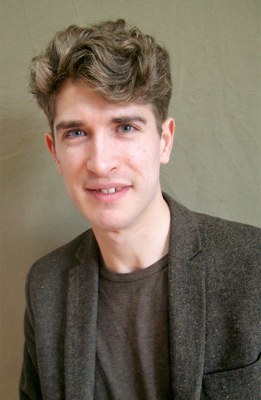
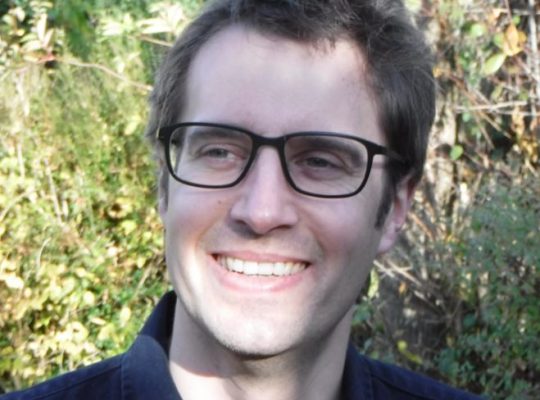
Dr. Victor Kempf is a postdoctoral researcher at the Institut für Philosophie , Humboldt-Universität zu Berlin, since March 2025. He completed his PhD at Goethe-Universität Frankfurt in 2017 and focuses on social and political philosophy from a critical theory perspective.
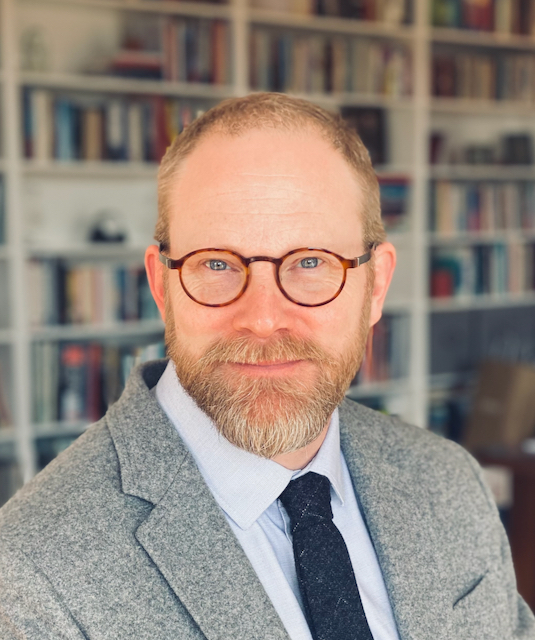
Professor Jason Rentfrow is a Professor of Personality & Individual Differences and Director of Graduate Education at the University of Cambridge's Department of Psychology. His research focuses on geographical psychology, exploring how regional environments shape personality, cultural differences, and societal outcomes. He also serves as Director of Studies in Psychology at Fitzwilliam College, Cambridge. Key research interests include the psychological effects of geography on traits like openness, conscientiousness, and neuroticism; the role of music preferences in personality expression; and the impact of socioeconomic status on self-concept. He has pioneered studies linking personality to political behavior, urban planning, and public health responses to crises like the 2020 pandemic. His work combines large-scale data analysis with spatial methodology, examining datasets from over 133 nations. Notable contributions include frameworks for measuring regional personality differences and their implications for innovation, entrepreneurship, and electoral outcomes. He has also developed psychometric tools like the Test of Attribute Preferences (TAP) for studying musical preferences. Recent research highlights include analyzing how Roman historical legacies influence modern German well-being disparities, the psychological roots of Brexit and Trump voter behavior, and the link between childhood trauma and adult empathy levels. His interdisciplinary approach spans psychology, sociology, economics, and geography. Professional activities include supervising graduate students, reviewing for top journals, and advising on cultural policy. He maintains an active lab focused on personality-environment interactions and their societal consequences.
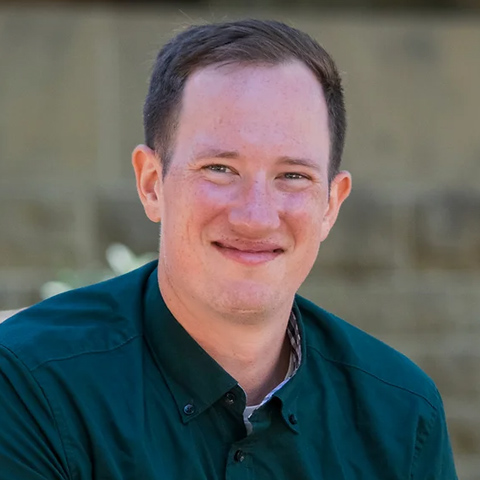
Professor Christopher Carman is the Stevenson Professor of Citizenship at the University of Glasgow, holding a PhD from the University of Houston. He has served in leadership roles including Head of Subject (Politics & International Relations), Head of the School of Social and Political Sciences, and Deputy Head of the School. His research focuses on political representation, electoral processes, public opinion, and Scottish politics, with notable contributions to studies on the Scottish Parliament and rural-urban political divides. Carman has led the Scottish Election Study (SES) since 2011 and co-leads the NORFACE-funded RUDE project on European rural-urban dynamics. He also contributes to the Glasgow-Nankai Joint Graduate School and the Stevenson Trust, fostering citizenship education and democratic research. Education: PhD in Political Science, University of Houston (2000). Previous academic roles include professorships at the Universities of Strathclyde and Pittsburgh. Research Interests: Political representation alternatives (e.g., public petitions systems), electoral behavior, Scottish and UK politics, direct democracy, and comparative legislative politics. Recent work addresses rural-urban divides in Europe and political compromise in democratic systems. Key Projects: Scottish Election Study (SES), Rural and Urban Divide in Europe (RUDE), and studies on political scandals and multilevel governance. His publications span electoral studies, comparative politics, and political behavior, with a focus on institutional trust and democratic engagement. Grants and Funding: ESRC and NORFACE grants support his research. The Stevenson Trust supports his work on citizenship education and public lectures.
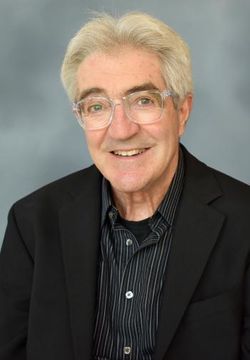
Jan G. Voelkel is an Assistant Professor at the Jeb E. Brooks School of Public Policy and the Department of Sociology at Cornell University. His research explores how micro-level preferences for equality and unity translate into macro-level political decisions, focusing on democratic attitudes, partisan dynamics, and moral framing. Ph.D. and M.A. in Sociology, Stanford University M.S. in Social and Behavioral Sciences, Tilburg University B.S. in Social Sciences, University of Cologne Voelkel’s work spans political psychology, metascience, and social policy, with a focus on interventions to reduce anti-democratic attitudes, partisan animosity, and gender bias in political leadership. His recent articles emphasize large-scale collaborations, reproducibility, and cross-partisan empathy. Scientific awards include: New Investigator Award (Behavioral Science & Policy Association) Public Sociology Award (American Sociological Association) Open Science Innovator Award (Stanford) Centennial Teaching Assistant Award (Stanford)
Dr. Kenneth Joseph is an Associate Professor in the Department of Computer Science and Engineering at the University at Buffalo , part of the School of Engineering and Applied Sciences . He serves as Associate Director of the Institute for Artificial Intelligence and Data Science and leads the Computation and Equity Lab (cubelab) , focusing on social inequality through computational measures and models. Education: PhD, MS, and BS in Societal Computing from Carnegie Mellon University (2016, 2012, 2010) Research Interests: Computational Social Science, Network Science, Gender Studies, and AI for Social Good Notable Work: Gender disparities in academia, predictive modeling for foster care and urban policy, and social media rumor analysis Awards: UB Exceptional Scholar—Young Investigator Award (2021) Advising: Mentored students like Yuhao Du, Jason Yan, Arjunil Pathak, and Navid Madani on projects spanning Twitter bios, foster youth services, and algorithmic fairness.
Morris P. Fiorina is the Wendt Family Professor of Political Science at Stanford University and a Senior Fellow at the Hoover Institution. He joined Stanford in 1998 after teaching at Caltech and Harvard. His academic credentials include a B.A. from Allegheny College (1968) and a Ph.D. from the University of Rochester (1972), both in Political Science. Fiorina's research focuses on American politics, emphasizing representation, public opinion, elections, and partisan dynamics. His influential works include Retrospective Voting in American National Elections , Culture War? The Myth of a Polarized America , and Unstable Majorities . He has authored or edited thirteen books and numerous articles, challenging conventional views on polarization, electoral behavior, and political institutions. He has held editorial roles across a dozen political science journals and chaired the American National Election Studies Board (1986–1990). A distinguished scholar, he is an elected member of the American Academy of Arts and Sciences, the American Academy of Political and Social Sciences, and the National Academy of Sciences. He received Career Achievement Awards from the American Political Science Association's sections on Elections, Public Opinion, and Voting Behavior, as well as Political Organizations and Parties. Key Contributions: Pioneered studies on retrospective voting, party sorting, and the 'myth of polarization.' Public Engagement: Analyzes contemporary issues like divided government, electoral reform, and the role of third parties. Fiorina’s work bridges academia and public discourse, addressing critical challenges in American democracy. His current research continues to explore polarization, representation, and governance in the modern political landscape.
James Tilley is a Professor of Politics at the University of Oxford's Department of Politics and International Relations (DPIR) and a Fellow and Tutor in Politics at Jesus College. His research focuses on public opinion, electoral behavior, and political identity, particularly in the context of Britain and the EU. He explores themes like voter responsibility attribution, class voting dynamics, and the emergence of post-Brexit political identities. Tilley has published influential works such as Blaming Europe (2014) and The New Politics of Class (2017), examining issues ranging from working-class political exclusion to the role of social cleavages. His media contributions include BBC Radio 4 documentaries on topics like political polarization and generational political attitudes. Teaching responsibilities include Political Sociology (PPE/HP) and Prelims Politics tutorials. His research spans over three decades, addressing evolving political identities, the impact of echo chambers on polarization, and the intersection of personality traits with political engagement. Tilley collaborates widely, with co-authors such as Sara Hobolt and Geoff Evans, and his work often intersects with contemporary issues like Brexit's societal effects and Northern Irish electoral behavior. Recent publications (2023–2025) analyze regional EU spending impacts, narcissism's role in polarization, and neighborhood effects on political divisions. His work bridges academic rigor with public engagement, contributing to debates on democracy, identity, and governance.
Hazel Rose Markus is the Davis-Brack Professor in the Behavioral Sciences at Stanford University's Department of Psychology within the School of Humanities and Sciences. With a distinguished career spanning decades, she has made significant contributions to cultural psychology and the understanding of how social contexts shape self and behavior. Her work bridges academic research and practical application through her role as Faculty Director of Stanford SPARQ. Markus received her B.A. from California State University at San Diego and her Ph.D. from the University of Michigan in Psychology. Her educational background laid the foundation for her groundbreaking work in cultural psychology. Her research focuses on the role of self in regulating behavior and how the social world shapes the self. She investigates people as culturally-shaped shapers of their cultures, examining how nation or region of origin, gender, social class, race, ethnicity, religion, and occupation shape thought, feeling, and action. Her work spans multiple domains including education, healthcare, workplace environments, and social policy. Analysis of her recent publications reveals a consistent focus on cultural frameworks, particularly examining independence-interdependence cultural models. Her research increasingly addresses social inequality, educational disparities, and systemic bias through empirical studies and intervention development. She has pioneered the Culture Cycle Framework for understanding and changing cultural patterns that perpetuate inequality. Member of the National Academy of Sciences Member of the British Academy Fellow of the American Academy of Arts and Sciences American Psychological Association's Distinguished Scientific Contribution Award Donald T. Campbell Award from SPSP APS William James Award for lifetime achievement Markus actively mentors doctoral students and postdoctoral scholars, with current advisees including Leslie Remache, Enna Chen, Ayo Dada, and Efrain Garcia Sanchez. She teaches courses including Graduate Seminar in Social Psychology Research, Intergroup Communication Facilitation, and Mind, Culture, and Society. As Faculty Director of Stanford SPARQ, she leads initiatives that partner with industry leaders to tackle disparities and inspire culture change in criminal justice, economic mobility, education, and health. Her laboratory work focuses on cultural psychology, examining how cultural contexts shape cognition, emotion, and behavior across diverse populations. Through SPARQ, she connects academic research with real-world applications to address societal challenges.
Peter Gries is a Professor of Chinese Politics and the Lee Kai Hung Chair at the University of Manchester, serving as the founding Director of the Manchester China Institute. He previously held roles at the University of Oklahoma and the University of Colorado, Boulder. Born in Singapore, he holds degrees from Middlebury, the University of Michigan, and a PhD from UC Berkeley. His research focuses on political psychology, particularly U.S.-China relations and Chinese nationalism, with notable works including China’s New Nationalism and The Politics of American Foreign Policy . He leads initiatives like the UK-China International Photography Award and the UK-China Diplomatic Dialogue. His grants include funding from the Ford Foundation and Smith Richardson Foundation for projects on security dialogues and course development. He sits on editorial boards of The China Quarterly , Political Psychology , and Nations & Nationalism . Recent work explores racial stereotypes, intersectionality, and threat perception in international relations. Education : Bachelor's and Master's in Asian Studies from Middlebury and the University of Michigan PhD in Politics from UC Berkeley Research Interests : Political psychology of international affairs U.S.-China relations Chinese nationalism and foreign policy Public opinion dynamics Grants : $60,000 from Smith Richardson Foundation (2005–2006) Multiple grants from Ford Foundation and Mershon Center for Sino-American Security Dialogues $4,000 from Freeman Foundation for Chinese Foreign Policy course development Media Contributions : Expert commentary on BBC World News, NYT, and CGTN Discussions on U.S.-China trade wars, China’s Japan policy, and global perceptions of China Labs/Institutes : Manchester China Institute Former director of the Institute for US-China Issues at University of Oklahoma
Daniela Goya-Tocchetto is an Assistant Professor of Organization and Human Resources at the School of Management, University at Buffalo. Her research focuses on inequality perceptions, meritocracy beliefs, social class/racial biases, and moral/political decision-making. She holds a PhD from Duke University's Fuqua School of Business and multiple advanced degrees from the Federal University of Rio Grande do Sul and the London School of Economics. Her work bridges social psychology and organizational behavior, addressing topics like system justification theory, partisan polarization, and interventions to reduce antidemocratic attitudes. Recent studies include analyzing income inequality perceptions and the Andrew Carnegie effect on wealth allocation. She has been recognized with the NTR-IACM Early Career Scholars Program (2022–24) and a Best Paper award at the 2022 Academy of Management Meeting. Professionally, she advises CLOO Behavioral Insights Unit on organizational behavior projects in Brazil and Portugal. Her research is published in journals like Science , Nature Communications , and Journal of Experimental Social Psychology .
Dr. Peter H. Ditto is a Professor of Psychological Science at the University of California, Irvine (UCI), affiliated with the School of Social Ecology and the Department of Psychological Science. He holds a Ph.D. from Princeton University. His research focuses on 'hot cognition'—the interplay of emotion and reason in social, political, moral, medical, and legal judgments. Central themes include motivated reasoning, partisan political bias, and the role of emotion in moral decision-making. His work has explored how political ideology skews judgments, denial in response to medical threats, and how moral principles are selectively applied to justify desired conclusions. Research affiliations include the Hot Cognition Lab at UCI and contributions to platforms like Yourmorals.org for data collection. His interdisciplinary efforts bridge psychology, ethics, and societal issues through studies on topics ranging from end-of-life medical decisions to workplace wellness incentives. He has published extensively in top journals such as Science , Journal of Personality and Social Psychology , and Psychological Science . His articles collectively examine moral psychology, political behavior, and health decision-making, highlighting biases in self-reported happiness, free will perceptions, and punitive motivations. Advising and grant activities are not explicitly detailed here, but his lab’s research emphasizes practical applications to real-world social problems, such as constructive political dialogue through Civil Politics.
Aleksandra Pomiecko is a Lecturer in Modern History at King's College London, specializing in Eastern European and Soviet history. She has held teaching positions at the University of St Andrews, the University of Manitoba, and the University of Toronto, and was a postdoctoral fellow at the Mandel Center for Advanced Holocaust Studies. PhD, University of Toronto MA, Uniwersytet Jagielloński Her research focuses on war and violence in twentieth-century Eastern Europe, particularly paramilitary activity, partisan movements, and local experiences of conflict. She explores topics such as Belarusian nationalism, post-war insurgency, and the role of religious institutions during the Holocaust. Recent publications examine paramilitarism in Polish borderlands, Soviet nation-building policies, and religious resistance in wartime Poland. Her work contributes to understanding the longue durée of paramilitary dynamics and their global implications. Scientific awards: Postdoctoral Fellowship at the Mandel Center for Advanced Holocaust Studies
Deen Freelon is the Allan Randall Freelon Sr. Presidential Professor at the University of Pennsylvania's Annenberg School for Communication, where he leads research in digital politics and computational methods. His work centers on identity dimensions in social media, misinformation ecosystems, and political communication. Previously, he held tenured positions at American University and the University of North Carolina at Chapel Hill. Freelon earned a B.A. with honors from Stanford University (2002), followed by an M.A. (2008) and Ph.D. (2012) from the University of Washington. His endowed chair honors his great-grandfather, Allan Randall Freelon Sr., a Penn alumnus and prominent Philadelphia artist. Freelon's research explores intersections of technology and society with emphases on: Computational analysis of social media discourse Race, gender, and ideological asymmetry in online spaces Misinformation propagation and mitigation strategies Impact of personalized information environments on democracy His publications consistently address how digital platforms reshape political engagement and identity expression. Freelon has secured over $6 million in research funding from organizations including the Knight Foundation, Hewlett Foundation, Spencer Foundation, and US Institute for Peace. As a founding member of UNC Chapel Hill's Center for Information, Technology, and Public Life, he contributes to interdisciplinary efforts examining technology's societal impacts.
Nicholas Dias is a postdoctoral researcher at the Department of Political Science, Aarhus University. His work focuses on public opinion, political psychology, and the dynamics of democratic systems. Research examines citizen competence, polarization, and misinformation Teaching includes seminars on American politics and data science Contact: niccdias@ps.au.dk Research Trends: Dias’s publications analyze how citizens engage with democracy, polarization’s impact on governance, and misinformation mitigation. His work challenges assumptions about voter rationality and explores the limits of correcting partisan misperceptions. Collaborations: Co-authored studies with scholars like Y. Lelkes and A. Sippitt, published in journals such as Journal of Politics , PNAS Nexus , and Political Quarterly .
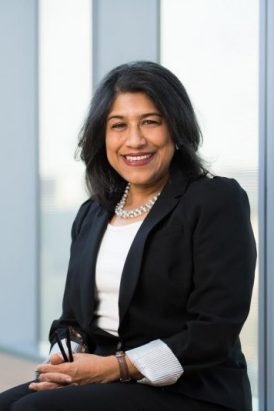
Aradhna Krishna is the Dwight F. Benton Professor of Marketing at the Stephen M. Ross School of Business, University of Michigan. She holds affiliations with the International Institute and the Center for South Asian Studies. Her research focuses on sensory marketing, health and nutrition, corporate social responsibility, and political decision-making. She has authored influential books like Customer Sense: How the 5 Senses Influence Buying Behavior and edited collections on sensory marketing. Education: PhD in Marketing, New York University (1989) MBA, Indian Institute of Management Ahmedabad (1984) B.A. in Economics, University of Delhi (1982) Research Interests: Her work explores how sensory cues (sight, sound, touch, smell, taste) shape consumer perceptions and behaviors. Key areas include food marketing, health decision-making, and the impact of political identity on risk perceptions. She has pioneered studies on sensory marketing’s role in persuasion and product design. Awards & Recognition: Fellow of the Society of Consumer Psychology (highest honor) Recognized by HBR as 'foremost expert in sensory marketing' Consulting & Expertise: Advised organizations like Procter & Gamble, General Mills, and the World Food Program. Served as expert witness for legal cases involving Hallmark Entertainment. Engages with policy boards for global health initiatives. Labs & Teams: Active in interdisciplinary collaborations at the Ross School, focusing on consumer behavior and sensory research.