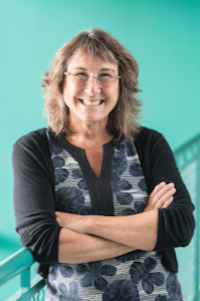
Owen Price is an Associate Professor and Director in Bushfire Risk Management at the School of Earth, Atmospheric and Life Sciences (SEALS), University of Wollongong. His roles include leading research on wildfire impacts on ecosystems, human health, and infrastructure. He holds a PhD from the Australian National University (1998), an MSc from the University of Strathclyde (1986), and a BSc (hons) from the University of York (1985). Director, Centre for Environmental Risk Management of Bushfire (since 2020) Principal Fellow, SEALS (2019–2021) His research integrates fieldwork, GIS/remote sensing, and statistical modeling to address landscape-scale wildfire risks. Key interests include fire severity effects on biodiversity, smoke pollution impacts, and cost-effective fire management strategies. He supervises postgraduate students in topics like coastal wetland vulnerability and fire regime analysis. Recent grants include studies on coastal wetlands' fire resilience (2023–2026), Bayesian fire spread modeling (2023–2026), and evaluating aerial firefighting efficacy (2023). His work bridges ecological, social, and technical dimensions of wildfire risk. Notable awards and recognitions are not explicitly listed in the provided materials. His contributions to fire policy and community adaptation are highlighted through collaborative projects with government and environmental agencies.
Professor Itai Einav is a renowned academic in civil engineering and geomechanics at The University of Sydney. He serves as Director of SciGEM (Science of Granular and Multiphase Energy Materials) and holds an honorary professorship at University College London. His research focuses on granular materials, particulate systems, and geomechanics, with particular emphasis on breakage mechanics and applications in mining, heat transfer, and fault dynamics. He advises PhD students on topics like robotic navigation inspired by earthworms and soil mechanics. Einav's work bridges fundamental physics and engineering applications, leveraging advanced imaging techniques (e.g., X-ray tomography) and computational models. He is affiliated with The Net Zero Institute and collaborates globally on projects like granular flow dynamics and porous media behavior. Notable contributions include the 2007 development of breakage mechanics theory and innovations in granular rheology and fault modeling.
Professor Rachel Gibson is a Professor and Head of School in the Allied Health Administration at the University of Adelaide. Her work focuses on gastrointestinal toxicity, chemotherapy-induced adverse effects, and microbiome interactions with diet and health. She leads research in mucositis management, drug delivery systems, and nutritional pathways in oncology care. Her research interests include the gut microbiome's role in chemotherapy toxicity, mechanisms of gastrointestinal damage, and translational applications of intestine-on-chip models. She has contributed to international clinical guidelines on mucositis assessment and palliative care innovations during the pandemic. Publications span 2016-2025, emphasizing chemotherapy-induced diarrhea, microbiome-drug interactions, and dietary interventions. She has pioneered digital health solutions for nutrition support and explored genetic predictors of adverse drug reactions. Current efforts address pain management in pediatric cerebral palsy and optimizing supportive cancer care pathways. Grants and collaborations involve multidisciplinary teams in oncology, bioengineering, and public health. She advises on translational research bridging basic science to clinical practice, with a focus on improving patient outcomes through personalized interventions.
Lidia Morawska is a Distinguished Professor and Australian Laureate Fellow at Queensland University of Technology (QUT), leading the International Laboratory for Air Quality and Health (ILAQH), a WHO Collaborating Centre. She specializes in air quality science and its health impacts, particularly particulate matter research. Her roles include Director of ILAQH, Co-Director of the Australia-China Centre for Air Quality Science and Management, and Adjunct Professorships at Jinan University and the University of Surrey. Education: PhD (Physics) and MSc from Jagiellonian University, Kraków, Poland. Early career included research in Canada and Poland before joining QUT in 1991, where she was promoted to Professor in 2003. Established the Environmental Aerosol Laboratory (now ILAQH) in 1992. Research interests focus on aerosol science, air pollution, and policy guidance for WHO guidelines since 1990. Awards include the 2023 L'Oréal-UNESCO International Award, 2022 AAAR Susanne V. Herring Award, and 2021 TIME100 recognition. She is a Fellow of the Australian Academy of Science and Queensland Academy of Arts and Sciences. Grants and projects include leadership of the ARC Training Centre for Advanced Building Systems Against Airborne Infection Transmission (THRIVE). Collaborates globally on clean air initiatives and indoor/outdoor exposure risks. Active in policy advising, including co-chairing WHO guideline development.
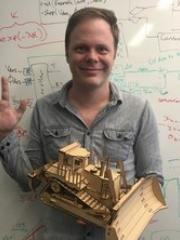
Dr. Tyson Phillips serves as Senior Lecturer and Director of Teaching and Learning at The University of Queensland's School of Mechanical and Mining Engineering within the Faculty of Engineering, Architecture and Information Technology. He is an active Affiliate of the Future Autonomous Systems and Technologies research group, focusing on translating robotics innovations into practical mining applications. His academic leadership includes curriculum development for engineering programs and direct industry engagement with major mining equipment manufacturers. He earned his Doctor of Philosophy (PhD) from The University of Queensland in 2016, with thesis research centered on LiDAR-based perception systems for autonomous excavators. His doctoral work established foundational methods for object pose verification in mining contexts. Phillips' research specializes in robotics perception for extreme mining environments, developing LiDAR-centric solutions for autonomous equipment operation amid dust, fog, and unstructured terrain. Key contributions include evidential reasoning frameworks for uncertainty management, real-time pose estimation algorithms, and sensor fusion techniques for excavators and bulldozers. His work bridges theoretical computer vision with industrial deployment, targeting operational safety and efficiency in mineral extraction. Publication analysis reveals consistent focus on mining robotics since 2012, with recent works (2021-2024) emphasizing minimal-sensor configurations, probabilistic terrain mapping, and vibration-assisted gripper technology. His 14 scholarly outputs demonstrate evolution from sensor evaluation (2012-2015) toward integrated autonomy systems (2018-2024), predominantly in Journal of Field Robotics and Sensors . He actively supervises graduate researchers as Principal Advisor for a PhD on multimodal perception mapping and Associate Advisor for two PhD projects involving spreader systems and physics-informed neural networks. Completed supervision includes a 2024 PhD on bulldozer terrain mapping and a 2021 Master's on shovel/hopper interaction strategies. Research funding spans 14 projects from 2012-2026, including current Australian Coal Association Research Program support (2025-2026) and major Caterpillar Inc. collaborations for ERS self-protection and articulated truck automation. Phillips operates within The University of Queensland's Future Autonomous Systems and Technologies group, which develops field-deployable autonomy solutions for mining partners. This team conducts real-world testing of perception systems using Caterpillar and FMG operational sites as validation environments.
Associate Professor Jochen Kaempf is a physical oceanographer at Flinders University's College of Science and Engineering since 2009. He holds a PhD from the University of Hamburg (1996) and has pioneered research on coastal upwelling systems, sediment dynamics, and ocean circulation. His work includes discovering the Great Southern Australian Coastal Upwelling System and advancing understanding of the Indian Ocean Dipole. He teaches marine sciences and climate change courses, and advises on desalination and environmental protection. Awards include the Jill Hudson Award (2014) and Eureka Award finalist (2011). Research focuses on physical-biological interactions, hydrodynamic modeling, and coastal processes. Key contributions include studies on sediment transport in submarine canyons, desalination brine dispersion, and pollutant dynamics. He serves on international committees like the 2nd International Indian Ocean Expedition and reviews scientific manuscripts globally.
Professor Craig Wheeler is a distinguished academic in the School of Engineering at the University of Newcastle, specializing in Mechanical Engineering with a focus on bulk solids handling and belt conveyor technology. As Associate Director of the Centre for Bulk Solids and Particulate Technologies and Deputy Chairman for the Australian Society for Bulk Solid Handling, he has established the university as a global leader in fundamental and applied research within this field. Wheeler's research interests primarily center on reducing the energy intensity and environmental impact of ore and mineral transportation globally. His work develops novel theoretical approaches to model and optimize belt conveyor and bulk handling systems, with significant contributions in energy-efficient transportation, dust emission control, and innovative conveying technologies like the Rail Conveyor system. His research bridges fundamental computational techniques with practical industrial applications, addressing real-world challenges in bulk material handling. His extensive publication record demonstrates trends toward increasingly sophisticated modeling techniques, combining continuum mechanics, discrete element methods, and computational fluid dynamics to solve complex problems in bulk material flow and energy consumption. Recent work shows particular emphasis on large-diameter idler rollers for energy savings, rail-running conveyor systems, and advanced dust control methodologies. 2023 Engineers Australia - Australian Society for Bulk Solids Handling 2017 Significant Contributions to Engineers Australia's Warman Design and Build Competition (Weir Minerals) 2017 Australian Council of Engineering Deans National Award for Engineering Education Excellence 2016 Innovative Technology Award (Australian Bulk Handling) 2010 Rising Star Award (Newcastle Innovation, The University of Newcastle) 2009 Pro-Vice Chancellor's Award for Research Excellence 2006 Best Research and Development Project (Australian Bulk Handling Review) 2000 A.W. Roberts Award (Australian Society for Bulk Solids Handling) Professor Wheeler has successfully led numerous Linkage Projects with major companies including Rio Tinto, Veyance Technologies, and Laing O'Rourke, securing significant cash and in-kind contributions for research projects. His industrial consulting experience, built on a 10-year engineering career with BHP, provides valuable insights that bridge fundamental research with practical applications. He actively supervises research students and contributes to professional development courses both within Australia and internationally. As a key member of the Centre for Bulk Solids and Particulate Technologies in association with TUNRA Bulk Solids, Wheeler leads research teams focused on developing eco-friendly conveying solutions. His work has resulted in new licensed technologies, internationally recognized testing methods, design guidelines, and Australian Standards that have transformed industry practices worldwide.
Professor Geoffrey Morgan is an epidemiologist and environmental health expert at the University of Sydney , affiliated with the School of Public Health and University Centre for Rural Health . With over 30 years of experience, he investigates environmental risk factors for health, particularly air pollution, heat, and climate-related hazards. He leads the NHMRC Centre for Clean Air Research Excellence and co-leads the Bushfires, Air Pollution and Extreme Events Theme in the HEAL network. His research has directly informed Australian ambient air quality standards and guided state-level air pollution control policies. Key areas include Environmental epidemiology Exposure assessment Climate change health impacts Health burden projections Recent publications (2025–2024) focus on wildfire smoke effects, temperature-related cardiovascular and mental health risks, PM2.5 mortality, and climate-driven infectious disease patterns. These studies span Australia, Singapore, and global contexts, emphasizing policy translation through health impact assessments. Professor Morgan teaches Environmental Health (PUBH5121) and Environmental Epidemiology (PH5125) in the University of Sydney's Master of Public Health program. He supervises PhD and MPhil students in environmental epidemiology.
Dr. Amar Khennane serves as a Senior Lecturer at the University of New South Wales (UNSW) Canberra campus within the School of Engineering and Information Technology. His academic career spans multiple institutions including previous appointments as Maitre de Conferences in Tizi-Ouzou, Algeria, Research Associate in Newcastle, Australia, and Lecturer/Senior Lecturer at the University of Southern Queensland (USQ). His research interests focus on sustainable construction materials, particularly bio-cementitious materials, composite materials, timber engineering, reinforced concrete, and hybrid structures. Dr. Khennane has published extensively in these fields with 47 peer-reviewed journal papers, 33 conference papers, 6 other publications, and 2 books including the widely recognized "Introduction to Finite Element Analysis Using MATLAB (R) and Abaqus" (2013). His recent work emphasizes recycling timber waste into geopolymer cement composites, sustainable wood-geopolymer masonry units, and fire response of timber structures. His scholarly output shows a clear trend toward sustainable construction materials and advanced structural analysis techniques, with significant contributions in finite element modeling, seismic performance evaluation, and fire resistance of composite structures. The majority of his recent publications (2020-2024) focus on developing sustainable building materials using recycled components and analyzing structural behavior under various loading conditions. Dr. Khennane actively contributes to engineering education through teaching courses in Structural Analysis, Finite Element Method, Reinforced Concrete, and Stress/Strain Analysis. His educational background includes authoring textbooks that bridge theoretical concepts with practical computational tools like MATLAB and Abaqus.
Associate Professor Chris Wensrich is a faculty member in the School of Engineering at the University of Newcastle, specializing in Mechanical Engineering. He holds a PhD, Bachelor of Mathematics, and Bachelor of Engineering from the same university. His research focuses on granular mechanics, neutron diffraction, and strain tomography, with pioneering work in Bragg-edge transmission strain tomography and granular dynamics modeling. Wensrich has held visiting appointments at Clare Hall College, Cambridge University, and the Isaac Newton Institute for Mathematical Sciences in the UK. He currently serves as President of the Australian Neutron Beam User Group (ANBUG) and is a member of the ACNS Program Advisory Team at ANSTO. His expertise spans applied mechanics, computational modeling (DEM), and experimental techniques involving neutron diffraction. His research interests include granular material behavior, stress distribution measurement, and validation of computational models using neutron imaging. Notable contributions include studies on silo quaking dynamics, force chain analysis in granular assemblies, and residual stress characterization in additive manufacturing. Wensrich has supervised 11 PhD students and secured over $5.4M in grants, including ARC Discovery Projects and industry-linked initiatives. Publications span granular mechanics, strain tomography, and material characterization, with over 60 journal articles and 38 conference papers. His work bridges theoretical, computational, and experimental methods to advance understanding of particulate systems and engineering materials.
Associate Professor Christopher Wensrich is a faculty member in the School of Engineering at the University of Newcastle, Australia, specializing in Mechanical Engineering. He has a strong background in applied mechanics from both computational and experimental perspectives, with significant expertise in granular mechanics, neutron diffraction strain measurement, and Bragg-edge transmission strain tomography. Education: PhD, University of Newcastle Bachelor of Mathematics, University of Newcastle Bachelor of Engineering, University of Newcastle Professor Wensrich's research focuses on several interconnected areas within mechanical engineering and materials science. His primary expertise lies in granular mechanics, spanning from micromechanics and homogenization of granular systems to analytical modeling of granular dynamics (particularly the silo quaking problem) and computational modeling using the Discrete Element Method (DEM). He is also a pioneer in applying neutron diffraction strain scanning techniques to granular systems. In the broader field of applied mechanics, he has made significant contributions to neutron diffraction-based strain measurement, including breakthroughs in Bragg-edge Transmission Strain Tomography, where he demonstrated the world's first practical application outside of simple axisymmetric systems. His publication record demonstrates a consistent focus on developing and applying advanced techniques for strain measurement and reconstruction in granular and composite materials. His recent work has centered on tomographic reconstruction methods using neutron diffraction, with particular emphasis on Bragg-edge techniques for 2D and 3D strain field reconstruction. His research bridges theoretical mathematics, computational methods, and experimental validation, creating a robust framework for non-destructive stress measurement in complex materials. Professional Recognition: President of the Australian Neutron Beam User Group (ANBUG) since December 2022 Member of the ACNS Program Advisory Team at ANSTO (Australian Nuclear Science and Technology Organisation) since March 2019 Visiting Fellow at Clare Hall College, Cambridge University (January-June 2023) Visiting Researcher at Isaac Newton Institute for Mathematical Sciences (January-June 2023) Professor Wensrich has secured substantial research funding, with a total of $5,478,793 across 42 grants. His funding portfolio includes projects from the Australian Research Council (ARC), ANSTO, and international partners like Oakridge National Laboratory and Japan Proton Accelerator Research Complex. He has successfully supervised 11 PhD and Masters students to completion, with research topics spanning granular mechanics, conveyor systems, and neutron strain tomography. His current research involves collaborations with institutions worldwide, focusing on advanced strain measurement techniques and their application to complex material systems.
Associate Professor Pierre Le Clech is a leading expert in membrane science and chemical engineering at the University of New South Wales , affiliated with the UNESCO Centre for Membrane Science & Technology. His work focuses on optimizing membrane processes for water and wastewater treatment, particularly addressing fouling mechanisms caused by biopolymeric materials and algal blooms. Current research explores fouling characterization, energy-efficient desalination, and membrane regeneration strategies. He contributes to Desalination and Water Treatment as Associate Editor, and serves on the editorial boards of Membrane Water Treatment and Process Safety and Environmental Protection . Research Trends : Recent publications highlight advancements in algal fouling analysis, graphene oxide membrane applications, and computational modeling of fouling dynamics. His work bridges chemical engineering with environmental technology , emphasizing sustainable solutions for global water challenges. Scientific Awards : Associate Editor, Desalination and Water Treatment Editorial Board Member, Membrane Water Treatment and Process Safety and Environmental Protection Supervision & Collaboration : He actively supervises projects in municipal wastewater treatment, potable water systems, and membrane fouling mitigation. His team collaborates with industry partners on innovations like solar-integrated desalination and biofouling prevention.
Deborah K. Steinberg is a Professor at the Batten School and Virginia Institute of Marine Science (VIMS), College of William & Mary. Her research focuses on zooplankton ecology, biogeochemical cycling, and climate change impacts across diverse marine environments including the Antarctic, Sargasso Sea, and Amazon River plume. Education: B.A. from University of California, Santa Barbara (1987), Ph.D. from University of California, Santa Cruz (1993) Her work examines zooplankton's role in nutrient cycling, vertical migration dynamics, and gelatinous bloom ecology. Current projects include NSF-funded LTER Palmer Antarctica studies, NASA EXPORTS program contributions, and the Bermuda Atlantic Time-series Study (BATS). Recent research highlights salp-mediated carbon export, microbial interactions with sinking particles, and temperature-driven shifts in Antarctic food webs. Selected publications emphasize climate-driven changes in zooplankton communities, carbon flux mechanisms, and polar ecosystem resilience. She trains students in marine ecology, biogeochemistry, and Antarctic research, with former advisees holding prominent positions in marine science institutions. 2015 SCHEV Outstanding Faculty Award 2014 CSX Eminent Scholar Chair in Marine Science 2005 College of William & Mary Distinguished Associate Professor 1987 Antarctic Service Medal Steinberg actively contributes to international collaborations, including climate change research in the Western Antarctic Peninsula and biogeochemical modeling initiatives. Her laboratory's long-term datasets provide critical insights into ecosystem transformations under global change.
Professor Sang-Heon Lee is a faculty member at the University of South Australia, affiliated with the UniSA STEM division. His research spans interdisciplinary domains including machine vision, supply chain optimization, and material science. His research interests focus on developing advanced imaging systems for food safety (e.g., aflatoxin detection in almonds), optimizing reverse supply chains for electronic waste and solar panels, and engineering nanocomposites for construction materials. He also investigates biomedical imaging techniques for mucociliary transit assessment and clinical coding methodologies. The 15 most recent publications highlight his work in multispectral/hyperspectral imaging, fuzzy logic optimization, and nanomaterials. Key trends include non-destructive food testing, sustainable e-waste management, and biomedical imaging analysis. As a research degree supervisor, he contributes to academic training in these areas. No scientific awards or lab affiliations were explicitly mentioned in the provided text.
Professor Katrin Meissner serves as Director of the Climate Change Research Centre at the University of New South Wales and is an Associate Investigator of the Australian Research Council's Centre of Excellence for Climate Extremes. Her research employs Earth System Climate Models and paleoclimate records to investigate abrupt climate change events, thresholds, and feedback mechanisms in the climate system, with particular emphasis on terrestrial biogeochemical cycles and ocean circulation dynamics. Research interests focus on: Dynamics of abrupt climate transitions and tipping points Interactions between ocean circulation and carbon cycling Paleoclimate reconstruction using model-data synthesis Impacts of Southern Ocean processes on global climate Biogeochemical feedbacks in warming and cooling scenarios Publications demonstrate consistent focus on paleoclimate modeling, particularly Last Interglacial and glacial termination dynamics, Southern Ocean processes, ice-sheet interactions, and carbon cycle feedbacks. Recent work expands into climate health impacts, including extreme heat mortality and air pollution effects on birth outcomes. Scientific awards include: Multiple ARC Discovery Grants (2013-2025) UNSW Science Goldstar & Silverstar Awards ARC Future Fellowship (Level II) NSERC Accelerator and Discovery Grants CFCAS Targeted Project Grant Leads the Climate Change Research Centre, coordinating interdisciplinary climate research. Manages significant grant portfolios and collaborates internationally on model intercomparison projects (e.g., CMIP6-PMIP4). Current work investigates Eocene climate dynamics, ocean deoxygenation, and climate-health interactions using high-resolution modeling approaches.