Dr. Diego Casado-Mansilla is a researcher at MORElab within the Deusto Engineering School at the University of Deusto, Spain. His work focuses on Internet of Things (IoT) systems that drive pro-environmental behavior change through persuasive technologies and Citizen Science initiatives. He has extensive international experience, including visiting researcher roles at THALES Communications in Paris and research assistant positions at the University of Alcalá. His research spans multiple domains: Smart Workplaces : Designing IoT interventions for energy efficiency and employee wellness Citizen Science : Developing tools like the SOCIO-BEE platform for community-driven environmental monitoring Edge Computing : Optimizing AI models for resource-constrained devices Rural Digitalization : Addressing infrastructure gaps through the AURORAL ecosystem Key publication themes include: Environmental monitoring with wearable sensors Human-in-the-loop machine learning Privacy-preserving IoT systems Behavioral nudging in tertiary buildings Smart mobility and energy efficiency
Dr. Shabnam Salimi serves as an Adjunct Assistant Professor in the Department of Epidemiology and Public Health at the University of Maryland School of Medicine. A physician-scientist trained in genetic epidemiology and computational biology, she focuses on biomarkers of chronic diseases and aging processes using omics data integration. Her work bridges clinical medicine with public health applications, particularly in understanding aging mechanisms and chronic disease pathophysiology. Education: MD, Kermanshah University of Medical Sciences (2003) MSc, Umea University (2008) Postdoctoral Fellowship in Genetic Epidemiology, University of Maryland Baltimore (2015) Postdoctoral Fellowship in Epidemiology of Aging, University of Maryland Baltimore (2017) Dr. Salimi's research centers on identifying molecular biomarkers for aging and chronic diseases through advanced omics methodologies. She investigates how genetic, epigenetic, and environmental factors interact to influence aging trajectories and disease susceptibility, with particular emphasis on cardiovascular health, bone metabolism, and inflammatory pathways. Her work leverages large population cohorts including the Old Order Amish and Baltimore Hip Fracture Study to translate findings into clinical and public health applications. Her 15 most recent publications (2017-2020) demonstrate expertise across environmental epidemiology, genetic associations with aging, and pandemic-related aging research. Key themes include air pollution impacts on vascular function, molecular crosstalk between aging hallmarks and infectious diseases, and multi-omics approaches to biomarker discovery in diverse populations. Much of this work involves NHLBI's TOPMed consortium and utilizes whole-genome sequencing in multi-ancestry cohorts. Professional Recognition: National Institute on Drug Abuse Travel Awards (2011, 2014) World Health Organization Travel Award (2011) Radiation Research Society Young Investigator Award (2014) American Heart Association Fellowship (2016) Multiple best presentation awards at aging research conferences (2017-2018) Dr. Salimi has secured pilot funding as Principal Investigator through the University of Maryland Claude D. Pepper Older Americans Independence Center for research on inflammatory markers following hip fracture. Her work has been supported by NIH institutes including NIA, NHLBI, and NIDDK, with additional recognition from the Radiation Research Society and American Heart Association. She actively collaborates with interdisciplinary teams across geriatrics, nephrology, and environmental health research. She contributes to the Geriatrics and Gerontology Education and Research Program and participates in the Aging ShowCase at Johns Hopkins University, working within multidisciplinary teams focused on translational geroscience and aging biomarker development.
Marie Pedersen is an Associate Professor at the Department of Public Health , University of Copenhagen , with additional research roles at the Statens Serum Institut (since 2020) and Danish Cancer Society Research Center (2014-2019). Her career spans international postdoctoral research at CREAL (Barcelona) and INSERM (Grenoble) , plus extensive collaboration across 14 European birth cohorts through projects like ESCAPE and NewGeneris . PhD in Environmental Health (2010) MSc & BA in Biology (2005 & 2003) Her research focuses on environmental epidemiology with specialization in prenatal exposure assessment , particularly through projects evaluating: Air pollution effects on childhood respiratory health Dietary acrylamide impacts on fetal development Biomarker validation for transplacental exposure Urban environmental stressors in LifeCycle and Athlete projects Recent publications (2023-2025) demonstrate a 5-year research output of 96 items , including high-profile journal articles in Nature Communications , Environment International , and Epidemiology . Notable trends include proteomic alterations in respiratory infections , air pollution-obesity links , and biomarker analysis for prenatal exposures . Scientific honors include: 2020: Top Reviewer, Environmental Health Perspectives 2017: ERC Starting Grant recipient 2013: Dual ISEE awards for abstract and poster excellence 2009: National recognition in Denmark As research mentor, she has guided: Tim Cadman (Marie Curie & Lifecycle grants) Vanessa Coffmann (NIH-supported research) She leads multiple 2017- projects including CHIPS (ERC-funded) and Danish cohort studies on animal farm proximity effects , while maintaining affiliations with international networks like COPSAC and ISGlobal .
Dr. Daniel Mmereki is a Researcher in the Department of Radiation Oncology at the Faculty of Health Sciences, University of the Witwatersrand. His work bridges environmental exposure science, occupational health, and cancer treatment optimization. With a PhD from China University of Geosciences, he has established himself as a multidisciplinary researcher focusing on exposure assessment and control measures across various settings. Dr. Mmereki leads the Technology and Management Systems Theme of the Exposure Science Degrees program and lectures on Exposure Science, Exposure Pathway Analysis, and Exposure Science and Data Analytics. He also teaches Basic Principles of Occupational Hygiene to Bachelor of Health Science undergraduate students. His educational background combines engineering with exposure science, creating a unique interdisciplinary perspective. His research spans three primary domains: environmental exposure science (particularly phthalates and dust exposure in various settings), waste management systems (with focus on African contexts), and radiotherapy optimization to improve patient flow in cancer treatment. Recent work shows an increasing emphasis on applying exposure science principles to healthcare settings, particularly in radiation oncology where he examines efficiency improvements in patient treatment pathways. His publication record demonstrates a strong trajectory from foundational work on solid waste management in Botswana and China to current research addressing critical healthcare challenges in South Africa. Iraj Zandi Award (USA) for contributing to the field of solid waste technology and management-2016. The Thirty-First Conference on Solid Waste Technology, Philadelphia, PA, USA: April 3-4, 2016 by Widner University Dr. Mmereki has served as an invited reviewer for high-quality journals and has edited books and published book chapters in his field. His current research focuses on implementing remote radiotherapy planning systems to increase patient flow at Johannesburg Academic Hospital, South Africa, representing a strategic pivot from his earlier environmental exposure work to direct healthcare delivery challenges in the South African context. He leads research teams examining healthcare waste management in Gauteng Province and developing protocols for optimizing cancer treatment efficiency.
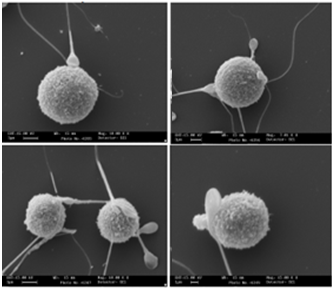
Dr. Violetta Borelli is a Researcher in General Pathology (MED/04) at the University of Trieste's Department of Life Sciences, where she has been active since 2005. She leads the research line 'Pathogenic potential of asbestos fibers' under the Biomedicine research area, focusing on immunological and molecular pathology mechanisms. Her research explores: 1) Genetic polymorphisms in inflammasome/iron metabolism related to asbestos-body formation; 2) Mast cell interactions with mineral fibers; 3) Roles of mast cells in endometriosis and periodontal disease. She coordinates projects including 'IN.P.PATO' evaluating asbestos-inertization methods and 'Inflammation and iron homeostasis in pleural mesothelioma'. Her publications predominantly focus on asbestos-induced pathology (75%), mast cell biology (15%), and diagnostic biomarkers (10%), with frequent applications of electron microscopy and genetic analysis techniques. She collaborates with IRCCS-Burlo Garofolo, Colorado State University (where she was a visiting scientist), and local industrial partners. Her lab utilizes Core Facilities for electron microscopy and maintains active partnerships with clinical departments for sample analysis.
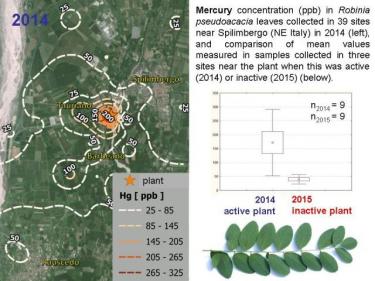
Mauro Tretiach is a Full Professor of General Botany at the Department of Life Sciences (DSV) of the University of Trieste, where he currently serves as Director after having been Deputy Director from 2012 to 2018. His academic career spans over 25 years at the same institution, progressing from researcher (since 1995) to associate professor (2001) and full professor (2018). He leads the Biology of Lichen Symbiosis research group and is actively involved in multiple doctoral programs including Environment and Life, Biological Sciences and Technologies, and Environmental Biology. Professor Tretiach's research focuses on fundamental and applied aspects of lichen biology, with particular emphasis on taxonomy, ecophysiology, and biomonitoring applications. His work combines molecular, ecophysiological, and 'omics' approaches to study lichen symbiosis in response to environmental stressors. He has significantly contributed to developing standardized protocols for using lichens as biomonitors of air pollution, collaborating with the Italian Institute for Environmental Protection and Research (ISPRA). Additionally, he is deeply involved in studying the ecotoxicology of two-dimensional nanomaterials, particularly as part of the EU Graphene Flagship project where his team investigates the environmental impacts of graphene-related materials. His research output includes 170 publications, over 100 in international journals, with recent work focusing on graphene environmental biodegradation, validation of particulate dispersion models using lichens, and the phylogenetic diversity of lichen photobionts. His publications demonstrate a strong interdisciplinary approach spanning environmental science, nanotechnology, molecular biology, and taxonomy, with increasing emphasis on the intersection of traditional lichenology with cutting-edge nanomaterial research. This reflects a strategic evolution from fundamental lichen studies toward addressing contemporary environmental challenges involving emerging pollutants. Among his notable scientific recognitions, two lichen species have been named in his honor: Physcia tretiachii and Pleospora tretiachii, reflecting his significant contributions to lichenology. His research has practical applications in environmental monitoring protocols used by local authorities and environmental agencies across Italy. Professor Tretiach actively mentors doctoral and master's students, currently supervising a research team that includes permanent researchers, postdoctoral fellows, and multiple doctoral students. His group has secured substantial research funding from various sources including the European Union (Graphene Flagship project), national research programs (PRIN), and institutional funds. His leadership extends to coordinating the national PRIN 2020 project '2D-Nano-Mad-Plants' focused on interactions between seed plant sexual structures and 2D nanomaterials. The research laboratory he directs maintains active collaborations with international institutions including the University of Innsbruck (Austria), Graz University (Austria), Stockholm University (Sweden), and Brigham Young University (USA). His team operates specialized facilities for lichen culturing, molecular analysis, and nanomaterial ecotoxicology testing, supporting both fundamental research and applied environmental monitoring services.
Western Switzerland University of Applied SciencesSwitzerland
Full Professor at the School of Engineering and Management of the Canton of Vaud, University of Applied Sciences and Arts Western Switzerland (HES-SO), where he serves as Head of the Energy and Environmental Techniques department. His research focuses on sustainable energy systems with particular expertise in biomass utilization, combustion technologies, and emissions control for decentralized energy production. Roger Röthlisberger's research spans multiple areas of sustainable energy engineering with a strong emphasis on practical applications: Combustion thermochemistry and emissions control for wood-based energy systems Biogas production optimization through pretreatment, co-digestion, and CO 2 enrichment Development of measurement and monitoring technologies for biomass energy content Integration of photosynthetic biofilm filters for aquaculture wastewater treatment Wood energy systems including stoves, boilers, and biomass processing His publication record over the past 25 years demonstrates a consistent focus on sustainable energy technologies, with recent work emphasizing practical solutions for biomass utilization. His research has evolved from fundamental combustion studies of natural gas engines to applied research on wood energy systems and biogas production. A notable trend is his increasing focus on circular economy approaches, such as integrating microalgae cultivation with aquaculture wastewater treatment and developing technologies for continuous measurement of wood chip energy content to improve billing accuracy. His work consistently bridges the gap between theoretical understanding and practical implementation. Professor Röthlisberger has secured significant research funding from multiple competitive sources including: Swiss State Secretariat for Education, Research and Innovation (SEFRI) Swiss Federal Office of Energy (OFEN) Swiss Innovation Agency (Innosuisse) Canton of Vaud research funds Industry partnerships with energy technology companies As Principal Investigator, Professor Röthlisberger has managed over 15 research projects since 2013 with total funding exceeding 2.5 million CHF. His current research portfolio includes four active projects totaling over 470,000 CHF, focusing on biomass collection automation, biogas enhancement, wood stove emissions treatment, and wood chip energy measurement. He regularly collaborates with academic partners in Tunisia and industry partners across Switzerland, demonstrating strong international research connections. His work on the MENA-II project with Tunisian partners highlights his commitment to international knowledge transfer in sustainable energy technologies. Professor Röthlisberger leads the Energy Institute (IE) research group at HEIG-VD, which maintains specialized laboratories for combustion analysis, biomass characterization, and energy system testing. His team works closely with the Institute of Thermal Engineering (IGT) and collaborates with multiple industry partners including Chemitube SA, TTL France, Oekosolve AG, and Energie Service Sàrl on practical implementation of research findings. The group's work spans from fundamental research to pre-industrial development, with several projects reaching pilot-scale implementation.
Lucia Gemma Delogu is an Associate Professor in the Department of Biological Sciences at Khalifa University, holding a Ph.D. in Biochemistry, Biology and Biotechnology from the University of Sassari (2008). Her career spans postdoctoral training at the University of Southern California and Sanford-Burnham Institute, Assistant Professorship at the University of Sassari, and promotion to Associate Professor at the University of Padua in 2019 where she headed the ImmuneNanolaboratory. She maintains visiting affiliations with Technische Universität Dresden and New York University Abu Dhabi. Her pioneering research integrates immunology with advanced materials science, focusing on: MXenes and 2D materials for biomedical applications Immune interactions of nanomaterials Impact of air pollution particulate matter and micro-plastics on immune responses High-dimensional single-cell analysis techniques Prof. Delogu introduced the "NanoImmunity-by-design" concept and pioneered single-cell mass cytometry applications in nanomaterial research. She has secured over €6 million in research funding through leadership of four major EU projects including the current MX-Map initiative involving 14 institutions across 11 countries. Her scientific recognition includes: Marie S. Curie Individual Fellowship Italian Ministry of Youth's "200 Young Best Talents of Italy 2011" award National Institutes of Health "Bedside to Bench & Back Award" Her work as corresponding author appears in top-tier journals including Advanced Materials, Nature Communications, Nano Today, and ACS Nano, establishing her as a leader in nano-immunology and translational biomaterials research.
Professor Seog Oh of Duke University's Department of Physics conducts groundbreaking research in high-energy particle physics through the ALICE and STAR experiments at the LHC and RHIC. His work focuses on quark-gluon plasma characterization via jet substructure analysis, charm and strange hadron production mechanisms, and fundamental studies of hypernuclei and antihypernuclei. Ph.D., Massachusetts Institute of Technology (1981) Principal Investigator, Mu2e Tracker Panel Processing (Fermilab, 2018-2023) Co-Investigator, DOE-funded High Energy Physics Research (2013-2025) His experimental investigations span: Jet quenching and medium modification in Pb-Pb collisions Charm quark hadronization in pp and p–Pb systems Electromagnetic dissociation and photoproduction in heavy-ion collisions Femtoscopic measurements of hadron emission sources Antinucleus production and coalescence dynamics Recent publications (2024-2025) reveal novel insights into: Medium-induced jet modifications via angularity measurements Quark-gluon plasma diagnostics using strange meson production Hyperon polarization studies in isobar collisions Transverse momentum fluctuations and flow decorrelations Chiral magnetic effect constraints from isobar collision data
Enrique Gutierrez de San Miguel Herrera is a University Professor at the University of Huelva , affiliated with the Higher Technical School of Engineering under the Department of Integrated Sciences . He specializes in Applied Physics through his work in environmental radiochemistry and atmospheric physics. His research focuses on: Radiogeochronology using 210Pb and 7Be isotopes Radionuclide behavior in atmospheric and aquatic systems Gamma spectrometry and alpha-particle spectrometry techniques Sediment accumulation rate analysis Meteorological influences on radioactive deposition Environmental impact assessment via natural tracers Recent publications highlight his expertise in 210Po/210Pb methodology validation, radium isotope determination, and radionuclide tracing for sediment dynamics and atmospheric transport modeling. He applies these techniques to study systems like the Guadalquivir Estuary and Sancho Reservoir, with particular emphasis on mining-impacted areas in Southwest Spain. Dr. Gutierrez de San Miguel Herrera earned his doctorate from the University of Seville in 2001 with the thesis "Application of the 210Pb dating method in aquatic systems of western Andalusia," supervised by Dr. Rafael García-Tenorio and Dr. Juan Pedro Bolívar. He leads the RNM348 Radiation Physics and Environment (FRYMA) research group within the Center for Research in Natural Resources, Health, and the Environment .
Professor Wenbiao Hu is a leading academic in public health and environmental epidemiology at the School of Public Health & Social Work , part of the Queensland University of Technology . With over 34 years of research and professional experience, he specializes in the interplay between climate change, socio-ecological factors, and infectious disease dynamics, particularly dengue and influenza. His work has led to the development of cutting-edge early warning systems for disease outbreaks, which have been implemented in public health programs across Australia and China. His research has been supported by multiple prestigious grants, including the NHMRC postdoctoral research fellowship , three NHMRC project grants , a QUT Vice-Chancellor Senior Research Fellowship , and both the Hong Kong Health and Medical Research Funds and the ARC Future Fellowship . He has supervised 15 PhD candidates and 2 Master’s students to completion, shaping the next generation of public health researchers. PhD in Public Health from Queensland University of Technology (2005) Professor Hu’s work focuses on climate change and infectious disease transmission , GIS and spatiotemporal modeling , biostatistics , and early warning systems . His recent publications highlight the impact of particulate matter on gastric cancer, autoimmune diseases, and respiratory health , as well as spatiotemporal modeling of dengue, influenza, and asthma across diverse geographical contexts. His research underscores the critical role of environmental determinants in shaping infectious disease patterns and public health outcomes. Scientific awards include: NHMRC postdoctoral research fellowship NHMRC project grants (3) QUT Vice-Chancellor Senior Research Fellowship Hong Kong Health and Medical Research Funds ARC Future Fellowship He currently serves as a Principal Supervisor for a PhD project on socio-environmental factors affecting COVID-19 transmission , and his completed supervision includes work on air pollution and active mobility . His research is prominently featured in journals like Nature Sustainability , Environmental Health Perspectives , and PLoS Computational Biology .
Sergio TEGGI is a Full Professor in the Department of Engineering 'Enzo Ferrari' at the University of Modena and Reggio Emilia (UNIMORE), specializing in Health-Environmental Engineering (CEAR-02/A). He maintains an active research and teaching profile with offices located at Via P. Vivarelli 10/1 Building 27, Room 008 in Modena, Italy. Professor TEGGI's research spans multiple critical environmental domains including contaminated site remediation, air and water pollution monitoring, urban heat island effects, and the intersection of environmental factors with public health outcomes. His work demonstrates a strong interdisciplinary approach connecting engineering solutions with epidemiological health assessments, particularly in the Po Valley region of Northern Italy. His recent publication trends reveal a significant focus on environmental health connections, with numerous studies examining how environmental factors like light pollution, air pollutants, and magnetic field exposure correlate with health outcomes including dementia and childhood leukemia. He has developed innovative monitoring technologies such as low-cost VOC flux chambers and contributed to emission modeling frameworks like VERT for traffic pollution assessment. Professor TEGGI actively supervises research projects and teaches multiple courses including Environmental Sustainability Laboratory, Remediation of Contaminated Sites, Elements of Pollutant Dynamics, and Environmental Health Engineering. His teaching approach combines theoretical knowledge with practical, hands-on experiences using calculation tools and field monitoring techniques. His collaborative research extends across multiple institutions, with frequent co-authorship with colleagues at UNIMORE including Grazia Ghermandi, Alessandro Bigi, and Sofia Costanzini, as well as connections with medical researchers studying environmental health impacts.
Xinya Liu is an external researcher affiliated with the Faculty of Science and Engineering at the University of Groningen , contributing to the Isotope Research group. Her work focuses on atmospheric and environmental sciences, particularly aerosol dynamics and air quality monitoring. Research Interests: Aerosol optical and physical properties, new particle formation, PM2.5 measurement technologies, and advanced data analysis techniques like positive matrix factorization (PMF). Her studies often involve ground-based observations and lidar-based remote sensing for climate and air quality assessments. Recent Research Trends: Analysis of aerosol behavior during the RITA-2021 field campaign, instrument calibration for particulate matter monitoring, and chemical speciation driving atmospheric particle growth in the Netherlands.
California Institute of Technology (Caltech)United States
Alex L. Sessions is a Professor of Geobiology in the Division of Geological and Planetary Sciences at the California Institute of Technology (Caltech). He serves as the option representative for geobiology and maintains affiliations with both the geobiology and geochemistry academic options. Dr. Sessions teaches three specialized courses: Organic Geochemistry (Ge 143), Isotope Ratio Mass Spectrometry (Ge 145), and Stable Isotope Biogeochemistry (Ge 140c), with Ge-145 offered in fall and the others in spring during alternate years. He also co-directs the International Geobiology Course, a five-week summer graduate training program hosted at Caltech and the Wrigley Marine Institute. Dr. Sessions' educational background includes: Ph.D. in geochemistry from Indiana University, Bloomington (2001) M.Sc. in geochemistry from Dartmouth College, Hanover (1996) B.A. in geology from Williams College, Williamstown (1991) His research focuses on stable isotope biogeochemistry and organic geochemistry, with particular emphasis on the biogeochemistry of marine sediments and the deep subsurface, controls on hydrogen and sulfur isotope distribution in lipids and sedimentary organic matter, and biomarker records of Precambrian environments. A significant portion of his work involves developing novel isotopic analytical methods, including compound-specific analysis of 34S in volatile organics and isotopic clumping in organic molecules. His laboratory employs GC/P/IRMS techniques to analyze hydrogen isotopes in individual organic compounds rather than bulk materials, providing greater specificity for understanding biogeochemical processes. Analysis of Dr. Sessions' publication record reveals a consistent research trajectory centered on hydrogen isotope fractionation across biological systems. His work spans from modern environments including oceans, soils, plants, and bacteria to ancient 3 billion-year-old rocks. A distinctive pattern in his research involves manipulating microbial growth conditions to understand how metabolic pathways affect lipid D/H fractionation, with potential applications for studying uncultured organisms and ancient life. His publications demonstrate increasing technical sophistication in isotopic measurement techniques while maintaining focus on fundamental biogeochemical questions. Dr. Sessions leads an active research group comprising a lab manager, 4 postdocs, and 5 PhD students. He co-founded Isotomics with John Eiler to commercialize clumped-isotope measurements in organic molecules. His extensive field experience includes research in Yellowstone National Park, Santa Barbara Basin, Owens Valley, Mono Lake, South China, and the northeastern Pacific. Professional affiliations include the Geochemical Society, European Association of Organic Geochemists, American Geophysical Union, and Geological Society of America.
National and Kapodistrian University of AthensGreece
Bakeas Evangelos is a Professor of Environmental Chemistry at the National and Kapodistrian University of Athens , affiliated with the Department of Chemistry. His research focuses on the analysis and impact of environmental pollutants, including polycyclic aromatic hydrocarbons (PAHs), trace elements, and air quality assessments. He has contributed extensively to the study of atmospheric chemistry, marine pollution, and health implications of environmental contaminants. Research Interests: Professor Bakeas investigates the occurrence, sources, and health risks of organic and inorganic pollutants in urban, industrial, and marine environments. His work spans analytical methodology development, catalysis for green chemistry, and environmental monitoring of airborne particles, water contaminants, and dietary exposure. Environmental Pollutant Analysis Atmospheric Particulate Matter PAHs and Trace Element Monitoring Green Catalysis Health Risk Assessment Scientific Awards: Recognized with teaching awards during 2016-2018 and 2019-2024. His publications highlight expertise in environmental chemistry, analytical methods, and health impacts of pollution.