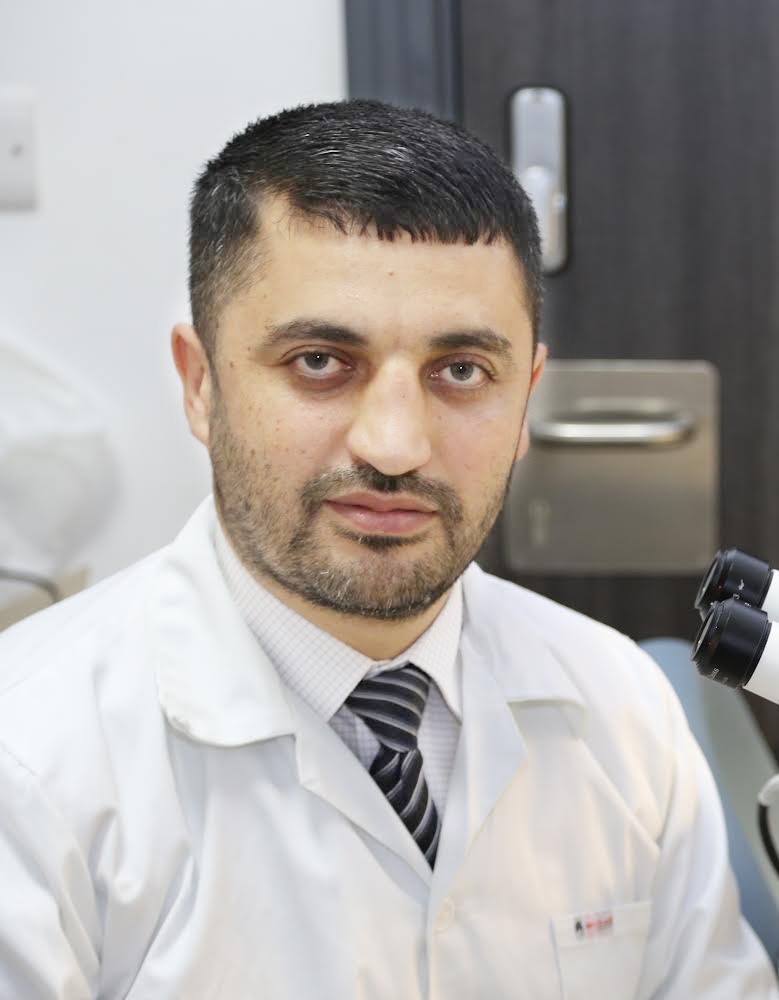
Prof. Dr. Muhamed Hadžiabdić currently serves as the ME Program Coordinator at the International University of Sarajevo (IUS) Department of Engineering. He earned his PhD from TU Delft in 2006, focusing on Thermal and Fluid Sciences, and completed postdoctoral work at Kramers Laboratorium in Multi-Scale Physics. Research interests include: Turbulence modeling with RANS and hybrid LES/RANS Heat transfer in urban flows and pollutant dispersion Flow control via rotary oscillations Computational Fluid Dynamics (CFD) applications for microclimate and environmental quality Thermal energy storage and building energy management His 2019-2025 publications emphasize hybrid modeling techniques, urban fluid dynamics, and high-Reynolds-number thermal flows. Recent work includes UTES systems, pollutant dispersion in real urban settings, and Rayleigh-Bénard convection at extreme Rayleigh numbers. Contact: mhadziabdic@ius.edu.ba | Office: A F1.31
Anas Alazzam is a Full Professor in the Department of Mechanical & Nuclear Engineering at Khalifa University. He serves as Head of the Microfluidics Lab and Theme Leader in the System on Chip Lab (SOCL), focusing on advanced microsystem technologies. PhD in Mechanical Engineering, Concordia University M.Sc. in Mechanical Engineering, Jordan University of Science and Technology His research spans microfluidics, nanofluids, dielectrophoresis, MEMS, graphene-based materials, and phase change materials . Key applications include biomedical devices, energy systems, and self-powered electronics through iontronic and triboelectric technologies. Recent publications emphasize advanced nanofluids for solar energy absorption , biodegradable phase change materials , and self-powered electronic systems . His work integrates computational modeling with experimental validation in thermal systems and particle dynamics. Professor Alazzam teaches courses in fluid mechanics, MEMS theory, and micro/nanotechnology applications. His labs welcome graduate students for research in microfluidics, nanofluids, and microsystem design.
Prof. Ian Griffiths is a Professor at the Mathematical Institute of the University of Oxford, located at the Andrew Wiles Building in Oxford (OX2 6GG). His contact details include phone +44 1865 615139 and ORCID profile https://orcid.org/0000-0001-6882-7977. His research focuses on industrial applications of fluid mechanics through the Oxford Centre for Industrial and Applied Mathematics. His primary research domains encompass: Hydrodynamics with application to physicochemical applications Filtration and water purification systems Glass manufacturing processes Slow viscous flow phenomena Surfactant-laden interfacial dynamics Advanced asymptotic analysis techniques Recent publications (2024-2025) demonstrate concentrated expertise in Hele-Shaw cell dynamics, bubble deformation mechanisms, and surface-tension-driven instabilities. His work bridges theoretical fluid mechanics with industrial applications in water treatment and materials science, consistently published in premier journals including Journal of Fluid Mechanics and Physical Review Fluids.
Professor Gernot Kurt Boiger is a faculty member at ZHAW Zurich University of Applied Sciences, leading the Research Area 'Multiphysics Modelling and Imaging' within the School of Engineering's Institute of Computational Physics. His primary role is Professor for Modelling Multiphysics Applications, combining academic teaching with advanced research in computational physics and industrial applications. Education : PhD in Thermofluiddynamic Simulation & Model Development (2009) - University of Leoben MSc in Process Engineering for Industrial Environmental Protection (2009) - University of Leoben BSc and Continuing Education in Higher Professional Education (2005) - ZHAW Research Interests : Boiger specializes in multiphysics simulation for product/process development, focusing on CFD, particle-laden flows, and microstructure analysis. His work integrates OpenFOAM-based computational tools with experimental validation, addressing challenges in filtration, energy systems (e.g., wood gasification), and material optimization. Key applications include: Electrostatic powder coating simulations Thermofluid dynamics in solid oxide fuel cells Acoustic metamaterials for vibration control Articles Overview : His recent publications (2020–2024) emphasize multiphysics modeling in energy systems, materials science, and industrial applications. Notable themes include SOFC electrode microstructure optimization, magnetorheological elastomers for acoustic control, and CFD validation for CO₂ plume transport. Awards : Rektor Platzer Ring (2005) - University of Leoben Grants & Projects : Lead or deputy leader on over 20 industrial projects, including: Simulation-based optimization of pharmaceutical production processes Development of ceramic heaters for extreme temperatures Cloud-based simulation platforms (e.g., kaleidosim) Labs & Teams : Head of the OpenFOAM for Multiphysics Applications team (2014–2018) and currently leads the Multiphysics Modelling and Imaging research group. He also contributes to the International Society of Multiphysics as Vice President Europe and editorial board member.
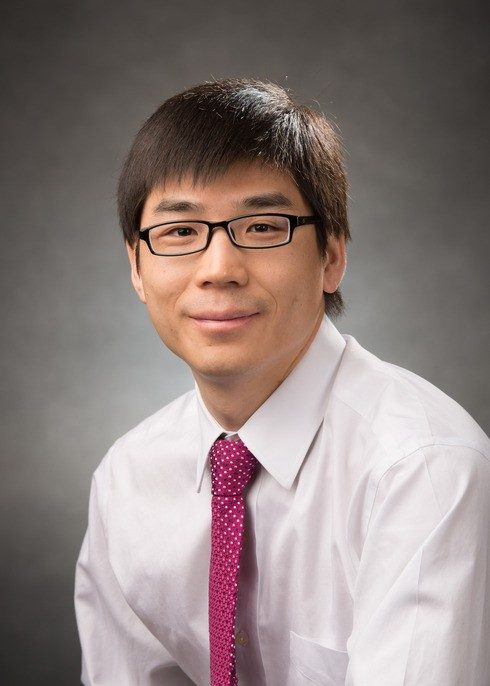
Heng Xiao is a Professor of Data-Driven Fluid Dynamics at the University of Stuttgart, affiliated with the Institute of Aerospace Thermodynamics (ITLR) and the Cluster of Excellence EXC 2075 'Data-Integrated Simulation Science' in the Stuttgart Center for Simulation Science (SC SimTech). He previously served as Associate Professor (2020-2022) and Assistant Professor (2013-2020) at Virginia Tech, USA, and was a Postdoctoral Researcher/Lecturer at ETH Zürich (2009-2012). Ph.D., Civil Engineering, Princeton University, 2009 M.S., Scientific Computing, Royal Institute of Technology (KTH), 2005 B.S., Civil Engineering, Zhejiang University, 2003 His research focuses on integrating data science (machine learning, uncertainty quantification, data assimilation) with traditional physical models to advance predictive capabilities in multi-scale fluid systems. Key areas include Data-Driven Turbulence Modeling , Laminar-Turbulent Transition , Subsurface Flows , and Particle-Laden Flows . His work addresses turbulence modeling through neural operators, Bayesian inference, and physics-informed machine learning, with applications in aerospace, ocean engineering, and geosciences. Recent publications highlight trends in Neural Operators for Nonlocal Models , Ensemble Kalman Methods for Turbulence Inference , and Machine Learning for Permeability Prediction . Collaborative projects, such as the DFG-funded development of coupled turbulence and heat-flux models for film cooling, underscore his focus on real-world impact. Fellowship, Center of Turbulence Research Summer Program, Stanford University (2016) Finalist, Undergraduate Research Advisor Award, Virginia Tech (2014) Advisor to doctoral students including Jian-Xun Wang, Rui Sun, Jin-Long Wu, and Carlos Michelén-Ströfer, he leads the 'Data-Driven Fluid Dynamics' group at Stuttgart. The team collaborates with academia and industry, emphasizing high-performance computing and open-source tools like SediFoam for sediment transport simulations.
Battista Francesco is an Associate Professor at the Department of Mechanical and Aerospace Engineering, Sapienza University of Rome. His research focuses on fluid dynamics, particularly turbulence modulation, polymer solutions, and multiphase flows. He employs advanced computational methods like direct numerical simulations (DNS) to study phenomena such as drag reduction mechanisms, particle-laden flows, and combustion dynamics. His work bridges fundamental fluid mechanics with engineering applications, including the effects of superhydrophobic surfaces and elastocapillary systems. Recent studies highlight innovative approaches to turbulence control and the interplay between polymer properties and flow dynamics. No scientific awards or grants are explicitly noted in the provided materials. His advising record includes no listed students, and specific lab affiliations are not mentioned.
Dr. Jiankang Yang is an environmental fluid dynamicist transitioning to an Assistant Professor role at Dalhousie University's Civil and Resource Engineering department (starting Fall 2024). Currently a Postdoctoral Associate at Yale University's Center for Natural Carbon Capture, his research focuses on stratified flows, marine carbon dioxide removal, and particle dynamics in oceanic systems. Yang holds a PhD in Civil Engineering from the University of British Columbia (2017-2022), an MPhil from Hong Kong University of Science and Technology (2015-2017), and a BE from Sun Yat-sen University (2011-2015). His research employs numerical simulations, laboratory experiments, and fieldwork to study fluid mechanics applications in climate change mitigation. Key areas include marine carbon sequestration via mineral particle settling, stratified shear instabilities, and tracer transport mechanisms. He is actively mentoring students in environmental fluid mechanics and ocean-based CO2 removal technologies. Prospective students are encouraged to apply for graduate programs (PhD/Master's) focusing on environmental fluid dynamics, physical oceanography, or hydraulics. Current openings prioritize candidates with programming (Python/Matlab) or experimental skills (PIV/CTD). Yang's work bridges fundamental fluid mechanics with applied climate solutions, emphasizing sustainable water environments. His research has advanced understanding of particle-laden flows, Holmboe instabilities, and enhanced weathering processes in marine contexts.
Matthew Cleary is a Professor of Mechanical Engineering at the University of Sydney, affiliated with the School of Aerospace, Mechanical and Mechatronic Engineering. His research focuses on improving combustion efficiency and reducing emissions in engines, with a particular emphasis on rotating detonation engines for sustainable rocket propulsion. Cleary holds a BE in Mechanical Engineering and Naval Architecture, along with a PhD from the University of Sydney. His teaching responsibilities include courses such as AMME2500 Engineering Dynamics and AMME5101 Energy and Environment. Cleary has supervised numerous PhD students, contributing to advancements in computational combustion modeling and soot formation. Research interests span turbulent combustion modeling, LES-MMC methodologies, and collaborative code development (e.g., mmcFoam). He is a member of the Net Zero Institute and Sydney Nano Institute, reflecting his commitment to sustainable energy solutions. Awards: Multiple teaching commendations, Australian Postgraduate Award (APA), and early-career research accolades. Current Projects: mmcFoam code development for open-source combustion simulation, rotating detonation engine research. Labs/Teams: Collaborations with institutions like University of Stuttgart and Indian Institute of Technology (Kanpur).
Jørgen Røysland Aarnes is a Research Fellow at the Department of Energy and Process Engineering, Norwegian University of Science and Technology (NTNU). His research spans fluid dynamics, computational methods, and philosophy of science, with particular focus on turbulence, multiphase flows, and structural realism in Ernst Cassirer's philosophy. He completed his PhD in 2018 with a thesis on particle-laden flows impinging on cylinders. Research Interests: Computational fluid dynamics (CFD), including high-order methods and overset grids Turbulent flows and free-surface vortex structures Particle-laden flow dynamics and impaction mechanisms Philosophy of science, structural realism, and symbolic forms Recent Contributions: His 2025 work on free-surface vortex patterns and 2024 philosophical papers on Cassirer's symbolic forms demonstrate interdisciplinary expertise. He has developed computational tools like the Pencil Code for fluid simulations. Awards: No scientific awards explicitly listed, though his work has been presented at major conferences including the European Turbulence Conference and European Geosciences Union meetings. Advising & Grants: No explicit grants or advisees listed, though his PhD supervision experience is implied through his postdoctoral role. Labs/Teams: Collaborates with the Pencil Code Collaboration and NTNU's energy engineering research groups.
Eckart Meiburg is a Distinguished Professor in the Department of Mechanical Engineering at the University of California, Santa Barbara. His research employs computational fluid dynamics (CFD), especially high-resolution direct numerical simulations, to investigate geophysical flows, multiphase systems, and particle-laden transport. Key focus areas include gravity/turbidity currents, sediment cohesion, double-diffusive instabilities, and stratified environmental flows, often validated through experimental collaborations. Research interests span: Fluid Dynamics & Transport : Turbidity currents, Hele-Shaw flows, internal bores. Multiphase Systems : Cohesive sediment flocculation, particle aggregation, granular collapses. Environmental Mechanics : Microplastic dispersion, hypersaline lake dynamics, biogenic turbulence. Advanced CFD : Machine learning-aided turbulence modeling, particle-resolved simulations. Recent publications (2020–2025) emphasize cohesive sediment transport, environmental particle dynamics, and stratified flows. Trends include granular rheology, turbulence-particle interactions, and physics-informed machine learning for fluid systems. No awards, grants, or student advisees are documented.
Dr. Chen Zhan is a Research Fellow in Bioinformatics at the South Australian Immunogenomics Cancer Institute (SAiGENCI), University of Adelaide. He is affiliated with the Faculty of Health and Medical Sciences and specializes in integrating multi-omics data to construct cell atlases. His research leverages statistical methods, machine/deep learning, and generative AI to analyze biological and experimental factors influencing cell behavior. His research interests span computational biology, machine learning applications in healthcare, and data-driven approaches to systems biology. He focuses on developing pre-trained models for biological data analysis and advancing interdisciplinary methods across genomics, pharmacology, and environmental science. Dr. Chen is eligible to supervise Masters and PhD students as a co-supervisor. His recent publications (2018–2024) emphasize computational fluid dynamics, multiphase flow modeling, and particle-laden jet systems, with notable contributions to turbulence modeling and RANS simulations.
Arun Soman Pillai is a postdoctoral researcher at the Laboratory of Fluid Mechanics and Acoustics (LMFA - UMR 5509) at École Centrale de Lyon, France. He collaborates with Aurore Naso and Alain Pumir on direct numerical simulations (DNS) to study particle-laden flows in homogeneous isotropic turbulence. Previously, he completed his PhD at the Indian Institute of Technology Madras, focusing on compressibility effects in turbulent mixing layers through topology-based analysis and energy density studies in scale space. Research Areas: His work spans fundamental fluid dynamics, turbulence modeling, compressible flows, and particle transport mechanisms. Current projects include DNS of turbulent flows and geophysical fluid dynamics. Education: PhD in Fluid Mechanics, Indian Institute of Technology Madras Contact: arun.soman-pillai@ec-lyon.fr
Carole Planchette is an Associate Professor at the Institute of Fluid Mechanics and Heat Transfer, Graz University of Technology. Her research focuses on fluid dynamics, particularly in droplet collisions, microfluidics, and interfacial phenomena. She has developed novel experimental approaches to study particle-laden systems, capillary interactions, and liquid encapsulation. Recent publications highlight her work on the physics of droplet impacts, fragmentation mechanisms, and microfluidic strategies for material synthesis. Key themes include the universality of stretching separation, viscoelastic effects in fluid systems, and dynamics of immiscible liquid interactions. Her expertise spans droplet behavior, interfacial tension, and granular raft mechanics. Contact: carole.planchette@tugraz.at
Dr. Pranav Joshi is an Associate Professor in the Department of Mechanical Engineering at the Indian Institute of Technology Kanpur (IIT Kanpur), where he has been employed since April 2018. His research specializes in experimental fluid mechanics and heat transfer, with particular focus on turbulent boundary layers, rotating flows, and convective heat transfer systems. Prior to joining IIT Kanpur, he held research positions at the National Aerospace Laboratories (India), Eindhoven University of Technology (Netherlands), and Johns Hopkins University (USA). Education: Ph.D. Mechanical Engineering, Johns Hopkins University (2013) M.S. Mechanical Engineering, Johns Hopkins University (2009) M.Sc. (Engg.) Mechanical Engineering, Indian Institute of Science (2006) B.E. Mechanical Engineering, Shivaji University (2003) Research Focus: Dr. Joshi's work bridges fundamental fluid dynamics and thermal sciences, examining complex phenomena in rotating turbulent convection, boundary layer modifications under pressure gradients, and particle-laden flows. His experimental investigations employ advanced measurement techniques to characterize flow structures and heat transfer mechanisms in both natural and forced convection systems. Publication Trends: His 15 most recent publications (2010-2017) demonstrate consistent focus on turbulence characterization, with experimental studies on rotating Rayleigh-Bénard convection systems dominating recent outputs. Earlier works established foundations in boundary layer turbulence modulation. Journals include Journal of Fluid Mechanics and Physical Review Fluids . Awards & Honors: AIAA Graduate Student Presentation Award (2012) Johns Hopkins ME Fellowship (2006-2007) IISc ME Department Alumni Medal (2006) Shivaji University Merit Scholarship (2003) Laboratory affiliations and student advising information are not detailed in available sources.
Dr.-Ing. Yoshiyuki Sakai is a Scientific Employee at the Department of Hydromechanics, College of Engineering, Technical University of Munich (TUM). His research focuses on wall-bounded flows, duct turbulence, coherent structures, computational fluid dynamics (CFD), and high-performance computing (HPC) applications. PhD in Fluid Mechanics (2016) from Karlsruhe Institute of Technology MSc in Computational Science and Engineering from TUM (2012) BEng in Aerospace Engineering from University of Southampton (2010) His work bridges fundamental turbulence research with environmental applications, particularly microplastic transport in aquatic systems and hyporheic exchange processes. He has contributed to advancing DNS and HPC capabilities through code optimization studies. Recent publications show strong focus on: Turbulent flow structure evolution Pore-scale and open channel flow dynamics Microplastic dispersion modeling LES-RANS hybrid methods Flow regime transitions HPC performance optimization His work combines theoretical fluid mechanics with advanced computational methods to address both engineering and environmental challenges.