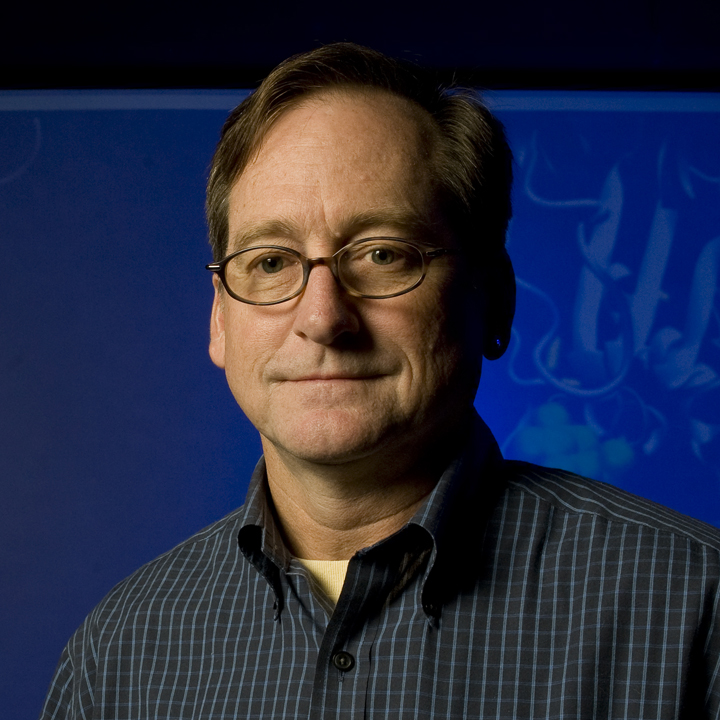
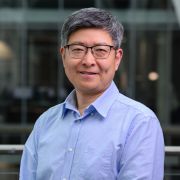
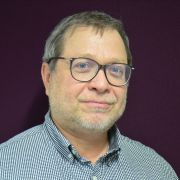
Dr. Deniz Bezgin is a Researcher at the Department of Aerodynamics and Fluid Mechanics of the Technische Universität München (TUM) . Her work focuses on computational fluid dynamics (CFD), machine learning integration in numerical methods, and high-order differentiable solvers for compressible flows. Research specialties include shock-capturing methods, multi-phase flow modeling, and data-driven shape optimization. Developed JAX-Fluids, a fully-differentiable framework for compressible two-phase flows. Key contributions to ENO/WENO schemes and thermodynamically consistent interface models. Current projects explore machine-learned discretizations and GPU-based high-performance computing. Her recent publications address differentiable simulations, data assimilation, and turbulence modeling. She has not received any explicitly listed scientific awards.
Adam G. Marsh is an Associate Professor at the School of Marine Science & Policy within the University of Delaware. His academic affiliations also extend to the Bioinformatics and Computational Biology program, reflecting his interdisciplinary expertise. Ph.D., Marine Science, University of Maryland (1989) M.S., Invertebrate Zoology, University of South Florida (1983) B.A., Biology and English Literature, University of South Florida (1981) Dr. Marsh specializes in epigenetics , with a focus on computational and bioinformatic analyses of genomes and DNA methylation to understand disease drivers and stress acclimation. His work spans marine organisms and clinical applications, including ovarian cancer, cerebral palsy, and breast cancer diagnostics. Recent publications highlight his innovative use of machine learning to diagnose complex diseases via DNA methylation patterns, contributions to geometric gauge theory , and marine genomics studies on Antarctic species. His research bridges theoretical physics, computational biology, and ecological systems. NSF CAREER Award (2003) for cold-adaptation genomics in polar marine invertebrates Dr. Marsh co-founded Genome Profiling, LLC (2012-present) and Evozym Biologics, Inc. (2010-present), serving as Chief Science Officer. His work explores the intersection of epigenetics, environmental stress, and technological innovation.
Sun-Jeong Kim is a Professor at the Department of Computer Science within the School of Computer Science at Korea University . Her research focuses on real-time rendering techniques, GPU programming, and game engine optimization. Specializes in procedural modeling and interactive visualization Develops efficient rendering algorithms for virtual reality Active in graphics hardware acceleration and collision detection Her research has produced 15+ publications on topics including tessellation strategies, skeletal animation systems, and particle effect optimizations. While specific awards and students aren't detailed in the current text, her work demonstrates consistent contributions to real-time graphics and game development.
Anders J Johansson is a Senior Lecturer (Docent) in Radiosystems at the Department of Electrical and Information Technology, Lund University. He serves as Director of First and Second Cycle Studies and leads research activities within ELLIIT (Linköping-Lund IT Initiative) and NEXTG2COM (Vinnova Competence Centre). His affiliations include LTH Profile Area: AI and Digitalization, and X-Lab teaching infrastructure. Senior Lecturer in Radiosystems Director of First/Second Cycle Studies ELLIIT Researcher NEXTG2COM Researcher AI & Digitalization Profile Member His research focuses on advanced antenna systems, wireless channel characterization, and 6G testbed standards. Key projects include beam power monitoring at the European Spallation Source and maritime communication reliability studies. He contributes to open data frameworks for next-generation networks. Recent work includes co-authorship on proton beam diagnostics (2024), 6G dataset standards (2023), and maritime channel analysis (2023). Collaborations span European institutions and industry partners in telecommunications and particle physics domains. Current initiatives involve NextG2COM (2024-2028), MARRMOT (2019-2020), and ESS beam control projects. He actively participates in IEEE conferences and contributes to academic governance through LTH's educational leadership roles.
Paul Richmond is a Professor of Research Software Engineering at the University of Sheffield's School of Computer Science. He holds an EPSRC Early Career Research Software Engineering Fellowship focused on accelerating scientific discovery through GPU-accelerated architectures. With a strong interdisciplinary research track record, he develops software solutions for complex systems simulation using high-performance computing architectures. His research spans GPU computing, agent-based modeling, complex systems simulation, and high-performance computing methodologies. Richmond leads the development of FLAME GPU, a framework enabling large-scale agent-based simulations on GPUs, applied to domains including computational biology, transportation systems, and neural simulations. Analysis of his recent publications reveals strong emphasis on GPU-accelerated scientific computing, computational biology applications (particularly oncology and neuroblastoma modeling), transportation simulations, and parallel algorithm development. His work consistently bridges theoretical computer science with practical engineering applications. EPSRC Early Career Research Software Engineering Fellowship Fellow of the Higher Education Academy Richmond has secured substantial research funding including £4.3M as PI/CI over five years. Major grants include leadership roles in PRIMAGE (childhood cancer diagnostics), ExaTEPP (particle physics), and industrial collaborations with Fujitsu, Siemens, and Department for Transport. He founded and led the University of Sheffield's Research Software Engineering group, growing it to 13.5 FTEs supporting £13M in research projects. He established the GPUComputing@Sheffield group, leads the FLAME GPU development team, and served as Engineering Lead for Cambridge's Institute of Computing for Climate Science. Richmond is also former President of the Society for Research Software Engineering.
Professor Shuisheng He is Professor of Thermofluids at the School of Mechanical, Aerospace and Civil Engineering, University of Sheffield, where he also serves as Course Director for the Nuclear Engineering Programme. With extensive expertise in fluid mechanics, heat transfer, and computational fluid dynamics, Professor He leads significant research in nuclear reactor thermal hydraulics and turbulence studies. Professor He earned his BSc and MSc in thermal power engineering from Huazhong University of Science and Technology in China, followed by a PhD in Nuclear Engineering from the University of Manchester in 1992. His career includes six years of post-doctoral research at Manchester, over three years at British Energy's reactor thermal hydraulics team, academic positions at Robert Gordon University and University of Aberdeen, before joining the University of Sheffield in 2011 as Chair in Thermofluids. His research focuses on the intersection of computational fluid dynamics and experimental studies, particularly in nuclear reactor thermal hydraulics and fundamental studies of turbulence, transition, and drag reduction. His recent publications reveal a strong emphasis on thermal hydraulics in nuclear applications, particularly sodium-cooled fast reactors and supercritical pressure systems. His work spans fundamental fluid dynamics, heat transfer phenomena, and practical nuclear engineering applications, with a consistent focus on computational modeling approaches including large eddy simulation and direct numerical simulation. Professor He is a Chartered Engineer and Fellow of the Institution of Mechanical Engineers. He leads the Heat, Flow and Turbulence Research Group (HeFT) and has secured numerous research grants, including significant projects with EPSRC, European Commission, and industry partners like EDF Energy. His research has practical applications in nuclear reactor design, safety analysis, and thermal system optimization.
Professor Michael Balikhin is a distinguished academic in the Space Systems Laboratory at the University of Sheffield's School of Electrical and Electronic Engineering . With over 30 years of research experience, his work focuses on space plasma physics , collisionless shocks , plasma turbulence , and radiation belt dynamics . He serves as Principal Investigator for the Digital Wave Processor instruments on ESA's Cluster satellites and as editor of Journal of Geophysical Research: Space Physics . PhD in Physics (1989) Joined Sheffield in 1995 Key contributor to Cluster mission Leading expert in nonlinear space plasma systems Research Areas His research spans space weather , solar-terrestrial relations , and spacecraft instrumentation , with particular emphasis on electron heating mechanisms , shock structures , and nonlinear system identification . The 15 most recent articles demonstrate his expertise in gamma-ray burst analysis , magnetospheric wave dynamics , and multi-point space plasma observations . Scientific Recognition Leverhulme Grant (2024-2027) STFC/NERC grants exceeding £1.5M EPSRC Platform Grant (2010-2015) Over 20 years of ESA Cluster mission involvement Key Collaborations Extensive collaborations with ESA , STFC , AGU , and international space agencies. Currently working with University of Michigan , Space Research Institute (Austria) , and Skobeltsyn Institute (Russia) .
Masaki Hori is an Associate Professor of Physics at Imperial College London's Faculty of Natural Sciences. He is affiliated with the High Energy Physics Group and the Physics of Particles sub-unit. His research spans experimental physics with a focus on atomic, molecular, nuclear, and particle physics, alongside quantum electronics and industrial applications. Education: PhD and Habilitation in Experimental Physics from Ludwig-Maximilians-Universität München; PhD in Physics from the University of Tokyo. Hori's work integrates laser spectroscopy, synchrotron instrumentation, and quantum metrology, with significant contributions to particle physics and precision measurement. He has held leadership roles at the Max Planck Institute of Quantum Optics and CERN. Scientific Awards: DFG Heisenberg Fellowship JSPS Overseas Research Fellowship JSPS PhD Fellowship Hori has advised research groups at Max Planck Institute and CERN, bridging academia and industry through collaborations in laser manufacturing and electronics development. His career includes tenure as a Senior Lecturer at Imperial College London (2023–2025) and Privatdozent roles in Germany.
Cynthia Cattell is a Research Professor at the School of Physics and Astronomy , University of Minnesota, with affiliations to the Minnesota Institute for Astrophysics , Physics Force Outreach Group , and Space Physics & Plasma Physics group. Her work bridges fundamental plasma processes and space weather phenomena, leveraging satellite data to advance understanding of Earth's magnetosphere and solar wind dynamics. Van Allen belts : Investigating rapid electron energization and loss mechanisms via wave-particle interactions Solar wind shocks : Studying microphysical structure and energy dissipation in collisionless plasmas Auroral acceleration : Analyzing electron/ion dynamics in auroral regions Magnetic reconnection : Probing energy conversion in Earth's magnetosphere Recent publications highlight her focus on ion acoustic waves , whistler wave effects , and radial evolution of solar wind structures , with implications for space plasma turbulence and particle acceleration. Her research has been recognized through the CSE Distinguished Professor award. Projects span 2004–2026, including NASA-funded studies on radiation belts, solar flares, and heliospheric phenomena Collaborates extensively with institutions like the Smithsonian Astrophysical Observatory and University of Maryland She contributes to UN Sustainable Development Goals through astrophysical research and leads major initiatives like the Solar Wind Electron Interaction Study and SoIFER projects.
Professor Jeanne Wilson is a Professor of Particle Physics in the Department of Physics at King's College London, where she co-leads the Experimental Particle & Astroparticle Physics (EPAP) group. She serves as Postgraduate Admissions Coordinator and Department EDI Lead. Previously, she held positions at Queen Mary University of London (2010-2019) and the University of Oxford. Education includes an MPhys in Physics and Astronomy from the University of Sheffield and a PhD from the University of Oxford focused on the Sudbury Neutrino Observatory. Her research investigates fundamental neutrino properties through experiments including T2K, Hyper-Kamiokande, and SNO+. Key questions include: CP violation in the lepton sector Majorana nature of neutrinos via double beta decay Absolute neutrino mass scale Solar and reactor neutrino detection Publications demonstrate consistent focus on neutrino oscillations, detection methodologies, and particle interactions. Over 80 articles primarily explore: Neutrino oscillation parameters Cross-section measurements Detector development (liquid scintillators, water Cherenkov) Solar/reactor neutrino physics Awards and Fellowships: PPARC Post-doctoral Fellowship (University of Sussex) Leverhulme Early Career Fellowship (University of Oxford) Leadership roles include analysis coordination for SNO+ and detector design for Hyper-Kamiokande. She leads equality initiatives including interdisciplinary modules addressing gender inequality in STEM education.
Taina Kurki-Suonio is a Senior University Lecturer in the Department of Applied Physics at Aalto University. Her research focuses on plasma physics and nuclear fusion, particularly in tokamak and stellarator technologies. She contributes to advanced studies of beam ion dynamics, charge exchange processes, and plasma confinement optimization. Her work spans experimental validation and predictive simulations, with publications in Plasma Physics and Controlled Fusion , Nuclear Fusion , and Nature Communications . Current projects address disruption prediction strategies, magnetic island formation, and long-pulse stellarator operation. Research Keywords Plasma Physics Nuclear Fusion Tokamak Reactors Energetic Particle Dynamics Charge-Exchange Processes
Vladimir Bashkirov is an Associate Research Professor at Loma Linda University's School of Medicine, affiliated with the Biomedical Engineering Science Division. His career spans high-energy physics and medical applications, with leadership roles in proton CT development and beam monitoring systems. Education: PhD, Loma Linda University (1999) Certificate, Moscow Institute of Physics & Technology (1997) MS, Moscow Institute of Physics & Technology (1982) BS, Moscow Institute of Physics & Technology (1979) Research Interests: Radiation detector design for medical imaging Monte Carlo simulations in proton therapy Proton CT and FLASH radiotherapy Nanodosimetry for radiation biology Neutron capture therapy Hadron therapy accelerators Publications & Trends: His 15 most recent articles focus on proton CT scanner optimization, FLASH beam monitoring, Monte Carlo simulations, and helium ion imaging. Topics include noise reduction, stopping power accuracy, and detector design, with collaborations at institutions like Stanford University and Lawrence Livermore National Laboratory. Grants & Projects: NIH/NCI SBIR grants for plasma panel detectors NIH R01 grant for clinical proton CT translation DOE funding for FLASH X-ray radiography NASA collaborations on proton space radiation European Commission research on neutron cancer risk Professional Service: Alternate Representative for School of Medicine at University Faculty Council (2023-2025) Program Committee, BIOMESIP 2021 Reviewer for journals including Physics in Medicine and Biology and IEEE Transactions on Nuclear Science
Prof. Dr.-Ing. Richard Membarth is a faculty member at Technische Hochschule Ingolstadt , where he holds the professorship for System-on-a-Chip and AI for Edge Computing. He is also affiliated with the German Research Center for Artificial Intelligence (DFKI) as a Senior Researcher and Team Leader for Compiler Technologies and High-Performance Computing, and with the Saarland University Computer Graphics Lab . His research spans GPU computing, domain-specific languages, and compilers. PhD from Friedrich-Alexander University Erlangen-Nürnberg (2013) Postgraduate diploma from Auckland University of Technology His research focuses on: Parallel computer architectures and programming models Automatic code generation for embedded to HPC systems Image processing, computer graphics, and deep learning applications Domain-specific languages for performance-portable code Recent publications highlight compiler design, GPU acceleration, and parallel algorithms. Scientific awards include the HiPEAC Paper Award (2018) and GPCE Best Paper Award (2015) . Professional roles include organizing High-Performance Graphics conferences as Treasurer (2024-2025) and Papers Chair (2020).
Wilson Q. Wang is a Professor at Lakehead University's Department of Mechanical and Mechatronics Engineering, where he serves as Lakehead Research Chair, Director of Mechatronics Engineering, and PhD Graduate Program Coordinator. He founded and directs both the Intelligent Mechatronics Systems Lab and Electric Vehicle Lab, supported by CFI/ORF grants. With cross-appointment in Electrical and Computer Engineering, he maintains an adjunct professorship at the University of Waterloo. PhD, Mechatronics Engineering, University of Waterloo MEng, Industrial Engineering, University of Toronto MSc, Mechanical Engineering, Northeastern University, China BASc, Electro-mechanical Engineering, SIT, China Dr. Wang's research focuses on the intersection of artificial intelligence and mechanical systems, specializing in signal processing techniques for condition monitoring, fault diagnosis, and prognostics. His work develops intelligent control systems that enhance machinery reliability through early fault detection and predictive maintenance strategies. The research spans both theoretical development of novel algorithms and practical implementation in industrial settings, with particular emphasis on mechatronic systems and electric vehicles. His publication record demonstrates consistent contributions to high-impact journals including IEEE Transactions on Fuzzy Systems, IEEE Transactions on Instrumentation and Measurement, and IEEE/ASME Transactions on Mechatronics. The work shows an evolving trajectory from fundamental signal processing techniques toward increasingly sophisticated AI-driven prognostic systems, with growing emphasis on real-time implementation and industrial applications. CFI John Evens Leaders Grant Award (2022) Excellent Teaching Award, Lakehead University (2018) Distinguished Researcher Award, Lakehead University (2017) NSERC DG Accelerator Grant Award (2016) Innovation Award, Lakehead University (2015) Dr. Wang has supervised an extensive research team including 9 postdoctoral fellows, 15 PhD students, and nearly 40 MSc students. His research has been supported by multiple NSERC grants (DG, AG, CRD, DAS, EG, IG), CFI (JELF, NOF), ORF, and industry partners including Bombardier Transportation, Siemens Mahon Electric, and Techform Group. He serves as Associate Editor for several prestigious journals including IEEE/ASME Transactions on Mechatronics and IEEE Transactions on Instrumentation and Measurement. He directs two specialized research facilities: the Lab for Intelligent Mechatronic Systems (LIMS) and the Lab for Electric Vehicles (LEV), which support his team's work on smart sensors, fault diagnosis systems, and intelligent control applications across various mechanical and electromechanical systems.
Jicong (Jack) Shi is an Associate Professor and Director of the Engineering Physics Program at the University of Kansas. He has held this position since 2002, after serving as an Assistant Professor from 1997 to 2002. Education: PhD in Physics, University of Houston (1991) MS in Physics, University of Science and Technology of China (1984) BS in Physics, University of Science and Technology of China (1982) Shi's research focuses on beam dynamics, accelerator physics, nonlinear dynamics, and computational physics. His work involves nonlinear analysis to understand beam particle motion in particle accelerators, supported by the US Department of Energy, and he collaborates with major international facilities like Fermilab, CERN, and DESY. His publications span interdisciplinary topics, including impurity nanorod arrays in superconducting films, carbon nanotube bolometers, and beam-beam effects in accelerators. These articles highlight his expertise in computational modeling and nonlinear dynamics across physics and applied domains. Scientific Awards: SSC National Fellow (1992) Shi's laboratory actively engages in research collaborations with leading accelerator laboratories worldwide. His work addresses critical challenges in preserving beam stability and mitigating long-range beam-beam effects in facilities like RHIC, LHC, and eRHIC.