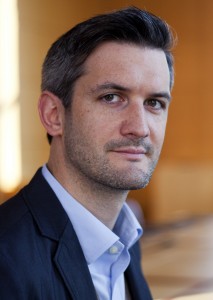
Norbert Krupp is a researcher at the Max Planck Institute for Solar System Research, focusing on planetary science. His work involves studying plasma processes in planetary magnetospheres, particularly those of Jupiter and Saturn, including radiation belts, auroral processes, and moon interactions. His research primarily utilizes in-situ spacecraft data and hybrid/MHD simulations. Key projects include roles as Principal Investigator for ULYSSES-EPAC and Co-Investigator for multiple instruments on missions like CASSINI, MARS EXPRESS, and JUICE. Scientific Awards: Appointed as COSPAR German Delegate Selected as JUICE Interdisciplinary Scientist Krupp has contributed extensively to understanding magnetospheric dynamics, with publications spanning topics such as Saturn's moon interactions (2020), Jupiter's magnetotail (2015), and comparative studies of giant magnetospheres (2014). His work bridges observational data with computational modeling.
Ahmet Deniz Baş is an Associate Professor at the Faculty of Engineering, Department of Mining Engineering (Mineral Processing Division) at Muğla Sıtkı Koçman University. With a Ph.D. in Metallurgy from Université Laval and prior degrees from Karadeniz Technical University, he specializes in hydrometallurgy, gold and copper extraction, and sustainable resource recovery from primary and secondary sources. Education: BSc and MSc in Mining Engineering (Karadeniz Technical University); Ph.D. in Metallurgy (Université Laval) His research focuses on electrochemical dissolution/passivation of gold during cyanidation, bioleaching of metals from electronic waste, and optimization of hydrometallurgical processes. He has authored key studies on gold recovery from refractory ores, silver extraction from X-ray films, and environmental mitigation in mineral processing. Dr. Baş’s 15 most recent publications span topics like Hydrometallurgy , Minerals Engineering , and Environmental Metal Recovery , with keywords covering electrochemical interactions, gold processing, bioleaching, and sustainable mining practices. Scientific Awards: Emerging Professional Award 2017 (Hydrometallurgy Technical Section) Gordon M. Ritcey Ph.D. Award 2016 He has led international projects on zero-waste valorization of ores, improved leaching kinetics, and mercury sequestration in gold processing. His editorial roles include associate editorships for Minerals Engineering and CIM Journal .
Mohammad Shojafar (M'17-SM'19) is an Associate Professor at the Institute for Communication Systems within the Faculty of Engineering and Physical Sciences at the University of Surrey , UK. He has secured over £1.9M in research funding as Principal Investigator for projects like ORAN-TWIN (EPSRC), PRISENODE (MSCA-IF), TRACE-V2X (MSCA-SE), and D-XPERT (Innovate UK), among others. Previously held positions include Senior Researcher at University of Toronto and Toronto Metropolitan University, Senior Researcher at Italian universities (Telecom Italia Mobile), and Postdoc at University of Padua Key affiliations: Associate Editor for IEEE Transactions on Network and Service Management, Intelligent Transportation Systems, Green Communications and Networking, and Consumer Electronics Magazine Research Specialism: 5G/6G Security and Privacy Open-RAN Security Green Networking Adversarial Machine Learning Applied Cryptography Publication Trends: Focus on Open RAN security challenges (bearer context migration poisoning, KPI poisoning attacks), IoT/Fog security (GAN-based attacks, distributed intrusion detection), Lightweight Cryptography (multi-signature protocols, authentication schemes), and AI-driven Network Optimization (federated learning, reinforcement learning applications). Recent work addresses security in vehicular networks, smart grids, and video streaming frameworks. Scientific Recognition: Marie Curie Individual Fellowship (MSCA-GF-IF) Intel Innovator ACM Professional Member Sustainability Fellow at Institute for Sustainability IEEE Senior Member Supervision: Currently supervising 6 PhD students and has graduated 5 PhD/MSc students since 2021. Active in 5G/Open RAN security research with over 20 related publications since 2022.
Nanna Bach-Møller is a postdoctoral fellow at the Niels Bohr Institute, University of Copenhagen, specializing in astrophysics and planetary research. She completed her PhD in 2024 with a dissertation on exoplanet atmospheres in high-energy radiative environments. Research Interests Exoplanet atmospheres and their interaction with high-energy radiation Microlensing events and brown dwarf characterization Planetary system dynamics and orbital evolution Stellar activity and its impact on exoplanet observations Her work combines theoretical modeling with observational data analysis, focusing on understanding atmospheric processes in extreme environments and the dynamics of planetary systems. Publications Dr. Bach-Møller has published extensively in leading journals such as Astrophysical Journal , Astronomy & Astrophysics , and Monthly Notices of the Royal Astronomical Society . Her recent work includes studies on cloud particle charging, transmission spectroscopy of exoplanets, and precision measurements of brown dwarf masses through microlensing. Collaborations She collaborates with international teams, including the MiNDSTEp Consortium, OGLE Collaboration, and MOA Collaboration, contributing to large-scale surveys and high-impact research projects.
Prof. Dr. Rolf Wanka is a Professor at the Department of Computer Science, Friedrich-Alexander-Universität Erlangen-Nürnberg (FAU), specializing in efficient algorithms and combinatorial optimization. His research focuses on swarm intelligence, discrete optimization algorithms, and scheduling problems, particularly in timetabling and robotics applications. Education : Sc.D. (Dr. rer. nat.) in Computer Science His work includes theoretical and experimental analyses of particle swarm optimization (PSO) algorithms, addressing runtime complexity, stagnation behavior, and convergence properties. He has developed novel heuristics for timetabling and sorting problems, with applications in multi-robot systems and medical imaging. Notable collaborations include studies on Markov chain-based PSO and fairness in academic scheduling. Key trends in his recent publications span swarm intelligence , discrete optimization , and scheduling heuristics , with a focus on robust timetabling , runtime analysis , and stochastic algorithm behavior . While no explicit scientific awards are listed, his mentorship in the Max Weber-Programm highlights his advisory role in academia. His publications demonstrate interdisciplinary applications of algorithms in robotics , medical imaging , and parallel computing , leveraging both theoretical rigor and practical experimentation. The full description below provides exhaustive details on his academic contributions and affiliations.
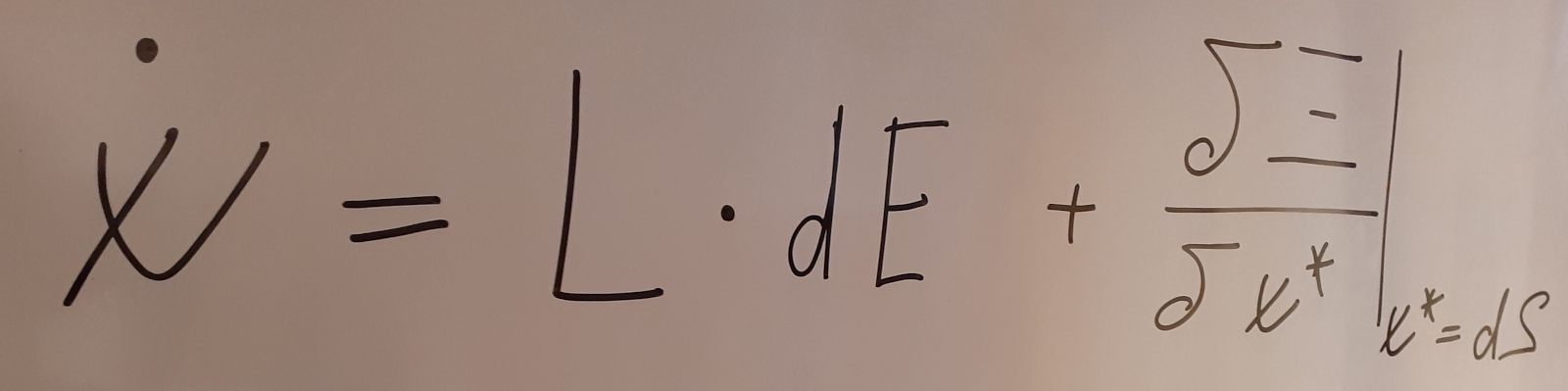
Michal Pavelka is an Associate Professor at the Division of Mathematical Modeling, Mathematical Institute, Faculty of Mathematics and Physics, Charles University, Prague, Czech Republic. His career spans roles from Postdoc (part time) at the Institute of Chemical Technology to positions at École Polytechnique de Montréal and New Technologies Research Centre. He earned his Ph.D. in 2015 and M.Sc. in 2012 at Charles University under František Maršík. Michal Pavelka's research integrates Non-equilibrium Thermodynamics , Geometric Mechanics , and Machine Learning . His work bridges advanced mathematical frameworks like GENERIC and Extended Irreversible Thermodynamics with practical applications in electrochemical systems (fuel cells, batteries) and quantum fluids . Notably, he has contributed to Smoothed Particle Hydrodynamics and Hamiltonian mechanics in complex systems. His recent publications focus on Multiscale Thermodynamics , Superfluid Modeling , and Machine Learning in Physics . Scientific awards include the Best paper award, Entropy (2021) and Czech Grant Agency President's award (2020). He has secured significant grants, including a €363k Czech Grant Agency award (2023–2025) for geometric multiscale thermodynamics of complex fluids. Scientific Awards: Best paper award, Entropy (2021) Czech Grant Agency President's award (2020) High quality monographs of Charles University competition (1st-3rd place, 2020) Current Projects: He leads research on geometric multiscale thermodynamics and co-supervises projects on zinc-air batteries and solid oxide fuel cells. His lab develops the SmoothedParticles.jl Julia package for fluid dynamics simulations.
Prof. Dr. Gil Westmeyer is a Professor of Neurobiological Engineering at the Technical University of Munich (TUM), holding joint appointments at the TUM School of Natural Sciences and TUM School of Medicine and Health. He serves as Director of the Institute for Synthetic Biomedicine at Helmholtz-Zentrum München and leads the Chair of Neurobiological Engineering at TUM. His research program bridges molecular engineering, neuroimaging, and synthetic biology to develop next-generation tools for understanding and manipulating cellular networks. Westmeyer's educational background includes medical and philosophical studies in Munich, doctoral work on the molecular basis of Alzheimer's disease under Professor Christian Haass, clinical training at Harvard Medical School, and postdoctoral research with Professor Alan Jasanoff at MIT. His laboratory focuses on creating genetically encoded molecular sensors and actuators that enable non-invasive imaging and remote control of cellular processes across multiple scales. His research spans three primary domains: molecular sensors for multimodal imaging (from electron microscopy to whole-organism optoacoustics), molecular actuators for spatiotemporal control of cellular processes, and neurobehavioral imaging in freely behaving model organisms. The lab's work integrates synthetic biology, nanotechnology, and advanced imaging techniques to create tools that map dynamic signaling processes and manipulate cellular functions with unprecedented precision. Westmeyer's publication record demonstrates consistent innovation in molecular engineering, with recent work focusing on genetically encoded barcodes for electron microscopy, intron-encoded reporting systems, multiplexed optoacoustic imaging, and magnetically responsive cellular compartments. His publications in high-impact journals like Nature Methods, Cell, and Nature Biotechnology reflect the significance of his contributions to molecular imaging and engineering. ERC Proof of Concept 'inteRNAlizer' (2023) ERC Consolidator Grant 'EMcapsulins' (2019) ERC Starting Grant 'MagnetoGenetics' (2013) Helmholtz Young Investigator's Group (2011) Westmeyer actively mentors students and researchers through multiple teaching positions at TUM, including courses in biological chemistry, genetic machine development (iGEM), mammalian cell technology, and neuro-recording methods. His laboratory develops technologies with clear translational potential for future neurotherapies and regenerative medicine applications, particularly through the creation of imaging-controlled cellular interventions. The lab maintains strong collaborations across disciplines and institutions, with research that contributes to multiple UN Sustainable Development Goals related to health and wellbeing.
Professor Christopher L H Wrede is a tenured faculty member at the Department of Physics and Astronomy , Michigan State University , and leads experimental research at the Facility for Rare Isotope Beams (FRIB) . His work bridges nuclear physics and astrophysics , focusing on beta decays of proton-rich nuclides to study hydrogen burning in accreting compact stars and isospin-symmetry breaking effects in the Standard Model. Ph.D. in Physics from Yale University (2008) Research areas: Nuclear Astrophysics Low-Energy Nuclear Experiments Isospin Symmetry Detector Instrumentation His group develops advanced detectors like GADGET II , LIBRA , and DSL2 to measure nuclear reactions in novae, neutron stars, and cosmic explosions. Recent work leverages machine learning and MCMC Bayesian analysis for data interpretation. Scientific awards include the DOE Office of Science Early Career Research Program (2016). His students and postdocs contribute to international collaborations and instrumentation projects, often publishing in Physical Review C and Nuclear Instruments and Methods in Physics Research .
Dr. D. Grant Allen is a Professor and Frank Dottori Chair in Pulp and Paper Engineering at the University of Toronto's Department of Chemical Engineering and Applied Chemistry (Faculty of Applied Science and Engineering). He serves as Principal Investigator at the Bioprocess Engineering Lab and BioZone research center. His education includes a B.A.Sc. and M.A.Sc. from the University of Toronto, and a Ph.D. from the University of Waterloo. Dr. Allen's research focuses on environmental bioprocess engineering , with emphasis on: Microalgae cultivation for biofuels/chemicals using CO₂ and wastewater Advanced biological wastewater treatment and toxicity reduction Biosolids dewatering using novel bioflocculants and enzymatic methods Bioconversion of waste streams into value-added products Biofilm/floc microbiology and process optimization His publications demonstrate strong interdisciplinary trends in sustainable waste valorization, algal biotechnology, and advanced sludge treatment techniques, with consistent focus on industrial applications in pulp/paper and wastewater sectors. Awards & Honors: Sustained Excellence in Teaching Award (2022) Professor Diran Basmadjian Teacher of the Year Award Fellow: Chemical Institute of Canada, AAAS, Canadian Academy of Engineering, Engineering Institute of Canada LeSuer Memorial Award for Technical Excellence He currently advises graduate students and leads collaborative projects with industry/government partners. As Principal Investigator at BioZone, he coordinates interdisciplinary teams developing bioscience solutions for sustainability. Current projects include photocatalytic wastewater pretreatment and microfluidic carbon capture systems.
Professor Rainer Kiko is a Heisenberg Professor and Make Our Planet Great Again Laureate at GEOMAR Helmholtz Centre for Ocean Research Kiel, where he leads research in Marine Biogeochemistry. His work focuses on understanding how global change impacts marine life distribution and activity, with significant implications for oceanic oxygen dynamics, nutrient cycles, and carbon dioxide transfer from the atmosphere to the deep sea. Kiko's research integrates augmented image observations that combine autonomous camera and environmental sensor systems with state-of-the-art artificial intelligence solutions and ecophysiological approaches to study zooplankton and detrital particle dynamics in a changing ocean. His primary research areas include marine carbon cycling, oxygen minimum zones, zooplankton dynamics, and the development of imaging technologies for marine observations. He leads several major projects including Imaging Marine life in an Ocean of Change (IOChange) funded by the Heisenberg Program of the German Research Foundation, and the Tropical Atlantic Deoxygenation project as part of the Make Our Planet Great Again initiative. His recent publications reveal a strong focus on marine particle dynamics, carbon export mechanisms, and the role of zooplankton in biogeochemical cycles, with particular attention to oxygen minimum zones and the impacts of climate change on marine ecosystems. Kiko employs advanced imaging technologies and machine learning approaches to address fundamental questions about the biological pump and ocean carbon sequestration. Among his notable recognitions are the prestigious Heisenberg Professorship from the German Research Foundation and the Make Our Planet Great Again Laureate award. His work has been published in high-impact journals including Nature Geoscience, Nature Communications, and Global Biogeochemical Cycles. Kiko mentors several researchers including Dr. Joelle Habib (Postdoc at Laboratoire d'Océanographie de Villefranche), Dr. Xiangyu Weng (Machine Vision specialist), Simon-Martin Schröder (computer scientist), and Claudeilton "Claus" Santana (PhD student). His research group develops innovative approaches combining deep learning, in situ imaging, and citizen science to resolve marine ecological questions across multiple scales.
Dr. Barak Ratzker is a researcher at the Max Planck Institute for Sustainable Materials , affiliated with the Microstructure Physics and Alloy Design department. His work focuses on the sustainable synthesis of materials, particularly through hydrogen-based reduction pathways and advanced sintering techniques like spark plasma sintering (SPS) and hot isostatic pressing (HIP). His research spans transparent ceramics, MAX/MXene phases, and alloy design. Key research areas include: Hydrogen reduction of oxides for sustainable metallurgy Pressure-assisted sintering (SPS/HIP) of transparent ceramics Microstructure engineering in refractory materials Development of MXene-based composites for electronics Thermodynamic and kinetic analysis of solid-state reactions His recent publications highlight trends in: Environmentally conscious processing of ferromanganese oxides High-pressure synthesis of MAX phases and MXenes Optimization of optical and mechanical properties in ceramics Dynamic deformation behavior under extreme conditions Biological material interactions (e.g., crusticul-chitin systems)
Dr. Stefan Ritt is a prominent researcher and Group Leader of the Muon Physics group at the Paul Scherrer Institute (PSI) in Switzerland. With over 30 years of experience in particle physics, he has made significant contributions to muon decay experiments and detector development. His research focuses on precision measurements of muon properties and searches for physics beyond the Standard Model. Ritt's primary research interests encompass particle physics, muon physics, detector development, and data acquisition systems. His work has been instrumental in advancing high-precision measurements of muon decay processes, particularly in the search for lepton flavor violation. He has pioneered developments in waveform digitizing technology, most notably through the Domino Ring Sampler (DRS) series of chips, which have revolutionized data acquisition in particle physics experiments. Analysis of his recent publications reveals a strong focus on the MEG and MEG II experiments, which search for the rare decay μ+→e+γ. His work spans detector design, data acquisition systems, trigger implementation, and precision analysis techniques. The publications demonstrate expertise in liquid xenon detectors, silicon photomultipliers, timing resolution, and high-speed waveform digitization. 1984 Jugend Forscht Landessieger 2011 IEEE Senior Member 2016 IEEE Fellow for the development of the Domino Ring Sampler series of chips 2020 IEEE Emilio Gatti Radiation Instrumentation Technical Achievement Award for contributions to the development and democratization of ultra high-speed digitizers Ritt has served as a thesis examiner for institutions including INFN Pisa and ETH Zurich, demonstrating his role in academic mentoring. His leadership extends to coordinating beam time for PSI's secondary particle beam lines and organizing major international workshops. He has been instrumental in developing the Mu3e experiment and advancing muon beam technology at PSI. As head of the Muon Physics group (comprising 12 members), Ritt oversees fundamental particle physics experiments at PSI's secondary beam lines. His group is responsible for the design and implementation of data acquisition hardware and software for the MEG II experiment and serves as co-spokesperson for the Mu3e experiment.
Prof. Dr. Aleksa Božičković serves as Full Professor at the Department of Nutrition, Physiology and Anatomy of Domestic and Farmed Animals within the Faculty of Agriculture at the University of Belgrade. With extensive experience in animal nutrition science, he teaches numerous courses including Ruminant Nutrition, Applied Nutrition of Domestic and Farmed Animals, and Modern Concepts of Nutrition of Domestic and Farmed Animals. His academic position is supported by a robust publication record spanning over a decade. Professor Božičković's research focuses on critical aspects of animal nutrition with particular emphasis on: Ruminant nutrition systems and their impact on dairy production Forage quality assessment and management strategies Silage technology and preservation methods Feed particle size and physical effectiveness in ruminant diets Nutritional management during critical physiological periods Protein degradability in various forage systems His scholarly work demonstrates a consistent trajectory toward improving precision feeding techniques and understanding the relationship between feed physical structure and animal performance. Recent publications highlight innovative methodologies for assessing forage maturity and nutritional value, particularly in alfalfa and pasture systems. Professor Božičković has made significant contributions to understanding how different feeding strategies affect animal metabolism, chewing activity, and production parameters. Professor Božičković actively contributes to the academic community through teaching, research supervision, and scholarly publications. His work bridges theoretical knowledge with practical applications in animal husbandry, benefiting both students and industry professionals.
Dr. Alexander Thomas is a Professor in Nuclear Engineering and Radiological Sciences at the University of Michigan’s College of Engineering, and a cross-appointed Professor in Applied Physics at the College of Literature, Science and the Arts. His research at the Center for Ultrafast Optical Science (CUOS) focuses on computational and experimental laser-plasma interaction physics, particularly laser wakefield acceleration of electrons for compact particle accelerators. His work investigates high-intensity laser-plasma interactions (up to 10 22 W/cm²) to study relativistic electron dynamics, radiation generation, and quantum effects. He develops advanced computational models like the FARSIGHT Vlasov-Poisson code for non-equilibrium plasma physics, relevant to inertial confinement fusion and fast ignition scenarios. Current projects include optimizing laser-driven proton beams, characterizing photon-photon scattering, and advancing the ZEUS laser facility. Key trends in his recent publications include high-intensity laser wakefield acceleration, plasma-based photon acceleration to extreme ultraviolet, magnetic field generation in laser-solid interactions, and quantum electrodynamics (QED) studies. His research leverages facilities like the Hercules 300 TW laser and ZEUS, with applications in radiography, astrophysics, and radiation reaction studies.
Claus Haslauer serves as Scientific Director at the Institute for Modelling Water and Environmental Systems and the Groundwater and Contaminated Site Remediation Test Facility (VEGAS) at the University of Stuttgart. He holds the academic rank of Professor within the Faculty of Civil and Environmental Engineering, specifically in the Department of Hydraulic Engineering and Water Resources Management. Haslauer has been affiliated with the institute since January 2019 and maintains an active research and teaching profile. His research interests focus on groundwater modeling, contaminant transport processes, environmental remediation technologies, hydrogeology, and soil engineering. Haslauer's work particularly emphasizes PFAS (per- and polyfluoroalkyl substances) research, investigating immobilization techniques, leaching behavior, and remediation strategies for these persistent contaminants. His methodological approaches include experimental testing at various scales (batch, column, lysimeter), numerical modeling, and field applications of remediation technologies. Analysis of his recent publications reveals a strong trend toward addressing complex environmental contamination challenges, particularly PFAS contamination in soil and groundwater systems. His research employs multi-scale experimental approaches combined with advanced modeling techniques to understand contaminant behavior and develop effective remediation strategies. The work spans fundamental hydrogeological processes to practical field applications, with significant emphasis on translating laboratory findings to real-world remediation scenarios. Haslauer teaches courses including Soil Engineering, Soil Experiments, Environmental Analytical Techniques, Statistics for Engineers, Environmental Measuring and Monitoring Technologies, Groundwater and Soil Remediation, and Hydrogeology Field Practice. His teaching integrates theoretical concepts with practical laboratory and field experiences, reflecting his research focus on experimental approaches to understanding subsurface processes.