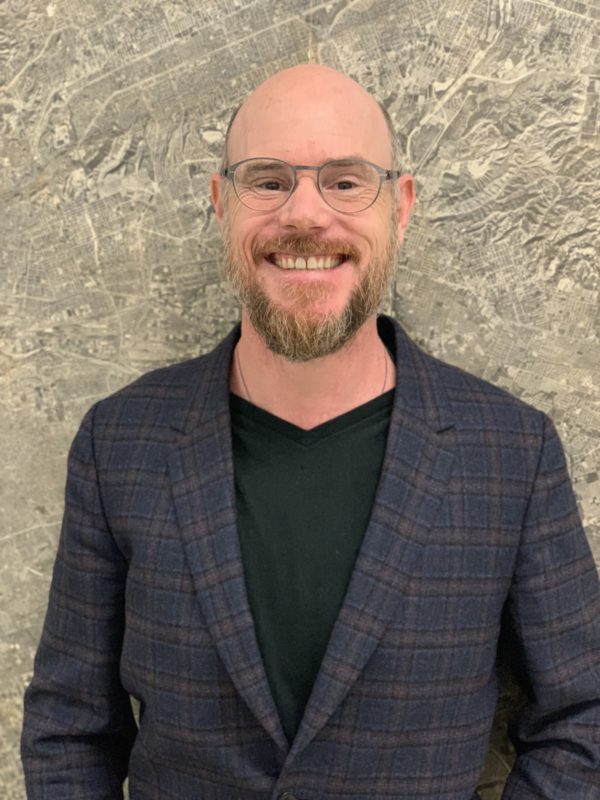
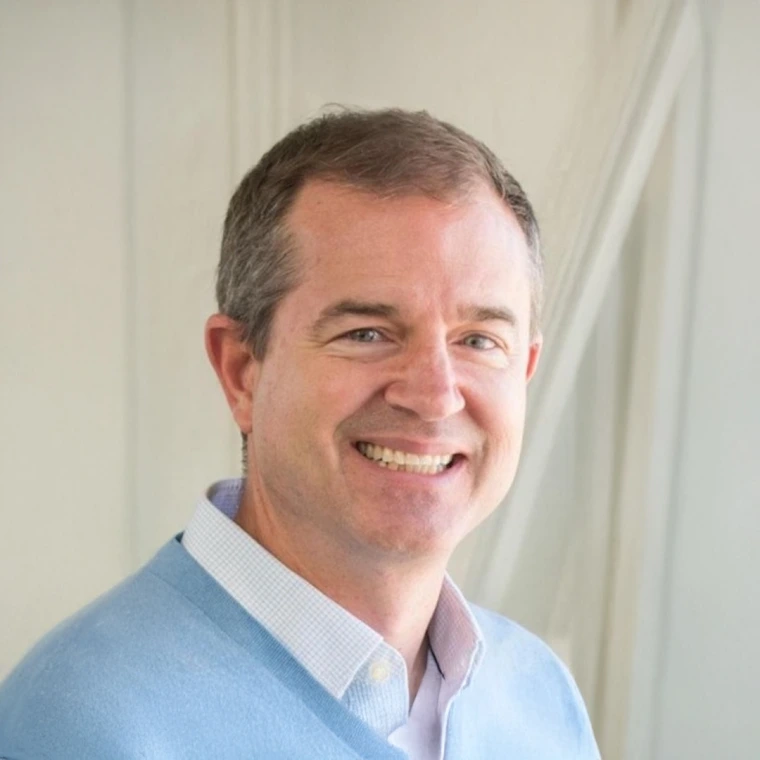
James L. Beck is the George W. Housner Professor of Engineering and Applied Science, Emeritus at Caltech, with joint appointments in Computing and Mathematical Sciences and Mechanical and Civil Engineering. His research develops theory and algorithms for stochastic system modeling, uncertainty propagation, and Bayesian updating of dynamic systems. Research interests include: Probability logic and computational Bayesian statistics Stochastic dynamics and system reliability theory Bayesian system identification Stochastically robust structural control Quantum stochastic mechanics Awards and Honors: Distinguished Member of ASCE Masanobu Shinozuka Medal Housner Medal European Association of Structural Dynamics Senior Research Prize
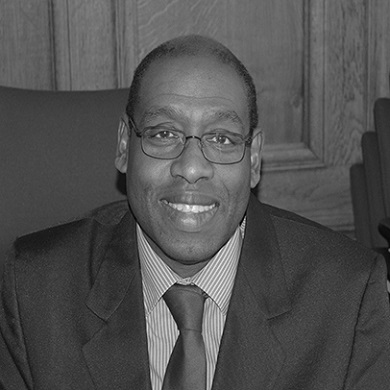
Dr. Glenford Mapp is an Associate Professor in the Department of Computer Science at Middlesex University. His research focuses on Cooperative Intelligent Transportation Systems (C-ITS), transport protocols for mobile environments, and edge computing frameworks such as the Y-Comm system. He explores intelligent algorithms for caching, network memory servers, and energy-efficient resource allocation in vehicular edge networks. His work emphasizes cybersecurity in healthcare, digital forensics for big data networks, and smart city infrastructure. Notable contributions include frameworks for secure service ecosystems, decentralized digital forensics, and AI-driven network design integrating IoT and cloud computing. He collaborates on projects involving vehicular communications, wireless medical networks, and post-pandemic healthcare security. Publications span topics like edge computing, vehicular networks, and smart city technologies. His research bridges theoretical models (e.g., queuing theory, particle swarm optimization) with practical implementations, including prototypes for traffic management and secure cloud-based services.
Gregory S. Okin is a Professor of Geography and Chair of the Department of Geography at UCLA, affiliated with the Institute of the Environment and Sustainability. He holds a PhD in Geochemistry from Caltech (2001) and has been at UCLA since 2006. His research focuses on dryland geomorphology, aeolian processes, and mineral aerosol dynamics, with emphasis on dust emission impacts on climate, ecosystems, and human health. Okin employs remote sensing, field studies, and modeling to analyze soil-vegetation-atmosphere interactions in arid regions, particularly wind erosion's role in grassland-to-shrubland transitions. He co-leads NASA's Earth Surface Mineral Dust Source Investigation (EMIT), creating global mineral maps using imaging spectroscopy. Recent work addresses dust-climate links, wildfire health impacts, and rangeland monitoring via satellite-cloud computing integration. Education Background: Ph.D., Geochemistry, California Institute of Technology (2001) M.S., Geology, California Institute of Technology (1997) B.A., Chemistry & Philosophy (Double Major), Middlebury College (1995) Postdoctoral Research, Geography, UC Santa Barbara (2001–2002) Research Interests: Dr. Okin's work integrates aeolian geomorphology , remote sensing , and Earth system modeling to explore: - Dust emission mechanisms and climate feedbacks - Dryland ecosystem resilience under climate change - Vegetation-soil connectivity in arid landscapes - Applications of imaging spectroscopy (e.g., EMIT mission) His projects often involve interdisciplinary collaborations, combining field measurements with computational modeling. Scientific Contributions: Key innovations include developing dust emission models (e.g., MAPTALE) and advancing spectral unmixing techniques for mineral mapping. His findings on pet food environmental impacts (e.g., carbon pawprints) have gained media attention.
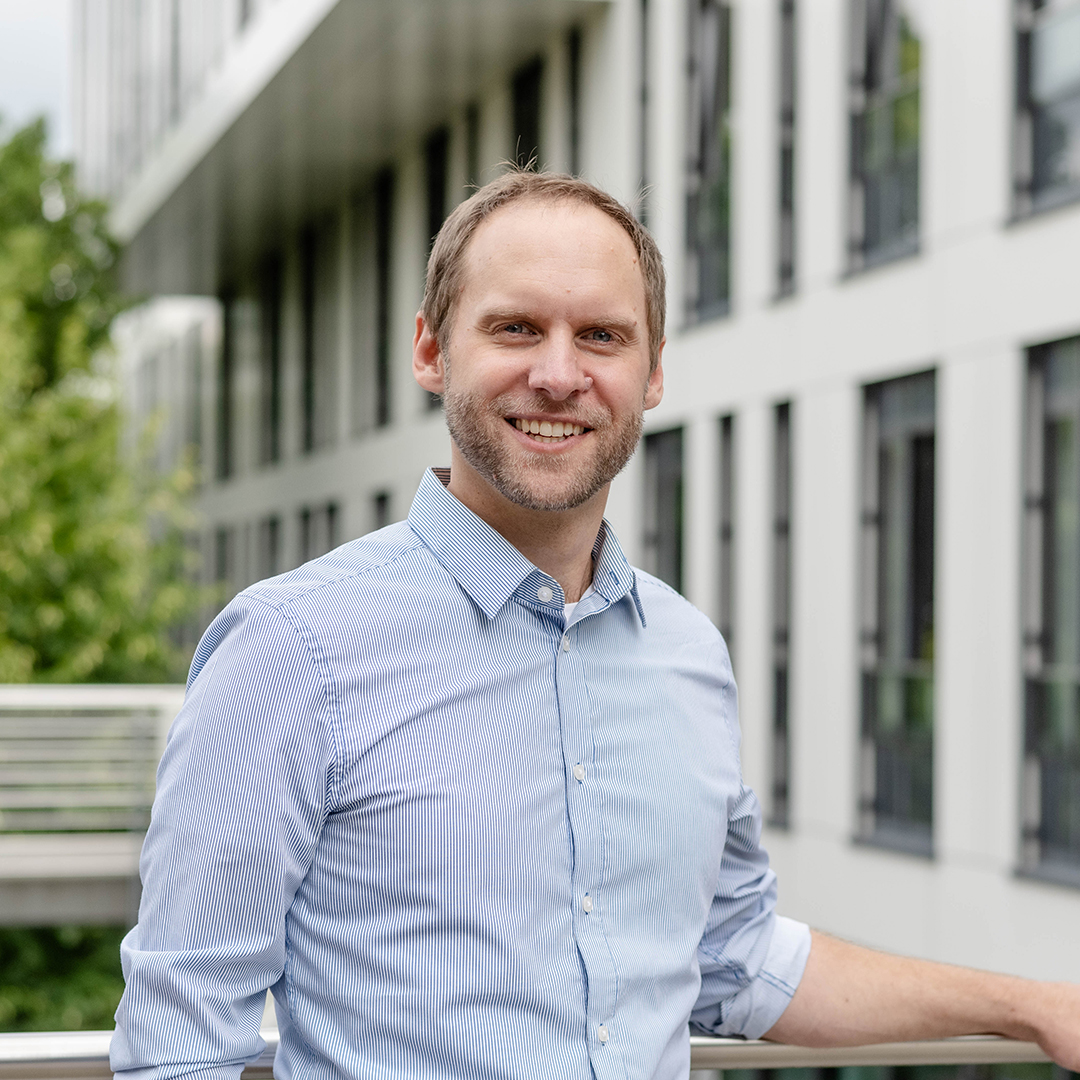
Prof. Dr. John Bulava is a Professor of Theoretical Hadron Physics at Ruhr University Bochum, affiliated with the Faculty of Physics and Astronomy. His research focuses on computer simulations of the strong nuclear force using lattice Quantum Chromodynamics (QCD) to study hadron properties and interactions, particularly hyperon scattering processes relevant to neutron stars. Prof. Bulava holds a B.Sc. in Physics and Mathematics from The George Washington University, an M.Sc. from Carnegie Mellon University, and a Ph.D. in Nuclear and Particle Physics from Carnegie Mellon University under Prof. Colin Morningstar. His research explores the dynamics of quarks within protons and neutrons, with special attention to how changes in fundamental constants like quark masses affect physical phenomena. Computational approaches form the cornerstone of his investigations into quantum field theories. Prof. Bulava's recent publications demonstrate consistent focus on resonance states and scattering processes in particle physics, employing lattice QCD methodologies. Key themes include baryon/meson resonances, finite-volume spectral analysis, and coupled-channel scattering studies. He has held positions at DESY (Germany), CERN (Switzerland), Trinity College Dublin (Ireland), and University of Southern Denmark before joining Ruhr University Bochum in 2023.
Charles B. Connor is Professor at the University of South Florida's School of Geosciences. His research focuses on physical volcanology and geophysics, specializing in volcanic hazard models including tephra dispersion, lava flow simulation, and probabilistic eruption forecasts. Research Areas: Computer modeling of volcanic processes Structural analysis of basaltic volcanic fields Heat and mass transfer in volcanic systems High-resolution gravity and magnetic surveys Connor develops computational tools for geovisualization and geocomputation, creating interactive simulations of volcanic phenomena and potential field geophysics. His publications demonstrate interdisciplinary approaches combining geology, atmospheric science, and computational modeling. He teaches courses in computational geology, field mapping, geovisualization, and potential fields geophysics, emphasizing scientific computing skills. Connor maintains the USF Volcanology Group developing open-source tools for geoscience education.
Wei Xue is an Assistant Professor in the Department of Physics at the University of Florida and a member of the Institute for Fundamental Theory (IFT). His office is located in the Nuclear Physics Building (NPB). His research group focuses on High Energy Theory, particularly particle physics, cosmology, and astroparticle physics, with an emphasis on dark matter phenomenology. His research investigates dark matter through multiple approaches: particle physics (utilizing colliders like the LHC), cosmological model-building, and astrophysical observations. Key themes include axion dynamics, gravitational wave signatures, boson stars, and novel detection methods for sub-GeV dark matter. Recent publications (2021–2025) demonstrate a strong focus on theoretical and phenomenological aspects of dark matter, including axion strings, gravitational particle production, boson star dynamics, and quantum computing applications. His work bridges collider physics, early-universe cosmology, and astroparticle detection strategies. He leads the High Energy Theory research group at IFT, fostering collaboration in fundamental physics. No awards, grants, or student advisements are documented in the provided text.
Joop Schaye is a Full Professor at Leiden University, affiliated with the Leiden Observatory within the Faculty of Science. His research focuses on galaxy formation, the intergalactic medium (IGM), and cosmological hydrodynamical simulations. He leads the FLAMINGO and COLIBRE projects, building on prior work with OWLS and EAGLE simulations. Role: Professor of Galaxy Formation and IGM Research Affiliation: Leiden Observatory, Faculty of Science Research & Group His group includes current PhD candidates (e.g., Jeger Broxterman, William McDonald) and postdocs (e.g., Victor Forouhar Moreno). Former students include Roi Kugel and Jorryt Matthee. Active collaborations involve MUSE surveys and Athena X-ray instrumentation. Awards Appointed member of the Royal Netherlands Academy of Arts and Sciences (KNAW) in 2025, recognizing his contributions to astrophysics. Teaching Teaches the Spring 2025 MSc course Large-scale structure and galaxy formation .
Edwin Jager is a Professor and Head of Division for Sensor and Actuator Systems at the Department of Physics, Chemistry and Biology (IFM) at Linköping University. He holds a part-time visiting professor role at the University of Wollongong (2012–2020) and coordinates the MSCA-DN SOFTWEAR project. His research focuses on electroactive polymers, soft actuators, and textile-based technologies for biomedical and robotic applications. Education: M.Sc.Eng. (Applied Physics) from University of Twente (1996), PhD in Applied Physics from Linköping University (2001), and Docent (2014). He co-founded Micromuscle AB (later acquired by Creganna Medical) to commercialize polypyrrole actuator technology. Research interests include textile actuators, bionic systems, and soft microrobotics. Key projects involve EU-funded WEAFING (textile muscles) and collaboration with the Swedish School of Textiles. His work integrates materials science, robotics, and biomedicine to develop smart textiles and wearable exoskeletons. Awards include the JSPS fellowship (2015/2017) and leadership roles in EuroEAP. Recent advancements include glucose-powered actuators and textile-based haptic interfaces. Grants and collaborations span national (Erling-Persson Foundation) and EU funding (Horizon 2020/2024). His lab, Bionics and Transduction Science, pioneers innovations in responsive fabrics and biohybrid systems.
Dr. Clare E. J. Watt is a prominent researcher in space physics at the University of Reading, with a distinguished publication record spanning over 15 years. Her work primarily focuses on magnetospheric physics, radiation belt dynamics, and space weather phenomena, contributing significantly to our understanding of Earth's space environment. Dr. Watt's research interests center on wave-particle interactions in Earth's magnetosphere, particularly examining ultra-low frequency (ULF) waves, plasmaspheric hiss, and their effects on radiation belt electrons. Her work bridges theoretical modeling with observational data, investigating how these waves influence electron acceleration and loss processes during geomagnetic storms. She has made significant contributions to understanding the temporal and spatial variability of wave-particle interactions, developing probabilistic mapping tools, and creating advanced models for radiation belt dynamics. Analysis of her recent publications reveals a strong emphasis on data-driven approaches to space physics, including machine learning applications for solar wind classification and ULF wave modeling. Her research demonstrates a consistent focus on quantifying uncertainties in space weather models and understanding the complex interplay between different wave modes in the magnetosphere. Dr. Watt frequently collaborates with leading space physics researchers across multiple institutions, contributing to major studies on space climate and radiation belt dynamics. Dr. Watt has co-authored numerous high-impact publications in leading journals including Journal of Geophysical Research: Space Physics, Geophysical Research Letters, and Space Weather. Her work has been instrumental in advancing our understanding of radiation belt dynamics and space weather prediction capabilities. She has also contributed to book chapters on ULF waves and Alfvén wave acceleration of auroral electrons, demonstrating her expertise in both observational and theoretical aspects of space physics.
Kanu Sinha is an Assistant Professor of Optical Sciences and Physics at the University of Arizona, serving as Joint Faculty in the College of Optical Sciences. His research focuses on quantum fluctuation phenomena, cavity and waveguide quantum electrodynamics (QED), collective atom-field interactions, and non-Markovian open quantum systems. He leads the Quantum Optics and Open Quantum Systems Group, which explores applications in quantum information processing and quantum sensing. His work emphasizes engineering light-matter interfaces to study macroscopic quantum behaviors. Education: Ph.D. in AMO Physics from the University of Maryland, College Park (2015). Research interests include collective radiation dynamics, quantum Brownian motion, and decoherence mechanisms. Recent publications highlight advancements in quantum sensing, entanglement engineering, and non-Markovian systems. His group collaborates closely with experimental teams to bridge theoretical models with real-world applications. Key contributions include studies on vacuum-induced quantum beats, collective decay mechanisms, and Casimir-Polder interactions. Current projects explore quantum fluctuation forces in nanoscale systems and mechanical quantum sensing for dark matter detection.
David W. Hahn serves as the Dean of the College of Engineering at the University of Florida. With a distinguished career in engineering and applied physics, he has established himself as a leading expert in laser spectroscopy and thermal energy conversion technologies. Dr. Hahn's research spans multiple disciplines within engineering and physical sciences, with a primary focus on Laser-Induced Breakdown Spectroscopy (LIBS) and related analytical techniques. His work encompasses: Development and application of LIBS for materials analysis Thermal energy conversion and solar fuel production Plasma physics and laser-matter interactions Chemical analysis of complex materials including aerosols and energy storage systems Advanced spectroscopic techniques for security and environmental applications Analysis of Dr. Hahn's recent publications (2019-2025) reveals a consistent research trajectory centered around laser-based analytical techniques, particularly LIBS. His work demonstrates increasing sophistication in applying these methods to challenging problems in energy storage safety, environmental monitoring, and materials characterization. Notably, there's a strong emphasis on practical applications of fundamental spectroscopic principles, with numerous publications addressing real-world challenges in battery safety, explosive detection, and renewable energy technologies. Dr. Hahn has made significant contributions to the development of laser-based analytical methods, particularly in: Advancing LIBS for aerosol and particle analysis Developing novel approaches for solar thermochemical energy conversion Creating improved methods for chemical characterization of energy storage systems Applying spectroscopic techniques to security and defense applications Contributing to fundamental understanding of laser-matter interactions
Alexei Koshelev is a Research Professor in the Department of Physics & Astronomy at the University of Notre Dame. Previously, he served as a Physicist at Argonne National Laboratory's Materials Science Division (1993-2024) and held visiting roles at Leiden University and the Landau Institute of Theoretical Physics. His research focuses on theoretical and computational studies of superconductivity, particularly vortex physics, Josephson effects, and magnetotransport in layered materials. Education includes a PhD from the Landau Institute of Theoretical Physics (1986) and a BS from Moscow Institute of Physics and Technology (1983). His work bridges theoretical modeling with experimental phenomena, emphasizing superconductors like Bi2Sr2CaCu2O8, RbEuFe4As4, and Kagome superconductors. Key research areas include vortex pinning mechanisms, terahertz emission from stacked Josephson junctions, and the interplay of magnetism and superconductivity. Notable contributions include studies on helical magnetic order in superconductors, anisotropic superconductivity, and critical current optimization through pinning landscape engineering. Awards include the 2015 Abrikosov Prize for Vortex Physics and Fellow of the American Physical Society (2003). His publications explore topics like magnetic field effects, material irradiation impacts, and high-field superconductivity in pulsed magnetic environments up to 86 T. Technical innovations include optimizing Bi2Sr2CaCu2O8 thin films for terahertz applications and developing numerical methods for simulating vortex dynamics in real-world superconductor landscapes.
Jose Miguel Reynolds Barredo is an Associate Professor and Director of the Doctorate in Plasmas and Nuclear Fusion at Carlos III University of Madrid. His research focuses on plasma physics, magnetohydrodynamics (MHD), and energy systems resilience. He leads studies on stellarator reactor design, plasma confinement optimization, and the integration of renewable energy into power grids. His work spans advanced MHD equilibrium solvers (e.g., SIESTA, FLIPEC) and fusion device optimization for ITER and Wendelstein 7-X. He also investigates climate impacts on renewable energy efficiency and power grid stability under high renewable penetration. Notable contributions include HVDC grid segmentation strategies and non-axisymmetric plasma transport modeling. Key Areas: Fusion reactor design, MHD stability, power grid resilience, climate-energy interactions Tools: SIESTA, FLIPEC, GENE, OPA cascading blackout model Projects: Doctorate in Plasmas and Nuclear Fusion, W7-X bootstrap current studies, climate-energy system interdependencies Research emphasizes computational plasma physics and interdisciplinary energy solutions, blending theoretical, numerical, and applied engineering approaches.
Andreas Winter is an ICREA Research Professor at Universitat Autònoma de Barcelona and holds a Hans Fischer Senior Fellowship at TUM-IAS, Technical University of Munich. He specializes in quantum and classical information theory with affiliations at the University of Cologne's Department of Quantum Information and Computation. His research examines fundamental limits in quantum communication, entropy applications, and quantum computing foundations. Education: Diploma in Mathematics, Freie Universität Berlin Ph.D. in Mathematics, Universität Bielefeld Research: His interdisciplinary work bridges quantum Shannon theory, thermodynamics, and discrete mathematics, exploring quantum channel capacities, information tradeoffs, and cryptographic protocols. Recent publications demonstrate advances in quantum coding efficiency and high-dimensional quantum systems. Awards: 2022: Hans Fischer Senior Fellowship, Alexander von Humboldt Prize, QCMC Quantum Award 2017: IEEE Information Theory Paper Award 2012: Whitehead Prize (LMS) 2007: Philipp Leverhulme Prize Leadership: Leads the Quantum Information Theory Focus Group at TUM-IAS, collaborating with Prof. Holger Boche on quantum communication frameworks.
Ewold Verhagen is a **Professor of Applied Physics (part-time)** at Eindhoven University of Technology and **Group Leader** of the Photonic Forces Group at AMOLF , Amsterdam. His research focuses on light-matter interactions at the nanoscale , particularly coupling between photons and phonons in nano-optomechanical systems. He explores fundamental principles like spatiotemporal symmetries and quantum mechanics, with applications in sensing, metrology, and communication. Education & Career : PhD in Physics from AMOLF (FOM Institute), followed by a postdoc at EPFL under Tobias Kippenberg. Key breakthroughs include demonstrating optomechanical cooling to near-quantum ground states and pioneering topological photonics in nanoscale systems. Research Interests : Quantum optomechanics, topological photonics, nano-optomechanical sensing, synthetic gauge fields, and photonic crystal engineering. His work bridges theoretical and experimental approaches to push boundaries in nanophotonics. Achievements : Recipient of the **NWO Vidi Grant (2014)** and **ERC Starting Grant (2017)**. Over 50 peer-reviewed publications, including articles in Nature , Science Advances , and Nano Letters . Labs/Teams : Leads the Photonic Forces Group at AMOLF, collaborating with experts in optomechanics, nanophotonics, and materials science. Active in training PhD students and postdocs in cutting-edge nanoscale physics.