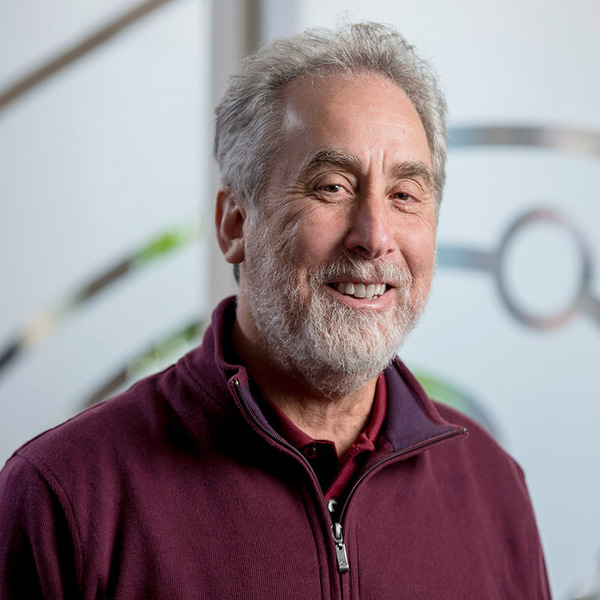
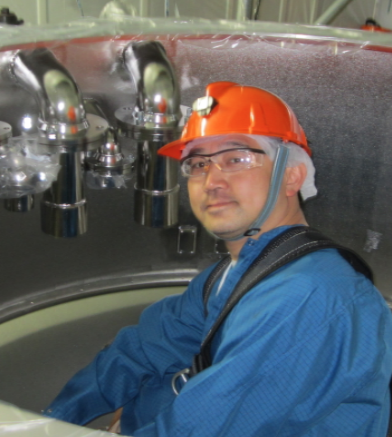
Mitchell Wayne is a Professor in the Department of Physics and Astronomy at the University of Notre Dame. His research centers on proton-proton collisions at the CMS detector at CERN's Large Hadron Collider, including Higgs boson studies and searches beyond the Standard Model. Honors include American Physical Society Fellowship and multiple teaching awards. His detector R&D focuses on fiber tracking, calorimetry, and Silicon Photomultipliers for CMS upgrades. Awards: Fellow of APS, Joyce Teaching Award (2019), Shilts-Leonard Teaching Award (2002), Kaneb Teaching Award (1999) Student Advising: Supervised 5 PhD students in particle physics and detector development
Professor Guennadi Borissov is affiliated with the Department of Physics at Lancaster University , actively participating in the ATLAS experiment at CERN . His research focuses on CP violation in particles containing b quarks , aiming to explain the universe's matter-antimatter imbalance. Research Interests: Dr. Borissov investigates deviations from lepton flavor universality (LFU) using top quark decays to tauons. His work involves precision measurements of branching fractions and testing Standard Model predictions through ATLAS detector data . Recent Publications (2025): His contributions include studies on jet track functions, Higgs boson decays, W-boson cross-sections, and searches for new physics phenomena like heavy neutral leptons and long-lived particles. These articles emphasize Standard Model validation , CP violation , and detector performance . Grants & Projects: He is involved in responsive and consolidated grants funded by the STFC , supporting Lancaster's Experimental Particle Physics group and ATLAS-related research (2022–2026). PhD Supervision: Dr. Borissov supervises Beltran Fernandez Barbadillo , focusing on top quark decay measurements. Contact: Department of Physics, B016, B-Floor, Physics Building, Lancaster University. Email: g.borissov@lancaster.ac.uk .
Pearl Sandick is a Professor in the Department of Physics and Astronomy and Interim Dean in the College of Science at the University of Utah. She has previously served as Associate Chair of the Department of Physics and Astronomy and Associate Dean for Faculty and Research in the College of Science. Her academic journey at the University of Utah began in 2011 as an Assistant Professor, progressing to Associate Professor in 2017, and achieving the rank of Professor in 2022. Her educational background includes: BA in Mathematics from New York University (2003) PhD in Physics from the University of Minnesota (2008) Sandick is a theoretical particle physicist whose research focuses on physics beyond the Standard Model, with particular emphasis on dark matter. Her work spans theoretical modeling, connections to astrophysical observations, and implications for experimental detection. She investigates various dark matter candidates and their potential signatures in current and future experiments, including collider searches, direct detection experiments, and indirect detection through astrophysical observations. Her research also extends to connections between particle physics and cosmology, including early universe phenomena and implications for cosmic structure formation. She has developed computational tools like MADHAT for dark matter analysis and has made significant contributions to understanding how stellar evolution can constrain axion physics. Her scholarly contributions have been recognized with several prestigious awards: University of Utah Early Career Teaching Award (2016) University of Utah Distinguished Mentor Award Linda K. Amos Award for Distinguished Service to Women University of Utah Presidential Scholar Sandick has been actively involved in mentoring graduate students, as evidenced by her teaching of PhD thesis research and Master's research courses. She has secured significant research funding from the National Science Foundation and other agencies to support her work on dark matter, dark energy, and new physics. Her grant portfolio includes projects on theoretical particle physics, connections to astrophysical observations, and studies on graduate education reform following a departmental tragedy. She is an active member of the American Physical Society, having served as Chair of the regional Four Corners Section in 2021-2022, demonstrating her commitment to the broader physics community and leadership in her field.
Roles & Affiliation: Research Professor of Physics and Senior Staff Scientist at the Thomas Jefferson National Accelerator Facility. Specializes in nuclear and particle physics with expertise in experimental hadronic physics and electromagnetic probe techniques. Education: BSc in Physics and Mathematics, University Mohamed V, Rabat, Morocco (1984) MSc in Theoretical Physics, University Mohamed V, Rabat, Morocco (1986) Diplôme des Etudes Approfondies, University of Blaise Pascal, France (1987) PhD in Physics, University of Blaise Pascal, France (1991) with thesis: Measurement of the Nucleon Axial Form Factor from Low Energy Pion Electroproduction advised by Prof. Pierre Y. Bertin Strategic Laboratory Leadership Program, University of Chicago Booth School of Business (2010) Research Focus: Experimental investigations into nucleon structure using electromagnetic probes, including axial form factor measurements. Active in pion electroproduction studies and hadronic physics. Engaged in advancing detector technologies through her work on drift chamber tracking systems. Grants & Advising: No specific grants or advisees listed in available records. Labs & Facilities: Primary affiliation with Jefferson Lab's nuclear physics division, contributing to accelerator-based experiments in fundamental nuclear structure.
Mark C. Chen is a Professor of Physics at Queen's University, holding the Gordon and Patricia Gray Chair in Particle Astrophysics and serving as a CIFAR Senior Fellow. He leads research in neutrino physics, geo neutrinos, and particle astrophysics, with a focus on experiments like SNO+ and the Sudbury Neutrino Observatory (SNO). His work addresses fundamental questions in particle physics, Earth's composition, and dark matter detection. Affiliations: Queen's University, CIFAR Roles: Chairholder, Senior Fellow, Department Head Chen's research spans neutrino oscillations, geo neutrino detection, and novel scintillator technologies. He contributed to SNO's discovery of neutrino flavor oscillations and pioneered SNO+'s liquid scintillator design to explore low-energy neutrinos, neutrinoless double beta decay, and Earth's radiogenic heat. His work bridges particle physics and geoscience, seeking answers to questions like neutrino mass and dark matter properties. His teaching includes advanced courses in mechanics, experimental physics, and astroparticle physics (PHYS 225-844). He has published extensively on neutrino experiments and collaborates internationally on projects like Borexino and SNO+. Awards: Gordon & Patricia Gray Chair, CIFAR Senior Fellowship Chen's grants and collaborations fund detector development, neutrino studies, and outreach. He co-leads SNO+ and advises on low-background environments for dark matter detectors. His lab focuses on scintillator optimization and neutrino detection technologies.
Professor Malcolm Fairbairn is a faculty member at King's College London's Department of Physics, part of the Faculty of Natural, Mathematical & Engineering Sciences. His research focuses on the intersection of cosmology, particle physics, and astrophysics, particularly dark matter, dark energy, and cosmological inflation. He leads projects like the ERC Consolidator Grant (2015–2020) investigating dark matter in the early Universe. He collaborates with initiatives such as the MoEDAL experiment at CERN (magnetic monopole searches) and the Cherenkov Telescope Array (CTA) for gamma-ray astronomy. His interests extend to gravitational waves, supermassive black hole formation, and particle astrophysics. Fairbairn has contributed to studies on axion dark matter, primordial black holes, and dark matter constraints from dwarf galaxies. He is affiliated with the Theoretical Particle Physics & Cosmology (TPPC) Group, exploring beyond-Standard-Model physics, including supersymmetry and extra dimensions. Publications span topics like dark matter relic abundance, JWST observations of black holes, and LHC searches for exotic particles. He has advised on outreach projects like the 'Dark Matter' exhibition at Science Gallery London and interviews with alumni (e.g., Royal Navy submariner Chris Tuckley).
Prof. Stanley Lai is a Professor of Experimental Particle Physics at the Institute of Physics, University of Göttingen, Germany, with secondary membership in the Institute of Informatics. He conducts research as a member of the ATLAS experiment at CERN's Large Hadron Collider (LHC), focusing on proton-proton collisions at 13/14 TeV to investigate fundamental particles and electroweak symmetry breaking. His educational background includes: B.A.Sc. from the University of Toronto (1999) M.Sc. from the University of Toronto (2001) Ph.D. from the University of Toronto (2007) Prof. Lai's research centers on precision measurements of the Higgs boson's properties—including quantum numbers and couplings—to deepen understanding of electroweak symmetry breaking. He actively pursues searches for new physics beyond the Standard Model at TeV energy scales, leveraging the unprecedented collision energies of the LHC. His work bridges theoretical predictions with experimental validation through the ATLAS detector. He joined the University of Göttingen in 2015 as a Professor, following his tenure as Akademischer Rat (permanent academic position) at the University of Freiburg (2011-2015) and Postdoctoral Researcher there (2006-2011).
Stephanie Käs is a Researcher at RWTH Aachen University specializing in Human Pose Estimation (HPE) and gesture recognition using CNN-based methods and Video Language Models applied to fisheye imagery. Her interdisciplinary background spans particle physics and railway engineering data science projects, with strong emphasis on science communication and agile project management. Her research focuses on overcoming challenges in 3D human pose estimation from distorted fisheye images, temporal consistency in motion recognition, and gesture-based human-robot interaction. She actively develops novel approaches for monocular 3D pose estimation and foundation model applications in robotics, with contributions to datasets like FISHnCHIPS for fisheye image analysis. Stephanie supervises multiple ongoing theses including motion recognition, visual anonymization, and anatomical realism evaluation in AI-generated imagery. She leads the Stratospheric Balloon Research Project (StratoGI) at JLU Gießen and has extensive teaching experience in machine learning, computer vision, and statistics at RWTH Aachen and JLU Gießen.
Prof. Rainer Wallny is a Full Professor of Physics at ETH Zurich and Head of the Institute for Particle Physics and Astrophysics. His research focuses on high-energy particle physics, particularly through the CMS experiment at the Large Hadron Collider (LHC), emphasizing Higgs boson studies and detector upgrades. He leads projects on Higgs boson characterization in photon and b-quark final states, as well as CMS pixel detector upgrades for Phase-2. His group also explores future collider technologies and contributes to teaching at all academic levels. Education: Studied Physics at Universities of Tübingen, Washington (M.Sc., 1994), and Heidelberg (Diplom, 1996) PhD in Physics from University of Zurich CERN Research Fellow (2001–2003) Faculty at UCLA (2003–2010), promoted to Full Professor in 2010 Joined ETH Zurich as Full Professor in 2010 Research Interests: Higgs boson properties and decay channels Supersymmetry searches in CMS data Detector development for CMS (pixel trackers, diamond sensors) Phase-2 LHC upgrade technologies Experimental particle physics at high-luminosity colliders Grants and Advising: Supervised over 20 PhD students since 2010 Leadership roles in CMS collaboration and detector R&D initiatives Active in curriculum design for physics education at ETH Labs & Teams: Wallny Group at ETH Zurich Institute for Particle Physics and Astrophysics (D-PHYS) Collaborations with CERN and global CMS teams
Pablo Parra Espada is an Associate Professor at the Department of Automática, University of Alcalá (Spain), affiliated with the Space Research Group (SRG-UAH). He holds a PhD from the University of Alcalá (2012) titled Integración de tecnologías de desarrollo y análisis basadas en componentes bajo un enfoque multi-plataforma , supervised by Dr. Sebastián Sánchez Prieto and Dr. Óscar Rodríguez Polo. His research focuses on space systems engineering , particularly in RISC-V processor design , embedded systems , and model-driven engineering . Key areas include hardware-software co-design for satellite systems, real-time computing, and fault-tolerant architectures. He has contributed to the Solar Orbiter mission through work on the Energetic Particle Detector (EPD) and its on-board software validation. His recent work emphasizes virtualization techniques for LEON processors, FPGA-based digital beamforming , and spaceborne phased array systems . He also explores model-driven approaches for automated configuration of ground support equipment. His interdisciplinary contributions bridge computer architecture with aerospace applications. Prof. Parra Espada has published extensively on topics such as hardware performance monitoring, memory management units for satellites, and system-level verification of space software. His work combines rigorous engineering methodologies with cutting-edge technologies to address challenges in space instrumentation and embedded systems.
Allen Mincer is a Professor of Physics and Collegiate Professor at New York University's College of Arts and Science, Department of Physics. He leads research in experimental high energy particle physics and astrophysics as a member of the NYU Experimental Particle Physics Group, with major contributions to the ATLAS and Milagro collaborations. His educational background includes a Ph.D. from the University of Maryland, College Park (1984) and a B.S. from Brooklyn College (1978). Mincer's research spans particle physics discoveries (top quark, Higgs boson) and cosmic ray astrophysics. He specializes in detector development, data analysis for high-energy collisions, and cosmic ray observations. His work integrates experimental physics with innovative educational approaches, particularly in physics pedagogy. Analysis of his publications (2020-2005) reveals dual research trajectories: LHC-focused studies on Higgs physics, supersymmetry searches, and trigger systems via ATLAS, alongside Milagro-based cosmic ray research mapping TeV emissions and anisotropies in the Galactic plane. His scientific recognition includes: Teach/Tech Award, New York University (2018) Collegiate Professor appointment at NYU (2008) Golden Dozen Teaching Award, NYU (1995, 2000) Mincer mentors undergraduate and graduate researchers while pioneering physics education through flipped classrooms, experimental pedagogy courses, and curriculum development for courses ranging from introductory physics to graduate particle physics. He actively contributes to the NYU Experimental Particle Physics Group, maintaining leadership roles in ATLAS detector operations and Milagro cosmic ray data analysis.
Corbin E. Covault serves as Professor and Chair of the Department of Physics at Case Western Reserve University (CWRU), leading experimental research in particle astrophysics and cosmic ray physics through major international collaborations including the Pierre Auger Observatory and Cherenkov Telescope Array (CTA). B.A., Massachusetts Institute of Technology (1985) Ph.D., Harvard University (1991) Covault's research centers on experimental particle astrophysics with emphasis on ultra-high energy cosmic rays, gamma-ray astronomy, and advanced instrumentation. His group develops photodetection systems, GPS timing solutions, and wireless communications for cosmic ray detectors. Key projects include investigating macroscopic dark matter using Auger fluorescence telescopes, designing a 100+ meter diameter 'flat' telescope for exoplanet detection, and pioneering spectral CT imaging with quantum dot X-ray detectors. His instrumentation work directly impacts next-generation observatories like CTA, where his team deploys silicon photomultiplier camera systems. Analysis of Covault's 15 most recent publications (2016-2019) reveals dominant research trends in cosmic ray mass composition, anisotropy studies, and multi-messenger astrophysics. His work consistently bridges particle physics and astrophysics through ultra-high energy cosmic ray observations, neutrino follow-ups of gravitational wave events, and development of novel detection methodologies. Key thematic areas include hadronic interaction modeling at extreme energies, radio-based cosmic ray detection, and searches for exotic particles like magnetic monopoles. Covault leads the CWRU group in the Pierre Auger Collaboration as a member of its 15-person Technical Board, overseeing instrument performance and data integrity. His group received MRI grant funding for CTA camera development starting August 2018, focusing on GPS timing synchronization and rapid trigger processing. Collaborative projects include spectral CT imaging with Philips and Wayne State University, optical SETI telescope development, and macro dark matter investigations with Glenn Starkman. His laboratory activities center on the Auger and CTA observatories, with instrumentation specialties in photodetection systems, GPS timing networks, and wireless data transfer. The CWRU group maintains active roles in Auger's science analysis teams and CTA's prototype deployment at Mt. Hopkins Observatory, Arizona.
Lena Funcke is an Assistant Professor of Theoretical Physics at Bonn University. Her research focuses on quantum computing, lattice field theory, and machine learning applications in physics. She explores topics such as topological phases, gauge theories, and quantum simulations. Her work bridges high-energy physics and computational methods, with a particular emphasis on overcoming noise challenges in quantum algorithms and leveraging machine learning for optimization tasks. Funcke’s research projects include C01 and C03, focusing on Hamiltonian lattice formulations and quantum computing methods for gauge theories. She investigates hybrid approaches combining Monte Carlo simulations with quantum computing to study quantum electrodynamics and topological systems. Her contributions highlight the interplay between theoretical physics and cutting-edge computational tools. Her publications span quantum algorithms for particle physics experiments, error mitigation strategies, and the application of normalizing flows to complex systems like the Hubbard model. She actively contributes to advancing the theoretical foundations of quantum computing and its practical implementation in solving fundamental physics problems.
Jonas Strandberg is an Associate Professor at KTH Royal Institute of Technology's Department of Physics, part of the School of Engineering Sciences. His research focuses on particle physics, particularly within the ATLAS Collaboration at the Large Hadron Collider (LHC). He contributed to the Higgs boson discovery and currently studies its properties. Strandberg has been involved in detector development, including the HGTD timing detector for the LHC upgrade. He holds a PhD from Stockholm University (2006) and worked as a postdoc at the University of Michigan (2006-2011) before joining KTH. His teaching responsibilities include courses on experimental particle physics, statistical methods, and engineering skills. Research interests span high-energy physics, collider technology, and detector systems. Research Highlights: Member of the ATLAS Collaboration since 2011 Key contributor to Higgs boson measurements Developed timing detector systems for LHC upgrades Published extensively on particle physics and accelerator technology Teaching & Supervision: Course responsible for Experimental Particle Physics (SH2203) Teaching roles in Applied Modern Physics (SH1015), Embedded Systems Design (IL2232), and more Professional Activities: ATLAS Data Preparation Coordinator (2015-2017) Member of the Particle and Astroparticle Physics Group at AlbaNova University Centre
Spyridon Pavlidis is an Associate Professor in the Department of Electrical and Computer Engineering at North Carolina State University, leading the Laboratory for Electronics in Advanced Devices and Systems (NCSU LEADS). He is affiliated with the ME Commons Hub (CLAWS), PowerAmerica, FREEDM, and ASSIST Research Centers. His research focuses on semiconductor devices, wide bandgap materials (GaN/AlN), and their applications in power electronics, sensing, and bioelectronics. Pavlidis holds a PhD from Georgia Tech (2016) and a Master's from Imperial College London (2010). Education: Ph.D. in Electrical and Computer Engineering, Georgia Institute of Technology (2016) M.Eng in Electrical and Electronic Engineering, Imperial College London (2010) His expertise spans power electronics packaging, microwave technologies, and biosensing. Recent work includes developing GaN and AlN-based devices for high-power and high-frequency applications. Pavlidis has received prestigious awards, including the 2022 NSF CAREER Award and the 2022 Bennett Faculty Fellowship. He actively contributes to IEEE committees and technical program reviews. His funded research includes defect-state analysis in GaN diodes and bioelectronic sensors for medical applications. Pavlidis collaborates across interdisciplinary teams, advancing next-generation semiconductor technologies and wearable biosensors.