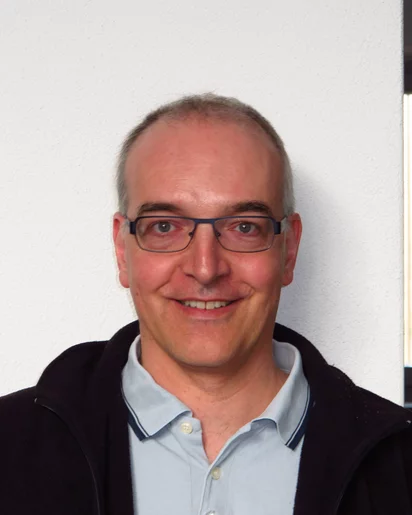
Dominic Greiffenberg is a researcher at the Paul Scherrer Institute (PSI), focusing on the development of High-Z sensors for advanced X-ray detection. He is affiliated with the Laboratory for X-ray Nanoscience and Technologies, where he leads technical advancements in detector hybridization and characterization. Education: PhD in physics from the University of Freiburg (Germany), with research at the University of Karlsruhe and international stays at Czech Technical University and University of Canterbury. His research targets extending detector energy ranges beyond silicon limitations, particularly for photon energies above 20 keV. He employs high-granularity detectors like JUNGFRAU/MONCH to study spectral information and sensor optimization. Recent publications highlight work on GaAs:Cr sensors, radiation hardness, and hybrid pixel detector simulations. Key trends in his publications (2021–2025) include advancements in soft X-ray detection, radiation-hard materials, and on-chip digitization techniques. Collaborations span institutions like European XFEL and teams working on synchrotron radiation.
Jean-Michel Sallese is a Senior Researcher at École polytechnique fédérale de Lausanne (EPFL), affiliated with multiple units including the Group of Semiconductor Devices (GR-SCI-IEL) , SEL-ENS , and EDMI-GE . His work focuses on semiconductor device modeling, biosensors, radiation effects in electronics, and microfluidic systems. Research Areas: Field Effect Transistor (FET) physics and modeling Radiation-induced soft errors in integrated circuits High-energy particle solid-state sensors Nanowire and junctionless FET biosensors Microfluidic mixer modeling Recent publications highlight advancements in ISFET biosensors , radiation-hard CMOS , and negative capacitance FETs , with applications spanning medical diagnostics, high-energy physics, and industrial monitoring. He supervises PhD students and co-developed the EDLAB initiative for device modeling. Teaching includes core electronics courses and specialized topics like Modeling Micro-/Nano-Field Effect Devices . No scientific awards are explicitly mentioned in the provided texts.
Dr. Wolfram Erdmann is a Researcher at the Paul Scherrer Institute (PSI) in Villigen, Switzerland, affiliated with the Laboratory for Particle Physics. His work focuses on advanced detector technologies for high-energy physics experiments, particularly within the CMS Collaboration at CERN's Large Hadron Collider (LHC). Research Interests: Dr. Erdmann specializes in particle physics instrumentation, with emphasis on silicon pixel detector development, radiation-hardened sensor design, and performance optimization for high-luminosity collider environments. His research spans detector upgrades, beam testing, and data analysis for heavy-flavor quark production. Publication Trends: Recent work (2010–2017) centers on CMS pixel detector upgrades for Phase I and II, radiation damage characterization, and test-beam validations. Earlier publications (2006–2009) detail foundational contributions to readout electronics, mechanical design, and qualification protocols for LHC experiments. Collaborations: Active member of the CMS and H1 Collaborations, contributing to technical design reports, hardware commissioning, and physics analyses.
Dr. Jakub Tkaczuk is a Senior Researcher at ETH Zürich's Global Health Engineering department, specializing in mechanical engineering and thermodynamics. His work integrates data analysis and numerical optimization to address global challenges in sustainable technology and health systems. He holds a PhD in cryogenics and physics from Université Grenoble Alpes and has contributed to EU-funded projects like H2020 and the Marie Sklodowska-Curie network. Education: PhD in Cryogenics and Physics (Université Grenoble Alpes), alumni of EU H2020 and Marie Sklodowska-Curie programs. Research focuses on thermodynamic modeling, sustainable engineering, and applications in global health. Notable projects include the Future Circular Collider (FCC) and European Spallation Source, alongside initiatives in waste management and renewable energy in developing regions. His recent work emphasizes low-cost engineering solutions for communities, such as biogas monitoring systems and incinerator designs in Malawi. Lab responsibilities include leading mechanical and wet labs for the Global Health Engineering group, and supervising student research. His articles span cryogenics, sustainable infrastructure, and high-energy physics collaborations.
Viktoria Hinger is a researcher at the Detector Group within the Center for Photon Science at Paul Scherrer Institute (PSI). She specializes in detector technologies for high-energy particle physics and photon science, with a focus on hybrid pixel detectors and soft X-ray applications. Her work bridges particle physics instrumentation and advanced X-ray experiments. Physics degree from Vienna University of Technology PhD at Vienna Institute of High Energy Physics Her research interests include: Optimization of charge-integrating hybrid pixel detectors for soft X-ray experiments Development of high-speed, large-area detectors for Resonant Inelastic X-ray Scattering (RIXS) Integration of Low-Gain Avalanche Diode (LGAD) sensors with internal signal amplification Exploration of JUNGFRAU and MÖNCH readout chips for synchrotron applications Her publications highlight advancements in hybrid pixel detectors, soft X-ray detection, and synchrotron instrumentation. Recent work includes RIXS-specific detector design and high-rate X-ray imaging. Scientific achievements: Recipient of CMS Thesis Award (2021) Marie Skłodowska-Curie Postdoctoral Fellowship Principal investigator for SNSF Ambizione grant-funded RIXS detector project (2024) She supports calibration and user experiments with the JUNGFRAU detector at PSI, while leading research on next-generation soft X-ray detectors with micron-scale spatial resolution capabilities.
Jiaguo Zhang is a Researcher at the Paul Scherrer Institute (PSI) in Switzerland, affiliated with the Center for Photon Science and Laboratory for X-ray Nanoscience and Technologies . He specializes in hybrid X-ray detectors for free-electron lasers (FEL) and synchrotron radiation sources. Research Interests: Development of radiation-hard hybrid pixel detectors Thin entrance window technology for soft X-ray detection Low gain avalanche detectors (LGAD) optimization Quantum efficiency and signal-to-noise ratio improvements Calibration procedures for high-rate detectors Simulation and modeling of charge transport in silicon sensors Scientific Awards: Marie Curie Fellowship (MC-PAD), 2009 Responsibilities: Lead developer of the Gotthard-II detector’s ASIC components and coordinator for soft X-ray sensor projects in collaboration with FBK. Supports detector commissioning at EuXFEL and synchrotron facilities. Email: jiaguo.zhang@psi.ch
Dr. Ljiljana Morvaj is a researcher at the Paul Scherrer Institute (PSI) in Villigen, Switzerland, specializing in muon physics and particle detection within the Laboratory for Particle Physics. Her work centers on cutting-edge experimental research at the intersection of particle physics and precision measurement. Her primary research interests include: Searching for charged lepton flavor violation (cLFV) and new resonances in muon decays via the Mu3e experiment Measuring the muon electric dipole moment using the muEDM experiment Coordination of the Proton Irradiation Facility (PIF) and Electron Monochromator (EMON) Previous involvement in Higgs boson decay analyses at the ATLAS experiment, LHC Her experimental focus spans precision muon physics, exotic particle searches, and detector system development for high-energy physics applications. Current work emphasizes probing beyond-Standard Model physics through rare muon decay channels and precision electromagnetic measurements. No scientific awards are documented in the provided materials. Dr. Morvaj leads critical facility operations at PSI while contributing to international collaborations including Mu3e and muEDM. Her technical coordination of PIF and EMON supports diverse radiation testing and electron beam applications. Prior LHC experience at ATLAS demonstrates cross-experiment expertise in new physics searches. She maintains active experimental programs through facility leadership and participation in major international particle physics initiatives.
Prof. Peter Wurz is a Professor at the University of Bern's Faculty of Science and Chair of the Center for Space and Habitability (CSH) Steering Committee. His research focuses on planetary science, exosphere dynamics, and instrumentation for space exploration. He leads studies on Mercury's helium exosphere, icy moons like Europa, and cometary processes. Prof. Wurz is actively involved in missions such as the Jupiter Icy Moons Explorer (JUICE) and Solar Orbiter, contributing to instruments like the Particle Environment Package (PEP). His work emphasizes laser-based mass spectrometry for in-situ analysis of organic molecules and habitability indicators. He also explores surface interactions with solar wind, exosphere modeling, and innovative instrumentation for future missions to Pluto, Uranus, and the Interstellar Medium. Education details are not explicitly stated, but his academic trajectory aligns with advanced roles in space and planetary science. His research spans Mercury's magnetosphere, cometary outburst mechanisms, and the development of compact, autonomous analytical tools for planetary surfaces. Key projects include the DIMPLE experiment for lunar dating and the ORIGIN instrument for biosignature detection on icy moons. Research interests are structured around planetary surface processes, exosphere evolution, and advanced instrument design. He collaborates on missions targeting Jupiter's icy moons, comets, and Mercury, with a focus on understanding volatile release mechanisms and solar wind interactions. His work bridges theoretical modeling (e.g., SpuBase sputtering database) and experimental validation using lab analogs and spaceborne sensors.
Michael Steinacher is a Researcher affiliated with the Department of Physics at the University of Basel, within the Faculty of Humanities and Natural Sciences. His work focuses on experimental particle physics, detector technology, and quantum computing. He contributes to large-scale experiments like PANDA at FAIR and has expertise in calorimeter design and nuclear physics instrumentation. His research spans topics including antiproton annihilations, neutron form factors, and exotic hadron spectroscopy. Steinacher collaborates internationally on projects such as the NCCR SPIN and Basel QC2 Center for quantum computing advancements. He holds an honorary doctorate (Dr. hc) and maintains active roles in laboratory infrastructure and technical development within the department.
Delphine Bechevet is an Associate Professor at the Geneva School of Landscape, Engineering and Architecture, part of HES-SO (University of Applied Sciences and Arts Western Switzerland). She specializes in RFID technology, antenna design, electromagnetics, and printed electronics. Her work focuses on miniaturization of wireless systems for outdoor sports equipment and medical applications, particularly neonatal monitoring. BSc in Computer Science and Communication Systems (HES-SO) MSc in Applied Electromagnetics (HES-SO Master) Her research explores low-cost antenna fabrication using conductive inks on plastics, material characterization for wireless applications, and RFID systems in harsh environments. Recent projects include 3D GPS antennas for sports watches and battery-less temperature sensors via RFID-polymer integration. Scholarly trends show expertise in RFID tag innovation (UHF/microwave frequencies), ultra-wideband antennas, and radiation effects on silicon detectors. She leads projects like UHF RFID tags for livestock tracking while collaborating on medical IoT systems and conference organization (IoT Week 2017). Current projects involve the Conception de tag RFID UHF miniaturisé (2017-2021) as main applicant and the Montre connectée (2020) as co-applicant. Completed initiatives include GPS antenna design for sports watches (2017-2019), the BB-Sensors medical monitoring system (2015-2017), and IoT Week 2017 organization.
Edoardo Lopriore is a Researcher at the Laboratoire d'électronique et structures à l'échelle nanométrique (LANES) within the School of Engineering (STI) at École Polytechnique Fédérale de Lausanne (EPFL). His research focuses on nanoscale electronic systems, layered materials, and optoelectronic devices, particularly in van der Waals heterostructures. He has contributed to the development of ultrafast photodetectors, tunable exciton dynamics, and cryogenic ASICs for particle physics experiments. His work intersects semiconductor physics, quantum devices, and materials science, with applications in both fundamental research and advanced technology. Key themes in his publications include electrical characterization of layered materials, interlayer exciton interactions, and high-precision electronics for cryogenic environments. He collaborates on projects like the Deep Underground Neutrino Experiment (DUNE), emphasizing interdisciplinary innovation. Edoardo's research emphasizes experimental and theoretical analysis of nanomaterials' electronic and optoelectronic properties, with a focus on translating fundamental discoveries into functional devices. His lab website can be found at https://lanes.epfl.ch .
Dr. Mauro Donegà is a Lecturer at the Department of Physics, ETH Zurich, and affiliated with the Institute for Particle Physics and Astrophysics. He holds a dual presence at CERN (Office 32-4-C16) and ETH Zurich (HPK E 30). His research focuses on experimental particle physics, Higgs boson studies, and advanced data analysis techniques. He teaches courses such as Statistical Methods and Analysis Techniques , Higgs Physics , and Experimental Foundations of Particle Physics , and has developed a Jupyter-based textbook on HEP data analysis. He supervises master’s and semester projects, mentoring students in topics like effective field theory, machine learning applications in particle physics, and CMS detector analysis. His work emphasizes bridging theoretical concepts with experimental validation, as highlighted by his teaching philosophy rooted in Freeman Dyson’s quote: 'New directions in science are launched by new tools.' Notable recognitions include the 'Best teacher prize' at the 2016 ITEP School in Russia. Donegà collaborates closely with researchers like Dr. A. Calandri and Dr. D. Valsecchi, advancing methodologies in statistical inference and multivariate analysis. His contributions span both education and cutting-edge experimental particle physics, reflecting his dual role as an educator and researcher.
Anna Yaneva is a researcher affiliated with the Professorship for Experimental Particle Physics at ETH Zurich , Switzerland. She works at CERN within the Institute for Particle and Astrophysics. Her contact details include a phone number (+41 22 767 24 02) and email ayaneva@ethz.ch . Her research focuses on experimental particle physics, including detector development and high-energy physics experiments. She is part of the institutional network connecting current professors, emergiti, and associated professorships.
Christian M. Franck is a Full Professor of High Voltage Engineering at ETH Zurich's Department of Information Technology and Electrical Engineering, where he leads the Power Systems and High Voltage Laboratory. Appointed Assistant Professor in January 2010, promoted to Associate Professor in June 2015, and elevated to Full Professor in March 2020, he has established himself as a leading researcher in electrical power transmission technologies. Dr. Franck's academic foundation includes physics studies at the Universities of Bonn, Edinburgh, and Kiel (diploma 1999), followed by a Ph.D. in experimental physics from the Max-Planck-Institute for Plasma Physics in 2003. His industry experience at ABB Research Center (2003-2010), where he headed the high voltage systems and gas circuit breakers group, provided crucial practical insights that inform his research approach. Research Focus: His laboratory investigates 'technologies for future electric power transmission systems' with four primary thrusts: High Voltage Gaseous Insulation Systems, Future Overhead Power Transmission Lines, High Voltage Solid Insulation, and Current Interruption. This includes developing SF6 alternatives, HVDC insulation systems, hybrid AC-DC overhead lines, corona mitigation techniques, and advanced circuit breaker technologies. His methodology combines cutting-edge experimental techniques with multiphysics simulations to achieve both practical solutions and fundamental physical understanding. Analysis of his recent publications (2023-2025) reveals a strong emphasis on eco-friendly alternatives to traditional insulating gases, advanced monitoring systems for circuit breakers, and the physics of current interruption in novel gas mixtures. His work bridges fundamental gas discharge phenomena with practical engineering applications in power transmission infrastructure. Full Professor of High Voltage Engineering, ETH Zurich (March 2020 - present) Associate Professor, ETH Zurich (May 2015 - March 2020) Assistant Professor, ETH Zurich (January 2010 - May 2015) Group Leader, High Voltage Systems and Gas Circuit Breakers, ABB Research Center (2005-2010) Dr. Franck teaches foundational and advanced courses including Networks and Circuits I, High Voltage Engineering, and Introduction to Electric Power Transmission. His research group maintains strong industry connections, ensuring practical relevance while advancing the fundamental science of high voltage engineering. The laboratory's work directly addresses critical challenges in the energy transition, particularly in developing sustainable alternatives to SF6 and enabling more efficient electrical energy transmission systems.
Bernd Schmitt is a senior research scientist and Group Leader of the Detector Engineering group within the Photon Science Division at the Paul Scherrer Institute (PSI), Switzerland. He leads a team of approximately 20 members, including engineers, technicians, PhD students, and postdocs, focusing on advanced detector development for synchrotron and free-electron laser facilities such as SLS and SwissFEL. His research interests lie in sensor physics for low and high energies, the development of novel detector concepts, and the exploitation of charge-sharing effects to enhance spatial resolution. His work bridges fundamental detector physics with practical applications in X-ray science and structural biology. The recent publications highlight a strong focus on next-generation pixel detectors like JUNGFRAU, MÖNCH, and adaptive gain systems, primarily applied in high-rate, high-resolution X-ray imaging environments such as European XFEL and synchrotron beamlines. These efforts support advancements in macromolecular crystallography, serial crystallography, and energy-resolved photon science. Bernd Schmitt has been recognized through patents and active participation in advisory and review panels at PSI and beyond. He plays a key role in shaping detector strategy and evaluating scientific personnel. He mentors students and early-career researchers as part of his group leadership. The Detector Engineering group is central to instrumentation development at PSI, contributing to national and international photon science infrastructure. The team collaborates extensively with experimental end-users and industrial partners.