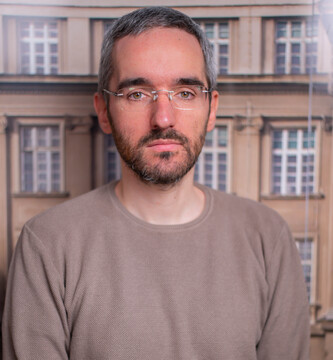
Dr. Ian Abel is an Associate Research Scientist at the Institute for Research in Electronics & Applied Physics (IREAP) at the University of Maryland, where he has been since 2018. His expertise spans fusion energy, plasma physics, and computational modeling. Abel holds a B.A. in Mathematics (2006) and M.S. in Applied Mathematics (2007) from the University of Cambridge, followed by a Ph.D. in Theoretical Physics from the University of Oxford (2012). His research focuses on magnetically confined fusion systems, particularly edge dynamics in tokamaks and innovative centrifugal mirror concepts. He has contributed to the development of gyrokinetic simulation tools like the GX code and the MaNTA transport model. Abel’s work also explores machine learning applications in plasma turbulence analysis and centrifugal mirror fusion reactor design for space propulsion. His research leverages advanced numerical methods, including GPU-native algorithms and adjoint-based optimization techniques for plasma equilibria. Key projects include the Centrifugal Mirror Fusion Experiment (CMFX), where he investigates plasma confinement and transport phenomena. His publications emphasize interdisciplinary approaches, integrating computational fluid dynamics, statistical physics, and high-performance computing to address challenges in fusion energy and plasma dynamics. While no specific awards are listed, his contributions to gyrokinetic turbulence modeling and centrifugal confinement systems are central to current fusion research.
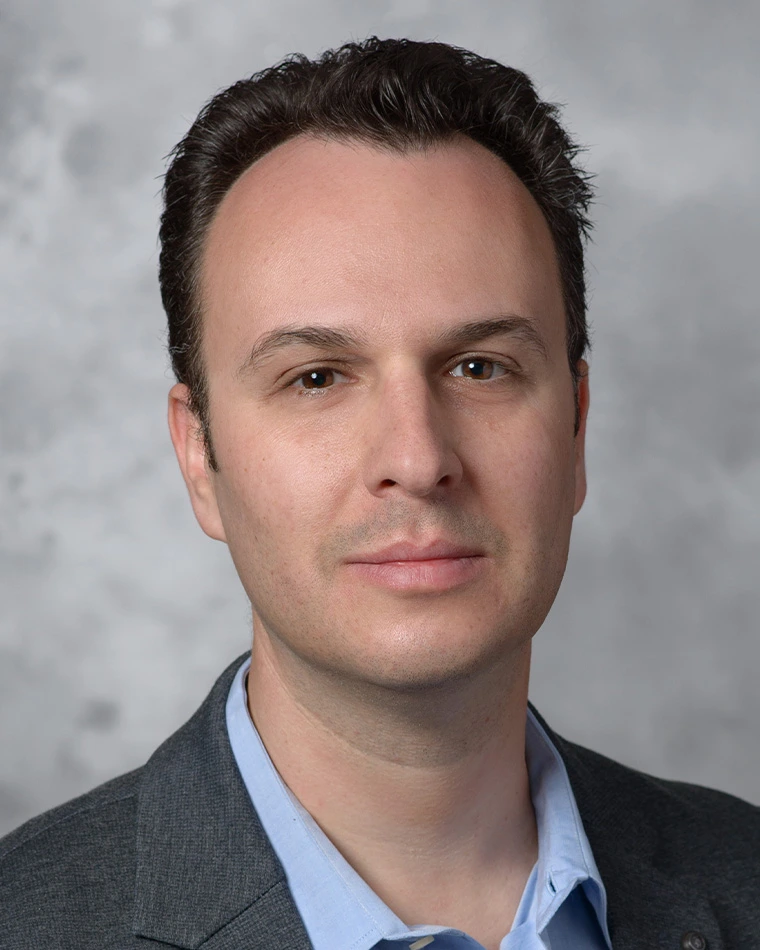
John Fox serves as an Adjunct Professor in the Department of Applied Physics within Stanford University's School of Humanities and Sciences, specializing in accelerator physics and energy systems optimization. His research bridges theoretical control methods with practical engineering applications in particle accelerators and sustainable transportation. Ph.D. in Applied Physics with minor in Electrical Engineering from Stanford University (1986) A.B. in Physics from Harvard University (1977) Professor Fox's research focuses on two primary domains: (1) accelerator physics including RF systems, beam dynamics, and instability control for particle accelerators, where he leads LARP projects for LHC LLRF techniques and electron-cloud instability mitigation; and (2) optimal control methods for improving energy efficiency in plug-in hybrid vehicles. His work combines advanced digital signal processing with practical instrumentation challenges in both synchrotron facilities and automotive systems. The research demonstrates consistent innovation in control theory applications across disparate physical systems. His publication record shows strong interdisciplinary connections between accelerator physics and energy systems engineering, with recent work increasingly focusing on multilevel inverter technologies and battery health optimization. The publications reveal a consistent thread of applying advanced control theory to complex physical systems across both high-energy physics and sustainable energy domains. Scientific Recognition: Dean's Award for Distinguished Teaching (2001) Fellow of the American Physical Society (2008) IEEE Senior Member (2018) Professor Fox has successfully mentored 5 Ph.D. students to completion and supervised 13 M.S. students, with two students receiving American Physical Society Dissertation Prizes and another winning the Toohig Fellowship. His research has been supported by significant collaborations including the Ford-Stanford Alliance and Precourt Center for Energy, with projects focusing on battery health modeling and optimal control strategies for hybrid vehicles. Current research includes leadership roles in LHC accelerator projects and development of energy optimization algorithms for transportation systems. As Group Leader for LARP projects, he directs teams working on feedback control systems for the LHC and SPS accelerators, with expertise spanning electron/positron and hadron synchrotrons, storage rings, and LINAC systems. His laboratory work emphasizes practical implementation of theoretical control concepts in both accelerator and automotive contexts.
Frank G. Schroeder is an Associate Professor in the Department of Physics & Astronomy at the University of Delaware. He holds a Diplom in Physics from TU Darmstadt (2007), a Doctoral Degree (2011), and a Habilitation (2017) from Karlsruhe Institute of Technology (KIT), Germany. He has been at UD since 2018. His research focuses on High-Energy Astroparticle Physics, including cosmic ray detection via radio antennas and computational data analysis. Key collaborations include the IceCube Neutrino Observatory at the South Pole and the Pierre Auger Observatory in Argentina. Recent work emphasizes cosmic-ray anisotropy studies, neutrino oscillations, and detector development for next-generation experiments like IceCube-Gen2 and AugerPrime. His research leverages machine learning for signal identification and analysis, with contributions to understanding ultra-high-energy cosmic rays and neutrino emissions. Schroeder’s teams actively participate in global initiatives such as the IceCube Collaboration and the Global Cosmic-Ray Observatory (GCOS) proposal. His technical innovations include radio antenna arrays and improved data reconstruction algorithms for air showers. He has published extensively on topics including cosmic-ray composition, neutrino point-source searches, and multi-messenger astrophysics.
Dr Maximilien Barbier serves as a Lecturer at the University of Surrey's School of Computing, Engineering and Physical Sciences, maintaining active research output through 2025. His academic profile is anchored in theoretical quantum mechanics with a distinctive focus on quantum backflow phenomena. Research interests center on quantum backflow , non-equilibrium statistical mechanics , and microreversibility principles . His work bridges fundamental quantum theory with practical applications, particularly in time-dependent quantum systems and transport phenomena. Key contributions include extending quantum backflow concepts to multi-particle systems and relativistic frameworks, while developing experiment-friendly formulations for observable quantum effects. Analysis of his 12 publications (2015-2025) reveals consistent focus on quantum measurement theory, with increasing emphasis on multi-dimensional systems and experimental validation pathways. His fingerprint profile shows 100% specialization in quantum backflow and microreversibility, with strong connections to non-equilibrium systems (87%) and fluctuation relations (41%). Scientific awards: None documented Dr Barbier collaborates extensively with researchers including Goussev, Fewster, and Srivastava across international institutions. His research demonstrates sustained funding through consistent publication output, though specific grants aren't detailed. Current work explores two-dimensional quantum backflow and time-of-arrival distributions, suggesting active laboratory or computational research environment despite no explicit lab description.
Professor Luke Connal is a full professor at the Research School of Chemistry at the Australian National University (ANU), where he leads the Connal Group. He joined ANU in 2017 after serving as a Senior Lecturer at the University of Melbourne. Currently, he holds an ARC mid-career industry fellowship and serves as the chair of the Royal Australian Chemical Institute (RACI) polymer division. Professor Connal is also an associate editor for the Royal Society of Chemistry journal "Molecular Systems Design and Engineering" and co-founder of two spin-out companies focused on polymer technologies. Professor Connal received his Bachelor of Chemical Engineering and PhD in polymer chemistry from the University of Melbourne, Australia. Following his doctoral studies, he completed a post-doctoral position with Professor Frank Caruso at the University of Melbourne, developing new techniques for the self-assembly of polymers. He then held a joint Sir Keith Murdoch postdoctoral Fellowship and Australian Linkage International Fellowship at the University of California, Santa Barbara, working with Professor Craig Hawker. Professor Connal's research focuses on the development of molecular design concepts to create new materials for diverse applications, including artificial skin and tissues, sustainable polymers and surfactants, additive manufacturing electronics, and water harvesting. His core competencies center around advanced polymer design, self-assembly, and catalysis . His group explores four main research themes: Catalysis, Functional Materials and Interfaces, Soft Matter, and Supramolecular Chemistry . They develop innovative materials such as enzyme-inspired polymer catalysts, smart polymers for 3D printing, and polymer electrolytes for energy storage applications. Analysis of Professor Connal's recent publications reveals a strong focus on developing biomimetic materials and responsive polymers. His work bridges fundamental polymer chemistry with practical applications in environmental remediation, healthcare, and sustainable technologies. A notable trend is the increasing emphasis on CO2 capture technologies through enzyme-inspired catalysts and hydrogel systems. His group has also made significant contributions to 3D printing of functional materials , particularly self-healing gels and pH-responsive polymers. The research demonstrates a consistent trajectory toward creating smart, responsive materials with applications addressing global challenges in sustainability and healthcare. David Syme Research Prize (2020) Grimwade Prize in Industrial Chemistry (2019) Professor Connal actively supervises multiple PhD students including Lilian Boton, Jason Buchanan, Sandra Jestin, Saif Rahaman, Peidong Shen, Ming Li Tan, Moki Thanusing, and Jekaterina Viktorova. His current research is supported by several significant grants including projects on sustainable and compostable plastic alternatives, multimaterial 3D printed antenna arrays, developing vitrimers as next-generation reusable plastics, multi-material 3D printing, and smart materials for atmospheric water management. These projects demonstrate his commitment to translating fundamental polymer research into practical solutions for environmental and technological challenges. The Connal Group at ANU operates at the intersection of polymer chemistry and materials science, developing innovative solutions across multiple domains. Their laboratory work focuses on creating new polymers with applications spanning artificial skin development, sustainable packaging alternatives, atmospheric water harvesting, and advanced electronics. The group's unique approach combines biomimicry principles with cutting-edge polymer synthesis techniques to create materials with precisely controlled properties. Current projects include developing strong and self-healing polymer materials for biological applications, expanding 3D printing capabilities for functional materials, creating fully recyclable or compostable plastics, and designing thermoresponsive polymer desiccants for sustainable water harvesting.
Ina Sarcevic is a Professor of Physics and Astronomy at the University of Arizona, holding the title of Primary Faculty. Her research focuses on particle astrophysics, dark matter, neutrinos, and collider physics. She has made significant contributions to the DUNE (Deep Underground Neutrino Experiment) collaboration, leading efforts in detector design, software development, and theoretical modeling. Her work bridges experimental and theoretical particle physics, addressing fundamental questions in astrophysics and cosmology. Education: Ph.D. in Physics from the University of Minnesota (1986), B.S. in Physics from the University of Sarajevo (1981), with notable fellowships including the Humboldt Fellowship (1989-1991) and a Doctoral Dissertation Fellowship (1985-1986). Research Interests: Dark matter detection via neutrinos, neutrino interactions at extreme energies, and the role of particle physics in cosmological phenomena. She explores theoretical frameworks for secret interactions of sterile neutrinos and their implications for the diffuse supernova neutrino background. Her work on detector technology for DUNE includes optimizing liquid argon time-projection chambers (TPCs) and developing algorithms for neutrino interaction reconstruction. Selected Honors: 2006 Fellow of the American Physical Society, recipient of the British Council Fellowship for Young Scientists (1980-1981), and Summa cum laude distinction at the University of Sarajevo. Grants and Collaborations: Principal investigator in DUNE-related projects, including detector design, software computing, and data analysis. Involved in international collaborations such as the LHC’s Forward Physics Facility and ProtoDUNE beam tests at CERN. Labs/Teams: Active member of the DUNE Collaboration, focusing on neutrino oscillation physics, supernova neutrino detection, and dark matter signatures in neutrino telescopes. Her group collaborates on developing advanced machine learning techniques for particle identification in large-scale detectors.
Mikel Sanz is a Ramón y Cajal Researcher and Ikerbasque Fellow at the University of the Basque Country (UPV/EHU) in Bilbao, Spain. His research focuses on quantum computing, quantum algorithms, quantum technologies, and quantum metrology. His research interests include: Quantum Computing and Quantum Algorithms Quantum Metrology and Quantum Sensing Digital-Analog Quantum Computing Quantum Machine Learning Quantum Simulation Quantum Error Correction and Mitigation Dr. Sanz's recent publications demonstrate a strong focus on practical applications of quantum computing across various domains. His work spans quantum hardware design, quantum algorithm development, quantum machine learning applications, and quantum metrology techniques. He has made significant contributions to digital-analog quantum computing approaches, quantum kernel methods, and quantum-enhanced sensing technologies. His scientific awards include being selected as a Ramón y Cajal Researcher, a prestigious research position in Spain for experienced researchers, and an Ikerbasque Fellow, which is awarded by the Basque Foundation for Science to attract top researchers to the Basque Country. Dr. Sanz has collaborated extensively with researchers across multiple institutions, contributing to a wide range of quantum information science projects. His work often bridges theoretical quantum information concepts with practical implementations, particularly in superconducting quantum computing platforms. He is actively involved in advancing quantum technologies through his research group at UPV/EHU, focusing on developing novel quantum algorithms and exploring applications of quantum computing in various scientific and industrial domains.
Professor Ivo Sachs is a distinguished theoretical physicist at the Ludwig-Maximilians-Universität München (LMU), where he holds a position at the Arnold Sommerfeld Center for Theoretical Physics with a Chair on Cosmology. His research spans multiple areas of theoretical physics with a particular focus on string theory, quantum field theory, and cosmological applications. He maintains an active research program with numerous recent publications in prestigious journals. Professor Sachs' research interests center around fundamental theoretical physics, with significant contributions to string field theory, cosmological perturbation theory, and the mathematical structures underlying quantum gravity. His work often bridges abstract mathematical concepts with physical applications, particularly in understanding the early universe and quantum aspects of gravity. He has developed innovative approaches to studying cosmological correlators, spinning particles, and the relationship between quantum field theory and gravitational physics. Analysis of his recent publications reveals a strong focus on the intersection of cosmology and string theory, with particular attention to mathematical structures in quantum gravity. His work demonstrates consistent exploration of how quantum field theory techniques can be applied to cosmological problems, especially regarding correlation functions in the early universe. He frequently collaborates with researchers across Europe, indicating an active international research network. Martín Enríquez Rojo (PhD, 2022): Asymptotic symmetries in FLRW and deformations of gravitational symmetry algebras
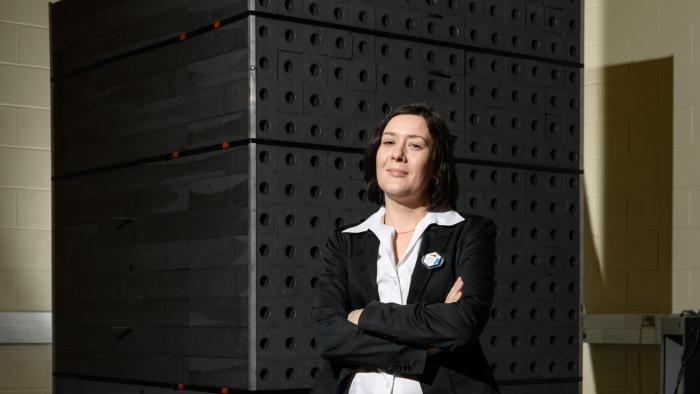
Anna Erickson serves as Woodruff Professor and Associate Chair for Research at Georgia Institute of Technology's George W. Woodruff School of Mechanical Engineering, where she bridges reactor engineering and nuclear nonproliferation through integrated theoretical and experimental approaches. Director of the $25M DOE NNSA-funded Consortium for Enabling Technologies and Innovation (12 universities, 12 national labs), she has authored over 100 publications including the seminal text Active Interrogation in Nuclear Security (Springer, 2018) and advises federal agencies on nuclear security policy. Education: Ph.D. in Nuclear Science and Engineering, Massachusetts Institute of Technology (2011) M.S. in Nuclear Science and Engineering, Massachusetts Institute of Technology (2008) B.S., Oregon State University (2006) Research Focus: Dr. Erickson pioneers nonproliferation-by-design methodologies through two integrated thrusts: advanced reactor analysis for proliferation-resistant nuclear energy systems and radiation detection for border security applications. Her work uniquely combines machine learning with nuclear engineering to develop safeguards for next-generation reactors, with significant contributions to antineutrino detection systems and medical physics applications like proton radiography. Current projects emphasize small modular reactor safety and spectral imaging techniques. Publication Trends: Analysis of her 15 most recent publications (2018-2020) reveals dominant themes in antineutrino-based reactor monitoring (60% of works), advanced radiation detection systems (30%), and small modular reactor design (10%). Key innovations include lithium-loaded scintillators for neutron detection, spectral X-ray correction algorithms, and high-temperature reactor concepts with inherent proliferation resistance, demonstrating consistent DOE funding focus on nuclear security infrastructure. Awards: Woodruff Professorship (2019) Lockheed Dean's Excellence in Teaching Award (2016) US Frontiers of Engineering Symposium (National Academy of Engineering, 2015) American Nuclear Society Graduate Scholarships (2006, 2009) Stewardship Science Graduate Fellowship (DOE, 2008-2011) Leadership & Funding: As director of the $25M Consortium for Enabling Technologies and Innovation, she manages cross-institutional R&D in machine learning, advanced manufacturing, and nuclear detection. Her Laboratory for Advanced Nuclear Nonproliferation and Safety (LANNS) coordinates with Aerospace Engineering, Chemistry, and International Affairs departments on nonproliferation projects, while her ELATES leadership program participation (2022) enhances STEM management capabilities. Recent media engagements with CBS News (nuclear fusion breakthrough) and CNN (radiation safety) demonstrate policy impact. Research Infrastructure: The multidisciplinary LANNS lab develops experimental detection systems alongside reactor modeling tools, supporting the Consortium's mission to create deployable nuclear security technologies. Collaborations with 12 national laboratories enable access to unique facilities for radiation source characterization and reactor simulation, with current efforts focused on AI-enhanced safeguards for commercial reactor fleets.
Claus Haslauer serves as Scientific Director at the Institute for Modelling Water and Environmental Systems and the Groundwater and Contaminated Site Remediation Test Facility (VEGAS) at the University of Stuttgart. He holds the academic rank of Professor within the Faculty of Civil and Environmental Engineering, specifically in the Department of Hydraulic Engineering and Water Resources Management. Haslauer has been affiliated with the institute since January 2019 and maintains an active research and teaching profile. His research interests focus on groundwater modeling, contaminant transport processes, environmental remediation technologies, hydrogeology, and soil engineering. Haslauer's work particularly emphasizes PFAS (per- and polyfluoroalkyl substances) research, investigating immobilization techniques, leaching behavior, and remediation strategies for these persistent contaminants. His methodological approaches include experimental testing at various scales (batch, column, lysimeter), numerical modeling, and field applications of remediation technologies. Analysis of his recent publications reveals a strong trend toward addressing complex environmental contamination challenges, particularly PFAS contamination in soil and groundwater systems. His research employs multi-scale experimental approaches combined with advanced modeling techniques to understand contaminant behavior and develop effective remediation strategies. The work spans fundamental hydrogeological processes to practical field applications, with significant emphasis on translating laboratory findings to real-world remediation scenarios. Haslauer teaches courses including Soil Engineering, Soil Experiments, Environmental Analytical Techniques, Statistics for Engineers, Environmental Measuring and Monitoring Technologies, Groundwater and Soil Remediation, and Hydrogeology Field Practice. His teaching integrates theoretical concepts with practical laboratory and field experiences, reflecting his research focus on experimental approaches to understanding subsurface processes.
Dr. Sonja Isabel Veith is a Scientific Staff member at the Institute for Special Education, Faculty of Philosophy, Leibniz University Hannover. Her work focuses on research and teaching in the fields of scientific and technical education, with a strong emphasis on phenomenography and inclusive didactics. Phenomenographic Research Science Education Physics & Computer Science Teaching Biomedical Optics Artificial Intelligence Applications Educational Background: M.Sc. in Physics (minor: Meteorology), Leibniz University Hannover B.Sc. in Physics (minor: Computer Science), Leibniz University Hannover Fellow of the International Max Planck Research School on Gravitational Wave Astronomy Dr. Veith's research explores children's perceptions of physics concepts like sound, interdisciplinary science education, and racism-critical teaching methods. She has developed innovative didactic approaches for visualizing sound and integrating computational thinking in elementary education. Her publications show a consistent focus on: Phenomenographic analysis of science concepts Physics education in elementary schools Interdisciplinary teaching methods AI applications in sensor data analysis Historical and societal contexts in science Inclusive didactic frameworks Scientific Honors: Fellow of the International Max Planck Research School on Gravitational Wave Astronomy Dr. Veith has collaborated extensively across disciplines, working with institutions such as the Albert Einstein Institute and Laser Zentrum Hannover. Her career spans multiple domains including physics, computer science, biomedical optics, and educational theory.
Harald Kucharek is a Research Professor in the Physics & Astronomy Department at the University of New Hampshire (UNH), part of the College of Engineering and Physical Sciences. He is affiliated with the Space Science Center and holds a dual Ph.D. in Physics from the Technical University of Munich and an M.S. in Physics from the University of Regensburg. His research focuses on heliospheric physics, interstellar medium interactions, and space plasma dynamics, leveraging data from missions like IBEX and Solar Orbiter. Dr. Kucharek's work centers on understanding the global structure of the heliosphere, interstellar neutral gas flow, and particle acceleration at shocks. He has contributed to studies of pickup ions, energetic neutral atoms (ENAs), and magnetic reconnection processes. His teaching includes courses on Space Plasma Physics and Magnetohydrodynamics of the Heliosphere. He has been involved in over 22 grants (2005–2024), including mission-related research for IMAP and interstellar probe concepts. Key research trends include analyzing IBEX observations of interstellar helium and oxygen, investigating shock dynamics and ion acceleration, and modeling the heliospheric boundary. His recent work explores the implications of hybrid simulations and multi-spacecraft data for understanding plasma behavior in extreme environments. Collaborations with institutions like NASA and ESA highlight his role in advancing space physics through both observational and theoretical contributions.
Christos Gagatsos is an Assistant Professor in the Department of Electrical and Computer Engineering and a member of the Wyant College of Optical Sciences at the University of Arizona. He joined the university in 2018 as a postdoctoral research associate, was promoted to Assistant Research Professor in 2020, and became an Assistant Professor in ECE in 2023. Prior to this, he was a postdoctoral research fellow at the University of Warwick, UK. His educational background includes: PhD in Engineering Sciences and Technology, Université Libre de Bruxelles and École Polytechnique, Belgium (2014) MSc in Physics of Elementary Particles, University of Athens, Greece (2010) BSc in Physics, University of Athens, Greece (2007) Christos Gagatsos's research lies at the intersection of quantum information, quantum sensing, and quantum communications, with a strong theoretical focus on bosonic systems. His work explores fundamental concepts such as entanglement, non-Gaussianity, and Bayesian estimation in quantum systems. He is particularly interested in pushing the limits of quantum-enhanced sensing, including optical phase and transmissivity estimation, and in developing theoretical frameworks for quantum detection and discrimination. His teaching interests include quantum information, quantum optics, probability theory, and applied mathematics. The recent trend in his publications reflects a deep engagement with Bayesian methods in quantum parameter estimation, quantum change point detection, and the characterization of quantum states through measures like Wigner entropy. His work spans both fundamental quantum theory and practical applications in sensing and communication, often bridging classical and quantum approaches. He advises several graduate students across departments, including Boyu Zhou (Physics), Ali Cox (Physics), Qipeng Qian (Mathematics), and Leo Bia (Optical Sciences). While no formal scientific awards are listed in the provided text, editorial recognition such as an Editor’s Pick in APL Quantum highlights the impact of his research. Christos Gagatsos leads a research group focused on theoretical quantum information, actively collaborating with quantum research groups across the University of Arizona, Arizona State University, and international institutions in the USA and Europe. His lab investigates quantum sensing, communications, and foundational aspects of quantum mechanics using bosonic platforms, fostering a collaborative and interdisciplinary research environment.
Prof. Dr. Gil Westmeyer is a Professor of Neurobiological Engineering at the Technical University of Munich (TUM), holding joint appointments at the TUM School of Natural Sciences and TUM School of Medicine and Health. He serves as Director of the Institute for Synthetic Biomedicine at Helmholtz-Zentrum München and leads the Chair of Neurobiological Engineering at TUM. His research program bridges molecular engineering, neuroimaging, and synthetic biology to develop next-generation tools for understanding and manipulating cellular networks. Westmeyer's educational background includes medical and philosophical studies in Munich, doctoral work on the molecular basis of Alzheimer's disease under Professor Christian Haass, clinical training at Harvard Medical School, and postdoctoral research with Professor Alan Jasanoff at MIT. His laboratory focuses on creating genetically encoded molecular sensors and actuators that enable non-invasive imaging and remote control of cellular processes across multiple scales. His research spans three primary domains: molecular sensors for multimodal imaging (from electron microscopy to whole-organism optoacoustics), molecular actuators for spatiotemporal control of cellular processes, and neurobehavioral imaging in freely behaving model organisms. The lab's work integrates synthetic biology, nanotechnology, and advanced imaging techniques to create tools that map dynamic signaling processes and manipulate cellular functions with unprecedented precision. Westmeyer's publication record demonstrates consistent innovation in molecular engineering, with recent work focusing on genetically encoded barcodes for electron microscopy, intron-encoded reporting systems, multiplexed optoacoustic imaging, and magnetically responsive cellular compartments. His publications in high-impact journals like Nature Methods, Cell, and Nature Biotechnology reflect the significance of his contributions to molecular imaging and engineering. ERC Proof of Concept 'inteRNAlizer' (2023) ERC Consolidator Grant 'EMcapsulins' (2019) ERC Starting Grant 'MagnetoGenetics' (2013) Helmholtz Young Investigator's Group (2011) Westmeyer actively mentors students and researchers through multiple teaching positions at TUM, including courses in biological chemistry, genetic machine development (iGEM), mammalian cell technology, and neuro-recording methods. His laboratory develops technologies with clear translational potential for future neurotherapies and regenerative medicine applications, particularly through the creation of imaging-controlled cellular interventions. The lab maintains strong collaborations across disciplines and institutions, with research that contributes to multiple UN Sustainable Development Goals related to health and wellbeing.
Prof. Dr. Aleksa Božičković serves as Full Professor at the Department of Nutrition, Physiology and Anatomy of Domestic and Farmed Animals within the Faculty of Agriculture at the University of Belgrade. With extensive experience in animal nutrition science, he teaches numerous courses including Ruminant Nutrition, Applied Nutrition of Domestic and Farmed Animals, and Modern Concepts of Nutrition of Domestic and Farmed Animals. His academic position is supported by a robust publication record spanning over a decade. Professor Božičković's research focuses on critical aspects of animal nutrition with particular emphasis on: Ruminant nutrition systems and their impact on dairy production Forage quality assessment and management strategies Silage technology and preservation methods Feed particle size and physical effectiveness in ruminant diets Nutritional management during critical physiological periods Protein degradability in various forage systems His scholarly work demonstrates a consistent trajectory toward improving precision feeding techniques and understanding the relationship between feed physical structure and animal performance. Recent publications highlight innovative methodologies for assessing forage maturity and nutritional value, particularly in alfalfa and pasture systems. Professor Božičković has made significant contributions to understanding how different feeding strategies affect animal metabolism, chewing activity, and production parameters. Professor Božičković actively contributes to the academic community through teaching, research supervision, and scholarly publications. His work bridges theoretical knowledge with practical applications in animal husbandry, benefiting both students and industry professionals.