Prof. Dr. Ekrem Aydıner is a distinguished physicist at Istanbul University, Faculty of Science, Department of Physics, specializing in High Energy and Plasma Physics. He also serves as a visiting researcher at Koç University and has been invited by Princeton University. With 78 WoS publications and an H-index of 726, his work spans particle physics, cosmology, and complex systems.
Sinan Yıldırım is a Researcher in the Faculty of Engineering and Natural Sciences at Sabancı University, Turkey. His primary research focuses on Bayesian Statistics, Monte Carlo methods, and data privacy, with interdisciplinary applications in machine learning and signal processing. He holds a BSc and MSc in Electrical and Electronics Engineering from Boğaziçi University, followed by a PhD in Mathematical Statistics from the University of Cambridge. Postdoctoral research (2013-2015) at the University of Bristol’s School of Mathematics involved the EPSRC-funded project 'Intractable Likelihood: New Challenges from Modern Applications (i-like).' His work bridges theoretical statistics with practical problems in privacy, control systems, and energy optimization. Research interests emphasize Bayesian methodologies for privacy-preserving data analysis, dynamic modeling of complex systems, and stochastic optimization algorithms. Recent publications explore differential privacy in machine learning, Monte Carlo techniques for high-dimensional inference, and applications of Bayesian methods in robotics and energy systems. Advising and grants include contributions to multi-party resource sharing frameworks and privacy-aware algorithms. His work integrates computational methods with real-world challenges in engineering and policy modeling.
Cavit Fatih Küçüktezcan is an Assistant Professor in the Department of Electrical Engineering at Istanbul Technical University, College of Engineering. His research focuses on power system security, optimization methods, and smart grid technologies. He actively contributes to advancements in electric vehicle energy systems, battery modeling, and resilience of renewable-rich power grids. Research Interests: His work spans power system dynamic security , preventive and corrective control , heuristic and evolutionary optimization (e.g., differential evolution, mean-variance mapping, genetic algorithms), and the application of machine learning for transient stability prediction. He also investigates electric vehicle battery systems , including optimal cell selection and real-time energy consumption modeling. The publication trends show a shift toward data-driven and AI-enhanced approaches in power systems, especially in modeling cyber-attack impacts and improving grid resilience. His recent articles emphasize practical applications in sustainable transportation and secure grid operation under uncertainty. Scientific Contributions: Developed optimization frameworks for preventive control with search space reduction. Applied mean-variance mapping optimization to enhance dynamic security. Explored machine learning benchmarks for transient stability under cyber threats. Contributed to battery modeling and energy efficiency in electric buses. Advising and Grants: While specific details on students or funded projects are not available in the provided text, his collaborative research patterns suggest active supervision and team-based research in power systems and energy technology. He frequently co-authors with researchers from Istanbul Technical University, indicating strong institutional collaboration. Labs and Teams: Though no specific lab or research group is named, his work aligns with smart grid, energy systems, and optimization research teams within the Department of Electrical Engineering at ITU. His focus on real-time data and cyber-physical systems suggests potential involvement in intelligent grid monitoring and control initiatives.
Fatih Bay serves as Full Professor and Chair of the Department of Mechanical Engineering at Antalya Bilim University since 2020, leveraging his physics expertise in an engineering leadership role. With a Ph.D. in Physics from the University of Bern (2012), he has driven major contributions to neutrino physics through international collaborations at CERN, Fermilab, and KEK, currently focusing on the DUNE experiment's quest to explain matter-antimatter asymmetry. His academic journey features: B.Sc. in Physics, Kocaeli University (2004) M.Sc. in Physics, Middle East Technical University (2008) Ph.D. in Physics, University of Bern, Switzerland (2012) Dr. Bay's research centers on experimental neutrino physics and advanced detector development, specializing in liquid argon time projection chambers, emulsion detectors, and iron-scintillator calorimeters. His current work with DUNE integrates deep learning for neutrino interaction reconstruction while exploring supernova neutrino detection capabilities. This builds upon foundational contributions to OPERA, T2K, and MicroBooNE experiments. Analysis of his 2023-2025 publications reveals dominant focus on DUNE detector systems, with emerging trends in AI-driven event reconstruction, liquid argon purity optimization, and multi-detector synergies for supernova neutrino studies. His work bridges particle physics methodology with cutting-edge computing techniques to enhance detection precision in large-scale experiments. His exceptional contributions earned recognition through: Breakthrough Prize in Fundamental Physics (2016) for T2K experiment leadership Dr. Bay secured significant research funding including a TÜBİTAK 'Returning Researchers' fellowship (2015) and leads international collaborations requiring substantial project resources. While student advising details aren't specified, his department chair role implies graduate mentorship in mechanical engineering contexts. His laboratory work spans CERN (Switzerland), KEK (Japan), and Fermilab (USA) facilities, with current focus on DUNE's vertical drift technology development and ProtoDUNE-SP calibration systems.
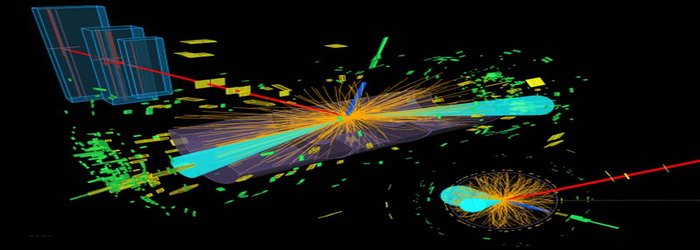
Muammer Altan Çakır is a Professor in the Department of Physics Engineering at Istanbul Technical University, actively engaged in high-energy physics research with significant contributions to the CMS Collaboration at CERN. His work focuses on proton-proton collisions, Higgs boson physics, and top quark studies using Large Hadron Collider data. His research interests span experimental particle physics with emphasis on proton-proton collisions , Higgs boson characterization , lepton physics , and transverse momentum analysis . Recent work explores charm baryon production, Drell-Yan processes, and muon identification techniques using advanced multivariate methods in the CMS detector. Analysis of his 15 most recent publications reveals a strong focus on precision measurements in high-energy collisions, particularly in Higgs physics (3 publications), top quark physics (2), and detector optimization (2). His work consistently addresses fundamental questions in the Standard Model through advanced statistical techniques and large-scale data analysis. Doktora sonrası araştırma bursu (2010) Landes Baden Württenberg Doktorarbeit Stipendium (2006) LPC Fall Guest Visitor Faculty (2017) Multiple Performans ödülü awards (2012, 2013, 2015) Professor Çakır has supervised 15 students and leads multiple research projects including GPU-based distributed computing platforms for big data processing, real-time predictive maintenance systems, and deep learning applications for top quark spin correlation studies. His current projects integrate generative AI with domain-specific physics research while developing scalable open-source big data architectures for industrial applications. His laboratory work centers on CMS detector data analysis, with recent focus on online data visualization tools and multivariate techniques for particle identification. Current projects explore GPU-accelerated computing frameworks and generative AI applications for physics-informed design systems.
Abdullatif Baba is an Assistant Professor in the Department of Computer Engineering at Turkish Aeronautical Association University. His research focuses on interdisciplinary applications of artificial intelligence, robotics, and sustainable energy systems. He develops solutions for smart infrastructure, including AI-driven energy forecasting, autonomous drones for grid maintenance, and hyperspectral imaging techniques. His research interests span: AI/ML Systems : Neural networks, probabilistic forecasting, and FPGA-accelerated deep learning Robotics : Autonomous drones with computer vision for industrial and energy applications Sustainable Energy : Solar-based systems, smart grid optimization, and consumption prediction Security : Chaos-based cryptographic systems for secure communications Recent publications (2020-2024) demonstrate strong trends in practical AI implementations. Key themes include energy forecasting using adaptive neural networks (11 papers), robotics for infrastructure maintenance (4 papers), computer vision for biometrics and imaging (3 papers), and cryptographic systems (2 papers). Methodologies frequently involve hybrid approaches combining ANN, fuzzy logic, and hardware acceleration. No awards, students, or grant details were mentioned in the source material. Research collaborations include institutions in Turkey and the Middle East.
Gizem Şengör is an Assistant Professor and Full-Time Faculty Member in the Department of Physics at Boğaziçi University, Istanbul, Turkey. She holds a PhD in Physics from Syracuse University (2018) and completed her MS and BS at Boğaziçi University. Her research lies at the intersection of cosmology, quantum field theory, and symmetries in curved spacetimes, with a focus on de Sitter spacetime, early universe physics, and cosmological perturbations. Her educational background includes: PhD in Physics, Syracuse University (2013–2018), Thesis: 'Cosmological Perturbations in the Early Universe', Advisor: Associate Professor G. Scott Watson MS in Physics, Boğaziçi University (2011–2013), Thesis: 'From Five Dimensional Flat Spacetime to Our Four Dimensional Braneworld via Kaluza-Klein', Advisor: Professor Metin Arık BS in Physics, Boğaziçi University (2007–2011) Her research interests center on theoretical aspects of modern cosmology, especially the role of symmetries in accelerating universes, quantum field theory in de Sitter space, and the behavior of perturbations during inflation and preheating. She explores fundamental questions about unitarity, information, and boundary structure in cosmological settings, often using effective field theory and group-theoretic methods. Her work bridges mathematical rigor with physical insight into the early universe. The analysis of her recent publications reveals a strong focus on de Sitter spacetime, particularly its late-time boundary, correlation functions, and unitarity issues. She investigates how symmetries constrain cosmological models and how quantum fields behave in expanding backgrounds. Her work often connects to holographic principles and the dS/CFT correspondence, aiming to understand the quantum nature of spacetime in an accelerating universe. Her scientific awards include: 2020 MSCA Success Stories in Widening Countries 2017 Henry Levinstein Distinguished Senior PhD Student, Syracuse University 2014 Henry Levinstein Fellowship Award, Syracuse University She has led and coordinated significant research projects, including the Marie Skłodowska-Curie Individual Fellowship 'SymAcc' (2019–2021) at CEICO, Czech Academy of Sciences, and currently leads the TÜBİTAK 2232-B project 'Quantum Field Theory in a de Sitter Universe: from particles to information' (2022–2025) at Boğaziçi University. She has delivered numerous invited seminars at institutions such as Imperial College London, Cambridge, and Amsterdam, reflecting her active engagement in the international theoretical physics community. She advises students and contributes to advancing research in cosmology and fundamental physics. She is involved in research groups and collaborations including the de Sitter Cosmology Group and participates in workshops such as the CORFU Summer Institute. Her ongoing projects aim to deepen our understanding of symmetries and degrees of freedom in cosmic acceleration, with implications for quantum gravity and cosmological model building.
Dr. Fatih Ilgın is a Lecturer in the Faculty of Engineering at Özyeğin University. He holds a PhD in High Energy Physics from Yıldız Technical University (2023), where he also earned his MSc (2017) and BSc (2011) in Physics. His research spans high energy physics, particle accelerators, collision simulations, and machine learning applications. Education PhD in High Energy and Plasma Physics, Yıldız Technical University (2023) MSc in Physics, Yıldız Technical University (2017) BSc in Physics, Yıldız Technical University (2011) Research Areas High Energy Physics Particle Accelerators Collision Simulations and Data Analysis Machine Learning Models Particle Detectors and Calorimeters Deep Neural Networks Publications 2023: Charge Parity Symmetry Violation via Top Quark Chromo-Electric Dipole Moments using Machine Learning 2022: Charge Parity Symmetry Violation via Top Quark Chromo-Electric Dipole Moments using Machine Learning 2017: Effective Mass Calculation of Lambda and Sigma Baryons Containing Tılsım Quark in Lattice QCD
Prof. Abbas Kenan ÇİFTÇİ is a Professor and Department Chair of Physics at İzmir Ekonomi University's Faculty of Science and Letters. He holds a Ph.D. from Duke University (1991) and has extensive experience in particle physics, accelerator physics, and nuclear physics. Previously, he served as a Professor at Ankara University and contributed to CERN collaborations like ATLAS, FCC, and CLIC projects. His administrative roles include Dean of the Institute of Science (2017-2019) and ongoing leadership in the Physics Department. Education: B.Sc. (1982, Ankara University), M.Sc. (1987, Duke University), Ph.D. (1991, Duke University). Research Focus: Particle physics phenomenology, accelerator design (CLIC, FCC, TESLA), synchrotron radiation, and group theory applications. He has advised numerous graduate students on topics like collider design and beam dynamics. His recent projects include FCC injector optimization and CERN collaboration studies. He teaches courses on particle physics, quantum mechanics, and general physics.
Assoc. Prof. SÜLEYMAN FATİH ÖZMEN is an academic at Akdeniz University's Technical Sciences Vocational School in the Department of Electricity and Energy . With a focus on nuclear physics and environmental radiation safety, he has contributed extensively to understanding natural/artificial radioactivity in geological materials, wastewater sludge, and coastal ecosystems. Education: PhD in Physics (2017), Akdeniz University MSc in Natural Sciences (2008), Selcuk University BSc in Physics Education (2002), Middle East Technical University His research spans radiation safety , gamma spectroscopy , environmental monitoring , and mutation breeding applications . Key projects include TUBITAK-funded studies on submarine groundwater discharge and radiation mapping in coastal areas . Publications highlight collaborations with institutions like Heavy Ion Lab and TAEK. Scientific awards : Recognition for aluminum target preparation techniques at Warsaw Heavy Ion Laboratory (2011) Active in academic service, he serves on editorial committees and has participated in international symposia in Japan, Greece, and Turkey. His work addresses UN Sustainable Development Goals, particularly Life Below Water and Responsible Consumption .
Prof. Dr. Saleh Sultansoy is a distinguished faculty member at TOBB University of Economics and Technology, where he serves in the Department of Materials and Nanotechnology Engineering. He is an active researcher in high energy physics and accelerator physics, leading research projects and teaching specialized courses in these fields. His educational background includes: PhD in Physics from Institute of High Energy Physics (Russia), 1985 Master's Degree in Physics from Azerbaijan Academy of Sciences, 1985 Bachelor's Degree in Physics from Azerbaijan University, 1974 Prof. Sultansoy's research focuses on the frontiers of particle physics and accelerator technology. His work explores fundamental questions about matter structure at the smallest scales, with particular emphasis on future collider technologies and potential discoveries beyond the Standard Model of particle physics. He has made significant contributions to the development of electron-proton and photon-hadron collider concepts, especially in relation to the Future Circular Collider (FCC) project. His research bridges theoretical physics with practical accelerator design considerations, addressing both luminosity optimization and potential discovery channels for new physics phenomena. His recent publications demonstrate a strong focus on FCC-based collider concepts, examining various collision types including lepton-hadron and photon-hadron interactions. These works analyze luminosity potential, discovery channels for exotic particles like fourth family quarks and leptogluons, and technical parameters for next-generation colliders. The research shows a consistent theme of exploring how future collider facilities could reveal new physics beyond our current understanding. Among his notable recognitions: Turkic World Red Apple Award Prof. Sultansoy has led significant research initiatives in Turkey's scientific development. His ongoing project "Searching for Possible New Structure Levels of Matter in TeV Energy Colliders" (2015-2018) represents cutting-edge research in high energy physics. Previously, he contributed to important national projects including "Particle Accelerators: What should be done in Türkiye" (2002-2005) and the "General Design of the Turkish Accelerator Complex" (2007-2010), helping to establish Turkey's roadmap in accelerator physics. At TOBB University, he leads a working group focused on high energy physics research and teaches courses including "Introduction to High Energy Physics" (MBN 315) and "General Physics I," contributing to the education of the next generation of physicists and engineers in Turkey.
Bora Akgün is an Assistant Professor and Vice-Chairman at the Department of Physics, Boğaziçi University. His research focuses on High Energy Physics, specifically Particle Physics Detectors, Detector Readout Systems, and Data Acquisition Systems. He has led projects funded by TÜBİTAK, including AdvancedTCA Development (2020-2023) and Special Cherenkov Light Production (2022-2024). He teaches courses such as Elementary Particle Physics, Introductory Mechanics and Thermodynamics, and Introduction to Research in Physics I/II. His laboratory work is showcased at Karebloc Lab . He has supervised two master's theses: 'Calibration of CMS Luminometers' (2021) and 'DAQ LINK and IBERT Studies of CMS HGCAL' (2022). His research emphasizes experimental techniques for high-energy physics applications.
Hakan Erkol is an Associate Professor and Deputy Head of the Department of Physics at Boğaziçi University. He holds a PhD (2009) and MS (2003) in Physics from Boğaziçi University, and a BS (2000) in Physics from Yıldız Technical University. His research focuses on theoretical physics applied to biomedical engineering, particularly in medical physics, photoacoustic imaging, and laser therapy. He has contributed to advancements in acoustic force modeling, photoacoustic wave analysis, and photothermal therapy planning. His work bridges fundamental physics with practical medical applications, including imaging technologies and therapeutic systems. Education: PhD: Boğaziçi University, Department of Physics (2009) MS: Boğaziçi University, Department of Physics (2003) BS: Yıldız Technical University, Department of Physics (2000) Research Interests: Medical Physics, Acoustic Forces, Photoacoustic Imaging, Laser Therapy, Biomedical Optics, and Analytical Modeling. Current Roles: Deputy Head of Department at Boğaziçi University's Physics Department (2018–present). His publications emphasize analytical models for biomedical applications, including studies on microbubble dynamics under pulsed lasers, chromophore concentration quantification in tissues, and real-time imaging techniques. He has led projects like the BAP 15362 (completed in 2022) on acoustic microscopy-guided laser therapy. His teaching spans foundational physics courses and research methodology.
Professor Cenap Şahabettin Özben is a faculty member at Istanbul Technical University's Department of Physics Engineering. He specializes in muon physics, radiation detection systems, and nuclear instrumentation. His research focuses on developing low-cost detectors for environmental radioactivity, neutron detection, and X-ray imaging technologies. He has led projects funded by TÜBİTAK and BAP, including radon monitoring systems and proton electric dipole moment experiments. Notable awards include the Muon g-2 prize. His work spans collaborations with international institutions like Brookhaven National Laboratory. Key research projects include radon concentration monitoring in fault zones (TÜBİTAK 2021-2023), neutron activation method automation (BAP 2016-2021), and silicon PIN photodiode-based detectors (BAP 2010-2021). His publications address topics like environmental radioactivity instrumentation, segmented neutron detectors, and proton electric dipole moment experiments. His research bridges fundamental physics with practical applications in security and environmental monitoring.
Prof. Dr. Ahmet Tolga TAŞÇI is a faculty member at Kastamonu University's Faculty of Engineering and Architecture, Department of Electrical-Electronics Engineering, since 2018. Previously, he served as Associate Professor (2013-2017) and Assistant Professor (2008-2013) in Physics at Kastamonu University's Faculty of Science and Letters. His academic career began as a Research Assistant at Abant İzzet Baysal University (1998-2008). PhD in Physics (2008), Abant İzzet Baysal University MSc in Physics (2002), Abant İzzet Baysal University BSc in Physics (1998), Gazi University His research spans High Energy Physics , Particle Physics , and Accelerator Detector Physics , with recent work on ZnO nanorods for photodetectors and MOS diodes. Key projects include anomalous Higgs couplings at LHeC and fourth-generation quark production at CLIC. Selected Awards: TÜBİTAK Yayın Teşvik Ödülü (2009-2014) He has supervised 7 master's theses on topics like ZnO nanostructures and heavy quark production , collaborating with researchers across Turkey. His publications (447* citations) focus on Standard Model extensions and semiconductor materials .


.jpeg)