Dr. Natalie Simpson is Professor and Associate Dean for Graduate Programs at the University at Buffalo's School of Management, Department of Operations Management and Strategy. She holds a PhD and MBA from the University of Florida, and a BFA from North Carolina School of the Arts. Her research explores emergency response systems , supply chain logistics , and educational technology , with particular focus on operational challenges in crisis management. She investigates hyper-project coordination in emergency contexts and resource allocation frameworks for incident commanders. Simpson's scholarly contributions show strong emphasis on: Modeling emergency response operations and supply chain vulnerabilities Developing pedagogical innovations for operations management education Analyzing healthcare workflow efficiency and disaster management systems Her extensive recognition includes: Decision Sciences Institute's Best Case Studies Award (2005) National Instructional Innovation Award (2004) SUNY Chancellor's Award for Excellence in Teaching (2002) Grinter Fellowship and Matherly Scholarship As Academic Director of Digital Access Education, she leads technology-enhanced learning initiatives and advises graduate programs. Administrative responsibilities include heading the Digital Access Working Group and serving on editorial boards for Decision Sciences.
Dr. Karen Cochrane is an Assistant Professor at the University of Waterloo, specializing in Human-Computer Interaction (HCI) with a focus on wearable and tangible computing for mental health and accessibility. Her research integrates soma design, autoethnography, and design fiction to address the needs of underrepresented communities, particularly those with disabilities. Key projects include developing assistive technologies for queer/crip identities, accessible gaming wearables, and tactile interfaces for sensory exploration. She explores embodied experiences through multidisciplinary approaches, blending traditional craft practices with modern computational tools. Her work prioritizes participatory design methodologies, collaborating with occupational therapists, disabled communities, and neurodivergent individuals to co-create inclusive technologies. Recent innovations include VARitouch (a haptic feedback device), Breathing Scarf (for emotional regulation), and adaptive switches for children with motor disabilities. Her research extends into sensory narratives, exploring how fabric and data can articulate bodily experiences through projects like Sensory Data Dialogues and Queer/Crip Body Mapping. While no formal grants or awards are listed, her publications reflect a strong focus on ethical technology, accessibility, and embodied interaction. Current projects emphasize the intersection of wearable tech with identity expression, mindfulness practices, and neuromotor rehabilitation. She actively designs prototypes that bridge clinical needs with creative technology solutions, though specific lab affiliations or team collaborations are not detailed in available texts.
Priti Narayan is an Assistant Professor in the Department of Geography at the University of British Columbia (UBC), Faculty of Arts. Her research and teaching focus on urban processes and politics in India, with an emphasis on state-society relations, feminist methodologies, and public scholarship. Prior to joining UBC, she was a postdoctoral fellow at Princeton University’s Mellon Initiative in Architecture, Urbanism, and the Humanities. PhD in Geography, Rutgers University (2019) Narayan’s research explores how marginalized communities in Chennai, India, negotiate slum evictions through collective action. She collaborates with the Pennurimai Iyakkam (“Women’s Rights Movement”) to document working-class activists’ lived experiences and theorize their contributions to urban studies. Her work bridges academic and activist knowledge, advocating for interdisciplinary approaches to environmental justice and labor rights. Recent projects examine urban development in Tamil Nadu, labor codes, and occupational health for construction workers. Her academic publications span journals like Gender, Place & Culture , Urban Studies , and Environment and Planning D: Society and Space , often co-authored with local activists. She emphasizes ethnography, archival analysis, and collaborative methods. Scientific Awards : SSHRC Insight Development Grant (2023) UBC PRE Fund Award (2023) CIHR Operating Grant (Co-PI, 2021-23) Hampton New Faculty Research Grant Narayan supervises graduate students in Geography and Interdisciplinary Studies, including Varun Panickar and Paroma Wagle (postdoctoral). She currently does not accept new supervisees. Her courses at UBC include topics like urban environmental politics and climate change.
Jeanna Matthews is a Full Professor of Computer Science at Clarkson University and an affiliate at Data and Society. She holds a PhD from UC Berkeley (1999) and teaches courses ranging from operating systems to cybersecurity. Her research focuses on algorithmic transparency, AI ethics, and societal impacts of automated systems. Matthews is a prominent ACM leader, serving on multiple committees including the Technology Policy Subcommittee on AI Accountability. She has pioneered work on forensic software analysis in criminal justice systems and delivered DEF CON presentations on virtualization security and adversarial testing. Awards include ACM Distinguished Speaker and Fulbright Specialist roles. Her work emphasizes open-source tools and critical thinking in education, extending to global service learning programs in the Dominican Republic and Brazil. Education: PhD in Computer Science (UC Berkeley, 1999), B.S. in Math/Computer Science (Ohio State, 1994), B.A. in Spanish (SUNY Potsdam, 2016). Research Interests: Cybersecurity vulnerabilities, algorithmic accountability frameworks, automated decision systems in justice contexts, and ethical AI design. Recent projects include investigating bias in DNA forensic software through a Brown Institute grant and analyzing political polarization on social platforms. Awards & Recognition: ACM Distinguished Speaker (2018-present) Fulbright Specialist (2018-present) 2018-2019 Brown Institute Magic Grant ACM SIGOPS Chair (2011-2015) ACM Special Interest Group Governing Board Chair (2016-2018) Teaching & Outreach: Designed courses integrating open-source tools and critical inquiry, including abroad programs in Mexico, Brazil, and the Dominican Republic. Advocates for lifelong learning strategies and questioning underlying assumptions in computing systems. Key Projects: Forensic Software Accountability: Examining discrepancies in DNA analysis tools Algorithmic Transparency: Frameworks for auditing automated systems Cybersecurity Education: Adversarial testing methodologies for justice software
Dr. Lauren Hammond serves as Lecturer in Teacher Education at the Institute for Education, Teaching and Leadership within the Moray House School of Education and Sport at the University of Edinburgh, a position she assumed in August 2022 after eight years at IOE, UCL's Faculty of Education and Society. Her academic career bridges secondary school teaching in London and Singapore with higher education expertise in geography teacher education, curriculum development, and doctoral supervision. Her educational background includes a PhD in Geography Education from University College London (2020), an MA in Geography Education from the Institute of Education (2009), a PGCE in Secondary Geography from the University of Bristol (2006), and a BA (Hons) in Geography from King's College London (2004). This foundation supports her interdisciplinary research at the intersection of children's geographies, geography education, and geographies of education. Dr. Hammond's research centers on children's rights, urban educational spaces (particularly London), and empowering young people through geography. She employs participatory methods including storytelling and mapping with youth, investigating how educational spaces reproduce social injustices and how geographical concepts illuminate educational processes. Her work critically examines geography's construction in schools and universities while exploring teacher education for complex socio-political contexts. Her recent publications reveal strong thematic continuity in children's geographies and geography education, with growing emphasis on race, climate change, and pandemic research ethics. Key trends include participatory methodologies, urban justice frameworks, and critical analyses of teacher development in volatile educational landscapes. Dr. Hammond holds significant professional recognition including: Fellow of the Royal Geographical Society (FRGS) Senior Fellow of the Higher Education Academy (SFHEA) She actively supervises postgraduate students and has secured competitive research funding including UCL's Centre for Teachers and Teaching Research grant (£3,500) for race and educational spaces (2023), an IOE Early Career Impact Fellowship (£1,000) on children's urban rights (2021), and seed funding for PGCE mentoring evaluation (£8,317.50, 2017). Her collaborative approach extends to organizing major conferences and leading cross-institutional networks. As deputy secretary of the RGS's Geography and Education Research Group and membership officer of the Geographies of Children, Youth and Families Research Group, she actively shapes research communities. Her leadership extends to the Geography Education Research Collective and Geographical Association's special interest groups, fostering national and international scholarly collaboration.
Olga Kokshagina serves as an Associate Professor in Innovation & Entrepreneurship at The University of Sydney, with adjunct research appointments at Monash University's Emerging Technology Lab and the UNU Hub - Learning Planet Institute. She is also an active member of the French Digital Council. Her research program investigates technology-mediated collaboration in complex innovation systems, focusing on healthcare transformation, deep tech commercialization, and co-design methodologies. Kokshagina has led high-impact projects with global institutions including the World Health Organization, OECD, STMicroelectronics, Vall d’Hebron Hospital, and Roche, demonstrating strong translational research capabilities. Her scholarly work centers on value-based healthcare innovation, digital platform governance, and AI-enhanced collaborative systems. She examines how organizational capabilities evolve during technological transitions, particularly in healthcare ecosystems, and investigates regulatory frameworks for algorithmic control in digital markets. Kokshagina's research bridges theoretical innovation management with practical applications, evidenced by her co-founding of Ninti—an initiative advancing women's health in workplace environments—and her Open Covid-19 crowdsourcing campaign that mobilized global expertise during the pandemic. Analysis of her 2021-2025 publications reveals a cohesive trajectory examining innovation in socio-technical systems. Key themes include value digitalization in healthcare, mission-oriented interdisciplinary collaboration, and the impact of big data on technology management. Her work consistently addresses grand challenges through mixed-methods approaches, spanning conceptual frameworks in journals like Research Policy to applied studies in Technovation and R&D Management, with increasing focus on quantum readiness and AI-augmented learning systems. No scientific awards are documented in the provided materials. Kokshagina currently holds a 2025 research grant for "Co-designing societal readiness and scenario building for quantum" through the University of Sydney Nano Institute/Catalyst program. While no student supervision activities are mentioned, her collaborative projects involve multi-institutional teams across industry, government, and academic sectors. Kokshagina maintains active roles within the University of Sydney Nano Institute and contributes to international policy discourse through the French Digital Council. Her Ninti initiative exemplifies her commitment to human-centered innovation, while ongoing collaborations with healthcare providers like Roche and Vall d’Hebron Hospital demonstrate sustained engagement with real-world implementation challenges in value-based care systems.
Gamze Z. Dane is a tenured Assistant Professor at the Department of Built Environment of Eindhoven University of Technology (TU/e), affiliated with EAISI Mobility and EAISI Health. She leads the Digital City Program (2020-2024) and specializes in decision-support systems, GIS, urban informatics, and data analytics for sustainable urban development. Her research integrates citizens into urban decision-making using digital tools like VR twins and data-driven approaches. Education: PhD in Urban Planning, MSc in Geographical Information Systems (GIS) and Decision Making. Research Interests: Focuses on human-environment interaction, transdisciplinary urban projects, and the impact of digitalization on cities. She develops tools for public participation and uses big data to analyze citizen behavior and urban experiences. Projects: Principal Investigator for EU/national projects involving cities like Eindhoven, Bologna, and Lisbon. Notable projects include UBeX Urban Behavior eXtended reality lab (2024-2026) and ROCK (2017-2020). Awards: Cuperusprijs 2020 (2nd place for student thesis) Drivers of Change Exhibition 2021 ISPRS International Journal Cover Story (2020) Teaching & Innovation: Coordinates courses like Smart Cities and Urban Redevelopment. Developed online teaching materials using VR, drones, and mobile apps. Guest lectures at Istanbul Technical University and visiting scholar at National University of Singapore. Labs & Networks: Leads the UBeX lab exploring immersive technologies for urban analysis. Active in academic networks including Urban Planning journals and international conferences.
Ross Meentemeyer is a Professor and Director of the Center for Geospatial Analytics at North Carolina State University, affiliated with the Department of Forestry and Environmental Resources in the College of Natural Resources. He holds a Ph.D. in Geography from the University of North Carolina, Chapel Hill (2000) and a B.S. in Geography from the University of Georgia (1993). His research focuses on geospatial analytics, ecological forecasting, biological invasions, and forest health, with a strong emphasis on integrating geospatial data and modeling to address environmental challenges. Dr. Meentemeyer's work includes developing decision-support tools for pest management, climate adaptation, and land-use planning. Notable projects involve forecasting invasive species spread via international trade, creating open-source geospatial platforms, and modeling floodplain development risks. He collaborates extensively with federal agencies like USDA, DOI, and NPS to translate research into practical solutions. His grants include multi-million dollar NSF and USDA-funded initiatives addressing plant disease pandemics, agricultural pest threats, and geospatial infrastructure development. Key outcomes include the PAdb system for pandemic prediction and the FUTURES model for urbanization forecasting. He also leads efforts to enhance stakeholder engagement through participatory modeling tools like Tangible Landscape. Research contributions span 20+ years, with over 100 peer-reviewed articles on topics like viewscape modeling, river water dynamics, and wildfire-epidemic interactions. His work bridges ecological and social sciences, emphasizing actionable solutions for sustainable land management and climate resilience.
Aafke Fraaije is a postdoctoral researcher at the Section Ethics & Philosophy of Technology , Faculty of Technology, Policy and Management , Delft University of Technology. Her work bridges art, ethics, and technology through interdisciplinary approaches to citizen engagement and responsible innovation. Institution: Delft University of Technology School: Faculty of Technology, Policy and Management Department: Section Ethics & Philosophy of Technology Academic Rank: Research Fellow Research Interests : Ethics of human-nature-technology relationships Art-based methods for public engagement with technology Participatory futuring in smart city development Inclusive approaches to technology governance Communication frameworks in clinical and engineering contexts Critical analysis of responsible research and innovation (RRI) Recent Research Trends : Her publications focus on using artistic practices (dance, theatre) to explore ethical implications of smart city technologies, developing frameworks for responsible innovation, and analyzing communication dynamics in high-stakes environments like surgery and robotics. Key themes include citizen participation in technological development, interdisciplinary methodologies, and ethical accountability across sectors.
Harald Rohracher is a Professor at the Department of Theme (TEMA) , Linköping University , affiliated with the Theme Technology and Social Change (THEME) . His research focuses on sociotechnical transitions for climate-neutral cities , examining energy systems, digitalization, and governance strategies. Grants: Formas, Horizon Europe, Vinnova Labs: STRIPE (Sociotechnical Research on Infrastructures, Politics, and Environment), Biogas Solutions Research Center Students: Adam Svensson, Stella Huang, Gavin Nilsson Lewis, Giorgi Kankia Rohracher investigates how households , social movements , and policy frameworks interact in transformative processes. His recent work explores smart grid politics , decentralized energy systems , and urban food digitalization , emphasizing power dynamics and governance experiments. He leads projects on transdisciplinary education for climate governance, positive energy districts , and collective experimentation across Sweden and Spain. His scientific grants highlight institutional support for sustainability research, while his research teams bridge academic, governmental, and civil society actors.
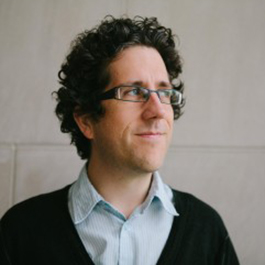
Matt Easterday is an Assistant Professor in the Learning Sciences Department at Northwestern University's School of Education and Social Policy, co-directing the Delta Lab. He holds a PhD in Human-Computer Interaction from Carnegie Mellon University (2010), preceded by an MS in the same field and a BA in Psychology and Mathematics from Reed College. His research focuses on technology-enhanced civic education, aiming to develop evidence-based tools that foster informed citizenship capable of addressing societal challenges like climate change and inequality. Core areas include deliberation systems, cognitive games for policy analysis, and platforms like The Loft and NextGenIL for collaborative civic innovation. Easterday's work emphasizes design research methodologies, bridging theory and practice through frameworks like the 'Design Risks Framework' and 'Research Slices.' His projects integrate iterative design, participatory governance, and scalable learning networks to address real-world policy problems. Awards: Siebel Scholar, Searle Center Fellow, Ver Steeg Advising Award Labs/Teams: Delta Lab (civic tech innovation), The Loft (online learning platform) He advocates for human-centered design in education, advancing tools like Critiki for formative feedback and StandUp for professional coaching in project-based learning.
Professor Ian Ruthven is a Professor of Information Seeking and Retrieval in the Department of Computer and Information Sciences at the University of Strathclyde. He chairs the Scottish Library and Information Council (SLIC) and the Steering Committee of the Information Seeking in Context (ISIC) conference series. His research focuses on human information interaction, including information seeking in health, migration, and cultural heritage contexts. He authored Dealing With Change Through Information Sculpting , proposing a theory explaining how people use information behaviors to adapt during life transitions. Education: PhD in Abduction, Explanation, and Relevance Feedback (University of Glasgow, 2001), MSc (University of Birmingham, 1993), BSc in Computing Science (University of Glasgow, 1992). Research Interests: Information seeking theory, interface design for information access, user studies. His work bridges human-computer interaction with socio-technical systems, emphasizing ethical and inclusive design. Publications: Over 170 peer-reviewed papers, including influential works on information resilience, digital divides, and pandemic impacts on international students. Recent work includes Grey Digital Divide: Factors Associated with Older People’s Use of the Internet for Financial Transactions (2025) and Information Avoidance: A Critical Conceptual Review (2025). Awards: Tony Kent Strix Memorial Award (2020), Fellow of the Royal Society of Arts (2010), and multiple best paper awards. His contributions span academic and policy realms, addressing societal challenges through information science. Projects: Co-investigator in the Participatory Harm Auditing Workbenches and Methodologies (PHAWM) project (2024–2028) and leader of the Scottish Network on Digital Cultural Resources Evaluation (ScotDigiCH) (2015–2016). These projects emphasize participatory design and cultural heritage evaluation. Professional Activities: Editorial roles for major conferences, visiting researcher at the University of Pretoria (2021), and advisory roles in library and information science initiatives. His work fosters collaboration between academia and cultural institutions.
Professor Tavis Potts is a Personal Chair in Sustainable Development and Environmental Governance at the University of Aberdeen, affiliated with the Department of Geography and Environment within the School of Geosciences. He is actively engaged in research on just transitions, environmental justice, marine governance, and participatory planning. His research focuses on: Understanding just transitions and the social dimensions of climate and energy Marine resource governance and planning Participatory and community-based approaches to managing natural capital The political economy of environmental policy The blue economy and net zero transitions His recent publications highlight a strong trend toward policy-relevant research on just transitions, stakeholder engagement, and environmental governance. Articles and reports examine climate assemblies, community participation in net zero planning, nuclear decommissioning, and measuring equitable outcomes in transition processes. His work integrates social science perspectives with environmental policy, emphasizing democratic participation and equity. Key scientific contributions include commissioned reports for the Just Transition Commission and the Nuclear Decommissioning Authority, as well as peer-reviewed articles in journals such as Environmental Science & Policy and Marine Policy . He has led and contributed to projects funded by Interreg EU, NERC, British Council, and the World Bank. Professor Potts advises research students and leads the Just Transition Lab at Aberdeen. He holds external advisory roles with Aberdeen City Council’s Net Zero Delivery Unit and Aberdeenshire Council’s Climate Ready Aberdeenshire Board, demonstrating active engagement with policy and practice. He is affiliated with key research centers including the Centre for Marine and Coastal Zone Management and the Just Transition Lab, where he advances interdisciplinary work on sustainable futures and equitable environmental governance.
Prof. Dr. Talja Blokland is a Professor of Urban and Regional Sociology at the Institute of Social Sciences within the Faculty of Cultural, Social and Educational Sciences at Humboldt University of Berlin. Based at Universitätsstraße 3b, Room 301, she actively contributes to urban sociological research and teaching, with contact via talja.blokland@sowi.hu-berlin.de. Her position as Women's* representative underscores her institutional engagement beyond academic duties. Bloklund's research centers on urban sociology, examining social inequality, neighborhood dynamics, social capital, public space, and urban diversity through qualitative and ethnographic lenses. She investigates how spatial arrangements shape social interactions, community formation, and exclusionary processes in cities like Berlin, Rotterdam, and São Paulo. Her work emphasizes the lived experiences of marginalized populations and the role of public spaces in mediating urban life, particularly in contexts of migration, segregation, and rapid urban transformation. Analysis of her recent publications reveals a dominant focus on 'urban impasses'—structural deadlocks where inequality becomes entrenched. Her scholarship consistently explores segregation mechanisms, social trust in public spaces, and the impact of policies like lockdowns on urban dwellers. Methodologically, she prioritizes ethnographic approaches to capture nuanced social realities, with recurring attention to Berlin's evolving urban landscape. Key thematic threads include the paradoxes of diversity, the spatial dimensions of social capital, and how marginalized groups navigate urban inequalities through everyday tactics.
Samuel Jean Bassetto is an Associate Professor in the Department of Mathematics and Industrial Engineering at Polytechnique Montréal. He serves as Director of the Continuous Improvement Laboratory (LABAC) and holds membership in multiple prestigious research groups including the Research Group on Globalisation and Management of Technology (GMT), Poly-Industries 4.0 Laboratory, Interuniversity Research Centre on Enterprise Networks, Logistics and Transportation (CIRRELT), and Institute for Data Valorization (IVADO). Dr. Bassetto's research spans multiple disciplines, focusing on continuous improvement through the integration of engineering, artificial intelligence, cognitive science, psychology, and design. His primary sphere of excellence is in New Frontiers in Information and Communication Technologies, with secondary expertise in Modeling and Artificial Intelligence and Human Health. He develops tools that place humans at the center of technology to enhance organizational performance while respecting human rhythms and cognitive limitations. His recent publication portfolio reveals a strong interdisciplinary approach, with research bridging industrial engineering, cognitive neuroscience, and AI ethics. His work addresses practical challenges in lean manufacturing assessment, racial bias in medical AI systems, cognitive data collection in natural environments, and condition monitoring for industrial machinery. The research consistently demonstrates a commitment to developing practical solutions that integrate human factors with technological innovation. NSERC Synergy Prize for Innovation recipient Principal investigator on multiple research grants from NSERC, FRQ, and MITACS Collaborations with over a dozen institutions across multiple countries Supervision of over 150 highly qualified personnel throughout his career Dr. Bassetto teaches specialized courses including CAP7011 (Creativity in Research), IND8444 (Continuous Improvement), IND8203 (Industrial Launch), and previously taught IND8178 (Production). His teaching philosophy emphasizes practical application, with courses featuring hands-on exercises, real-world scenarios, and gamification techniques to enhance learning. His supervision portfolio includes numerous Ph.D. and Master's students working on topics ranging from human-technology collaboration to reinforcement learning for production management. Through LABAC, Dr. Bassetto leads research initiatives focused on developing human-centered tools for continuous improvement in organizational settings. The laboratory conducts projects related to industrial IoT applications, cognitive aspects of process improvement, and the development of practical frameworks for organizations to enhance performance while maintaining respect for human rhythms and cognitive capabilities.