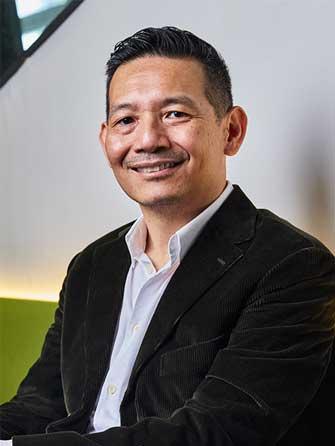
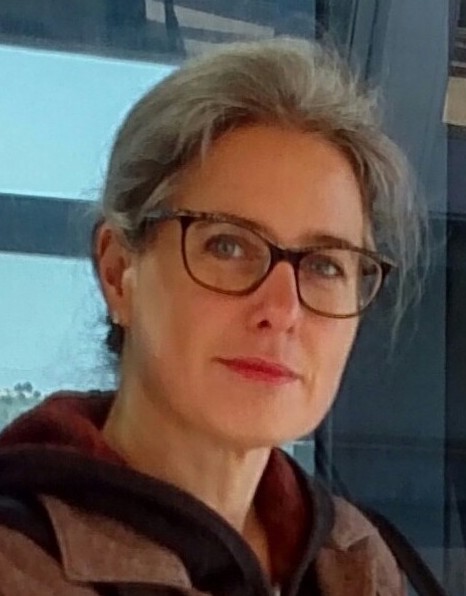
Dr. Hyunjung Shin is an Associate Professor in the Department of Curriculum Studies at the University of Saskatchewan's College of Education. Her work focuses on applied linguistics, EAL education, and critical pedagogy. She holds a Ph.D. from the University of Toronto (2010) in Curriculum, Teaching and Learning, with a specialization in Second Language Education. Her research explores topics such as transnational student experiences, neoliberalism in education, refugee language policies, and identity formation. Notable awards include the Government of Canada Post-doctoral Research Fellowship (2010-2011) and the BAAL International Scholarship (2010). Shin's publications challenge dominant narratives in language education, emphasizing critical perspectives on multilingualism and globalization. She has presented widely, including a TEDx talk on diversity in 2019. Her work integrates participatory action research and ethnographic methods to address systemic inequities.
Mel Ainscow is a Professor in Education at the University of Glasgow and holds adjunct and emeritus roles at Queensland University of Technology and the University of Manchester. He is recognized globally for his work on inclusion and equity in education, particularly through systemic reforms and collaborative research with schools. His career includes roles as a head teacher, adviser, and researcher, emphasizing strategies to make schools effective for all students. Key projects include leading the Greater Manchester Challenge (a £50M initiative for school improvement) and Schools Challenge Cymru (a Welsh Government program focusing on disadvantaged students). He advises UNESCO and the Organization of American States on equity in education. His research focuses on systemic change, policy analysis, and inclusive practices, with over 90 publications including books like Struggles for Equity in Education and articles in journals like Journal of Educational Change and Prospects . Dr. Ainscow's awards include a CBE for services to education (2012). His work bridges theory and practice, advocating for equity through collaboration, ethical leadership, and evidence-based strategies. He has collaborated with international networks in Australia, Portugal, Spain, and Latin America, emphasizing global approaches to educational challenges.
Matthew Palm is an Assistant Professor in the Department of City and Regional Planning at the University of North Carolina at Chapel Hill, holding the Cities Pardue Fellowship. His research focuses on transportation equity, shift work commuting challenges, and mobility barriers affecting essential workers in 24-hour economies. He examines how transportation systems impact social participation, healthcare access, and economic opportunities while advocating for equitable planning solutions. Recent work explores post-pandemic transit trends, ride-sharing equity, and the intersection of transportation policy with marginalized communities. Palm collaborates with community organizations to co-create evidence-based solutions for mobility challenges. He currently holds a $1.09 billion grant reflecting North Carolina’s renewed interest in rail infrastructure. His research agenda includes three core areas: 1) analyzing how shift workers’ nighttime commuting affects social exclusion and family care logistics, 2) studying transportation affordability’s role in economic participation, and 3) evaluating transportation infrastructure’s dual potential to improve lives while mitigating negative externalities like pollution. He emphasizes participatory approaches to planning and has published extensively on pandemic-era transit usage shifts, accessibility metrics, and housing-transit linkages.
Steve Mann is a Professor in Applied Linguistics at the University of Warwick, where he has been affiliated since 2007. His work focuses on English Language Teacher Education (ELTE), teacher development, and qualitative research methodologies. He holds a PGCE from the University of Warwick (1984) and has extensive experience in ELT across Hong Kong, Japan, and Europe. Mann’s research group investigates reflective practice, teacher beliefs, mentoring, and technology integration in education. Notable contributions include co-editing the Routledge Handbook of English Language Teacher Education (2019) and pioneering studies on video-based teacher reflection. He has supervised numerous PhD students exploring aspects of teacher development, though he is currently not accepting new PhD candidates. Education: PGCE, University of Warwick (1984) Pre-service teaching in English and Drama in England (1980s) British Council Teaching Scheme in Hong Kong (1980s) Research Interests: Teacher education, reflective practice, qualitative interview methodologies, and the role of technology in professional development. His work emphasizes bridging theory and practice in ELT, particularly through collaborative dialogue and action research. Grants & Projects: Supporting Sustainable English Teacher Professional Development in Yunnan Province (British Council, 2022–2023) China Course Research: Postgraduate Curriculum Design (2019–2022) Video in Language Teacher Education (British Council, 2016–2018) Labs/Teams: Leads a research group focused on teacher development, mentoring, and blended learning strategies. Collaborates with institutions like the British Council on global teacher education initiatives.
Prof. Dr. Johannes Sauer is a Professor at the Technical University of Munich (TUM), holding dual affiliations with the TUM School of Management and the TUM School of Life Sciences . His academic focus is on production and resource economics, with expertise in agricultural sustainability, policy evaluation, and circular economy strategies in Asia-Pacific and Latin America. Education: Bachelor’s/Master’s in Agricultural Economics from Universities of Tübingen, Hamburg, and Imperial College London. Doctorate (summa cum laude) in Agricultural Economics from the University of Bonn (2004). Research Interests: Prof. Sauer’s work spans productivity and resilience in agricultural systems, adoption of sustainable technologies, water resource valuation, and bioeconomic trends. He emphasizes smart technologies and circular economy applications in developing regions. His research employs econometric methods to analyze policy impacts and environmental-economic trade-offs. Key Trends in Publications: Recent articles highlight climate-smart agriculture, ICT adoption in rural China, and agroforestry’s role in reducing ecological-economic trade-offs. He explores behavioral drivers of policy participation and innovative tools like the IoFarm decision support system. Awards: 2021 Honorary Professorship at ANU OECD Fellow Awards (2010, 2016) Best Paper Awards (2008–2015) Consulting & Roles: OECD and Asian Development Bank consultant, ESRC Peer Review College member, and liaison lecturer for the German National Academic Foundation. He advises on agri-environmental policies and international development. Labs/Teams: Active in collaborative projects such as PONDERFUL Framework and IPM Popilia , focusing on nexus research and pest management strategies.
Arjan F. Kirkels is an Assistant Professor and University Lecturer in the Department of Technology, Innovation & Society within the School of Industrial Engineering and Innovation Sciences at Eindhoven University of Technology (TU/e). His work focuses on sustainability assessments, decision-making in transitions, and interdisciplinary education for sustainable innovation. His research interests include Life Cycle Assessment (LCA), Multi-Criteria Assessment (MCA), sustainability transitions, industrial ecology, and systems engineering. He applies these to emerging technologies such as batteries, hydrogen systems, and heat pumps, with a strong emphasis on integrating stakeholder values and addressing deep uncertainties in sustainability decisions. The recent articles highlight a consistent focus on assessing emerging technologies, particularly in renewable energy and circular economy applications. Trends include prospective LCA, experience curves in solar technology, socio-technical impact assessment, and educational innovations in sustainability. His work bridges technical analysis with social and governance dimensions of sustainability transitions. Best Teacher Award, 1st year Bachelor Sustainable Innovation, for course 0SV20 'Industrial Ecology' (2013) Best Teacher Award, 1st year Bachelor Sustainable Innovation, for course 0SV20 'Industrial Ecology' (2018) Best Teacher Award, 1st year Bachelor Sustainable Innovation, for course 0SV20 'Industrial Ecology' (2020) Educational award nomination, bachelor Sustainable Innovation, course 0SK30 Inter-University Sustainability Challenge (2023) Education Award 2024 - master Innovation Sciences (2025) Arjan F. Kirkels has supervised over 100 thesis students and more than 100 interdisciplinary student groups. He has developed and taught over 20 courses and co-authored 4 textbooks and 7 publications on educational innovation. He is currently supervising four researchers: Huiying Liu, Prapti Maharjan, Rishi Bhatnagar, and Seyed Mousavi. His research is supported by projects such as the EU-funded cVPP (Community-based Virtual Power Plant) and studies on Dutch sustainability transitions. He is actively involved in educational initiatives, including MOOC development and challenge-based learning, and contributes to public discourse through media appearances and workshops on sustainability education and systems thinking.
Dr Francis Maravillas is a Senior Lecturer and Programme Leader of the BA (Hons) Art Histories and Curatorial Practices: Asia and the World at LASALLE College of the Arts, Singapore. His academic work bridges art historical research, curatorial practice, and interdisciplinary teaching with a focus on contemporary Asian art contexts. His educational background includes a PhD in Humanities and Social Sciences from the University of Technology Sydney and a First Class Honours BA in Politics from Macquarie University, Australia. Maravillas' research centers on modern and contemporary Asian art, with particular expertise in curatorial practices, exhibition histories, and socially engaged/performatory art forms. His current projects investigate the aesthetics and politics of food in contemporary Asian art, examining how food functions in performance, installation, and community-based practices within post-colonial and global contexts. This research explores intersections between alimentary practices, political economies of survival, and post-colonial histories across Asia. His publication record reveals consistent engagement with Southeast Asian contemporary art worlds, food-art practices, and diasporic visual cultures. Key projects include the co-edited World Art special issue on Southeast Asian art publics (2020) and the forthcoming Routledge anthology 'Tastes of Justice' (2025), which examines food, art, and justice politics in Asian-Australian contexts. Maravillas has secured significant research funding including a SGD 20,000 LASALLE College of the Arts grant for 'Tastes of Justice' (2024) and an AUD 49,526 Creative Australia grant for related art, performance, and symposia activities in Sydney and Singapore (2024). He actively collaborates internationally through co-curated exhibitions like 'Bruised Food: A Living Laboratory' (2019) and the symposium 'Shifting Grounds, New Horizons' (2022), demonstrating commitment to building transnational networks in contemporary Southeast Asian art.
Lauren Leve is an Associate Professor of Religious Studies and Director of Graduate Studies at the University of North Carolina at Chapel Hill. Her academic career centers on the intersection of religion, culture, and changing forms of life in contemporary Nepal and South Asia. Trained as an anthropologist, she examines how religious practices and subjectivities interact with broader political, economic, and social trends, particularly those associated with neoliberal globalization. Ph.D., Princeton University B.A., University of Chicago A.A., Simon's Rock of Bard College Professor Leve's research interests span ethnographic methods, the ethnography of religion, personhood, subjectivity, the anthropology of ethics, democracy, law, violence, international development, globalism, postcoloniality, and the religious landscapes of Nepal, South Asia, and Buddhist Southeast Asia. Her work explores how religious practices mediate and are mediated by political and economic transformations, with particular attention to how human agents use religion to reflect on their world and aspirations. Her scholarly output reveals a consistent focus on Theravada Buddhism's revival in Nepal, particularly among Newar communities, and how this religious movement intersects with democratic reforms, economic liberalization, and changing forms of personhood. Her publications demonstrate expertise in both ethnographic methodology and theoretical contributions to understanding modern religious subjectivity, with a special emphasis on how global processes are reflected and reflected upon by Nepali Buddhists. James Fisher Prize for First Books on the Himalayan Region (2018) UNC FIRE grant (2016) Carolina Women's Center, Faculty Fellow (2013-14) Institute for Arts and Humanities, Faculty Fellow (2007) Harry Frank Guggenheim Foundation, Research Award (2004) Program in Agrarian Studies, Yale University, Program Fellow (2004-2005) As Director of Graduate Studies in Religious Studies, Professor Leve mentors graduate students and teaches courses on ethnographic methodologies, Theravada Buddhism, Himalayan Buddhism, and topical theories reflecting her research interests. She has consulted on research studies in international development, focusing on women's literacy and empowerment, and provides expert witness services in US courts. Her current research projects explore the globalization of Buddhist meditation through the Goenka tradition and follow rural women's experiences through development projects, Maoist insurrection, and conversion to Christianity.
Emily S. Cross is Professor at the University of Glasgow's School of Psychology & Neuroscience, where she co-directs the Social Brain in Action Lab (SoBA) and leads the ERC Starting Grant 'Social Robots' project. She completed her PhD at Dartmouth College and held positions at Bangor University, Radboud University, and the University of Western Australia before joining Glasgow. Her research explores: Experience-dependent plasticity through dance and motor learning Social cognition in human-robot interaction Emotional processing during action observation Aesthetic perception of movement Cross-cultural differences in technology acceptance Professor Cross uses neuroimaging (fMRI), neurostimulation (TMS, tDCS), and behavioral methods to study how we perceive and learn from human and artificial agents. Her work has been published in Trends in Cognitive Sciences, Journal of Neuroscience, and Philosophical Transactions of the Royal Society. She currently supervises projects on robot-assisted health interventions and develops VR paradigms to study social cognition.
Dr. Shari Sabeti is a Senior Lecturer in Arts and Humanities Education at the Moray House School of Education and Sport, University of Edinburgh. She holds a PhD in English Literature from the University of Cambridge and is a Senior Fellow of the Higher Education Academy (SFHEA). Her research focuses on arts, cultural heritage, and decolonizing education, with projects in museums, schools, and Pacific Island communities. She has led initiatives in the Marshall Islands, Samoa, and Hawaii, emphasizing participatory and arts-based methodologies. Education: MA (Hons) English (Cambridge, 1994), MA English and American Literature (UCL, 1995), PhD English Literature (Cambridge, 1999), PGCE Secondary English (IOE, 2002). She has taught at the University of Stirling and the University of Edinburgh, where she currently organizes courses on anthropology of education, creative pedagogies, and literacy. Research interests include museum education, decolonizing approaches, Pacific Island education, and creative writing pedagogy. Her work bridges anthropology, ethnography, and arts-based methods, exploring community resilience and identity formation. Recent projects include 'Remediating Stevenson' (AHRC-funded, 2022–2025) and studies on Marshallese displacement through arts education. Awards and grants include a £1M AHRC Standard Grant for decolonizing Pacific literature and multiple GCRF awards for education in the Marshall Islands. She has supervised over a dozen PhD students on topics like museum pedagogy, diaspora education, and creative writing practices. Labs/Networks: Centre for Creative Relational Inquiry, Digital Cultural Heritage Network, Atelier Creative Arts and Social Sciences Network. Her work often involves partnerships with museums, NGOs, and international communities.
Sophie Oldfield is Professor and Chair of the Department of City and Regional Planning at Cornell University's College of Architecture, Art, and Planning. She is internationally recognized for her research on cities in the Global South, with a particular focus on African urbanism, informality, governance, and collaborative planning. She previously held a joint professorship at the University of Cape Town and the University of Basel from 2016 to 2021. Ph.D., Geography, University of Minnesota M.A., Geography, Syracuse University Her research interests center on urban studies in the Global South , especially African cities, where she investigates informality, housing struggles, participatory planning, and the epistemologies of urban knowledge production . She is deeply committed to collaborative and community-engaged research, challenging traditional academic boundaries between the university and community. Her work emphasizes fieldwork, theory, and practice, and explores how urban governance shapes everyday life in marginalized settlements. Her recent publications reflect a strong trend toward co-produced knowledge, feminist urban praxis, and critical urban theory from southern perspectives . She frequently examines how urban theory can be reimagined through partnerships with communities, activists, and practitioners. Her scholarship spans interdisciplinary areas including geography, planning, urban studies, and social policy. Society of South African Geographers Fellowship (2020) Distinguished African Scholar, Cornell University (2018) British Academy Newton Advanced Fellow (2015–2018) University of Cape Town Social Responsiveness Award (2014) Mandela Mellon Fellow, Harvard University (2010) She has supervised and collaborated with numerous students, particularly through participatory research projects such as Building Bit-by-Bit , which involved master’s students from the University of Cape Town and the University of Basel. She has secured significant research funding through fellowships and institutional support. Her work is closely tied to initiatives like the African Centre for Cities and the Critical Urbanisms program at the University of Basel . She continues to be an active voice in rethinking urban scholarship through collaboration, equity, and southern epistemologies.
Steven W. Popper is a Professor of Policy Analysis at the RAND School of Public Policy and an Adjunct Senior Economist at the RAND Corporation. He also serves as Distinguished Professor of Decision Sciences at Tecnológico de Monterrey’s School of Government and Public Transformation, reflecting his international academic engagement. His work bridges economics, science and technology policy, and strategic decision-making under uncertainty. Research Interests: Popper's expertise lies in decision-making under deep uncertainty (DMDU), robust decision making (RDM), assumption-based planning, and science, technology, and innovation policy. He has made seminal contributions to long-term policy analysis, particularly through his co-authorship of Shaping the Next One Hundred Years (2003). His research addresses complex systems in economic development, international relations, and environmental planning. Publication Trends: His recent work applies RDM methodologies to diverse domains such as U.S.-China economic competition, Israeli defense and energy policy, transportation planning, and future technologies. His publications often involve scenario analysis, foresight, and adaptive strategies for policy resilience in uncertain futures. Scientific Awards and Leadership: Founding officer and current Finance Chair, Society for Decision Making under Deep Uncertainty Past Chair, Industrial Science and Technology Section, American Association for the Advancement of Science Consultant to the World Bank, OECD, and multiple national governments Advising and Grants: While specific advisees are not listed, Popper has led numerous high-impact research projects funded by U.S. federal agencies and international bodies. His role as Associate Director of the Science and Technology Policy Institute (1996–2001) involved providing analytic support to the White House Office of Science and Technology Policy, indicating extensive grant-funded research leadership. Labs and Teams: Popper is affiliated with RAND’s research teams focused on policy analysis, innovation, and strategic foresight. He collaborates with interdisciplinary teams applying modeling and simulation tools to public policy challenges, particularly through the Robust Decision Making framework.
Professor Lucy Kimbell is Professor of Contemporary Design Practices at Central Saint Martins, University of the Arts London, where she convenes the Policy Futures Studio. She is Co-Director of the Sustainable Transitions through Democratic Design Doctoral Network funded by the EU Marie Curie programme and serves as Visiting Professor at University of Ulster and Honorary Adjunct Professor at RMIT University. Her work bridges design practice, public policy, and social innovation across multiple international contexts. Professor Kimbell's educational background includes a PhD in Design from Lancaster University (2013), an MA in Computing in Art and Design from Middlesex University (1996), and a B. Engineering in Design and Appropriate Technology from the University of Warwick (1989). Her academic journey reflects a consistent integration of technical, creative, and social perspectives. Kimbell's research focuses on service design, social design, and design for policy, with increasing emphasis on sustainable transitions and democratic innovation. She explores how design methods can address complex societal challenges, particularly through transdisciplinary approaches that connect creative practice with public policy contexts. Her work examines the role of design in government, professional services, and community settings, with particular attention to AI readiness in professional service firms and antimicrobial resistance policy in India. She has pioneered frameworks for measuring design's social and environmental value, notably through the Design Value framework developed with the Design Council. Her recent publications demonstrate a clear trajectory toward understanding design's role in public policy, sustainable transitions, and democratic innovation. The research shows increasing integration of practice-based research methods with policy development, emphasizing transdisciplinary collaboration and the application of design thinking to complex societal challenges. There's a notable focus on developing frameworks for measuring design's social and environmental value and advancing democratic innovation through design practice. Notable recognitions include: AHRC Research Fellow in Policy Lab in the Cabinet Office (2014-15) Principal research fellow at University of Brighton (2013-15) Clark Fellow in Design Leadership at Said Business School, University of Oxford (2005-10) Professor Kimbell supervises transdisciplinary PhD research connecting design with public policy, with six completions to date including four UAL-KCL joint studentships. She examines PhDs internationally and serves on the supervisory board for the PhD in Service Design for Public Sector at Sapienza University, Rome. Her grant portfolio includes major projects funded by EU Marie Curie, AHRC, ESRC, and Creative Europe, totaling millions in research funding for design-led approaches to societal challenges, including the Sustainable Transitions through Democratic Design Doctoral Network (2024-28) and the AHRC Design & Policy Research Network (2022-23). She previously directed UAL's Social Design Institute (2019-2022), which brought together university expertise in design for society through capacity building, joint research, publications, and public events. Her collaborative work extends to knowledge exchange projects with Design Council, Department of Work and Pensions, Northern Ireland Social Care Council, and Bite Back 2030, demonstrating her commitment to applying design thinking to real-world policy and social challenges.
Dr. Megan Bailey is an Associate Professor and Canada Research Chair (Tier II) in Integrated Ocean and Coastal Governance at Dalhousie University's Marine Affairs Program, part of the Faculty of Science. She holds a PhD from the University of British Columbia (UBC) and has conducted postdoctoral research at Wageningen University in the Netherlands. Her work focuses on global fisheries governance, combining market and state approaches to achieve sustainable outcomes, particularly in transboundary fisheries and tuna governance. Bailey’s research integrates game theory, global value chain analysis, and informational governance to address challenges in seafood sustainability. She emphasizes collaboration among governments, NGOs, and industry to enhance transparency and equity in fisheries management. Her projects often center on Indigenous rights, Arctic char fisheries in Nunatsiavut, and the impacts of market mechanisms like eco-labels and trade policies. Key areas of research include: cooperative management of shared fish stocks, traceability systems, food security, and equitable allocation in fisheries. She leads the Bailey Lab, which supports interdisciplinary projects such as the North Atlantic Right Whale conservation initiative and the Sustainable Nunatsiavut Futures Project. Bailey has supervised numerous PhD and Master’s students, fostering the next generation of marine governance researchers. Her scientific contributions include over 50 peer-reviewed publications, with recent work addressing Indigenous data sovereignty, decolonizing research methodologies, and the socio-ecological impacts of climate change on coastal communities. Bailey is a principal investigator for the Nippon Foundation Ocean Nexus Center, furthering global ocean equity initiatives.
Karyn Moffatt is an Associate Professor in the School of Information Studies at McGill University and holds the Canada Research Chair in Inclusive Social Computing. As Graduate Program Director for the PhD program, she leads the Accessible Computing Technologies Research Group (ACT Lab), focusing on designing inclusive computing applications that support social engagement across diverse lifespans and abilities. Her work bridges human-computer interaction, accessibility research, and real-world community impact. Educational background: PhD in Computer Science, University of British Columbia MSc in Computer Science, University of British Columbia BASc in Computer Engineering, University of British Columbia Research Interests: Dr. Moffatt's work centers on inclusive social computing with emphases on aging populations , disability access , and intergenerational communication . She investigates how technology can overcome barriers to social participation through co-design methodologies, particularly for older adults and individuals with cognitive or physical disabilities. Current projects explore AI-enhanced aging support, dementia-friendly social platforms, accessible financial technology, and respite care coordination systems. Her approach integrates participatory design with rigorous usability testing to create solutions that address real-world challenges in healthcare, finance, and community engagement. Publication Trends: Analysis of her 15 most recent publications reveals consistent focus on aging and accessibility (60% of works), with growing emphasis on AI ethics (2025), dementia support systems (30% of 2023-2024 works), and accessible financial technology (2024). Methodologically, 75% employ co-design or participatory approaches, while 40% involve longitudinal field studies. Key venues include CHI (33%), ASSETS (20%), and ACM Transactions on Accessible Computing (27%), demonstrating leadership in top-tier HCI and accessibility forums. Scientific Awards: Multiple Best Paper Awards from ASSETS, CHI, and CSCW conferences Canada Research Chair in Inclusive Social Computing Advising and Grants: Dr. Moffatt currently supervises PhD candidates Chong Hu and Muhe Yang, having graduated four students since 2022 including Maurício Fontana De Vargas (2023) and Carrie Dai (2023). Her active grants include: NSERC Discovery Grant (2024-2029) as PI: Ethical AI for active aging Canada Research Chair renewal (2022-2027) as PI McGill Nursing Collaborative grant (2023-2025) as Co-I: iRespite mHealth app for palliative care Labs and Teams: She directs the ACT Lab, which partners with healthcare providers, public libraries, and community organizations to develop and deploy inclusive technologies. Current initiatives include the QuickPic AAC system for speech therapy, dementia-focused social programs with Montreal libraries, and Quebec-wide respite care coordination tools, all developed through interdisciplinary collaboration with clinicians, caregivers, and end-users.