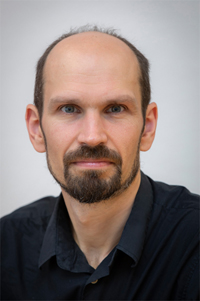
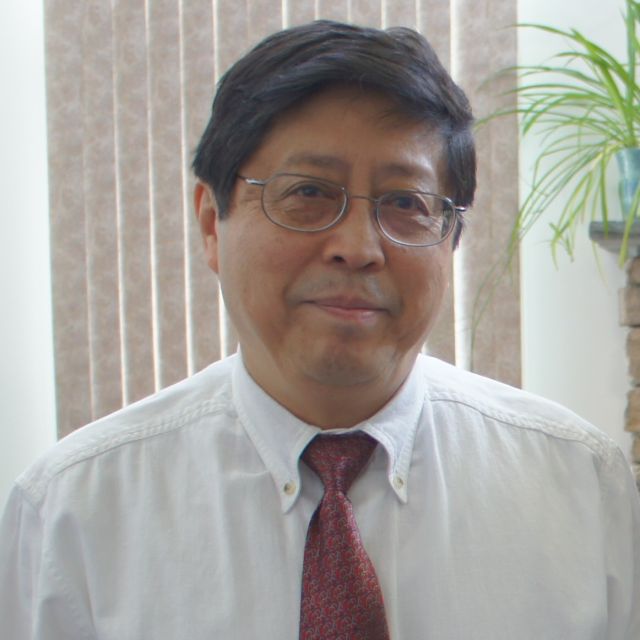
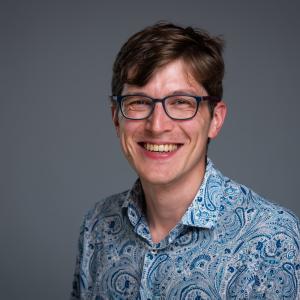
Marc Geilen is an Associate Professor at the Electronic Systems group of Eindhoven University of Technology (TU/e) . He leads the Model-Based Design Lab within the CompSOC Lab and High Tech Systems Center .
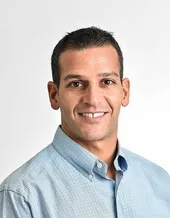
Dr. Robert Legenstein is a Full Professor and Institute Head at the Institute of Machine Learning and Neural Computation , Graz University of Technology. He serves as Speaker of the Graz Center for Machine Learning and Action Editor for Transactions on Machine Learning Research (TMLR) . His research bridges computational neuroscience and machine learning, focusing on neuromorphic computing systems that mimic biological neural networks. Research Leadership: Leads EU-funded projects like Adaptive Optical Dendrites (FET-Open) , SYNCH (FET-Proactive) , and Stochastic Assemblies in SNNs (FWF) . Scientific Contributions: Develops learning algorithms for spiking neural networks (SNNs), with applications to memristive architectures, neuroprosthetics, and energy-efficient AI systems. Key Publications: 15+ recent works on topics including dendritic computing, hardware-aware training, and context-dependent neural processing. Teaching Roles: Offers courses like Deep Learning , Principles of Brain Computation , and Data Structures & Algorithms . Contact: robert.legenstein@tugraz.at | +43 316 873 5824 | Inffeldgasse 16b/I, 8010 Graz, Austria.
Eitan Yaakobi is a Professor at the Computer Science Department of the Technion – Israel Institute of Technology, with a courtesy appointment in the Electrical and Computer Engineering Department. He holds a B.A. in Computer Science and Mathematics, an M.Sc. in Computer Science from the Technion, and a Ph.D. in Electrical Engineering from UC San Diego. His research focuses on information and coding theory, with applications in non-volatile memories, DNA storage, and distributed storage systems. He has been affiliated with the TUM Institute for Advanced Study (2018–2022) as a Hans Fischer Fellow and held a visiting position at Nanyang Technological University (2023–2024). Education: B.A. in Computer Science and Mathematics, Technion (2005) M.Sc. in Computer Science, Technion (2007) Ph.D. in Electrical Engineering, UC San Diego (2011) Research Interests: Information theory, coding theory, DNA storage, non-volatile memories, distributed storage systems, and private information retrieval. His work emphasizes error-correcting codes for emerging storage technologies like racetrack and DNA memories. Publications: Over 70+ peer-reviewed articles, including seminal work on WOM codes, burst error correction, and DNA storage coding. Recent trends include optimizing coding schemes for DNA synthesis and addressing errors in biomolecular storage systems. Awards: Multiple Technion Excellence Teaching Awards (2016, 2021), Marconi Society Young Scholar Award (2009), and Intel Ph.D. Fellowship (2010–2011). His research has been supported by grants like the ERC Consolidator Grant and EIC Pathfinder Challenge. Advising & Grants: Supervised over 30 graduate students and postdocs. Current lab members include Ph.D. researchers in coding theory and DNA storage. Active collaborations with institutions like UCSD’s Center for Memory and Recording Research. Labs/Teams: Leads a research group at the Technion focusing on coding for next-generation storage systems. Collaborates with interdisciplinary teams on biomolecular data storage and emerging memory technologies.
Corentin Dumery is a Doctoral Assistant at École Polytechnique Fédérale de Lausanne (EPFL) , affiliated with the Computer Vision Laboratory (CVLAB) and Machine Learning and Optimization Laboratory (MLO) within the School of Computer and Communication Sciences . His research bridges Computer Vision and Computer Graphics , focusing on 3D scene reconstruction, garment modeling, and neural rendering techniques. Previously, he interned at Meta Redmond , worked at CEA Paris-Saclay on polycube mapping, and was a visiting researcher at ETH Zurich under Prof. Olga Sorkine-Hornung . Corentin holds dual MSc degrees in Computer Science from National University of Singapore (NUS) and Télécom Paris . His work emphasizes 3D content creation for AR/VR Diffusion models for garment reconstruction Neural radiance field optimization Polycube mapping for hexahedral meshing His recent publications (2022–2025) span top venues like SIGGRAPH , ICCV , and CVPR , addressing challenges in 3D Gaussian splatting, view-consistent NeRF training, and single-view garment recovery. He also contributes to academic service as an Outstanding Reviewer at CVPR25 and co-organizes workshops like OpenSUN3D . At EPFL, he serves as Head Teaching Assistant for courses CS433 Machine Learning (2023–2024) and CS442 Computer Vision (2023–2024). Additionally, he is the VP/Treasurer of EPIC , EPFL's computer science PhD association.
Iacopo Carusotto is a Lecturer at the Department of Physics, University of Trento, where he teaches advanced courses such as Quantum Optics . His research bridges theoretical and experimental quantum physics, with a focus on quantum fluids, photonics, and emergent phenomena in condensed matter systems. Research interests span: Quantum optics and polariton dynamics Bose-Einstein condensates and superfluidity Quantum Hall physics and topological phases Nonlinear photonics and cavity QED Non-equilibrium quantum systems Analog gravity and cosmological simulations His recent publications (2021–2025) consistently explore quantum many-body phenomena, including supersolidity in photonic systems, vacuum decay in spin chains, and hydrodynamic analogs of black holes. Theoretical frameworks often intersect with experimental validations in microcavities and engineered lattices.
Timo Hyart is a Research Fellow at the Department of Applied Physics within the Correlated Quantum Materials (CQM) group. His work focuses on quantum materials with an emphasis on topological superconductivity , graphene-based systems , and non-Hermitian quantum states , as evidenced by his research fingerprint. Hyart’s recent publications (2025–2022) highlight his exploration of mesoscopic graphene transport , non-Hermitian topology , Chern number measurements , and superlattice parametric effects . These studies often involve collaborations with researchers like Antti Lau and Wojciech Brzezicki . He has contributed to journals such as Physical Review Research , Nanotechnology , and Physical Review B , with recurring themes in quantum entanglement , superconducting materials , and topological phase transitions . No formal awards or student advisement details are publicly listed in the provided data.
Konrad Lehnert is a Lecturer in the Department of Physics at the University of Colorado, affiliated with JILA, a joint institute of the University of Colorado and NIST. His research focuses on quantum optomechanics, quantum metrology, and the development of quantum-coherent networks for advanced measurement systems. Key areas include studying quantum coherence in mechanical oscillators, microwave-to-optical transduction, and applications in astrophysics and condensed matter physics. Lehnert's work involves cutting-edge experiments with superconducting resonators, parametric amplifiers, and quantum-limited measurement techniques. Notable collaborations include the HAYSTAC project for axion dark matter detection using microwave cavity experiments. His research bridges theoretical and experimental quantum physics, emphasizing precision measurement and hybrid quantum systems. His publications span Nature, Physical Review Letters, and specialized journals in quantum engineering, showcasing contributions to optomechanical ground-state cooling, entanglement-based sensing, and quantum transduction. While specific awards are not listed, his impactful contributions to quantum science are evident through high-impact publications and leadership in major experiments like HAYSTAC. Lehnert's technical innovations include advancements in superconducting circuit design, low-loss couplers, and squeezed-state receivers. His work at JILA leverages interdisciplinary approaches to tackle fundamental questions in quantum mechanics and cosmology, positioning him as a key figure in modern quantum technology research.
Vladimir Loncar is a researcher specializing in machine learning, FPGA optimization, and high-energy physics computing. His work focuses on accelerating neural networks and scientific algorithms using hardware-aware techniques. Notably, he contributes to the hls4ml framework for FPGA deployment of machine learning models, and has applied these methods to particle physics experiments like LHCb and the HL-LHC. His research spans symbolic regression, recurrent neural networks, and real-time data processing for large-scale physics detectors. Key projects include developing resource-efficient inference systems (e.g., Tailor for CNN optimization), benchmarking frameworks for GNN-based surrogate models, and latency-critical implementations for collider experiments. Loncar's work bridges theoretical physics and computational engineering, emphasizing practical applications in experimental particle physics, quantum simulations, and autonomous detector control. He collaborates extensively with institutions like CERN and the sPHENIX collaboration.
Prof. David Bommes is a Professor and Head of the Computer Graphics Group (CGG) at the University of Bern's Institute of Computer Science. He specializes in geometry processing, with a focus on hexahedral and quad mesh generation, volumetric mapping, and parametrization quantization. His work bridges theoretical computer science and practical applications in computational geometry, geology, and engineering. Research Interests: His key areas include hex meshing, frame field synthesis, topology optimization, and robust mesh construction. He explores methods to generate high-quality meshes for simulations and modeling, often addressing challenges in non-manifold structures and boundary layer representations. Recent advancements include progressive embedding for tetrahedral maps and quantization techniques for hexahedral meshes. Publications: Over 20 publications since 2004 cover topics like parametrization quantization, subdivision surfaces for geological modeling, and automatic differentiation tools. His 2023 work on expansion cones and 2022 survey on hex-mesh processing highlight his leadership in this domain. Labs/Teams: Directs the CGG, a research group advancing computational geometry and graphics. Collaborates on projects involving mesh generation, geometric algorithms, and interdisciplinary applications in geology and engineering.
Dr. Chris Willcocks is an Associate Professor in the Department of Computer Science at Durham University, specializing in generative models and machine reasoning. He has authored over 35 peer-reviewed publications in top-tier venues including ICLR, TPAMI, CVPR, and IEEE TIFS. His research group has made significant contributions to theoretical generative modeling, including ∞-Diff for infinite-resolution synthesis and anomaly detection techniques like AnoDDPM. His research interests focus on theoretical generative modeling, machine reasoning frameworks, and AI safety. Key projects include diffusion models in Hilbert spaces, gradient origin networks, and applications in medical anomaly detection and security threat analysis. Teaching responsibilities include deep learning, reinforcement learning, and cybersecurity modules. Industry collaborations span multinational corporations (P&G, Unilever, Dyson) and public sector organizations (NHS, DSTL), with over 15 invited talks on AI ethics and cybersecurity. Awards include fellowship of the Higher Education Academy. Professional activities include serving as area chair for BMVC and admissions tutor for computer science. Willcocks supervises multiple postgraduate students including Jonathan Frawley and Rita Liu, and maintains a YouTube channel with educational content on deep learning.
Ana Asenjo Garcia serves as Associate Professor of Physics in the Department of Physics at Columbia University, where she leads the Asenjo-Garcia Lab. Her research bridges theoretical quantum optics, quantum information science, and many-body physics, focusing on emergent phenomena in open quantum systems. She joined Columbia in January 2019 after completing her PhD at Universidad Complutense de Madrid and prestigious postdoctoral fellowships at ICFO Barcelona and Caltech. PhD: Universidad Complutense de Madrid (2014) Marie Curie Postdoctoral Fellow: Institute of Photonic Sciences (ICFO) IQIM Fellow: California Institute of Technology Her research centers on theoretical quantum optics with emphasis on light-matter interactions in far-from-equilibrium quantum systems. Key interests include quantum many-body dynamics, superradiance, quantum simulation, and protocols for quantum information processing. Her work explores how collective quantum effects enable novel phenomena like self-organization and emergent order in atomic arrays, with applications in quantum metrology and quantum computing. The lab develops theoretical frameworks connecting fundamental quantum optics to experimental platforms in atomic physics and photonics. Analysis of recent publications reveals strong focus on quantum entanglement engineering, dissipative state preparation, and topological aspects of light-matter interactions. Her group pioneers methods for controlling quantum dynamics in structured environments, with particular emphasis on correlated decay phenomena and quantum-enhanced sensing protocols. The research demonstrates consistent innovation in connecting abstract quantum theory to experimental implementations. Packard Fellowship NSF CAREER Award AFOSR Young Investigator Prize Sloan Fellowship Professor Asenjo Garcia mentors four PhD students in the Asenjo-Garcia Lab, including Silvia Fernanda Cardenas Lopez, Edgar Guardiola Navarrete, Joseph T Lee, and Eric Sierra-Garzo. Her research is supported by multiple federal grants including NSF and AFOSR funding. The lab maintains active collaborations with experimental groups at UC Berkeley (Stamper-Kurn), Caltech, and international institutions including MPQ and the University of Copenhagen. The Asenjo-Garcia Lab operates as a theoretical research group specializing in quantum optics and many-body physics. The team combines analytical methods with numerical simulations to investigate emergent phenomena in quantum systems, with particular focus on atom-photon interactions in structured environments. Current projects explore quantum information storage, non-linear quantum optics, and metrology applications using engineered atomic arrays and photonic structures.
Wei-Min Huang is a Professor in the Department of Mathematics at Lehigh University. He joined Lehigh in 1982 as an Assistant Professor, was promoted to Full Professor in 1995, and served as Chair of the Mathematics Department from 2007 to 2016, with an interim role in 2018. His research focuses on statistical theory and applications, including semiparametric modeling, nonparametric methods, and interdisciplinary collaborations in bioinformatics, engineering, and environmental science. Huang has published extensively in top-tier journals, addressing topics like GARCH models, plasma processes, and epidemiological forecasting. Education: Ph.D. in Statistics, University of Rochester (1982). Research Interests: Huang’s work bridges foundational statistics and applied domains. Key areas include semiparametric efficiency, kernel density estimation, and statistical applications in wireless networks and bioinformatics. Recent research extends to sustainable chemistry processes and optimal sampling strategies in ecology. His methods emphasize robustness and adaptability, with tools like the Bickel-Rosenblatt test and approximate entropy. Articles Trends: Recent publications highlight interdisciplinary applications, such as cold plasma reforming for hydrogen production and ensemble algorithms for influenza prediction. Earlier contributions include foundational work on semiparametric models and bootstrap methods for financial time series. Advising & Grants: Huang has supervised numerous Ph.D. students, fostering collaboration across disciplines. His grants and partnerships span statistical theory, environmental engineering, and materials science. Labs/Teams: Engaged in collaborative projects with engineering and chemistry departments, particularly on plasma-catalyzed processes and material characterization through XPS spectroscopy.
Gian Paolo Leonardi is a Full Professor in the Department of Mathematics at the University of Trento. His research focuses on geometric analysis, calculus of variations, partial differential equations, and their applications in mathematical physics and optimization. He has organized several international conferences, including the 'One-Day Workshop on Applied Mathematics' and the 'National Conference on Calculus of Variations'. His work spans topics such as isoperimetric inequalities, free boundary problems, and geometric measure theory. Notable contributions include studies on Wulff crystals in materials science, quantitative Faber-Krahn inequalities, and the prescribed mean curvature equation. Recently, he has also explored applications of geometric analysis in deep learning theory, proposing novel complexity measures for neural networks. Leonardi has collaborated with institutions like ETH Zurich, the University of Jyväskylä, and the University of Padua. His research often bridges pure mathematics and applied problems, with a focus on variational principles and geometric regularity. Despite extensive contributions, no specific awards or grants are explicitly listed in the provided materials.
Juan Margalef Bentabol is an Assistant Professor in the Department of Mathematics at Carlos III University of Madrid. He is affiliated with the Modeling, Numerical Simulation and Industrial Mathematics research group and the Gregorio Millán Barbany University Institute for Modelling and Simulation. His research focuses on theoretical physics, mathematical physics, and gravitational theories, with a particular emphasis on general relativity, quantum gravity, and the geometric foundations of field theories. His work explores topics such as the covariant phase space formalism, boundary conditions in gravitational theories, and the interplay between topology and dynamics in physical systems. He has contributed to understanding symplectic structures in gravity, the analysis of marginally trapped surfaces, and the quantization of scalar fields in curved spacetimes. His research also extends to mathematical areas like differential geometry and partial differential equations. Notable contributions include studies on the equivalence of symplectic forms in canonical and covariant formulations, the analysis of nonmetricity and torsion in modified gravity theories, and the geometric interpretation of configuration spaces in classical mechanics. He has supervised theses on topics such as the covariant phase space of gravity with boundaries and transformations applied for design. He is actively involved in academic activities, including co-authoring papers in prestigious journals like Physical Review D , Classical and Quantum Gravity , and General Relativity and Gravitation . His work is recognized internationally, with multiple citations and readership on platforms like Mendeley.
Dr Erik Panzer is a Royal Society University Research Fellow at the Mathematical Institute, University of Oxford, and a Fifty-Pound Fellow at All Souls College since 2021. His research lies at the intersection of quantum field theory and number theory, focusing on Feynman integrals, hyperlogarithms, and motivic periods. Education: PhD in Mathematics, Humboldt-Universität zu Berlin (2015) CASM (Part III), University of Cambridge (2009-2010) Undergraduate studies at Freie Universität Berlin and Brandenburgische Technische Universität Cottbus Research Interests: Panzer's work spans quantum field theory, number theory, and algebraic geometry. He investigates Feynman graphs and integrals, hyperlogarithms, (elliptic) polylogarithms, and multiple zeta values. His research also delves into motivic periods, combinatorial Hopf algebras, renormalization, and graph complexes. Publications: His recent publications explore advanced topics such as the cohomology of GL₂ₙ(ℤ), regularized integrals, Feynman symmetries, and hierarchies in Picard-Lefschetz theory. His work often involves intricate calculations in quantum field theory and deep connections to number theory. Awards and Grants: Foreign Exchange Scholarship from Studienstiftung (2009-2010) College Prize, Retrospective Title of Scholar 2009/10 (2008) Royal Society University Research Fellowship Events: Panzer has co-organized numerous academic events, including conferences on tropical geometry, periods, and scattering amplitudes, fostering interdisciplinary collaboration.