معرفی
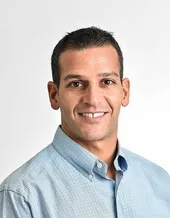
Eitan Yaakobi is a Professor at the Computer Science Department of the Technion – Israel Institute of Technology, with a courtesy appointment in the Electrical and Computer Engineering Department. He holds a B.A. in Computer Science and Mathematics, an M.Sc. in Computer Science from the Technion, and a Ph.D. in Electrical Engineering from UC San Diego. His research focuses on information and coding theory, with applications in non-volatile memories, DNA storage, and distributed storage systems. He has been affiliated with the TUM Institute for Advanced Study (2018–2022) as a Hans Fischer Fellow and held a visiting position at Nanyang Technological University (2023–2024).
Education:
- B.A. in Computer Science and Mathematics, Technion (2005)
- M.Sc. in Computer Science, Technion (2007)
- Ph.D. in Electrical Engineering, UC San Diego (2011)
Research Interests: Information theory, coding theory, DNA storage, non-volatile memories, distributed storage systems, and private information retrieval. His work emphasizes error-correcting codes for emerging storage technologies like racetrack and DNA memories.
Publications: Over 70+ peer-reviewed articles, including seminal work on WOM codes, burst error correction, and DNA storage coding. Recent trends include optimizing coding schemes for DNA synthesis and addressing errors in biomolecular storage systems.
Awards: Multiple Technion Excellence Teaching Awards (2016, 2021), Marconi Society Young Scholar Award (2009), and Intel Ph.D. Fellowship (2010–2011). His research has been supported by grants like the ERC Consolidator Grant and EIC Pathfinder Challenge.
Advising & Grants: Supervised over 30 graduate students and postdocs. Current lab members include Ph.D. researchers in coding theory and DNA storage. Active collaborations with institutions like UCSD’s Center for Memory and Recording Research.
Labs/Teams: Leads a research group at the Technion focusing on coding for next-generation storage systems. Collaborates with interdisciplinary teams on biomolecular data storage and emerging memory technologies.