Dr. Adam Rysanek is an Assistant Professor of Environmental Systems at the University of British Columbia (UBC) School of Architecture and Landscape Architecture (SALA). His expertise spans green building design, construction, and operation, with a focus on parametric tools like Rhino/Grasshopper for performative building design. Education: PhD in Engineering, University of Cambridge BASc and MScE, Queen’s University Dr. Rysanek integrates emerging technologies such as augmented reality and machine learning into architectural design optimization, and investigates building performance through Internet-of-Things (IoT) sensors and data analytics. His research also explores future trends in community-scale energy systems, including building-integrated transportation energy systems (BITES). Research Leadership: Supervises postdoctoral and graduate researchers at UBC SALA and Department of Mechanical Engineering Current projects hosted by the Buildings Decisions Research Group (BDRG): bdrg.io
Dr. Joshua Brinkerhoff is an Associate Professor in Mechanical Engineering at the University of British Columbia Okanagan Campus. He serves as the Associate Director for Research & Industrial Partnerships in the School of Engineering and leads the UBC-Okanagan Computational Fluid Dynamics Laboratory. His research spans computational fluid dynamics, turbomachinery, multiphase flows, hydrogen safety, wind energy, and biofluid mechanics. He teaches courses in mechanics of materials, alternative energy systems, turbulence, computational fluid dynamics, and aircraft design. PhD, Aerospace Engineering (Carleton University, Ottawa, ON) BEng, Aerospace Engineering (Carleton University) Dr. Brinkerhoff’s research interests include: Computational Fluid Dynamics (CFD) for laminar-to-turbulent transition and instability analysis Wind energy systems and turbine aerodynamics Hydrogen storage and safety protocols for transportation Biofluid mechanics for respiratory diseases and aneurysm modeling Multiphase flows in industrial and environmental contexts His publications focus on CFD simulations for: Aerosol dispersion and mitigation in indoor environments Wind farm interactions and atmospheric gravity waves Cavitation and phase transitions in cryogenic and LNG systems Heat transfer optimization in industrial and thermal systems Instability dynamics in buoyancy-driven and swept flows Turbulent structures in fluidized beds and reactors Dr. Brinkerhoff has no listed scientific awards in the provided data but has extensive contributions to renewable energy, hydrogen safety, and medical fluid dynamics. His laboratory develops open-source tools like TOSCA for large-eddy simulations and investigates practical applications in urban air quality, dental aerosol control, and turbine wake modeling.
Ben Amor is a Full Professor in the Department of Civil Engineering at the Faculty of Engineering, Université de Sherbrooke, where he serves as Director and Founder of the CIRMIB (Integrated Research Center on Sustainable Materials, Infrastructure and Buildings) and Director of Sustainable Development for the Faculty of Engineering. Previously, he held associate professor positions at Université Laval and Université de Sherbrooke. His research focuses on Life Cycle Assessment (LCA) methodologies applied to sustainable construction, circular economy implementation in building sectors, and building decarbonization strategies. He has pioneered regionalized LCA approaches for Arctic regions and developed frameworks for carbon budgeting in building sectors. His work bridges environmental science with practical engineering solutions for sustainable infrastructure. His recent publications reveal strong trends in building decarbonization pathways, material circularity in construction, and the integration of biogenic carbon accounting. He emphasizes both technological solutions and behavioral change strategies for achieving net-zero emissions in the built environment. ACLCA 2018 Life Cycle Assessment Leadership Award Life Cycle Academy Awards 2019 (two awards) Quebec Public Administration Excellence Prize 2023 for Scientific Collaboration Multiple university teaching awards including the Jacques-Bazinet Merit Award Professor Amor leads significant research grants totaling over $20 million, including NSERC Alliance grants for sustainable building materials and a $2 million Research Chair on Net Zero Strategies and Life Cycle Assessment. He directs the CIRMIB research center and the LIRIDE (Interdisciplinary Research Laboratory in Sustainable Engineering and Eco-design), supervising multiple doctoral candidates. His work includes developing LCA tools for Quebec's construction industry and advising government bodies on sustainable procurement policies.
Patrick Brown is an Associate Professor at the University of Toronto , affiliated with the Department of Statistical Sciences and cross-appointed to the Centre for Global Health Research and St. Michael's Hospital . His research focuses on spatio-temporal data modeling , Bayesian inference , and non-parametric methods for spatial epidemiology and environmental sciences. Fields of Interest : Spatial Statistics, Cancer Statistics, Statistical Software Education : PhD from University of Lancaster His methodological work encompasses Bayesian inference for non-Gaussian spatial data, Gaussian Markov random fields, and computational techniques like INLA and MRA. Applied research themes include disease mapping, environmental risk assessment, and public health surveillance using real-world data sources such as electronic health records and wastewater monitoring . He has developed key R packages (mapmisc, geostatsp, diseasemapping) supporting spatial statistical applications. Current collaborative projects span diverse fields: Ultra-diffuse galaxy detection with astrophysical applications Multi-pollutant mortality studies in Canadian cities SARS-CoV-2 seropositivity tracking Homelessness population estimation using EHR Geospatial cancer risk tools for Nova Scotia His work bridges statistical innovation with global health challenges , emphasizing computationally efficient solutions for large-scale spatiotemporal datasets.
Afshin Ashari is an Assistant Professor in Landscape Architecture at the School of Environmental Design and Rural Development , University of Guelph. Prior to academia, he worked at BrookMcIlroy Inc., an interdisciplinary firm in Toronto, on architectural and landscape projects in public and private sectors. Education : Masters in Landscape Architecture, University of Toronto Bachelor of Computer Engineering, Azad University of Tehran Research Interests : Afshin explores the intersection of computational design and mixed-reality environments, focusing on: Art-Technology Unity in Public Spaces Algorithmic and Parametric Modeling Data-Driven Design Approaches Interactive Immersive Environments Biophilic Design Agricultural Urbanism Article Trends : His publications emphasize: AI tools for design processes Parametric modeling in urban rehabilitation Climate change communication via social media Drones for visual impact assessments Augmented reality in public spaces Historical and future-oriented design frameworks
Dr. Yen-Ting (Allen) Yeh is an Assistant Professor in the Department of Computer Science at the University of Saskatchewan, where he leads research in Human-Computer Interaction focusing on mobile interaction techniques, collaborative tools, and creative technologies. PhD, Cheriton School of Computer Science, University of Waterloo MS, Graduate Institute of Networking and Multimedia, National Taiwan University His research explores physical and cognitive human capabilities through: Innovative phone interaction methods (folding, dexterous gestures, side-touch expansion) Collaborative writing environments with privacy controls Creativity augmentation systems for 3D modeling Augmented reality and interactive fabrication tools Recent publications demonstrate strong focus on: Acoustic input techniques using finger snapping Motion-based creative reflection tools Dynamic gesture recognition systems Collaborative editing comfort optimization Scientific recognition includes: ACM Creativity and Cognition 2021 Honorable Mention The research group at the University of Saskatchewan's HCI Lab actively seeks students interested in phone interactions, human factors, AR/VR, collaborative tools, and creative arts applications.
Alla Sheffer is a Professor and Associate Head of Faculty Affairs in the Department of Computer Science at the University of British Columbia, Faculty of Science. She is affiliated with multiple research centers including CAIDA (Centre for Artificial Intelligence Decision-making and Action), the Institute of Applied Mathematics, and ICICS (Institute for Computing, Information and Cognitive Systems). B.Sc., Hebrew University, Jerusalem (1991) M.Sc., Hebrew University, Jerusalem (1995) Ph.D., Hebrew University, Jerusalem (1999) Postdoctoral Research Associate, University of Illinois, Urbana-Champaign (1999-2001) Assistant Professor, Technion, Israel (2001-2003) Assistant Professor, University of British Columbia (2003-2008) Associate Professor, University of British Columbia (2008-present) Professor Sheffer's research focuses on geometry processing, addressing algorithmic challenges in digital shape modeling and manipulation. Her work primarily deals with discrete geometry representations, specifically meshes (polygonal model representations), with applications in computer graphics and computer-aided engineering. She utilizes tools from computational and differential geometry, discrete mathematics, and graph theory to generate, manipulate, and edit discrete geometric models. Her research spans virtual and augmented reality, visual computing, and 3D modeling, with significant contributions to sketch-based modeling, mesh processing, and cloth simulation. The 15 most recent publications reveal a consistent research trajectory in geometry processing, with recent work focusing on vector sketch processing, VR drawing tools, and advanced mesh manipulation techniques. Her work demonstrates a strong connection between human perception and computational methods, particularly in the interpretation of freehand sketches and the generation of perceptually-accurate geometric representations. The recurring themes across her publications include flowlines, curve networks, mesh parameterization, and the application of perceptual studies to improve algorithmic outputs. Eurographics Fellow ACM Fellow IEEE Fellow Royal Society of Canada Fellow SIGGRAPH Academy Member UBC Killam Research Prize NSERC Discovery Accelerator Supplement IBM Faculty Award Professor Sheffer has supervised numerous doctoral and master's students, with recent theses focusing on geometric mesh processing, vector sketch interpretation, VR drawing tools, and garment modeling. Her research group maintains strong connections with industry through various partnerships and has received substantial grant funding to support their innovative work in geometry processing and computer graphics. She teaches courses in computer graphics, geometric modeling, and video game programming, contributing significantly to both undergraduate and graduate education in computer science.
Dave Tompkins is an Associate Professor in the David R. Cheriton School of Computer Science at the University of Waterloo. He holds a PhD in Computer Science and a MASc in Electrical Engineering from the University of British Columbia, along with a BESc and BSc from Western University. His primary research focuses on Stochastic Local Search (SLS) algorithms for the Satisfiability Problem (SAT) and MAX-SAT. Research Interests: His work spans Stochastic Local Search Algorithms SAT and MAX-SAT problem solving Dynamic Local Search techniques Heuristic algorithm design and optimization Data compression and image coding Genetic algorithms and game theory Scientific Awards: He has received Best Paper Award (2006, CCAI) Best Poster Awards (2003, ASI; 1999, ASI) Gold and Silver Medals in SAT Competitions (2004) Incomplete Solver Track Awards (2012, MAX-SAT) Projects: He is known for developing the UBCSAT framework and the Captain Jack SAT solver. He has also contributed to standards like JBIG2 and JPEG-2000.
AnnaLisa Meyboom is an Associate Professor at the University of British Columbia’s School of Architecture and Landscape Architecture (SALA). As Director of the Transportation Infrastructure and Public Space Lab (TIPSlab), she bridges engineering and architecture through research on digital fabrication, autonomous vehicles, and responsive environments. Engineering from University of Waterloo Architecture from University of British Columbia Her research explores: Digital Wood Fabrication: Robotic construction techniques for large-scale timber structures. Autonomous Urbanism: Reimagining city layouts for self-driving vehicles. Responsive Architecture: Integrating technology into adaptive building systems. While her publications span from 2000 to 2022, recent works focus on infrastructure’s cultural value and future mobility systems. She has taught at institutions globally and led design-build initiatives across Canada. Co-founder of TIPSlab Featured speaker at international conferences Combines engineering rigor with architectural creativity
Nicolás Quesada is an Associate Professor in the Department of Engineering Physics at Polytechnique Montréal, where he holds the MEI Chair in Quantum Photonics. He serves as Director of COPL (Centre d'optique, photonique et laser) and is a member of INTRIQ (Institut transdisciplinaire d'informatique quantique). His research program focuses on quantum information, quantum computing, and quantum optics, with particular emphasis on photonic implementations of quantum technologies. Dr. Quesada earned his B.Sc. in Physics from Universidad de Antioquia in 2010, followed by M.Sc. and Ph.D. degrees in Physics from the University of Toronto. During his doctoral studies, he was awarded both Vanier and Stoicheff scholarships. Prior to joining Polytechnique Montréal, he worked at Xanadu Quantum Technologies as lead developer of the Strawberry Fields and The Walrus software libraries, where he led theoretical efforts demonstrating photonic quantum advantage. His research interests span quantum photonics, quantum computing, and quantum optics, with specific focus on Gaussian Boson Sampling, squeezed light generation, non-Gaussian light sources, and quantum benchmarking techniques. His group develops theoretical frameworks and computational tools for next-generation quantum light sources needed for fault-tolerant quantum computers, quantum communication networks, and quantum sensors. His work bridges theoretical quantum information science with practical photonic implementations. Analysis of his recent publications reveals a strong focus on advancing Gaussian Boson Sampling as a platform for quantum advantage, developing mathematical frameworks for quantum optics, and engineering practical photonic quantum devices. His work spans from fundamental quantum optics to applied quantum computing, with increasing emphasis on verification and benchmarking of quantum computational advantage. Dr. Quesada has received notable recognition including the Vanier Canada Graduate Scholarship and the Stoicheff Scholarship during his doctoral studies. His research has attracted significant funding, including a $6 million grant for quantum projects at Polytechnique Montréal announced in January 2025 and involvement in a $1.91 million NSERC quantum sensing project led by Professor Denis Seletskiy. He has supervised two Master's students to completion in 2024: Dalbec-Constant, N. who worked on photon counting from transition-edge sensors, and Zhao, J. who researched optimal pumps for spontaneous parametric down-conversion. His research group collaborates extensively with both academic and industry partners in the quantum technology sector. As Director of COPL, he oversees one of Canada's leading photonics research centers, facilitating interdisciplinary research across quantum optics, classical optics, and laser technologies.
Glen McGee is an Assistant Professor in the Department of Statistics and Actuarial Science at the University of Waterloo. He holds a PhD in Biostatistics from Harvard University and a BScH in Mathematics from Queen's University. His research focuses on developing statistical tools for epidemiology, environmental health, and health policy, with a particular emphasis on environmental mixture analysis, cluster-correlated data modeling, and outcome-dependent sampling methodologies. Education : PhD in Biostatistics, Harvard University BScH in Mathematics, Queen's University Research Interests : McGee advances methodologies for analyzing complex environmental mixtures and their health impacts, including incorporation of biological knowledge into statistical frameworks. His work addresses challenges in multigenerational studies, informative cluster sizes, and measurement error correction in case-crossover designs. Key application areas include hospital profiling, exposure misclassification, and longitudinal health data analysis. Research Trends : His publications emphasize Bayesian methods for mixture modeling, innovative sampling strategies for clustered data, and causal inference techniques. Notable contributions include frameworks for integrating biological pathways into environmental health analyses and developing efficient sampling approaches for healthcare performance evaluation. Grants & Labs : McGee collaborates on projects involving CMS data applications and maintains GitHub repositories like hospODS for hospital profiling methodology implementation. His work bridges statistical theory with practical public health applications, particularly in environmental epidemiology and healthcare analytics.
Professor Jitendrapal (Jit) Sharma is a Professor and former Inaugural Department Chair (2013-2018) of Civil Engineering at York University's Lassonde School of Engineering. He holds a P.Eng license in Saskatchewan and Ontario and has held academic positions globally, including at the University of Saskatchewan where he was a Professor of Geotechnical Engineering. His research focuses on theoretical and computational geomechanics, geotechnical centrifuge modeling, and soil-structure interaction. Dr. Sharma is an Associate Editor of the Canadian Geotechnical Journal (2006-2018) and a specialist in geotechnical engineering consulting. He is renowned for innovative teaching methods using web-based tools to enhance student engagement in problem-solving. His work emphasizes integrating out-of-classroom learning with in-class discussions. His research interests include unsaturated soil mechanics, ground improvement techniques, and geosynthetics. While no specific grants or labs are mentioned, his publications reflect advanced computational and theoretical contributions to geotechnical engineering. He has received multiple teaching excellence awards for his educational innovations.
Craig S. Kaplan is a Professor at the University of Waterloo's David R. Cheriton School of Computer Science within the Faculty of Mathematics. His research bridges computer science and mathematical art, focusing on computational geometry, geometric pattern design, and algorithmic art. He holds degrees including a Ph.D. and M.Sc. from the University of Washington (2002, 1998) and a B.Math. from the University of Waterloo (1996). His work spans applications of mathematics in art and design, including Islamic geometric patterns, computer graphics, and computational geometry. Notable contributions include developing methods for generating Islamic geometric patterns, exploring aperiodic tilings (including the discovery of an aperiodic monotile in 2023), and creating tools for artistic visualization like RepulsionPak and FlowPak. He also engages with digital art forms such as generative algorithms, stereoscopic 3D rendering, and interactive applications for mindfulness and VR. His publications reflect a focus on geometric algorithms, pattern generation, and interdisciplinary art-science projects. Though no explicit awards are listed, his prolific output and contributions to mathematical art suggest significant recognition in his field. His work often emphasizes computational methods for artistic expression, combining rigorous mathematics with creative outcomes.
O. Remus Tutunea-Fatan is a Professor in the Department of Mechanical & Materials Engineering at Western University, with cross appointments in Biomedical Engineering and Electrical and Computer Engineering. His work focuses on laser polishing, CNC machining, and surface structuring for drag reduction and biomedical applications. Ph.D. in Mechanical Engineering, The University of Western Ontario M.E.Sc. and B.E.Sc. in Mechanical Engineering, Transilvania University, Romania Research interests include: Advanced CAD/CAM frameworks Laser remelting process optimization Biomedical device design Composite manufacturing techniques Surface topography analysis Artificial intelligence in process control Recent publications indicate expertise in: Laser polishing of metallic surfaces Riblet microstructures for drag reduction AI-driven process monitoring 5-axis machining error compensation Scientific recognition includes: Edward G. Pleva Award for Excellence in Teaching (Western University, 2023) Dr. Terry Base Memorial Teaching Award (2022 co-winner, 2021, 2019) R. Mohan Mathur Award (Faculty of Engineering, 2020) University Students' Council Teaching Honour Roll (2011-2012) Prof. Tutunea-Fatan serves as Associate Chair for Graduate Research Programs (2025-2027) Acting Associate Dean for Undergraduate Studies (2023-2024) Acting Chair, Department of Mechanical and Materials Engineering (2021-2022) He supervises over 40 graduate students and collaborates with industry partners including DuPont Safety and Construction, General Motors, and Active Industrial Solutions Inc.
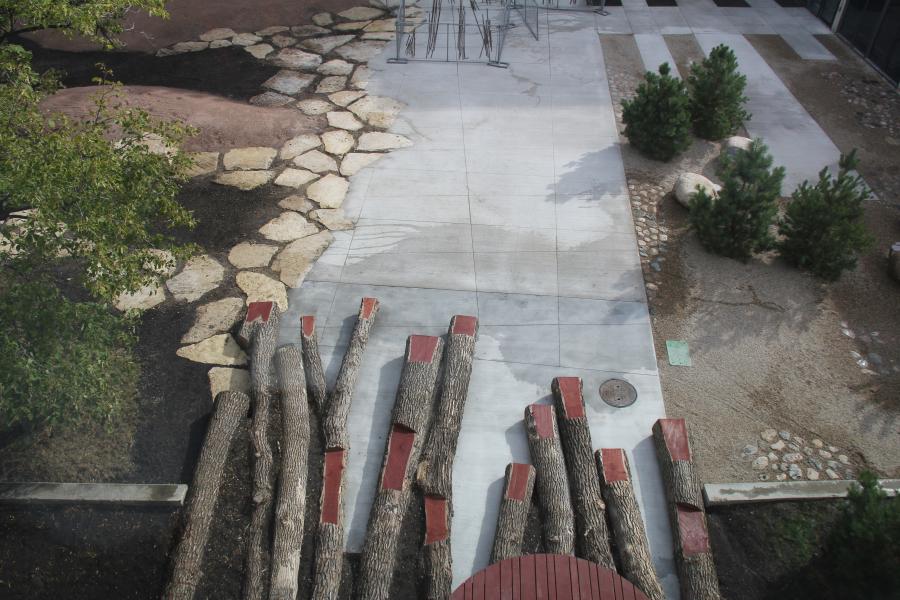
Professor Dietmar Straub is a leading landscape architect and educator at the University of Manitoba's Faculty of Architecture. He holds the rank of Professor in the Department of Landscape Architecture, specializing in sustainable design, ecological rehabilitation, and community-engaged scholarship. His work bridges academia and practice, emphasizing improvisation, recycling, and interdisciplinary collaboration. Education : Diplom-Ingenieur (Master’s equivalent) in Landscape Architecture, Technical University of Munich Certification in Vocational Education and Training (pedagogy/educational psychology) Landscape Gardener Journeyman’s Certificate Research & Practice : Straub’s research, often conducted through 'Research by Design,' focuses on gardens as experimental spaces, traumatized landscapes, and water management in prairie contexts. Key projects include the award-winning Chenshan Botanic Garden (Shanghai) and the Science Courtyard at the University of Manitoba, which integrates native plantings, geological storytelling, and biodiversity. Teaching : He teaches design studios and site planning, emphasizing hands-on learning through projects like tree-pit construction and community planting initiatives. His approach narrows the gap between theory and practice, fostering student engagement with material processes and ecological systems. Awards : Over three dozen national/international awards highlight his contributions to sustainable design, including the 2024 LILA Award for the Science Courtyard and the 2023 Indigenous Initiatives Fund grant for the Shared Path project with Lake Manitoba First Nation. Community Work : Straub collaborates with underserved communities (e.g., Folly Forest in Winnipeg) to create spaces that blend ecological resilience with cultural relevance. His practice often involves pro bono work, prioritizing social impact over commercial gain.