
Shoudong Huang is a Professor at the School of Mechanical and Mechatronic Engineering , University of Technology Sydney, and Deputy Director of the UTS Robotics Institute. His research focuses on mobile robot navigation , SLAM , nonlinear state estimation , and surgical robotics . He has published over 200 papers and is recognized as one of the 100 Most Influential Scholars in Robotics (Aminer, 2018). PhD in Automatic Control, Northeastern University (China) Postdoctoral Research Fellow, University of Hong Kong (1998-2000) Research Fellow, Australian National University (2001-2003) Full-time academic roles at UTS since 2004 His work addresses challenges in robot localization across extreme environments (underwater, underground mining, surgical settings) and develops globally optimal SLAM algorithms with guaranteed performance. He has secured over $4 million AUD in external funding, including ARC Discovery grants and industry partnerships. Recent publications emphasize cross-modal calibration (camera-LiDAR), interval analysis for bounded noise , and template-based deformable surface reconstruction . These span applications in autonomous driving, surgical navigation, and UAV guidance. Chancellor’s Medal for Research Excellence (2020) Supervisor of the Year (2023) Best Paper Award (2016 ICARCV) Huang serves as Associate Editor for IEEE Transactions on Robotics and International Journal of Robotics Research , and has held leadership roles in top robotics conferences like IROS and RSS. His collaborations span MIT, USC, Zhejiang University, and industry partners including PMSW Research Pty Ltd and Multiplex Constructions Pty Ltd.
جستجوی استاد راهنمای دانشگاهی
برای مسیر پژوهشیتان، استاد راهنما، استاد دانشگاه و پژوهشگر مناسب را پیدا کنید و با آنها ارتباط بگیرید.
نمایش ۱-۱۵ از ۱۶۳ استاد راهنما
اطلاعات پروفایلها از صفحات عمومی دانشگاهها گرفته شده و ممکن است بهروز نباشد.
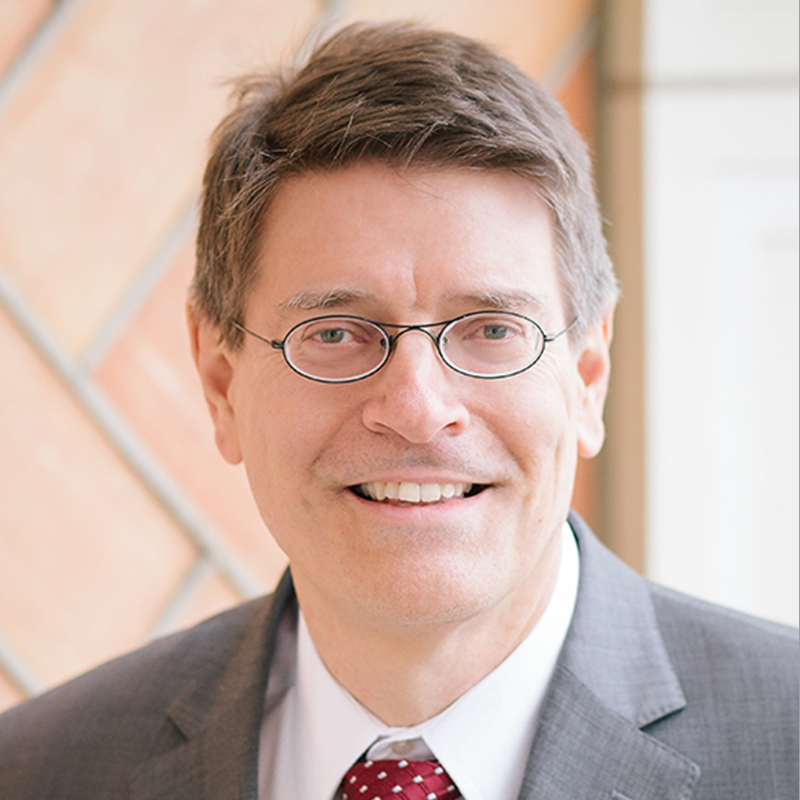
Gary Fedder is the Howard M. Wilkoff Professor of Electrical and Computer Engineering at Carnegie Mellon University (CMU), with courtesy appointments in Biomedical Engineering, Mechanical Engineering, and Robotics. He serves as Faculty Director of the Manufacturing Futures Institute (MFI) and previously held roles such as Vice Provost for Research and Interim CEO of the Advanced Robotics for Manufacturing (ARM) Institute. Fedder’s research focuses on MEMS, advanced manufacturing, and implantable microsystems. He earned his B.S., M.S., and Ph.D. in EECS from MIT and UC Berkeley, respectively. Education: Ph.D., Electrical Engineering and Computer Science, UC Berkeley (1994) M.S., Electrical Engineering and Computer Science, MIT (1984) B.S., Electrical Engineering and Computer Science, MIT (1982) Research Interests: Microelectromechanical systems (MEMS), digital twins, aerosol jet printing, stretchable electronics, and manufacturing innovation. His work integrates MEMS with CMOS processes, emphasizing low-cost, high-performance systems. Key Contributions: Co-founded the ARM Institute; developed MEMS-based sensors and actuators; pioneered methods for manufacturing innovation through projects like America Makes. His research spans over 300 publications and 21 patents. Awards: IEEE Fellow (2007), Ross Tucker Award (1993), NSF CAREER Award (1996), and leadership roles in Manufacturing USA initiatives. Leadership & Outreach: Directed the Institute for Complex Engineered Systems and led national initiatives to advance U.S. manufacturing competitiveness. Active in editorial roles for journals like IoP Journal of Micromechanics .

Jon Simon is the Joan Reinhart Professor and Professor of Applied Physics at Stanford University . He leads the Simon Lab , which explores the convergence of condensed matter physics , quantum optics , and quantum information science , focusing on creating synthetic materials from light and investigating topological and strongly correlated quantum systems. His research spans constructing photonic materials in quantum circuits, studying small quantum systems with strong correlations, and applying Hamiltonian engineering to realize exotic states of matter. The lab has achieved milestones like the first Mott insulator of photons and topologically insulating circuits . Collaborative projects with the Schuster Lab leverage superconducting quantum circuits for synthetic matter studies. Jon's students include Adam Shaw (PhD, now at Stony Brook) Lavanya Taneja (PhD, now at Atom Computing) Ruichao Ma (Postdoc, now faculty at Purdue) among others. The lab's recent publications focus on cavity arrays, hybrid quantum systems, and topological photonics. Research is supported by grants and affiliations with Stanford's Department of Applied Physics and interdisciplinary institutes.
Mikko Valkama is a Professor at the Department of Communications Engineering , part of the Faculty of Information Technology and Communication Sciences at Tampere University . His research focuses on advanced wireless communication systems, positioning technologies, and integrated sensing and communication (ISAC). He holds an Orcid ID ( 0000-0003-0361-0800 ) and can be reached at mikko.valkama@tuni.fi . Research interests span 5G/6G networks , RF antenna design , deep learning for signal processing , and millimeter-wave systems . He leads projects on positioning algorithms (e.g., mmWave SLAM, NLOS mitigation), ISAC architectures, and hardware-efficient transmitter linearization. Notable contributions include works on DECT-2020 NR standards, phase-based localization, and RIS-assisted systems. In 2025 alone, his group published over 30 articles on topics such as: Antenna array design for Ka-band and wideband applications Machine learning for power amplifier predistortion Bistatic radio SLAM and mmWave mapping Covert transmission and physical-layer security His work bridges theoretical advancements with practical implementations, often validated through experimental setups (e.g., TUJI1 dataset for indoor localization). No scientific awards were explicitly listed in the provided texts.
Professor Paul Goulart is a full Professor of Engineering Science at the University of Oxford and Tutorial Fellow at St Edmund Hall, positions he has held since 2014. He leads research and teaching in robust optimization, control systems, and high-speed numerical methods, with applications spanning fluid flows, traffic networks, and economics. Education SB & MSc, Aeronautics and Astronautics – Massachusetts Institute of Technology (MIT) PhD, Control Engineering – University of Cambridge (Gates Scholar, 2007) Research Interests Professor Goulart’s work lies at the intersection of control engineering and optimization . His core expertise includes: Robust and high-speed convex optimization Model predictive control (MPC) and control barrier functions Neural-network-based control and system identification Optimization over traffic and economic networks Real-time and embedded optimization solvers These interests are reflected in prolific publication output and active supervision of doctoral researchers. Publications & Trends From 2020 to 2025 Professor Goulart has co-authored more than thirty papers. A dominant theme is the development of fast, reliable algorithms for conic optimization and robust control , often leveraging machine-learning techniques to enhance scalability and real-time performance. Recent works emphasize safety certificates, GPU-accelerated solvers, and neural-network controllers for uncertain systems. Awards & Honors Gates Cambridge Scholar (2003) Advising & Grants Professor Goulart actively seeks DPhil students in control engineering and optimization . He leads the Control Group within the Department of Engineering Science and has been involved in multiple industrially funded projects, although specific grant identifiers are not provided in the supplied text. Laboratory & Teams He is a member of the Control Group , Department of Engineering Science, University of Oxford, and serves as Secretary to the Governing Body of St Edmund Hall (Michaelmas Term 2024).

Angela Kouمشاهده پروفایل
استادیار
Angela Kou is an Assistant Professor in the Department of Physics at the University of Illinois at Urbana-Champaign, specializing in the intersection of quantum information science and condensed matter physics. Her laboratory develops novel superconducting circuit elements and qubits, while also utilizing superconducting circuits to investigate topological materials with potential applications in quantum computing. She actively seeks postdoctoral researchers and graduate students to explore superconducting qubit engineering and quantum material sensing. Her research integrates quantum information , topological materials , and superconducting circuit design . Recent publications demonstrate expertise in fluxonium qubit control , quantum dot Josephson junctions , and parafermion zero modes in exotic heterostructures. She contributes to advancing cryogen-free dilution refrigerator technology for scanning probe microscopy applications. Current research trends focus on quantum coherence optimization , phase-slip qubit operation , and vibration mitigation in cryogenic systems. Her work receives support from the Air Force Office of Scientific Research, Army Research Office, IBM-Illinois Discovery Accelerator Institute, and the National Science Foundation. Collaborations span multiple institutions, with key partnerships at Stanford University and SLAC National Accelerator Laboratory. Her technical contributions include microwave impedance microscopy , scanning single-electron transistor measurements , and vibration analysis for quantum device stability.
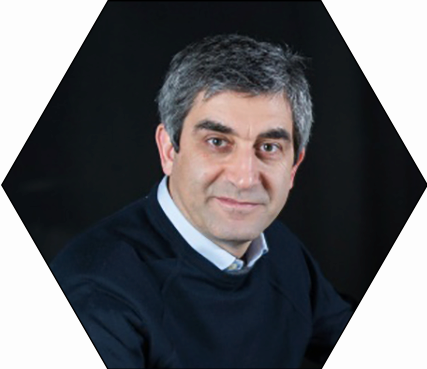
F. Levent Degertekin is a Regents' Entrepreneur and the George W. Woodruff Chair in Mechanical Systems and Professor at the George W. Woodruff School of Mechanical Engineering at Georgia Institute of Technology. His office is located in Love Building, room 311B, and his contact email is levent.degertekin@me.gatech.edu. Dr. Degertekin's academic journey includes a Ph.D. in Electrical Engineering from Stanford University (1997), an M.S. in Electrical Engineering from Bilkent University, Turkey (1991), and a B.S. in Electrical Engineering from Middle East Technical University, Turkey (1989). Dr. Degertekin's research focuses on micromachined ultrasonic devices and systems for medical applications, particularly in intravascular ultrasound imaging, therapeutic ultrasound, and acousto-optical sensors for MRI. His work spans from fundamental research on novel transduction methods to complete catheter-based imaging systems close to commercialization. He has made significant contributions to capacitive micromachined ultrasonic transducers (CMUTs), developing diffraction grating based optomechanical sensing methods now commercialized by Silicon Audio, novel atomic force microscopy imaging probes, and micromachined ultrasonic ejector structures for cell transfection commercialized by OpenCell Technologies. His research integrates acoustics, optics, and their combinations for various medical applications, utilizing conventional microfabrication (MEMS) and integrated circuit technologies. The Degertekin lab exposes students to applied physics, electrical, mechanical and biomedical engineering, biology, and biomimetic systems, providing them with thorough theoretical and experimental education in acoustics and optics while learning interdisciplinary research. Dr. Degertekin's work has received significant media attention, including coverage in IEEE Spectrum, Wired Magazine, The New York Times, and Fox Business News, highlighting innovations such as handheld ultrasound probes, MRI safety sensors, and minimally invasive cardiac imaging technologies. IEEE Fellow for 'Contributions to micromachined ultrasonic and optomechanical transducers and systems,' 2022 IEEE UFFC Society Inaugural Carl Hellmuth Hertz Ultrasonic Achievement Award, 2014 George W. Woodruff School Outstanding Achievement in Commercialization and Entrepreneurship Award, 2024 National Science Foundation CAREER Award, 2004-2009 Whitaker Foundation Biomedical Engineering Research Grant Award, 2001 66 US and 6 International Patents Dr. Degertekin has mentored numerous students who have gone on to make significant contributions in the field. Several of his students have received IEEE Ultrasonics Symposium Best Student Paper Awards, including Jeff McLean (2003), Sheng-Yu Peng (2006), Rasim O. Guldiken (2005 and 2007), and Toby Xu (2014). His research has been supported by various grants including the NSF CAREER Award and Whitaker Foundation grant. His work has led to multiple commercial ventures including Silicon Audio and OpenCell Technologies. The Degertekin Group at Georgia Tech focuses on transducers and systems for medical imaging and sensing, with current projects including capacitive parametric transducers, acousto-optic sensors for MRI, novel transducer methods for focused ultrasound in the brain, microsystems for intravascular and intracardiac ultrasound imaging, and CMUT-on-CMOS systems for IVUS imaging.
Kevin P. O'Brien is an Associate Professor in the Department of Electrical Engineering and Computer Science (EECS) at the Massachusetts Institute of Technology (MIT), affiliated with the Research Laboratory of Electronics (RLE). He leads the Quantum Coherent Electronics (QCE) group, focusing on advancing superconducting quantum computing, microwave quantum optics, and quantum metamaterials. His research explores nonlinear and quantum-mechanical light-matter interactions using superconducting circuits, aiming to improve quantum technologies like qubits and amplifiers. Education: B.S. in Physics from Purdue University, Ph.D. in Physics from UC Berkeley, and postdoctoral research at UC Berkeley developing superconducting quantum processors. His group collaborates with MIT Lincoln Laboratory and institutions nationwide. Research Interests: Quantum computing hardware, superconducting circuits, parametric amplifiers, qubit measurement systems, and metamaterials for quantum applications. His work emphasizes scalable architecture design, noise reduction, and novel device concepts. Key projects include directional qubit readout resonators, Floquet-mode amplifiers, and quarton couplers for ultrafast readout. The group actively engages in training graduate students and postdocs, emphasizing open collaboration and problem-solving in quantum technologies. Advising & Grants: Supervises a dynamic team of graduate students and postdocs. Students like Bright Ye and Kaidong Peng have contributed to award-winning projects. The group receives support through fellowships (e.g., Jin Au Kong, NSF GRFP) and industry partnerships. Labs/Teams: Quantum Coherent Electronics Group at MIT, collaborating on quantum device fabrication, theoretical modeling, and experimental validation of quantum systems.
Robert M. Weikle, II is a Professor in the Charles L. Brown Department of Electrical and Computer Engineering at the University of Virginia, with a courtesy appointment in the Department of Physics. He earned his B.S. from Rice University (1986), M.S. (1987), and Ph.D. (1992) in Electrical Engineering from Caltech, followed by postdoctoral work at Chalmers University of Technology (1992). His research focuses on millimeter-wave and terahertz electronics , applied electromagnetics, integrated antennas, low-noise sensors, and heterogeneous integration of compound semiconductors. His work bridges electronics and photonics for spectrum access, with applications in astronomy, spectroscopy, and metrology. He has published extensively on micromachined silicon substrates, superconducting materials, and emerging technologies. Scientific Awards: IEEE Microwave Prize (1993) David A. Harrison III Award (1999) University of Virginia All-University Outstanding Teaching Award (2000) Edlich-Henderson Innovator of the Year (2016) Fulbright Scholar (2001) As Chief Technology Officer and co-founder of Dominion Microprobes, Inc., he commercializes micromachined wafer probes for high-frequency metrology. His lab, located in E220 Thornton Hall and the Jesse W. Beams Physics Building, has produced 15+ recent publications on submillimeter-wave devices, THz probes, and calibration techniques.

Zijian Shaoمشاهده پروفایل
پژوهشگر ارشد
Zijian Shao is a Postdoctoral Research Associate at Princeton University's School of Engineering and Applied Science, affiliated with the Department of Electrical Engineering. His work focuses on advanced antenna design, electromagnetic modeling, and machine learning applications in RF/mmWave systems for 5G/6G telecommunications. Advisor: Kaushik Sengupta Email: zs9193@princeton.edu Office: Engineering Quadrangle Atrium Shao's research explores the intersection of machine learning and electromagnetic design , particularly for next-generation wireless communication. He specializes in antenna miniaturization , MIMO decoupling , and metasurface-enabled beamforming , with applications in sub-terahertz circuits and integrated sensing systems. His recent publications demonstrate expertise in deep learning-assisted inverse design of multi-port RF systems and spoof surface plasmon polariton-based antenna optimization . While no formal awards are listed, his work contributes to advancing compact, high-efficiency antenna arrays for 5G/6G networks.
Yiorgos Makris is a Professor in the Department of Electrical and Computer Engineering at the Erik Jonsson School of Engineering & Computer Science, The University of Texas at Dallas, since July 2011. Previously, he was a faculty member at Yale University for over a decade. He holds a Ph.D. in Computer Engineering from the University of California, San Diego, and a Diploma in Computer Engineering from the University of Patras, Greece. Education: Ph.D. in Computer Engineering, University of California, San Diego (2001) M.S. in Computer Engineering, University of California, San Diego (1997) Diploma in Computer Engineering and Informatics, University of Patras, Greece (1995) Research Interests: Hardware Security and Trustworthiness Statistical Side-Channel Fingerprinting Machine Learning in Semiconductor Manufacturing Trusted and Reliable Integrated Circuits Hardware Trojans in Wireless Cryptographic ICs On-Die Learning and Emergent Technologies His work focuses on enhancing hardware security through statistical methods, machine learning, and formal verification, with applications in analog/RF ICs, post-production calibration, and secure IC design. Key Contributions: Co-Founder and Site-PI of NSF CHEST I/UCRC (Hardware and Embedded System Security and Trust) Leader of the Safety, Security, and Healthcare Thrust at TxACE (Texas Analog Center of Excellence) Director of the Trusted and RELiable Architectures (TRELA) Lab Grants and Funding: NSF, NIH, SRC, ARO, AFRL, AFWERX, DARPA, DOE, and industry partnerships with Boeing, Northrop Grumman, IBM, Intel, Qualcomm, etc. Recent grants include projects on DNA storage security, analog neural networks, and malicious hardware detection. Awards and Recognition: IEEE Fellow (2025) Best Paper Awards at DATE'13, VTS'15, DCAS'22 Best Hardware Demonstration Awards at HOST'16 and HOST'18 Erik Jonsson School Faculty Research Award (2020) Labs and Teams: TRELA Lab (Focus: Secure Hardware Design, Trusted Architectures) CHEST I/UCRC (Industry-University Collaboration)
Wolfgang Bösch is a Professor at Graz University of Technology's Institute of Microwave and Photonic Engineering, specializing in advanced RF components and measurement techniques. His research advances high-frequency systems through innovations in antenna technology and electromagnetic theory. Research domains include: metamaterial-based antennas, precision measurement calibration, microwave filter optimization, and 3D-printed RF components. Recent work demonstrates strong focus on millimeter-wave systems and reconfigurable antenna arrays. Publications highlight expertise in: machine learning for filter design, metasurface applications, PCB transitions for high-frequency systems, and uncertainty quantification in RF engineering. Research consistently addresses miniaturization and performance optimization challenges. Awards recognize contributions to measurement science and antenna design: Fellow of IET, Houska Prize, and best paper awards. Current laboratories investigate liquid crystal antenna systems and error calibration methodologies for next-generation wireless systems.
Boyin Dingمشاهده پروفایل
دانشیار
- Ocean Renewable Energy
- Robotics
- Biomechanics
- +۲ مورد دیگر
Dr. Boyin Ding is an Associate Professor at the University of Adelaide , serving as Academic Director at Haide College and researcher in the Mechanical Engineering department within the Faculty of Sciences, Engineering and Technology. He leads the Wave Energy Research initiative established in 2014, while also contributing to Robotics and Biomechanics through his work with the Flinders Medical Device Research Institute. Research Areas: Ocean Wave Energy Harvesting Control Systems for Renewable Energy 6DOF Robotic Testing Spine Biomechanics Transnational Education Programs Key Collaborations: Australia-China Joint Research Centre for Offshore Wind & Wave Energy Acoustics, Vibration and Control Research Group Scientific Awards: Australian Endeavour Fellowship Malcolm Kinnaird Engineering Excellence Award (2012) His recent publications focus on hybrid offshore energy systems, nonlinear hydrodynamics in wave energy converters, and biomechanical testing technologies. He has developed control algorithms for floating offshore wind-wave systems and pioneered 6DOF robotic platforms for medical applications. As an eligible PhD supervisor, he actively collaborates with global industries and academic institutions.
- Volcanology
- Seismology
- Infrasound
- +۳ مورد دیگر
Robin S. Matoza is a Professor in the Department of Earth Science at the University of California, Santa Barbara (UCSB). His research focuses on volcano seismology, acoustics, and infrasound, with particular emphasis on understanding volcanic processes through seismic and infrasound data. He leads studies on volcanic eruption dynamics, infrasound propagation, and the application of seismoacoustic methods for hazard mitigation. Roles: Professor, Principal Investigator Affiliations: Department of Earth Science, Earth Research Institute, UCSB Research interests include volcano acoustics, infrasound source characterization, and the development of infrasound monitoring tools. He has contributed to global volcanic eruption detection systems, such as the IMS_VASC software for automated volcanic infrasound cataloging. His work integrates field data from volcanoes like Tungurahua (Ecuador), Yasur (Vanuatu), and Kīlauea (Hawaii) with computational modeling. Key projects include studying infrasonic signals from explosive eruptions, submarine volcanic activity, and the interaction between volcanic processes and atmospheric dynamics. He collaborates on international initiatives like the International Monitoring System (IMS) for nuclear treaty verification and volcanic monitoring.
Sean Andersonمشاهده پروفایل
مدرس ارشد
Dr Sean Anderson is a Senior Lecturer at the Department of Automatic Control and Systems Engineering , University of Sheffield , with over 15 years of experience in interdisciplinary research spanning robotics, control systems, and computational biology. He earned his MEng and PhD from the University of Sheffield, focusing on control systems and chemical engineering. Education: MEng in Control Systems Engineering, University of Sheffield (2001) PhD in Chemical and Process Engineering, University of Sheffield (2005) Research Interests include: Bioinspired robotics Adaptive and optimal control in biological systems Nonlinear system identification Computational neuroscience Acoustic and visual sensor fusion for localization His recent publications highlight innovations in robotic localization in hazardous environments, interpretable deep learning for control systems, acoustic sensing technologies, and data-driven modeling of complex systems. Key projects involve autonomous navigation in pipe networks, turbulence modeling, and biomedical signal processing. Grants and Funding: He has secured major grants from EU H2020 (£4M), EU FP7 (£2.9M), and EPSRC (£5.7M), focusing on bioinspired control algorithms, robotic safety, and infrastructure assessment. Teaching: He leads the ACS61011 Deep Learning module, emphasizing practical applications in robotics and signal processing.