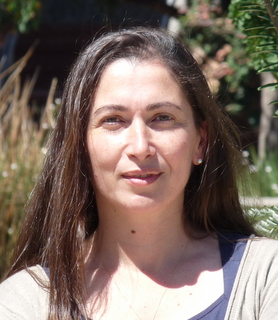
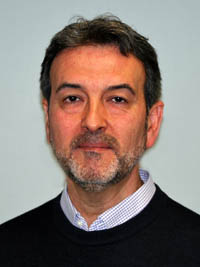
Rocco Caira is a Lecturer at the University of Deusto's Bilbao campus. He holds a Ph.D. in International Relations and Public International Law from the University of the Basque Country and a BA in Law from Trinity College, Dublin. His teaching focuses on Commercial Law, European Law, Legal Context, and International Negotiations, delivered in English across BA programs in Business Administration, Modern Languages and Management, as well as MBA and EIBM courses. Education: Ph.D. in International Relations and Public International Law, University of the Basque Country BA in Law, Trinity College, Dublin Research interests center on law and international relations, with publications in these areas. He has maintained a parallel career as a practicing lawyer in Bilbao since 1994.
Maria Garcia de la Banda is a distinguished Professor at Monash University's Faculty of Information Technology, where she serves in the Department of Data Science and Artificial Intelligence (DSAI). With over 25 years of academic experience, she has held significant leadership roles including Deputy Dean (Research) until July 2022, overall Deputy Dean of the Faculty (2013-2016), and Head of the Caulfield School of Information Technology (2009-2011). She is currently a member of the ARC College of Experts and Co-Chair of the Monash-Woodside FutureLab. Her educational background includes a Doctor of Philosophy in Computer Science from the Universidad Politecnica de Madrid (awarded July 7, 1994) and an Ingeniero Informatico degree from the same institution (awarded March 1, 1992). Her PhD received the university's Best PhD Award. Garcia de la Banda's research spans multiple disciplines with a strong focus on constraint programming, combinatorial optimization, program analysis, and bioinformatics. She leads the Optimization research group within DSAI and has made significant contributions to declarative programming languages, parallelism, and automatic parallelization. Her interdisciplinary work bridges computer science with biological applications, particularly in protein structure analysis and computational drug design. Her publication record shows consistent contributions across constraint programming, optimization, and bioinformatics. Recent work demonstrates increasing interdisciplinary collaboration, with a notable expansion into bioinformatics applications alongside her core constraint programming research. She has maintained a strong presence at major conferences like CP (International Conference on Principles and Practice of Constraint Programming) while also building impactful industry collaborations. Her scientific recognition includes: Logan Fellowship (1997) - the first and only prestigious award of its kind in the Faculty of IT International Constraint Modelling Challenge winner (2005, with Peter Stuckey) Universidad Politecnica de Madrid's Best PhD Award (1994) Induction into the Monash Honour Roll (2021) Vice-Chancellor's Diversity and Inclusion Award (2020) As a research leader, Garcia de la Banda has secured over $20M in industry funding and $14M in nationally competitive funding, including $8M as Chief Investigator in 11 ARC grants (5 as lead). She has served as Area Editor of the Journal of Theory and Practice of Logic Programming since 2010 and on the Editorial Board of the Constraints journal since 2019. Her leadership extends to professional organizations, having served on the Executive Committees of both the Association of Logic Programming (2005-2008) and the Association of Constraint Programming (2017-2020), where she was President (2019-2020). She leads the Optimization research group within DSAI and collaborates extensively across Monash University and with industry partners. Her current major projects include HARNESS (Hierarchical Abstractions and Reasoning for Neuro-Symbolic Systems), the ARC Training Centre in Optimisation Technologies, and the Building 4.0 CRC project focused on better buildings through technology. These initiatives demonstrate her commitment to translating theoretical research into practical applications with real-world impact.
Manuel Hermenegildo is a distinguished academic holding dual appointments as a Full Professor at the Polytechnic University of Madrid (Spain) and a Distinguished Professor at the IMDEA Software Institute. He earned his Ph.D. in Computer Science from the University of Texas at Austin in 1986. His roles include Founding Director of IMDEA Software (2007–2017) and former Director of Spain's national research funding agency. He leads the CLIP Lab (UPM) and contributes to the Ciao programming language and CiaoPP analysis tool. Education: Ph.D. in Computer Science, University of Texas at Austin (1986) Research focuses on global program analysis, verification, debugging, parallelism, and logic programming. He has authored over 250 papers and received prestigious awards like the ACM Fellowship and Spain's Julio Rey Pastor Prize. His leadership roles span international organizations such as INRIA's Scientific Board and the European Association for Programming Languages and Systems (EAPS). Key contributions include static analysis frameworks, energy-aware programming models, and educational tools like the Ciao Prolog Playground. Notable collaborations include the ENTRA project for whole-system energy transparency. His work emphasizes practical applications of formal methods, with projects funded by national and international grants. Advises on policy and research strategy for EU and Spanish science initiatives.
José Luis Roda García serves as an Associate Professor in the Department of Computer Engineering and Systems at the University of La Laguna, Spain. His academic work centers on the Area of Computer Languages and Systems, with active involvement in the PhD Program in Industrial Engineering, Informatics, and Environmental. Institutional correspondence is managed through jlroda@ull.edu.es. Education: PhD in Computer Science from the University of La Laguna (1998) with thesis "Nuevos modelos de predicción en computación paralela" (New Prediction Models in Parallel Computing), supervised by Dr. Casiano Rodríguez León. His research program demonstrates exceptional interdisciplinary breadth while maintaining core focus in computational disciplines. Primary expertise includes Data Science applications for public safety (e.g., R-based analysis of Canarian emergency services data), Bioinformatics tool development (notably Dockerized platforms like NanoDJ for genome assembly), and Software Engineering for scalable data infrastructure. His work consistently bridges theoretical computer science with practical implementations in medical informatics, astronomy, and social sciences, reflecting a commitment to solving real-world problems through computational innovation. Analysis of his recent publications (2021-2025) reveals three dominant trajectories: 1) Emergency management systems using data science techniques, 2) Reproducible bioinformatics workflows via containerization, and 3) Cross-disciplinary collaborations in astronomy instrumentation and medical diagnostics. This pattern highlights his role as a computational enabler across diverse scientific domains rather than a domain-specific specialist. Scientific awards: No major awards, fellowships, or honors are documented in available sources. Advising and grants: No specific doctoral students or postdoctoral researchers are listed in public records. Project involvement suggests participation in EU-funded initiatives like ERASMUS environmental programs and Canarian public data projects, though explicit grant details remain unspecified.
Michele Chiumenti is a Tenured Professor of Continuum Mechanics and Structural Analysis at the Polytechnic University of Catalonia (UPC), School of Civil Engineering. He also serves as Deputy Director of Master and Doctoral programs in Civil Engineering at UPC and is a Full Researcher at the International Center for Numerical Methods in Engineering (CIMNE). His academic career began with a Civil Engineering degree from Politecnico di Milano (1994) and a PhD in Civil Engineering from UPC (1999). Chiumenti's research focuses on finite element technology for non-linear analysis, including incompressible limits, strain localization, and tensile cracking. He also investigates non-linear constitutive models for coupled thermo-mechanical problems and numerical simulation of metal forming processes like Additive Manufacturing (AM), Friction Stir Welding (FSW), and metal casting. Key areas include AM process optimization, material flow analysis, and residual stress mitigation. His work spans over 200 peer-reviewed articles, with recent trends emphasizing AM process simulation, FSW modeling, and advanced material characterization. Notable contributions include crack-free AM substrate designs, high-fidelity part-scale simulations, and empirical methodologies for inherent strain calculations. Grants & Projects: OPENINNOTRAIN (H2020), ADHYWHEEL (H2020), SuPreAM (H2020), and collaborations with industry partners like RMIT and RPS. Labs/Teams: MMCE research group (Mecànica de Medis Continus i Estructures) and (MC)² group (Mecànica de Medis Continus i Computacional).
Dr. José Manuel Claver Iborra is a Full Professor at the Department of Computer Science, School of Engineering (ETSE-UV), University of Valencia. He holds a PhD in Computer Science (Parallel and Distributed Computing program) from the Technical University of Valencia and an MSc in Physics (specialized in Electronics and Computer Science) from the University of Valencia. As an IEEE Senior Member, he focuses on cloud computing, video coding, parallel/distributed systems, reconfigurable computing, and network protocols for real-time applications. Current Research: Cloud-based video encoding, GPU acceleration for DNA analysis, FPGA-based network protocols, and indoor localization systems Academic Leadership: Coordinator of the UV-Tirant node in the Spanish Supercomputing Network (RES) His recent publications analyze GPU-based motion estimation, heterogeneous computing for video standards (H.264/AV1), and QoS scheduling algorithms. He supervises PhD and Master's theses on sensor networks, FPGA programming platforms, and parallel applications. Scientific Awards IEEE Senior Member He has directed funded projects on cloud infrastructure, distributed video processing, and reconfigurable systems since the 1990s.
María Luzdivina Cuesta Torre is a Full Professor at the University of León, specializing in Spanish and Classical Philology within the Faculty of Philosophy and Letters. Her research focuses on medieval literature, particularly chivalric romances, Arthurian cycles, and classical tradition in Castilian texts. She has supervised key academic works including analyses of the Tristan de Leonís narrative and the Libro del caballero Zifar. Academic Affiliation: University of León Department: Spanish and Classical Philology Research Group: Spanish Literature and Classical Tradition Her research interests include: Medieval Castilian literature and chivalric romances Classical reception in Iberian texts Narrative symbolism (clothing, feasting, magic) Textual criticism and manuscript studies Gender roles in medieval didactic literature Interdisciplinary approaches to literary analysis Recent publications examine narrative uses of clothing in chivalric texts, classical influences in Castilian prose, and pedagogical innovations through gamified learning experiences. While her work centers on Spanish medieval literature, it intersects with cultural history, material studies, and education. She has collaborated with Hugo Óscar Bizzarri, Bernard Darbord, and César García de Lucas in editorial projects, and her scholarly contributions appear in critical editions and journal monographs. Her academic trajectory reflects continuous engagement with the University of León since obtaining her PhD in 1993 with a thesis on Tristan de Leonis.
Pere Bennàsar Bennàsar is an Associate Professor at the University of the Balearic Islands, affiliated with the Industrial Engineering and Construction school and the Agroforestry Engineering department. He has been serving in this academic role since 2014 while maintaining an active parallel professional career in landscape design. His educational qualifications include: Bachelor's Degree in Biology from the University of the Balearic Islands (2001) Graduate in Landscape Studies from the Polytechnic University of Catalonia (2005) University Specialist in Geographic Information and Teledetection Systems (UIB 2005) Master in Landscape Studies (UPC 2007) Bennàsar specializes in practical landscape applications with expertise in public space design , garden implementation and maintenance , environmental impact assessment , and geographic information systems . Since 2005, he has worked as a freelance professional designing public spaces, gardens, and outdoor areas, collaborating with architectural firms on projects and environmental assessments. He is a founding member of LASUMA, a professional landscape group. His teaching portfolio demonstrates consistent specialization across multiple programs, focusing on landscape technology, garden implementation, and horticulture. He teaches both undergraduate and graduate courses with particular emphasis on practical applications. Bennàsar maintains an active professional practice alongside his academic responsibilities, reflecting the applied nature of his expertise in landscape architecture and design. His laboratory is located in the Architectural Constructions group on the first floor of the Mateu Orfila i Rotger building.
Kevin Jiokeng is an Assistant Professor in Computer Science at Ecole Polytechnique, working in the Epizeuxis team (Networks research team of LIX laboratory). His research focuses on wireless networks, ubiquitous computing, and their applications in localization technologies, mobile healthcare, and smart environments. Current affiliations: Ecole Polytechnique (since 09/2024), INRIA Lille (03/2022-08/2022), Toulouse INP (PhD, 10/2018-01/2022) Research interests: Wireless networks, ubiquitous computing, localization, mobile healthcare, and smart environments. His recent work involves AI-based network intrusion detection, wireless sensing generalizability, and machine learning applications in smart networking. Scientific achievements: Best student paper award at CoRes 2020 Second prize (ex æquo) of PhD Dissertation Award (GDR RSD & ASF, 2023) 200k€ ANR Young Researcher Program grant (2024) Advising and service: Co-advises two PhD students (Stanislas Lucinski and Lucien Dikla) and serves as reviewer/committee member for IEEE INFOCOM, ACM IMWUT, IEEE WiMob, IEEE CSCN, IEEE SMARTCOMP, ACM SIGCOMM, ACM CoNEXT, and AlgoTel/CoRes conferences.
Naama Ben-David serves as an Assistant Professor at the Technion - Israel Institute of Technology. Prior to this position, she completed a three-year postdoctoral fellowship at VMware Research following her PhD in the Computer Science Department at Carnegie Mellon University, where she was supervised by Guy Blelloch. Her academic foundation includes undergraduate studies at the University of Toronto. Her educational pathway features: PhD in Computer Science from Carnegie Mellon University Undergraduate degree from the University of Toronto Dr. Ben-David's research establishes theoretical frameworks for concurrent systems, specializing in performance cost analysis of concurrent programs through rigorous mathematical methods. Her work bridges theoretical computer science with practical implementations, extending to concurrent data structures and parallel/distributed algorithm design where she actively explores scalability limitations and optimization strategies. Her scholarly recognition includes: Honorable Mention in CMU's School of Computer Science Dissertation Award 2022 PODC Doctoral Dissertation Award NSERC PGSD scholarship Microsoft Research PhD Fellowship During her doctoral studies, she received significant funding through the NSERC PGSD scholarship and Microsoft Research PhD Fellowship. The available documentation does not specify current research grants, student supervision activities, or laboratory affiliations at the Technion.
Jose Francisco Llosa Espuny is a faculty member at the Universitat Politècnica de Catalunya (UPC), affiliated with the Faculty of Computer Science of Barcelona (FIB) and the Department of Computer Architecture. He is a key member of the PM - Programming Models research group and has been involved in numerous competitive R&D projects related to high-performance computing and computer architecture. University: Universitat Politècnica de Catalunya School: Faculty of Computer Science of Barcelona Department: Department of Computer Architecture Research Group: PM - Programming Models Email: josepll@ac.upc.edu ORCID: 0000-0001-7740-3148 His research focuses on advanced computer architecture topics, particularly VLIW processors, software pipelining, register allocation, and compiler optimizations for high-performance and low-power systems. He has also made significant contributions to computer science education, exploring active learning, problem-based learning, and the use of interactive response systems for formative assessment. His recent publications and projects, including the European Master for HPC Curriculum and various HPC education initiatives, highlight his ongoing engagement in both technical research and pedagogical innovation. The articles reflect a strong trend in optimizing processor architectures for performance and energy efficiency, as well as improving teaching methodologies in computer science. He has been involved in significant research projects funded by the Spanish government and the European Union, such as those under the HORIZON 2020 program and various national R&D plans. Llosa Espuny has advised doctoral students, including Manoj Gupta and Francisco Zalamea, indicating his role in mentoring the next generation of researchers. He has collaborated extensively with leading figures in the field, such as Mateo Valero and Eduard Ayguadé, on numerous publications and projects. His work is associated with the Barcelona Supercomputing Center, a key entity in national and European high-performance computing efforts.
Pau San Valero Tornero is an Associate Professor in the Department of Chemical Engineering at the School of Engineering, University of Valencia, Spain. He is an active member of the GI2AM Research Group on Environmental Engineering, contributing to both environmental bioprocesses and chemical engineering education innovation. His research interests span two interconnected domains: Environmental and Bioprocess Engineering and Chemical Engineering Education . In environmental engineering, he focuses on biotrickling filtration for VOC removal, anaerobic digestion, biogas treatment, and ABE fermentation from lignocellulosic biomass like rice straw. His educational research emphasizes active learning, virtual laboratories (e.g., IQLABS, VIRTUALCHENG), pedagogical tools like Wooclap, and curriculum development for transferable skills in Industry 4.0. The 15 most recent publications reveal a strong trend toward sustainable bioprocesses for bio-based chemical production and a parallel commitment to educational transformation. Articles cluster around optimizing fermentation conditions (pH, sugar composition), pretreatment methods, and in-situ recovery techniques for butanol, while also advancing virtual and active learning models in chemical engineering education. This dual focus highlights his role as both a technical innovator and an educational leader. Dr. Valero has been involved in several educational innovation projects such as ACESIQ, IQLABS, and VIRTUALCHENG, which aim to modernize laboratory teaching, align curricula with learning outcomes, and enhance virtual learning strategies. These projects reflect institutional grant support and collaborative efforts to improve engineering education. Although no specific advisees are listed, his leadership in these initiatives suggests mentoring roles for students and junior faculty. He is actively engaged with the GI2AM Research Group, where he contributes to projects on gas-phase pollution control, bioreactor modeling, and sustainable process design. This team-based research environment fosters interdisciplinary collaboration in environmental biotechnology and process engineering.
Javier Masip Bruin is a full Professor at the Polytechnic University of Catalonia (UPC), holding a position in the Computer Architecture Department at the Higher Polytechnic School of Engineering of Vilanova i la Geltrú (EPSEVG). He serves as Coordinator of the Doctoral Program in Computer Architecture and leads the CRAAX research group (Centre de Recerca d'Arquitectures Avançades de Xarxes). With an h-index of 34, his work spans advanced network architectures, parallel processing, and embedded systems design. Education & Affiliations: Doctoral Coordinator in Computer Architecture, CRAAX Research Group Lead His research focuses on optimizing hardware-software co-design for high-performance computing and networked systems. Over 418 documented professional activities include 160+ research projects, 65 indexed journal articles, and 26 patents. Active in academic governance as department head and doctoral program coordinator. Recognition includes WoS Researcher ID G-1263-2015 and ORCID 0000-0002-4755-556X. His work bridges theoretical computer architecture with practical implementations in networking and embedded systems.
Juan Jose Costa Prats is a researcher in the Department of Computer Architecture at the Universitat Politècnica de Catalunya (UPC), affiliated with the Escola Tècnica Superior d'Enginyeria de Telecomunicació de Barcelona. He is a key member of the CRAAX - Centre de Recerca d'Arquitectures Avançades de Xarxes, contributing to advanced research in computing systems and network architectures. His work is deeply integrated into competitive R&D projects, including Horizon Europe and national initiatives focused on digital innovation and infrastructure. Research Interests: Costa Prats specializes in high-performance and distributed computing, with a strong focus on parallel programming models (especially OpenMP), software distributed shared memory (SDSM), cloud computing, virtualization, and cybersecurity. His recent work emphasizes secure and resilient computing systems, particularly through RISC-V-based architectures, hypervisor extensions, and runtime malware detection using opcode analysis and machine learning. He also contributes to educational innovation through remote datacenter laboratories. Publication Trends: His recent publications (2021–2024) reflect a shift toward secure, trustworthy computing environments, especially in cloud and IoT contexts. Themes include RISC-V virtualization, intrusion detection using transfer learning, GPS spoofing detection, and secure development frameworks like Vitamin-V. These works highlight a convergence of system architecture, security, and machine learning. Scientific Awards: No specific awards mentioned in the provided text. Advising and Grants: While no formal students are listed, Costa Prats collaborates extensively with leading researchers such as Beatriz Otero, Ramon Canal, and Javier Verdú. He participates in numerous competitive R&D+i projects funded by the Spanish government and the European Union, including Horizon Europe, RIS3CAT, and national research programs, focusing on cloud resilience, intelligent cloud management, and RISC-V ecosystem development. Labs and Teams: He is an active member of the CRAAX research group at UPC, which works on advanced computing architectures. His research often involves collaboration with the Barcelona Supercomputing Center. His projects, such as Vitamin-V and Remote DasaLAB, indicate involvement in both secure computing environments and innovative educational platforms.
Ramon Canal Corretger is a Full Professor in the Department of Computer Architecture at the Faculty of Informatics of Barcelona (FIB), Universitat Politècnica de Catalunya (UPC). He previously served as Vice Dean of Postgraduate Studies at FIB and leads the VirtuOS (Virtualization and Operating Systems) research group. His work bridges computer architecture, hardware security, and system-level reliability. Doctorate from UPC, co-supervised at the University of Wisconsin-Madison Sabbaticals at Harvard University (2006–2007) and the University of Cyprus (2019–2020) Active leadership in EU-funded projects such as Vitamin-V (Horizon Europe) His research focuses on microarchitecture, processor and memory design, reliability under variability, and security at the hardware-software interface. He explores low-power multicore architectures, virtualization optimizations, and secure RISC-V-based systems. His recent work integrates AI for intrusion detection and privacy-preserving federated learning in fog computing environments. The most recent publications demonstrate a strong trend toward security, reliability, and trustworthy computing , particularly in RISC-V ecosystems and cloud/edge infrastructures. There is increasing emphasis on hardware-software co-design , attack detection via performance monitoring , and energy-efficient secure accelerators using emerging technologies like neuromorphic and photonic computing. Scientific Awards: HiPEAC Paper Awards (2017, 2010) IEEE Senior Member (2016) Fulbright Award (2006) IBM Faculty Award (2000) Best Student Paper at HPCA-6 (2000) Multiple teaching excellence recognitions from UPC and AQU Catalunya First Prize in Epson Foundation Rosina Ribalta Award (2001) He has advised several PhD students including Manish Rana, Zoran Jaksic, and Shrikanth Ganapathy, many of whom received honors such as the Intel Doctoral Student Programme recognition. His research is supported by competitive grants from the Spanish government, EU Horizon programs, and industry collaborations. He is actively involved in the design of secure, reliable, and efficient computing systems for future cloud and embedded applications. He leads the VirtuOS research group, which focuses on virtualization, operating systems, and hardware-software interface optimization. The group contributes to open-source RISC-V initiatives and participates in large-scale European R&D projects targeting trustworthy computing infrastructures.