Dr. Edyta Chlebowska is an Assistant Professor at the Cyprian Norwid Research Center, John Paul II Catholic University of Lublin. Specializing in the visual art and literary legacy of Cyprian Norwid, she explores intersections between Polish Romanticism, art history, and cultural studies. Her work extends to album art analysis and interdisciplinary connections with music (e.g., Pink Floyd, Czesław Niemen). Her research focuses on Norwid's self-portraits, eschatological themes in his drawings, and comparative studies with 19th-century Warsaw painting. She reconstructs lost artworks, documents private collections (e.g., Konstancja Górska, Victor Gomulicki), and examines Norwid's reception in Florence and Odessa. Key projects include translating Studia Norwidiana and critical editing of Norwid's complete works. As editor-in-chief of multiple On Cyprian Norwid. Studies and Essays volumes and organizer of conferences like Niemen Non Stop and Colloquia Norwidiana , she bridges academic rigor with public engagement. Her publications span peer-reviewed books, journal articles, and popular science pieces, emphasizing Norwid's unpublished works and symbolic programs.
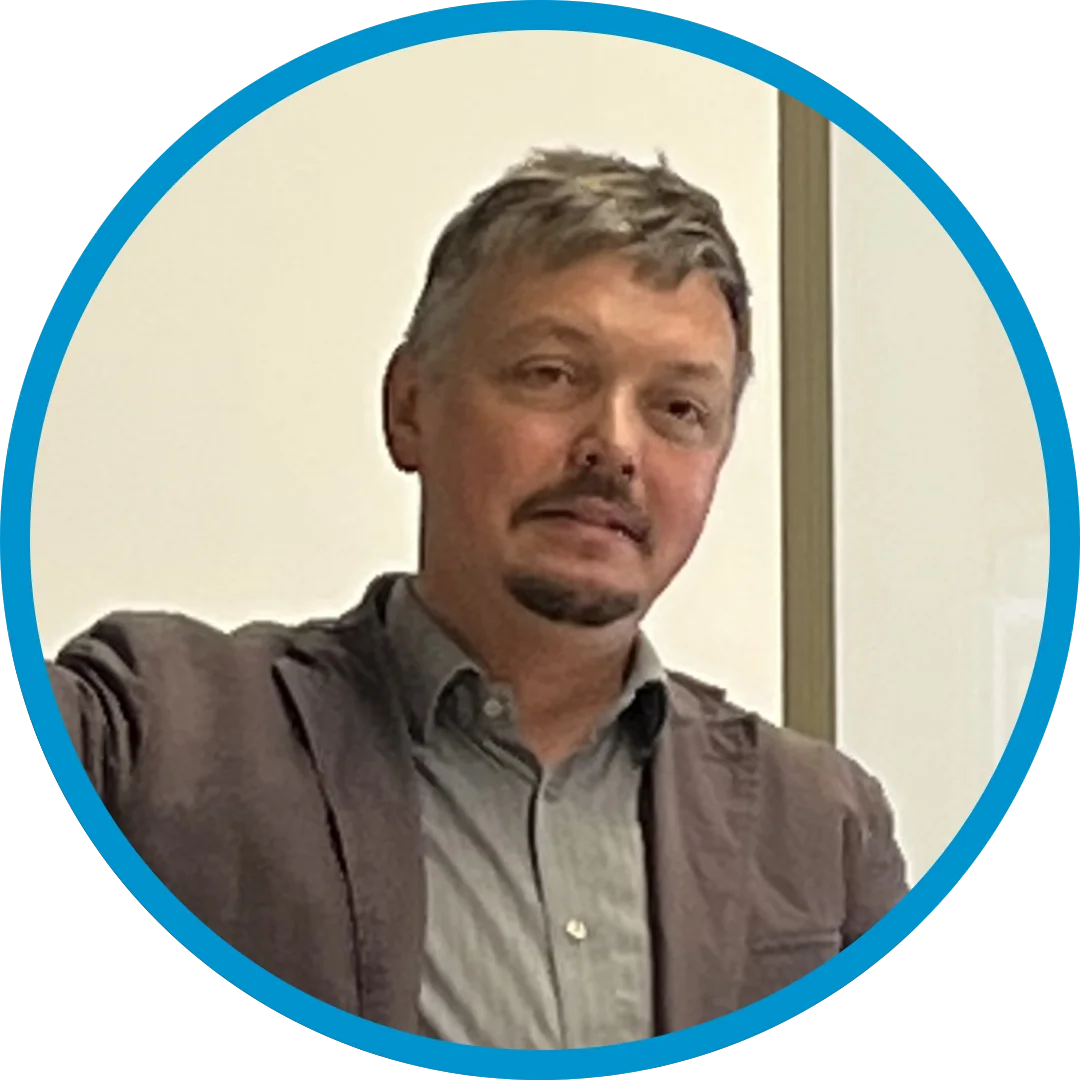
Przemysław Kordos is a Professor at the University of Warsaw , affiliated with the Faculty of Liberal Arts , where he serves as Coordinator for the Development of the Modern Greek Philology Program . He holds two PhDs in Humanities (2007, 2019) and was awarded the Loukis Papaphilippou Seat of Advancement in Modern Greek scholarship. Education: MA in Ethnology and Cultural Anthropology (University of Warsaw, 2001) MS in Sociology (University of Warsaw, 2002) PhD in Humanities (University of Warsaw, 2007) Second PhD in Humanities (University of Warsaw, 2019) His research interests span: Contemporary Modern Greek and Cypriot literature Polish-Greek cultural relations (philhellenism) Social and ethnographic issues in Greece and Cyprus Travel literature analysis Fantasy literature's cultural implications His scientific work reveals a focus on linguistic assimilation in foreign language learning (via fMRI studies), historical parallels between Polish and Greek independence movements, and critical analyses of Cypriot folk culture's politicization. Key scientific awards include: Loukis Papaphilippou Seat (University of Warsaw) Internships at EKPA and IKY (Greece) Scholarships at IMXA (Greece) and MUNI (Czech Republic) His academic contributions include cataloging 60+ Polish travel accounts to Greece, analyzing the shift from travel literature to tourism discourse, and examining the Hellene-Romios dichotomy's role in modern Greek identity construction.
Gabriela Jarzębowska-Lipińska is an Assistant Professor at the School of Liberal Arts, University of Warsaw, specializing in Critical Animal Studies and Environmental Humanities. Her work examines interspecies relations through historical, cultural, and sociological lenses. Education: PhD in Cultural and Religious Studies (2020, University of Warsaw) International Experience: Fulbright Junior Fellow (2018–2019), visiting scholar at Linköping University (2016) and UC Santa Cruz (2019) Research focuses on animal representation in culture, environmental conflict rhetoric, and modernity's impact on human-animal relations. She explores topics like rat extermination as cultural practice, interspecies ethics in state socialism, and posthumanist collectives. Her recent publications address factory farming as capitalist imagination failure, animal biographies, and urban rodent media narratives. Key scientific contributions include the concept of "species cleansing" and critical analysis of sanitary discourse in totalitarian regimes. She advocates for animal welfare frameworks that challenge anthropocentric policies.
Magdalena Szymczyk is a Lecturer in the Department of Biocybernetics and Biomedical Engineering at AGH University of Science and Technology, Faculty of Electrical Engineering, Automatics, Computer Science and Biomedical Engineering. Her work bridges embedded systems, biomedical signal processing, and geophysical data analysis. Research focuses on energy-efficient sensor networks, neural networks for GPR data classification, and mathematical transforms in signal analysis Expertise in parallel computing, real-time systems, and biomedical engineering applications Her publications (2015–2025) demonstrate a trajectory from parallel neural networks and S-transform/GPR methodologies to recent work on MicroPython in embedded systems. Key themes include energy optimization in distributed architectures and AI-driven signal processing across biomedical and geophysical domains. She has authored works on deterministic chaos in simulations, GPU image processing, and cybersecurity in microcontroller systems. Her current research emphasizes embedded systems security, medical signal diagnostics, and computational methods for geological analysis. She utilizes tools like OpenCL for GPU acceleration and MATLAB for parallel computing implementations.
Rafał Biedrzycki is an Assistant Professor at The Institute of Computer Science within Warsaw University of Technology's Faculty of Electronics and Information Technology. His research focuses on optimization algorithms, evolutionary computation, and machine learning applications. He holds a PhD in Information Science (2009) and a D.Sc. (2024). Key research interests include evolutionary algorithms (e.g., Differential Evolution, CMA-ES), optimization techniques for real-world problems (e.g., compressor scheduling, optical networks), and algorithm benchmarking. He has contributed to improving constraint-handling methods and hybrid algorithm designs. Received team awards for scientific achievements from Warsaw University of Technology (2019, 2023) and teaching excellence (2021, 2024). Active in interdisciplinary projects, including the DAFNE initiative for data fusion systems (2010-2011). Supervises research in optimization, machine learning, and computational electromagnetics. His work bridges theoretical algorithm development with practical applications in engineering and data analysis. Recent efforts include analysis of CEC competition algorithms and parameter-tuning methodologies.
Prof. Wilken Engelbrecht is a prominent scholar in Dutch language and literature at the John Paul II Catholic University of Lublin. His work focuses on historical linguistics , medieval philology , and literary reception studies in Central and Eastern Europe. He has led international projects like CODL and organized conferences including the 15th Regional Colloquium van Comenius . Education & Appointments : PhD in Dutch Philology, habilitation on prepositional complements, founder of Olomouc Neerlandistiek program His research spans 150 years of Dutch studies in Czech Republic , medieval Latin commentaries on Ovid, and translation dynamics under socialist regimes. Recent publications analyze Czech reception of Frisian literature and Ovidian traditions in academic contexts. Awards & Recognitions : Bronze Medal for Long Service Silver Medal of Palacký University Officier van de Orde van Oranje-Nassau Individual Rector's Award (I stopień) He serves on editorial boards for Roczniki Humanistyczne and Neerlandica Wratislaviensia , and has reviewed over 10 habilitation theses. His teaching includes Dutch language courses and comparative studies at Palacký University.
Dr. Anna Głowa serves as Assistant Professor in the Department of Art History at the Institute of Art Sciences, Faculty of Humanities, John Paul II Catholic University of Lublin (KUL), with active research continuing through 2025. Her institutional profile lists her office at Al. Racławickie 14, Lublin, and she maintains scholarly visibility through ORCID (0000-0002-0478-7563) and peer-reviewed publications. Primary research interests focus on Late Antique textiles from Egypt , avian iconography (eagles, parrots), and provenance studies of Polish museum collections. She examines cultural syncretism through motifs in mosaics and fabrics, connecting Byzantine, Roman, and early Christian contexts. Specific expertise includes Władysław Czartoryski's collection , Robert Forrer's textile trade , and spolia practices in Constantine-era architecture. Analysis of her 15 most recent articles reveals obsessive attention to Egyptian textile fragments in Central European collections, particularly Polish institutions like the Jagiellonian University Museum. She consistently identifies iconographic motifs (eagles, parrots) across mosaics and textiles to demonstrate cultural fluidity, while her architectural work challenges decadence narratives about Late Antique spolia through empirical provenance research. No scientific awards, prizes, or medals were documented in the provided texts. Głowa leads major NCN-funded projects including SONATA BIS (2021) for 'Common Threads: Late Antique Egyptian Textiles at Jagiellonian University Museum and Their European Links', OPUS (2019) on 'Scattered Heritage: Provenance of 19th-Century Late Antique Textile Collections', and MINIATURA (2018) for Egyptian textile provenance research. She secured a 2021 Research Grant from Staatliche Museen zu Berlin. Supervision of diploma theses is noted without specific student names. She actively participates in the international Textiles from the Nile Valley Study Group and serves as thematic editor for early Christian art history in the journal 'Vox Patrum'. Głowa co-organizes the Kazimierz Symposia on Late Antiquity and Early Christianity, and delivered lectures at the University of Silesia and Lublin Art Secondary School on textile symbolism and weaving techniques.
Maria Piechocka-Kłos is an Adjunct Professor at the Department of Philosophy and Canon Law, Faculty of Theology, University of Warmia and Mazury. Her academic career focuses on theology, history, and anthropology, particularly in the context of Early Christianity and Late Antiquity. Current affiliation: Faculty of Theology, University of Warmia and Mazury Academic rank: Adjunct Professor Her research explores intersections between religious practices, cultural transformations, and historical narratives in the Roman Empire (4th–6th centuries). Key areas include pagan-Christian conflict, liturgical calendar development, hagiographic texts, and legal frameworks affecting religious minorities. With 53 publications and a total ministerial score of 1,254, her work emphasizes patristic studies, classical reception in medieval theology, and symbolic interpretations of historical sources. Articles analyze early Christian synodal documents, Roman legislation, and classical texts like Aulus Gellius' Attic Nights. Notable research themes: Temple destruction in Late Antiquity, saint veneration in heraldry, and anti-Jewish legislation Methodological focus: Textual analysis, historical context, and interdisciplinary synthesis
Dr. hab. Klaudia Carlos-Machej is a Professor and has served as Dean of the Faculty of Dance at the Chopin Academy of Music in Warsaw (UMFC) since 2019. She holds dual doctorates as Doctor of Humanities and Doctor of Musical Arts, and is an accomplished dancer and choreographer specializing in Polish national dances. Her academic foundation includes a degree in ballet pedagogy from UMFC (1995), postgraduate studies in journalism at Adam Mickiewicz University in Poznań (2001), and Postgraduate Studies in Cultural Management at the Polish Academy of Sciences (2017). As a lecturer at UMFC since 1995, she served as Vice-Dean of the Faculty of Choral Conducting, Music Education, Church Music, Rhythm and Dance from 2012-2019 before becoming Dean. Professor Carlos-Machej's research focuses on dance education, Polish national dances, and the historical relationship between music and dance. Her work explores dance as cultural heritage, particularly during Poland's partition era, examining how traditional forms like polonaise, krakowiak, kujawiak, and oberek functioned as expressions of national identity. She has documented the influence of Russian classical dance traditions on Polish ballet education and investigated the philosophical dimensions of dance in antiquity. Her publications from 2014-2024 demonstrate consistent scholarly output, with her most recent work examining the relationship between dance and music during Poland's loss of statehood (1795-1918). She has also edited significant dance publications including comprehensive guides to Polish dances. As an educator and administrator, she has been conceptually responsible for the Polish Dance Forum since 2014, an important periodic event at UMFC that serves as a platform for dance scholarship and performance in Poland. Her professional background includes extensive performance experience as a dancer with the T. Sygietyński State Folk Song and Dance Ensemble 'Mazowsze' (1990-1995) and as a mime dancer and dance teacher at the Warsaw Chamber Opera (1996-2011), where she performed solo parts in numerous productions including works by Mozart, Telemann, Monteverdi, and Tchaikovsky. Additionally, Professor Carlos-Machej has maintained a parallel career in media since 1994 as a journalist and TV presenter across multiple Polish networks, creating programs that promote dance and music, including the Baletownik series on TVP Kultura featuring prominent Polish dancers.
Dr. Kamila Tomaka serves as an Assistant Professor in the Department of Dutch Language at the Institute of Linguistics, Faculty of Humanities, John Paul II Catholic University of Lublin. Her academic profile bridges Dutch philology with linguistic theory, specializing in particle studies, comparative linguistics (Dutch-Polish), language change, and language education. She maintains active research connections between contemporary Dutch linguistic phenomena and ancient Greek linguistic traditions. Her research portfolio demonstrates remarkable coherence across several key domains: Particle Studies - In-depth analysis of Dutch particles' semantic values, interpretative challenges, and translational possibilities, with comparative frameworks examining parallels in Polish and Greek linguistic traditions Language Change - Investigation of contemporary shifts in Dutch usage, particularly the increasing acceptance of 'hun' as a subject pronoun and societal attitudes toward linguistic variation Comparative Linguistics - Systematic examination of grammatical structures across Dutch and Polish, especially word order patterns and grammatical constructions Language Pedagogy - Research on common errors made by Polish students learning Dutch and development of effective teaching methodologies Historical Connections - Exploration of links between ancient Greek linguistic concepts and modern Dutch linguistic phenomena Dr. Tomaka's scholarly trajectory reveals a consistent focus on the intricate relationship between linguistic structures and communicative functions, with increasing sophistication in cross-linguistic comparative frameworks. Her work on particles creates a distinctive bridge between Dutch linguistics and ancient Greek studies, demonstrating how pragmatic-discursive approaches can illuminate both historical and contemporary linguistic phenomena. Her notable scholarly recognitions include: Ministry of Education and Science scholarship for outstanding young scientists (18th edition, 2023) Rector's Award - team award, 1st degree Diplomatic distinction from the Ambassador of the Republic of Poland in The Hague (2013) Flemish Government Research Scholarship for research at KU Leuven Dr. Tomaka actively contributes to academic administration through supervision of diploma theses, development of the Dutch philology program, and membership in the Faculty Commission for Quality of Education. She has established significant international collaborations, including a cotutelle doctoral program agreement with KU Leuven. Her outreach efforts include co-organizing visits by prominent Dutch scholars (Prof. Ad Foolen, Prof. Roel Vismans), organizing the Comenius Summer Course in Dutch Language and Culture, and promoting Dutch studies through initiatives like 'Get in Touch with the Dutch' and representation at meetings with the Ambassador of the Kingdom of the Netherlands to Poland.
Dr Julia Możdżeń serves as an Adjunct Professor at the University of Gdańsk's Faculty of History, where she works in the Institute of History, Division of Polish Medieval History and Auxiliary Sciences. She holds significant leadership roles including Chair of the Program Council for German Studies and Supervisor of the Scientific Circle of Historians at UG. Her academic service extends to various scholarly organizations and editorial boards. Dr Możdżeń's research focuses on medieval and early modern urban history, with particular expertise in manuscript culture, codicology, and source editing. Her work explores the social dynamics of Prussian cities, particularly Gdańsk and Toruń, examining how urban communities regulated social behavior, perceived their natural environment, and documented their historical experiences. She has made significant contributions to understanding urban chronicles, municipal regulations, and the cultural reception of historical events in the Hanseatic context. Her recent scholarly output demonstrates a consistent focus on urban source materials, particularly city statutes, chronicles, and manuscript collections from the 15th-16th centuries. A notable trend in her work is the comparative analysis of urban regulations across different regions, revealing fascinating parallels between seemingly disparate communities. Her expertise in codicology and source editing has led to important editions of historical documents that illuminate the social, political, and cultural dimensions of urban life in medieval Prussia. Research grant awarded by the Rector of University of Gdańsk (2022-2024) for the project 'Zaginiona' i odnaleziona. Kronika Albrechta Finka von Seyboldt' II Award 'Studiów Źródłoznawczych' named after Stefan Krzysztof Kuczyński (2020) Distinction in the competition for the Scientific Award of the Polish Academy of Sciences Branch in Gdańsk for Young Scientists (2016) Dr Możdżeń actively supervises student research through her role as Supervisor of the Scientific Circle of Historians at UG. Her current research is supported by multiple grants, including the Gdańsk Humanities Support Program grant she leads on the Albrecht Fink von Seyboldt Chronicle. She participates in numerous scholarly collaborations with institutions across Poland and Germany, contributing to international research projects focused on medieval urban history and manuscript studies. As an active member of several scholarly organizations including the Historische Kommission für ost- und westpreußische Landesforschung, Towarzystwo Naukowe w Toruniu, and Towarzystwo Naukowe 'Pruthenia' in Olsztyn, Dr Możdżeń contributes to the broader academic community through editorial work, conference organization, and collaborative research projects that advance the field of medieval urban studies.
Michela Taufer is the David L and Beverly JC Mills Chair of Computer and Information Sciences and an Associate Professor at the University of Delaware. She earned her Masters degrees in Computer Engineering from the University of Padova (Italy) and her doctoral degree in Computer Science from the Swiss Federal Institute of Technology (Switzerland). Her research interests include scientific applications and their advanced programmability in heterogeneous computing (i.e. multi-core and many-core platforms, GPUs); performance analysis; modeling and optimization of multi-scale applications on heterogeneous computing; cloud computing and volunteer computing; numerical reproducibility and stability of large-scale simulations on multi-core platforms; and big data analytics and MapReduce. Dr. Taufer has published research on protein folding, molecular dynamics, and workflow execution on cloud and grid platforms. Her work often focuses on performance characterization and optimization of scientific applications on distributed and parallel systems. From 2003 to 2004 she was a La Jolla Interfaces in Science Training Program (LJIS) Postdoctoral Fellow at the University of California San Diego (UCSD) and The Scripps Research Institute (TSRI) From 2005 to 2007, she was an Assistant Professor at the Computer Science Department of the University of Texas at El Paso (UTEP) She joined the University of Delaware in 2007 as an Assistant Professor and was promoted to Associate Professor with tenure in 2012
Rev. Prof. Dr. hab. Piotr Szczur is a Professor at the Department of Church History , John Paul II Catholic University of Lublin. He has held significant administrative roles including Director of the Institute (2016-2017, 2009-2010, 2008-2009) and Head of Department (2014-2019, 2008-2014). His research focuses on Patristics , Early Christian Theology , and Homiletics , particularly the works of John Chrysostom and other Church Fathers. Key Research Areas : Church History, Patristic Exegesis, Penitential Practices, Byzantine Theology, Biblical Interpretation, Late Antique Social Structures His recent publications explore the penitential traditions of Irish and British Churches , typology of Early Christian baptisteries , and John Chrysostom’s analysis of wealth . He has contributed to peer-reviewed journals like VOX PATRUM and edited volumes on Polish Ecclesiastical History and Byzantine Culture . Scientific Awards include multiple Rector’s Awards of KUL (individual and team) and the Silver Medal for Long Service . He has organized international conferences on topics like Ravenna’s cultural synthesis and Biblical Jubilees , and served on program councils for events in Byzantine Studies and Patristic Theology . Advising highlights his mentorship of doctoral students such as Beata Jadwiga Szpetkowska (penitential theology) and Ks. Bartłomiej Bartosik (spiritual gifts theology). He has reviewed numerous doctoral and habilitation theses, and hosted international scholars from Ukraine and Romania.
Leszek Rutkowski is a Professor at the Institute of Computer Science within the Faculty of Computer Science at AGH University of Science and Technology in Kraków, Poland. His primary research focuses on fuzzy systems, control theory, and optimization with significant applications in algorithmic trading and pattern formation dynamics. His research program centers on developing advanced fuzzy control frameworks for complex systems, particularly addressing security challenges in networked environments and optimizing financial trading strategies under uncertainty. Key contributions include novel approaches to Turing pattern control in reaction-diffusion systems, reinforcement learning for multi-agent consensus, and volatility-dependent Forex trading models using multi-criteria optimization. His work consistently bridges theoretical control mechanisms with practical implementations in stochastic and constrained environments. Analysis of his recent publications (2021-2025) reveals three dominant research thrusts: (1) Security-oriented fuzzy control for cyber-physical systems under DoS attacks, (2) Bifurcation analysis and pattern dynamics in fractional-order neural networks, and (3) Interpretable algorithmic trading systems leveraging belief-plausibility uncertainty models. His publications demonstrate increasing integration of reinforcement learning with traditional control theory, particularly in multi-agent coordination problems. Scientific awards: No awards were documented in the provided information sources. Advising and grants: No doctoral students or research grants were explicitly listed in the available materials. Laboratories and teams: Research appears to be conducted within the Institute of Computer Science framework, though specific laboratory names or team structures were not mentioned in the sources.
Katarzyna Rycerz is a Lecturer at the Institute of Computer Science within the Faculty of Computer Science at AGH University of Science and Technology in Kraków, Poland. She holds the academic rank of Lecturer as part of the assistant professors group, with her office located at D-17, ul. Kawiory 21, room II, 3.54. Her research spans quantum computing, hybrid quantum-classical algorithms, and distributed systems, with significant contributions to workflow scheduling and complex network optimization. Dr. Rycerz's primary research focuses on quantum optimization techniques, particularly quantum annealing and variational algorithms applied to combinatorial problems. Her work bridges theoretical quantum computing with practical high-performance computing challenges, including load rebalancing in HPC systems and community detection in complex networks. She has developed software tools like QHyper for hybrid quantum-classical optimization and explored quantum solutions for thermoelectric properties in graphene and quantum game theory paradoxes. Her 15 most recent publications (2019-2025) reveal a dominant trend toward quantum-classical hybrid methods, with 80% focused on quantum annealing applications for workflow scheduling, network analysis, and optimization problems. Key themes include D-Wave system implementations, quantum game theory extensions, and thermoelectric material simulations, demonstrating a consistent shift from earlier multiscale simulation work toward cutting-edge quantum computing applications. No scientific awards are documented in the available information. Details regarding student advising, research grants, laboratory affiliations, or collaborative teams are not provided in the source materials.