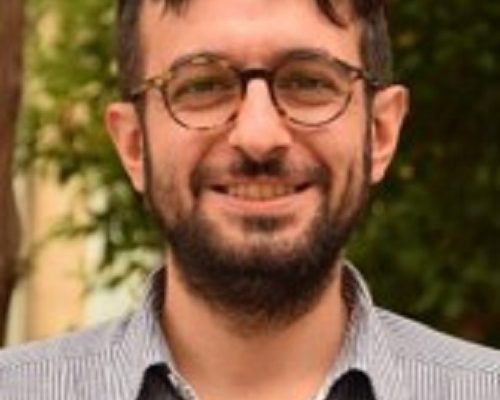
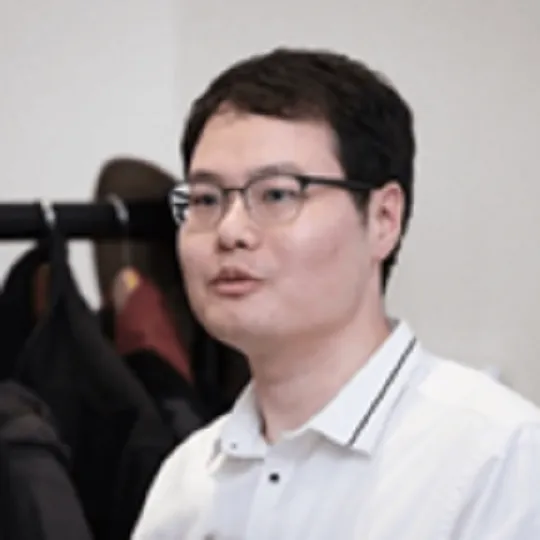
Dr. Alex White is a Senior Lecturer in Thermofluids at the Department of Engineering, Cambridge University, and a Fellow and Director of Studies at Peterhouse. He earned his undergraduate and PhD degrees from King's College, Cambridge, and conducted postdoctoral research in Cambridge, Lyon, and Toulouse before returning to Cambridge in 2000 as part of the Energy Group. His research focuses on two-phase flow (vapour-droplet flows), thermodynamics of power generation, Computational Fluid Dynamics (CFD), and heat pumps. His work includes theoretical and numerical studies on warm dense matter, electron transport, and energy storage systems like pumped thermal and compressed air storage. Recent publications emphasize warm dense matter physics, inertial confinement fusion, and thermal energy storage innovations. His theoretical analyses and simulations span high-energy-density plasmas, nonlocal electron stopping power, and hybrid energy systems. While no scientific awards are documented, his contributions to thermofluids and extreme condition physics are significant.
Massimiliano Tamborrino is an Associate Professor in the Department of Statistics at the University of Warwick since August 2024. He holds a WIHEA Fellowship (2023-2026) and has organized the One World ABC Seminar (2020–present), focusing on approximate Bayesian computation (ABC) and simulation-based inference. He co-organizes the BioInference conference series, which explores mathematical modeling in biological systems. His research integrates stochastic processes, numerical methods, and statistical inference, with applications in neuroscience, biology, and parallel-in-time algorithms. Education: PhD in Probability Theory and Statistics from the University of Copenhagen (2013), supervised by Prof. Susanne Ditlevsen. Previously held roles include University Research Assistant at JKU Linz (2014–2019) and Postdoc at the University of Copenhagen (2012–2014). Research interests include stochastic processes (diffusions, point processes), parallel-in-time numerical schemes (PinT), and ABC methods. His work bridges stochastic numerics with computational statistics, particularly in neuroscience and biological systems. He has developed R packages for exact simulation of non-Gaussian processes (e.g., shot noise, OU processes). Awards: WIHEA Fellow (2023–2026). Active in grants, including leadership of the EPSRC-funded project on AI-informed decision-making using Decision Field Theory. Teaching responsibilities include ST232/ST233: Introduction to Mathematical Statistics for undergraduate students.
Sebastien Loisel is an Assistant Professor in the School of Mathematical & Computer Sciences at Heriot-Watt University, specializing in the Department of Mathematics. His primary research focuses on domain decomposition methods for solving large-scale problems in massively parallel environments. He has contributed significantly to numerical analysis, stochastic processes, and computational mathematics. Research interests include algorithms, parallel computing, and finite element methods. His work spans topics such as the p-Laplacian, stochastic p-Laplace systems, and handling missing data in PCA. He has published extensively in journals like SIAM Journal on Numerical Analysis and Numerische Mathematik . Dr. Loisel received the Heriot-Watt University Teaching Excellence Award for Global Learning and Teaching in 2019, highlighting his commitment to education. His research collaborations span multiple institutions and countries, reflecting his global academic engagement. While specific advising details are not listed, his research contributions and collaborations indicate active participation in academic and industrial partnerships. His work often emphasizes computational efficiency and scalability in numerical methods.
Dr. Pantelis Sopasakis is a Lecturer in the School of Electronics, Electrical Engineering and Computer Science at Queen's University Belfast, Northern Ireland. His research focuses on developing efficient numerical optimization algorithms and model predictive control (MPC) methodologies for uncertain systems, with applications in autonomous vehicles, smart infrastructure networks, and advanced manufacturing. He leads projects on embedded optimization solvers, GPU-accelerated MPC, and stochastic control for systems like water networks and microgrids. His work emphasizes real-time implementation and safety-critical applications in robotics and energy systems. He teaches postgraduate and undergraduate courses in control theory and signals, and is actively involved in supervising PhD students in areas like parallel algorithms and MPC for uncertain systems. Key achievements include the development of the Open-Source Optimization Engine , widely used for embedded MPC. Research interests span distributed embedded intelligence, intelligent uncertain-aware MPC, and biomedical applications of control systems. He collaborates internationally on projects involving risk-averse control, multi-agent systems, and circular economy applications. His interdisciplinary work bridges optimization theory, robotics, and energy systems, with a focus on scalable and real-time solutions. Teaching includes modules on control systems fundamentals and advanced MPC concepts, supported by his textbook Control Systems: An Introduction . Dr. Sopasakis has contributed to over 50 publications, with recent work on conformal prediction for stochastic control, distributed collision avoidance, and thermodynamical material networks. He participates in conferences and editorial activities, and has organized events like the 2025 IEEE UK and Ireland Robotics Conference. His research group is part of the Energy, Power, and Intelligent Systems and Control clusters at Queen's.
George Deligiannidis is a Professor of Statistics and Director of the MSc in Statistical Science at the University of Oxford's Department of Statistics. He is also a Hugh Price Fellow in Statistics at Jesus College. His academic journey includes degrees from the University of Warwick (MMath), Heriot-Watt University/Edinburgh (MSc in Financial Mathematics), and a PhD from the University of Nottingham. He has held roles at the University of Leicester and King's College London before returning to Oxford in 2017 as Associate Professor, promoted to full Professor in 2024. His research focuses on probability theory, statistical methodology, and their applications in computational statistics and machine learning. Key interests include Monte Carlo methods (especially MCMC), random walks, optimal transport, and diffusion models. Notable recent work explores the theoretical foundations of diffusion models under manifold hypotheses, generalization bounds in machine learning, and convergence analysis of sampling algorithms. Deligiannidis has authored influential papers in top conferences (NeurIPS, ICML, COLT) and journals (Annals of Statistics, JRSSB). He is actively involved in teaching, including Advanced Simulation Methods and Modern Statistical Theory. His work bridges theoretical probability with practical computational challenges, contributing to both methodological advances and foundational understanding in statistical inference.
Dr. Georges Kesserwani is a Senior Lecturer in Water Engineering at the School of Mechanical, Aerospace and Civil Engineering , University of Sheffield. His work bridges flood risk modeling , hydrodynamic simulations , and agent-based modeling to advance automated flood mapping and forecasting. He holds an EPSRC Early Career Fellowship (2018–2024) and has organized international workshops on flood modeling. Research Interests: He develops computational methods to integrate fluid mechanics , uncertainty quantification , and human behavior in flood scenarios. Current projects include GPU-accelerated flood models Agent-based evacuation dynamics Multiwavelet terrain filtering Two-way pedestrian-floodwater interaction Scientific Contributions: His publications reveal trends in Hybrid numerical-data-driven flood simulation Uncertainty propagation in multi-hazard environments Agent-based modeling of urban evacuation Experimental validation of flow-structure interactions Awards: ASCE’s 2024 Best Reviewer Award EPSRC Early Career Fellowship DAAD Visiting Fellowship (2013–2014) Teaching & Leadership: Dr. Kesserwani teaches hydraulics , hydrology , and computer modeling to water engineering students. He leads the Water - Environmental Fluid Mechanics research group and co-organized the 2024 Advances in Flood Modelling workshop.
Professor Tobias Weinzierl holds the position of Professor in the Department of Computer Science at Durham University. He is the Co-director of the Institute for Data Science (IDAS) and leads the Scientific Computing research group. His expertise includes high-performance computing, parallel algorithms, and scientific computing, with a focus on numerical methods and adaptive mesh refinement techniques. Research interests encompass high-performance computing architectures, parallel algorithm design, and the development of scalable numerical solvers for hyperbolic partial differential equations (PDEs). He has contributed to projects like ExaHyPE, an engine for exascale simulations of wave phenomena, and has authored influential books such as *Principles of Parallel Scientific Computing* and *A Framework for Parallel PDE Solvers on Multiscale Adaptive Cartesian Grids*. He has held roles including inaugural director of the Master in Scientific Computing and Data Analysis (MISCADA) and has reviewed for the European High Performance Computing Joint Undertaking (EuroHPC JU). His work emphasizes resilience in numerical software, compiler optimizations, and energy-efficient computing. Key contributions include the Peano software framework for adaptive grid traversals, and research on task-based parallelism, GPU offloading, and fault tolerance in HPC systems. Current research focuses on exascale computing, multiscale optimisation, and the application of parallel computing to astrophysics and fluid dynamics. Labs/Teams: Scientific Computing research group, ExaHyPE project team Grants/Projects: PI/Co-I on ExCALIBUR projects, H&ES installations
Professor Karl Jenkins is a Professor of Computational Engineering at Cranfield University , where he leads the Centre for Computational Engineering Sciences . His expertise spans Computational Fluid Dynamics (CFD) , Turbulent Combustion , High Performance Computing (HPC) , and Multiphase Flow Modeling . Jenkins has published over 100 papers and received the Gaydon Prize for his contributions to combustion research. His research focuses on reacting flows , turbulence modeling , and compressible multiphase flows , with recent work addressing green hydrogen production , aircraft component segmentation , and virtual reality applications in aviation safety. He has developed high-order numerical methods for shock wave analysis and interface-capturing in unstructured mesh environments . A former Sir Arthur Marshall Research Fellow at Cambridge University, Jenkins combines academic rigor with industrial collaboration , having worked with companies like Rolls-Royce plc , Airbus SE , and Siemens AG . He mentors research students including Yiren Tong and actively contributes to LES/DNS computational frameworks for aerospace and environmental applications .
Dr. Stuart Barnes is a Lecturer in Computational Intelligence and Data Analytics at Cranfield University , where he also serves as Course Director for the MSc Computational & Software Techniques in Engineering program. His academic background combines Physics (BSc, MSc from University of Kent) and Computer Vision (PhD, MSc from Cranfield University). Research focuses on Vision-Based Computing with applications in - Human-Computer Interaction (HCI) and Gesture Recognition - Surveillance and Security systems - Autonomous Vehicle Operations Recent publications highlight his work in semantic segmentation (2025), autonomous refueling systems (2023-2024), and historical contributions to laser shearography (2004-2006). His technical expertise spans algorithm development, machine learning models, and industrial software deployment across aerospace and automotive sectors. Key Collaborations : • Jaguar Land Rover Ltd • Airbus SE • Saab UK Ltd (BlueBear) • Thales SA
Royal Holloway, University of LondonUnited Kingdom
Matthew Hague is a Professor at the Department of Computer Science, Royal Holloway University of London. His research focuses on theoretical and practical aspects of infinite-state verification, with a particular emphasis on higher-order recursion and counter systems. Education: MEng in Computing, Imperial College London DPhil (PhD) in Computer Science, University of Oxford Research Interests: Matthew's work spans infinite-state systems verification , higher-order program analysis , string constraint solving , and pushdown automata . He develops practical tools like Ostrich (for string constraints), C-SHORe (for HORS analysis), TreePed (for CSS optimization), and PDSolver (for pushdown parity games). Scientific Contributions: His recent work includes symbolic Parikh's theorem applications (2024), regex-dependent string constraint solving (2022), collapsible pushdown parity games (2021), and path feasibility analysis with integer data types (2020). These span formal methods, automata theory, and programming language design. Awards & Grants: EPSRC Early Career Fellowship (2013-2018) EPSRC Grant for String Constraint Solving (PI, 2019-2022) Academic Leadership: Matthew has supervised numerous PhD students including Emma Lieu and Jonathan Hoyland, and organized key conferences like BCTCS 2018 and ICALP 2026. He maintains active involvement in program committees for POPL, LICS, and MFCS. Laboratory Tools: He leads development of Ostrich (string constraint solver), PDSolver (pushdown system analysis), and C-SHORe (higher-order verification) tools.
Graham Riley is a Lecturer in the School of Computer Science at the University of Manchester and holds a part-time position in the Scientific Computing Department (SCD) at STFC, Daresbury. His research focuses on high performance computing (HPC), software engineering for scientific computing, and performance modeling for parallel machines. Key areas include techniques for developing HPC applications, software architectures for coupled modeling, and performance control in distributed systems. His work emphasizes collaboration with computational scientists in domains such as Earth System Modelling (e.g., UK Met Office), computational chemistry, and biology. He has contributed to projects like the EuroExa architecture for exascale computing and the LFRic weather/climate model porting to FPGAs. Riley's research also explores energy efficiency in HPC systems and FPGA acceleration strategies for scientific workloads. Notable contributions include studies on parallelization strategies, FPGA-based acceleration of climate models, and optimizing OpenCL for heterogeneous architectures. His work aligns with UN Sustainable Development Goals, particularly through contributions to climate modeling and sustainable computing practices. Riley collaborates with institutions like the Met Office and the ESM community in Europe/US. His academic profile reflects a balance between theoretical research and practical application, with a strong focus on bridging computational science and engineering challenges.
Dr. Liucheng Guo is a Visiting Senior Research Fellow and RAEng Industrial Fellow at King’s College London, affiliated with the Department of Mathematics within the Faculty of Natural, Mathematical & Engineering Sciences. His expertise spans AI software-hardware co-design, embedded AI, and high-performance computing (HPC), with a focus on sustainable human-machine interfaces (HMI) for sectors like IoT, Automotive, Healthcare, and XR. He holds a Ph.D. from Imperial College London and an MA from Peking University. Dr. Guo has co-founded the award-winning AI startup TG0, securing seven patent groups and over £20 million in grants from InnovateUK, RAEng, and the European Innovation Council. His research emphasizes smart home, IoT, and healthcare applications, including VR mirror therapy for post-stroke rehabilitation and gesture-based control systems. He is a Senior Member of IEEE and Fellow of IET/BCS/RSA, reflecting his leadership in bridging research and industry. His grants include Smart Grants, KTP awards, and SME Leader initiatives. He actively promotes STEM through roles as RAEng Visiting Professor and public engagement ambassador.
Dr. Mark Woodgate is a Research Associate in the Autonomous Systems & Connectivity research group at the School of Engineering, University of Glasgow. His research focuses on computational fluid dynamics applications for rotorcraft and helicopter aerodynamics, with extensive publications spanning over two decades. His research interests include: Computational Fluid Dynamics for rotorcraft applications Rotor blade design and optimization Helicopter aerodynamics and dynamics Wind turbine analysis High-fidelity CFD/CSD methods Dr. Woodgate's recent publications demonstrate a strong focus on advanced computational methods for rotorcraft analysis and design. His work frequently involves collaboration with George Barakos and other researchers at the University of Glasgow. Key research trends include the application of harmonic balance methods, adjoint optimization techniques, and the development of efficient CFD solvers for rotorcraft applications. His research has significant implications for helicopter design, tiltrotor aircraft, and wind turbine technology. Scientific contributions: Development of implicit hybrid methods for rotorcraft flow computation Analysis of rotor blade stall and flutter phenomena Simulation techniques for helicopter ditching scenarios Optimization frameworks for rotor blade planform design Dr. Woodgate has supervised research students, including Dada, Oyedoyin Samuel, who worked on 'Machine Learning for Flying Vehicles - Demonstration for autonomous fire-fighting aircraft.' His work bridges traditional aerospace engineering with emerging computational techniques and applications.
Professor Sierk Ybema is a distinguished scholar in Organization Studies at Anglia Ruskin University's Faculty of Business and Law, with a parallel appointment at Vrije Universiteit Amsterdam in the Netherlands. His research centers on social, cultural and political processes in organizational settings, with particular expertise in ethnographic approaches to understanding workplace dynamics. Ybema holds a Ph.D. in Social Science from VU University Amsterdam (2003) with a thesis on editorial conflicts in Dutch newspapers, and an M.Sc. in Organizational Psychology from the same institution (1992). His research spans two decades of ethnographic work in diverse settings including amusement parks, newspaper editorial offices, multinational corporations, police organizations, and healthcare institutions. His research interests focus on organizational identities, cross-boundary collaboration, workplace resistance, organizational discourse and change, intercultural communication, and organizational ethnography. Ybema examines how social actors negotiate meaning, power, and identity in complex organizational environments, particularly during periods of radical change or cross-cultural interaction. His recent publications reveal a consistent focus on boundary work, identity construction, and resistance dynamics across various sectors including healthcare, multinational corporations, and public services. The research demonstrates methodological sophistication through ethnographic approaches that uncover nuanced organizational processes often invisible to more traditional analytical frameworks. Associate Editor of Organization journal Member of the Editorial Board of Organization Studies Principal Organizer of the International Conference on Organizational Discourse Principal Organizer of the Ethnography Workshop (with Cardiff and Lyon) Member of EGOS (European Group for Organizational Studies) Ybema has secured substantial research funding from diverse sources including the Netherlands Organisation for Scientific Research (NWO), Ministry of Health, Welfare and Sport, and various industry partners. His projects span cross-cultural collaboration in Chinese business in Europe, healthcare innovation and integration, nursing home change and innovation, and decentralization of long-term care. He has supervised numerous PhD students working on identity, talent management, diversity, cross-cultural collaboration, and boundary work in organizational settings. His ethnographic approach has led to extensive fieldwork in Japanese, Chinese, and Dutch multinational companies, Amsterdam municipality, Dutch National Police, cultural industries, and healthcare organizations. This work has been funded by government agencies, public organizations, and industry partners across Europe.
Emma Edwards is a Career Development Fellow in Engineering at St Peter's College, University of Oxford. She holds a BSc in Mathematics from the University of North Carolina at Chapel Hill (2012), a PhD in Engineering from MIT (2020), and has held postdoctoral roles at MIT and the University of Plymouth. Her research focuses on offshore renewable energy technologies, including wave energy converters and floating offshore wind turbines (FOWTs), with expertise in hydrodynamic modeling, numerical simulation, and experimental validation. She has contributed to global hubs for offshore renewable energy research and expanded her work to floating wind turbine systems. Her career includes a unique parallel as a professional cyclist from 2018–2022. Her research interests span the optimization of wave energy converter geometries, comparative studies of offshore wind platform designs, and the analysis of hydrodynamic responses in dynamic systems. Key publications explore numerical-experimental model comparisons, platform design trends, and load prediction methodologies. She collaborates with leading institutions such as the University of Plymouth and MIT, leveraging advanced simulation tools and real-world testing frameworks. Emma’s work bridges theoretical and applied engineering, addressing challenges in renewable energy systems’ efficiency and structural resilience. Her contributions to early-stage FOWT designs and platform evolution have advanced the field, emphasizing sustainable offshore energy solutions.