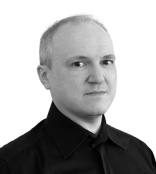
Professor Heinrich Schmidt is an Adjunct Professor in the School of Science at RMIT University, Australia. His research focuses on Software Engineering, Distributed Systems, and Cyber-Physical Systems. He specializes in areas such as formal verification, safety-critical systems, and cloud computing. His work emphasizes practical applications in industrial automation, IoT, and HPC environments. Key research interests include spatio-temporal analysis, fault tolerance, and adaptive systems design. He has supervised projects on IoT data contextualization, software fault characterization, and spatial modeling in PRISM. Over 98 publications highlight his contributions to formal methods, distributed systems, and industrial software solutions. Professor Schmidt collaborates on projects like Chiminey (cloud/HPC integration) and VxLab (industrial visualization). His teaching covers parallel systems, trusted components, and model-based monitoring. No specific awards are listed, but his extensive publication record underscores his academic impact.
Professor Phil Trinder is a Professor of Computing Science at the University of Glasgow's School of Computing Science. He leads the Glasgow Parallelism Group (GPG) and is a member of the Glasgow Systems Section (GLASS) and the Scottish Programming Languages Seminar (SPLS). His research focuses on parallel and distributed programming models, functional programming, and applications in computational algebra. Trinder holds a DPhil from Oxford University and has over 100 publications. He has led 12 major research projects as Principal Investigator and coordinated EU projects. Collaborations include Ericsson, Maplesoft, Microsoft, and Motorola. His work emphasizes scalable distributed systems, actor-based platforms, and reliable computation. Notable contributions include the SymGridPar framework for computational algebra and research on Erlang scalability. He also explores IoT architectures and tierless programming languages. Key projects include improving Erlang's network scalability and developing frameworks for exact combinatorial search (YewPar). He has supervised numerous researchers and contributed to high-performance systems like HPC-GAP.
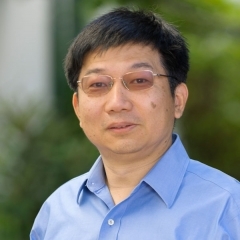
Tao Yang is a Professor in the Department of Computer Science at the University of California, Santa Barbara, where he has been a faculty member since 1993. His research spans web search and mining, database and information systems, machine learning and data mining, parallel and distributed systems, and cloud computing. He serves as an active educator, teaching courses including CS170 Operating Systems (Spring 2024), CS291A Neural Information Retrieval (Fall 2024), and CS140 Parallel Computing (Winter 2025). PhD in Computer Science, Rutgers University ME in Artificial Intelligence, Zhejiang University MS in Computer Science, Rutgers University BS in Computer Science, Zhejiang University Professor Yang's research focuses on advancing the field of information retrieval with particular emphasis on neural approaches to search and ranking. His recent work explores neural document ranking, privacy-aware search systems, and versioned data search. He has led significant projects including Neptune clustering infrastructure, Sorrento self-organizing storage cluster, and TMPI for MPI execution optimization. His research bridges theoretical advances with practical implementations, particularly in scaling search architectures to handle billions of documents while maintaining relevancy, performance, and freshness. His publication record shows a clear evolution from foundational work in parallel and distributed systems toward contemporary research in neural information retrieval. Recent publications demonstrate expertise in optimizing both sparse and dense retrieval methods, with particular focus on efficiency improvements for multi-vector representations. His work consistently addresses real-world challenges in search scalability and privacy preservation. Faculty Research Award, Google Research Research Initiation Award, NSF (1994) UC Regents' Junior Faculty Award (1994) Computer Science Faculty Teacher Award (1995) CAREER Award, NSF (1997) Noble Jeeviant Award, AskJeeves (2002) Professor Yang has supervised numerous graduate students, many of whom have gone on to prominent positions at companies like Google, Apple, and Coursera, or academic positions at universities worldwide. His industry experience as Chief Scientist for Ask.com (2001-2010) and founding Chief Scientist for Teoma (2000-2001) has informed his research direction and provided valuable practical context for his academic work. He has served on program committees for major conferences including WWW, SIGIR, KDD, WSDM, CIKM, ECIR, and EMNLP. His research group maintains active projects in neural information retrieval, privacy-aware search, similarity computing, and parallel computing systems. The group collaborates closely with industry partners, particularly in the search technology space, and has developed systems that power major search engines serving over 100 million users.
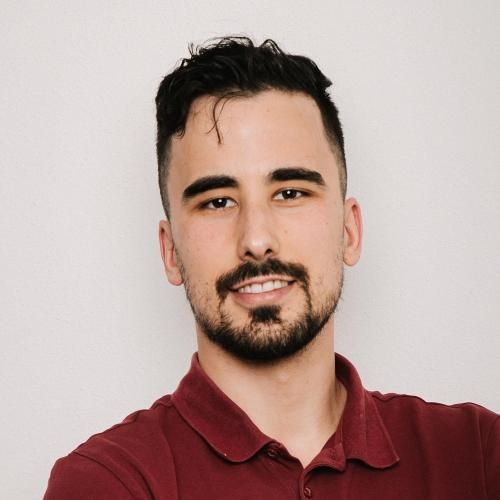
Martin Uecker is a Professor at the Institute of Biomedical Imaging at TU Graz. His research focuses on advanced MRI reconstruction techniques, real-time imaging, and open-source software tools like the Berkeley Advanced Reconstruction Toolbox (BART). He specializes in developing methods for fast and accurate medical imaging, including applications in cardiac MRI, fetal brain imaging, and disease monitoring. His work emphasizes reproducibility, quantitative imaging, and clinical translation. Key research areas include generative models for MRI reconstruction, model-based inversion of the Bloch equations, and interactive real-time MRI systems. His team collaborates on projects involving hardware-software integration, such as portable MRI scanners and MRI-guided interventions. Notable contributions include advancements in multi-echo radial FLASH techniques, motion-resolved T1 mapping, and Bayesian uncertainty estimation in imaging. Uecker’s publications highlight innovations in accelerating MRI acquisition and reconstruction, with applications in pulmonary function assessment, neonatal imaging, and cardiovascular diagnostics. His work bridges theoretical physics, computational methods, and clinical practice, fostering open-source frameworks to democratize access to cutting-edge imaging tools.
Heike Jagode is a Research Associate Professor at the Innovative Computing Laboratory (ICL), part of the Tickle College of Engineering at the University of Tennessee, Knoxville. She joined ICL in 2008 and became Lead of the ICL Performance Group in 2013. Her research focuses on High Performance Computing (HPC), advanced computer architectures, performance analysis, and dataflow programming paradigms for scientific applications. PhD in Computer Science (2017), University of Tennessee, Knoxville MSc in High-Performance Computing (2006), University of Edinburgh MSc in Applied Techno-Mathematics (2001), University of Applied Sciences Mittweida BSc in Applied Mathematics (2001), University of Applied Sciences Mittweida Her work centers on developing tools for performance analysis, tuning, and energy efficiency in parallel scientific applications. She has contributed to PAPI (Performance Application Programming Interface) and task scheduling systems like StarPU and PaRSEC. Her current projects include MINCER (Monitoring Infrastructure for Network and Computing Environment Research), SPADE (Scalable Performance and Accuracy analysis for Distributed and Extreme-scale systems), and STEP (Software Tools Ecosystem Project) under DOE and NSF grants. Scientific awards include: Best Research Poster Finalist, Supercomputing Conference (SC17), 2017 Best Research Paper Finalist, IEEE High Performance Extreme Computing Conference (HPEC '17), 2017 Her publications and community roles span conferences like ISC, SC, IPDPS, HIPS, and journals such as IJHPCA and CCPE. She has served on technical program committees and steering committees for major HPC conferences.
Marcus ANG Teck Meng is an Associate Professor of Operations Management (Education) at the Lee Kong Chian School of Business, Singapore Management University. He is also the Academic Director and Track Coordinator of the International Trading Institute (ITI). His academic journey began at the National University of Singapore, where he earned dual B.Sc. degrees in Mathematics, followed by an S.M. in High Performance Computing and a Ph.D. in 2008. Ph.D., National University of Singapore, 2008 S.M., High Performance Computing for Engineering Systems, Singapore-MIT Alliance under NUS, 2003 B.Sc. (Hon), Mathematics, National University of Singapore, 2002 B.Sc., Mathematics, National University of Singapore, 2001 His research focuses on the theoretical and applied aspects of operations management, particularly in inventory management , stochastic models , and robust optimization . His work bridges mathematical rigor with real-world applications in supply chains, healthcare, and e-commerce. He has made significant contributions to warehouse storage optimization, hospital resource planning, and online retail fulfillment under uncertainty. The recent articles reflect a strong trend in applying robust optimization and stochastic modeling to logistics and service operations. His research spans domains such as healthcare analytics, e-commerce fulfillment, and inventory systems. Keywords like operations research , supply chain management , and data analytics dominate, with sub-fields including appointment scheduling, risk measures, and warehouse layout optimization. His teaching excellence has been widely recognized: Winner, SMU Undergraduate Excellent Teacher Award (2020) Winner, SMU Undergraduate Innovative Teacher Award (2018) Nominee, SMU Undergraduate Innovative Teacher Award (2021, 2022) Multiple appearances on SMU Dean’s Teaching Honour List (Undergraduate and Postgraduate) MPA Research Fellow (AY2019–2023) Dean’s List, NUS Department of Mathematics (AY1998–2001) He leads the International Trading Institute (ITI) and has been involved in pedagogical innovation through TEL grant-funded projects such as Inn or Out and Pricing Boss . While no formal list of advisees is provided, his role as Academic Director and course coordinator suggests active mentorship and supervision of students in operations and analytics. He has no known lab or research team explicitly mentioned, but his case studies and projects indicate strong industry engagement and applied research leadership.
Marcus Hilbrich is a Professor in Computer Science with extensive academic experience across multiple institutions. His primary affiliation is Chemnitz University of Technology, where he held roles including Assistant Professor, Acting Professor of Software Engineering, and Research Assistant. He also served as Scientific Coordinator at Humboldt University of Berlin (SFB 1404 FONDA) from 2022–2024. Education: He earned a Doctor of Engineering (Dr.-Ing.) from Dresden University of Technology in 2015, focusing on job/user-centric monitoring in distributed environments. His diploma thesis (2008) explored performance analysis of parallel simulations using the SUN Niagara II architecture. Research Interests: Hilbrich specializes in distributed systems, software engineering, cloud computing, and workflow management. He investigates microservices architecture, resilience engineering, and scalable monitoring techniques. His work bridges theoretical foundations (e.g., formal methods for workflows) with practical applications in HPC and data analysis. Publications: He has authored/co-authored over 15 peer-reviewed articles, including key contributions on ßMACH software management guidance, validity constraints in data workflows, and microservices design patterns. His research often addresses interdisciplinary challenges in computational systems and software lifecycle management. Projects: Active involvement in third-party funded projects like SFC (Cloud Computing for Secure Financial Transactions), ECOUSS (parallel simulations), and WisNetGrid (knowledge networks in grids). His work often integrates performance analysis and system scalability. Labs/Teams: Central to his work is the SFB 1404 FONDA collaborative research center, focusing on foundational aspects of distributed heterogeneous environments.
Dr. Alok Kushwaha is a Researcher at the University of Adelaide's School of Electrical and Mechanical Engineering, affiliated with the Biomedical Engineering department. He has 24 years of experience in academia, research, and administration, with expertise in semiconductor devices, digital signal processing, and antenna design. Currently, he collaborates with Dr. Jiawen Li and Dr. Robert McLaughlin at the Institute for Photonics and Advanced Sensing (IPAS) on Optical Coherence Tomography (OCT) and Fluorescence systems. His research interests include biomedical engineering applications, advanced semiconductor technologies, and nanoelectronics. Notable projects involve developing handheld OCT probes for oral tissue imaging and analyzing terahertz communication systems. He has contributed to studies on molecular communication protocols and sensor technologies for livestock health monitoring. Research Trends : Recent work focuses on biomedical imaging innovations (e.g., 3D-printed OCT devices), semiconductor device optimization (e.g., subthreshold MOSFET performance), and high-speed antenna designs. His publications span nanotechnology, image processing, and materials science. Grants & Advising : No student advisees or grant details listed. Collaborates extensively within interdisciplinary teams at IPAS. Labs/Teams : Active member of the Institute for Photonics and Advanced Sensing (IPAS), contributing to advanced sensing and photonics research.
David Chisnall is a researcher affiliated with the University of Cambridge and active in systems programming, compiler design, and cross-language interoperability. He contributes to conferences like POPL, PLDI, ISMM, and SPLASH, with particular focus on secure compilation and memory management.
Gerhard Wellein is a Professor for High Performance Computing at the Department of Computer Science of Friedrich-Alexander-Universität Erlangen-Nürnberg (FAU). He is the head of NHR@FAU (Erlangen National Center for High Performance Computing) and a member of the board of directors of the German NHR-Alliance. Since 2024, he has also served as a Visiting Professor for HPC at the Delft Institute of Applied Mathematics, Delft University of Technology. He holds a PhD in theoretical physics from the University of Bayreuth and has over two decades of experience in HPC education and research. Research Interests: His research focuses on performance modeling and engineering, architecture-specific code optimization, novel parallelization techniques, and the development of hardware-efficient building blocks for sparse linear algebra and stencil solvers. His work bridges computer science, applied mathematics, and computational physics, aiming to maximize efficiency on current and future HPC architectures, including exascale systems. Publication Trends: His recent publications emphasize analytical performance modeling (e.g., Roofline, oscillator models), energy efficiency, GPU optimization, and scalable linear algebra. They reflect a strong focus on both theoretical modeling and practical implementation, with applications in CFD, quantum physics, and molecular dynamics. Scientific Awards: 2011 Informatics Europe Curriculum Best Practices Award (shared with Jan Treibig and Georg Hager) for outstanding teaching contributions in HPC. Grants and Advising: He has led numerous third-party funded projects from the EU, BMBF, and DFG, including EoCoE-III, ESSEX, EXASTEEL, and ProPE. These projects focus on exascale software, performance engineering, fault tolerance, and multiscale simulation. He has mentored multiple researchers and students, contributing to the development of tools such as LIKWID, ClusterCockpit, and GEOPM. Labs and Teams: He leads the HPC research group at FAU and is deeply involved in national and international HPC initiatives. His team collaborates extensively on open-source HPC software and performance tools, fostering a strong community-driven approach to performance engineering.
Harald Köstler is an Associate Professor and Head of Research at the Erlangen National High Performance Computing Center (NHR@FAU) within the Department of Computer Science at Friedrich-Alexander-Universität Erlangen-Nürnberg (FAU). He leads the research group on HPC Software Design at the Chair of Computer Science 10 (System Simulation), focusing on software engineering for high-performance computing and data analytics. His research interests include: Software Engineering for HPC Code Generation for Numerical Solvers Performance Engineering on Hybrid Architectures Discontinuous Galerkin and Lattice Boltzmann Methods Multigrid Solvers and Parallel Algorithms Performance Portability across CPUs, GPUs, and FPGAs The recent publications highlight a strong trend in developing efficient, scalable, and portable simulation frameworks for complex physical systems. His work emphasizes code generation, performance optimization, and the integration of classical model-driven and data-driven approaches. Key application areas include computational fluid dynamics, geotechnical engineering, and climate modeling, often leveraging the waLBerla and ExaStencils frameworks. Harald Köstler has no listed scientific awards in the provided text. He advises students in the areas of high-performance computing, numerical methods, and software engineering for scientific applications. His research is supported by collaborations within the FAU HPC ecosystem and likely involves grants related to national high-performance computing initiatives. He is a key contributor to the waLBerla framework, a block-structured, high-performance software for multiphysics simulations, and is involved with the ExaStencils project, which focuses on advanced multigrid solver generation. These frameworks form the core of his research team's efforts in scalable scientific computing.
Adrián García Gutiérrez is a Professor in the Department of Aerospace Engineering at the University of León's College of Engineering. His research focuses on aerospace systems, uncertainty quantification in CFD, atmospheric boundary layer modeling, and airship technology. Recent publications highlight his work in parallel orbital propagation algorithms, stochastic optimization of high-altitude platforms, and neural network applications for wind profiling. Key trends include aerodynamic modeling under uncertainty and interdisciplinary approaches combining turbulence analysis with LiDAR measurements. He contributes to educational innovation in aerospace engineering through simulation-based learning tools and leads the GITA Tecnología Aeroespacial research group.
Prof. Julija Zavadlav is an Assistant Professor of Multiscale Modeling of Liquid Materials at the Technische Universität München (TUM), affiliated with the TUM School of Engineering and Design. Her research integrates physical modeling with machine learning and Bayesian techniques to develop multi-scale simulation frameworks for diverse applications in bioinformatics and engineering. Education: She earned her PhD in Physics from the University of Ljubljana (2015) and conducted postdoctoral research at ETH Zurich (2016–2019), where she received an ETH Postdoctoral Fellowship. Since 2019, she has held her current position at TUM. Research Interests: Her work focuses on advancing machine learning potentials, Bayesian uncertainty quantification, and multi-scale modeling for complex systems like ionic liquids, metal-organic frameworks, and biomolecules. Her ERC Starting Grant (2022) supports the SupraModel project, emphasizing scalable and interpretable models. Awards: Golden Teaching Award 2022 (Best Lecture), ERC Starting Grant 2022, and ETH Postdoctoral Fellowship. Her recent publications emphasize neural network potentials, transfer learning, and computational tools like JaxSGMC for Bayesian analysis. Grants and Labs: While specific lab names are not mentioned, her ERC grant underscores active funding. No formal student advisee list is provided, but her collaborative work suggests involvement in training next-generation computational scientists.
Victor J. Milenkovic is a Professor and Department Chair in the Department of Computer Science at the University of Miami's College of Arts and Sciences. His research focuses on computational geometry, geometric algorithms, and their applications in robotics, computer-aided design (CAD), and high-performance computing. He specializes in developing robust algorithms for handling degenerate cases in geometric computations, free space construction for robotic motion planning, and efficient implementations of geometric operations using modern hardware like GPUs. Key contributions include: Advanced techniques for detecting degenerate predicates in computational geometry GPU-accelerated Minkowski sum computations Robust free space construction for polyhedra Geometric rounding methods for preserving mesh topology His work emphasizes practical implementations with provable correctness and efficiency, validated through applications in CAD, robotics, and HPC environments. No academic awards are explicitly listed in the provided materials. Advising and grants: No student advisees or grant details are provided in the profile. His research has been applied to problems in algorithmic robustness, geometric modeling, and parallel computing. Labs/Teams: No specific lab or team affiliations are mentioned beyond his departmental role.
Victoria Shao is a Teaching Associate Professor in the Department of Electrical and Computer Engineering at the University of Illinois Urbana-Champaign (UIUC). She specializes in electromagnetic compatibility (EMC), computational electromagnetics (CEM), and high-power microwave technology. Her work focuses on advancing numerical methods for transient electromagnetic analysis, stochastic modeling in complex enclosures, and the design of integrated electronic systems. Affiliations: Holonyak Micro and Nanotechnology Laboratory at UIUC Education: B.S. in Electrical Engineering (USTC, 2003), Ph.D. in Electromagnetics (Chinese Academy of Sciences, 2008) Prior positions: Researcher at ElectroScience Laboratory, Ohio State University (2009–2014) Research Interests: Dr. Shao’s work bridges computational methods with practical engineering challenges, emphasizing: Stochastic Green’s function approaches for statistical wave physics Multi-physics analysis of electronic systems Development of scalable algorithms for high-performance computing Nanotechnology integration for 3D RF components Her research has led to innovations in: Self-rolled-up membrane (S-RuM) nanotechnology for compact inductors Supercomputing-driven radio wave propagation models for urban environments Parallel-in-space-and-time electromagnetic simulation methods Awards: She has received multiple recognitions, including Best EMC Paper finalist awards (2022, 2023) and a Best Paper Award in IEEE Transactions (2017). Teaching and Contributions: Dr. Shao teaches core ECE courses such as ECE 110, ECE 210, and specialized EMC courses (ECE 498 YS3/YVS). She pioneers educational strategies using visualization tools and asynchronous learning to enhance STEM accessibility.