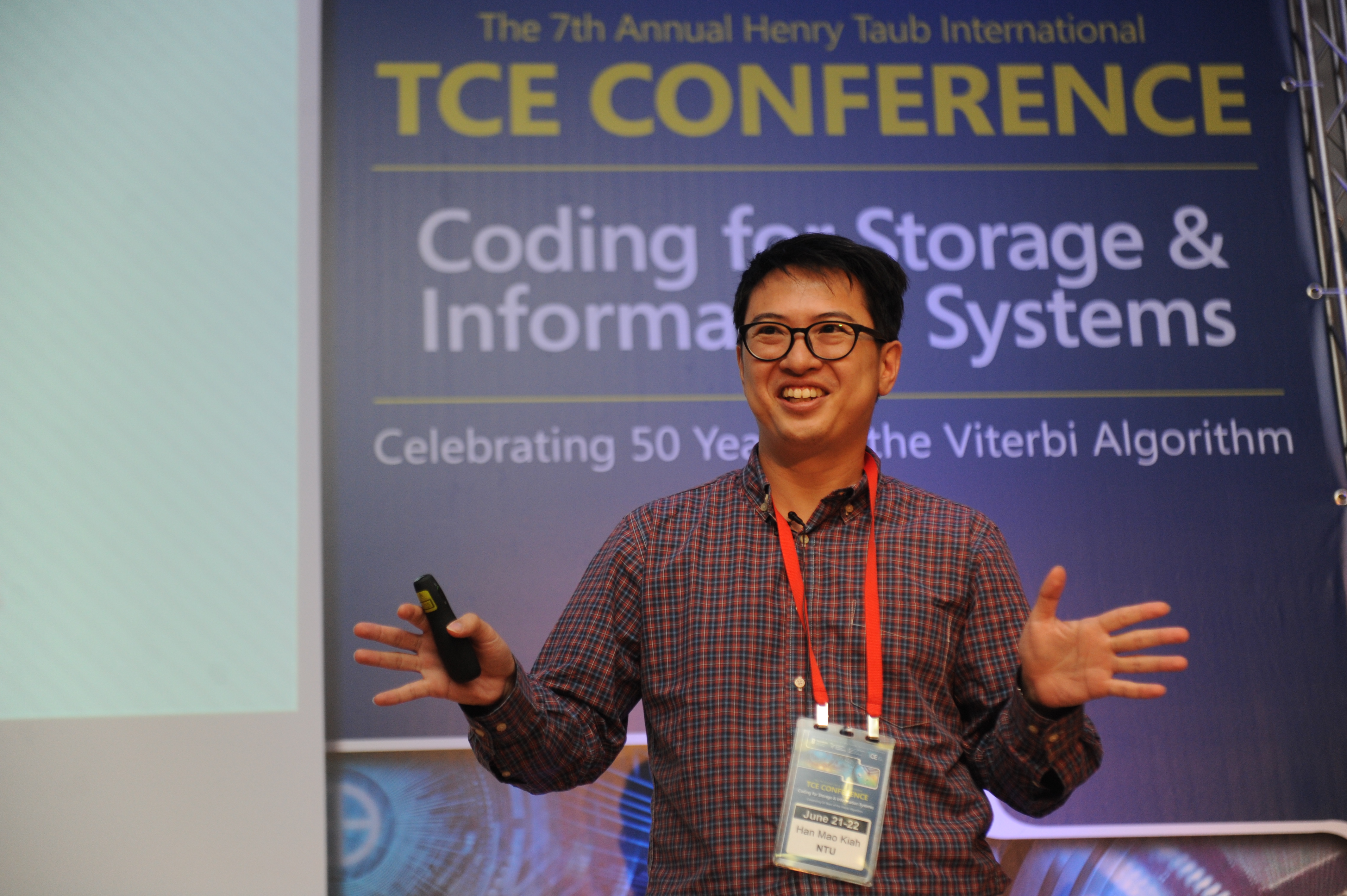
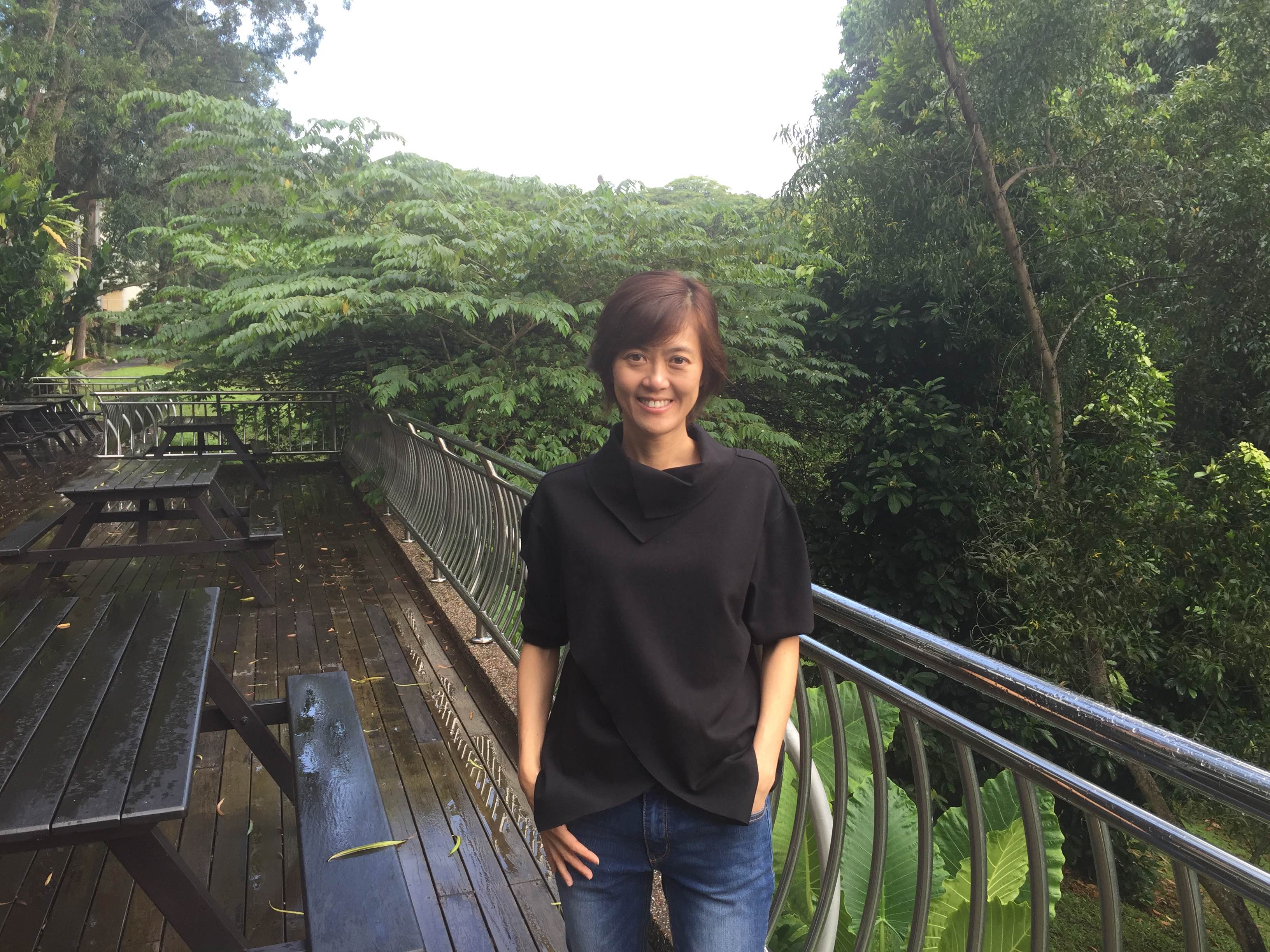
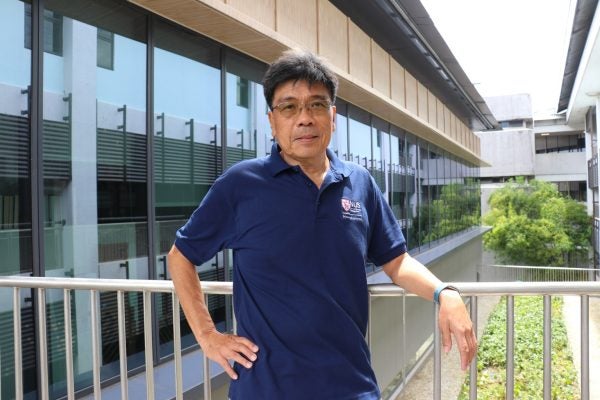
Han Mao Kiah is an Assistant Professor at Nanyang Technological University , specializing in Coding Theory and Combinatorics . He earned his Ph.D. in Mathematics at NTU under Yeow Meng Chee and held a postdoctoral position at the Coordinated Science Lab, University of Illinois at Urbana-Champagne with Olgica Milenkovic . Current Role: Assistant Professor, NTU, Department of Mathematics Education: Ph.D. in Mathematics (NTU), Postdoc (University of Illinois) His research focuses on Coding Theory for applications in DNA-based data storage , Reed-Solomon codes , and combinatorial designs . Recent work includes Private Information Retrieval , Sequence Reconstruction , and Error Correction in distributed systems. Key trends in his publications involve Reed-Solomon codes , Private Information Retrieval , and DNA sequence profiling with a focus on Efficient Algorithms and Constrained Coding for error control in emerging storage systems. ISITA Early Career Researcher Paper Award (2022, Researcher: D. T. Dao) Memorable Paper Award Finalist (2021, Student: J. Chrisnata) Best Student Paper Award (2020, Student: J. Chrisnata) Student Paper Award Finalist (2012)
Penghui Yao is a Professor in the Department of Computer Science and Technology at Nanjing University, where he is a member of the CS Theory group. His academic career spans prestigious institutions including the Centre for Quantum Technologies at National University of Singapore, Centrum Wiskunde Informatica (CWI), Institute for Quantum Computing (IQC) at University of Waterloo, and Joint Center for Quantum Information and Computer Science (QuICS) at University of Maryland. Education: BSc in Mathematics from East China Normal University PhD from Centre for Quantum Technologies, National University of Singapore (supervised by Rahul Jain and Miklos Santha) Professor Yao's research focuses on quantum computing and theoretical computer science, with particular expertise in quantum algorithms and computational complexity. His work bridges classical and quantum information theory, with significant contributions to analysis of Boolean functions and their quantum applications. He has developed novel approaches to communication complexity problems in both classical and quantum settings, advancing our understanding of the fundamental limits of computation. His recent publications reveal a strong trend toward practical quantum algorithms with applications in distributed systems, quantum simulation, and quantum cryptography. The breadth of his work spans from theoretical foundations of quantum complexity classes to experimental implementations of quantum processes, demonstrating both depth in theoretical understanding and relevance to practical quantum computing challenges. Professor Yao actively mentors the next generation of quantum computing researchers, supervising multiple PhD and Master's students at Nanjing University while maintaining collaborations with international research groups. His service to the community includes program committee roles for major quantum computing conferences including QIP and TQC.
Assoc Prof Anupam Chattopadhyay is an Associate Professor in the College of Computing & Data Science at Nanyang Technological University (NTU), Singapore. He also holds a courtesy appointment in the School of Physical & Mathematical Sciences. His research focuses on computer architecture, security, design automation, and quantum computing. Anupam received his PhD from RWTH Aachen University in 2008, followed by roles at CoWare R&D and RWTH Aachen as a Junior Professor before joining NTU in 2014. Education: B.E., Jadavpur University, India MSc, ALaRI, Switzerland PhD, RWTH Aachen University, Germany Research Interests: Anupam’s work spans quantum computing, hardware security, AI security, post-quantum cryptography, and emerging technologies. His contributions include novel high-level synthesis techniques for cryptography, reliability estimation flows for embedded processors, and exploration of coarse-grained reconfigurable architectures. His research has been featured in major outlets like The Economist and Asian Scientist. Awards: Borcher's plaque (2008) for outstanding doctoral dissertation Nomination for Best IP Award (ACM/IEEE DATE 2016) Nomination for Best Paper Award (International Conference on VLSI Design 2018) Advising & Grants: Anupam leads a team of over 20 researchers, overseeing projects funded by various grants. He has advised numerous doctoral students and collaborates with institutions like Temasek Labs and the Indian Statistical Institute. Labs & Teams: His research group focuses on advanced topics in secure computing, quantum-resistant systems, and hardware-software co-design, leveraging cutting-edge tools and platforms for next-generation technologies.
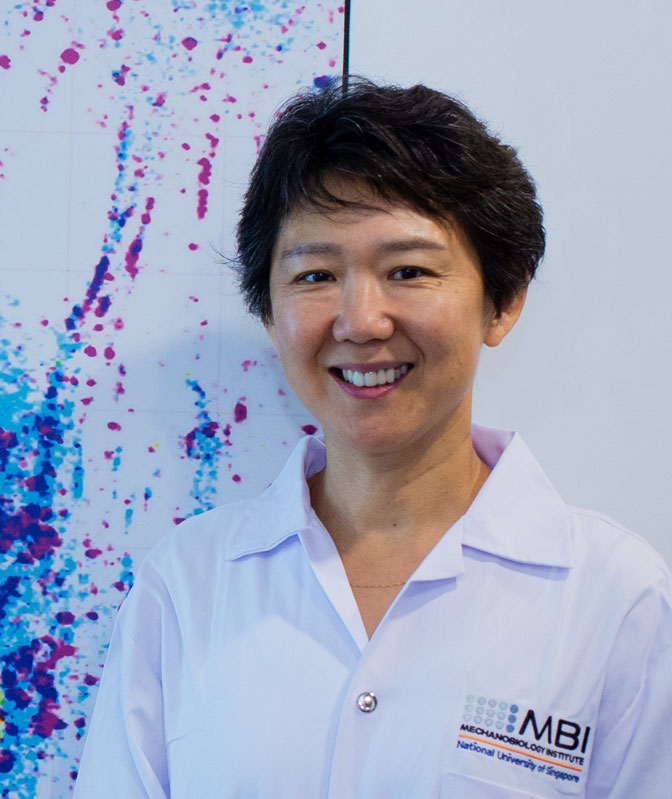
LI Rong is a Professor (courtesy appointment) in the Department of Mechanical Engineering at the National University of Singapore (NUS), and Director of the Mechanobiology Institute (MBI), a Research Centre of Excellence at NUS. She concurrently holds a Distinguished Professorship in the Department of Biological Sciences at NUS. Previously, she served as Bloomberg Distinguished Professor of Cell Biology at Johns Hopkins School of Medicine and Department of Chemical and Biomolecular Engineering at Johns Hopkins University. Her research focuses on cellular dynamics and mechanics, integrating genetics, quantitative imaging, biophysical measurements, mathematical modeling, genomics, and proteomics. This interdisciplinary work aims to understand how eukaryotic cells transmit genomes, adapt to environments, and organize for specialized functions. Her recent publications span entity profiling, temporal data management, and big data analytics systems. Key contributions include the MAROON+ system for temporal entity profiling, HC-Store for hybrid MapReduce-RDBMS systems, and frameworks for optimizing algorithmic trading strategies using MapReduce. LI Rong's leadership roles include directing the Mechanobiology Institute and holding distinguished appointments across multiple institutions. Her work bridges engineering, biology, and computational sciences, reflecting her expertise in both mechanobiology and big data systems.
Weng Fai WONG is an Associate Professor and Deputy Head of the Department of Computer Science at the School of Computing, National University of Singapore (NUS). With over three decades of academic experience at NUS, he has established himself as a leading researcher in computer systems, with particular expertise in the interface between hardware and software stacks. Dr. Wong received his B.Sc. (First Class Honors) and M.Sc. from the National University of Singapore in 1989 and 1991 respectively, followed by a Dr.Eng.Sc. from the University of Tsukuba in 1993. His academic journey began at NUS (then DISCS) in 1985, where he progressed from student to Senior Tutor in 1989, and later returned from Japan as a Lecturer in 1993. Dr. Wong's research focuses on systems and networking, with special emphasis on hardware-software co-optimization. His current research interests include approximate computing , neuromorphic computing , and hardware acceleration for deep learning. His work spans computer architecture , embedded systems , compilers and runtime systems , and programming languages . He has made significant contributions to optimizing software for novel hardware including FPGAs, GPUs, and non-volatile memory technologies. His recent publications (2023-2025) demonstrate a strong focus on energy-efficient AI computing, with particular emphasis on spiking neural networks, large language model acceleration, and FPGA-based solutions for graph processing and machine learning workloads. His research shows a clear trajectory toward green AI through hardware-software co-design that minimizes energy consumption while maintaining computational effectiveness. Dr. Wong is a Member of ACM and a Senior Member of IEEE. His paper "Exploiting half precision arithmetic in Nvidia GPUs" was a Best Paper Finalist at the IEEE High Performance Extreme Computing Conference (HPEC 2017). As Deputy Head of the Department of Computer Science at NUS, Dr. Wong plays a key leadership role in academic administration while maintaining an active research program. His work has been supported by numerous research grants, though specific details are not provided in the available information. Dr. Wong leads research in the Systems & Networking area at NUS, with particular focus on the Hardware-Software Interface Laboratory. His team explores innovative approaches to bridge the gap between theoretical computer science and practical hardware implementation, with applications spanning from edge computing to large-scale data centers.
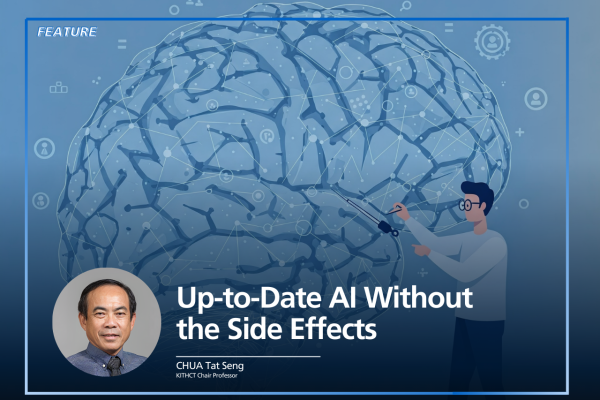
Professor Chua Tat Seng is a distinguished academic at the National University of Singapore's School of Computing, serving as KITHCT Chair Professor and Director of the NUS-Tsinghua Extreme Search Center (NExT). He also holds Distinguished Visiting Professorships at Tsinghua and Zhejiang Universities in China. PhD in Computer Science (University of Leeds, 1983) Founding Dean of School of Computing (1998-2000) Co-founded ViSenze and 6Estates technology startups His research focuses on unstructured multimodal data analytics, with particular emphasis on multimedia information retrieval, social media analytics, recommendation systems, and trustworthy AI. He has pioneered work in computational wellness and fintech applications, establishing the Lab for Media Search and leading NExT++ research initiatives. Over 300 publications in leading venues (CVPR, SIGIR, WWW, AAAI) Recipient of ACM SIGMM Technical Achievement Award (2015) Supervised 37 PhD students since 2004 Editorial leadership in ACM Transactions and IEEE Multimedia Recent work explores multimodal LLMs, knowledge editing techniques (AlphaEdit), and 3D generation frameworks, reflecting his commitment to advancing web intelligence and user empowerment.
Professor Toh Kim Chuan is the Leo Tan Professor in Science and serves as Research Director (Technical) at the Institute of Operations Research and Analytics (IORA) within the National University of Singapore (NUS). His primary affiliation is with the Department of Mathematics in the Faculty of Science. His research focuses on matrix optimization problems, large-scale semidefinite programming, fast algorithms for statistical and machine learning tasks, and iterative methods for solving large linear systems in optimization contexts. His recent work emphasizes contributions to nonsmooth nonconvex optimization, distributionally robust optimization, and scalable algorithms for sparse and low-rank optimization problems. Notable methodologies include Bregman proximal algorithms, adaptive sieving techniques, and inexact augmented Lagrangian methods. Professor Toh is also actively involved in developing computational tools like CDOpt for Riemannian optimization and frameworks for low-bit communication in distributed model training. While no specific awards are listed, his extensive publication record (over 150 papers from 2020-2025) demonstrates significant contributions to optimization theory and applications. His research bridges theoretical foundations with practical implementations, addressing challenges in large-scale systems, machine learning, and operations research.
Dr. Tay Seng Chuan is an Associate Professor in the Department of Physics at the National University of Singapore (NUS). He is also the Deputy Director of the Centre for Remote Imaging, Sensing and Processing (CRISP) since 2001. His roles include coordination of the SM2/SM3 Bridging Courses under the Office of the Provost and Warden at Ridge View Residences . PhD in Computer Science from NUS (1999) Master of Science in Computer and Information Sciences from NUS (1994) His research interests span Remote Sensing , Image Processing , Parallel Simulation , Performance Modeling , High Level Architecture (HLA), and Information Technology Applications . He has contributed to Parallel Discrete-Event Simulation , Performance Analysis , and IT in Education . His publications focus on Time Warp Algorithms , Distributed Simulation , Parallel Processing , and Java-based Educational Tools . He has received multiple Meritorious Teaching Awards from NUS. Meritorious Teaching Award (2000) Meritorious Teaching Award (1999) Science Teaching Award (1997) In administration , he has served as Deputy Director at CRISP, Head of Education Division at CITA (1998–2001), and Webmaster of the Physics Department (1996–2001). He has also supervised UROPS projects on topics like Memory Management for Parallel Simulation and Remote Sensing Data Processing .
Li-Shiuan Peh is a Provost's Chair Professor in the Department of Computer Science at the School of Computing, National University of Singapore (NUS) . She previously held faculty positions at MIT (2013-2016) and Princeton University (2002-2009), advancing from Assistant to full Professor. Education: B.S. from National University of Singapore (1995) Ph.D. from Stanford University (2001) Her research focuses on energy-efficient hardware systems , spanning neural network accelerators for edge computing , privacy-preserving embedded systems , on-chip communication networks , and hardware security . Current projects include AI-on-skin interfaces , secure Network-on-Chip (NoC) architectures , and low-power wearable sensors . Scientific Awards: IEEE Fellow (2017) National Research Foundation Returning Singaporean Scientist Award (2016) ACM Distinguished Scientist (2011) MICRO Hall of Fame Award (2011) National Science Foundation CAREER Award (2003) Her work has driven innovations in bufferless NoC architectures , collaborative traffic advisory systems , and laser attack benchmarks , with publications in top venues like DATE, NOCS, and DAC. She leads an interdisciplinary research group at NUS, advising graduate students in computer architecture and hardware security.
Associate Professor at the Department of Computer Science , School of Computing , National University of Singapore . Research focuses on systems-level optimization across hardware-software stacks, including GPU computing, memory systems, and approximate computing for deep learning. Dr.Eng.Sc. (University of Tsukuba, 1993) M.Sc. (NUS, 1991) B.Sc. (NUS, 1989) Research interests span computer architecture , compiler design , and embedded systems , with recent emphasis on precision analysis , variable precision arithmetic , and deep learning approximation using hardware accelerators . Publications reveal trends in GPU optimization, memory management for NAND flash, and fault-tolerant cloud-based GPU computing. Scientific Recognition: Best Paper Finalist at IEEE High Performance Extreme Computing Conference (HPEC) 2017 Professional memberships include ACM Member and IEEE Senior Member , with editorial contributions to Software Practice and Experience . Teaching experience includes courses like CS2100 Computer Organisation and CS5250 Advanced Operating Systems .
Gary Tan Soon Huat serves as Associate Professor (Educator Track) and Vice-Dean of Student Life at the National University of Singapore's School of Computing, Department of Computer Science. With over three decades of continuous service since 1990, he has established himself as a leading educator and researcher in parallel and distributed systems. His educational background includes a B.Sc (1st class Honours) from NUS, followed by M.Sc and Ph.D degrees from the University of Manchester, UK. As a pioneer in NUS's Direct Honours Programme, his academic journey reflects deep institutional commitment. Tan's research focuses on parallel and distributed computing , symbiotic simulation , and traffic and crisis management simulation . His work bridges theoretical computer science with practical applications in disaster response systems, where he develops frameworks that analyze real-life video feeds to model human movement during emergencies. This research has evolved from foundational work on High Level Architecture and Data Distribution Management to current innovations like the Conscious Movement Model (CMM) that extracts behavioral patterns from CCTV footage. His publication record spans nearly three decades, showing a clear evolution from neighborhood-based multiprocessor scheduling to sophisticated GPU-accelerated traffic simulations and crisis management frameworks. The research demonstrates consistent focus on distributed systems while adapting to emerging technologies like deep learning and GPU computing. ASIASIM FELLOW 2016 NUS Annual Teaching Excellence Awards (03/04, 04/05, 06/07) School Teaching Excellence Awards (1999, 2002, 2016) Faculty of Science Teaching Awards (1992, 1998) ATEA Honour Roll 2008 As an educator, Tan has supervised PhD candidates Wang Chengxin and Muhammad Shalihin bin Othman, focusing on pedestrian movement analysis during crises. His leadership extends beyond research to academic service, including roles as Program Chair of DSRT 2016, Conference Co-chair of SIMUTOOLS 2016, and President of both the Society of Simulation and Gaming of Singapore and the ASIASIM federation. His administrative contributions include serving as Master of Sheares Hall (2003-2013) and current Vice-Dean of Student Life. Tan leads the Modelling and Simulation Group within NUS's Computer Systems Lab, collaborating internationally with KTH (Sweden), FOI (Swedish Defence Research Agency), SMART, and Beihang University. His team's work bridges academic research with practical applications in transportation systems and emergency response planning.
Jialin Li is the Sung Kah Kay Assistant Professor at the School of Computing , National University of Singapore (NUS). They earned a PhD from the University of Washington under the advisement of Dan Ports and a bachelor's degree from the University of Michigan . Their research focuses on distributed systems and operating systems, particularly on co-designing systems with data center networks, data plane operating systems, and decentralized infrastructure. Research Interests : Distributed systems, network ordering, consensus algorithms, in-network processing, decentralized infrastructure, and programmable hardware. Awards : OSDI '14 Jay Lepreau Best Paper Award, NSDI '15 Best Paper Award. Students : Mentors PostDocs (Chaoyi Ruan), Graduate Students (Inho Choi, Yunfan Li, Ziji Shi, etc.), and Undergraduate Students (Mohsen Ghasemi, Akshaye Shenoi, etc.). Service : Conference Organizer (APSys '25 Program Co-Chair), Technical Committee for EuroSys, SOSP, NSDI, and others.
Associate Professor Ilya Sergey leads the Verified Systems Engineering (VERSE) lab at the School of Computing, National University of Singapore (NUS). He holds a PhD in Computer Science from KU Leuven and an MSc in Mathematics from Saint Petersburg State University. His research focuses on programming languages, software verification, distributed systems, and program synthesis. He is a recipient of the AITO Dahl-Nygaard Junior Prize (2019) and multiple ACM SIGPLAN Distinguished Paper Awards. His work includes developing the Scilla smart contract language and the Veil verification framework, emphasizing formal methods for ensuring software correctness. **Education**: PhD in Computer Science, KU Leuven, Belgium (2012) MSc in Mathematics and Computer Science, Saint Petersburg State University, Russia (2008) **Research Interests**: Design and Implementation of Programming Languages Formal Verification using Separation Logic Distributed Systems and Concurrency Program Synthesis and Automated Proof Repair **Recent Articles Trends**: His recent work emphasizes automated verification tools (e.g., Veil), exploit generation via synthesis, and compositional verification of Byzantine protocols. These contributions bridge foundational theory with practical applications in distributed systems and smart contracts. **Awards**: AITO Dahl-Nygaard Junior Prize (2019) ACM SIGPLAN Distinguished Paper Awards (PLDI'23, PLDI'21, POPL'19) Google, Facebook, and Amazon Research Awards **Advising & Grants**: He actively mentors PhD students in formal methods and verification. His grants include support from Google and industry partnerships. He organizes the ICFP Programming Contest and co-chairs ICFP'25. **Labs & Teams**: Leads the VERSE lab, part of the PLSE@NUS group, focusing on verified software systems and program synthesis.
Georg Weissenbacher is a Full Professor of Computer Science at Vienna University of Technology (TU Wien), working in the Institute of Logic and Computation within the Faculty of Informatics. He leads the Formal Methods in Systems Engineering research group and has established himself as a leading researcher in formal verification and automated reasoning. His educational background includes a DPhil from Oxford University (2008-2010), research at ETH Zürich (2005-2010), and a Master's degree from TU Graz (completed by 2003). He completed his Habilitation at TU Wien in 2016 with a thesis on Logical Methods in Automated Hardware and Software Verification. Weissenbacher's research focuses on developing automated tools for software and hardware verification, with particular emphasis on detecting and explaining bugs in complex systems. He is renowned for his work on heisenbugs - bugs that disappear when analyzed, which are particularly challenging in concurrent and multi-core systems. His research bridges theoretical foundations in logic with practical applications in software engineering, with significant contributions to interpolation-based verification techniques and SAT/SMT solving applications. His recent publications show a clear progression from traditional software verification toward emerging challenges in AI security, neural network verification, and sophisticated concurrency models. The research trajectory demonstrates increasing sophistication in handling complex systems properties, with a growing emphasis on probabilistic guarantees and formal methods applied to modern computing challenges. OOPSLA'18 Distinguished Paper Award for 'Randomized Testing of Distributed Systems with Probabilistic Guarantees' Weissenbacher has advised numerous PhD students and postdocs, including current researchers Mai AL-Zu'bi, Katalin Fazekas, and Sarah Sallinger. His research has been supported by significant grants including the Vienna Research Groups for Young Investigators (2011), the National Research Network 'Rigorous Systems Engineering' funded by FWF, and a Microsoft Research PhD Scholarship (2016). He actively contributes to the academic community through his service as co-chair for major conferences including CAV 2018 and FMCAD 2017. As leader of the FORSYTE research group at TU Wien, Weissenbacher oversees a vibrant research team working at the intersection of logic, verification, and practical software engineering challenges. The group is currently involved in the Doctoral College on Automated Reasoning, funded by FWF, which aims to train the next generation of researchers in this critical field.
Professor Zhang Hanqin is a faculty member at the Department of Analytics & Operations, National University of Singapore (NUS), affiliated with the Institute of Operations Research and Analytics (IORA), part of NUS’s Smart Nation Research Cluster. His research focuses on stochastic models, applied probability, algorithms in stochastic systems, supply chain management, and queueing theory. He has contributed extensively to optimization in inventory systems, manufacturing systems, and service operations. His work spans theoretical advancements and practical applications, including optimal staffing for queues, assemble-to-order systems, and quantity flexible contracts. Recent studies address time-varying queues, minimal phase-type distributions, and impulse control strategies. His research bridges stochastic processes, operations research, and applied mathematics with real-world systems. Key achievements include foundational contributions to diffusion approximations, Coxian representations, and policy design for complex systems. His articles often explore multi-source inventory systems, tandem queues, and expediting strategies, reflecting a deep engagement with both theoretical rigor and industrial relevance.