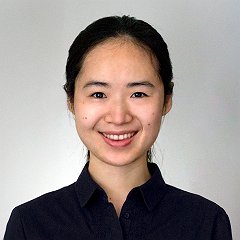
Jiasi Shen is an Assistant Professor in the Department of Computer Science and Engineering at The Hong Kong University of Science and Technology. She leads the HKUST Automated Reasoning and Transformation of Software research group. PhD and Master's from Massachusetts Institute of Technology Bachelor's from Peking University Her research focuses on automating software development through program analysis , program transformation , and active learning . She explores how to systematically introduce safety checks, optimize performance, and enable cross-platform adaptation while maintaining core functionality. Recent work includes: Dynamic graph-based fingerprinting for cryptomining detection Benchmarking LLMs for operating system verification tasks Improving program comprehension via deimplicitization techniques She has received the Distinguished Artifact Award at SLE 2017 and serves on program committees for OOPSLA, Onward!, and SPLASH conferences. Her group supervises multiple PhD and MPhil students while developing systems like Konure (database application modeling) and KumQuat (parallel Unix command synthesis).
Stephane Vialle is a researcher at CentraleSupélec, leading the Interdisciplinary Laboratory of Digital Sciences. His research focuses on High-Performance Computing (HPC), GPU Computing, Quantum Computing, and Quantum Machine Learning. He has extensive experience in developing scalable fine-grained computing environments and optimizing parallel algorithms for distributed systems. His work spans financial engineering, energy management, and railway infrastructure through digital twin technology. Recent contributions include advancements in GPU cluster energy efficiency, stochastic control algorithms, and hybrid classical-quantum architectures for data clustering. Research interests emphasize optimizing parallel computing frameworks for diverse applications, including financial modeling, material science simulations, and transportation systems. His publications demonstrate expertise in distributed computing, fault-tolerant architectures, and algorithmic innovation across multiple computational paradigms. Current projects explore quantum computing integration with classical systems, GPU-based large-scale data processing, and real-world applications of parallel simulation techniques. Notable contributions include the parXXL development environment for coarse-grained platforms and the MINERVE digital twin for railway infrastructure management. His work bridges theoretical computing advancements with practical implementations in engineering and finance domains.
Koléhè Coulibaly-Pasquier is a Lecturer at University of Lorraine, affiliated with Polytech Nancy within the Faculty of Science and Technology. He is a member of the Probability and Statistics research team at IECL (Institut Élie Cartan de Lorraine) in Nancy, France, where he maintains office 211 at the Campus on Boulevard des Aiguillettes in Vandœuvre-lès-Nancy. His research spans several interconnected areas in stochastic analysis and differential geometry, with primary focus on stochastic processes , geometric flows , Markov interlacing , and cut-off phenomena . His work frequently explores the intersection of probability theory with Riemannian geometry, particularly investigating Brownian motion behavior under time-changing metrics and its applications to Ricci flow. His research demonstrates strong continuity in examining geometric-flavored stochastic processes with connections to mean curvature flow and domain evolution on manifolds. Analysis of his publication history from 2008-2024 reveals an evolving research trajectory that began with foundational work on time-dependent Brownian motion and Ricci flow, then progressed into dual processes on manifolds, and most recently has focused on high-dimensional cut-off phenomena and stochastic mean curvature flow. His work consistently combines deep theoretical insights with geometric intuition, often revealing surprising connections between seemingly disparate mathematical concepts. The majority of his publications involve collaboration with Marc Arnaudon and Laurent Miclo, indicating a strong, sustained research partnership. While no specific scientific awards are mentioned in the available information, his publication record in prestigious journals like Annals of Probability , Electronic Journal of Probability , and Bernoulli demonstrates significant scholarly recognition. His work has appeared in both specialized probability journals and broader mathematical publications, indicating cross-disciplinary relevance. Coulibaly-Pasquier's research involves substantial collaboration, particularly with Marc Arnaudon and Laurent Miclo, with whom he has co-authored numerous papers across different mathematical subfields. His work appears to be supported by institutional affiliations rather than specific named grants mentioned in the text. The IECL research environment, particularly the Probability and Statistics team, provides the primary research context for his activities. His research includes significant computational and simulation components, as evidenced by references to video simulations showing the evolution of dual processes for Brownian motion on various domains and manifolds. These visualizations illustrate theoretical results about asymptotic convergence, domain evolution, and volume behavior as time-changed Bessel processes. The IECL's SIMBA, SPHINX, and PASTA research teams likely provide additional collaborative context for his work.
Jolan PHILIPPE is a Lecturer at University of Orléans affiliated with LMV research laboratory, and currently holds a postdoctoral position at Université de Rennes in the DiverSE team under the supervision of Olivier Barais. His research focuses on Infrastructure as Code (IaC) and distributed systems reconfiguration, with particular emphasis on formal methods and model-driven approaches. His primary research interests include: Distributed Systems and Cloud Computing Infrastructure as Code (IaC) and DevOps Model Driven Engineering Formal Methods and Verification Parallel and Distributed Programming Algorithmic Skeletons Dr. PHILIPPE's work demonstrates a strong trajectory from foundational research in parallel programming models (particularly through his work on PySke) to applied research in distributed system reconfiguration. His recent publications show increasing focus on formal approaches to infrastructure management, with significant contributions to languages like Concerto-D and frameworks like Ballet for cross-DevOps reconfiguration. His research bridges theoretical computer science (formal methods, verification) with practical cloud infrastructure concerns. He is actively supervising two PhD candidates: Haitam El Hayani (Taranis project, 2024-2027) - Extending Infrastructure as Code (IaC) languages, focusing on enhancing capabilities and integration with modern cloud deployment practices Olivia Proust (For-Coala project, 2025-2028) - Towards formally verified configuration management languages Dr. PHILIPPE is deeply involved in research coordination: Coordinator of the "Défi GDR GPL" (challenge) ADDYCT (ADaptation DYnamique et ConTinue) for 2026-2030 One of the leaders of the GDR GPL's GT SyLA (Groupe de Travail - Système Logiciel Adaptable) since February 2025 Helped organize the VELVET (Verification and Software Engineering for DevOps and Reconfiguration) days in Nantes, December 2023 His service to the academic community includes: Program Committee Member for DebConf 2025, ICCS 2025, LowCode@MODELS 2025 Publicity Chair and Program Committee Member for UCC 2025 and BDCAT 2025 Reviewer for journals (COLA, SoSyM) and multiple international conferences
Vincent Danjean is an associate professor at Grenoble Alpes University , specializing in parallel computing, high-performance computing, and bioinformatics. He earned his PhD in 2004 from École Normale Supérieure de Lyon under the supervision of Raymond Namyst. Research Interests: Vincent's work spans several critical areas in computational science: Parallel and Distributed Systems: Focus on task-based parallelism and hybrid cluster architectures. Performance Analysis: Development of visual frameworks for analyzing parallel applications. Bioinformatics: Application of computational methods to genetic and genomic data analysis. GPU Computing: Efficient scheduling and work stealing strategies for multi-GPU systems. Reproducible Research: Workflows using Git and Org-mode for scientific transparency. Publication Trends: His publications demonstrate a consistent focus on advancing parallel computing techniques, with significant contributions to GPU scheduling, cache-efficient algorithms, and visualization tools. Recent work includes interdisciplinary applications in genomics and cybersecurity protocols. Contact: vincent.danjean@imag.fr
Remy Dupas is a Professor at the University of Bordeaux , affiliated with the IMS Bordeaux - Integration, Material to System Laboratory within the Production Engineering research group. His work focuses on Operations Research , Logistics , and Transportation Systems , developing advanced algorithms for complex routing and supply chain optimization problems. Research Highlights: Innovative Branch-Cut-and-Price algorithms for Two-Echelon Vehicle Routing Problems with drones and time windows City Logistics models for sustainable urban freight distribution in Tokyo MultiAgent Systems for supply chain coordination 3D Loading Constraints integration in pickup-and-delivery problem solving Rail-Rail Transshipment scheduling methodologies Key Publications (2024-2007) demonstrate expertise in Combinatorial Optimization , Dynamic Routing , and Interoperability Metrics for enterprise systems. His research is characterized by strong Algorithm Development and Real-Time Transportation solutions.
Dr. Michael Berhanu is a Senior CNRS researcher at the Laboratory Matières et Systèmes Complexes (MSC) within Université Paris Cité, where he has been working since 2010. Previously a CNRS researcher at the same institution (2010-2024), he specializes in fundamental aspects of non-linear physics and out-of-equilibrium systems, with particular focus on fluid mechanics problems related to environmental and natural phenomena across various scales. He earned his PhD in Physics from the École Normale Supérieure in 2008, with his thesis titled 'Turbulent Magnetohydrodynamics in liquid metals' supervised by Professors Stéphan Fauve and Nicolas Mordant. Prior to this, he completed a Master's degree in Physics from the École Normale Supérieure de Lyon in 2005. Between 2008 and 2010, he served as a Postdoctoral Researcher at Clark University, Massachusetts, USA, working in the Complex Matter and Nonlinear Physics Laboratory under Arshad Kudrolli. In December 2020, he successfully defended his habilitation thesis on 'Wave interactions and wave turbulence in presence of dissipation'. Dr. Berhanu's research spans multiple interconnected domains within fluid mechanics and non-linear physics. His primary focus areas include hydrodynamics of erosion by dissolution with applications to geomorphology, gravity-capillary surface waves and wave turbulence phenomena, turbulence in free surface flows, granular gas of magnetized particles as models for out-of-equilibrium statistical physics, and surface wave generation by underwater moving bottoms. His work often bridges laboratory experiments with natural phenomena, creating valuable analogs for understanding complex environmental processes. Notably, he has conducted research on capillary waves in microgravity as part of experiments aboard the International Space Station. Analysis of his recent publications reveals a consistent focus on wave dynamics, fluid-structure interactions, and pattern formation in natural systems. His work demonstrates strong interdisciplinary connections between fluid mechanics, statistical physics, and geophysical processes. He frequently employs experimental approaches combined with theoretical modeling to investigate nonlinear phenomena, with particular attention to dissipation effects and non-equilibrium dynamics. His research has important implications for understanding natural phenomena ranging from erosion patterns to wave dynamics in various environmental contexts. Dr. Berhanu actively participates in scientific outreach, including talks for physics teachers, presentations at the Pint of Science festival, and leadership in the French Physicists' Tournament. He has also organized professional development sessions for high school teachers and regularly participates in the 'Fête de la Science' events. His laboratory, MSC, is part of Université Paris Cité, which was formed in 2020 through the merger of University Paris Diderot and University Paris Descartes.
MALAK Derya is an Assistant Professor at EURECOM's Communication Systems department, specializing in networked distributed computing systems. Her research focuses on optimizing communication and computation trade-offs in networks, with a strong emphasis on network coding, information theory, and wireless communication systems. She holds a dual role in advancing theoretical foundations and practical implementations of distributed computing frameworks. Dr. Malak has received prestigious recognitions, including the Best Paper Awards at WiOpt 2023 and WIOPT 2022 for her work on content distribution optimization and random access protocols. Her research explores cutting-edge topics such as non-linear function computation, structured coding for matrix operations, and congestion-aware job scheduling in real-time systems. Key Research Areas: Distributed Algorithms, Network Coding, Machine Learning Systems, Wireless HetNets, and Multi-Server Architectures Awards: WiOpt 2023 Best Paper, WIOPT 2022 Best Paper Professional Activities: Invited speaker at major conferences and workshops, including the National Center on Networks and Systems for Digital Transformation Her work bridges theoretical insights with practical engineering solutions, addressing critical challenges in modern distributed and networked systems.
Dmitriy Traytel is an Associate Professor at the Department of Computer Science (DIKU), Faculty of Science, University of Copenhagen, where he leads the Software, Data, People & Society (SDPS) section. He earned his PhD from TU München under the supervision of Tobias Nipkow in 2015 and previously held a senior researcher position at ETH Zürich's Information Security Group. His primary research interests include interactive theorem proving, runtime verification, logic, automata, decision procedures, and coinduction. He works extensively with the Isabelle/HOL proof assistant, developing foundational theories and verified tools. His work bridges theoretical logic and practical system verification, focusing on correctness, expressiveness, and scalability. The recent publications highlight a strong focus on verified runtime monitoring, formalization of logical systems, and efficient query evaluation. Key themes include the development of formally verified monitoring tools (e.g., TimelyMon, WhyMon, VeriMon), foundational work on corecursion and datatypes in Isabelle, and translations of logical formalisms into executable and verifiable code. Several publications have received distinguished paper awards, indicating high impact in the programming languages and verification communities. Distinguished Paper Award, POPL 2025: 'Barendregt Convenes with Knaster and Tarski: Strong Rule Induction for Syntax with Bindings' Distinguished Paper Award, POPL 2023: 'Admissible Types-to-PERs Relativization in Higher-Order Logic' Distinguished Paper Award, ATVA 2018: 'Optimal Proofs for Linear Temporal Logic on Lasso Words' Best Student Paper Award, FSCD 2016: 'Formal Languages, Formally and Coinductively' Traytel has (co)supervised numerous PhD, MSc, and BSc students, many of whose projects contribute directly to his research agenda in verified systems and formal methods. He is actively involved in the academic community, serving on program committees for POPL, ITP, RV, and CPP, and has chaired conferences such as CPP 2023 and 2024. His tools, including TimelyMon, VeriMon, and WhyMon, are practical outcomes of his research, enabling scalable, explainable, and trustworthy runtime verification. He leads a research group focused on trustworthy stream processing, distributed streaming computations, and explainable monitoring. His work often involves collaboration with researchers at ETH Zürich and other institutions, particularly in the areas of security and monitoring.
Cyril RANDRIAMARO is a Lecturer at the University of Picardie Jules Verne (UPJV), affiliated with the Algorithmic and Complexity (ALCO) research domain. His work focuses on distributed systems and parallel computing paradigms. Research Interests: Dr. RANDRIAMARO's expertise spans distributed storage architectures, peer-to-peer (P2P) network optimization, fault-tolerant systems, and parallel algorithm design. Key areas include dynamic data distribution strategies, cluster I/O performance enhancement, and efficient scheduling methods for block-cyclic array redistribution in high-performance computing environments. Publications: His 15 most recent articles (1996-2010) demonstrate a consistent focus on scalable distributed systems. Major themes include P2P storage resilience, parallel computation scheduling, and cluster I/O optimization, reflecting deep engagement with reliability engineering and performance tuning in networked environments. Affiliations: Historical associations include contributions to the Laboratoire de l’Informatique du Parallélisme (LIP), evidenced in his 1998 publication. No awards, student advisories, or part-time status are documented.
Arthur Fages is an Associate Professor of Computer Science at Université de Toulouse and a member of the ELIPSE team at IRIT. His research focuses on developing novel interaction techniques using Mixed Reality technologies to enhance collaboration in multi-display environments. Previously, he was a postdoctoral researcher at LISN and earned his PhD from Université Paris-Saclay on collaborative design in augmented reality. His investigations bridge augmented reality and desktop interfaces to support remote teamwork, exploring workspace representations and viewpoint management. He has developed frameworks like ARgus to facilitate multi-view collaboration between AR headset users and traditional desktop environments. Fages teaches courses ranging from Human-Computer Interaction to Object-Oriented Programming, covering both undergraduate and graduate levels. His technical expertise includes motion capture, 3D scanning, and tangible user interfaces for immersive applications.
Prof. Gael Thomas is a Professor at Telecom SudParis, focusing on distributed systems, operating systems, and high-performance computing. His work emphasizes virtualization, concurrency control, and secure execution environments. He has contributed extensively to projects like VMKit, I-JVM, and J-NVM, addressing challenges in garbage collection, system scalability, and trusted computing. His research interests include: Virtualization techniques for improved system isolation Optimizing garbage collectors for multicore architectures Trusted execution environments using SGX and HTM Performance analysis of MPI/OpenMP applications Notable contributions: Developed PALLAS trace format for HPC analysis (2025) Created NVCache for NVMM-based I/O optimization (2021) Pioneered secure code partitioning techniques (2023-2024) His work has been presented at top conferences including EuroSys, Middleware, and DSN.
Giovanni Neglia is a Research Director (DR2) at Inria, affiliated with the NEO team and the 3IA Côte d'Azur Chair, focusing on performance evaluation of distributed systems, cache networks, and large-scale machine learning. He is based in Sophia Antipolis, France. Inria, Sophia Antipolis NEO Team 3IA Côte d'Azur Chair His research interests center on distributed systems, leveraging mathematical tools such as Markov processes, control theory, fluid models, and game theory. Key areas include caching policies, distributed optimization for machine learning, and performance modeling of networks. He has previously worked on P2P networks, delay tolerant networks, smart grids, and complex networks. Recent publications demonstrate a strong focus on similarity caching, federated learning, and distributed optimization. Trends include developing online learning algorithms for caching, improving privacy and efficiency in federated systems, and optimizing content delivery in 5G and small cell networks. Best paper award at ITC-33 IEEE Infocom Distinguished TPC member (2017, 2018, 2022) Best paper award at ITC28 2016 Best paper award at IEEE Online Greencomm 2014 Best paper award at IEEE Infocom NetSciCom 2014 Best paper award at IEEE VTC2013-Spring Best student paper award at VALUETOOLS 2012 Best paper award at BIONETICS 2007 Giovanni Neglia leads the Fed-Malin Inria challenge on federated machine learning and has secured grants including a 3IA Côte d'Azur chair for PERUSALS (Pervasive Sustainable Learning Systems). He advises PhD students such as Othmane Marfoq and Chuan Xu, and collaborates with Accenture Labs, SAP, and Nokia Bell Labs. He has organized winter schools and tutorials on complex networks and similarity caching. He leads the NEO team and previously led the Maestro team. He is involved in the joint Brazilian-French research team Thanes on network science and has served on numerous technical program committees for major conferences including IEEE Infocom, INFOCOM, and SIGMETRICS.
Gilles DEQUEN is a University Professor at Université de Picardie Jules Verne (UPJV), specifically affiliated with the Computer Science Department within the Faculty of Science. His research domain focuses on Optimization and Cryptography, AI - OCIA (Optimization, Cryptography and Artificial Intelligence), as indicated in his institutional profile. His work spans theoretical computer science with practical applications in healthcare, blockchain technology, and privacy-preserving systems. Professor DEQUEN's research interests are diverse yet interconnected, focusing primarily on cryptographic algorithms, blockchain consensus mechanisms, and artificial intelligence applications in healthcare. His work in cryptography includes lattice-based cryptography, SAT solving for cryptographic attacks, and post-quantum cryptographic techniques. In blockchain research, he has made significant contributions to PBFT consensus protocols, particularly for IoT applications and distributed ledger consistency. His healthcare applications span emergency medicine predictive modeling, autism spectrum disorder diagnosis using eye-tracking and machine learning, and privacy-preserving techniques for medical data. His publication record demonstrates a clear trend toward interdisciplinary research, increasingly bridging computer science with healthcare applications. While maintaining strong theoretical foundations in cryptography and optimization, his recent work (2023-2025) shows a pronounced shift toward explainable AI in medical contexts, privacy-preserving healthcare analytics, and ethical considerations in AI deployment. His publications consistently address real-world challenges in data privacy, system scalability, and clinical decision support. Professor DEQUEN actively collaborates across disciplinary boundaries, working with medical researchers, computer scientists, and data privacy specialists. His research group OCIA appears to serve as a hub for interdisciplinary projects that combine theoretical computer science with practical applications in healthcare and distributed systems. The team has secured funding for projects including BforSAT, VERTPOM, and SmartAngel, which focus on SAT solving, privacy-preserving technologies, and healthcare AI applications respectively.
Gil UTARD is a University Professor at Université de Picardie Jules Verne (UPJV), specializing in Networks and Data. His research spans from foundational work in parallel computing and distributed systems to cutting-edge applications in medical IoT security and blockchain technology. Research Focus: Professor Utard's work has evolved significantly over three decades, beginning with fundamental research in parallel computing architectures and matrix operations. His early contributions include developing efficient out-of-core algorithms for large-scale matrix computations and pioneering work in data-parallel program validation. More recently, his research has pivoted toward critical applications in healthcare technology, specifically securing medical Internet of Things (IoT) devices through innovative blockchain implementations and advanced cryptographic protocols. Research Areas: Distributed Systems and Peer-to-Peer Networks Medical IoT Security and Privacy Blockchain Technology for Healthcare Parallel and High-Performance Computing Large-scale Data Storage and Management Cryptographic Protocols for Secure Data Sharing Research Evolution: His publication trajectory demonstrates a clear evolution from theoretical computer science foundations to practical security applications. The 2000-2010 period focused on parallel computing fundamentals, particularly matrix operations and storage systems. The 2011-2020 period saw expansion into peer-to-peer storage systems and distributed architectures. The 2021-present period represents a dramatic shift toward medical applications, with 70% of recent publications addressing healthcare-specific security challenges. Laboratory Affiliation: Professor Utard is associated with the Networks and Data domain within UPJV's research structure, though specific laboratory details are not provided in the source material.