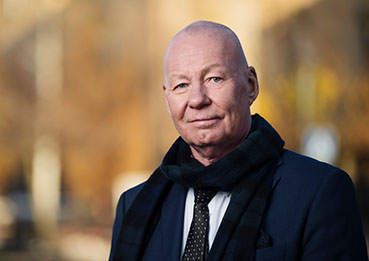
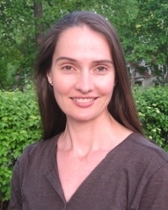
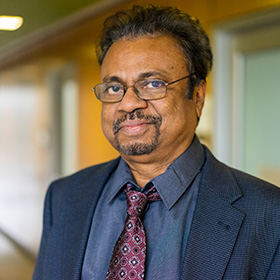
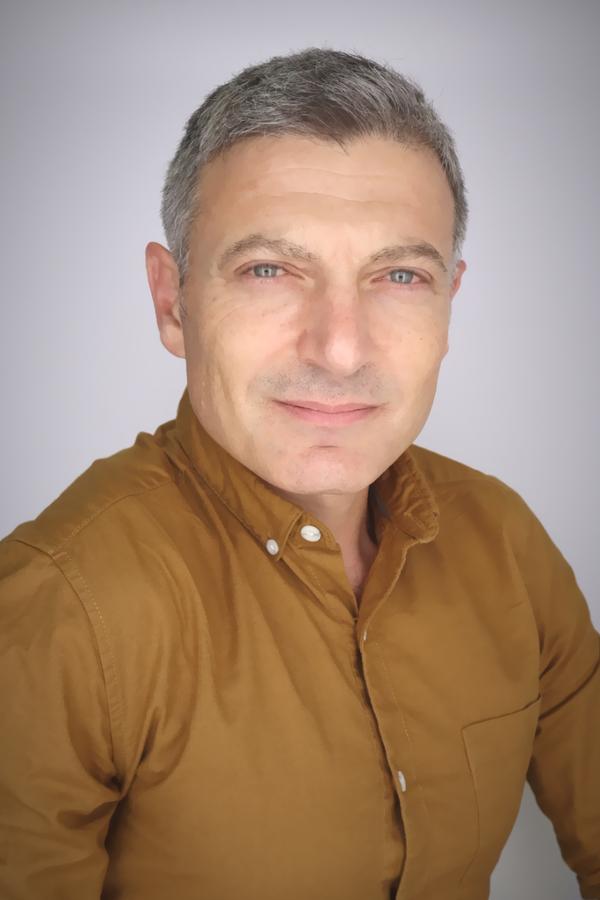
Matthew Potolsky is Professor of English at the University of Utah, specializing in nineteenth-century literature and literary theory. His career spans from 1998 Lecturer at Harvard University to current University Professorship. He earned a BA in Comparative Literature and Philosophy (1990), followed by MA and PhD in Comparative Literature (1992, 1997) from UC Irvine. Chair of English Department (2013-2016) University Professor (2014-2016) Research focuses on Decadence , Mimesis , Finance-Aesthetics intersections , and Government Secrecy . His work traces connections between financialization and decadent aesthetics, revealing how economic cycles influence artistic production. Key themes include: Decadent anti-realist literary movements Finance capital's cultural impact Decadent counterpublic formations Victorian aesthetic education debates Sublime aesthetics in national security Cosmopolitanism in literary communities Recent publications analyze: Decadent style as financialization rhetoric Reintroduction of verisimilitude theory Decadent responses to financial crises Mimetic labor in artistic production Decadent cosmopolitan counterpublics Historical parallels between financialization and literary decadence
Rosa Andujar is a Senior Lecturer in Liberal Arts at King's College London, where she is affiliated with both the Department of Liberal Arts and the Department of Classics within the Faculty of Arts & Humanities. She serves as Editor of the American Journal of Philology and holds positions on the editorial boards of Brazilian journals Nuntius Antiquus and PhaoS - Revista de Estudos Clássicos. Dr. Andujar was elected to the Program Committee of the Society for Classical Studies for a three-year term (2022-2025), serving as Vice President for Program and Chair from 2023-2025. Her research focuses on two complementary areas: Ancient Greek tragedy, particularly the tragic chorus and its performance capabilities Global receptions of Greek drama, with special emphasis on Latin America and the Caribbean Dr. Andujar's work examines how engagements with Graeco-Roman antiquity intersect with questions of gender, race, class, and national identity. She has particular expertise in Cuban adaptations of Greek tragedy and Latinx receptions of classical drama, exploring how these cultural encounters create new narratives that challenge traditional understandings of classical reception. Her research has been recognized with prestigious awards including the 2020 London Hellenic Prize for 'The Greek Trilogy of Luis Alfaro' and the 2022 AJP Best Article Prize. She has secured significant research funding from the Loeb Classical Library Foundation, British Academy, A. G. Leventis Foundation, Harvard Center for Hellenic Studies, Andrew W. Mellon Foundation, and Fundación BBVA. Dr. Andujar's current research projects include 'The Cambridge Companion to Classics and Race' (edited volume), 'La Puerta Electra/The Electra Door' (critical bilingual anthology of Cuban rewritings), and 'Tragedy and Revolución' (monograph on Greek drama in Caribbean cultural history), supported by recent fellowships from the Loeb Classical Library Foundation and British Academy. She is actively involved in academic service as Editor of the American Journal of Philology, co-editor of the 'Classics and the Postcolonial' book series for Routledge, and Advisory Board member of 'Hesperides: Classics in the Luso-Hispanic World.' Her external examining work for the University of Birmingham (2018-2023) demonstrates her commitment to academic standards across institutions.
Professor Omer Rana serves as Professor of Performance Engineering and International Dean for the Middle East at Cardiff University's School of Computer Science and Informatics. He also holds the prestigious position of Cross-Council Research Director for the UK National Edge AI Hub, demonstrating his leadership in national research initiatives. Previously, he led the Complex Systems research group and served as Dean of International for the Physical Sciences and Engineering College at Cardiff University. Professor Rana is a Fellow of both the Learned Society of Wales and the Higher Education Academy, and serves on the Advisory Board of the Welsh Ethnic Minority Professors Initiative (WEMPI). His research expertise centers on the intersection of intelligent systems and high performance distributed computing, with particular focus on applying intelligent techniques to resource management in distributed systems. His scholarly contributions span edge computing, cloud computing, Internet of Things (IoT), artificial intelligence, cybersecurity, federated learning, privacy-preserving systems, and sustainable computing. Professor Rana has published extensively in top-tier journals and conferences, with recent work emphasizing practical applications in industrial automation, smart buildings, and sustainable computing solutions. Professor Rana's publication record demonstrates consistent leadership in edge computing and distributed systems research, with a growing emphasis on practical implementations across diverse application domains. His work bridges theoretical computer science with real-world technological challenges, particularly in industrial automation, smart environments, and sustainable infrastructure. Fellow of the Learned Society of Wales Fellow of the Higher Education Academy Professor Rana actively supervises postgraduate students and has secured significant research funding for projects related to edge computing, IoT, and distributed systems. His international collaborations span Europe, Asia, and the Middle East, reflecting his global influence in the field. He serves as a sought-after keynote speaker, workshop chair, and panel moderator at major international conferences including IEEE/ACM Utility and Cloud Computing (UCC) and IEEE Edge Computing. He leads multiple research initiatives, most notably as Cross-Council Research Director for the UK National Edge AI Hub, where he shapes national research directions in edge computing and AI. His work has practical applications across industrial automation, smart building management, electric vehicle infrastructure, and sustainable computing solutions.
Jan de Gier is a Professor at the School of Mathematics and Statistics, The University of Melbourne . He is also the Founding Director of MATRIX , Australia’s residential research institute in the mathematical sciences, and a former Deputy Director and Chief Investigator in the Australian Research Council Centre of Excellence for Mathematical and Statistical Frontiers (ACEMS) . Additionally, he co-founded the Australian and New Zealand Association for Mathematical Physics (ANZAMP) in 2011 and served as its inaugural Chair. His research focuses on solvable lattice models at the intersection of mathematical physics and statistical mechanics . Key areas include the application of quantum integrability , algebraic structures like the Yang-Baxter equation, Hecke algebras, and quantum groups, as well as analytical methods such as complex analysis and elliptic curves. His work bridges pure and applied mathematics through connections between enumerative combinatorics , representation theory , and real-world phenomena like traffic flow modeling via exclusion processes . The 15 most recent articles reflect his expertise in integrable systems , non-equilibrium statistical mechanics , and algebraic combinatorics . Topics span Macdonald polynomials , stochastic duality , quantum spin chains , and traffic modeling , with methodologies involving matrix product forms , exact solutions , and critical phenomena analysis. He has contributed to editorial efforts through the AustMS Gazette and MATRIX Annals, and has been involved in public science communication via opinion pieces on mathematics funding and applications. His work emphasizes the importance of fundamental research in driving technological innovation, as highlighted in media articles discussing pi calculation , zero-knowledge proofs , and mathematics education .
Aniello Murano is a Professor of Computer Science at the Department of Electrical Engineering and Information Technologies , University of Naples Federico II. He serves as Scientific Director of the ASTREA (Automated Strategic Reasoning) Laboratory and leads cutting-edge research in Artificial Intelligence, Strategic Reasoning, Multi-Agent Systems , and Formal Verification . Research Interests : Strategic reasoning under perfect/imperfect information, specification/verification/synthesis of reactive systems, temporal/modal logics, automata theory, parity games, game theory, mechanism design, and formal languages. Notable Projects : PNRR Research Unit Coordinator (2023-2025) on Resilient AI, PRIN 2020 Unit Coordinator (RIPER: Resilient AI-Based Self-Programming and Strategic Reasoning), H2020-MSCA SEAL (Principal Coordinator). Awards & Honors : JPMorgan Faculty Research Award (2022), Royal Society Award (2016), Best Paper PRIMA (2015), INDAM Project Leader (2023), Italian Scientific Habilitation (2017-2018). Students & Postdocs : Supervised 6 PhD students (e.g., Silvia Stranieri, Vadim Malvone) and mentored postdocs such as Munyque Mittelmann and Bastien Maubert. Laboratory : Leads ASTREA Lab, focusing on automated strategic reasoning and resilient AI systems.
Dr. Yiran Chen is the John Cocke Distinguished Professor at Duke University's Department of Electrical and Computer Engineering, leading the NSF AI Institute for Edge Computing (Athena) and the Duke Center for Computational Evolutionary Intelligence (DCEI). A global leader in neuromorphic computing, emerging memory systems, and edge AI, he holds prestigious roles including IEEE Fellow and Editor-in-Chief of IEEE Transactions on Circuits and Systems for AI. His research spans machine learning accelerators, security-hardened hardware, and co-design of EDA tools with LLMs. With over 700 publications and 96 patents, he has been awarded 15 paper awards and 17 nominations, including rare Technical Achievement Awards from IEEE societies. He advises over 60 PhD students and 4 postdocs, many of whom hold academic positions worldwide. His work bridges academia and industry, contributing to startups and venture capital through his board roles. Education: B.S. (Tsinghua, 1998) → M.S. (Tsinghua, 2001) → Ph.D. (Purdue, 2005). Career path: Assistant/Associate Professor at University of Pittsburgh (2010–2014) → Duke since 2014. Awards include the ACM SIGDA Outstanding New Faculty Award (2014), NSF CAREER Award (2013), and the Stansell Family Distinguished Research Award (2022). Research focuses on innovations in: (1) Non-volatile memory architectures for AI acceleration, (2) Hardware-software co-design for edge computing, (3) Security in neuromorphic systems, and (4) Large-scale ML for EDA. His group pioneered ReRAM-based accelerators like ReBNN and MARC, and introduced novel edge AI frameworks like Ecco and Prosperity. These works address scalability, energy efficiency, and real-time performance challenges. Key initiatives include the NSF IUCRC for Alternative Sustainable & Intelligent Computing (ASIC), advancing sustainable computing through novel materials and architectures. His leadership in standard-setting bodies like the IEEE Circuits and Systems Society ensures cutting-edge research translates into industry practices. Grants: Lead PIs for multiple NSF AI Institutes and industry partnerships. Labs: Directs the Athena Institute and DCEI, fostering collaboration between academia and industry. Current projects include quantum computing placement algorithms (QPlacer), federated learning frameworks (FedGPT), and neuro-symbolic architectures.
Xiao-Yu Cao is an associate professor at the School of Chemistry and Chemical Engineering , Xiamen University , China, where he has been based since February 2011. His expertise bridges supramolecular chemistry, organic materials, and organometallic systems, with a focus on self-assembly, conjugated architectures, and their optoelectronic or biological applications. Education: 2011.02–present Associate Professor, Xiamen University, School of Chemistry and Chemical Engineering 2008.12–2011.02 Marie Curie Fellow, University of Eindhoven, Department of Biomedical Engineering (supervisor: Prof. Bert Meijer) 2004.09–2009.12 Ph.D. studies, University of Strasbourg, Institute of Supramolecular Science and Engineering (mentor: Prof. Jean-Marie Lehn) 2003.07–2004.09 Research Assistant, Peking University, School of Chemistry and Molecular Engineering (mentor: Prof. Jian Pei) 1999.09–2003.07 B.Sc., Peking University, School of Chemistry and Molecular Engineering Research Interests: Dr. Cao’s research integrates supramolecular chemistry with materials science . He designs self-assembling systems driven by dynamic covalent bonds, metal coordination, and hydrogen bonding to construct functional architectures. A parallel stream focuses on conjugated organic materials —including BN-embedded heterosuperbenzenes and corannulene derivatives—for applications in photoelectrodes, organic field-effect transistors, and solar cells. Additionally, he explores organometallic aromatic systems built around osmium, elucidating their bonding, reactivity, and electronic properties. Publication Profile: Across 2013–2023, Dr. Cao has co-authored >15 high-impact articles in journals such as Nature Communications , Journal of the American Chemical Society , Angewandte Chemie , and Chemical Science Reviews . His work advances three synergistic themes: (1) supramolecular assembly —from grid-like metallo-architectures to chiral polyhedra; (2) organic semiconductors —delivering record electron mobilities and non-fullerene acceptors; and (3) organometallic chemistry —mapping the landscape of osmacycles and metallabenzenes. These studies combine synthetic innovation with detailed structural, spectroscopic, and device characterization. Scientific Awards: Marie Curie Fellowship (European Commission, 2008–2011) Advising & Grants: While the provided text does not enumerate specific doctoral or master’s students, Dr. Cao’s active publication record—often with graduate-student co-authors—indicates ongoing research supervision. Grant details are not disclosed. Laboratory & Teams: Dr. Cao leads projects within the Supramolecular and Materials Chemistry group at Xiamen University. The team leverages state-of-the-art synthetic, spectroscopic, and device-testing facilities to pursue interdisciplinary research spanning chemistry, materials science, and nanotechnology.
Anders Söderholm serves as the Vice-Chancellor (Rektor) of KTH Royal Institute of Technology, Sweden's leading technical university. His leadership spans academic, research, and strategic domains with a strong focus on positioning KTH as a key player in addressing global challenges through technology and innovation. Recent initiatives highlight his emphasis on AI ethics, quantum technology development, and sustainability research. Söderholm's research interests center on academic leadership, organizational theory, and project management, with particular focus on temporary organizations and the 'projectified society.' His work bridges theoretical frameworks with practical applications in higher education governance and research policy. He has significantly contributed to the Scandinavian school of project management research, exploring how organizations navigate complexity through temporary structures. Analysis of his recent publications reveals a clear trajectory from theoretical explorations of project management toward practical applications in higher education leadership. His scholarship demonstrates increasing engagement with the challenges of university governance in an era of rapid technological change, particularly around AI implementation and international research collaboration. The interdisciplinary nature of his work connects organizational theory with practical leadership challenges in academic settings. Söderholm actively engages in national policy discussions, having contributed to debates about university associations, research funding models, and international collaborations, particularly regarding China. His leadership extends to fostering partnerships with industry and other academic institutions, as evidenced by initiatives with Chalmers University of Technology. As Vice-Chancellor, Söderholm oversees KTH's strategic direction, which includes significant investments in research infrastructure, educational innovation, and international collaboration. His leadership approach emphasizes the university's role in societal development, technological advancement, and democratic values, while navigating the complex landscape of research funding and academic autonomy.
Vinay Lal is Professor of History and Asian American Studies at the University of California, Los Angeles (UCLA), where he has been teaching since Fall 1993. He holds a joint appointment in the Department of History and the Asian American Studies Department. Born in Delhi and raised across multiple countries including India, Indonesia, Japan, and the United States, Lal brings a global perspective to his scholarship and teaching. His educational journey began at Johns Hopkins University, where he earned both his B.A. (1982) and M.A. (1982) from the Humanities Center with concentrations in literature, history, and philosophy. He then studied film in Australia and India on a Thomas J. Watson Fellowship before pursuing his Ph.D. at the University of Chicago's Department of South Asian Languages and Civilizations, which he completed with Distinction in 1992. His dissertation, 'Committees of Inquiry and Discourses of 'Law and Order' in Twentieth-Century British India', received the Marc Galler Award for the best dissertation in the Division of the Humanities at the University of Chicago. Lal's research spans an extraordinary breadth of intellectual interests, with primary focus on Indian history, historiography, public and popular culture in India, the Indian diaspora, colonialism, human rights, American politics, the architecture of nonviolence, Gandhi studies, and the global politics of knowledge systems. His work consistently challenges conventional disciplinary boundaries, engaging with topics ranging from the politics of religion and ethnicity in South Asia to the moral and political thought of Mohandas Gandhi, from the partition of India to the intersection of history and popular cinema. His scholarship reflects a deep commitment to decolonizing knowledge systems and exploring alternative epistemologies from the Global South. His publications reveal a scholar deeply engaged with both historical analysis and contemporary political issues. The 15 most recent articles demonstrate his consistent focus on South Asian politics, historical memory, nonviolence, and the politics of knowledge. His writing spans academic journals, major newspapers, and public intellectual platforms, with a distinctive voice that bridges scholarly rigor and public accessibility. His work on Gandhi, colonialism, and contemporary Indian politics forms a particularly strong thread throughout his recent publications. Fellow of the World Academy of Art and Science (elected February 2000) William R. Kenan Fellow, Society of Fellows in the Humanities, Columbia University (1992-93) Senior Fellowship from the American Institute of Indian Studies National Endowment for the Humanities Fellowship for University Teachers Fellowship from the Society for the Promotion of Science/Japan Area Studies Center Listed among the '101 Most Dangerous Professors in America' in David Horowitz's book Fulbright-Nehru Fellowship for Academic and Professional Excellence Fellow at the Stellenbosch Institute for Advanced Study (STIAS), South Africa (2024) Oxford University Press India Academic (Humanities) Delegate (2022-2028) As a dedicated mentor, Lal has supervised numerous PhD students who have gone on to prominent academic careers at institutions including CSU-Sacramento, UNC-Charlotte, O.P. Jindal University, UC Irvine, and the University of Pittsburgh. His teaching portfolio at UCLA is exceptionally broad, encompassing undergraduate courses on Indian Civilization, British India, contemporary South Asia, and world history, along with graduate seminars on Indian politics and religion, historiography of modern India, nationalism and colonialism, Indian cinema, and postcolonial theory. His lecture courses are available in their entirety on his academic YouTube channel, which has garnered over 3 million views and 36,000 subscribers. Lal has also served as University of California's Director of the Education Abroad Program in India and as Professor of History at the University of Delhi during 2010-11. Lal is a founding member of the Backwaters Collective on Metaphysics and Politics (2010-2020), which met annually in Kerala, and was associated with Multiversity, a group of scholars focused on decolonizing Western knowledge systems. His current work includes a four-book project titled 'The Genocide and Hope Quartet: Studies in the Architecture of Oppression and the Redemptive Possibilities of Nonviolence', examining Dandi, Auschwitz, Hiroshima, and Robben Island. He maintains an active public intellectual presence through his blog 'LAL SALAAM' and his academic YouTube channel, making scholarly content accessible to wider audiences.
Sarah Jacoby is a Professor of Religious Studies at Northwestern University , specializing in Tibetan Buddhism with particular focus on gender and sexuality, religious autobiography, Buddhist revelation, and Tibetan literature. She holds a Ph.D. from the University of Virginia and previously held a postdoctoral fellowship at Columbia University’s Society of Fellows in the Humanities. Key academic affiliations: Northwestern University (2009–present), Columbia University (postdoc), University of Virginia (Ph.D.) Teaching areas: Introduction to Buddhism, Buddhism and Gender, Tibetan Religion and Culture, Feminist Theory, Religion and Celibacy Research Themes : Jacoby’s work centers on Tibetan Buddhist women’s voices through textual translation and analysis. Her groundbreaking study of Sera Khandro (1892–1940) explores: Autobiographical ventriloquy and spiritual legitimacy Interdependent personhood and relational ethics Translation methodology as ethical practice Gender dynamics in tantric Buddhist practices Academic Impact : 2016 E. Gene Smith Book Prize for Love and Liberation 2015 American Academy of Religion Book Award Finalist Co-organizer of 2022 Tibetan translation workshop Advocate for Tibetan script in academic publications Key Projects : Current book project on Lelung Zhepai Dorjé’s biographical texts Khyentse Foundation Buddhist Studies Lecture Series chair Collaborative translation initiatives with Tibetan writers and scholars
Swarnavel Eswaran Pillai is an Associate Professor in the Department of English and the School of Journalism at Michigan State University. A graduate of the Film and Television Institute of India and the University of Iowa, he is both an accomplished filmmaker and a scholar. His work spans documentaries like Nagapattinam: Waves from the Deep (2018) and the fiction feature Kattumaram (2019), alongside academic contributions to journals like Intersections and Caste: A Global Journal . His research focuses on Tamil cinema's history, its relationship with Hollywood, and intersections with caste, gender, and technology. Education : Ph.D. in Film Studies (University of Iowa), D.C. in Film Direction (Film and Television Institute of India), B.Com (Bombay University) His recent articles and essays explore themes such as transphobia in Tamil society, caste dynamics in cinema, and the influence of global media icons. His documentary Is It Too Much to Ask? (2016) analyzes housing discrimination through a docudrama lens, while works like Maadathy (2022) address caste and gender representation. The 15 most recent publications highlight his expertise in cross-cultural film analysis, social exclusion, and visual narrative techniques. Scientific awards include the Tamizh Studio Lifetime Achievement Award (2017) , Teacher-Scholar Award at MSU (2016) , and the Tamil Literary Garden Award (2015) . His accolades reflect recognition of his dual contributions to filmmaking and academic research.
Dr. Maryam Yashtini is an Assistant Professor at Georgetown University's Department of Mathematics and Statistics (College of Arts and Sciences). She holds a Ph.D. in Applied Mathematics and dual M.S. degrees in Mathematics and Industrial & Systems Engineering from the University of Florida. Her research focuses on optimization, computational mathematics, and machine learning applications in medical imaging and computer vision. Notable contributions include algorithms for MRI image quality improvement and AI-generated image detection. Education: Ph.D., Applied Mathematics, University of Florida M.S., Industrial Engineering, University of Florida M.S., Applied Mathematics, University of Florida Research interests span optimization theory, image processing, and interdisciplinary applications in healthcare. Her work bridges theoretical mathematics with practical challenges in medical imaging, such as pneumonia detection via CNN models and texture-based AI image analysis. Over 20 peer-reviewed publications appear in top journals like the Journal of Global Optimization and SIAM Journal on Imaging Sciences. Scientific Honors: Best Paper Award, Journal of the Operations Research Society of China Best Presentation Award, International Congress of Mathematicians Her research has been featured in Georgetown College News. Current projects emphasize AI-driven medical diagnostics and algorithmic advancements in nonconvex optimization. She actively mentors students and promotes interdisciplinary collaboration to address real-world problems.
Professor Gil Lee holds the Stokes Full Professor of Physical Chemistry position at the University College Dublin, School of Chemistry . With a B.S. and Ph.D. in Chemical Engineering from Purdue University and University of Minnesota respectively, he transitioned to academia after postdoctoral research at the American Society of Engineering Education and a research engineer role at the Naval Research Laboratory. His career spans associate professorship at Purdue University (2000-2008) and adjunct roles, showcasing a trajectory marked by innovation in biomagnetic technologies . Education B.S. Chemical Engineering, Purdue University (1987) Ph.D. Chemical Engineering, University of Minnesota (1992) Postdoctoral Fellow, American Society of Engineering Education (1995) Executive Education Global EMBA, TRIUM (2016) His research is driven by three key areas : Bionanomaterials : Development of superparamagnetic microparticles for biological separations, drug delivery, and hyperthermia therapy. Techniques include iron-gold nanorods and self-assembled iron oxide nanoparticles with controlled surface chemistry. Single-Molecule Force Analysis : Pioneering work in atomic force microscopy (AFM) for quantitative force measurements, including streptavidin-biotin bond lifetime studies and magnetic tweezers for parallel ligand-receptor analysis. Biosensing & In Vitro Diagnostics : Innovations in immunomagnetic cell separation, magnetophoretic sensing, and microfluidic devices for rapid pathogen detection and cancer diagnostics. His scientific awards include the Stokes Chair (2008), E.T.S. Walton Fellowship (2006), and multiple Edison Patent Awards. He has received grants for projects in cancer diagnostics and microfluidic technologies . His teaching activities focus on advanced physical chemistry modules, emphasizing kinetics and thermodynamics, with roles as module coordinator since 2014.
Marcus Gomes is a Senior Lecturer in Organisation Studies and Sustainability at Cardiff Business School, the world's first World Public Value Business School. He holds a PhD in Public Administration and Government from FGV-EAESP in Brazil and has previously been based at the University of Exeter Business School (2016-2019) and FGV-EAESP (2011-2016). He currently serves as one of 22 international trustees and Council members for the Society for the Advancement of Management Studies (SAMS) and as co-chair of the Critical Management Studies division at the Academy of Management for 2023-28. His research explores the relationship between Business and Society through a critical understanding of governance, examining how actors negotiate governance regimes within 21st century capitalism. His work focuses on power relations leading to environmental degradation and social inequalities, with particular interest in activism, social movements, business elites, and populism. His scholarship is affiliated with critical management studies and phenomenologically driven, addressing grand societal challenges like sustainable development and environmental crisis mitigation. Analysis of his recent publications reveals consistent engagement with critical perspectives on governance, particularly examining the intersections of business, politics, and society. His work increasingly addresses environmental governance challenges, the impact of populism on business practices, and alternative economic models like community energy and agricultural cooperatives. A significant thread throughout his research examines how social movements and activism influence corporate behavior and regulatory frameworks. Cardiff University Excellence Award: Exceptional Enhancement of the Student Experience (2022) AOM Dark Side Case Competition Winner (CMS division - best case) (2016) Honorary Thesis of Public Management and Government (FGV/EAESP) (2014) Innovative Practices of Teaching and Learning for Human Rights module (FGV/EAESP) (2014) Dr. Gomes actively supervises PhD students focusing on environmental and social challenges, particularly exploring governance and activism in shaping economies and societies. His current supervisees include Panayiota Georgiou and Juliana Reimberg. He serves as Associate Editor for Cadernos Gestão Pública e Cidadania and co-editor for MayFly books, demonstrating his commitment to advancing critical management scholarship. His professional activities include guest editing special issues on topics ranging from social challenges in the age of populism to the impacts of COVID-19 on organizations.
Arie M. Dubnov is an Associate Professor of History and International Affairs at The George Washington University in Washington, DC, where he also serves as the Max Ticktin Chair of Israel Studies and Director of the M.A. Middle East Studies program. Trained in Israel and the U.S., he specializes in twentieth-century Jewish and Israeli history with emphasis on political thought, nationalism studies, decolonization, and partition politics. His academic work bridges Jewish history with broader global historical developments. Dubnov earned his PhD from the Hebrew University of Jerusalem in 2010 and has since established himself as a leading scholar in modern Jewish intellectual history. His research interests span British intellectual history, modern British history, Jewish studies, and Middle Eastern history, with particular focus on the intersections between Zionist history and the British Empire. His recent scholarship demonstrates consistent engagement with themes of partition, nationalism, and Jewish political thought. The 2023-2025 publications reveal a sophisticated approach to understanding Israel's place in global history, examining everything from British visions for the Hebrew University to right-wing Zionist radicalism, and from Israel's absence at the Bandung Conference to comparative refugee studies. His work often employs conceptual history methodology to trace the evolution of key political terms and ideas across national boundaries. G.L. Mosse Fellowship at the University of Wisconsin-Madison Dorset Fellowship at the Oxford Centre for Hebrew and Jewish Studies Visiting Fellowship from the Parkes Institute at the University of Southampton Fellowship at the Wissenschaftskolleg in Berlin Senior Research Fellowship from Leibniz Institut für Europäische Geschichte Dubnov has made significant contributions to scholarly discourse through both his monographs and edited collections. His leadership as Director of the M.A. Middle East Studies program demonstrates his commitment to mentoring the next generation of scholars and fostering interdisciplinary approaches to Middle Eastern studies. His work on commemoration culture in Israel, particularly his conceptual framework of necrography, necrogeography, necropoesis, and necrochronology, has provided innovative tools for understanding Israeli memory practices.