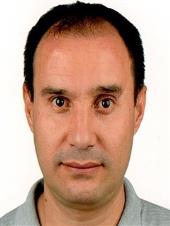
Prof. Cüneyt F. Bazlamaçcı is a Professor in the Computer Engineering Department at İzmir Institute of Technology (IZTECH). He holds a B.Sc. and M.Sc. from Middle East Technical University (1988, 1991) and a Ph.D. in Computing from the University of Manchester (1996). His academic career includes roles at METU (1992–2020) before joining IZTECH in 2020. His research focuses on Communication and Computer Networks, Computer Systems Architecture, Graph Algorithms, and Embedded Systems. Notable contributions include patents on IP lookup architectures and publications in journals like Microprocessors and Microsystems and IEEE Transactions . He has advised over 40 graduate students, with topics ranging from FPGA-based systems to network optimization. His work spans network-on-chip design, reconfigurable computing, and cloud resource allocation. Projects include TÜBİTAK-funded research on low-voltage distribution systems and METU DSIM benchmarking studies. Prof. Bazlamaçcı teaches advanced courses in optimization, computer networks, and architecture. His research integrates algorithm design, hardware/software co-design, and parallel computing for real-world applications.
Alper Şen is a Professor in the Department of Computer Engineering at Bogazici University, Istanbul, Turkey. He previously worked at Freescale Semiconductor Inc. (formerly Motorola SPS) in Austin, TX, and served as an Adjunct Assistant Professor at The University of Texas at Austin. His research focuses on software dependability and system verification. Ph.D. in Electrical and Computer Engineering from The University of Texas at Austin B.S. and M.S. in Electrical and Electronics Engineering from Middle East Technical University, Ankara, Turkey His research interests include: Software Testing and Verification Machine Learning for Software Engineering Parallel and Distributed Systems Embedded Systems He leads the Dependable Systems Group (DSG) and is affiliated with the Computer Architecture and Systems Laboratory (CASLAB). Recent courses taught include CmpE 589 (Software Testing and Verification), CmpE 240 (Digital Systems), and CmpE 436 (Concurrent and Distributed Programming).
Francesco Silvestri is an Associate Professor in Computer Engineering at the Department of Information Engineering, University of Padova. Previously, he held roles including Assistant Professor (2016-2019) and post-doctoral positions at the University of Padova and IT University of Copenhagen. He also served as a part-time lecturer at IT University of Copenhagen (2013-2014) and as a visiting scholar at the University of Texas at Austin (2006-2007). He earned his Ph.D. in Computer Engineering from the University of Padova in 2009. His research focuses on algorithms and data structures, emphasizing big data efficiency, high performance computing, and modern architectures. Key areas include similarity search, dimensionality reduction, graph mining, and parallel algorithms. He supervises PhD students and collaborates with researchers globally. His work has been recognized with awards such as the ICDT Best Paper Award (2023) and the ACM SIGMOD Research Highlights Award (2020). Teaching includes courses like Big Data Computing and Algorithm Design at the University of Padova and IT University of Copenhagen. He has served on program committees for major conferences like Euro-Par, IPDPS, and SIGMOD. His contributions span academic publications and industrial collaborations, including work on mobility data analysis and resilient algorithms. He is affiliated with the AIDA Lab (Algorithms for Intelligent Data Analytics) and actively contributes to the academic community through editorial roles, such as being an Associated Editor of the ACM Transactions on Parallel Computing.
Prof. Müştak Erhan Yalçın is a Professor of Electronics and Telecommunications Engineering at Istanbul Technical University (ITU). He holds a Ph.D. from Katholieke Universiteit Leuven (2004) and degrees from ITU (1997, 1993). His research focuses on nonlinear circuits, chaos theory, cellular neural networks, and embedded systems. He has authored numerous publications in top-tier journals and conferences, with recent work emphasizing secure communication, GPS spoofing detection, and chaotic systems applications. He actively contributes to the academic community through editorial roles (e.g., Associate Editor of IEEE Transactions on Circuits and Systems-II) and organizing international conferences. Notable recognitions include elevation to IEEE Senior Member (2019) and inclusion in ITU's Career-Long Impact category (2024). Education: Ph.D. in Electronics Engineering, Katholieke Universiteit Leuven, 2004 M.Sc., Istanbul Technical University, 1997 B.Sc., Istanbul Technical University, 1993 Research Interests: Nonlinear Circuits and Chaos Theory Cellular Neural Networks and Wave Computing Embedded Systems and Hardware Security Chaotic Signal Processing and Cryptography Recent Projects: TÜBİTAK-funded project on active shield design (2021) Development of GPS spoofing detection methods (2024) Secure communication systems using chaotic oscillators Grants & Awards: IEEE Senior Member (2019) Associate Editor, IEEE Transactions on Circuits and Systems-II (2020–2021) Recipient of TÜBİTAK 1505 Collaboration Program (2021) Labs & Teams: Leading research on nonlinear systems and embedded security within ITU's Electronics and Telecommunications Engineering Department, collaborating with industry partners like Aselsan.
Prof. Metin Sezgin is a Professor in the Department of Computer Engineering at Koç University, College of Engineering. He specializes in Artificial Intelligence, Computer Vision, and Human-Computer Interaction, with notable contributions to sketch recognition, multimodal interaction, and educational technologies. His recent work includes advancing AI-driven systems for comic analysis, human-robot engagement, and child-centered machine learning pipelines. Prof. Sezgin has been appointed as Türkiye's representative in the Global Partnership for AI (GPAI), emphasizing his leadership in AI policy and research. He leads projects like the eHRI database for human-robot interaction analysis and develops tools for classroom engagement monitoring. His research integrates computer vision with real-world applications, including tangible programming interfaces for children and affective computing systems. Grants: TÜBİTAK 1001 Grant (2023) Labs: Koç University Parallel and Multicore Computing Lab Key Areas: Sketch Recognition, Multimodal Datasets, Human-Robot Interaction, Educational Technology His publications span domains from AI ethics to technical advancements in vision systems, with a focus on bridging theoretical research and practical societal impact.
Dr. Alptekin Temizel is a Full Professor at the Graduate School of Informatics, Middle East Technical University (METU), Ankara, Turkey. He leads the METU Deep Learning and Computer Vision Lab (DLCV) and the GPU Research and Education Center. His research focuses on computer vision, deep learning, GPU computing, and medical image analysis. He holds a B.Sc. in Electrical and Electronic Engineering from METU (1999) and a Ph.D. in Computer Vision from the University of Surrey, UK (2006). Affiliations: Executive Board Member, Neuroscience and Neurotechnology Center of Excellence Executive Board Member, METU Center for Image Analysis (OGAM) DLI Certified Instructor and DLI University Ambassador (NVIDIA) Education: B.Sc.: Electrical and Electronic Engineering, METU, Turkey (1999) Ph.D.: Center for Vision, Speech and Signal Processing (CVSSP), University of Surrey, UK (2006) Research Interests: Deep Learning & Computer Vision Applications Medical Image Analysis & Healthcare AI Adversarial Machine Learning & Model Security GPU Parallel Computing & System Optimization Federated Learning in Medical Imaging Recent Achievements: 3rd place in Federated Brain Tumor Segmentation (FeTS) Challenge at MICCAI 2021 Developed SAHI package (2M+ downloads) LIMUC dataset for Ulcerative Colitis endoscopy Teaching: MMI 727: Deep Learning: Methods & Applications MMI 713: Applied Parallel Programming on GPU DI 725: Transformers and Attention-Based Deep Networks MMI 712: Machine Learning Systems Design & Deployment
Assoc. Prof. Dr. Ahmet Sayar is an Associate Professor at the Department of Computer Engineering, Faculty of Engineering at Kocaeli University, Turkey. He holds an M.Sc. (2001) and Ph.D. (2009) in Computer Science from Syracuse and Indiana Universities, USA. His research focuses on Distributed Systems, Big Data, Data-Intensive Computing, Geographic Information Systems (GIS), and Exploratory Data Analysis (EDA). He has co-authored over 150 papers, 15 book chapters, and 1 book. Currently, he serves as Head of Student Affairs at Kocaeli University and as an associate editor for multiple journals. Education: M.Sc. in Computer Science, Syracuse University (2001) Ph.D. in Computer Science, Indiana University (2009) Research Interests: Parallel and Distributed Algorithms Big Data Analytics & Cloud Computing Machine Learning Applications (e.g., Image Processing, NLP) GIS and Remote Sensing Blockchain Technology for IoT and Logistics Recent Trends in Articles: His recent work emphasizes real-time data processing (e.g., video stream analytics), blockchain for supply chains, and AI-driven solutions for healthcare, transportation, and urban management. He explores ethical aspects of web scraping and low-code platforms for process automation. Advising & Grants: Advised 18 master’s/phd theses. Involved in TÜBİTAK projects and KOSGEB innovation programs. Member of editorial boards and national advisory committees. Labs/Teams: Leads university-level student affairs initiatives and collaborates on interdisciplinary projects involving distributed systems and big data frameworks.
Murat Okatan is an Associate Professor at Istanbul Technical University's Informatics Institute, Department of Computational Science and Engineering. He previously held academic positions at Cumhuriyet University in Electrical and Energy, Biomedical Engineering, and Mechatronics Engineering departments, and served in administrative roles including Department Chair, Head of Discipline, and Vice Dean. He received his PhD from Boston University and completed postdoctoral research at Ankara University and Boston University. PhD, Boston University MS, Syracuse University BS, Boğaziçi University (Dual Degree: Physics and Electrical-Electronics Engineering) His research lies at the intersection of computational neuroscience, neural signal processing, and biomedical engineering. He specializes in extracellular neural recordings, spike detection, brain-machine interfaces, and statistical modeling of neural data. His work includes developing automated thresholding techniques such as truncation thresholds for spike detection, analyzing subthreshold motor cortical activity, and modeling hippocampal place cells using Zernike polynomials. His recent publications focus on statistical significance testing in receptive field estimation and improving signal-to-noise ratio in neural recordings. His recent publications reveal a strong focus on statistical methods in neural data analysis, particularly in spike detection and receptive field modeling. He has developed and refined truncation threshold methods for more accurate action potential identification. His work bridges theoretical statistics with practical applications in brain-computer interfaces and neural decoding. He has also contributed to open-source tools, including Python code for parameter estimation in truncated distributions. YÖK Akademik Teşvik Ödeneği (2016, 2017) 2232 Postdoctoral Return Fellowship, TÜBİTAK (2011) Best Oral Presentation Award, 6th National Neuroscience Congress (2007) Best Oral Presentation Second Prize, 8th National Neuroscience Congress (2009) Presidential University Graduate Fellowship, Boston University (1997) High Honor Degree, Boğaziçi University (1995) Murat Okatan has supervised research projects funded by TÜBİTAK, the Turkish Higher Education Council, and international agencies including NIH, NSF, and ONR. He has served as a project executive and researcher in multiple scientific initiatives, including the Neuroscience and Neurotechnology Excellence Center (NÖROM). He has also acted as a guest editor for the Turkish Journal of Electrical Engineering and Computer Sciences . His lab focuses on developing computational tools for neural data analysis, with applications in brain-machine interfaces and neuroprosthetics. He is a member of several professional societies, including IEEE, IEEE Signal Processing Society, Society for Neuroscience (SFN), Brain Research Society (BAD), and Turkish Biophysics Society. His research group develops algorithms for real-time neural signal processing and contributes to national and international collaborative efforts in computational neuroscience.
Erhan KURT is a Lecturer at the Faculty of Engineering and Architecture , Kırşehir Ahi Evran University , since 2024. Previously, he worked as a Research Assistant at Nuh Naci Yazgan University from 2012 to 2024. PhD in Electrical and Electronics Engineering, Erciyes University (2023) MSc in Electronic Engineering, Erciyes University (2014) BSc in Electrical and Electronics Engineering, Erciyes University (2011) His research focuses on Electromagnetic Field Analysis , Microwave Engineering , and Artificial Intelligence Applications in antenna design. He has contributed to optimization algorithms for antenna array synthesis, sidelobe suppression, and pattern nulling. A review of his 15 most recent articles reveals trends in Antenna Array Optimization using bio-inspired algorithms (e.g., Ant Lion, Salp Swarm, Differential Evolution) and applications of AI in microwave engineering. Key subfields include Computational Electromagnetics , Beamforming , and Algorithmic Antenna Design . He has collaborated extensively with researchers such as Kerim Güney , Suad Başbuğ , and Mustafa Türkmen on interdisciplinary projects involving signal processing and antenna systems.
Şefik TEKLE serves as Assistant Professor in the Department of Food Engineering at Kirsehir Ahi Evran University's Faculty of Engineering and Architecture since 2024, following progressive academic appointments from Instructor (2017-2022) to Doctoral Lecturer (2022-2024) within the same institution. His research bridges food science with Islamic ethical frameworks, specializing in valorization of fishery by-products. Academic Background: PhD in Food Engineering (2022), Yıldız Technical University MS in Food Engineering (2016), Erciyes University BSc in Food Engineering (2005), Selçuk University TEKLE's research centers on fish-derived bioactive compounds (gelatin hydrolysates, collagen peptides) from waste streams like fish skins and heads, with emphasis on enzymatic modification (Alcalase/Savinase) for functional properties. His parallel expertise in halal food systems addresses packaging compliance, ingredient certification, and global standardization challenges. Current projects focus on protein hydrolysates from pomegranate seeds, sturgeon, and trout by-products. His publication trend reveals a strategic shift from foundational halal food policy (2013-2017) toward applied biotechnology (2020-2025), with 60% of recent articles examining marine by-product valorization. Key themes include enzymatic hydrolysis optimization, functional property characterization (rheology, bioactivity), and halal-compliant ingredient development. Scientific Recognition: 2023 TEKNOFEST Agriculture Technology Acceleration Category 'Best Venture Award' 2022 TEKNOFEST Incubation Program Graduate 2021 TEKNOFEST Biotechnology Innovation Competition Runner-up TEKLE advises 4 master's students on protein hydrolysate projects using sturgeon, walnuts, sunflower, and pomegranate waste. His 8 funded projects (2020-2026), including TÜBİTAK collaborations, total 6 years of continuous research support. Current leadership includes directing the 'Ahiler Diyarı Bilimle Şenleniyor' outreach program and serving on the MHT Arge Gıda Sağlık Danışmanlık board.
Semra Tunalı is a Professor at İzmir University of Economics' Faculty of Economics and Administrative Sciences, Department of Business Administration since 2010. She holds a Ph.D. in Computer Sciences from Ege University and has held academic positions at Ege University, Dokuz Eylül University, and as Visiting Fellow at GINTIC Institute of Manufacturing Technology, Northwestern University, and Loyola University. B.Sc. in Industrial Engineering, Ege University (1978) M.Sc. in Applied Statistics, Ege University (1980) MBA, University of Missouri (1985) Ph.D. in Computer Sciences, Ege University (1991) Her research focuses on production optimization, with emphasis on: Buffer allocation in unreliable production lines Capacitated lot sizing with setup carryover Scheduling flexible mixed-model assembly lines Hybrid metaheuristics for manufacturing systems Simulation optimization in industrial applications Combinatorial optimization in production planning Her recent publications (2010-2019) demonstrate expertise in applying heuristic algorithms like genetic algorithms and tabu search to complex production problems, particularly in lot sizing and assembly line optimization. Common themes include: Integration of simulation and analytical modeling Hybrid algorithm development for manufacturing systems Capacity planning improvements through optimization Reliability analysis in production line design
Deniz KUNDAKÇI is an Associate Professor at the Department of Political Science and Public Administration , Kastamonu University , affiliated with the Faculty of Economics and Administrative Sciences. She has held full-time academic positions since 2010 and currently serves as Department Head (2022-2025) and Chair of the Disciplinary Committee (2024-). PhD in Systematic Philosophy and Logic, Ankara University (2011, 2014) MA in Philosophy, Middle East Technical University (2006, 2010) BA in Public Administration, Uludağ University (2000, 2004) Her research focuses on Political Philosophy , History of Political Thought , and Political Movements , with a particular emphasis on classical democratic models, postmodern critiques, and ethical dimensions of governance. Her work spans from Aristophanes’ political satire to Rorty’s liberal utopias. Recent publications (2017-2025) address topics like fluid modernity , democratic foundations , and ethical reification , reflecting her interdisciplinary approach. She has supervised 12 master’s theses and co-edited international books on contemporary political theory. Young Social Scientists Award, Turkish Social Sciences Association (2011) Editorial roles in journals like Beytül Hikme and Çankırı Karatekin University Journal Kundakçı has served as a Mevlana Exchange Program Coordinator (2019-2020) and Deputy Dean (2019-2020). She continues to contribute to academic discourse through conferences and publications.
Mehmet Merkepçi serves as an Assistant Professor in the Department of Computer Engineering at Gaziantep University's Faculty of Engineering, Turkey. Holding a Doctorate in Electrical and Electronic Engineering (2017), he has maintained continuous academic affiliation with the university since 2007 through progressive roles from Research Assistant to his current position. Academic Background: Doctorate (2017): Gaziantep University, Institute of Science, Electrical and Electronic Engineering Master's (2009): Gaziantep University, Institute of Science, Electrical and Electronics Engineering Bachelor's (2000): Karadeniz Technical University, Faculty of Engineering, Electrical-Electronic Engineering Merkepçi's research demonstrates exceptional interdisciplinary breadth with core emphasis on Cryptography and Artificial Neural Networks . His recent work pioneers neutrosophic number theory applications in public key cryptography, significantly advancing RSA and El Gamal algorithms. Parallel research trajectories include biomedical signal processing using photoplethysmography for non-invasive monitoring systems, and textile engineering innovations in fabric porosity and air permeability analysis. This multifaceted approach bridges theoretical mathematics with practical engineering solutions across diverse domains. Publication analysis reveals 10 journal articles concentrated in 2022-2025, with cryptographic research constituting 60% of recent output. The remaining publications demonstrate sustained engagement in biomedical engineering (20%) and textile science (20%), indicating strategic diversification while maintaining cryptographic expertise as the research cornerstone. This distribution reflects deliberate specialization in security-critical applications alongside targeted explorations of neural network implementations in physical systems. Merkepçi teaches advanced courses including Security Engineering and Occupational Safety at graduate level, and foundational undergraduate instruction in Computer Programming, Database Management, and Engineering Mechanics. His administrative service includes Department Vice Chairman (2020-present) and former Department Head (2020-2024), demonstrating institutional leadership alongside research and teaching responsibilities.
Esin ÖZTÜRK IŞIK is an Associate Professor at Boğaziçi University's Biomedical Engineering Institute, where she also serves as the Director of the Computational Imaging Laboratory. She has held this position since September 2014, following her tenure as an Assistant Professor at Yeditepe University from December 2009 to September 2014. Prior to her academic appointments in Turkey, she completed her postdoctoral fellowship at the University of California, San Francisco, where she had also earned her Ph.D. through the Joint Graduate Program in Bioengineering between UC Berkeley and UCSF. Dr. ÖZTÜRK IŞIK's research primarily focuses on magnetic resonance imaging and spectroscopic imaging techniques, with particular emphasis on developing novel computational methods for MR image analysis. Her work spans multiple areas including parallel imaging theories, fast data acquisition methods, phosphorus MR spectroscopic imaging, and machine learning applications for disease characterization. She has made significant contributions to multimodality medical imaging for cancer diagnosis, treatment planning, and disease monitoring. Her research output shows a clear trend toward increasingly sophisticated computational methods applied to medical imaging problems, with recent publications focusing on compressed sensing techniques for accelerated phosphorus MRSI, machine learning approaches for tumor classification, and multi-parametric MRI analysis for cancer grading. The majority of her work centers on brain tumor imaging, with growing interest in prostate cancer applications as well. Bogazici University Academic Encouragement Award (2014) TUBITAK EU Project Submission Encouragement Award (2010) Educational Stipend Awards from ISMRM conferences (2004-2006) High Field Workshop Trainee Award (2007) UCSF Graduate Division Earle C. Anthony Travel Award (2006) UCB Graduate Division Conference Travel Grant (2006) Dr. ÖZTÜRK IŞIK has secured significant research funding including a TUBITAK 1001 Grant for 'Determination of Multimodality Magnetic Resonance Imaging Based Biomarkers for Mild Cognitive Impairment in Parkinson Disease' (2015-2018), a Bogazici BAP Grant for 'Investigation of the Human Brain Metabolism in-vivo in Chronic Liver Failure' (2015-2018), and a Marie Curie International Reintegration Grant for 'Phosphorus MR Spectroscopic Imaging of Brain Tumors at 3T' (2010-2014). She serves as an active reviewer for numerous prestigious journals including Magnetic Resonance in Medicine and Journal of Magnetic Resonance Imaging. As Director of the Computational Imaging Laboratory at Boğaziçi University, she leads a research team focused on developing advanced computational methods for medical image analysis. Her lab specializes in translating technical innovations into clinical applications, particularly in the areas of brain tumor characterization and cancer imaging. She also serves as the ERASMUS coordinator and Summer internship coordinator for the Biomedical Engineering Institute.
Kamer Kaya is an Associate Professor at the Faculty of Engineering and Natural Sciences, Sabancı University. He obtained his PhD in 2009 from the Department of Computer Science and Engineering at İhsan Doğramacı Bilkent University, focusing on Threshold Cryptography. His career spans research roles at CERFACS (France) and Ohio State University, where he worked in the HPC Lab and later as a Research Assistant Professor in the Dept. of Biomedical Informatics. Since 2014, he has been affiliated with Sabancı University and founded Dakik Software Technologies in 2018, focusing on R&D projects in blockchain, machine learning, and high-performance computing (HPC). He is actively involved in Sabancı University's Center of Excellence in Data Analytics and COMPUTE. PhD in Threshold Cryptography from Bilkent University (2009) Postdoctoral research at Ohio State University's HPC Lab Founder of Dakik Software Technologies (2018) His research interests include parallel algorithms , sparse data machine learning , graph algorithms , HPC hardware optimization , and cryptography . He collaborates on projects involving GPUs/IPUs for ML applications, blockchain interoperability, and digital twins for automation. As a team leader, he seeks students skilled in algorithms, data structures, and C/C++ programming.