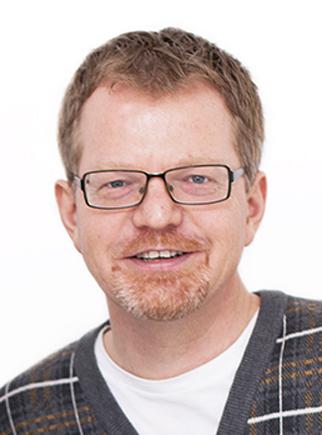
Kjetil Nørvåg is a Professor at NTNU's Department of Computer and Information Science, affiliated with the Data and Artificial Intelligence group. His research focuses on distributed systems, database technologies, and large-scale data processing. He teaches courses covering data mining, big data architecture, information retrieval, and distributed systems. Nørvåg leads significant research projects including the Norwegian Center for Research-based AI Innovation (NorwAI, 2020-2028) and Big Data & Machine Learning collaboration with DNB (2018-2023). His publication record includes nearly 200 works addressing challenges in database systems and information retrieval.
Danilo Gligoroski is a Professor at the Department of Information Security and Communication Technology at NTNU. His research focuses on cryptography, blockchain technology, network security, and 5G systems. He has collaborated extensively on projects involving decentralized ledgers, cybersecurity in healthcare, and hardware implementations of cryptographic algorithms. Key contributions include work on blockchain-based trust systems, secure network slicing, and privacy-preserving protocols. Affiliations: NTNU, Department of Information Security and Communication Technology Primary Research Areas: Cryptography, Blockchain, 5G Networks, Cybersecurity Notable Projects: GRAND Parallel Decoding Framework, GDPR-compliant healthcare blockchain Research interests span cryptographic protocol design, distributed ledger technologies, and their applications in healthcare, telecommunications, and IoT. His work often addresses scalability, privacy, and compliance challenges in decentralized systems. Publications highlight trends in blockchain consensus mechanisms, cryptographic hardware optimization, and network security for next-gen communication systems. Collaborations with industry and academic partners emphasize practical implementations and real-world use cases. Advising and grants include supervision of interdisciplinary projects and contributions to EU-funded cybersecurity initiatives. Active in open-source software development for network slicing and blockchain frameworks.
Jostein Kjærandsen is a Professor at UiT The Arctic University of Norway, affiliated with Tromsø University Museum. His research focuses on insect diversity patterns, taxonomic frameworks, and the functional evolution of organs like genitalia and wings within Diptera, particularly Sciaroidea (fungus gnats). Research Interests : Taxonomy, biosystematics, DNA barcoding, molecular phylogeny, and biodiversity assessment of Diptera, especially Mycetophilidae and Keroplatidae. Students : Supervised PhD candidate Jon Peder Lindemann. Email : jostein.kjarandsen@uit.no Recent Articles highlight integrative taxonomy using DNA barcoding, molecular phylogenies of fungus gnats, and the role of museum collections in species discovery. His work addresses taxonomic impediments for 'dark taxa' while advancing reference libraries for global biodiversity studies.
Bastiaan Star is a Professor at the Centre for Ecological and Evolutionary Synthesis (CEES) at the University of Oslo, where he leads research integrating ancient DNA, genomics, and evolutionary ecology to study historical environmental changes and human impacts on marine organisms. His work spans Atlantic walrus, cod, herring, and New Zealand snapper, examining genetic variation, population structure, and responses to human exploitation over centuries to millennia. Star's research focuses on ancient DNA analysis of archaeological material (hundreds to thousands of years old), collaborating closely with archaeologists and zooarchaeologists. Key interests include population genomics , local adaptation , thermal physiology , and bioinformatics development for degraded samples. His group investigates how long-distance trade networks, climate change, and fisheries exploitation have shaped marine biodiversity through time. His recent publications reveal trends in marine historical ecology , demonstrating how ancient DNA exposes millennial-scale population dynamics in exploited species. Work spans walrus ivory trade chronology, Atlantic bluefin tuna demographic collapse, puffin hybridization due to climate shifts, and medieval cod trade routes. This research combines high-throughput sequencing, computational biology, and interdisciplinary archaeological approaches. Star actively collaborates on major projects including: BEEDIVERSE: Wild bee conservation through functional ecology and genomics SeaChanges: Human exploitation thresholds in marine vertebrates The Impact of Art: Ancient DNA tracing historic walrus trade EvoCave: Population genomics of Atlantic puffins He leads the Archaeogenomics group at CEES, developing methodologies for ancient DNA extraction from challenging substrates like fish bones and degraded archaeological specimens. His work bridges molecular biology, ecology, and archaeology to reconstruct past ecosystems and inform conservation strategies.
Einar Broch Johnsen is a Professor at the Department of Informatics , University of Oslo . His research focuses on formal methods , distributed systems , and digital twins , with applications in cloud computing , robotics , and healthcare . Leadership: Strategy Director of SIRIUS (2015-2023), Coordinator of EU projects Envisage and HyVar . Community Roles: Board member of Formal Methods Europe , editorial board member of Formal Aspects of Computing , and chair of conferences like FM 2015 and FASE 2022 . His recent work explores symbolic execution , probabilistic logic , and self-adaptive systems , as reflected in his 15 most recent publications . He teaches courses such as IN2031 – Project in Programming and IN5170: Models of Concurrency .
About Mohammad Derawi Mohammad Derawi is a Professor at NTNU's Department of Electronic Systems, part of the Faculty of Information Technology and Electrical Engineering. He leads the Smart Wireless Systems (SWS) Research Group and directs the IoT-Lab at NTNU Gjøvik. His academic journey includes a PhD from NISLab (Norway) and CASED (Germany), alongside BSc/MSc degrees in Informatics from DTU (Denmark). Research Interests Derawi specializes in Smart Wireless Systems (IoT), Information Security (Biometric Systems), Digital Electronics, and Machine Learning applications in activity recognition and e-learning. His work bridges theoretical advancements with practical implementations, emphasizing secure and efficient IoT solutions. Research Projects Notable projects include IoT-Safetraffic (RFF Innlandet), Ambulance Drone (NTNU), Wireless ECG (Innovation Norway), and the EU-funded TURBINE project. These projects focus on IoT security, healthcare applications, and smart transportation systems. Awards & Recognition Recipient of NTNU's Quality in Education Award (2017) Honored as Norway's Youngest Professor (2016) Received multiple best paper awards from IEEE/ACM/Springer Invited to the Crown Prince Couple's 50th Birthday Celebration (2023) Grants & Leadership Led multi-institutional initiatives funded by RFF Innlandet, Innovation Norway, and EU grants. His research group collaborates with industry partners to develop cutting-edge IoT and wireless communication solutions. Labs & Teams Scientific Director of NTNU's IoT-Lab, fostering innovation in IoT ecosystems and smart city technologies. Active in mentoring students and industry professionals through workshops and conferences.
Professor Danilo Gligoroski is affiliated with the Norwegian University of Science and Technology (NTNU) under the Department of Information Security and Communication Technology. His work bridges cryptography, blockchain technology, and 5G network security, with a focus on decentralized systems and privacy-preserving protocols. Key research trends in his recent publications include blockchain applications in healthcare and reseller markets, verifiable delay functions for consensus mechanisms, and cryptographic frameworks for chat-based systems. He explores data integrity, network coding, and scalable storage solutions for blockchain ecosystems. Major collaborations include co-authors like Mayank Raikwar, Katina Kralevska, and Anton Karl Oskar Hasselgren. His work often intersects with GDPR compliance, network slice isolation, and secure service implementation in modern telecommunications.
Magnus Lie Hetland is an Associate Professor in the Department of Computer Science at the Norwegian University of Science and Technology (NTNU) . His research focuses on algorithms, data structures, and Python programming. Primary research areas: Algorithms, Metric Indexing, Python Programming, Fair Allocation Teaches TDT4120 - Algorithms and Data Structures , DT8123 - Advanced Computing , and TDT4125 - Algorithm Construction His recent publications emphasize fair allocation problems (2024), metric indexing (2020, 2015), and Python programming guides (2024, 2014, 2008). Key trends include algorithmic fairness, proximity search optimization, and accessible programming education. Scientific contributions are spread across algorithm design , database optimization , and multi-agent resource distribution . Teaching activities include foundational and advanced courses in algorithms and computing.
Roberto Di Remigio Eikas is an Associate Professor in the Department of Chemistry at UiT The Arctic University of Norway. His research focuses on quantum chemistry, computational methods, and solvation modeling. Key research areas: Quantum Chemistry, Relativistic Electronic Structure Theory, Multiwavelet Frameworks, and Solvation Modeling Major contributions to open-source software development (VAMPyR, PCMSolver, MRChem) Collaborator in Nordic Quantum Chemistry Library Ecosystem His recent work explores multiwavelet-based quantum chemical methods, relativistic effects in solution-phase calculations, and stochastic approaches to coupled cluster theory. Publications span high-impact journals like Journal of Chemical Theory and Computation and Journal of Chemical Physics , highlighting innovative numerical techniques and software implementations.
Edvard Pedersen is an Associate Professor in the Department of Computer Science at UiT The Arctic University of Norway. His research focuses on bioinformatics, machine learning applications in medical imaging, and data management systems for biological datasets. He has contributed to projects involving genomics pipelines, metagenomic analysis, and VR visualization of biological networks. Pedersen also engages in educational research, such as improving course evaluation methods through student panels. His work spans interdisciplinary areas including computational biology, cloud computing infrastructure for scientific workflows, and synthetic data ethics. Notable contributions include the GeStore system for metagenomic pipelines and collaborative studies on tumor-infiltrating lymphocytes quantification using machine learning. Pedersen frequently collaborates with researchers in medicine, marine biology, and computer science. Recent research highlights include ethical challenges in synthetic data usage (2023), VR-based biological network visualization (2021), and pragmatic machine learning approaches for cancer diagnostics (2022). His publications demonstrate a strong emphasis on practical solutions for large-scale biological data challenges.
Morten Kjelland is a Norwegian Professor of Law at the University of Southeast Norway (USN) , holding a permanent position within the Department of Economics, Marketing and Law at USN Business School . In parallel, he has served since 2013 as Professor of Law at the University of Oslo , Faculty of Law. A prolific scholar and sought-after lecturer, he combines rigorous research in tort and welfare law with innovative digital pedagogy. Education & Academic Formation Cand. jur., University of Oslo (2000) Dr. juris, University of Oslo (2008) University pedagogical certification, UiO (2008, supplemented 2013) Research & Scholarly Focus Kjelland’s research centres on tort law , welfare law , health law , social security law , and legal method . He investigates liability establishment, damages assessment, and the protection of vulnerable groups within compensation systems. His comparative and empirical analyses draw on extensive Norwegian and Danish jurisprudence, and he has pioneered digital tools—such as multimedia e-books and open-access databases—to make complex legal concepts accessible. Key Publications & Creative Outputs Recent works include: Erstatningsrett – en lærebok (3rd ed., 2023), the market-leading Norwegian tort law textbook with integrated digital resources. Velferdsrett I & II (7th & 6th eds., 2022), core welfare law texts co-authored with Professor Aslak Syse. Skader på reiseveien – når er man yrkesskadedekket (2024), a 127-page monograph analysing 80 000 decisions on occupational injuries during travel. Digital projects: KUNNE Erstatningsrett multimedia book (2025), and forthcoming commentaries to the Violence Victim Compensation Act and Natural Damage Act. Teaching, Supervision & Outreach Kjelland teaches tort law, welfare law, health law, and legal method to law, medical, and interdisciplinary students. He supervises master’s theses at UiB, UiT, UiA, and serves on doctoral evaluation committees. Beyond academia, he has delivered over 400 hours of professional training nationwide for judges, lawyers, insurers, and health authorities. His popular science lectures—such as “When the Accident is Over” and “What is Law Really?”—bridge legal scholarship and public understanding. Research Ethics & Service Since 2022 he has been external deputy member of the Research Ethics Committee at the Norwegian University of Life Sciences (NMBU) , advising on legal dimensions of scientific misconduct. He founded the Norwegian Forum for Tort Law (NFFE) in 2018, now counting 1 500 members, and edits its digital publications.
Beatrice Marlen Unn Gustafsson Reed is a Research Fellow at the Centre for Ibsen Studies, University of Oslo. Her work examines cultural narratives through ecocritical and postcolonial lenses, focusing on Scandinavian literature with emphasis on Sami representation and botanical themes. Research domains include: Plant representation in Scandinavian children's literature Nationalism and indigenous narratives in literary history Postcolonial analysis of forced displacement Ecocritical methodologies for literary studies Recent publications analyze botanical metaphors in award-winning picturebooks and Sami portrayals in Norwegian literary histories. She developed a phytobibliographical database for systematic analysis of plant representations. Current NORN project investigates Norwegian Romantic Nationalisms through digital and traditional textual analysis. Academic activities include workshops on psychoeducation renewal and participatory research models within autism studies. Outreach features podcasts on autism identity development.
Stefan Ritter serves as an Adjunct Associate Professor at Oslo Metropolitan University (OsloMet) within the Faculty of Technology, Art and Design , specifically in the Department of Built Environment . In parallel, he is a Senior Specialist at the Norwegian Geotechnical Institute (NGI) , where he contributes to geotechnical engineering research and practice. Education: BSc and MSc in Geotechnics and Tunnelling, University of Leoben , Austria Marshall Plan Fellow at MIT , USA (Master’s research) PhD in Geotechnical Engineering, University of Cambridge , UK (awarded Philip Turner Prize) Research Interests: Ritter's expertise lies in underground construction in soft soil , soil stabilisation , and the interaction between ground and built environment . He focuses on sustainable urban geotechnics, integrating underground space into urban planning, and advancing instrumentation and monitoring techniques to enhance geotechnical performance. Scientific Awards: Philip Turner Prize for excellence in geotechnical centrifuge testing Teaching and Mentorship: Since February 2023, Ritter has been teaching the 10 ECTS MSc course Urban Geotechnics at OsloMet. While no specific student advisees are listed, his role involves direct engagement with master's students in geotechnical engineering. Affiliations and Labs: He is affiliated with NGI , Norway’s leading geotechnical research institute, and collaborates extensively on both national and international projects. His work bridges academic research and practical engineering solutions.