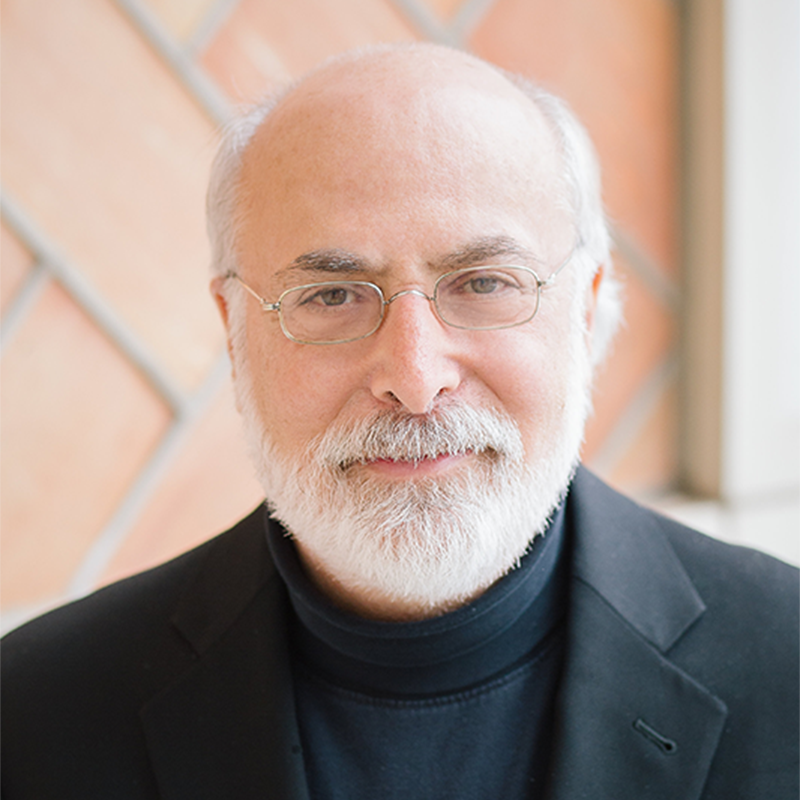
Antonio Toral is a leading researcher at the University of Groningen, focusing on Neural Machine Translation (NMT) , human evaluation , and parallel corpus curation . His work spans low-resource language modeling, lexical diversity enhancement, and multilingual figurative language detection. Affiliations: University of Groningen, MaCoCu Project, CREAMT Consortium Key projects: MaCoCu (Massive collection of under-resourced language data) CREAMT (Creativity in literary translation) Research interests include: Improving NMT naturalness and lexical richness Document-level evaluation of machine translations Character-level modeling and downsampling techniques Reproducibility challenges in human NLP evaluation Cross-lingual formality transfer without parallel data His recent articles (2021–2025) demonstrate expertise in: Reinforcement learning for naturalness preservation Statistical analysis of translationese effects Dependency-based reordering models Pivot translation for Catalan→Chinese Domain-specific corpus creation for EU Digital Service Infrastructures
Professor Richard Stern holds joint appointments in Electrical and Computer Engineering, Computer Science, and Biomedical Engineering at Carnegie Mellon University. His research bridges auditory perception with speech technology, particularly in developing noise-robust speech recognition systems. His PNCC algorithm revolutionized feature extraction for speech recognition in noisy environments. Research emphases include: Auditory-inspired signal processing Robust automatic speech recognition Computational models of binaural hearing Music information retrieval Biomedical applications of audio analysis Recent work demonstrates growing interest in human-robot interaction and respiratory monitoring applications. Publications increasingly incorporate deep learning while maintaining foundations in auditory physiology. Honors include the IEEE Signal Processing Society 2019 Best Paper Award for PNCC research. Current projects investigate neural audio processing models and online learning for sound event detection.
Marita Kristiansen is Associate Professor at the Department of Linguistic, Literary and Aesthetic Studies, University of Bergen, and head of Termportalen. Her research focuses on terminology development, neology, corpus linguistics, and language planning in Norwegian contexts. Key research examines climate change discourse in corporate communications, environmental terminology development, and challenges of language internationalization in higher education. She investigates domain loss, parallel language use, and terminological infrastructure through corpus-based approaches. Publications analyze specialized vocabulary in media, scholarly concept evolution, and digital resources for terminology management. Her work contributes to Norwegian language planning and lexical innovation studies. Notable projects include research on Termportalen as a national terminology infrastructure and analysis of financialization in climate communication.
Professor Ekaterina Lapshinova-Koltunski serves as Full Professor (W3) in Multilingual Technical Specialized Communication at the University of Hildesheim since October 2022. She is affiliated with the Institute for Translation Studies & Specialized Communication within Department 3: Linguistics and Information Sciences. Previously, she held positions as Akademische Oberrätin (equivalent to Associate Professor) at Saarland University (2017-2022) and served as Interim Professor at the University of Hildesheim (2020-2021). Her educational background includes: Habilitation in Linguistics, Translation Studies and Corpus Linguistics (2016) from Saarland University PhD in Computational Linguistics (2011) from University of Stuttgart Postgraduate studies in Language Data Processing (2003-2006) from Georg August University of Göttingen Diploma in Translation, Interpreting and Intercultural Communication (1997-2002) from Volgograd State University Professor Lapshinova-Koltunski's research focuses on the intersection of translation studies, corpus linguistics, and artificial intelligence, with particular emphasis on machine translation, plain language communication, and multilingual technical communication. Her work bridges theoretical linguistics with practical applications in healthcare communication, accessibility, and translation technology. She has made significant contributions to understanding cohesion and coherence in translation, cross-linguistic variation, and the cognitive aspects of translation processes. Her recent publications (2024-2025) demonstrate a strong shift toward AI applications in translation, particularly in health communication and plain language translation. These works examine how large language models can support the creation of accessible medical information, analyze gender representation in machine translation, and develop practical frameworks for integrating AI tools into editorial workflows. Her research shows increasing focus on practical applications of translation technology to address real-world communication challenges, especially in healthcare contexts. She actively serves as a reviewer for major funding organizations including DFG and Research Foundation – Flanders, and for numerous prestigious journals and conferences in computational linguistics and translation studies. Her current grant portfolio includes: Project B7 'Translation as Rational Communication' in SFB1102 (2022-2026) 'AI-supported health communication in Plain language' funded by the Ministry of Science and Culture of Lower Saxony (May 2024-August 2025) 'Use of AI tools in intralingual translation of health communication' with Wort & Bild Verlag (October 2023-April 2024) 'Data triangulation in translation process research' startup grant from University of Hildesheim (August 2023-January 2024) Professor Lapshinova-Koltunski holds multiple administrative roles including membership in various examination committees for master's programs in International Communication and Translation, Barrier-free Communication, and Technical Communication, as well as serving on the Faculty Council and Research Committee for Department 3.
Xavier Gómez Guinovart is a Professor of Linguistics at the University of Vigo and coordinator of the research group on Technologies and Applications of the Galician Language (TALG), which integrates the Seminar on Computational Linguistics (SLI). As a leading expert in Galician language technologies, he has established himself as a key figure in computational linguistics for minority languages. His research interests focus on the linguistic applications of computing , development of lexical resources , and construction and exploitation of parallel and specialized corpora . He has pioneered numerous resources for the Galician language including dictionaries, translation systems, and linguistic corpora that have significantly advanced computational processing of Galician. His recent publications demonstrate a strong trend toward lexical ontology development , multilingual resource creation , and terminology extraction across specialized domains. His work bridges computational linguistics with practical applications for language preservation and technology. As editor of the journal Linguamática , he actively contributes to the academic discourse on computational processing of Iberian Peninsula languages. He also participates extensively in research networks and the evaluation of scientific activities in his field. Xavier Gómez Guinovart has directed multiple competitive projects as principal investigator in Galician language technologies and has founded the Seminar on Computational Linguistics at the University of Vigo. His work spans both theoretical computational linguistics and practical applications for language technology development.
Andrew Caines is a Research Fellow at the Computer Laboratory , University of Cambridge, and a member of the NLIP Group and ALTA Institute . He works on computational linguistics, second language learning, and low-resource NLP with applications in educational technology and cybersecurity. Current projects include hate speech detection, LLM-based grammatical error correction, and machine translation for African languages Collaborations with Cambridge Cybercrime Centre and Cambridge Language Sciences interdisciplinary center Teaching roles: Co-lecturer for NLP courses, organizer of 'Non-standard NLP' and 'NLP & ML for Speech' topics His work combines corpus linguistics with machine learning to develop tools for language assessment and educational technology. Recent publications focus on hate speech analysis , multilingual grammatical error correction , and language model bias mitigation .
Dr. Damiano Perri serves as an Adjunct Professor in the Department of Mathematics and Computer Science at the University of Perugia. With a strong background in computer science research and teaching, his work spans multiple cutting-edge domains with practical applications. His academic profile demonstrates a consistent commitment to both theoretical research and real-world implementation. His research interests encompass a broad spectrum of computer science disciplines including Virtual Reality, Augmented Reality, Artificial Intelligence, Cloud Computing, Machine Learning, High Performance Computing, Quantum Computing, and Health Informatics. His work often bridges multiple domains, such as applying VR/AR technologies to healthcare problems like Visual Snow Syndrome treatment, or combining quantum computing principles with machine learning approaches. Professor Perri's publication record shows consistent output with 37 publications spanning from 2018 to projected 2026, demonstrating his active research trajectory. His work appears in high-impact venues including IEEE Access and Lecture Notes in Computer Science, often in collaboration with colleagues like Osvaldo Gervasi and Marco Simonetti. His research has evolved from foundational work in parallel computing and VR to increasingly interdisciplinary applications including health informatics and quantum computing. As an educator, Professor Perri has supervised numerous students, contributing as co-author to 7 master's theses and 52 bachelor's theses since 2019. He teaches several courses including Elements of Computer and Operating System Architecture, Virtual and Augmented Reality Laboratory, Computer Networks: Protocols, and Informatics across different degree programs. He serves as the technical manager of the LibreEOL project since 2015, which appears to be an important electronic assessment platform used at the university. Additionally, he is currently participating in a PRIN research project focused on analyzing Italian language corpora using artificial intelligence techniques. Professor Perri has developed several practical tools to support teaching and research, including a Confusion Matrix generator, Timezones tool, Countdown Timer, Banker's Algorithm solver, Money Calculator, and Break Timer. These tools reflect his commitment to practical applications of computer science concepts and enhancing the educational experience.
Kathryn Franich is an Assistant Professor in the Department of Linguistics at Harvard University and director of the Harvard PhonLab. She is affiliated with the Mind, Brain, Behavior faculty initiative and the Center for African Studies. Her research focuses on phonological structure, phonetic patterns, and prosodic variation across languages. Academic Background: PhD from University of Chicago Previous Affiliation: Faculty at University of Delaware (2016-2020) Research interests include: Interaction of metrical structure, rhythm, and tone in African languages Timing dynamics in speech and co-speech gestures Speech prosody in autism spectrum disorder Language-music interface across cultures Recent publications analyze temporal coordination in Niger-Congo languages, articulatory gesture dynamics, and prosodic patterns in Medʉmba. She has ongoing projects examining cross-linguistic rhythm typology and prosodic biomarkers in ASD. Advising and Collaborations: Advisees include Katie Garvin (postdoc), Victor Nwosu, William Dych Collaborative work with researchers at University of Chicago, University of Delaware Labs directed: Harvard PhonLab
Dr. Bert Le Bruyn is an Associate Professor at the Department of Languages, Literature and Communication (TLC) within Utrecht University's Faculty of Humanities. As a semanticist, his expertise spans cross-linguistic variation, second language acquisition, and the study of referentiality and tense/aspect phenomena. He has pioneered the Translation Mining methodology through collaborative projects like Time in Translation (2017–2021, NWO Free Competition, €750k) and The semantics and acquisition of referentiality (2014–2017, NWO VENI, €250k). Research Focus : Semantics, cross-linguistic variation, tense/aspect systems, and second language acquisition mechanisms Methodologies : Corpus analysis, experimental offline studies, and translation mining frameworks Recent Research Trends show a strong emphasis on comparative studies across Romance, Germanic, and Sino-Tibetan languages. His work explores how definiteness and perfect tense constructions vary across languages and how these differences inform semantic theory. Notably, his Translation Mining approach leverages multilingual corpora to decode implicational hierarchies in temporal reference and partitivity. Scientific Contributions include methodological innovations in corpus-based translation studies and theoretical advancements in weak referentiality. He has served as editor for Languages (2022) and Belgian Journal of Linguistics (2009).
Veronica Samu serves as an Assistant Professor at the Department of Japanology within the Institute of East Asia at the Faculty of Humanities and Social Sciences, Károli Gáspár Reformed University in Budapest, Hungary. Specializing in linguistics and translation studies with particular expertise in Japanese onomatopoeia, she maintains regular reception hours on Tuesdays from 12:00-13:00 (currently conducted online by prior arrangement). MA in Japanology (2011) from Károli Gáspár Reformed University PhD in Linguistics (defense scheduled for 2024) from University of Pécs Dissertation: "A sound-schema-based analysis of Japanese and Hungarian onomatopoeias in a contrastive approach – with special regard to the semantic domains mapped by sound schemes" Dr. Samu's research centers on Japanese onomatopoeia, investigating its morphosemantic structures, cognitive foundations, and pedagogical applications. Her work explores how sound schemas map semantic domains across Japanese and Hungarian languages, revealing cross-linguistic parallels. She extends this research to translation studies, particularly regarding culture-specific words between Japanese and Hungarian, and develops innovative approaches to teaching Japanese onomatopoeia through artistic methods and visual aids. Her scholarship bridges theoretical linguistics with practical language instruction, focusing on how onomatopoeic elements enhance language acquisition. Analysis of Dr. Samu's publications from 2012-2022 reveals a clear scholarly trajectory from theoretical linguistic analysis toward practical pedagogical applications. Her early work focused on translation strategies for Japanese phraseologisms and onomatopoeia, while her more recent publications (2021-2022) explore the artistic dimensions of onomatopoeic expressions across media—from children's literature to audiovisual arts. This evolution demonstrates her commitment to applying linguistic theory to enhance Japanese language teaching methodologies in Hungarian educational contexts, particularly through multimodal approaches that leverage artistic expression. Dr. Samu has participated in significant professional development opportunities, including Japanese language programs at the Japan Foundation in 2015 and 2017, which have informed her cross-cultural research and teaching practices. Her linguistic expertise spans Japanese (advanced), English (intermediate), and Serbian (advanced), supporting her comparative research between Japanese and Hungarian languages. She has organized academic events such as the "Translation, not distortion" translators' workshop in 2016 and has contributed to the scholarly community through book reviews and conference organization. Her research demonstrates consistent engagement with both theoretical linguistic frameworks and practical language teaching applications, particularly in the specialized domain of onomatopoeia across Japanese and Hungarian languages. This dual focus positions her work at the intersection of cognitive linguistics, translation studies, and language pedagogy, contributing to both academic discourse and practical educational methodologies in Japanology.
Assistant Professor Juraj Benić is a control engineer at the School of Applied Mathematics and Informatics, Josip Juraj Strossmayer University of Osijek, Croatia . His interdisciplinary work bridges control theory, fluid power systems, IoT, and data-driven maintenance , with applications ranging from forestry vehicles to unmanned aerial systems. Education PhD in Control Theory and Mechanical Engineering, 2022 – University of Zagreb, Faculty of Mechanical Engineering and Naval Architecture MSc in Control Theory and Mechanical Engineering, 2017 – University of Zagreb, Faculty of Mechanical Engineering and Naval Architecture BSc in Control Theory and Mechanical Engineering, 2015 – University of Zagreb, Faculty of Mechanical Engineering and Naval Architecture Research Interests Prof. Benić’s core research areas include: Energy-efficient direct-driven hydraulic (DDH) systems for mobile machinery Hybrid-electric powertrains for forestry skidders and multirotor UAVs IoT-enabled predictive maintenance using convolutional neural networks and vibration analysis Fuzzy-logic and ontology-based controllers for electro-hydraulic systems Human-robot interaction and context-aware robotics Computational linguistics and digital corpora of Croatian dialects Publication Trends Since 2018 he has produced more than 25 peer-reviewed works. The 2023-2024 journal articles focus on hybrid UAV propulsion and comparative energy efficiency of hydraulic systems , while earlier works delve into fuzzy control ontologies , predictive maintenance via IIoT and fuel-saving hybrid skidders . Interspersed linguistic contributions showcase his versatility in digital dialectology. Scientific Awards & Recognition While explicit awards are not listed, he has delivered invited lectures (University of Maribor, 2021) and participated in study visits (South Kazakhstan State University, March 2024), indicating growing international recognition. Supervision & Collaboration He collaborates closely with colleagues from the University of Zagreb and University of Osijek, co-authoring with researchers such as D. Pavković, Ž. Šitum, M. Cipek, and D. Brezak. Student supervision is implied through experimental rigs and project descriptions, although specific advisee names are not provided. Laboratory & Field Infrastructure Research is supported by fully instrumented hydraulic test benches, a retrofitted deep-drilling rig, IoT accelerometer networks, and field-measurement campaigns on commercial skidders equipped with telematics (WIGO-E) for long-term fuel and energy-data logging.
Anca Dinu is a Lecturer at the Faculty of Foreign Languages, University of Bucharest, with a dual academic background in Computer Science (PhD, 2011) and Theoretical Linguistics (MSc, 2004). Her work bridges computational methods with linguistic analysis, focusing on Romanian language processing and Romance language comparisons. PhD in Computer Science (University of Bucharest, 2011) MSc in Theoretical Linguistics (Faculty of Foreign Languages, 2004) Bachelors in Mathematics and Computer Science (University of Bucharest, 2003) Bachelors in Electrical Engineering (Politechnica University, 2002) Her research spans computational linguistics, natural language processing, and historical linguistics. Key areas include collocation detection, stress assignment in Romanian, temporal text classification, and linguistic creativity assessment. She contributes to digital humanities through tools like CoToHiLi for historical linguistics. Recent publications examine large language models (LLMs) in creativity comparison with humans, automatic victim-blaming detection, and literary text analysis. Her work integrates formal semantics, syntax, and quantitative methods across 20 years of scholarly output.
Sylvie Vandaele is a Full Professor at the Department of Linguistics and Translation , University of Montreal, Faculty of Arts and Sciences. She teaches biomedical translation courses at undergraduate and graduate levels, including TRA2240 Langue et notions biomédicales and TRA6609 Traduction médico-pharmacologique . She served as director of the journal Meta (2008–2014) and coordinates biomedical, scientific, and technical translation sectors. Education: PhD in Molecular Pharmacology (biomedical research until 1995), followed by a Master's in Translation. Research focuses on cognitive semantics applied to translation, analyzing metaphorical and metonymic conceptualization in life sciences (anatomy, cell biology, genetics). She uses digital humanities tools and corpora for medical metaphor analysis, historical science translation, and specialized translation pedagogy. Awards include the 2008 ACT award and 2004 teaching award from the Faculty of Arts and Sciences. She has directed 7 graduate students and led projects like The discourse of COVID-19 in media and 19th-20th century biomedical translation history . Projects: CRSH-funded studies on knowledge diffusion, translation standardization, and media representation of science.
Prof. Zdeněk Žabokrtský is a Professor at the Institute of Formal and Applied Linguistics (ÚFAL) within the Faculty of Mathematics and Physics at Charles University in Prague. He serves as the head of the PhD study program in Computational Linguistics and teaches several courses including Language Data Resources, Variability of Languages in Time and Space, Natural Language Processing, and Introduction to Language Technologies. His office is located in room S 409 on the 4th floor in the Lesser Town area of Prague. Prof. Žabokrtský's research spans multiple areas of Natural Language Processing and Computational Linguistics. His primary interests include building multilingual morphological resources, developing NLP applications that utilize parallel corpora, studying dependency syntax and valency frameworks, coreference resolution, theoretical studies on formal representations of natural languages, and applying Machine Learning techniques to linguistic problems. His work bridges theoretical linguistics with practical applications in language technology. Analysis of Prof. Žabokrtský's recent publications reveals a strong focus on morphological analysis, coreference resolution across multiple languages, and cross-lingual NLP. His research spans diverse languages including Czech, Turkish, Russian, and various Indic languages. He has made significant contributions to morphological resources, word-formation networks, and multilingual coreference systems, often creating and utilizing linguistic resources while developing novel computational approaches to linguistic phenomena. As an academic leader, Prof. Žabokrtský has supervised numerous PhD students and contributed to major research projects at the Institute of Formal and Applied Linguistics. His work has been supported by various grants that have enabled the development of important linguistic resources and NLP tools. He has been instrumental in establishing the PhD study program in Computational Linguistics at Charles University. Prof. Žabokrtský is a key member of the Institute of Formal and Applied Linguistics research teams, contributing to projects focused on developing language technologies, creating linguistic resources, and advancing theoretical understanding of natural language processing. His work is closely integrated with the Prague Dependency Treebank project and other major linguistic resources developed at Charles University.
Assoc. Prof. Pavel Pecina, Ph.D., is a faculty member at the Institute of Formal and Applied Linguistics, Faculty of Mathematics and Physics, Charles University, Prague, Czech Republic. His primary academic role as an Associate Professor focuses on Natural Language Processing , Artificial Intelligence , and related areas. Research Interests: Information extraction, information retrieval, machine translation, multimodal data interpretation, optical music recognition Teaching: Courses since 2012-2022 including Natural Language Processing , Information Retrieval , and Statistical Methods in NLP Key Research Projects include GI-Insight (AI for healthcare), RES-Q+ (global stroke care registry), and MEMORISE (heritage digitization). His recent publications (2023-2025) demonstrate expertise across clinical NLP , historical document analysis , and music technology domains. Advising: Supervised 10+ graduate students in areas ranging from semantic search to optical music recognition. Collaborates with international institutions on multilingual translation and medical informatics challenges through initiatives like IWSLT and CLEF eHealth.