Lars Kastner is a postdoctoral researcher at the Institute of Mathematics of the Technical University Berlin , affiliated with the discrete geometry group led by Michael Joswig. His work focuses on computational mathematics and mathematical software development. Key research areas include: Interdisciplinary applications of Combinatorics , Algebraic Geometry , and Commutative Algebra Development of mathematical software like mptopcom , OSCAR , and extensions for polymake Advancing FAIR data principles in computational mathematics Notable software contributions: mptopcom : Parallel triangulation computation framework cellularSheaves : For tropical homology polymake : Polyhedral geometry software Macaulay2 : Maintainer of Polyhedra package Scientific awards : Fields Postdoctoral Fellowship His publications demonstrate expertise in: Toric and tropical geometry Triangulation algorithms Homological algebra Hyperplane arrangements Mathematical software engineering
Sujoy Bhore is affiliated with the Indian Institute of Technology Bombay (Department of Computer Science & Engineering), Université libre de Bruxelles, and Technische Universität Wien. His research focuses on algorithms , computational geometry , and graph theory , with a strong emphasis on geometric optimization , dynamic data structures , and parameterized algorithms . Recent publications highlight advancements in Euclidean spanners for sparse network design online algorithms for dynamic geometric problems Steiner trees and tree covers in planar domains k-median/means approximation using coresets His collaborative work spans institutions, with frequent joint research on geometric intersection graphs , map labeling , and planar graph embeddings . Co-authors include prominent researchers like Csaba D. Tóth, Martin Nöllenburg, and Timothy M. Chan. While no formal awards are documented here, his contributions to algorithmic complexity and geometric networks remain significant.
Witold Andrzejewski is an active researcher in computer science, focusing on data deduplication pipelines, co-location pattern mining, and GPU-accelerated algorithms. His work bridges academia and industry, with publications analyzing customer record deduplication in the financial sector, performance optimization of spatial data processing, and comparative studies of statistical modeling versus machine learning approaches. 2025: Co-location pattern mining with Euclidean metrics 2024: Customer data deduplication parameter tuning 2023: Text similarity measures in financial applications
Andreas Wagner is a researcher affiliated with Helmholtz-Zentrum Dresden-Rossendorf , with a focus on interdisciplinary research spanning computational biology, systems biology, computer science, and materials science. His work explores genotype-phenotype mappings, evolutionary innovation, and robustness in biological systems, while also contributing to machine learning, numerical methods, and positron annihilation spectroscopy in physics. Wagner collaborates internationally, with co-authors from institutions in Germany, Austria, Finland, and beyond. Research Interests : Wagner's research bridges computational biology and systems biology, analyzing evolutionary processes through genotype networks, metabolic innovation, and gene regulatory circuits. He applies machine learning techniques to energy systems, such as solar power forecasting in federated learning frameworks. His physics work involves positron annihilation spectroscopy for material defect analysis, particularly in alloys and thin films. Publications & Data Science : He has published extensively on topics like robust numerical algorithms, adaptive cruise control optimization, and data-driven approaches for systematic reviews. His recent work includes matrix-free preconditioning methods and physics-regularized multi-modal image assimilation for medical imaging. Wagner contributes to open data initiatives, including datasets on radiation damage and material porosity via RODARE.
Benjamin Recht is a Professor at the California Institute of Technology , affiliated with the Center for the Mathematics of Information . His work spans Machine Learning , Control Systems , Reinforcement Learning , and Optimization , with a focus on theoretical guarantees, adaptive algorithms, and real-world applications. His research includes: Control Systems : Certainty equivalence, adaptive control, LQR, and robustness in dynamic environments. Machine Learning : Generalization bounds, interpolation in classifiers, test set overuse, and ethical frameworks for systemic harm detection. Neural Rendering : K-Planes for explicit radiance fields in space-time-appearance modeling. Recent publications (2025-2018) highlight trends in automating adaptive control , ethical machine learning , distributed computing , and 3D reconstruction . No student lists, awards, or lab details are explicitly mentioned.
Professor Thomas Kühne is a computational systems scientist affiliated with the University of Paderborn's Faculty of Computer Science and Institute of Artificial Intelligence. He holds a joint appointment with the Helmholtz-Zentrum Dresden-Rossendorf (HZDR) and works at CASUS Görlitz, a center investigating complex systems through data science methods. Education B.Sc. in Computer Science from ETH Zurich Diploma in Computational Sciences from ETH Zurich PhD in Computational Sciences (2008) from ETH Zurich His research focuses on developing advanced numerical algorithms for simulating chemical and physical processes, with specialization in aqueous systems, heterogeneous catalysis, and sustainable energy materials like CIGS solar cells and hydrogen storage systems. His work leverages supercomputers and quantum computing platforms. Notable achievements include authoring 175+ peer-reviewed publications and co-developing the open-source simulation package CP2K. Current leadership roles include Vice-Chair of the Paderborn Center for Parallel Computing (PC2) and Center for Sustainable Systems Design (CSSD), plus DFG Review Board membership. Scientific Awards ERC Starting Grant (2016) University of Paderborn Research Award (2020)
Prof. Dr. Alexander A. Auer is a research group leader at the Max Planck Institute for Chemical Energy Conversion, specializing in Molecular Theory and Spectroscopy and Theoretical Methods and Heterogeneous Reactions. His work integrates computational chemistry, spectroscopy, and catalysis to address fundamental questions in energy conversion and material science. Research Focus: Auer's expertise spans: Development of quantum chemical methods (e.g., contributions to ORCA software) Electrocatalysis (oxygen evolution, fuel cell interfaces) NMR spectroscopy and hyperpolarization techniques Heterogeneous catalysis reaction mechanisms Polymorphism in molecular crystals Recent Publications: His 2024-2025 articles emphasize computational studies of transition metal catalysts, NMR methodology advancements, and energy-related electrocatalysis. Dominant themes include mechanistic insights into hydrogenation, oxygen evolution, and solid-state NMR applications. Collaborations: Frequently partners with experimental groups (e.g., Fürstner, Neese, List) to validate theoretical models. Leads interdisciplinary projects combining synthesis, spectroscopy, and computation.
Peter Nejjar is a Tenure-Track Juniorprofessor for Probability Theory at the University of Potsdam since January 2023. His research addresses fundamental questions of universality in stochastic systems , investigating why identical probability distributions emerge across disparate contexts like random matrices and growth models, with connections to combinatorics, mathematical physics, and numerical analysis. His primary research domains include stochastic particle systems (TASEP/ASEP), KPZ universality class phenomena, and Markov chain mixing behavior —particularly the cutoff phenomenon. Nejjar's work reveals deep structural parallels between shock fluctuations in interacting particle systems and random matrix eigenvalue distributions, leveraging connections to algebraic combinatorics through Schur processes. Recent publications demonstrate evolving focus from shock fluctuation theory (2015-2018) toward dynamical phase transitions in KPZ systems (2020-2022) and emerging interdisciplinary applications like DNA-based molecular tagging (2025). His collaborative network prominently features Patrik Ferrari across 7 publications, reflecting sustained focus on universality in exclusion processes.
Martin Radetzki is a full Professor at the Institute for Computer Architecture and Parallel Systems (University of Stuttgart) , specializing in Embedded Systems . His work focuses on network-on-chip (NoC) design, fault tolerance, memory optimization, and simulation frameworks. Key research areas: NoC synthesis, deadlock-free routing, performability analysis, and power-efficient memory subsystems Recent publications emphasize integer linear programming frameworks for co-designing floorplanning and routing, chiplet-based systems , and machine learning-enabled performance evaluation His methodologies address cross-layer challenges in NoC design, combining formal optimization with practical implementation for heterogeneous processing elements. Collaborative projects include fault resilience analysis, parallel simulation techniques, and memory allocation strategies for SoCs. Dr. Radetzki supervises research with students like Shuang Liu and Manuel Strobel , contributing to IEEE Transactions on Computers , ACM TECS , and conferences such as DATE and MCSoC . Current work explores optimal routing topologies for emerging chip architectures.
Amin Totounferoush serves as a Researcher within the Analytic Computing group at the University of Stuttgart, Germany. His institutional affiliation places him at Universitätsstraße 32, room 2.201, 70569 Stuttgart, with office hours available by appointment. Contact is facilitated through direct phone lines +49 711 685 88409 and +49 711 685 78409. His research portfolio centers on advanced computational methodologies, with primary expertise in data-intensive systems and scalable computing architectures. Key focus areas include: Algorithm optimization for distributed environments Parallel processing frameworks Large-scale data analytics pipelines High-performance scientific simulations As a core member of the Analytic Computing research unit, Dr. Totounferoush contributes to developing next-generation computational tools for complex scientific problems. His work integrates theoretical computer science with practical engineering solutions for data-intensive challenges across academic and industrial applications.
Prof. Dr. Ulrich Göhner is a Professor and Laboratory Head at the Faculty of Computer Science of Kempten University of Applied Sciences. He serves as Vice Dean of the Faculty of Computer Science and chairs the program committees for both the Bachelor and Master programs in Computer Science. His office hours are on Thursdays at 9:45 a.m. (pre-registration by email required). University: Kempten University of Applied Sciences Role: Professor, Vice Dean, Laboratory Head Research Expertise: Algorithms and Data Structures Compilers Parallel Computer Systems He leads the Parallel Computer Systems Laboratory and is associated with the Institute for Production and Informatics (IPI). Contact details include phone numbers +49 (0) 831-2523-198 and +49 (0) 831-2523-9283, and office location S3.06.
Prof. Dr.-Ing. Horst Schulte is a Professor at the Department of Engineering I, HTW Berlin - University of Applied Sciences. His expertise lies in Control Systems Engineering, Electrical Engineering, and Renewable Energy Systems, with a focus on modeling, fault-tolerant control, and computational intelligence applications. Department of Engineering I, HTW Berlin Chair in Control Systems Group ResearchGate profile with 214 publications Research Interests include: Model-based and data-driven control systems Wind and photovoltaic power plants Takagi-Sugeno fuzzy systems Robust and fault-tolerant control Dynamic virtual power plants (DVPP) Computational intelligence in energy systems Scientific Awards : 10th Annual ISGAN Award (2024) HTW Berlin Research Award (2018/19) Best Paper in Control Theory (2013) Best BMBF Project of the Month (2012) Key Contributions involve power tracking control for renewables, fault reconstruction in wind turbines, and innovative converter control schemes. His work bridges theoretical control methods with practical energy system implementations.
Lars Müller is a Scientific Employee ( Wissenschaftlicher Angestellter ) at the Department of Business Administration and Operations Research within the Institute of Business Administration & Business Informatics at the University of Hildesheim. His affiliation spans the Faculty of Mathematics, Natural Sciences, Economics and Computer Science.
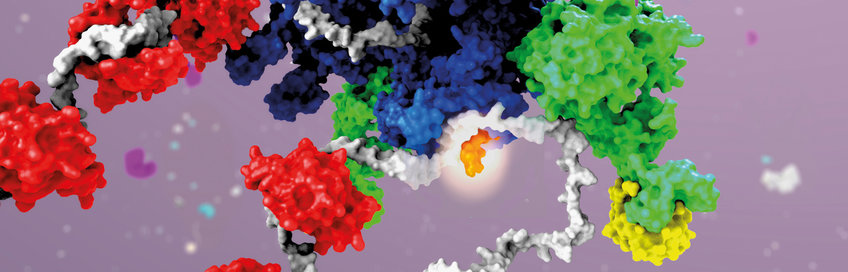
Karl Duderstadt is a Professor of Experimental Biophysics at Technische Universität München and an Independent Research Group Leader at the Max Planck Institute of Biochemistry since 2015. His research focuses on understanding the Structure and Dynamics of Molecular Machines involved in DNA replication, particularly the replisome and its coordination with chromatin dynamics. He employs advanced single-molecule imaging and biophysical techniques to address challenges in genome integrity and replication mechanics. B.A. in Physics, Oberlin College (2004) Ph.D. in Biophysics, University of California, Berkeley (2011) Postdoctoral Fellow, Rijksuniversiteit Groningen (2015) His research interests span chromatin replication , topological stress resolution , and replisome stability . Current projects include ReplisomeBypass (ERC-funded) and ChromoMemInMotion (ERC Consolidator Grant). His work has produced groundbreaking insights into replisome dynamics and nucleosome inheritance , with implications for genome stability and epigenetic regulation. Scientific awards include the ERC Starting Grant (2018) and ERC Consolidator Grant (2023) . The group utilizes novel single-molecule platforms to study replication under stress conditions and develop tools like the MARS software for bioimage analysis. Collaborative efforts involve characterizing molecular barriers in DNA replication and understanding how protein complexes coordinate dynamic events during chromosome duplication.
Prof. Burkhard Corves serves as Director of the Institute of Mechanism Technology, Machine Dynamics and Robotics within the Faculty of Mechanical Engineering at RWTH Aachen University. His academic leadership spans robotics, mechanism theory, and dynamic systems engineering, with significant contributions to industrial automation and sustainable manufacturing applications. His research concentrates on Robotics, Mechanism Design, Machine Dynamics, and Multibody Simulation, with recent emphasis on compliant gripper development for surgical applications, energy-efficient cam mechanisms, and human-robot collaboration systems for inclusive workplaces. Key investigations address data-driven trajectory optimization, sustainable ship recycling processes, and real-time simulation techniques for bicycle and vehicle dynamics. Analysis of his 15 most recent publications (2024-2026) reveals dominant themes in industrial robotics (particularly delta robots and pick-and-place systems), compliant mechanism design for medical applications, and sustainable manufacturing processes. Significant focus appears on real-time multibody simulation for transportation systems, control strategies for vibration suppression, and recycling automation aligned with circular economy principles. Emerging work explores human-robot collaboration for disability inclusion and bioprocessing optimization. Scientific Awards No awards were documented in the provided materials. Advising and Grants Specific student supervision details and grant funding information were not included in the source documentation. Laboratories and Teams Prof. Corves leads the Institute of Mechanism Technology, Machine Dynamics and Robotics (IGMR), directing research in robotic systems for manufacturing, sustainable ship recycling, and bicycle dynamics simulation. The institute actively participates in interdisciplinary projects including Bots2ReC (semi-autonomous asbestos removal) and sustainable EV battery recycling initiatives, with strong emphasis on practical engineering solutions for industrial challenges.