
Johann Blieberger is an Associate Professor and Head of the Institute of Computer Engineering at Technische Universität Wien. He also leads the Automation Systems Research Unit (E191-03) and serves as a Principal Member of the Faculty Council. His work focuses on real-time systems, concurrent programming, railway operation optimization using Kronecker Algebra, static analysis, and Ada programming. Key projects include developing simulation tools for sustainable public transport (2021–2023), coordinating autonomous vehicles in pedestrian environments (2017–2019), and optimizing railway systems via Kronecker Algebra (e.g., the Zagreb-Rijeka line). He has secured grants from the Austrian Research Promotion Agency (FFG) and Austrian Science Fund (FWF). Blieberger’s research interests span weak memory models, symbolic evaluation, and algorithm analysis. He actively contributes to the ISO JTC1/SC22/WG9 committee for Ada language development. His advising spans multiple PhD and master’s theses, including work on concurrent program verification and Kronecker Algebra applications.
جستوجوی استاد و پژوهشگر
استاد راهنما، استاد دانشگاه یا پژوهشگر مناسب برای مسیر پژوهشیتان را پیدا کنید و با او ارتباط بگیرید.
نمایش ۱۲۱-۱۳۵ از ۱۸۸ استاد راهنما
اطلاعات این پروفایلها از صفحات عمومی دانشگاهها جمعآوری شده و ممکن است بهروز نباشد.
Rudolf Freund is a retired Professor at the Vienna University of Technology (TU Wien), affiliated with the Department of Theory and Logic (E192-05) under the Faculty of Informatics. His research focuses on formal languages, membrane computing (P systems), theoretical computer science, and bio-inspired computational models. He has contributed extensively to areas such as infinite words, graph grammars, molecular computing, and neural networks. Freund has held roles including editor for conference proceedings (e.g., NCMA 2019) and has taught courses like Formal Language Theory and Introduction to Clinics. His work often bridges theoretical foundations with practical applications in computing systems, emphasizing formal verification and computational completeness. His research has been published in journals like Natural Computing and Theoretical Computer Science , exploring topics such as derivation modes in P systems, reactive membranes, and computational models for Boolean networks. Despite retirement, he remains active in academic activities, including organizing workshops and contributing to conferences on unconventional computing. Freund's expertise spans membrane computing variants, automata theory, and regulated rewriting systems, with a focus on advancing computational paradigms inspired by biological processes.
Ingo Feinererمشاهده پروفایل
دانشیار
- Databases
- Artificial Intelligence
- Text Mining
- +۲ مورد دیگر
Ingo Feinerer serves as an Associate Professor at Vienna University of Technology's Faculty of Informatics, specifically within the Institute of Information Systems Engineering (E192-02). His research bridges theoretical computer science and practical applications in database systems, artificial intelligence, and text mining, with significant contributions to configuration management and formal methods. His educational background includes: PhD Dissertation (2007): A formal treatment of UML class diagrams as an efficient method for configuration management Diploma Thesis (2005): Formal program verification: a comparison of selected tools and their theoretical foundations Feinerer's research focuses on database theory (particularly schema mapping and dependencies), AI-driven configuration systems using integer linear programming, and text mining infrastructure development in R. His work combines theoretical rigor with practical tool development, notably through the textcat and tm packages. The integration of formal methods in software engineering remains a consistent thread throughout his publications. Analysis of his 15 most recent publications reveals strong specialization in database constraints (40%), text mining applications (30%), and software configuration systems (30%), with increasing interdisciplinary work connecting computer science to digital humanities. His notable recognition includes: INiTS Award (2007) for technology commercialization potential Feinerer has supervised doctoral research including F. I. Chertes' work on schema mapping languages and diploma theses on UML semantics and probabilistic databases. He led major research projects HINT (2012-2017) and SEE (2012-2016) focusing on database technologies and information systems. His work demonstrates consistent funding through Austrian national research programs. As a core member of the Databases and Artificial Intelligence research group, he collaborates extensively on R package development for text analysis and contributes to international workshops on theoretical aspects of software engineering.
Tobias Geibinger is a PreDoc Researcher at the Institute of Logic and Computation of Vienna University of Technology , supported by a DOC Fellowship from the Austrian Academy of Sciences. His work focuses on explainability in Answer-Set Programming (ASP), particularly for advanced language features and hybrid ASP systems. Education: BSc, Dipl.-Ing. (Master's equivalent) in Computer Science Projects: CD Laboratory for AI and Optimization (2017–2025), KIRAS-PrEMI (2019–2022), ARTIS (2017–2025) His research combines logic programming with constraint programming and hybrid methods to solve industrial scheduling problems. This includes automated test laboratory scheduling, photolithography job scheduling, and pandemic-era physician scheduling. Recent work investigates neurosymbolic integration and contrastive explanation frameworks. Selected publications analyze ASP optimization techniques for parallel machine scheduling, large-neighborhood search strategies, and nonmonotonic paraconsistent logics. These contributions align with broader trends in declarative AI and logic-based optimization. Scientific Recognition: ASAI Master Thesis Prize (2023)
Bernhard Kerblمشاهده پروفایل
پژوهشگر
Bernhard Kerbl is a Post-doctoral Researcher at the Computer Graphics Group (E193-02) within the Faculty of Informatics at Vienna University of Technology (TU Wien). He actively contributes to research in real-time rendering, GPU optimization, and 3D visualization. His work focuses on point cloud rendering, Gaussian splatting, and low-level graphics API development (particularly Vulkan). Core Research Areas: Real-time rendering, GPU programming, point cloud processing, 3D Gaussian splatting, task-based parallelism Projects: IVILPC (2023–2026), ACD (2020–2028), EVOCATION (2018–2022) Key Contributions: Developed real-time rendering techniques for massive datasets, pioneered GPU-based scene streaming architectures, and created novel methods for visual error prediction using machine learning. His work on Vulkan transition in academia received recognition, and he maintains active collaborations in GPU education. Scientific Achievements: Best Paper Award at EGPGV 2024 for "Fast Rendering of Parametric Objects on Modern GPUs" Recipient of Vienna Science and Technology Fund (WWTF) support for graphics research Technical Expertise: Specializes in CUDA, OpenGL/Vulkan APIs, and real-time systems. His work bridges academic research with practical implementations in virtual reality, augmented reality, and GPU education.
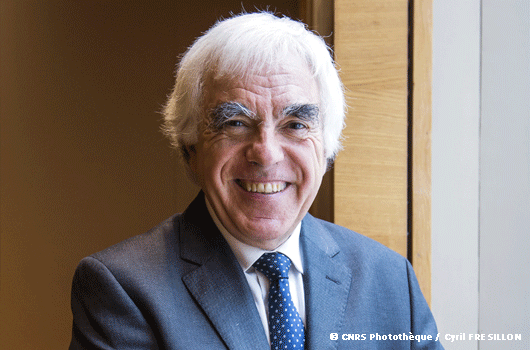
Berry Gérard is a distinguished Professor at Collège de France, holding the Chair in Algorithms, Machines, and Languages since 2012. He previously served as Director of Research at INRIA Sophia Antipolis and Chief Scientist at Esterel Technologies. His academic journey includes roles at École des Mines de Paris and École Polytechnique. Gérard specializes in models of computation, programming language design, and synchronous systems. He has contributed significantly to the development of the Esterel language for embedded systems and formal verification techniques. Education: Docteur d’Etat in Mathematics, Université Paris VII (Computer Science option), 1979 Ingénieur des Mines, Corps National des Ingénieurs des Mines, 1970 École Polytechnique, 1967 Research Interests: Focuses on computational models (e.g., lambda-calculus, synchronous concurrency), programming languages (Esterel, Hop/HipHop), circuit synthesis, and formal verification. His recent work explores diffuse programming and web orchestration. Key Awards: 2014: Médaille d'or du CNRS 2005: Member, Académie des technologies 1993: Member, Academia Europaea 1979: Bronze Medal of CNRS Professional Roles: President of the Council of Education and Research at École Polytechnique Member of the Scientific Council of IRCAM Former President of the INRIA Evaluation Committee Labs/Teams: Active in INRIA’s Indes project on diffuse programming and collaborates with IRCAM on real-time music systems.
- Linguistics
- Syntax
- Machine Translation
- +۷ مورد دیگر
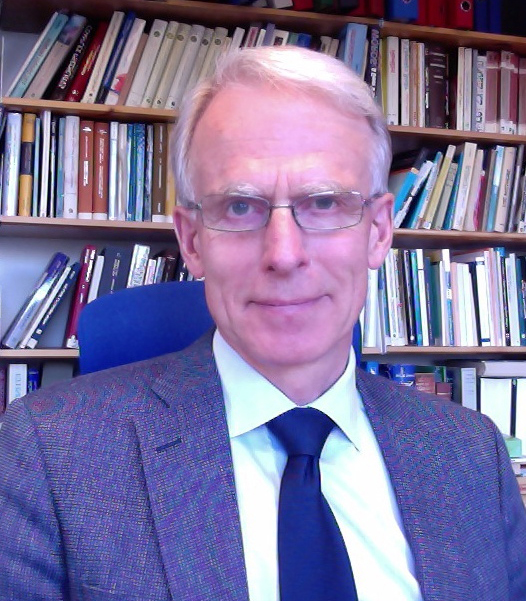
Helge Julius Jakhelln Dyvik is a Professor of General Linguistics at the University of Bergen, Norway. He has held this position since 1983, following roles as Researcher (1981–1983) and Research Assistant (1976–1981) at the same institution. His academic journey includes a Dr. philos. in Theoretical Linguistics (1981) from the University of Bergen, alongside advanced studies in Vietnamese, Old and Middle English, and Scandinavian languages. His research focuses on syntax, computational linguistics, machine translation, corpus linguistics, and Old Norse studies. Notable projects include pioneering work on the PONS machine translation system, leadership in the ParGram and LOGON projects, and contributions to semantic analysis via translation-based methods. He has also been involved in standardization efforts for Norwegian language through roles in national committees like Fagråd for normering og språkobservasjon and the Norwegian Academy’s dictionary project. His awards include membership in Norway’s leading scientific academies (1995–1998) and the Fridtjof Nansen Award for Research Excellence (1987). His publications span theoretical linguistics, computational frameworks, and language policy, emphasizing collaborative approaches in computational linguistics. Key contributions include the development of treebanking infrastructure, semantic analysis techniques, and methodologies for language variation studies. He remains active in academic governance, including roles at Nansenfondet and advisory boards for language standardization initiatives.
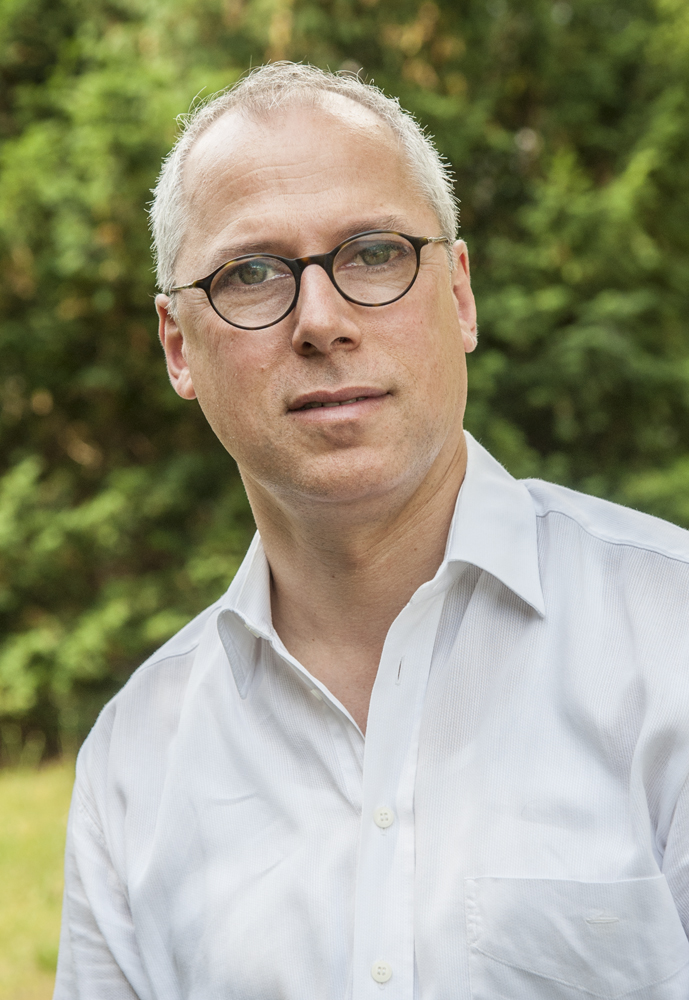
Martin Vingron is a Director and Professor at the Max Planck Institute for Molecular Genetics , leading the Computational Molecular Biology Department since 2000. He previously served as Head of Theoretical Bioinformatics at the German Cancer Research Center (DKFZ) from 1995–2000. Current: Director, Computational Molecular Biology Department (2000–present) Former: Head of Division, DKFZ (1995–2000) Research Interests : Dr. Vingron specializes in computational molecular biology , focusing on biological sequence analysis, transcriptional regulation, functional genomics, and algorithm development for molecular biology applications. His work bridges statistical methods and bioinformatics tools for analyzing genomic data. Scientific Awards : Elected Fellow of ISCB (2012) Max Planck Research Award (2004) Member of Leopoldina (2004) Honorary Professor at Freie Universität Berlin (2001) Publications : His research spans topics such as miRNA promoter recognition, histone modification correlation networks, RNA-seq assembly, and phylogenetic analysis, reflecting expertise in integrating computational methods with molecular biology challenges.
- Theoretical computer science
- Computational complexity
- Models of sequential and parallel computational systems
- +۷ مورد دیگر
Jiri Wiedermann is a Professor of Computer Science at Charles University, Prague, and has served as Director of the Institute of Computer Science at the Academy of Sciences of the Czech Republic since 2000. He previously held the position of Associate Professor at Charles University from 2000 onwards. Research interests: His work spans foundational areas of computer science, including computational complexity, neurocomputing, and non-standard computing models. He has contributed to the understanding of sequential and parallel computational systems, embodied cognition, and artificial life. Scientific awards and memberships: Member of Academia Europaea (Informatics Section) since 2006 Member of the Czech Learned Society since 2003 Board of Directors member at ERCIM since 1997 Former Vicepresident of EATCS (1997-2002) Council member of EATCS (1995-2003) Longstanding member of EATCS since 1993

Hermann Maurer is Full Professor of Computer Science at Graz University of Technology (since 1978), with additional roles as Honorary Visiting Professor at Danube University and Honorary Research Fellow at University of Auckland (till 2012). He has held leadership positions including Dean of Computer Science (2004-2007) and Chair of Informatics Section in Academia Europaea (2007-2012). Key Institutions: Graz University of Technology, Austria-Forum, JOANNEUM RESEARCH, Academia Europaea Academic Honors: Member of Finnish Academy of Sciences, Cross of Honour for Arts and Science (Austria), multiple honorary doctorates Research Focus: Networked Interactive Digital (NID) Books, Austria-Forum (1.1M entries), hypermedia systems, anti-monopoly digital frameworks, and societal impacts of technology. He pioneered second-generation web systems and co-founded conferences like ED-MEDIA and I-KNOW. Key Trends in Publications: Recent works emphasize NID systems, interactive encyclopedias, web reliability, and the future of digital libraries. His research spans e-learning, information integration, and combating web-based plagiarism. Scientific Awards: Honorary Doctorates (St. Petersburg, Karlsruhe, Calgary) AACE Fellowship (2003) Integrata Prize (2000) Enter Prize (1999) Advising & Grants: Supervised over 400 M.Sc. and 50 Ph.D. theses. Led multimillion-dollar projects including Hyperwave AG, COSTOC, and Austria-Forum. His work on optical storage and color-graphic microcomputers (MUPID) exemplifies technological innovation.

Dipl.-Ing. Dr.techn. Carlo Corinaldesi is affiliated with TU Wien's Department of Energy Economics and Energy Efficiency within the Research Unit Energy Economics and Energy Efficiency (E370-03). His research focuses on sustainable energy systems, electromobility, and smart grid technologies. He contributes to projects addressing decentralized energy systems optimization, sector coupling, and prosumer dynamics in energy transition contexts. Key research interests include energy flexibility markets, electric vehicle integration, cost-benefit analysis of charging infrastructure, and grid stability enhancement through EVs. His work explores innovative business models for aggregated flexibility in European electricity markets and the socio-technical aspects of local energy communities. Recent publications emphasize real-time trading algorithms, portfolio optimization of end-user flexibilities, and the economic viability of residential car-sharing models. He collaborates on projects analyzing transmission congestion mitigation and market potentials for new flexibility products in continental Europe. Corinaldesi's contributions span technical reports on algorithm scalability, forecasting methodologies, and dynamic interfaces between aggregators and energy management systems. His research bridges theoretical frameworks with practical implementations in energy policy and market design.

- Combinatorics
- Probability Theory
- Random Structures
- +۵ مورد دیگر
Prof. Benedikt Stufler is a Professor of Mathematics at Technische Universität Wien's Institute of Discrete Mathematics and Geometry. His research focuses on the interplay between combinatorics and probability, particularly the analysis of random structures such as graphs, trees, and maps. He holds a Habilitation in Mathematics (2022) and a Doctorate from Ludwig-Maximilians-Universität München (2015). Education: Habilitation in Mathematics, TU Wien (2022) Doctorate in Mathematics, LMU Munich (2015) Master's (Diplom-Mathematiker), LMU Munich (2013) Study abroad at Universidad de Buenos Aires (2011) Research Interests: His work combines stochastic methods with combinatorial constructions to study models of random structures. Key areas include: Limits of random structures (Gromov-Hausdorff-Prokhorov convergence) Branching processes and random maps Enumerative combinatorics and Gibbs partition models Phase transitions in weighted graphs Algorithmic sampling of combinatorial structures Recent Grants: FWF Project 'Limits of random networks' (2024–2027, €435k) Principal Investigator in SFB 'Discrete Random Structures' (2024–2028, €3.9M total) Lab/Group: Current members include postdoc Dr. Colin Desmarais and PhD students Niccolò Bosio and Philipp Beltran. He supervises master's theses in probability theory.

Markus Kuba is a Professor (FH-Professor) at FH-Technikum Wien in Vienna, Austria, where he leads the Department of Applied Mathematics and Physics. He holds a habilitation (Privatdozent) from TU Wien's Faculty of Mathematics and Geoinformation, granting him the venia docendi. He is also a teacher at HTL-Spengergasse, a higher technical institute, specializing in mathematics and computer science. His academic journey includes a PhD in Mathematics from TU Wien (2006) and a habilitation in 2013. His research focuses on theoretical computer science, analysis of algorithms, analytic combinatorics, and random structures. Notable specializations include tree structures, urn models, multiple zeta values, and SAT-problems. His work bridges combinatorial theory with practical applications in network analysis and stochastic processes. Key contributions include studies on urn models, tree growth models, and interdisciplinary projects like integrating traffic simulation tools. His publications span prestigious journals such as Theoretical Computer Science , Combinatorics, Probability and Computing , and Journal of Combinatorial Theory . Teaching spans secondary schools and universities of applied sciences since 2009, with a focus on mathematics and programming. Collaborations include co-authors from institutions worldwide, reflecting his active role in international academic networks.
Ivona Brandić is a University Professor for High Performance Computing Systems at TU Wien's Institute of Software Engineering and Interactive Systems. Born in Gradačac, Bosnia and Herzegovina, she moved to Austria in 1992 as a refugee during the Bosnian War. She earned a master's degree (2002) and doctorate (2007) in business computer science from TU Wien and completed her habilitation in applied computer science there in 2013. Her career includes roles as an assistant professor (University of Vienna, 2002–2007) and postdoctoral researcher (University of Melbourne, 2008). She transitioned to a tenure-track position at TU Wien in 2014 and became a full professor in 2016. Brandić’s research focuses on cloud computing, energy-efficient ultra-scale systems, and hybrid quantum-classical computing. She has been recognized with the MiA Award (2011), the Austrian Science Fund's Start-Preis (2015), and membership in the Austrian Academy of Sciences' Young Academy (2016). Her work emphasizes sustainable computing, edge systems, and optimizing resource management for distributed applications. Education: Bachelor's degree in Business Informatics (University of Vienna/TU Wien) Master's in Business Computer Science (University of Vienna, 2002) PhD in Applied Computer Science (TU Wien, 2007) Habilitation in Practical Computer Science (TU Wien, 2013) Research Interests: Brandić’s work spans cloud computing, energy efficiency in HPC systems, edge computing, and quantum-classical hybrid systems. She explores autonomic resource management, distributed system resilience, and sustainability in ultra-scale infrastructures. Her projects often address real-world applications like drug design, environmental monitoring, and smart energy grids. Publications: Her 2009 paper Cloud Computing and Emerging IT Platforms is a seminal work in the field. Recent publications focus on quantum-edge integration, energy optimization in AI models, and adaptive edge analytics frameworks. These contributions highlight trends toward sustainable, distributed, and hybrid computational paradigms. Awards: 2011: MiA Award for distinguished contributions by international backgrounds 2015: Austrian Science Fund’s Start Prize 2016: Austrian Academy of Sciences Young Academy Membership Advising & Grants: Brandić leads research groups and has secured grants for projects like NESSUS (energy-efficient cloud systems) and CHIST-ERA’s SDCDN (distributed networks). She mentors students in HPC, edge computing, and quantum systems. Advised topics include workload scheduling, fault tolerance, and energy-aware algorithms. Labs & Teams: She directs research on autonomic cloud management, edge intelligence frameworks (e.g., Sea-LEAP, FRESCO), and quantum-classical workflow systems (RIGOLETTO). Her teams collaborate internationally, integrating academia and industry for scalable, sustainable solutions.
Hubert Missbauer is a Full Professor for Production and Logistics Management at the University of Innsbruck. He holds a Diploma (1982) and Doctorate (1986) in Business Administration from the University of Linz, with a Habilitation in Business Administration (1994) focusing on manufacturing planning systems. His research emphasizes production planning concepts, workload control, and optimization in manufacturing systems, particularly in steel production. He co-organizes the International Working Seminar on Production Economics and serves on the editorial board of the International Journal of Production Economics . Research interests include order release optimization, production scheduling in steel industries, and quantitative methods in operations management. Recent work focuses on Lagrangian decomposition algorithms, behavioral perspectives in workload control, and integrated scheduling in steel production processes. He has published extensively in top-tier journals like International Journal of Production Research and European Journal of Operational Research . Education: University of Linz (Diploma 1982, PhD 1986, Habilitation 1994) Affiliations: Institute for Information Systems, Production and Logistics Management at University of Innsbruck Key Projects: Steel production scheduling, iterative LP-simulation algorithms, behavioral studies in manufacturing control Editorial Roles: Guest Editor for International Journal of Production Economics since 2020 His work bridges theoretical models (e.g., clearing functions, transient analysis) with practical applications in industries like steelmaking and construction. Recent presentations include discussions on Lagrangian approaches at the INFORMS Annual Meeting (2024) and EURO conferences.