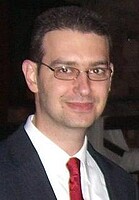
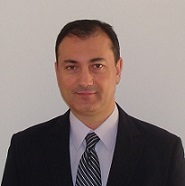
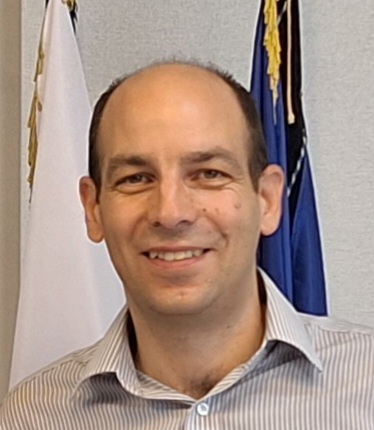
Antonios Deligiannakis is a Professor at the Department of Electronic and Computer Engineering, Technical University of Crete. His research focuses on databases, sensor networks, online analytical processing (OLAP), approximate query processing, and distributed systems. He holds a Ph.D. in Computer Science from the University of Maryland (2005), an M.Sc. from the same institution (2001), and a Diploma in Electrical & Computer Engineering from the National Technical University of Athens (1999). His career includes postdoctoral work at the University of Athens (2006–2007), a lecturer position there (2007), and an internship at AT&T Labs-Research (2003). He leads the Software Technology and Network Applications Laboratory , contributing to projects like extreme-scale analytics platforms (INFORE) and federated learning systems. Research areas span IoT workflow optimization, communication-efficient distributed learning, and real-time maritime event detection. His work emphasizes scalability, efficiency, and practical implementations for big data challenges. Courses taught include Structured Programming . Notable contributions include DAG* algorithms for IoT workflows, federated learning frameworks, and systems for proactive streaming analytics at scale. He has pioneered methods for outlier detection in sensor networks and efficient query processing over distributed streams.
Vassilios V. Dimakopoulos is a Professor of Parallel Processing at the Department of Computer Science and Engineering, University of Ioannina, Greece. He has been affiliated with the university since 1998, initially as an adjunct professor and later as a regular faculty member. Currently, he serves as the Dean of the School of Engineering and Chairman of the Technical Council of the University of Ioannina. His academic journey includes a Diploma in Computer Engineering from the University of Patras (1990), and M.A.Sc. and Ph.D. degrees in Electrical and Computer Engineering from the University of Victoria, Canada (1992 and 1996, respectively). His research focuses on parallel and distributed systems, parallel programming models, systems software, computer architecture, embedded systems, and performance analysis. He has held administrative roles such as Deputy Chairman of the Department (2014–2017) and Director of Graduate Studies (2016–2020). His contributions include pioneering work on OpenMP runtime systems, adaptive scheduling for embedded multicore architectures, and probabilistic search protocols in dynamic networks. Dimakopoulos is a member of the IEEE and the Technical Chamber of Greece. His work emphasizes bridging compiler design, runtime systems, and hardware constraints to optimize parallel computing efficiency. Recent research trends include hybrid OpenMP-MPI offloading strategies, adaptive task scheduling in heterogeneous environments, and fog computing cost modeling. His administrative leadership spans multiple institutional committees, reflecting his dual role as an academic leader and researcher. His research group collaborates on projects involving high-performance numerical optimization, task-based global optimization for protein folding, and embedded systems integration.
Panos Trahanias is Professor and Vice Chair in the Department of Computer Science at the University of Crete, and heads the Computational Vision and Robotics Laboratory (CVRL) at Foundation for Research and Technology - Hellas (FORTH). His research bridges computational vision, robotics, and embedded systems, with specific focus on humanoid robot navigation, real-time SLAM implementations, and adaptive control systems. Recent investigations include developing climbing quadruped robots, robust grip-lifting mechanisms, and probabilistic contact estimation methods for dynamically challenging terrains. Medical applications feature prominently through neural network approaches for ventilator waveform analysis in critical care settings. Hardware innovation is demonstrated through FPGA-accelerated visual SLAM architectures and reconfigurable embedded systems designed for resource-constrained robotic platforms. His work consistently advances the integration of probabilistic methods, deep learning, and adaptive control in autonomous systems.
Manolis G.H. Katevenis is a Professor at the Department of Computer Science, University of Crete, and the founder and Head of the Computer Architecture and VLSI Systems (CARV) Laboratory at the Institute of Computer Science (ICS), Foundation for Research and Technology – Hellas (FORTH) in Heraklion, Crete, Greece. He has held academic positions since 1986 and played a pivotal role in establishing the Computer Science Department at the University of Crete. His research spans computer architecture, interconnection networks, VLSI systems, and high-performance computing, with a strong focus on scalable, low-power, manycore systems and RISC-V. He has led numerous European R&D initiatives, including serving as Coordinator of the ExaNeSt project. PhD in Computer Science, University of California, Berkeley (1983) MSc in Electrical Engineering and Computer Science, University of California, Berkeley (1980) Diploma of Electrical Engineering, National Technical University of Athens (1978) Manolis Katevenis's research focuses on advancing scalable system architectures for high-performance and big data computing. His work in computer architecture includes RISC-V, exascale computing, and manycore systems. He has made foundational contributions to interprocessor communication, particularly through remote-write, remote-DMA, and remote-enqueue mechanisms, and has pioneered innovations in interconnection networks and low-latency network interfaces. His research integrates hardware and software co-design to optimize performance, energy efficiency, and scalability in large-scale computing systems. The recent publications highlight a strong trend in exascale computing, interconnection networks, and FPGA-based prototyping of manycore systems. His work emphasizes scalable, low-power architectures, with recurring themes in congestion management, fair scheduling, crossbar design, and hardware-software integration for HPC. The articles span high-impact journals such as IEEE/ACM Transactions on Networking, IEEE Micro, and Computer Networks, reflecting sustained contributions to computer architecture and networking. ACM Doctoral Dissertation Award (1984) David J. Sakrison Memorial Prize (1983) IBM PhD Fellowship (1981–1983) Greek State Fellowship (1973–1978) Stelios Pichoridis Award for Outstanding University Teaching (2015) Member of Academia Europaea (elected 2012) Award by the Secretary General of the Region of Crete (2003) IEEE Milestone recognition for the RISC Project (2015) Manolis Katevenis has supervised over 50 graduate theses and mentored many prominent Greek computer architects, including recipients of the ACM Maurice Wilkes Award. He has served as Principal Investigator or co-PI in over 30 R&D projects with a total budget exceeding 18 million euros, including major European initiatives such as ExaNeSt (which he coordinated), EuroEXA, EcoScale, SARC, ENCORE, and multiple HiPEAC Network of Excellence projects. His leadership extends to project coordination, architectural design, FPGA prototyping, and systems software development. Katevenis founded and leads the CARV Laboratory at FORTH-ICS, a major research team with 80–100 members focused on computer architecture and VLSI systems. The lab has spun off the Distributed Computing Systems (DCS) Laboratory and is central to European exascale computing efforts, including participation in the European Processor Initiative. CARV has developed large-scale prototypes such as the 768-core ExaNeSt system and the Formic FPGA platform for manycore research.
Georgios Syrakoulis serves as a full Professor at Democritus University of Thrace's School of Engineering, Department of Electrical and Computer Engineering since 2018 (appointed faculty member since 2008). He concurrently holds a visiting researcher/Professor position at UWE, UK since 2014 and maintains active industry collaborations through prior founding roles at Ulysses O.E. (1999-2002). His educational background includes a Diploma (1996) and Ph.D. (2001) in Electrical and Computer Engineering from Democritus University of Thrace. His research spans complex electronic systems , with specialized focus on memristive nanodevices, cellular automata theory, neuromorphic computing architectures, and bioinspired computational models. His work bridges theoretical frameworks with practical implementations in nanoelectronics and unconventional computing paradigms. Recent publications reveal a concentrated research trajectory in memristor-based neuromorphic and quantum computing systems , with significant contributions to modeling dynamic behavior of TaO memristors, developing virtual physarum-based computing labs, and establishing foundational frameworks for memristive networks. His scholarly output demonstrates consistent emphasis on bridging nanoscale device physics with computational architecture design. Professor Syrakoulis has supervised 11 Ph.D. dissertations, 22 Master's theses, and 75 undergraduate projects, with several receiving departmental and international awards. He has coordinated over 30 research programs funded by the EU, GSRT, HFRI, and private entities, including Wave-Based Memristive Devices (2020-2022), 1D1M Crossbar Architecture (2019-2021), and Synthesis and Performance Optimization of a Switching Nano-Crossbar Computer (2015-2019). As leader of the Electronics Laboratory, he directs research in nanoelectronic devices, memristive circuits, and unconventional computing architectures. His team maintains active collaborations through initiatives like Greek-Russian bilateral projects on quantum computing and EU-funded NANOxCOMP. He has organized international conferences including NANOARCH 2019 and PACET 2017, while presenting as invited speaker at over 30 international venues in the past five years.
Rouskas Angelos is a Professor at the Department of Digital Systems, University of Piraeus. He holds a Diploma in Electrical Engineering from the National Technical University of Athens (NTUA), a Master's in Communications and Signal Processing from Imperial College London, and a PhD in Electrical and Computer Engineering from NTUA. Previously, he served as Lecturer, Associate Professor, and Head of the Computer Systems and Communications Laboratory at the University of the Aegean (2000–2009). His research focuses on next-generation wireless networks, edge computing, and energy-efficient network design. He has led multiple national and EU-funded projects and worked as a network designer at CosmOTE (1999–2000). He chaired the Technical Committee for European Wireless 2006 and served on numerous international conference committees. Education: BEng: Electrical Engineering, NTUA MSc: Communications & Signal Processing, Imperial College London PhD: Electrical & Computer Engineering, NTUA Research Interests: His work centers on optimizing wireless networks, particularly in edge computing environments and 6G/IoT connectivity. Key areas include energy efficiency, heterogeneous network architectures, and latency reduction through adaptive resource allocation. Recent trends in his publications emphasize non-terrestrial networks and federated edge-cloud IoT systems. Grants & Leadership: He has coordinated国家级 and European projects focusing on green networks and edge computing. His technical leadership extended to roles in industry partnerships and academic administration. Labs & Collaboration: Past leadership at the Computer Systems & Communications Lab (University of the Aegean) and current involvement in edge-cloud research initiatives.
Professor Theodoridis Ioannis is a distinguished faculty member in the Department of Informatics at the University of Piraeus, where he serves as Director of the Data Science Laboratory within the School of Information and Communication Technologies. With a career spanning over two decades, he has established himself as a leading expert in data management and analysis. His research interests focus on Data Science, particularly in databases, big data management, data mining, and geoinformatics. Professor Theodoridis has made significant contributions to spatial database systems, time series analysis, and distributed data processing. His work bridges theoretical foundations with practical applications in areas such as smart cities, mobility analytics, and scientific data management. His publication record demonstrates consistent research productivity with over 100 peer-reviewed articles in top-tier venues, accumulating more than 10,000 citations. His research output shows a clear evolution from foundational database techniques toward contemporary challenges in big data analytics, machine learning integration, and privacy-preserving methods. Member of editorial board of ACM Computing Surveys (since 2016) Reviewer for numerous international journals and conferences Active participant in data management conference committees Professor Theodoridis has secured significant research funding through Horizon 2020 projects, serving as project coordinator and research team leader since 2001. His work demonstrates strong industry and academic collaboration, with applications spanning multiple domains. He has also co-authored three influential monographs in his field. He leads the Data Science Laboratory, which serves as a hub for interdisciplinary research at the intersection of database systems, machine learning, and domain-specific applications. The laboratory fosters collaboration between computer scientists, domain experts, and industry partners to address real-world data challenges.
Konstantinos Parsopoulos is a Professor at the Department of Computer Science & Engineering, University of Ioannina. He holds a Dipl. Mathematics (1998) and M.Sc. in Mathematics of Computers and Decision Making (2000) from the University of Patras, where he also earned his Ph.D. in Intelligent Optimization (2005). Prior to his current role, he served as a Lecturer at the Department of Mathematics, University of Patras (2008–2009). His academic journey includes positions as Assistant Professor (2009–2016), Associate Professor (2016–2022), and Professor (since 2022) at the University of Ioannina. His research focuses on Numerical Optimization, Computational Intelligence (including Evolutionary Computation and Swarm Intelligence), and Computational Operations Research. These areas encompass the development and analysis of metaheuristics, algorithm portfolios, and optimization techniques for real-world applications such as logistics, financial forecasting, and engineering systems. His work emphasizes parallel computing strategies, reinforcement learning for parameter adaptation, and software tools like SOMO-VCB for stochastic optimization. Parsopoulos has contributed to diverse optimization challenges, including crowdshipping models, neural network-based differential equation solvers, and variance counterbalancing in stochastic systems. His publications span topics from theoretical algorithm design to practical implementations in MATLAB and distributed computing environments. Despite his extensive contributions, no scientific awards are explicitly mentioned in the provided texts. In terms of academic leadership, he has advised numerous students (though no names are listed) and has been involved in grants related to optimization software and algorithmic research. His collaborations extend to cross-disciplinary projects in visual sensor networks, traffic light optimization, and bioinformatics, reflecting the broad applicability of his optimization methodologies.
Koutsopoulos Iordanis serves as a Professor in the Department of Informatics within the School of Information Sciences and Technology at Athens University of Economics and Business (AUEB). His office is located at 2, Troias, Kimolou & Spetson Str., 4th Floor, Office 402, with contact details including email jordan@aueb.gr and phone +30 210 - 8203 933. His research spans Federated Learning , Explainable AI for Healthcare , and Edge Computing Systems , with significant focus on the PRE-ACT project for breast cancer radiotherapy optimization. Key interests include energy efficiency algorithms, wireless networking, and AI deployment on resource-constrained devices. His work demonstrates strong interdisciplinary integration between computer science and clinical medicine. Recent publications reveal dominant trends in medical AI applications (particularly breast cancer treatment optimization), federated learning architectures for edge environments, and energy-aware systems . The PRE-ACT project constitutes a major research thrust, combining explainable AI with clinical radiotherapy decision support across multiple international institutions. He actively contributes to wireless networking research with emphasis on Software-Defined Networking (SDN) optimization, controller placement strategies, and tactical MANET implementations. His experimental work includes development of testbeds for federated learning on resource-constrained hardware.
Lazaros Papadopoulos serves as an Assistant Professor in the Department of Electrical and Computer Engineering at Democritus University of Thrace since May 2024, focusing on computational resource management for embedded and high-performance systems. His work bridges hardware-software co-design with energy-efficient computing paradigms. His academic credentials include: Bachelor's in Electrical and Computer Engineering from Democritus University of Thrace (2005) Master's degree from the same institution (2008) PhD from the National Technical University of Athens (2016) Research centers on optimizing computing infrastructure through real-time resource management, heterogeneous memory architectures, and AI workload acceleration. His investigations target energy-performance tradeoffs in GPU systems, persistent memory integration, and edge-device neural network deployment, with direct applications in sustainable computing and high-performance data processing. Publication analysis (2018-2022) reveals consistent focus on heterogeneous system optimization, particularly energy-aware GPU acceleration frameworks, memory management for DRAM/NVM hybrids, and efficient CNN implementations for edge devices. Key thematic threads include sustainable computing practices, hardware-aware AI deployment, and memory hierarchy innovations. Scientific recognition includes: Two Best Paper Awards Research leadership spans major EU initiatives: Work Package Coordinator for LAGO (Horizon Europe, 2022-2024) and PRAETORIAN (H2020, 2022-2024); Technical Coordinator for EXA2PRO (H2020, 2018-2021); and Work Package Coordinator roles in SDK4ED (H2020, 2018-2020) and EXCESS (H2020, 2013-2016). These projects address embedded systems security, exascale programming models, and energy-efficient computing toolchains. He operates within the Computer Architecture and High Performance Systems laboratory, directing research on computational resource orchestration for next-generation heterogeneous platforms.
Dionysios Pneumatikatos is a Professor at the School of Electrical and Computer Engineering of the National Technical University of Athens (NTUA) since September 2019. Previously, he served as a Professor and Chair of the Department of Electronic and Computing Engineering at the Technical University of Crete (2000–2019) and is an Associate Researcher at the Foundation for Research and Technology (FORTH) since 1997. His primary affiliations include the Computing Systems Laboratory (CSLab) at NTUA and the Computer Architecture and VLSI Systems (CARV) Laboratory at FORTH. Education: B.Sc. in Computer Science, University of Crete (1989) M.Sc. and Ph.D. in Computer Science, University of Wisconsin–Madison (1991, 1995) Research Interests: Computer Architecture Reconfigurable Computing Hardware Acceleration (e.g., FPGA, RISC-V) Energy-Efficient Systems Reliable System Design Application-Specific Architectures His work focuses on heterogeneous parallel systems , bioinformatics accelerators , and virtualization frameworks for reconfigurable platforms . Recent Projects & Contributions: Coordinator of the FASTER (FP7) project Principal Investigator in EDRA (H2020), EXTRA , and dReDBox Key roles in AXIOM , DeSyRe , and VPLANET These projects explore FPGA-based HPC systems , RISC-V ecosystems , and disaggregated data center architectures . Teaching & Mentorship: Teaches courses on Computer Architecture , Parallel Processing , and Logic Design at NTUA and TU Crete Supervised multiple national/EU projects, fostering interdisciplinary research in embedded and high-performance systems Labs & Networks: Active member of the HiPEAC European Network Program Committee roles at ISCA , FPL , and DATE Led the 21st International Conference on Field-Programmable Logic and Applications (FPL)
Euripides Petrakis is a Professor at the School of Electrical and Computer Engineering of the Technical University of Crete (TUC), serving as Director of the Intelligent Systems Laboratory since 2006. He holds a B.Sc. in Physics from National University of Athens (1985) and a Ph.D. in Computer Science from University of Crete (1993). His research focuses on cloud computing, IoT, semantic web technologies, and image databases. Notable achievements include over 175 publications with a Google Scholar citation count exceeding 4000, attracting €2.5M in EU and Greek Government funding. Education: B.Sc. Physics (1985), Ph.D. Computer Science (1993) Research interests span: - Cloud computing and microservices orchestration - IoT security and interoperability - Semantic web ontologies for service descriptions - Edge computing architectures Recent work emphasizes Kubernetes scheduling optimizations, real-time video processing, and GDPR-compliant IoT frameworks. His group developed systems like TWIST, DeFog, and CLONE, addressing challenges in distributed systems and semantic interoperability. Awards: TUC Excellence Award (2022), AINA 2024 Best Paper Advising over 30 graduate students, Prof. Petrakis has coordinated 15+ research projects. His lab explores next-generation cloud-edge architectures and semantic web of things standards.
Christoforos Kachris is an Assistant Professor at the Department of Electrical and Electronics Engineering, University of West Attica since 2023. Previously, he co-founded and led InAccel, a startup pioneering FPGA deployment in the cloud, securing €500k in funding and winning awards like the Venture Impact Award (2021) and DeepBlue Cup (2019). He led EU projects such as VINEYARD (€6.3M, 2016–2018), the first to deploy FPGAs in cloud data centers. His research spans reconfigurable computing, hardware accelerators, cloud computing, and optical interconnects, with over 90 publications and 2,700+ citations. Education: Ph.D. (2007, Delft University of Technology), M.Sc. (2003, Technical University of Crete), and Diploma (2001, Technical University of Crete). His Ph.D. focused on FPGA-based network processing, with internship at Xilinx Research Labs, resulting in a US patent on configurable transactional memories. Research interests include machine learning on embedded systems, FPGAs, edge AI, reconfigurable computing, and optical interconnects. He has advised numerous students, many now in tech roles at Cisco, IBM, Ericsson, and startups. Notable contributions include a highly cited survey on optical interconnects in data centers and leadership in projects like VINEYARD and CloudAccel (Principal Investigator). Awards include Venture Impact Award and recognition in international hardware competitions.
Dr. Panagiota Fatourou is a Professor in the Department of Computer Science at the University of Crete and a senior researcher at the Institute of Computer Science (ICS), Foundation for Research and Technology - Hellas (FORTH). She holds a dual affiliation, contributing significantly to both institutions. She has previously served as faculty at the University of Ioannina and held postdoctoral positions at the Max-Planck-Institut für Informatik and the University of Toronto. She has also been a visiting professor at École Polytechnique Fédérale de Lausanne (EPFL). Her research spans the theoretical and practical foundations of parallel and distributed computing. She is a leading expert in concurrent data structures, transactional memory, and the use of persistent memory in system design. Her work integrates theoretical rigor with practical implementation, often publishing in top-tier venues like PPoPP, PODC, SPAA, and PVLDB. Recent publications highlight her focus on efficient garbage collection for multiversioning, persistent data structures, and distributed data series similarity search, reflecting a trend towards high-performance, fault-tolerant systems for modern hardware. Best Paper Award, PPoPP 2022 Marie-Curie Individual Fellowship FSMP Distinguished Professor Fellowship ACM Distinguished Speaker Featured ACM Member Dr. Fatourou has a strong record of leadership and mentorship. She has advised numerous MSc and PhD students and is actively recruiting for her PERSIST project, funded by HFRI. She has led major research initiatives, including the EU-funded TransForm network and the GreenVM project. Her leadership extends to the broader community, where she has served as Past Chair of the ACM Europe Council, Chair of the Greek ACM-W Chapter, and on the steering committees of PODC and OPODIS. She has also co-organized key events on gender equality in computing, such as the Summits on Gender Equality in Computing (GEC) and the WISTEM Summer School. She is deeply involved in the academic service, frequently serving on program committees for premier conferences such as SPAA, NETYS, and SRDS. Her laboratory and research team at FORTH ICS and the University of Crete focus on building the theoretical underpinnings and practical implementations of next-generation concurrent and distributed systems.
Christos Kotselidis is an Associate Professor at the University of Manchester's School of Computer Science and serves as Chief Engineer at Pierer Innovation (previously mentioned as KTM Innovation). He leads the TornadoVM project, a groundbreaking Java Virtual Machine for heterogeneous hardware acceleration. His work bridges academia and industry, focusing on hardware/software co-design for virtual machines and embedded systems. His research spans chip design, micro-architecture, compilers, virtual machines, and garbage collection. Dr. Kotselidis has pioneered work in heterogeneous computing, particularly in accelerating Java applications on GPUs, FPGAs, and RISC-V architectures. His team's recent development of GPULlama3.java demonstrates the practical application of his research in bringing LLM inference to pure Java with GPU acceleration. His publications show a consistent focus on bridging hardware capabilities with managed runtime systems. The research trajectory reveals increasing sophistication in handling memory hierarchies, parallelism, and cross-architecture execution. His work has significant implications for high-performance computing, AI acceleration, and sustainable computing practices. Dr. Kotselidis actively contributes to the academic community as a program committee member for conferences like ISMM and as an organizer for workshops including VMIL and MoreVMs. He's also involved in EU-funded projects like AERO and DARE, which focus on European processor initiatives and software ecosystems. As project lead for TornadoVM, he mentors a research team at Manchester including Michalis Papadimitriou, Mary Xekalaki, and Thanos Stratikopoulos. His lab (Beehive Lab) develops open-source tools that are widely used in both academic and industrial settings for heterogeneous computing.