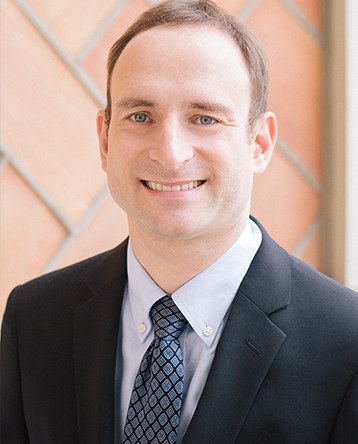
Franz Franchetti is the Kavčić-Moura Professor of Electrical & Computer Engineering at Carnegie Mellon University. He serves as Associate Dean for Research and Director of the Engineering Research Accelerator at CMU. Education: Ph.D. in Computational Mathematics (Vienna University of Technology, 2003) M.Sc. in Technical Mathematics (Vienna University of Technology, 2000) His research interests focus on automatic performance tuning and program generation for emerging parallel computing platforms , including multicore CPUs , GPUs , and 3DIC chip design . He leads the SPIRAL effort to automate highly optimized software libraries and explores domain-specific compiler transformations in HPC applications for smart grids and material sciences . Recent work extends SPIRAL to quantum computing . The scientific awards Franchetti has received include the Gordon Bell Prize (2006) , HPC Challenge Class II Award (2010) , and the CIT Dean's Early Career Fellowship (2013) . He and his students have won multiple Best Paper Awards at HPEC, DAC, and ISPA ACM TODAES Best Paper (2014) Student Research Competition wins (PACT 2024, CGO 2023) Franchetti has advised students like Richard Veras and Thom Popovici . He has secured significant grants from agencies such as DARPA, DOE, NSF, and industry partners (Intel, NVIDIA, Mercury). He co-founded SpiralGen, Inc. and holds leadership roles in organizations like ASciNA Western Pennsylvania and as Honorary Consul of Austria in Pittsburgh.
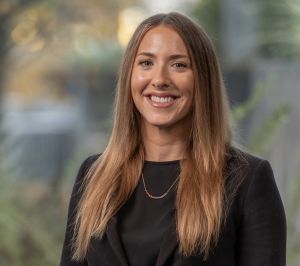
Ashley Cordes (Coquille/KōKwel) serves as an Assistant Professor of Indigenous Media in Environmental Studies and Data Science at the University of Oregon's College of Arts and Sciences. She is also a recent American Council of Learned Societies Fellow whose research bridges Indigenous science and technology studies, digital media, and environmental/place-based studies. Her educational background includes a PhD in Media Studies with an outside area in Native American Studies from the University of Oregon (2019), an MA in Communication from Hawaii Pacific University (2012), and a BA in Communication with a Journalism Certificate from Loyola Marymount University (2010). Cordes' research centers on how Indigenous culture and technology producers leverage digital media, emerging technologies, and discourse to advance Tribal sovereignty, cultural revitalization, and the resurgence of Indigenous knowledge systems. Her work specifically examines AI, blockchain, and cryptocurrency through Indigenous epistemologies, challenging dominant narratives about technological progress and financial systems. She has published in journals such as Cultural Studies >Critical Methodologies , Journal of International and Intercultural Communication , and Feminist Media Studies , and is the author of Indigenous Currencies: Leaving Some for the Rest in the Digital Age (MIT Press). Her recent publications reveal a consistent focus on decolonial approaches to technology, with particular attention to Indigenous data sovereignty, environmental justice, and alternative economic systems. The trajectory of her work shows increasing engagement with AI ethics from Indigenous perspectives, culminating in her contributions to the Indigenous Protocol and Artificial Intelligence position paper. American Council of Learned Societies Fellow Contributor to Indigenous Protocols and Artificial Intelligence Working Group Cordes actively mentors doctoral students in Indigenous digital media and participates in multiple research collectives including Abundant Intelligences, CHoRUS Network (focusing on ethical data gathering in Indigenous contexts), Indigenous Protocols and Artificial Intelligence, and the Climate Resilience Taskforce. Her community-engaged work includes the Storying on the Coquille River project, which addresses climate change impacts on salmon populations through digital humanities approaches. She maintains strong connections to her Coquille Nation community, serving on the Climate Resilience Taskforce and as Chair of the Culture and Education Committee, ensuring her academic work remains grounded in community needs and Indigenous knowledge systems.
Prof. Dr. Rudi Zagst is a Professor of Mathematical Finance at the Technical University of Munich (TUM), where he serves as Head of the Department of Mathematical Finance within the TUM School of Computation, Information and Technology. He has held this position since 2001 and is actively involved in teaching, research, and academic leadership. In 2003, he was appointed as a second member of the Faculty of Economics, and since 2004, he has served as Deputy Chairman of the joint elite degree program 'Finance & Information Management' of the University of Augsburg and TUM. Prof. Zagst earned his doctorate in business mathematics from the University of Ulm, where he later completed his habilitation in 2000. His academic journey began with a professional career at HypoVereinsbank AG, where he served as Head of Product Development in Institutional Investment Management before becoming Managing Director of RiskLab GmbH in 1997. His research focuses primarily on financial engineering, risk management, and asset management, with particular emphasis on portfolio optimization, mathematical finance, and quantitative risk management. His work bridges theoretical finance with practical applications, often incorporating advanced mathematical techniques to solve complex financial problems. Recent publications demonstrate his continued interest in GARCH models, portfolio optimization under various constraints, and the application of machine learning techniques to financial problems. Analysis of his recent publications (2024-2025) reveals a strong focus on portfolio optimization under complex market conditions, particularly using GARCH models to capture volatility dynamics. His work increasingly incorporates machine learning techniques (as seen in the credit spread analysis paper) while maintaining rigorous mathematical foundations. Many papers explore the intersection of theoretical finance with practical investment strategies, reflecting his commitment to bridging academic research with real-world financial applications. Professor of the Year 2007 (awarded by Unicum Profession magazine) Prof. Zagst has supervised numerous bachelor's, master's, and doctoral theses through TUM's Finance and Actuarial Science research group. His collaborative work with industry partners through the TUM CAIR Labs and RiskFactory demonstrates strong connections between academic research and practical financial applications. He has received research funding through various industry partnerships with major financial institutions including Allianz, Munich Re, and ERGO Group AG. Prof. Zagst leads the Research Group Finance and Actuarial Science at TUM, which includes Professors Matthias Scherer, Aleksey Min, and Christoph Knochenhauer. The group maintains strong industry connections through the TUM CAIR Labs initiative, collaborating with over 25 financial institutions including Allianz, Munich Re, Deloitte, PwC, and KPMG. Their RiskFactory laboratory serves as a bridge between academic research and practical financial risk management applications in the industry.
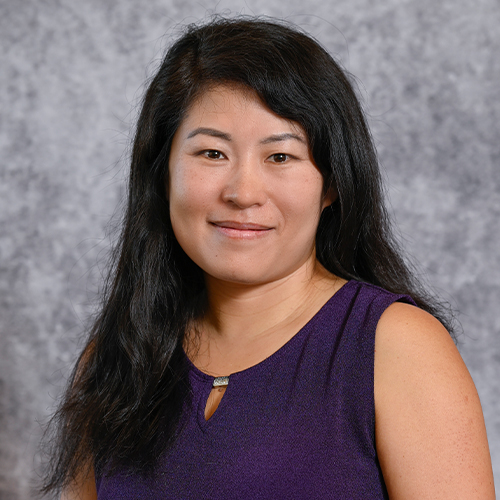
Ruth Fong is a Teaching Professor at the Department of Computer Science, Princeton University , where she teaches foundational and advanced AI/ML courses (COS324, COS126) while leading the Looking Glass Lab in explainable AI research. She collaborates closely with the Visual AI Lab and Professor Olga Russakovsky . Education: PhD in Visual Geometry Group, University of Oxford (advised by Andrea Vedaldi , funded by Rhodes Trust and Open Philanthropy ) MSc in Neuroscience, University of Oxford (with Rafal Bogacz , Ben Willmore , and Nicol Harper ) AB in Computer Science, Harvard University (with David Cox and Walter Scheirer ) Research Focus: Pioneering Explainable AI and ML Fairness , with emphasis on post-hoc model understanding, interpretable-by-design architectures, and human-AI interaction frameworks. Her work spans computer vision, self-supervised learning, and neuroscience-inspired methodologies. Publication Trends: Recent papers (2023-2025) analyze interactive explanations , concept salience , and gender artifacts in vision datasets . Earlier work (2017-2020) established foundational techniques in extremal perturbations , backpropagation saliency , and neural network interpretability . Scientific Awards: Princeton Engineering Council Teaching Award (2025) Keller Center Summer Course Development Grant (2025) CHI Honorable Mention Paper Award (2023) Open Philanthropy AI Fellowship (2018) Rhodes Scholarship (2015) Advising: Directly mentored 10 Princeton undergraduates on IW/senior theses projects spanning generative AI , medical imaging fairness , and interactive visualization tools . Grants include Princeton SEAS and Open Philanthropy funding for the Looking Glass Lab. Lab & Team: Leads the Looking Glass Lab with 6 graduate/postgraduate members including Rawand Aziz , Matthew Barrett , and Ben Wachspress . Collaborates with faculty across Princeton and Oxford.
Heng Ji is a Professor at the Siebel School of Computing and Data Science , affiliated with the Department of Computer Science , Electrical and Computer Engineering Department , and multiple research labs including the Coordinated Science Laboratory and Carl R. Woese Institute for Genomic Biology at the University of Illinois Urbana-Champaign. She serves as an Amazon Scholar and Founding Director of the Amazon-Illinois Center on AI for Interactive Conversational Experiences (AICE) and CapitalOne-Illinois Center on AI Safety and Knowledge Systems (ASKS) . B.A. and M.A. in Computational Linguistics from Tsinghua University M.S. and Ph.D. in Computer Science from New York University Her research bridges Natural Language Processing with Vision-Language Models , Knowledge-Enhanced LLMs , and AI for Science (e.g., chemical language modeling). She leads major multi-institutional projects such as DARPA ECOLE MIRACLE , KAIROS RESIN , and DEFT Tinker Bell , while advising governments (U.S. Air Force Data Analytics Expert Panel) and industry (Amazon, Google, IBM). Her work on multimodal reasoning, agent-based systems, and chemical language models (e.g., mCLM ) has been supported by NSF, DARPA, and corporate partners. Recent publications (2025) focus on LLM agents , vision-language integration , and scientific knowledge acquisition . Awards include NSF CAREER , IEEE Intelligent Systems' AI's 10 to Watch , and multiple Outstanding Paper Awards at ACL/NAACL. She advises students like Chi Han (ACL/NAACL awardee) and post-docs Xiusi Chen and Yuji Zhang , and leads the BLENDER Lab , which develops frameworks like WiNELL (Wikipedia updating) and ProteinZero (protein generation). She has also served as NAACL Secretary and Program Co-Chair for ACL-IJCNLP2022. Outstanding Paper Award at ACL2024 Two Outstanding Paper Awards at NAACL2024 Young Scientist by World Laureates Association (2023-2024) AI's 10 to Watch by IEEE (2013) NSF CAREER (2009) Google/IBM/Bosch Research Awards
Minsu Kim is a CIFAR AI Safety Post-doc Fellow at KAIST and Mila, collaborating with Prof. Yoshua Bengio, Prof. Sungjin Ahn, and Prof. Sungsoo Ahn. His work bridges System 2 Deep Learning, Bayesian posterior inference, and combinatorial optimization. Ph.D., Industrial Engineering, KAIST (2025) M.S., Electrical Engineering, KAIST (2022) B.S., Mathematics and Computer Science (Dual Degree), KAIST (2020) Kim's research focuses on enabling AI systems to measure uncertainty, represent causality, and perform sequential reasoning for safety-guaranteed planning. His methodology integrates GFlowNets and diffusion models with off-policy amortized inference, targeting applications in scientific discovery , hardware design optimization , and large language model alignment . Recent work explores Bayesian posterior inference through GFlowNets, aiming to unify deep learning with probabilistic reasoning. His 15 most recent publications (2025–2024) reveal a trend of combining combinatorial optimization with generative models for tasks like molecular graph discovery, vehicle routing, and neural architecture search. He also investigates diffusion samplers for Bayesian inverse problems and symmetry-based neural methods (Sym-NCO) to enhance sample efficiency. Jang Yeong Sil Fellowship (2025) KAIST Presidential Best Ph.D. Thesis Award (2025) Qualcomm Innovation Fellowship (2023) DesignCon Best Paper Awards (2021–2022) Kim's collaborations span KAIST's Industrial Engineering department and Mila's AI research groups. He actively contributes to academic peer review for top conferences (NeurIPS, ICML, ICLR) and journals (IEEE TNNLS, TPAMI), emphasizing the intersection of AI safety , uncertainty quantification , and systemic reasoning .
Julia DiBenigno is a Professor of Organizational Behavior at Yale School of Management, where she has been faculty since 2016 and was promoted to full professor in 2023. She holds a courtesy appointment in Sociology and is an organizational ethnographer whose research focuses on the sociology of work, professional collaboration, upward influence, and organizational change. Her research interests include understanding how professional groups collaborate across boundaries, how frontline workers can effectively voice concerns upward in organizational hierarchies, and how organizations navigate change during crises. She specializes in qualitative, ethnographic methodologies, immersing herself in organizational settings ranging from hospitals to the U.S. Army to uncover the social dynamics that shape workplace behavior. DiBenigno's publication record includes multiple articles in top journals like Administrative Science Quarterly and Organization Science, with her most recent work examining how crises create opportunities for implementing long-resisted changes. Her research demonstrates patterns where frontline staff can successfully push through organizational resistance when they move quickly and demonstrate both short- and long-term value of their proposals. Ned Smith Rising Star Award, Organization & Management Theory Division of the Academy of Management, 2023 Thinkers50 Radar List, Class of 2022 Equity, Diversity, and Inclusion Research Award, NYU Wagner, 2021 Grigor McClelland Best Dissertation Award, EGOS, 2017 W. Richard Scott Outstanding Paper Award, American Sociological Association, 2016 As an educator, DiBenigno teaches Managing Groups & Teams and Power & Politics at Yale SOM. Her research on team dynamics has revealed insights about coordination loss, the common knowledge problem in group decision-making, and how hierarchical structures can both help and hinder effective teamwork. Her work with healthcare providers during the pandemic demonstrated how team identification reduces stress and burnout among frontline workers.
Nicolò Cesa-Bianchi is a Professor of Computer Science at the University of Milan, where he serves as head of the Computer Science programs. He is also associated with the Department of Electronics, Information and Bioengineering (DEIB) at Politecnico di Milano. Cesa-Bianchi holds significant leadership roles including Board member, Fellow and co-director of the Milan unit of the European Laboratory for Learning and Intelligent Systems (ELLIS), and membership in the prestigious Accademia Nazionale dei Lincei. He is also involved with The European Lighthouse on Secure and Safe AI (ELSA), The European Lighthouse of AI for Sustainability (ELIAS), and The FAIR foundation. Professor Cesa-Bianchi's research focuses on the theoretical foundations of machine learning, with special emphasis on sequential decision making and online learning algorithms. His work spans multiple areas including multi-armed bandit problems, regret analysis, prediction with expert advice, and learning on graphs. He has made significant contributions to understanding the theoretical limits of learning algorithms and developing efficient methods for various learning scenarios. His research has important applications in online markets, social networks, and bioinformatics. His monographs 'Prediction, Learning, and Games' and 'Regret Analysis of Stochastic and Nonstochastic Multi-armed Bandit Problems' are considered seminal works in the field. His recent publications demonstrate continued leadership in advancing the theoretical understanding of machine learning, with 2024-2025 papers covering cooperative online learning, multitask learning, fair trade mechanisms, and refined analyses of bandit algorithms. The research shows increasing focus on practical economic applications while maintaining strong theoretical foundations. Google Research Award Xerox Foundation UAC Award Member of the Accademia Nazionale dei Lincei ELLIS Fellow Cesa-Bianchi has been deeply involved in academic service, having served as action editor for the Machine Learning Journal, IEEE Transactions on Information Theory, and the Journal of Machine Learning Research. He currently serves as associate editor for the Journal of Information and Inference and TheoretiCS. He has held leadership positions including President of the Association for Computational Learning and member of the steering committee for the EC-funded Network of Excellence PASCAL2. He was program chair of the 13th Annual Conference on Computational Learning Theory and the 13th International Conference on Algorithmic Learning Theory. He leads the Laboratory for AI and Learning Algorithms (ALGA) at the University of Milan, which focuses on theoretical and applied research in machine learning. His international collaborations are extensive, with visiting positions at UC Santa Cruz, Graz Technical University, Ecole Normale Supérieure in Paris, Google, and Microsoft Research. As an educator, he teaches advanced courses including Reinforcement Learning and Statistical Methods for Machine Learning, and has supervised numerous students through the years.
Jason Cong is the Volgenau Chair for Engineering Excellence and Distinguished Chancellor's Professor in the Computer Science Department at UCLA's Samueli School of Engineering. He directs the Center for Domain-Specific Computing (CDSC) and the VLSI Architecture, Synthesis, and Technology (VAST) Laboratory, and serves as Associate Vice Provost for Internationalization and Co-Director of UCLA/PKU Student and Scholar Program. Dr. Cong's research spans electronic design automation, customizable computing for machine learning and big-data applications, quantum computing, and highly scalable algorithms. His work has produced over 500 publications with more than 41,000 citations and an H-index of 106. His recent work focuses on quantum computing compilation, domain-specific acceleration for AI workloads, and high-level synthesis optimization techniques that leverage machine learning. His publication trend shows a strong emphasis on quantum computing and machine learning acceleration in recent years, with numerous papers on quantum layout synthesis, LLM acceleration, and high-performance FPGA implementations. His team has developed frameworks like TAPA for task-parallel dataflow programming and RapidStream for automated parallel implementation of FPGA designs. Member of National Academy of Engineering (2017) IEEE Robert N. Noyce Medal recipient (2022) Phil Kaufman Award recipient (2024) ACM Chuck Thacker Breakthrough Award recipient (2024) 18 Best Paper Awards across major conferences Multiple 10-Year Retrospective Most Influential Paper Awards Dr. Cong has graduated 50 PhD students, many of whom are now faculty at major research universities or hold key positions at leading tech companies. He has led over 100 research projects funded by DARPA, NSF, SRC, and industry sponsors. His entrepreneurial activities include founding three successful companies (Aplus Design Technologies, AutoESL, and Falcon Computing Solutions), all acquired by major EDA players. His VAST Laboratory continues to push boundaries in domain-specific computing, with active research in quantum computing, AI acceleration, and high-performance FPGA implementations.
Harish Ravichandar is an Assistant Professor at the School of Interactive Computing , Georgia Institute of Technology, and a core faculty member of the Institute for Robotics and Intelligent Machines (IRIM) . He leads the Structured Techniques for Algorithmic Robotics (STAR) Lab , focusing on structured computational frameworks and learning algorithms with inductive biases to enhance robot efficiency, reliability, and self-sufficiency in human-robot collaboration and complex applications like dexterous manipulation and multi-agent coordination. His research bridges robot learning , human-robot interaction , and multi-agent systems , emphasizing stable, frugal, and safe skill acquisition from human demonstrations. Key themes include intention inference , trajectory optimization , and heterogeneous team coordination , often leveraging Koopman operators , hypernetworks , and graph-based methods . Scientific recognition includes the NSF CAREER Award , IEEE MRS Best Paper Award , and Georgia Tech’s College of Computing Outstanding Post-Doctoral Research Award . His work also received the ASME DSCC Best Student Paper Award and P&W Institute Graduate Fellowship . Harish’s educational background includes a Ph.D. in Electrical and Computer Engineering from the University of Connecticut (2018) , an M.S. from the University of Florida (2014) , and a B.E. in Instrumentation and Control Engineering from Anna University (2012) . He previously held postdoctoral and research scientist roles at Georgia Tech before his current position.
Simo Hostikka is a Professor in the Department of Civil Engineering at Aalto University's School of Engineering. His research focuses on fire safety engineering , utilizing numerical fire simulations to address critical challenges in building and infrastructure safety. Key Expertise: Fire Dynamics Simulator (FDS) development, thermal radiation heat transfer, pyrolysis modeling, fire toxicity calculations, and probabilistic risk analysis. Leadership: Supervises advanced fire safety research and contributes to international fire safety standards. Research Trends: Recent publications emphasize fire toxicity modeling , hydrogen fire safety , radiation heat transfer , and fire retardancy of polymeric materials . His work bridges computational methods with real-world fire safety applications. Scientific Awards: Philip Thomas Medal of Excellence (2008, 2005) Sjölin Award (2012) Interflam Trophy (2007) Harmathy Award (2020, 2019) Dean’s Award for Best MSc Thesis (2020) Best Paper in Rakenteiden Mekaniikka (2009) Advising: Supervised Topi Sikanen, who received the Young Talent Award from the International Water Mist Association.
Dr. Min Chi is a Professor in the Department of Computer Science at North Carolina State University, where she joined in 2013 as a Chancellor's Faculty Excellence Program cluster hire in the Digital Transformation of Education. Her academic journey includes a Ph.D. and M.S. in Intelligent Systems from the University of Pittsburgh and a B.E. in Information Science and Technology from Xi'an Jiaotong University, China. She completed postdoctoral fellowships at Carnegie Mellon University's Machine Learning Department and Stanford University's Human Sciences and Technologies Advanced Research Institute. Dr. Chi's research focuses on the development and empirical evaluation of cutting-edge Artificial Intelligence, Deep Learning, and Reinforcement Learning frameworks tailored for addressing human-centric challenges. Her work spans multiple domains including advanced learning technologies, AI and intelligent agents, data sciences and analytics, and human-computer interaction. She has made significant contributions to intelligent tutoring systems, healthcare applications, nuclear power systems, and humanitarian efforts such as food distribution and disaster relief. Her publication record demonstrates a strong focus on applying AI techniques to real-world educational challenges, with recent work examining metacognitive knowledge transfer, reinforcement learning for pedagogical policy induction, and deep learning approaches for proactive help in educational settings. Her research also extends to healthcare applications, food distribution systems, and other socially impactful domains. 10 Best Paper, Best Student Paper, and Outstanding Paper Awards Prestigious Alcoa Foundation Engineering Research Achievement Award NSF CAREER Award Dr. Chi leads multiple significant research projects funded by the National Science Foundation, National Institutes of Health, and the Department of Energy, with a total funding exceeding $7 million. Her work bridges theoretical advances in AI with practical applications that address critical societal challenges in education, healthcare, and humanitarian operations.
Martin D F Wong serves as the Edward C. Jordan Professor of Electrical and Computer Engineering and Executive Associate Dean for the College of Engineering at the University of Illinois at Urbana-Champaign. He is affiliated with the Coordinated Science Laboratory and has been instrumental in advancing electronic design automation research. His educational background includes: B.Sc. in Mathematics, University of Toronto (1979) MS in Mathematics, University of Illinois at Urbana-Champaign (1981) Ph.D. in Computer Science, University of Illinois at Urbana-Champaign (1987) Wong's research centers on combinatorial optimization and algorithm design for VLSI systems, with particular expertise in lithography-aware physical design, field-programmable systems, and electronic packaging. His work bridges theoretical algorithms with practical semiconductor manufacturing challenges as feature sizes shrink below 20 nanometers. Current research focuses on integrating chip design with next-generation lithography technologies including triple-patterning, self-aligned double patterning, directed self-assembly, and extreme ultraviolet processes. His publication record shows consistent contributions to electronic design automation, with emphasis on manufacturing-aware physical design algorithms and circuit optimization techniques. Recent work addresses the critical interface between circuit layout and lithography processes as semiconductor technology advances to 14nm and beyond. Scientific recognition includes: Fellow of IEEE and ACM 2000 IEEE Donald O. Peterson Best Paper Award Multiple Best Paper Awards at DAC, ICCD, and ICCAD conferences IBM Faculty Awards (2000, 2004) NSF Research Initiation Award Wong has secured significant research funding including a $450,000 NSF grant for lithography-aware physical design and has supervised over 49 PhD students. His work continues the legacy of integrated circuit innovation at Illinois, building on foundational contributions like Jack Kilby's integrated circuit invention. Current research initiatives focus on optimizing chip design for next-generation manufacturing processes where optical interference challenges require co-design of layout and fabrication. He leads research within the Coordinated Science Laboratory, focusing on electronic design automation algorithms that address the growing complexity of semiconductor manufacturing at nanometer scales.
Prashant Mehta is a Professor of Mechanical Science and Engineering at the University of Illinois at Urbana-Champaign , affiliated with the Coordinated Science Laboratory . His research focuses on controlled interacting particle systems and machine learning applications , particularly in human activity recognition using motion sensors. Education: Ph.D. in Mathematics, Cornell University (2004) M.S. in Electrical & Computer Engineering, University of Massachusetts Amherst (1996) B.E. in Electrical & Electronics Engineering, Birla Institute of Technology & Sciences (1993) Mehta's work has pioneered the feedback particle filter (FPF) algorithm for nonlinear estimation, applied in robotic systems and gesture recognition. His research spans control of combustion instabilities in jet engines, mean-field games , and dynamical systems in aerospace engineering. His publications emphasize nonlinear control theory and stochastic filtering , with recent trends in sensor data pattern recognition and cyber-physical systems . He has received multiple scientific awards , including the MURI award for the Cyberoctopus project and Excellence in Undergraduate Advising Awards . Scientific Honors: MURI Award (2019) for Cyberoctopus Excellence in Undergraduate Advising (2010, 2008) Outstanding Teaching Assistant Award (1994) Senior Member, IEEE Control Systems Society Member, ASME Energy Systems Subcommittee Member, SIAM Dynamical Systems Group Mehta has supervised students like Jin Kim (IEEE CDC Best Student Paper, 2019) and co-founded the startup Rithmio , acquired by Bosch Sensortec . His laboratory develops gesture-detection filters for applications in soft robotics and human-machine interfaces .
Pardis Emami-Naeini is an Assistant Professor of Computer Science at Duke University, with joint appointments in the Sanford School of Public Policy and the Department of Electrical and Computer Engineering. She serves as the Director of the Duke Interdisciplinary Security, Privacy, and Interaction Research (InSPIre) lab and is a Duke Science and Technology Scholar. Her interdisciplinary work bridges computer science, public policy, and electrical engineering, with a focus on developing usable privacy and security solutions that empower individuals from diverse sociodemographic backgrounds. Dr. Emami-Naeini earned her Ph.D. in Computer Science from Carnegie Mellon University in 2020, followed by postdoctoral research at the University of Washington (2020-2022). Her research sits at the intersection of security, privacy, and human-computer interaction, with particular expertise in IoT security, technology-enabled abuse, reproductive health privacy, and smart city security. She has published extensively at flagship venues including IEEE S&P, CHI, CSCW, and SOUPS, with her work covered by major media outlets such as Wired and The Wall Street Journal. Her recent publications reveal a clear trajectory toward examining the human dimensions of security and privacy in emerging technologies, from LLM chatbots for mental health to social robots and period-tracking apps in the post-Roe v. Wade landscape. Her work consistently emphasizes the need for privacy-aware design that accounts for diverse user needs and contexts, particularly for vulnerable populations. Google Systems and ML Research Gift Award (2025) Google AI Research Scholar Program Award (2024) Top 5% Instructor in Duke Trinity College (2024) ORAU Ralph E. Powe Junior Faculty Enhancement Award (2023) Duke Science and Technology Scholar (2022) IEEE S&P paper highlighted in IEEE Security and Privacy Magazine (2021) CyLab Presidential Fellowship (2019) Dr. Emami-Naeini actively mentors several Ph.D. students including Jabari Kwesi, Jessie Cao, and Hiba Laabadli, as well as undergraduate and master's students. Her research has influenced key organizations including the National Institute of Standards and Technology (NIST), Consumer Reports, and the World Economic Forum in creating usable security and privacy labels for smart devices. She serves on numerous program committees including USENIX Security and CHI, and has participated in NSF grant review panels, demonstrating her growing leadership in the security and privacy community. Her InSPIre lab conducts user-centered research to uncover security and privacy needs of diverse stakeholders, with a particular focus on marginalized communities. The lab's work spans multiple domains including intimate partner violence, reproductive health, virtual reality, and smart cities, always with a strong emphasis on translating research findings into practical tools and policy recommendations.