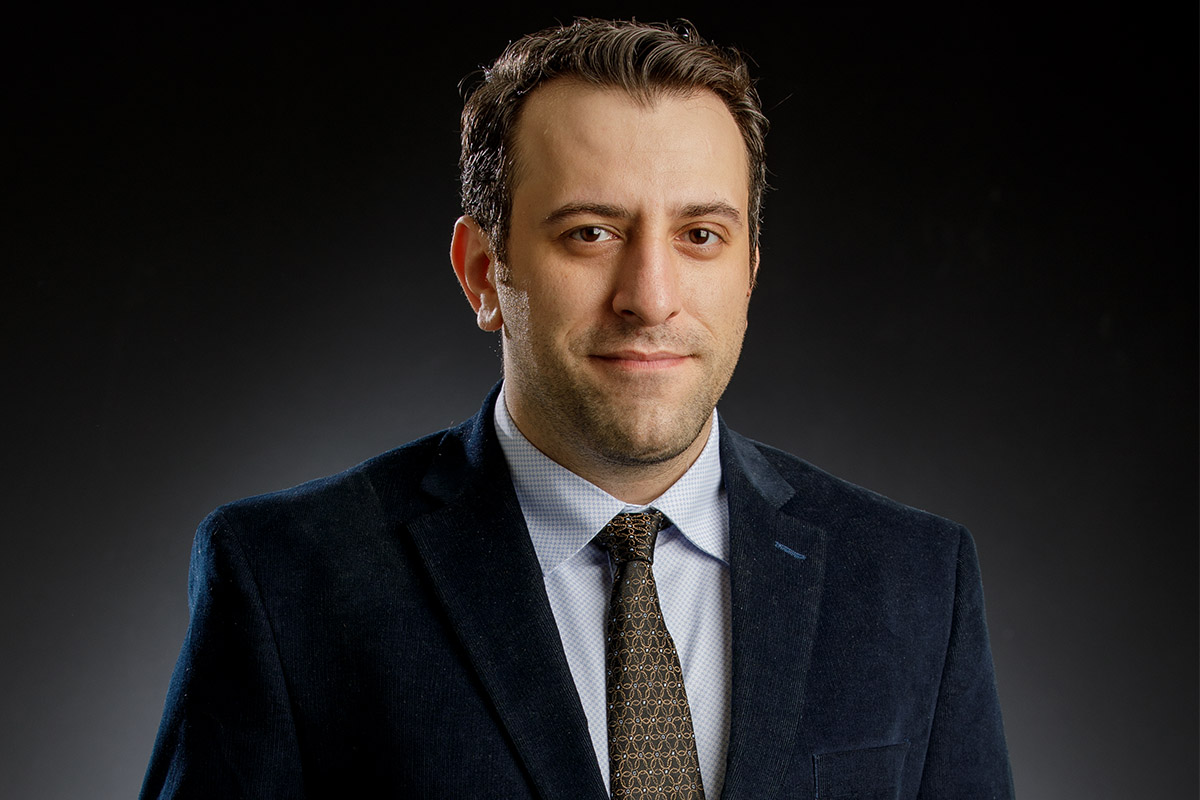
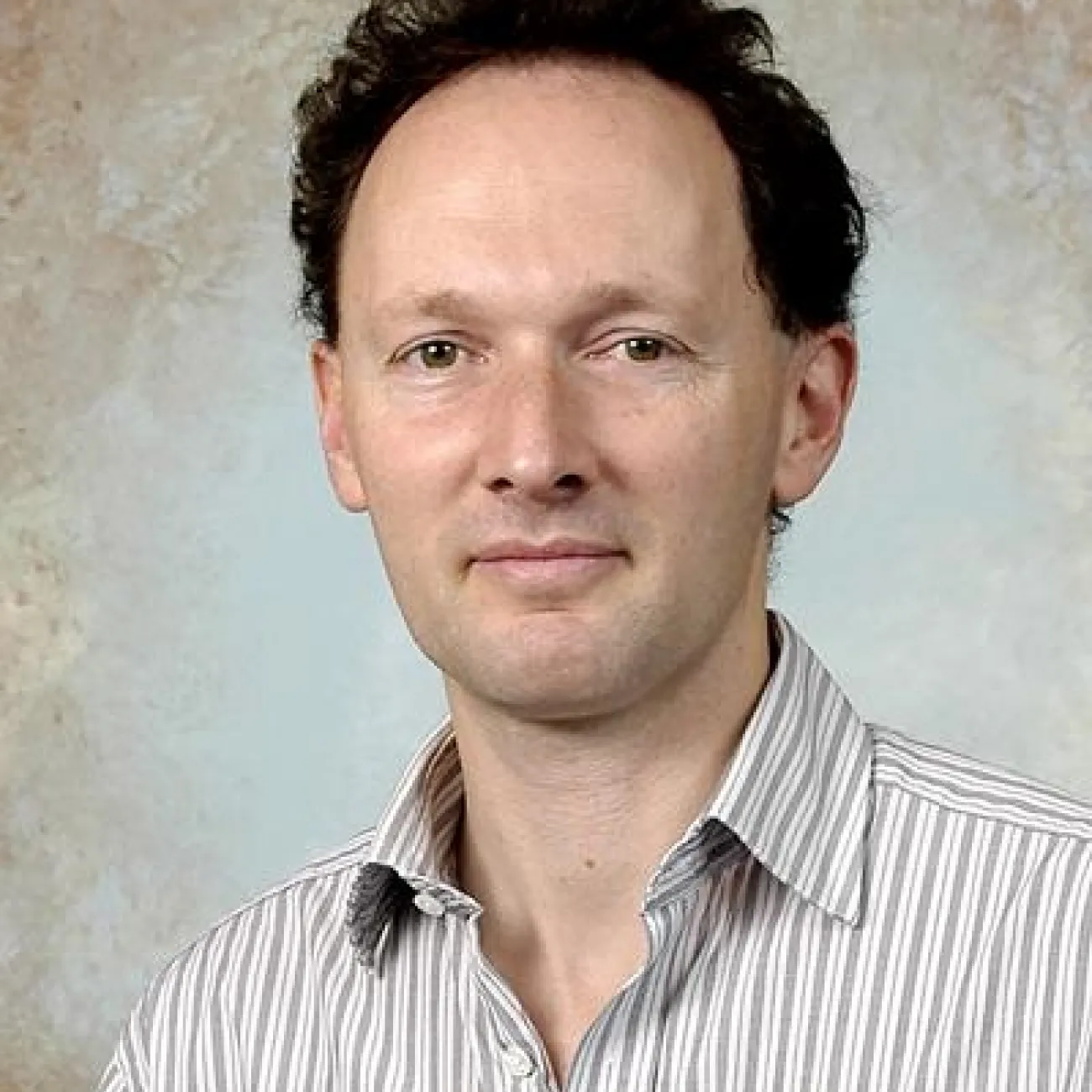
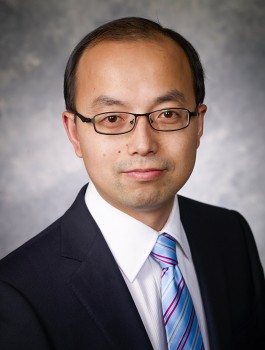
Dr. Kellie Bennett is an Associate Professor Senior Lecturer at the University of Western Australia (UWA) in the UWA Medical School's Psychiatry department. Her research focuses on mental health and well-being, psycho-oncology, medical education, and statistical methodology. She co-authored a widely used statistical textbook, Statistics by SPSS: A Practical Guide (5th ed.), and leads projects on substance abuse treatment and maternal opioid effects on children. Bennett holds a PhD in Psychology from Curtin University and a Juris Doctor from UWA. Education: PhD in Psychology, Curtin University Juris Doctor, The University of Western Australia Graduation Diploma in Education Key Research: Clinical efficacy of implant therapies for amphetamine addiction Effects of maternal opioid use on child health Spirituality in medical education Cancer patients' use of complementary therapies Her work addresses UN Sustainable Development Goals related to education and health. She received the 2022 UWA Medical School Excellence in Teaching Award (Team). Bennett supervises higher-degree research students and has 41 publications. Recent studies include self-concept in cystic fibrosis patients, cannabis-related carcinogenesis, and AI detection of lung conditions.
Ardeshir Moftakhari is an Assistant Professor in the Department of Mechanical and Aerospace Engineering at Oklahoma State University (OSU), affiliated with the College of Engineering, Architecture and Technology (CEAT). His research focuses on building energy analysis, HVAC system design, and grid-interactive energy systems. He is a member of the Center for Integrated Building Systems (CIBS) and the Building & Environmental Thermal Systems Research Group (BETSRG). Education: Ph.D., Civil, Architectural and Environmental Engineering, University of Texas at Austin (2022) M.S., Mechanical Engineering, K. N. Toosi University of Technology (2016) Research Interests: Optimization of HVAC systems and district energy networks Thermal comfort and indoor air quality Integration of renewable energy with building systems Advanced computational modeling for thermal systems Awards: ASHRAE Grant-in-Aid Award Winner (2018) Preeminent Distinguished Researcher, K. N. Toosi University of Technology (2016) Professional Memberships: American Society of Heating, Refrigerating and Air-Conditioning Engineers (ASHRAE) International Building Performance Simulation Association (IBPSA) American Society of Mechanical Engineers (ASME) His recent work emphasizes data-driven approaches for energy system optimization, including reinforcement learning and inverse analysis techniques. Graduate assistantships are currently available in his research group.
Mehar Singh Khatkar is a researcher affiliated with James Cook University , specializing in genetics and genomics with a focus on aquaculture species such as shrimp (Penaeus monodon and Litopenaeus vannamei), pearl oysters (Pinctada maxima), and cattle. His work spans bioeconomic modeling, genomic prediction, and genetic parameter estimation. He collaborates extensively with institutions like JCU’s College of Science and Engineering. Key research areas include: Quantitative trait loci (QTL) mapping in aquatic species Genome-wide selection and linkage disequilibrium studies Application of deep learning in aquaculture engineering Genetic improvement of aquaculture species Recent contributions highlight his expertise in: Estimating heritability using family-pooled data Developing tools like NETVIEW P for visualizing population structure Bioeconomic analysis of shrimp farming systems Publications demonstrate interdisciplinary approaches combining genetics, statistics, and bioinformatics to advance sustainable aquaculture practices.
James Foster is the Oliver T. Carr, Jr. Professor of International Affairs and Professor of Economics at George Washington University (GWU), serving as full-time faculty. He is also a Research Associate at the Oxford Poverty and Human Development Initiative (OPHI) at the University of Oxford. His research focuses on welfare economics, poverty measurement, economic inequality, and multidimensional poverty indices. Dr. Foster holds a Ph.D. in Economics from Cornell University and a Doctorate Honoris Causa from Universidad Autónoma del Estado de Hidalgo (Mexico). His work underpins global indices like the UNDP’s Multidimensional Poverty Index (MPI) and the Women’s Empowerment in Agriculture Index (WEAI). He has collaborated with renowned scholars such as Amartya Sen and Sabina Alkire. His research interests include welfare economics, poverty dynamics, and inequality, with notable contributions like the FGT Index (1984) and the Alkire-Foster method for multidimensional poverty. He teaches courses on economic development and development economics at GWU and is affiliated with the Global Food Institute. Scientific awards include the Doctorate Honoris Causa. His work bridges academic rigor with policy impact, guiding national and international poverty reduction strategies. Current projects explore social mobility, labor market inequities, and statistical capacity measurement.
Professor Jonathan Bull is a faculty member in Ocean and Earth Science at the National Oceanography Centre Southampton, University of Southampton. His research focuses on fluid flow dynamics, carbon capture and storage (CCS), marine geophysics, and tectonics. He leads projects such as STEMM-CCS and QICS, addressing challenges in CCS monitoring and seabed methane venting. Bull teaches exploration geophysics and remote sensing at undergraduate and graduate levels. He currently supervises eight PhD students and serves on NERC panels. Research interests: Fluid flow quantification, passive acoustics, marine geophysics, and northern Indian Ocean tectonics. Key projects: Greensand Project, STEMM-CCS, and CHIMNEY (NERC-funded). Teaching: Coordinates the second-year module 'Exploration Geophysics and Remote Sensing.' External roles: NERC Core Panel Member and NERC Main Panel Chair since 2020. His work integrates geophysical methods with environmental monitoring, emphasizing long-term CCS safety and seabed fluid dynamics. Collaborations include institutions like the National Oceanography Centre and European Union-funded initiatives.
Professor Sebastian Sardina is a Professor in Artificial Intelligence at RMIT University's School of Computing Technologies. He holds a Bachelor's from South National University (Argentina) and a PhD from the University of Toronto (Canada). His research focuses on AI for dynamic systems, including automated planning, knowledge representation, and agent-oriented programming. He has contributed to enhancing agent programming languages with learning capabilities and advanced AI planning techniques. His work frequently appears in top AI venues like IJCAI and AAAI, with notable best paper nominations. Teaching interests include foundational CS courses such as Theory of Computation and Intro to AI. He actively promotes computational thinking through workshops for youth and educators, including roles in Victorian curriculum development (VCE Algorithmics). Supervision projects span hand gesture recognition, autonomous vehicle safety, and goal recognition in path-planning. His research has been presented globally and applied across domains like aviation safety, manufacturing systems, and healthcare. Recent trends in his publications emphasize goal recognition techniques (e.g., process mining applications), agent behavior modeling, and interdisciplinary AI applications in healthcare and automotive engineering. He has collaborated with industry and academic partners internationally, contributing to both theoretical advancements and practical AI solutions. Scientific Recognition: Multiple best paper nominations in AI conferences. Community Engagement: MAV conference presenter, VCAA Algorithmics curriculum panel member (2023). Supervision: Active mentor for 4+ research projects in AI planning and recognition.
Dr. Zhiqiang Lin is an Associate Professor in the Computer Science Department at the University of Texas at Dallas (UT Dallas), affiliated with the Erik Jonsson School of Engineering and Computer Science. He holds a PhD in Computer Science from Purdue University (2011). His research focuses on software security, cloud computing security, and memory data analysis, with applications in vulnerability discovery, malware analysis, and virtualization security. He has received prestigious awards including the NSF CAREER Award and Air Force YIP Award. Education: PhD in Computer Science, Purdue University, 2011 Research Interests: Software Security: Binary code analysis, kernel malware detection, and vulnerability discovery. Cloud Computing: Virtual machine introspection, cloud security mechanisms, and data protection in distributed systems. Memory Analysis: Data structure identification in memory/disk, forensic recovery, and semantic data extraction. Teaching: CS 4393: Computer and Network Security (Spring 2013) CS 6324: Information Security (Fall 2012) CS 6V81: Systems Security/Binary Code Analysis (Spring 2012) CS 6V81: Advanced Digital Forensics (Fall 2011) Grants & Projects: Lead researcher on DARPA-funded project to transition legacy system data to secure platforms (collaboration with Purdue University). Developed "space travel" technique for cross-VM monitoring, enhancing cloud security. Air Force-funded framework to protect computer cores from advanced threats. Service & Leadership: NSF proposal review panel member (2012+) Publication Chair for IEEE IPCCC (2012) TPC member for ICDCS, AsiaCCS, CCGrid, and other conferences.
Dr. Savva Shanaev is an Assistant Professor and Lecturer in Finance at the Accounting and Financial Management Department within Newcastle Business School at Northumbria University. His research focuses on asset pricing, financial econometrics, market anomalies, alternative investments, cryptocurrency economics, and international finance. He has published in journals such as the European Journal of Finance and Finance Research Letters, and serves as a reviewer for ABS-ranked journals. He teaches modules on financial management, risk management, derivatives, quantitative finance, and mathematics, advocating for research-informed teaching and blended learning approaches. He leads an educational YouTube channel. Prior to Northumbria, he studied International Economics at Finance University in Moscow and worked as a consultant and researcher at Vneshekonombank, a Russian development bank. His hobbies include poetry, linguistics, European history, and gaming. Education: PhD in Accounting and Finance, Northumbria University (2021) BA (Hons) in Financial Management, Finance University, Moscow (2017) Research Interests: Savva’s work explores asset pricing, financial econometrics, cryptocurrency valuations, and market anomalies. He has contributed to understanding the impact of political risk in emerging markets and developed econometric tests for detecting herding behavior in analyst forecasts. His recent studies analyze the relationship between cryptocurrency values and regulatory policies, including US marijuana legislation. Teaching & Engagement: In addition to his academic roles, Savva actively engages in educational outreach via YouTube, focusing on quantitative finance and derivatives. His teaching integrates cutting-edge research with practical applications, emphasizing blended learning methodologies.
Jamie Moore is a Research Fellow at the University of Essex, focusing on linked and missing data. They previously worked at the Administrative Data Research Centre for England (University of Southampton) and the UK Office for National Statistics. Moore holds a BSc in Biology (University of Southampton) and a PhD in Evolutionary Ecology (University of Leeds). Research Interests: Quantifying non-response bias in surveys, adjusting for missing data in longitudinal studies, pandemic-related data collection challenges, and record linkage methodologies. Key Collaborations: Regularly works with Gabriele Durrant, Peter W.F. Smith, and other interdisciplinary teams. Recent publications highlight their work on survey design during global crises, bias adjustment techniques, and health disparity analysis using large-scale datasets like the UK Household Longitudinal Study. Moore’s methodological contributions span both academic journals and policy-oriented working papers, emphasizing practical applications in public health and social sciences.
Dr David Begg is a Senior Lecturer at the University of Portsmouth, affiliated with the Faculty of Technology and School of Civil Engineering and Surveying. He contributes to the Portsmouth Centre for Advanced Materials and Manufacturing and serves as a PhD supervisor. Academic Rank: Senior Lecturer University: University of Portsmouth School: Faculty of Technology Department: School of Civil Engineering and Surveying His research focuses on structural engineering, concrete technology, and smart systems. Key areas include: Structural Modeling, Monitoring, and Design Steel Fiber Reinforced Concrete Building Information Modeling (BIM) Optimization Seismic Analysis and Rehabilitation Intelligent Structural Systems Research trends show consistent contributions to concrete material properties, BIM integration, and seismic vulnerability assessment. Scientific awards are not explicitly mentioned in available data. He accepts PhD students but notes no current funding opportunities.
Professor Peter Lanjouw holds the rank of Full Professor at the School of Business and Economics, Department of Economics at Vrije Universiteit Amsterdam. He is also affiliated with the Tinbergen Institute and the Amsterdam Centre for World Food Studies. Prior to joining VU in 2015, he spent over two decades at the World Bank's Development Economics Research Group, most recently as Manager of the Poverty and Inequality team. His research focuses on poverty and inequality analysis in developing countries, structural transformation, and longitudinal village studies. He currently serves as Editor of the World Bank Research Observer and holds roles at the LIS Cross National Data Center. Education: PhD in Economics from the London School of Economics (LSE) Teaching: Courses include Development Economics, Globalization, Growth, and Sustainability, and International Trade and Development Economics. Ancillary Activities: Editor of the World Bank Research Observer (since 2015) and Directeur at the LIS Cross National Data Center (since 2021). Research Interests: His work addresses poverty measurement, structural economic shifts in developing nations, and rural development through longitudinal studies. He has contributed methodologies for tracking poverty dynamics using synthetic panels and small-area estimation techniques. Projects: He led an NWO-funded project (2018–2022) on food security in Lao PDR and Myanmar, emphasizing synergies between food production and environmental sustainability. His research often intersects with UN Sustainable Development Goals, particularly poverty reduction and equitable growth. Grants & Recognition: His contributions to poverty analysis have influenced policy frameworks globally. He is a core member of the Global Poverty Commission and a fellow of the Tinbergen Institute. Media & Outreach: He frequently engages in public discourse on development issues, including expert commentary on USAID’s policies and poverty dynamics in Malaysia.
Geraint Ellis is a Professor in the School of Natural and Built Environment at Queen's University Belfast, with a secondary role as Adjunct Professor at Western University, Canada. His research focuses on planning and sustainability, renewable energy governance, healthy urban environments, and environmental justice. He has held significant roles, including membership on the National Economic and Social Council (NESC) in Ireland and the Assessment Panel for REF2021. His work integrates academic rigor with practical policy engagement, addressing topics like climate resilience, urban equity, and energy transitions. Key affiliations include editorial roles for the Journal of Environmental Policy and Planning and Cities and Health . He has led major projects such as the Healthy Urban Living and Ageing in Place initiative and contributed to international collaborations on marine governance and green infrastructure. His teaching includes modules on Planning and Climate Change, and Urban Futures, supervising approximately 10 students annually. Ellis is actively involved in community organizations, including roles with Belfast Healthy Cities and refugee support groups. His awards include the QUB Teaching Award (2003) and recognition for impactful publications. He advises governmental and non-governmental bodies, emphasizing participatory planning and environmental equity.
Kathleen Bell is a Professor of Resource Economics and Policy at the University of Maine, affiliated with the School of Economics within the College of Natural Sciences, Forestry and Agriculture. She is also supported by the Maine Agricultural and Forest Experiment Station and leads the Hatch Multistate project ME031802. Her work integrates economics with environmental and public health issues, focusing on sustainable land and water management, rural development, and climate resilience. Education: Ph.D. in Economics, University of Maryland A.B. in Economics & Environmental Studies, Bowdoin College Her research spans environmental economics, public economics, and data analysis, with a strong emphasis on interdisciplinary approaches. Key interests include rural economic development, natural resource management, outdoor recreation, public policy, and risk communication. She studies how individuals, organizations, and markets interact with environmental systems, using spatial analysis and decision-making models to inform private and public policies. Dr. Bell's publications appear in top journals such as Proceedings of the National Academy of Sciences , Land Economics , and Marine Resource Economics . Her work reflects a trend toward integrated, evidence-based solutions that bridge economic, social, and environmental systems, with increasing focus on climate adaptation, stakeholder engagement, and valuation of ecosystem services. Scientific Awards: University of Maine’s Excellence in Faculty Mentoring Award (2018) Dr. Bell advises undergraduate and graduate students in Economics and Ecology & Environmental Science. She has led large interdisciplinary research projects funded through the Experiment Station and federal programs. Her leadership extends to service on editorial boards and as a reviewer for major journals and federal grant panels. She is committed to workforce development and mentoring future leaders in data-driven environmental policy. She is actively involved in research programs that connect science with decision-making, particularly through the School of Economics and the Maine Agricultural and Forest Experiment Station. Her lab and research team focus on economic valuation, risk communication, and modeling human-environment interactions in rural and coastal communities.
Prof. Dr. Josef Settele is a leading academic and researcher in conservation biology and social-ecological systems. He is the Head of the Department of Conservation Biology & Social-Ecological Systems at the Helmholtz-Centre for Environmental Research (UFZ) in Halle, Germany. He also holds the academic rank of Professor of Ecology (apl.) at Martin-Luther-University of Halle-Wittenberg and has been an Adjunct Professor at the University of the Philippines, Los Baños. His work is deeply interdisciplinary, bridging ecology, policy, and societal engagement. His primary research interests lie in the ecology of insects in cultural landscapes , the interplay between biodiversity, land use, and social-ecological systems , and the critical interface between science, society, and policy . A central theme of his career has been understanding and mitigating the impacts of human activities on biodiversity, with a particular focus on pollinators. He has led major international projects such as ALARM, LEGATO, CLIMIT, and the current SPRING project, which is preparing the EU Pollinator Monitoring Scheme (EU PoMS). His recent publications (2020–2025) demonstrate a consistent focus on long-term biodiversity monitoring, the impacts of climate change and land use, and the development of policy-relevant science. He is a prolific author on topics including butterfly population trends in Europe, the assessment of Natura 2000 sites, the genetic diversity of insect populations, and the role of science in environmental policy debates, particularly concerning the EU’s Nature Restoration Law. His work heavily utilizes large datasets and citizen science, exemplified by the 'Tagfalter-Monitoring Deutschland' (Butterfly Monitoring Germany). Member, German Advisory Council on the Environment (SRU) (since 2020) Member, Multidisciplinary Expert Panel (MEP) of IPBES (since 2022) Co-Chair, Global Assessment of IPBES (2016-2019) Scientific Coordinator, SPRING Project (2021-2024) Member, Senate Committee Competition (SAW) of the Leibniz Association (since 2020) Review Board Member, German Research Foundation (DFG) (2016-2024) Prof. Settele is a highly active advisor and grant coordinator, having led numerous large-scale, multi-national research projects funded by the EU (FP5, FP6), the German Federal Ministry of Education and Research (BMBF), and other national and international bodies. His leadership in projects like ALARM, LEGATO, and SPRING, which involve dozens of partner institutions and hundreds of scientists, underscores his role as a principal investigator and scientific coordinator of the highest caliber. He is deeply involved in the governance of science, serving on prestigious review boards and advisory councils. He leads the research team on 'Animal Ecology and Social-Ecological Systems' at the UFZ and is the driving force behind the 'Tagfalter-Monitoring Deutschland' (Butterfly Monitoring Germany) project. His work is also connected to larger research units and platforms at the UFZ, including the 'Community Ecology' department and the 'Research Ecosystems of the Future' initiative. His research is fundamentally collaborative, involving extensive national and international networks of scientists, stakeholders, and policy-makers.
Susana Rogeiro Nina is an Assistant Professor at Lusófona University and an Integrated Researcher at LusoGlole (ULusófona). She contributes to the Observatory of the Quality of Democracy (OQD, ICS-ULisbon) and specializes in Political Communication , Media Studies , and European Union research. Her work spans comparative analyses of EU Politicization , Televised Debates , and Political Campaigns . PhD in Comparative Politics (University of Lisbon, 2022) Master’s in Political Science (ISCTE-IUL, 2016) Bachelor’s in Political Science and International Relations (University of Beira Interior) Bachelor’s in Communication Sciences (University of Lisbon) Research Interests include political communication, media effects, and media framing of EU politics. Her work examines how televised debates influence candidate evaluation, media polarization during crises, and digital campaign strategies post-pandemic. Publications like "European Economic Narratives and the Emergence of a European Public Sphere" (2023) highlight her focus on media narratives and European integration . Notable Contributions involve the European Research Council-funded MAPLE Project and co-authorship of "A Brief History of the Ecologist Party 'Os Verdes'" (2019). She has presented at major conferences including the IPSA World Conference of Political Science and International Conference of Europeanists , with expertise in STATA , SPSS , and Mixed Methods Research .