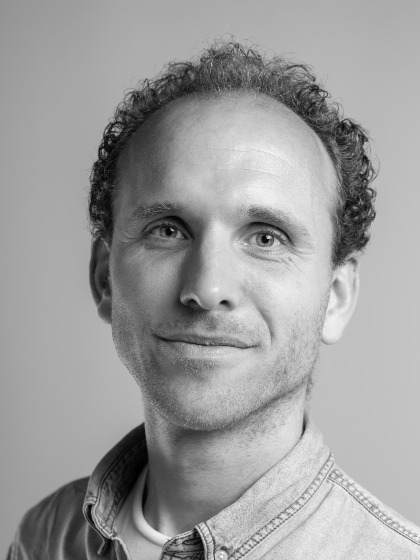
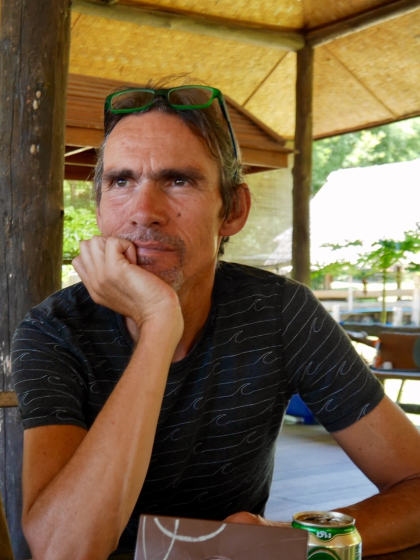
Anna Grigolon is an Assistant Professor at the University of Twente , Netherlands, affiliated with the Transport Engineering and Management Research Group . Her research focuses on sustainable urban mobility , user-centric transport solutions , and travel behavior analysis using tools like discrete choice modeling , spatial analysis , and social psychology theories . Research Interests : Sustainable Urban Mobility Accessibility Modeling Travel Behavior Discrete Choice and Latent Class Modeling Spatial Analysis and GIS Shared Micromobility and Mobility Hubs Equity in Transport Planning Article Trends : Anna’s recent work (2025–2024) emphasizes mobility justice , 15-minute city transitions, and equity in transport access , particularly for marginalized communities like São Paulo favelas. She integrates digital tools (e.g., serious games, kiosks) and space-time metrics to evaluate mobility solutions. Projects : She currently leads the SmartHubs project and contributes to DREAMS and R-map , focusing on smart, equitable mobility systems in Europe and Saudi Arabia.
Dr. Eiko Fried is an Associate Professor at Leiden University's Faculty of Social and Behavioural Sciences, where he works at the intersection of clinical psychology, psychiatry, epidemiology, methodology, and complexity science. His research focuses on improving psychological science through open science practices and innovative measurement approaches. PhD in clinical psychology, Free University of Berlin Postdoctoral training at KU Leuven and University of Amsterdam Promoted to Associate Professor at Leiden University in 2021 Key research areas include: Psychopathology measurement and classification Network analysis in mental health research Ecological momentary assessment (EMA) methodology Open science advocacy and implementation Dynamic systems modeling in psychology Transdiagnostic approaches to mental disorders Recent publications demonstrate expertise in: Symptom network analysis across disorders Improving depression measurement standards Transdiagnostic assessment protocols Mental health data integration challenges Psychological theory construction Methodological innovations in clinical research
Maarten Kroesen is an Associate Professor in the Transport and Logistics group at Delft University of Technology's Faculty of Technology, Policy and Management. His research focuses on travel behavior analysis, sustainable transport, and quantitative methods. He earned his PhD cum laude in 2011 with work on aircraft noise annoyance and has since shifted to mobility patterns and policy analysis. Kroesen teaches courses on statistics, data analysis, and travel behavior research, and has received multiple awards including the Best Teacher of the Year (2016) and Henk Sol Award (2011). His work bridges behavioral theory with policy implications, emphasizing longitudinal panel data methods. Education: PhD (cum laude) in Transport Policy and Management (TU Delft, 2011), MSc in Systems Engineering (TU Delft) Research Interests: Travel behavior dynamics, sustainable mobility transitions, latent class models, accessibility disparities Awards: Over six major accolades, including best thesis and innovation awards Expertise: Policy advising on aviation, transport equity, and behavioral modeling Recent work explores emerging time-use patterns, zero-emission flight impacts, and bidirectional effects between accessibility and travel behavior. He actively contributes to Dutch policy discussions on aviation and transport infrastructure.
Roel C.G.M. Loonen is an Associate Professor at the Unit Building Physics and Services within the Department of the Built Environment at Eindhoven University of Technology (TU/e), Netherlands. He holds joint appointments with EAISI High Tech Systems and EIRES Research groups, focusing on building performance simulation and energy systems. His work bridges academic research with practical applications through collaborations with SMEs in the building industry. Loonen received his BSc and MSc (cum laude) in Building Services from Eindhoven University of Technology, followed by a PhD in 2018 with a dissertation on 'Approaches for computational performance optimization of innovative adaptive facade concepts.' His educational background has positioned him as a leading expert in building performance simulation and sustainable building technologies. His research interests center on developing and applying modeling and simulation strategies to support decision-making for designing buildings that combine high indoor quality with minimal environmental impact. Key areas include adaptive facades, building-integrated renewable energy systems, and energy-efficient building envelopes. He specializes in creating and validating new building performance simulation models to advance innovative building technologies. His recent publications demonstrate a strong focus on practical applications of building performance simulation, with emphasis on residential energy efficiency, photovoltaic systems, and occupant-centered approaches to building design. The work shows increasing integration of machine learning techniques with traditional building simulation methods, particularly for sensitivity analysis and optimization of building performance. REHVA Young Scientist Award (2021) Best PhD supervisor award from Department of the Built Environment, TU/e (2018) First prize - REHVA International student competition (2011) Smart daylight control for optimal building performance (NWO Take-off award, 2018) Best paper award (2021) Loonen actively supervises PhD and Master's students, evidenced by his Best PhD Supervisor Award in 2018. He manages multiple research projects including Sustainable Summer Comfort (2024-2027), Modeling Innovative Use Scenarios for Future Domestic Comfort (2023-2026), and Just Prepare (2022-2026), with funding from sources including the Dutch Research Council (NWO). His professional service includes being a board member of the Dutch-Flemish IBPSA affiliate and co-chair of IBPSA World's website committee, plus reviewing for 35 academic journals. He leads research within the Building Performance group, focusing on creating practical tools and methodologies that bridge the gap between theoretical building performance models and real-world implementation in the construction industry. His work particularly emphasizes the integration of occupant behavior and practices into building performance models, recognizing that human factors are critical to achieving sustainable building performance in practice.
Dr. Serhan Sadikoglu is an Assistant Professor at Tilburg University's Tilburg School of Economics and Management (TiSEM), Department of Econometrics and Operations Research. He earned his PhD in Econometric Theory from Tilburg University in 2019. His research focuses on econometric theory, semiparametric estimation, robust statistics, and panel data analysis. He has published in prestigious journals such as Econometric Reviews and Econometrics Journal , with recent work addressing nonseparable panel models and robust estimation techniques. Sadikoglu teaches courses including Quantitative Methods, New Venture Creation and Growth, and Statistics for Econometrics. His research emphasizes methodological contributions to econometrics, particularly in handling complex data structures and improving estimation robustness.
Beate Volker is an Associate Professor at the Faculty of Geosciences , University of Utrecht , specializing in Human Geography and Spatial Planning . Her research focuses on Social Network Analysis , Social Capital , and Personal Network Dynamics , with particular interests in Dutch society, neighborhood effects, and urban sociology. Institutional affiliation: University of Utrecht Academic rank: Associate Professor Department: Human Geography and Spatial Planning Her scholarly work examines how life course events , urban densification , and social stratification shape personal and community-level networks. She investigates network segregation in Chilean and Dutch contexts, prisoner reintegration challenges, and the health impacts of social capital . Her methodological expertise includes field experiments, panel data analysis, and relational data collection. Recent publications highlight trends in acquaintanceship networks in the Netherlands, collective efficacy in neighborhoods, and person-centered care in long-term facilities. She contributes to the Dynamics of Youth and Pathways to Sustainability research programs. As a supervisor and researcher, Volker explores network consequences of entrepreneurship , pet ownership , and romantic relationships . Her work frequently appears in journals like Social Networks , British Journal of Sociology , and Health and Place , with peer-reviewed studies on network homogeneity, tie decay, and expert-driven causal modeling.
Dr. Tom Boot is an Associate Professor at the Department of Economics, Econometrics & Finance at the University of Groningen. He holds a PhD in Econometrics from Erasmus University Rotterdam (2017) and an MSc in Econometrics from the same institution (2012), along with an MSc in Physics from the University of Groningen (2010). His research focuses on econometric theory applied to macroeconomic forecasting, high-dimensional data analysis, and causal inference. He has been recognized with the Veni grant (2021–2024) for his work on forecasting methodologies. Boot’s research interests include improving forecast accuracy through methods like subspace projections, structural break modeling, and privacy-aware marketing analytics. His recent work explores privacy-utility trade-offs in data-driven marketing and unbiased estimation techniques for clustered errors. He has supervised PhD students including Jhordano Aguilar Loyo and Gilian Ponte, whose theses addressed panel data heterogeneity and differential privacy applications. Boot is also a program director for the MSc Econometrics, Operations Research, and Actuarial Studies (since 2024). His contributions to econometrics span over a dozen peer-reviewed publications, with a focus on advanced statistical techniques for economic forecasting and policy analysis. Collaborations include work with institutions like Harvard/MIT and the organization of workshops on causal inference and machine learning.
Eva Jaspers is Professor of Empirical and Theoretical Sociology at Utrecht University's Faculty of Social and Behavioural Sciences, where she also serves as Bachelor Director for Sociology. She is a member of the Interuniversity Center for Social Science Theory and Methodology (ICS) and leads the ICS Research Line on Migration and Social Stratification. Her educational background includes a PhD in Sociology (2008) and an MA in Sociology cum laude (2003), both from Radboud University Nijmegen, where she also obtained her University Basic Teaching Qualification in 2007. Professor Jaspers' research focuses at the intersection of networks, diversity and inequality, examining how people's contexts, interactions and relations with (dis)similar others shape their behavior and outcomes across various domains. Her work spans social networks, ethnic relations, gender and sexuality, discrimination, and gender equality, utilizing social network analysis as a key methodology. She has published in top journals including American Sociological Review , European Sociological Review , and Social Networks . Analysis of her recent publications reveals a strong focus on intergroup relations, social networks, and inequality, with particular emphasis on interethnic contact, gender dynamics in workplaces and families, and the impact of social norms on polarization. Her work increasingly employs computational methods and longitudinal data to examine complex social dynamics. Fellow of the Gravitation Program SCOOP (research and training center for sustainable cooperation) Professor Jaspers has managed multiple large-scale data collections and secured significant funding from NWO and Volkswagen Stiftung. She leads international projects including INCLUSIVITY (network interventions to counter polarization) and GENPARENT (research on transition to parenthood for same-sex couples). She is also a co-applicant in the prestigious NWO Summit Grant SOCION for research on social cohesion. Her academic leadership includes chairing the Dutch Sociological Association and organizing major conferences like the INSNA Sunbelt Conference. She is affiliated with several research initiatives including the Institutions for Open Societies (IOS) program, focusing on Future of Work, Gender Diversity and Global Justice, and Migration and Societal Change. Her work with the CILS NL data and SOCON panels demonstrates her commitment to longitudinal research on social networks and societal change.
Prof. Christian Conrad is a Professor of Econometrics at the Department of Economics, Heidelberg University. He also serves as a member of the HEiKA Strategic Board, Steering Board Member of the HKMetrics Network, and holds affiliations with institutions like the Centre for European Economic Research (ZEW) and the Rimini Centre for Economic Analysis. His research focuses on Expectation Formation, Financial Econometrics, and Volatility Modeling, with notable contributions to understanding inflation dynamics, financial risk, and macroeconomic uncertainty. Education: PhD in Economics (Dr. rer. pol.), University of Mannheim (2002–2006) MSc in Econometrics and Economics, University of York (2000–2001) Diplom-Volkswirt (Economics Degree), Heidelberg University (1997–2002) Research Interests: Prof. Conrad’s work spans Expectation Formation, Financial Econometrics, and Macroeconometrics. He develops advanced methodologies like the MF2-GARCH model to analyze volatility cycles and explores how household information and experience influence inflation expectations. His research also addresses cryptocurrency volatility, political communication impacts on markets, and the link between inflation uncertainty and macroeconomic performance. Key Contributions: His articles include seminal works on GARCH model extensions, volatility forecasting techniques, and the role of uncertainty in financial markets. Recent studies include analyzing ECB inflation projections and their implications for policy credibility. Awards & Affiliations: Senior Fellow, Rimini Centre for Economic Analysis (2020–present) External Fellow, Center for European Studies (2019–present) Associated Research Professor, KOF Swiss Economic Institute (2011–present) Labs & Teams: He leads the Research Group on Macroeconomics & Financial Econometrics at Heidelberg University, focusing on empirical economic research and policy-relevant studies in financial markets and macroeconomic dynamics.
Jan van den Brakel is an Extraordinary Professor of Survey Methodology at Maastricht University and a Senior Statistician at Statistics Netherlands. He holds a position in the Department of Quantitative Economics within the School of Business and Economics. His primary affiliation is with the methodology department at Statistics Netherlands, where he focuses on advancing statistical methods for official statistics. **Research Interests:** Professor van den Brakel specializes in survey methodology, with a focus on mixed-mode surveys, time series modeling, small area estimation, and discontinuity analysis. He explores topics such as sampling techniques, variance estimation, and the integration of non-probability data sources (e.g., social media) into official statistics. His work addresses challenges in labor force surveys, health surveys, and the impact of technological changes like tablet-based data collection. **Key Projects:** Current projects include mixed-frequency time series modeling for short-term statistics, accuracy assessments of non-probability web panels, and modeling discontinuities in official surveys. He has contributed to high-impact studies, such as analyzing mobility patterns during the pandemic and improving unemployment rate estimation using Bayesian models. **Awards:** His 2013 paper on factorial designs in probability samples was honored as the best journal paper by Survey Methodology in 2014. He is a member of the Advisory Committee on Statistical Methods at Statistics Canada, reflecting his international leadership in statistical methodology. **Professional Roles:** In addition to his academic role, he collaborates extensively with national statistical offices, advising on methodological challenges. His work bridges theory and practice, ensuring statistical methods are robust and applicable to real-world data collection and analysis.
Prof. Matthijs Kalmijn holds a dual role as Professor at the University of Groningen's Faculty of Spatial Sciences (Department of Demography) and Senior Researcher/Theme Leader at the Netherlands Interdisciplinary Demographic Institute (NIDI-KNAW). His expertise spans demography, sociology, quantitative research methods, and family/life course studies. He coordinates major surveys like the Netherlands Kinship Panel Study and Parents and Children in the Netherlands (OKiN), focusing on topics such as migration, social inequality, and intergenerational relations. Education: PhD in Demography from UCLA (1991). Key Research Areas: Family dynamics, migration, divorce economics, parental support inequalities, and cultural demographics. His work addresses how social structures and policies shape individual and familial trajectories. Grants & Projects: Secured €30 million for social cohesion research (2024) and leads multi-country projects on aging and migration. His research informs policy through analyses on retirement migration, immigrant return intentions, and cultural audience trends. Awards: Member of the Royal Netherlands Academy of Arts and Sciences (KNAW), recognizing his contributions to demographic science. Active in public discourse on topics like classical music attendance demographics and retirement migration impacts. Labs/Teams: Core member of NIDI and collaborator with international networks like Population Europe. Supervises interdisciplinary teams analyzing complex family structures and late-life employment trends.
Dr. Nicola Cortinovis is an Assistant Professor in the Department of Economic Geography at Utrecht University's Faculty of Geosciences. His research focuses on regional economic performance, industrial dynamics, and the role of knowledge spillovers in shaping regional development. He explores topics such as smart specialization, green innovation, and the impact of multinational enterprises on local economies. Education: PhD in Economic Geography (2016, Utrecht University) Teaching: Courses include Geographies of Multinationals, Location in a Globalized World, and Methods for Economic Geography. Research interests span institutional drivers of regional diversification, the relationship between spatial structure and productivity, and the application of AI in research data processing. He contributes to initiatives like the LSE GILD Blog and collaborates on projects such as PILLARS (Pathways to Inclusive Labour Markets). Recent work examines green innovation in EU regions, export dynamics in China, and wage inequality in the Netherlands. He is affiliated with the Foundations of Complex Systems and Institutions for Open Societies (IOS) research groups.
Dr. Evert van Nieuwenburg is an Assistant Professor at Leiden University, affiliated with both the Leiden Institute of Advanced Computer Science (LIACS) and the Leiden Institute of Physics (LION). His research bridges the fields of Quantum Physics , Machine Learning , and Condensed Matter Physics , with a focus on quantum algorithms, reinforcement learning, and quantum game development (e.g., Quantum TiqTaqToe ). He actively contributes to the Applied Quantum Algorithms (aQa) initiative and leads the QuantumPlayed subgroup for quantum games and education. Research Interests: AI-driven quantum experiment control, quantum machine learning, variational quantum circuits, and quantum games for education and intuition-building. Publications: 15+ peer-reviewed works spanning quantum error correction, phase transitions, reinforcement learning in quantum systems, and quantum dot array simulations. Community Engagement: Developer of educational quantum games, open science advocate, and active participant in interdisciplinary initiatives. Selected Trends: His work demonstrates AI's transformative role in quantum physics, from decoding error-correcting codes with graph neural networks to merging reinforcement learning with quantum control systems. Labs & Initiatives: Affiliated with the Applied Quantum Algorithms (aQa) initiative and co-founder of QuantumPlayed , where quantum mechanics meets game theory to engage diverse audiences.
Sandra Bellekom is a Lecturer-researcher at Hanze University of Applied Sciences, working within the Entrance – Center of Expertise Energy. Her work focuses on system integration in the energy transition, with particular expertise in renewable energy systems, solar power optimization, and smart grid technology. She contributes significantly to research projects related to sustainable energy solutions and environmental systems analysis. Education: Ph.D. in Electrical Engineering from Delft University of Technology (1993-1998) Master's degree in Energy and Environmental Sciences, cum laude, from University of Groningen (2002-2005) Basic Teaching Qualification (BKO) from University of Groningen (2010-2011) Master's degree in Electrical Engineering (ir), cum laude, from Delft University of Technology (1989-1993) Sandra Bellekom's research interests span the critical areas of energy transition and sustainable systems. Her work emphasizes practical applications of renewable energy technologies, particularly focusing on system integration challenges. She investigates how solar energy systems perform under real-world conditions, examining factors like panel contamination and cleaning effectiveness. Her research also extends to hydrogen energy systems, smart grid integration, and the economic optimization of renewable energy solutions. Through her work, she addresses key challenges in making the energy transition technically feasible and economically viable, with a strong focus on data-driven analysis and system modeling. Her recent publications (2019-2025) demonstrate a clear trend toward applied research in solar energy optimization and hydrogen systems. The research shows increasing focus on practical field studies examining how real-world factors like bird droppings, dust, and other contaminants affect solar panel performance. There's also a notable shift toward system-level analysis, particularly in hydrogen energy configuration and the integration of multiple renewable sources. Her work consistently bridges technical analysis with practical implementation considerations, making it highly relevant for industry applications. Sandra actively participates in multiple research projects including 'Effect of pollution and cleaning of solar parks,' 'Hydrogen Works,' and studies on sensible heat storage systems. Her collaborative approach is evident in her numerous co-authored publications across various energy domains. While specific mentoring relationships aren't detailed in the available information, her background includes supervising master's students during previous academic positions. Her research laboratory and team work primarily through the Entrance – Center of Expertise Energy, focusing on practical field studies and system modeling. Current projects involve monitoring solar parks across the Netherlands, developing hydrogen configuration tools, and optimizing energy storage solutions for buildings. The team employs a combination of field measurements, data analysis, and system modeling to address real-world energy challenges.
Guus Velders is a Professor of Air Quality and Climate Interactions at Utrecht University's Faculty of Science, Department of Marine & Atmospheric Research. He also serves as a Senior Scientist at the National Institute for Public Health and the Environment (RIVM). His work focuses on ozone layer depletion, climate change, and air quality modelling, with significant contributions to policy assessments at national, European, and global scales. He led the 2007 IPCC Special Report as coordinating lead author and contributed to multiple UNEP/WMO assessments. His research on Montreal Protocol benefits and HFC climate impacts led to the 2016 Protocol amendment. Velders has received prestigious awards including the UNEP Montreal Protocol Award (2017), Nature's 10 (2016), and TIME's 100 Most Influential (2016). His research interests span air quality modelling, ozone depletion-climate interactions, and policy analysis for environmental protection. He co-chairs the UNECE Clean Air in Cities Expert Panel and oversees annual Dutch air quality/nitrogen deposition mapping projects. Recent publications highlight HFC emissions in China, climate migration in Bangladesh, and novel Earth system model scenarios.