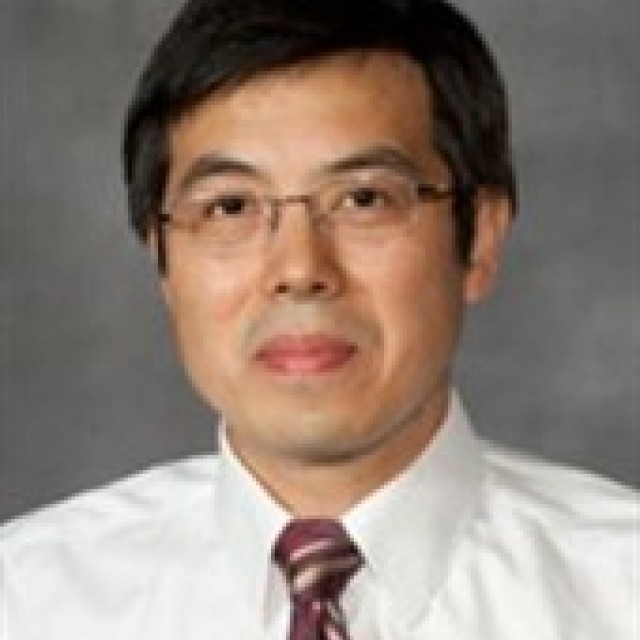
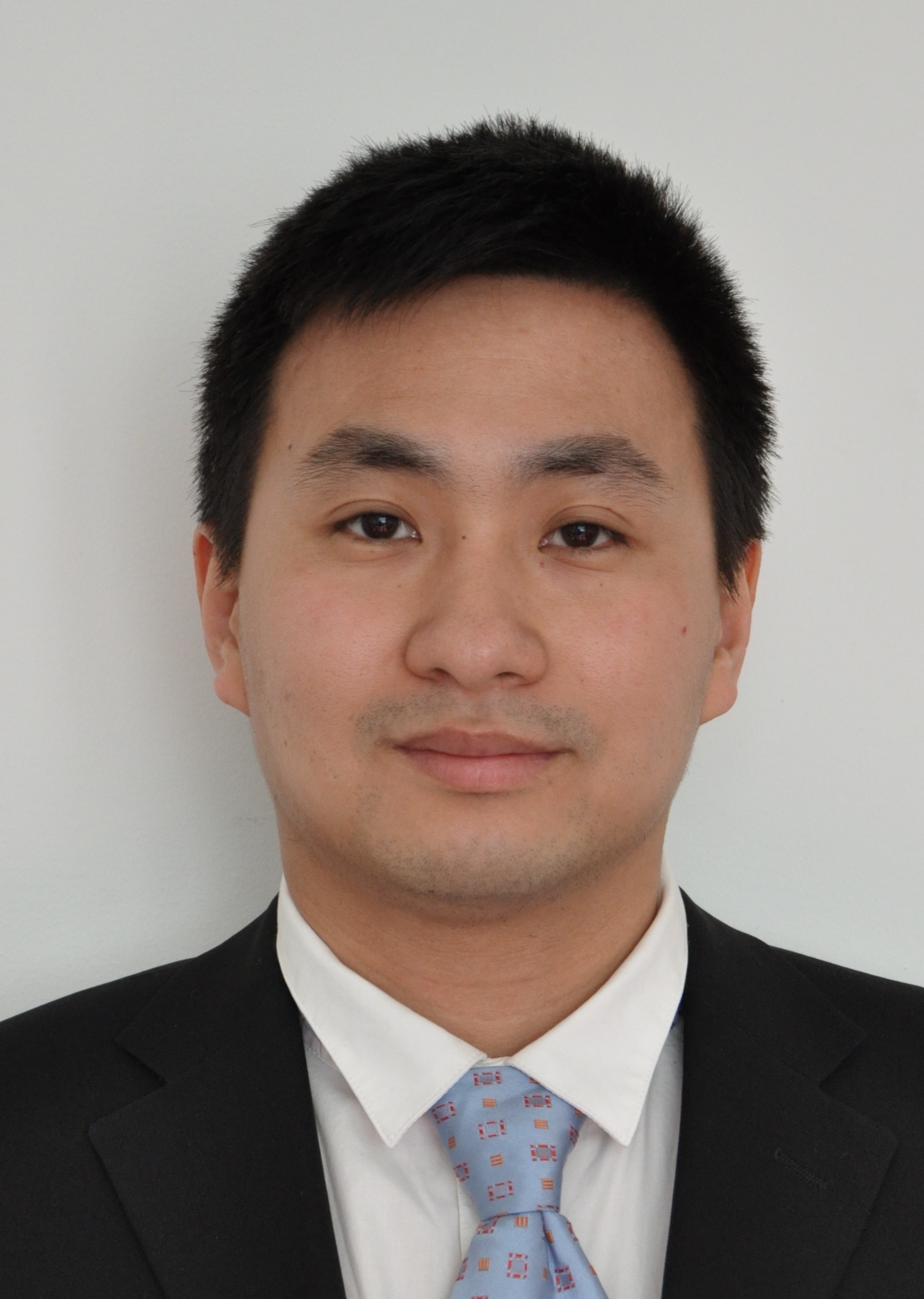
Guimin Gao is a researcher with expertise in statistical genetics and bioinformatics. His research focuses on applying statistical methods to analyze genetic and genomic data, including collaborations in clinical and translational science. He has developed methods for haplotyping, gene mapping in admixed populations, and analyses of GWAS, methylation, and DNA sequencing data. He holds a Ph.D. in Biostatistics from Sun Yat-sen University of Medical Sciences and has completed postdoctoral training at Virginia Tech and Creighton University. His work spans diverse areas such as epigenetic biomarker identification in schizophrenia and statistical methodologies for genomic association studies. Education: Ph.D. (Biostatistics, 2000), Postdoc in Statistical Genetics (2001-2005) Research interests include statistical genetics, bioinformatics, and the application of computational methods to biomedical data. His publications demonstrate contributions to haplotype analysis, admixture mapping, and epigenetic studies. Gao has collaborated on projects involving family-based studies, meta-analyses, and the development of tools like MethylPCA for confounder control in methylome-wide studies.
Vítor Sérgio Ferreira is a Senior Researcher at the Instituto de Ciências Sociais da Universidade de Lisboa (ICS-ULisboa), specializing in Sociology of Culture, Communication, and Education. He holds a PhD from Iscte-IUL (2006) and has extensive experience in youth studies, body cultures, and qualitative research methods. His work focuses on youth transitions, generational dynamics, and social inequalities, contributing to ICS-ULisboa’s Inclusion Thematic Line. He coordinates the LIFE research group (Life Paths, Inequalities, and Solidarities) and teaches at ICS-ULisboa’s doctoral and postgraduate programs, including courses on narrative data analysis and MAXQDA-assisted qualitative methods. **Education:** PhD in Sociology (Iscte-IUL, 2006) Masters in Communication, Culture, and New Technologies (Iscte-IUL, 1998) Bachelor’s in Sociology (Iscte-IUL, 1995) **Research Interests:** His interdisciplinary work explores youth cultures, somatic practices, generational approaches, and the interplay between art, labor, and identity. Key themes include tattoo/body modification cultures, professionalization of creative industries, and youth policy interventions. He has pioneered studies on the pedagogization of “dream jobs” (e.g., DJs) and the sociological dimensions of youth activism. **Grants & Projects:** Coordinator of projects like Educational provision and professional training for youth in contemporary art museums and Youth(s): From local to national—What intervention? Member of evaluation panels for FCT doctoral scholarships and international research funding. **Teaching & Outreach:** In addition to his roles at ICS-ULisboa, he has taught at institutions in Brazil (Federal University of São Carlos, University of São Paulo) and Germany (Goethe-Universität). He actively contributes to public youth policy, serving on Portugal’s Permanent Youth Observatory since 1996. **Labs/Teams:** He leads the LIFE research group and participates in initiatives like the MetodICS postgraduate program in social research methods, emphasizing innovative data analysis techniques.
Yongqiang Chen is a Professor at the Chinese Academy of Sciences in the School of Engineering, Department of Computer Science and Engineering. With over 15 years of continuous research contributions spanning from 2005 to 2025, Dr. Chen has established himself as a versatile scholar working at the intersection of theoretical mathematics, machine learning, and practical engineering applications. Dr. Chen's research expertise encompasses: Machine Learning and Causal Inference, with recent focus on large language models and out-of-distribution generalization Signal and Image Processing, particularly in keyword spotting and watermarking applications Optimization Algorithms for engineering and management problems Theoretical Mathematics, including partition functions and combinatorial identities Engineering Management and Project Governance in construction contexts His recent publication trajectory (2023-2025) reveals a strategic evolution toward integrating causal reasoning with modern neural architectures, while maintaining strong connections to practical applications. Dr. Chen's work demonstrates exceptional interdisciplinary range, bridging pure mathematics with cutting-edge AI development and engineering solutions. His publications in venues like AAAI, NeurIPS, and IEEE Transactions reflect both theoretical rigor and practical relevance across multiple domains including renewable energy, neuroscience, and construction management. Dr. Chen maintains active collaborations with researchers across institutions, particularly with Bo Han on causal language models, James Cheng and Yiping Ke on brain network analysis, and various colleagues in engineering management. His research group appears to focus on developing theoretically sound yet practically applicable computational frameworks that address real-world challenges while advancing fundamental knowledge in machine learning and optimization.
Professor Kirk Woolford is the founding director of the Institute for Creative Technologies at Norwich University of the Arts. Previously, he held roles including Lecturer, Senior Lecturer, Reader in Digital Media Arts, and Principal Research Fellow at institutions such as the University of Surrey and Anglia Ruskin. His academic journey began with a dual BS in Computer Science and Humanities from Clarkson University, followed by an MSc in Design and a PhD from the University of Surrey. Woolford’s research focuses on the intersection of creative practice with transdisciplinary challenges, particularly in intangible cultural heritage, health, wellbeing, and environmental values. He pioneers immersive experiences and performance art using emerging technologies, showcased globally at venues like MoMA, Venice Biennale, and SIGGRAPH. His hybrid background includes 40+ years in tech and media industries, co-founding companies in New York, London, and Amsterdam. His work emphasizes practice-based methodologies, blending computational tools with artistic expression. Key projects include Photoria (exploring fireflies’ ecological value) and Jinn (interactive performances blending motion capture and virtual environments). He currently leads interdisciplinary initiatives addressing global challenges through creative technologies. Woolford actively contributes to academic communities, serving on review panels for AHRC and UKRI, and chairs initiatives like Collusion Cambridge. Upcoming projects include Jinn Ginnaye: Palmyra , an immersive piece exploring cultural heritage preservation.
Gail Ramster is a design researcher at the Royal College of Art (RCA), working within the Helen Hamlyn Centre for Design (HHCD) in the School of Design. She has been with HHCD since 2009 and co-leads the Public Toilets Research Unit with Professor Jo-Anne Bichard. As an RCA PhD supervisor and lecturer in inclusive and participatory design, she contributes significantly to academic programs while leading impactful research projects that address social challenges through community engagement. Gail graduated from RCA in 2007 with an MA in Industrial Design Engineering and previously worked internationally as a mechanical engineer. Her professional background spans wayfinding, product design, and industrial design, providing a strong foundation for her current research in inclusive design. Her research focuses on addressing social challenges through participatory and co-design methods with citizens and communities, particularly in the areas of public space accessibility, healthcare design, and urban environments. She has explored community engagement at multiple scales, from workplace design to neighborhood planning, with a special emphasis on public toilet accessibility. Her work consistently emphasizes how design processes can capture and respond to people's attitudes and aspirations across various contexts, from childhood obesity to autonomous vehicles. Ramster's publication record shows a consistent focus on inclusive design research with practical applications. Her work spans public infrastructure (particularly toilet accessibility), community engagement methodologies, healthcare design, and future urban environments. A notable pattern is her ability to translate research into tangible outcomes like The Great British Public Toilet Map and practical design guidelines that influence policy and practice. Good Toilet Commendation, Work of the Public Toilets Research Unit 2020-21 Japanese Toilet Association 2021 BSI Standards Makers Award 'Guidance on Safe Working during the COVID-19 pandemic' (advisory panel member), 2020 Finalist (Outstanding Impact in Society), The Great British Public Toilet Map, ESRC Impact Awards 2016 Finalist (Digital Health), The Great British Public Toilet Map, AbilityNet Tech for Good Awards 2016 Runner-up, The Great British Public Toilet Map, TSO Open.Up Awards 2010 Winner, Sat-Lav, Westminster Innovate 2007 As a PhD supervisor at RCA, Ramster mentors the next generation of design researchers while leading significant funded projects including Engaged: A toilet on every high street (funded by LEAP, Mayor of London), Air-Control-Reimagined (with Tata Consultancy Services), and the Global Healthcare Index (funded by WSP). Since 2020, she has co-led the Helen Hamlyn Design Awards, recognizing outstanding RCA graduate projects that improve people's lives. Her research has secured funding from diverse sources including the Open Data Institute, Nominet Trust, ESRC, AHRC, and various foundations. Ramster co-directs Public Convenience, a social enterprise spun out from RCA that manages The Great British Public Toilet Map. Through the Public Toilets Research Unit, she has conducted five major public toilet research projects, creating practical tools and knowledge exchanges like the Toilets Innovation and New Knowledge Exchange (TINKLE). Her work bridges academic research with real-world application, demonstrating how design can address pressing social challenges through meaningful community engagement.
Angela Troitiño Cobas is a University Lecturer in the Area of Quantitative Economics at the University of Santiago de Compostela, teaching Business Statistics I and II for the Bachelor's Degree in Business Administration and Management and methodological foundations for the Doctoral Program in Regional Development and Economic Integration. Her research specializes in poverty and inequality analysis with a regional focus on Galicia and the European Union. She employs advanced statistical methodologies to examine multidimensional poverty, child poverty in cross-border regions like Galicia-North Portugal, and crisis-induced inequality shifts. Her work bridges theoretical economic frameworks with empirical regional studies, emphasizing policy-relevant findings for welfare assessment. Analysis of her 15 most recent publications reveals consistent thematic focus on poverty measurement evolution (2008-2021), with increasing emphasis on multidimensional approaches post-2013. Key methodological contributions include applying the Alkire-Foster framework to Spanish poverty dynamics and analyzing crisis effects on regional inequality distributions. Geographically, her work prioritizes Galicia while maintaining EU-wide comparative perspectives. She actively participates in the research group 'Innovation, Structural Change and Development', which drives collaborative projects on regional economic transformations. While no formal student supervision or grant details appear in the source material, her doctoral course teaching indicates engagement with advanced research training.
David Gefen: Academic Profile David Gefen, PhD, is the Provost Distinguished Research Professor and Academic Director of the Doctorate in Business Administration (DBA) Program at Drexel University’s LeBow College of Business. He holds a dual appointment in Decision Sciences and Management Information Systems. His research focuses on trust in IT systems, outsourcing, research methodology (SEM), and text analysis, with over 150 peer-reviewed publications in top journals like MISQ and ISR. Education & Career: Joined Drexel in 1997 after industry roles in software development. Earned an M.Sc. in Computer Information Systems and PhD from Georgia State University under Detmar Straub. Previously served as Senior Editor at MISQ and Editor-in-Chief roles at JMIS and JAIS. Research Interests: Explores trust dynamics in digital technologies, ERP implementation, and text analysis applications in healthcare and consumer behavior. Notable contributions include frameworks for measuring distrust in chatbots and analyzing adverse drug interactions via text mining. Awards & Recognition: Ranked in top 0.08% of global scientists (ScholarGPS), top 0.3% (Scientific Index 2023), and #703 in global Business & Management research (Research.com). Recognized for prolific HCI publications (3rd/4th, 1990–2008). Service: Senior Editor at JAIS, Advisory Board Member at JMIS, and active in editorial roles for top journals. Served on ICIS panels addressing curriculum reform and MIS research methods. Grants & Labs: Secured $50,000 for research on AI and epistemic welfare in ChatGPT discourse. Collaborates with Einstein Medical Center on telemedicine portals and Children’s Hospital of Philadelphia on telemedicine adoption barriers.
Ana Camanho is an Associate Professor at the Faculty of Engineering of the University of Porto (FEUP) and a Research Coordinator at INESC TEC since July 2013. She holds a Degree in Industrial Engineering and Management (1995) and a PhD in Industrial and Business Studies (1999) from Warwick Business School, UK. Her leadership roles include directing the Integrated Master in Industrial Engineering and Management and serving on FEUP's Pedagogical Council. Operational Research Data Envelopment Analysis Economic Efficiency Modeling Health System Performance Banking Regulation Sustainable Infrastructure Her research focuses on efficiency and productivity change models applied to diverse sectors such as banking, education, health, transport, and sustainability. Recent publications highlight methodological innovations in Data Envelopment Analysis , Mixed-Integer Linear Programming , and Stochastic Frontier Analysis . Her work spans empirical applications in global health systems, Italian school management, Eurozone banking, and water utility optimization. Notable projects include developing optimization models for asset management in water systems and analyzing the Single Supervisory Mechanism 's impact on Eurozone banks. She has supervised thesis work on topics ranging from customer experience in B2B machinery to equity in European education systems . Her 2024 literature review on economic efficiency assessments outlines trends in cost efficiency , revenue modeling , and panel data applications.
Professor Marian-Gabriel Hâncean holds a faculty position at the University of Bucharest's Faculty of Sociology and Social Work. His research focuses on network science, particularly social networks analysis, organizational sociology, and the interplay between societal structures and health outcomes. He leads the GraphNets research team, which explores applications ranging from migration corridors to climate impact on disease spread (e.g., the COSMOS project). Research Interests: Social Network Analysis, Sociology of Organizations, Organizational Behavior, Public Health, Complex Systems Key Projects: COSMOS Project (climate & mobility's role in pandemic spread), migration corridor analysis, and global health policy studies His work bridges mathematical modeling with sociological theory, addressing contemporary challenges like pandemic dynamics and organizational efficiency. Recent collaborations include transnational social field sampling and multinational pandemic response strategies.
Svetlana Maslyuk is a Lecturer and Researcher affiliated with the School of Arts and Humanities within the Faculty of Education and Arts. Her research spans economics, environmental policy, and financial systems, with a focus on energy consumption patterns, economic growth determinants, and tax revenue dynamics in developing nations. She has collaborated with institutions across multiple countries, contributing to interdisciplinary studies in applied economics and education. Her research interests prominently feature the intersection of energy policy and economic development, particularly in Africa and Asia. She also explores educational assessment practices in higher education, as evidenced by collaborative work on student perspectives in university settings. Key research trends in her publications include analyzing stochastic convergence in energy consumption, evaluating stock market impacts on economic growth, and investigating the environmental and fiscal implications of carbon taxation. Her work frequently employs advanced econometric techniques such as panel data analysis and cointegration testing. Maslyuk has authored/co-authored over a dozen peer-reviewed journal articles and book chapters, with contributions to outlets like Applied Economics , Journal of Developing Areas , and Energy Economics . Her research has addressed diverse topics including renewable energy adoption, Malaysian tax-revenue linkages, and Australian coal mining resilience to economic shocks.
Professor Hoa Le-Minh is a Professor in Optical Communications and Deputy Head of the Department of Mathematics, Physics, and Electrical Engineering at Northumbria University, UK. Previously, he held roles including Research Fellow at the University of Oxford, Research Assistant at Siemens AG, and Lecturer at Ho Chi Minh University of Technology. His research focuses on photonics, optical communications, visible light communications (VLC), smartphone technology, signal processing, and intelligent networks. He has published over 200 articles and secured grants from EPSRC, Innovate UK, the EU, and industry. Education: PhD in Communication Studies (2004) PGCert in Communication Studies (2013) Fellow of the Higher Education Academy (FHEA, 2014) Research Interests: Development of energy-efficient VLC systems for healthcare monitoring Physical layer security schemes and positioning in VLC networks Merging smartphone technology with optical camera communication for data transfer Machine learning applications in channel allocation and signal processing Grants & Projects: Principal Investigator for Northumbria University-Integrated System Technologies (Innovate UK, £235,679, 2021-2024) Advising: Supervising PhD student Vaigai Yokar in "Machine Learning Enhanced Next-Gen Smartphone Communication Augmented with Barcodes" Professional Activities: Former Chapter Chair of IEEE Communications Society (UK/Ireland) Member of EPSRC ICT Grant Prioritisation Panels Associate Editor for multiple peer-reviewed journals
Fausto Giunchiglia is a Full Professor in the Faculty of Science at the University of Trento, Italy, where he has served since 1999. Previously, he was an Associate Professor at the Faculty of Economics, University of Trento (1992-1999), and held positions at Stanford University, University of Genoa, ITC-IRST, and University of Edinburgh. He is a Fellow of EurAI, AAIA, and ECCAI, and a member of the Academia Europaea. Education: PhD in Computer Engineering, University of Genoa, Faculty of Engineering (1987) Master in Computer Science, University of Genoa, Faculty of Engineering (1983) Laurea (Master) in Electronic Engineering (specialization in Computer Engineering), University of Genoa, Faculty of Engineering (1981) Professor Giunchiglia's research spans Artificial Intelligence with a focus on social computing, logics and formal methods, knowledge management and representation, agent-oriented software engineering, and semantics. His current research explores computational models of the mind and how the known is grounded in the unknown. He has made significant contributions to both theoretical foundations and practical applications of AI, with particular emphasis on enabling worldwide diversity-aware data-driven social innovation. Throughout his career, Giunchiglia has received numerous honors including being named an Honorary Professor at Jilin University, winning the IBM Shared University Research Grant, and receiving multiple innovation awards for EU-funded projects including WeNet, WhiteRabbit, InteropEHRate, and Smart Society. Professional Leadership: Member of the Panel "Computer Science and Informatics" of the European Research Council (ERC) Chair of the International Advisory board of SICSA (Scottish Informatics and Computer Science Alliance) Coordinator of the task-force for the Italian National Research Program in ICT Scientific Coordinator of the Italian Platform for the Future Internet Co-founder and first Head of the Department of Computer Science at University of Trento Vice-rector of the University of Trento in charge of ICT and innovation Giunchiglia has advised over 50 PhD and Master's students throughout his career and has been deeply involved in academic leadership, serving as President of IJCAI, President of KR, Inc., and on editorial boards of numerous prestigious journals including the Journal of Data Semantics and Journal of Artificial Intelligence Research. He leads the Knowdive research group and the DataScientia social innovation initiative at the University of Trento.
Donghyung Lee is an Assistant Professor in the Department of Statistics at Miami University. His research focuses on statistical genomics and bioinformatics, particularly in developing computational tools for analyzing genomic data. He holds a Ph.D. in Statistics from Stony Brook University (2011). Dr. Lee’s work emphasizes applications in psychiatric genetics, single-cell RNA sequencing, and genomic imputation. He has developed influential R packages like GAUSS and ZMIX for analyzing cosmopolitan cohorts and estimating ancestry proportions. His research also addresses challenges like batch effect correction in single-cell data and detecting hidden variation in transcriptomes. His recent studies include genome-wide association studies of anxiety disorders, co-expression analyses of schizophrenia genes, and pathway methods to uncover molecular mechanisms of psychiatric disorders. His contributions to statistical frameworks for genomic data analysis have enhanced precision in psychiatric GWAS and functional genomics.
Bogdan BEDELEAN serves as a Lecturer within the Department of Wood Processing and Design of Wood Products at the Faculty of Furniture Design and Wood Engineering, Transilvania University of Brasov, Romania. His academic work centers on enhancing wood processing technologies through rigorous experimental design and advanced data modeling, with contact details including Building H (Rooms L P 1, H I 6) and email bedelean@unitbv.ro. His research program addresses critical challenges in wood science and manufacturing: Wood Drying : Innovating drying schedules and analyzing kiln aerodynamics to reduce energy consumption and improve wood quality. Design of Experiments : Systematically varying parameters to understand their impact on wood processing outcomes. Data Modelling : Leveraging Artificial Neural Networks (ANN) and Response Surface Methodology (RSM) for predictive optimization. Wood Dust Control : Developing systems to mitigate dust generation during machining operations. Wood Machining : Focusing on drilling optimization for composite wood panels to enhance surface finish and tool life. Optimization of Wood Processing : Integrating multiple techniques to achieve efficient, high-quality manufacturing processes. Analysis of his 15 most recent publications (2018-2024) reveals two dominant research thrusts: Optimization of Wood Machining : Extensive work on drilling parameters for MDF, plywood, and particleboard using ANN and RSM, resulting in significant improvements in process efficiency and product quality. Mechanical Behavior of Wood Joints : Detailed investigations into the bending strength of heat-treated dowel joints, including effects of dowel configuration, adhesive consumption, and environmental factors like freezing/thawing cycles. Emerging Techniques : Application of Monte Carlo methods for RF treatment reliability and novel drying schedule assembly, indicating a move toward complex simulation-based approaches. Scientific Awards: No scientific awards, fellowships, or medals were documented in the provided information. Advising and Grants: Information regarding graduate student advising, research grants, or funded projects was not available in the source material. Laboratories and Teams: No specific laboratory facilities, research groups, or collaborative teams were identified in the current profile.
Ruby Chang is an Associate Professor of Statistics at the Royal Veterinary College (RVC), specializing in statistical support for academic and postgraduate research. She holds a Chartered Statistician (CStat) designation from the Royal Statistical Society and is a Fellow of the Higher Education Academy (FHEA). Her career includes roles as a Computational Geneticist at the University of Wisconsin-Madison and a Research Fellow at the University of Leeds, focusing on statistical modeling and genetic epidemiology. Education: B.Sc. from Tung-hai University (Taiwan), M.Sc. in Statistics and Ph.D. in Animal Sciences from the University of Wisconsin-Madison. Key research interests include systems modeling for mineral homeostasis in feline renal health, osteoarthritis mechanisms in animals, and machine learning applications for predicting tuberculosis drug resistance. Collaborations include projects with the London School of Hygiene & Tropical Medicine and Manchester Metropolitan University. Teaching includes foundational and advanced statistics courses for veterinary and biological sciences programs, covering topics like mixed-effects models, survival analysis, and machine learning. She also provides tailored statistical consultancy for researchers and PhD students. Recent projects include VetCompass studies on chronic kidney disease in cats, equine fracture detection via deep learning, and causal inference methods for evaluating clinical interventions using veterinary electronic health records. Her work emphasizes interdisciplinary approaches to improve animal health outcomes and welfare. Awards include membership on the Veterinary Products Committee and the NC3Rs Grant Assessment Panel. Her publications span over 200 peer-reviewed articles, with a focus on veterinary epidemiology, statistical methodology, and translational research.