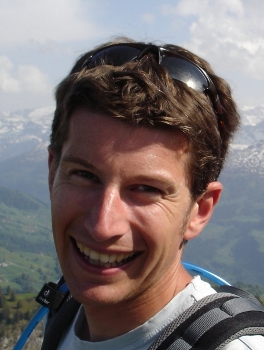
Prof. Willy Tinner is a leading academic at the University of Bern, serving as Head of the Paleoecology section and Vice Executive Director within the Institute of Plant Sciences. His research focuses on reconstructing past environmental changes through pollen analysis, vegetation dynamics, and human-ecosystem interactions. Tinner's work integrates paleoecological data with climatology, archaeology, and conservation biology to understand long-term ecological processes. His expertise spans Holocene climate impacts, Neolithic land use patterns, and biodiversity conservation challenges in alpine and Mediterranean ecosystems. Notable research includes studies on Fagus-Quercus forest coexistence in Italy, Abies alba climatic adaptations, and human-driven vegetation changes across Europe. Tinner collaborates internationally, contributing to projects in Greece, Ukraine, and the Balkans. He has published extensively on topics such as fire regimes, lake sediment archives, and the ecological consequences of ancient agricultural practices. His leadership positions reflect his role in shaping Switzerland's ecological research priorities through institutions like WSL Cadenazzo.
Dr. Attila Balázs is a Senior Researcher and Lecturer at ETH Zurich's Institute of Geophysics, affiliated with the Department of Earth and Planetary Sciences. His research integrates numerical modeling with geological data to investigate tectonic-surface process interactions, focusing on orogen-basin systems and continental deformation. Key contributions include studies on back-arc basins, transform faults, and the Tibetan Plateau's uplift mechanisms. He holds the 2020 Flinn-Hart Award and an ETH Zurich Postdoctoral Fellowship. His work emphasizes geodynamic processes such as mantle delamination, slab dynamics, and crustal deformation patterns. Balázs collaborates with the Geophysical Fluid Dynamics Group and maintains an active research portfolio spanning field observations, seismic analysis, and 3D numerical simulations. Research Foci: Tectonic modeling, basin evolution, mantle dynamics, and crustal rheology Key Regions: Pannonian Basin, Tibetan Plateau, Adriatic Sea, Himalayas His articles highlight interdisciplinary approaches to understanding continental and oceanic tectonics, with recent emphasis on transform fault mechanics, triple junction dynamics, and the interplay between tectonics and climate.
Prof. Flavio Anselmetti is a Full Professor of Quaternary Geology and Paleoclimatology at the University of Bern , where he has been employed since 2012. He also serves as the Managing Director of the Institute of Geological Sciences . Prior to this, he held significant roles at ETH Zurich, including SNSF Assistant Professor, and at EAWAG Dübendorf as Head of the Sedimentology Group, while remaining a Titular Professor at ETH Zurich until 2012. His academic training includes a Diploma in Geology (1990) from the University of Basel , followed by a PhD (1994) from ETH Zurich and University of Miami (USA) . He spent three years as a Postdoctoral Fellow and Research Associate at the University of Miami between 1994 and 1997. Paleoseismology : Using lacustrine and marine sediments to reconstruct earthquake and tsunami records Climate Change Studies : Investigating Holocene and Pleistocene climate shifts through sediment cores Sediment Dynamics : Analyzing source-to-sink systems and glacial sediment properties His recent publications focus on sedimentary archives in Science Advances , Quaternary Research , and Environmental Modelling and Software , with an emphasis on deep learning applications in sediment analysis , multi-proxy paleoenvironmental reconstructions , and human impact assessments over millennia. He has contributed to major projects in the Alpine foreland and Caribbean regions . Prof. Anselmetti leads the Quaternary Geology and Paleoclimatology Research Group and collaborates with international teams on ICDP-DOVE drilling campaigns and multibeam bathymetry mapping in Swiss lakes. His work extends to geohazard assessment , carbonate-siliciclastic shelf dynamics , and subaqueous fault analysis in active tectonic zones.
Swiss Federal Institute of Technology in LausanneSwitzerland
Mathias Lerch serves as Lecturer and Head of the Urban Demography Laboratory (URBDEMO) at the School of Architecture, Civil and Environmental Engineering (ENAC) of the Swiss Federal Institute of Technology Lausanne (EPFL). With expertise spanning population dynamics, urbanization, and demographic estimation, he bridges demography with urban planning and environmental science through interdisciplinary research on mortality, fertility, and migration patterns. His research centers on Population and Development, International Demography, and Urban Demography, examining how socioeconomic and environmental factors interact with demographic change. Methodologically, Lerch specializes in data collection, linkage, quality assessment, and advanced statistical modeling for demographic estimation and multi-regional projection, with particular focus on migration systems, fertility transitions, and mortality disparities in urban contexts. Analysis of his 15 most recent publications (2017-2025) reveals consistent investigation into migration patterns across rural-urban continua, fertility transitions in developing regions, and mortality outcomes in urban environments. His work demonstrates methodological innovation through multi-regional projection techniques and large-scale dataset integration, significantly advancing demographic estimation practices and policy-relevant insights for urban population growth. Dr. Lerch currently advises PhD students Beckendorff Dorothee and Du Wenxiu while teaching courses including Urban Demography and Border Forensics at EPFL. His advisory work focuses on training the next generation of demographers in quantitative methods and urban population analysis. As head of URBDEMO, Lerch leads a research team developing systemic frameworks for understanding urban population dynamics. The laboratory's work integrates demographic methods with urban studies to address contemporary challenges in urbanization, migration flows, and sustainable city development through innovative data linkage and modeling approaches.
Dr. Kerttu Majander is a Research Assistant and Postdoctoral Research Fellow at the University of Basel's Department of Environmental Sciences. She is affiliated with the Integrative Prehistoric and Natural Science Archaeology (IPNA) group led by Prof. Dr. Dr. Verena Schünemann. Her work focuses on interdisciplinary environmental research spanning evolutionary ecology, host-parasite dynamics, and natural science approaches to archaeology. Research interests include environmental change impacts on biological systems, coevolutionary processes, and paleoenvironmental reconstruction methods. These align with the department's mission to study biosphere-geosphere-atmosphere interactions and sustainable environmental management.
Dr. Maria Giuditta Fellin is a Lecturer at the Department of Earth and Planetary Sciences at ETH Zurich, affiliated with the Institute of Geochemistry and Petrology. She is part of the Earth Surface Dynamics Group and specializes in low-temperature thermochronology, using fission-track and (U-Th)/He dating techniques on zircon and apatite to study mountain belt exhumation and erosion processes. Her work focuses on linking tectonic activity, erosion patterns, and long-term landscape evolution. Her research spans global tectonic regions including the Pamir, Alps, Apennines, and Andes. She teaches courses on sedimentary petrography, microscopy, geochronology, and climate-soil-water interactions. No specific scientific awards are listed in the provided information. Her technical expertise includes advanced geochronological methods and quantitative modeling of tectonic-erosional systems.
Dr. Christine Christ is a Researcher at the Faculty of Theology of the University of Basel. Her work spans theological disciplines with a focus on historical, ethical, and intercultural perspectives. Institution: University of Basel School: Faculty of Theology She contributes to research areas including theology, religious studies, ecumenism, and ethics, though specific projects are not detailed in the provided texts. Her role involves academic collaboration and guest research initiatives. Recent publications highlight trends in soil science, environmental monitoring, and climate-related research, suggesting potential interdisciplinary engagements or data inconsistencies. These works address multi-scale soil quality frameworks, sediment source apportionment, peatland carbon dynamics, and radionuclide tracing methodologies. Dr. Christ's contact details include the email christine.christ@unibas.ch . No scientific awards or student supervision details are mentioned in the provided data.
Dr. Erika Gobet is a Lecturer in Paleoecology at the University of Bern's Institute of Plant Sciences. Her work focuses on reconstructing long-term environmental changes through multi-proxy analyses of lake sediments, ice cores, and macrofossil records. She specializes in understanding interactions between climate, vegetation dynamics, and human activities, particularly during the Holocene and Late Glacial periods. Her research spans multiple regions including Switzerland, Greece, Ukraine, the Mediterranean, and Central Asia. Key themes include the impact of Neolithic land use on ecosystems, climate-driven vegetation shifts, and teleconnections between distant ecosystems via monsoon patterns. She employs cutting-edge methods like high-resolution chronologies, machine learning for pollen sequence analysis, and genetic studies of plant species adaptation. Dr. Gobet collaborates across disciplines, integrating archaeology, climatology, and ecology to address questions about human-environmental interactions. Her work highlights biodiversity conservation challenges posed by historical and modern environmental changes, especially in mountainous and mediterranean ecosystems. Recent studies emphasize methodological advancements in paleoenvironmental reconstruction (e.g., ice-core microfossil extraction) and interdisciplinary projects like Burgäschisee archaeological excavations. Though no awards are explicitly mentioned, her prolific publication record and methodological innovations indicate significant contributions to the field.
Dr. Andrea Balbo is a Scientific Collaborator in Geoarchaeology and Paleogeography at the University of Geneva, affiliated with the Department of Earth Sciences within the Faculty of Sciences. His research is supported by major grants, including the Swiss National Science Foundation (SNSF) project 'Specialized Craftsmen on the Move,' and he collaborates with institutions across Switzerland, France, Italy, Spain, India, and beyond. PhD in Archaeology (Geoarchaeology), University of Cambridge (2007) Associate Professor Accreditation, Italian Ministry of University and Research (2013) Accreditation for Advanced Research, Catalan University Quality Agency (2015) Senior Research Fellow, Alexander von Humboldt Foundation, University of Hamburg (2015–2018) His research focuses on human-environment interactions during the Holocene, particularly in mountainous, arid, and coastal zones. He integrates archaeological fieldwork with paleoenvironmental and paleoclimatic data, using techniques such as soil micromorphology, remote sensing, and agent-based modeling. His work spans diverse regions including the Alps, Mediterranean wetlands, North Gujarat (India), the Sahara, Tierra del Fuego, and the Antarctic Peninsula. The recent publications highlight a strong trend in interdisciplinary environmental archaeology, with emphasis on climate change impacts, land use sustainability, terrace agriculture, and the use of advanced technologies like SAR remote sensing and simulation modeling. His articles appear in leading journals such as Quaternary Science Reviews , The Holocene , PLOS ONE , and WIREs Water . Senior Research Fellow, Alexander von Humboldt Foundation (2015–2018) Associate Professor Accreditation, MIUR, Italy (2013) Accreditation for Advanced Research, AQU Catalunya (2015) Dr. Balbo has served as a lecturer and teaching director at multiple universities, including the University of Geneva, Politecnico di Milano, University of Bologna, and University of the Philippines. He has supervised laboratory and field training at the University of Cambridge and coordinated international summer schools. He is also an active peer reviewer for the European Commission, National Geographic Society, IUCN, and over 20 scientific journals. His work at ALIPH Foundation on heritage conservation in conflict zones further demonstrates his engagement with real-world applications of archaeological science. He has contributed to projects involving heritage conservation, climate-conflict interactions, and illicit trafficking of cultural goods, and helped design e-learning platforms for heritage diplomacy. His affiliations include the Humboldt Foundation, Darwin College (Cambridge), Marie Skłodowska-Curie Association, and the SDG Academy Alumni Network.
Alistair Morgan is a Researcher at the Department of Environmental Sciences , University of Basel , Switzerland, since November 2021. His research focuses on paleoclimatology and speleothem geochemistry , particularly in SW Asia , to understand historical climate variability and its societal impacts. PhD in Quaternary Geology (2021–present) MRes in Speleothem Isotope Geochemistry (2020–2021) MESci in Environmental Geoscience (2011–2015) His work integrates speleothem records , lake sediments , and historical data to reconstruct rainfall variability over decadal to multi-decadal scales, addressing water scarcity in the Middle East . Key projects involve Byzantine and Hittite climate interactions , Mid-Holocene hydroclimatic optima , and volcanic climate forcing . His publications span topics like Dansgaard-Oeschger cycles , stalagmite dating , and human-climate entanglements .
Professor Thomas Stocker is a leading international expert in climate and environmental physics at the University of Bern's Physics Institute, where he heads the Climate and Environmental Physics division. His work focuses on ice core analysis (reconstructing CO₂ levels over 800,000 years) and climate modeling, particularly reduced-complexity models for long-term climate projections. Stocker's career included postdoctoral research at University College London, McGill University, and Columbia University under Wally Broecker. He co-chaired the IPCC's Working Group I for the 2013 Fifth Assessment Report, which underpinned the Paris Agreement. His research emphasizes understanding glacial cycles, carbon cycle dynamics, and abrupt climate transitions. His team's Beyond EPICA project seeks 1.5-million-year-old Antarctic ice cores to study precession-dominated climate cycles. Notable contributions include disproving the 'global warming pause' myth and analyzing AMOC stability under climate change. Education: ETH Zurich (PhD in Physics) Postdoctoral fellowships at UCL, McGill, and Columbia Research Themes: Ice core greenhouse gas reconstructions Climate modeling of millennial-scale variability Anthropogenic climate change impacts Policy-relevant climate science communication His 2025 articles highlight advancements in ice core drilling (Beyond EPICA), climate intervention studies, and projections for 2050. Recent work addresses tipping points, Antarctic ice sheet stability, and solar radiation management risks. Awards: Swiss Science Prize Marcel Benoist (2017) AGU Fellow (2016) Dr. Honoris Causa degrees from ETH Zurich (2012) and Versailles (2006) Stocker advocates for global climate partnerships, emphasizing the need for decarbonization as a 'fourth industrial revolution.' His lab develops the Bern3D Earth system model and advances drilling technologies like RADIX to access deep Antarctic ice cores.
Professor Daniel Ariztegui is a leading researcher in limnogeology and geomicrobiology at the University of Geneva. His work focuses on reconstructing paleoenvironments using lacustrine and marine sediments, with particular emphasis on biogeochemical cycles, microbial processes, and subsurface biosphere dynamics. He has supervised multiple PhD students and leads international drilling projects like the Dead Sea Deep Drilling Project (DSDDP) and the ICDP Towuti Drilling Project. His research integrates fieldwork, laboratory analyses, and genomic techniques to understand climate change impacts and environmental evolution. Teaching: Limnogeology, Global Change, Quaternary Paleoclimatology, Paleogeography Administrative Roles: President of the International Sedimentological Commission (ISC), Associated Editor for Sedimentology and Swiss Journal of Geosciences Research highlights include studies on microbialite formation in Patagonia, arsenic enrichment in Dead Sea microbial mats, and strontium bioremediation using green algae. His fieldwork spans Argentina, Guatemala, Chile, and Indonesia, with ongoing projects in Lake Petén-Itza and Lake Chad. Key contributions include over 50 peer-reviewed publications since 2020, focusing on paleohydrology, microbial biomineralization, and climate-ecosystem interactions. Current grants support investigations into Dead Sea lake levels, Pampean lake systems, and subsurface biosphere dynamics.
Dr. Lieveke van Vugt is a Postdoc researcher at the University of Bern's Institute of Plant Sciences, specializing in Paleogenomics & Vegetation Modelling. Her work focuses on reconstructing Holocene environmental changes, particularly the interplay between climate, vegetation, and human land use in Mediterranean and alpine regions. She employs multidisciplinary methods including pollen analysis, sediment DNA, and archaeological data to trace ecological transitions linked to prehistoric agricultural expansion and societal impacts. Key research interests include the coexistence of Fagus and Quercus forests under climatic extremes, the role of wild/domesticated animals in shaping alpine biodiversity, and the drivers of synchronous forest declines in northern Greece during the Early Holocene. Her studies often bridge paleoecology with archaeological inquiries, emphasizing long-term human-environment feedback mechanisms. Her recent work highlights the climatic drivers behind vegetation shifts at the onset of European farming and reveals comparable land-use patterns across southern and central Europe during the Neolithic. Methodologically, she advances high-resolution palaeoecological records from lacustrine sediments, integrating genetic and macrofossil evidence for comprehensive ecological reconstructions.
Jörg Franke is a Lecturer in Climatology and PostDoc researcher at the Institute of Geography, University of Bern, Switzerland. He specializes in paleoclimatology, climate modeling, and data assimilation techniques. His research focuses on reconstructing historical climate patterns using proxy data and climate models, particularly through the development of paleo-reanalysis systems like ModE-RA and EKF400. Educational Background: Franke earned a Diploma in Physical Geography (2003) from the University of Hanover, followed by a PhD in Geosciences (2008) from the University of Bremen, where he studied radiocarbon reservoir ages in marine environments. His postdoctoral work (2008–2011) at the Swiss Federal Research Institute WSL focused on dendrochronology and paleoclimatic reconstructions. Research Interests: His work emphasizes data assimilation of instrumental and proxy records, climatic extremes analysis, and spatial climate reconstructions. He has contributed to understanding the impacts of volcanic eruptions (e.g., Laki 1783) on global and regional climate systems, as well as the role of atmospheric circulation patterns in historical climate variability. Key Projects: Co-developed the ModE-RA global paleo-reanalysis system (1421–2008 CE) and led efforts to integrate satellite and reanalysis data for climate studies in regions like Eritrea and the Hindu Kush Himalaya. His tools, such as ClimeApp, advance climate data processing for historical reconstructions. Professional Roles: In addition to teaching quantitative methods in geography, Franke managed climate data services at the Oeschger Centre for Climate Change Research (2012–2014) and has contributed to interdisciplinary projects linking paleoclimate data with modern climate models. Lab/Team Affiliations: Active in the Climate Research Group and Oeschger Centre at the University of Bern, collaborating with international teams on paleo-reanalysis and climate variability studies.
Sébastien Castelltort is a Full Professor and Head of the Section of Earth and Environmental Sciences at the University of Geneva's Faculty of Science. He holds a Ph.D. in Earth Sciences from the University of Rennes (2003). His career includes roles at ETH Zurich and as an Associate Professor at Sorbonne Universités (2005–2007). His research focuses on climate change impacts on Earth systems, particularly the Paleocene-Eocene Thermal Maximum (PETM) and Middle Eocene Climatic Optimum (MECO). He explores sediment routing systems, paleoclimatic signals in geological records, and planetary geology (e.g., Mars). His fieldwork spans the Gulf of Mexico, Himalayas, Taiwan, and Sahara, analyzing marine sediments, river networks, and ancient climates. Key projects include Swiss National Science Foundation (SNSF) and EU-funded grants investigating climate-driven environmental changes. He also promotes science outreach through initiatives like the Enviroscope and ClimatiZENs project, engaging schools and the public. His research group addresses interdisciplinary questions linking tectonics, climate, and sedimentology. He serves as a leader in Source-to-Sink approaches, integrating stratigraphic and geomorphologic data to decode Earth's history.