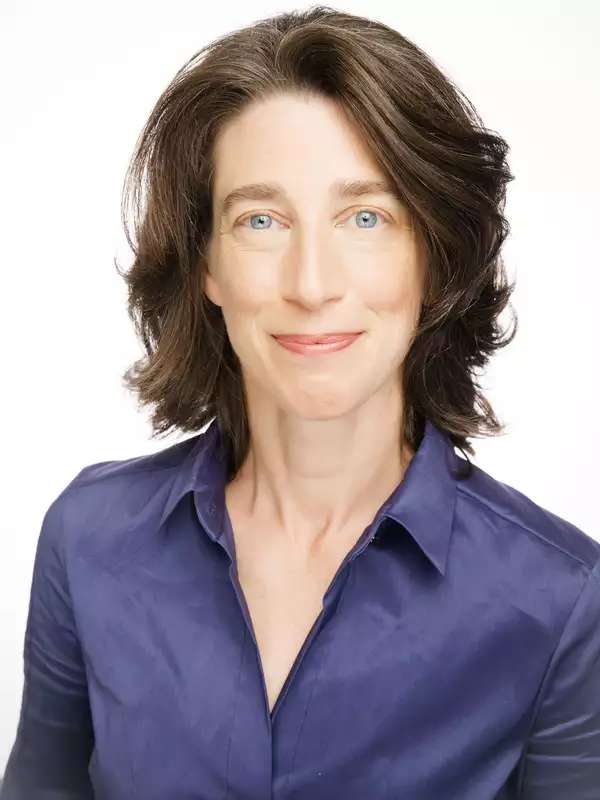
Christina Antonie Reh is a Lecturer at the Lucerne School of Business (HSLU), affiliated with the Institute of Communication and Marketing (IKM MM). Her roles include academic teaching and research in digital marketing and sustainability. She holds a PhD from WHU - Otto Beisheim School of Management and has professional experience in data science and marketing at companies like LOréal and SevenVentures. Education: PhD (tbc 2024), WHU; M.Sc. (2016), LMU Munich; B.Sc. (2013), LMU Munich Her research focuses on digital marketing effectiveness , sustainability in advertising , and consumer behavior . Notable projects include studies on long-term brand equity and sustainable product messaging. Recent work explores the impact of climate pledges on consumer trust. Publications highlight her contributions to media measurement modeling and online coupon strategies. Key awards include the Amazon Research Awards (ARA 2023) and MassChallenge recognition (2024). Advising: No formal students listed; however, co-founded baybies GmbH and Aiko Pet Foods GmbH. Grants: $28,000+ from Amazon Research Awards. Labs/Teams: Co-founder of startups baybies and Aiko Pet Foods, focusing on sustainable consumer products and pet food innovation.
Vitaly Shmatikov is a professor of computer science at Cornell Tech and the Cornell Ann S. Bowers College of Computing and Information Science . Prior to his current position, he worked at the University of Texas at Austin and SRI International. His research focuses on digital privacy , computer security , and security and privacy issues in machine learning . Education: Ph.D. in Computer Science and M.S. in Engineering Economic Systems from Stanford University Teaching: Offers courses like CS 5435 Security & Privacy Concepts in the Wild Shmatikov's research has received multiple accolades, including the Caspar Bowden PET Award three times and Test-of-Time Awards from leading IEEE and ACM symposiums. His work addresses adversarial system design and practical applications of privacy and security. Scientific Awards: Caspar Bowden PET Award (3x) IEEE Test-of-Time Award ACM Test-of-Time Award ACM/IEEE Symposium on Logic in Computer Science Test-of-Time Award USENIX Security Outstanding Paper Award EMNLP Distinguished Paper Award He actively mentors students and collaborates on cutting-edge security research, with applications in cryptography, malware analysis, and behavioral economics in cybersecurity.
Alexandra Horowitz is a Senior Research Fellow and Adjunct Associate Professor at Barnard College. She has been teaching since 2004, specializing in dog cognition and olfactory research. Her academic roles span the Departments of English and Psychology, reflecting her interdisciplinary focus on animal behavior and human-animal interactions. Education: M.S. and Ph.D. in Cognitive Science from UC San Diego; B.A. in Philosophy from the University of Pennsylvania. Research interests include naturalistic observations of dog social play, testing anthropomorphic assumptions, and characterizing canine olfactory abilities. She has authored influential books like Inside of a Dog and Being a Dog , exploring how dogs perceive the world. Her work frequently appears in top journals and media outlets, including the New York Times and TED-Ed. Recent articles highlight studies on dog navigation, play behavior, and olfactory perception. She has been recognized as among the Top 2% of Cited Authors globally. Her presentations and lectures span academic conferences, museums, and public forums, emphasizing science communication.
Ian Goldberg is a Professor at the Cheriton School of Computer Science , University of Waterloo, Canada. He holds the Canada Research Chair in Privacy Enhancing Technologies and leads the Cryptography, Security, and Privacy (CrySP) group . He is affiliated with the Cybersecurity and Privacy Institute and the Institute for Quantum Computing . Research Focus: Security, privacy, and privacy-enhancing technologies (PETs) for the Internet, including Off-the-Record (OTR) Messaging , censorship resistance , private information retrieval , and zero-knowledge proofs . Recent Publications: His work addresses metadata protection , deniable authentication , and secure multi-party computation , with applications to anonymous communication and censorship resistance. Scientific Awards: Canada Research Chair in Privacy Enhancing Technologies Students: He advises current and former PhD/Master’s students in projects like Lox , PRSONA , Walkie-Talkie , and SkypeMorph . Notable advisees include Sajin Sasy (Privacy-Preserving Communications), Justin Tracey (PETs Development), and Tao Wang (Website Fingerprinting Defenses). Labs & Teams: Goldberg is a core member of the CrySP group and contributes to the Tor Project and Off-the-Record Messaging open-source initiatives. His research bridges theoretical and applied cryptography, with deployments in real-world systems like Tor and PIR protocols.
Prof. Dr. Günther Dissertori is a Full Professor and Rector of ETH Zurich, where he oversees teaching and academic affairs. His academic journey began at the University of Innsbruck, followed by a doctoral position at CERN, and he joined ETH Zurich as an Assistant Professor in 2001 before becoming a Full Professor in 2007. Academic Role: Full Professor of Particle Physics Institutional Leadership: Rector of ETH Zurich (since 2022) Contact: guenther.dissertori@sl.ethz.ch Research Interests: Dissertori's work spans Particle Physics and Experimental Physics , notably contributing to the CMS experiment at CERN, which was instrumental in the Higgs boson discovery. His group also developed cost-effective PET devices, leading to the spin-off Positrigo AG . Research keywords include Detector Development , Medical Imaging , and Quantum Physics . Teaching Excellence: Recognized with multiple Golden Owl awards (2005–2020) and the Credit Suisse Award for Best Teaching (2013), Dissertori is celebrated for his pedagogical impact in the Department of Particle Physics. Scientific Contributions: His publications include advancements in CMOS technology, quantum dynamics, and medical applications, reflecting interdisciplinary expertise in high-speed electronics, environmental science, and architectural history.
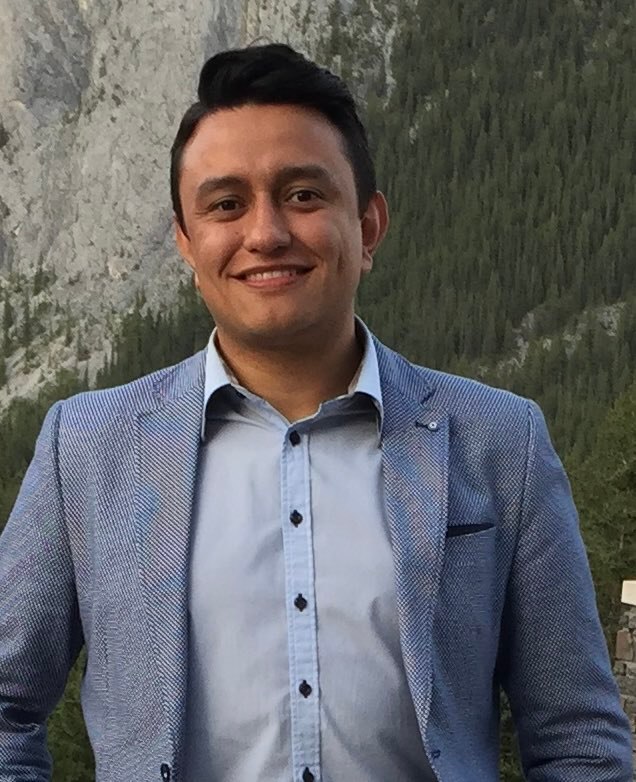
José Eduardo Villalobos Graillet is an Assistant Professor of Spanish at Idaho State University , specializing in Modern Peninsular Literature and Culture with a focus on visual culture (film and television) . He previously held a position as Spanish Instructor at Wilfrid Laurier University in the Department of Languages and Literatures. Research Areas : Spanish Film Studies, Spanish Medieval Literature, Latin American and Caribbean Studies, Teaching Spanish as a Foreign Language, Visual Culture, and Critical Pedagogy. His scholarly work examines film and television adaptations of 'La Celestina' , analyzing censorship dynamics across Francoist Spain, the Democratic Transition, and contemporary Spain. He also contributes to Spanish pedagogy , developing technological tools like Lang-8 for written expression and culturally immersive teaching units on topics such as winter festivals and Caribbean music. His publications span both critical academic analysis and methodological innovations for language instruction. Key Themes in Publications : Adaptation fidelity, political censorship, intercultural pedagogy, and the role of digital platforms in language learning.
George Danezis is a Professor of Security and Privacy Engineering at University College London (UCL), affiliated with the Information Security Group. He is also a faculty fellow at the Turing Institute and has held part-time roles since 2018 to focus on commercialization. His research spans systems security, privacy, anonymous communications, and blockchain technologies. Danezis co-founded Chainspace (acquired by Facebook in 2019) and Mysten Labs, where he serves as Chief Scientist. He holds a PhD from the University of Cambridge (2004) and has held positions at Microsoft Research, K.U.Leuven, and the University of Cambridge. Education: PhD (Computer Laboratory, University of Cambridge, 2004), B.A. (Hons) in Computer Science (Queens' College, Cambridge, 2000). Research interests include blockchain consensus, decentralized systems, privacy-preserving technologies, and machine learning applications in security. He has advised numerous doctoral students and led projects funded by EU Horizon 2020, EPSRC, and industry partnerships. His work emphasizes practical solutions for privacy, such as Loopix (anonymity system), Narwhal/Tusk (blockchain consensus), and Coconut (privacy credentials). Danezis has received awards for best papers (PET 2002/2018), is a Fellow of the British Computing Society, and advises organizations like Privacy International and DeepMind. Publications focus on blockchain, anonymity, and privacy, with over 100 peer-reviewed papers. Grants include leadership in projects like DECODE (EU), PANORAMIX, and Glass Houses. Teaching includes courses on computer security and privacy technologies at UCL.
Affiliation & Education Scott Hauck is a Professor at the University of Washington's Department of Electrical & Computer Engineering and an Adjunct Professor in Computer Science & Engineering. He leads the Adaptive Computing Machines and Emulators (ACME) Lab . He earned his BS in EECS from UC Berkeley (1990), and MS/PhD in CSE from the University of Washington (1992/1995). Research Focus Dr. Hauck specializes in FPGA-based reconfigurable computing with applications in: Quantum Computing: FPGA controllers for trapped-ion quantum systems enabling precise laser control and quantum state readout. Medical Imaging: Portable radiation sensors for personalized cancer therapy and PET scanner enhancements. High-Energy Physics: FPGA readout systems for ATLAS pixel detectors at CERN's Large Hadron Collider. AI Acceleration: Real-time machine learning inference for scientific applications via projects like hls4ml. His work bridges hardware innovation with computational physics, emphasizing real-time processing and low-latency systems. Publication Trends Recent research focuses on FPGA-accelerated machine learning for particle physics (e.g., transformer networks for LHC trigger systems) and quantum computing instrumentation. Earlier work established foundations in reconfigurable computing architectures and medical imaging electronics. Awards & Recognition Distinguished Teaching Award, University of Washington (2010) Advising & Funding Leads the ACME Lab with extensive funding from NSF, DARPA, NIH, DOE, and industry partners including Intel, Xilinx, and Microsoft. Mentored over 30 MS/PhD students in VLSI, reconfigurable systems, and scientific computing. Collaborations & Labs Directs the ACME Lab (EE1-307), collaborating with UW Radiology (Prof. Robert Miyaoka), UW Physics (Prof. Shih-Chieh Hsu), and Drexel University (Prof. Josh Agar). Projects include quantum control systems, LHC readout electronics, and medical sensor networks.
Ferdinando Fioretto is an Assistant Professor of Computer Science at the University of Virginia, leading the Responsible AI for Science and Engineering (RAISE) group. His research focuses on foundational challenges in AI, privacy, fairness, and the intersection of machine learning and optimization. He holds a dual PhD in Computer Science from the University of Udine and New Mexico State University. Affiliations: University of Virginia (current), Syracuse University (former), Georgia Institute of Technology (postdoc), University of Michigan (research fellow) Education: PhD (Udine & NMSU), B.S. (University of Parma) Research Interests: Machine Learning, Responsible AI, Optimization, Differential Privacy, Algorithmic Fairness. His work emphasizes practical applications in energy systems, court scheduling, and privacy-preserving machine learning. Recent projects include neuro-symbolic diffusion models, fairness-aware optimization, and privacy guarantees in LLMs. Grants & Funding: NSF CAREER Award, Google Faculty Research Award, Amazon Research Award, NVIDIA Academic Grant, and grants from the LaCross Institute and 4-VA. His group collaborates with institutions like George Mason University and Virginia Tech. Key Awards: NSF CAREER (2022), IJCAI Early Career Spotlight (2022), Caspar Bowden PET Award (2022), ACP Early Career Researcher Award (2021) Labs/Teams: RAISE group at UVA, focused on trustworthy AI, fair optimization, and privacy-preserving systems. Active in organizing workshops like NeurIPS Algorithmic Fairness and AAAI Privacy-Preserving AI.
Tanja Narancic is an Assistant Professor at the School of Biomolecular and Biomedical Science at University College Dublin (UCD). She is also an academic collaborator at the Bioeconomy Research Centre BiOrbic, where she coordinates multiple research projects among PIs, PostDocs, PhD students, and designs projects proposed by industrial partners. Dr. Narancic earned her PhD in Applied Microbiology from the University of Belgrade, Serbia in 2012, followed by postdoctoral research at the Institute of Molecular Genetics and Genetic Engineering in Belgrade. In 2013, she joined University College Dublin as a Postdoctoral Research Fellow under Prof. Kevin O'Connor, where she investigated microbial metabolic pathways using proteomics, metabolomics, and synthetic biology tools as part of FP7 and H2020 projects. She became a Research Fellow at BiOrbic in 2019 before advancing to her current position as Assistant Professor. Her research focuses on elucidating bacterial metabolism and leveraging synthetic biology tools to exploit bacteria for producing high-value products. Key research areas include: Proteomics, Metabolomics, and Transcriptomics for microbial pathway analysis Metabolic engineering for bioproduction Biocatalysis and enzyme optimization Protein engineering and purification Polyhydroxyalkanoate (PHA) production from waste streams Plastic upcycling and biodegradation technologies Dr. Narancic's publication record demonstrates a strong focus on converting plastic waste into valuable biodegradable materials through innovative biotechnological approaches. Her recent work has centered on developing microbial systems for upcycling polyethylene terephthalate (PET), polyolefins, and other recalcitrant plastics into polyhydroxyalkanoates (PHAs) and other high-value products. She has made significant contributions to understanding the metabolic pathways involved in plastic monomer conversion and has developed engineered strains with enhanced capabilities for plastic upcycling. As a principal investigator, Dr. Narancic leads multiple significant research projects including the Ad Astra Studentship (2023-2028), the UPLIFT project on sustainable plastics for food packaging (2021-2025), and the PROMOFER project (2024-2028) on optimizing PHB production. She also serves as a reviewer for numerous prestigious journals including Enzyme and Microbial Technology, Journal of Applied Microbiology, and Microbial Biotechnology. Her teaching portfolio includes coordination of multiple modules such as Bioprocessing, Metabolism and Disease, and SynBio for Bioeconomy, demonstrating her commitment to educating the next generation of scientists in both fundamental and applied aspects of biomolecular science.
Francesca De Benetti is a Researcher at the Chair of Computer Aided Medical Procedures (Prof. Navab) at the Technical University of Munich (TUM), affiliated with the Interdisciplinary Research Laboratory (IFL) and NARVIS Lab at the Garching Campus. Her research focuses on Nuclear Medicine and Machine Learning for medical image processing, particularly in internal radiation therapy simulations and AI-driven segmentation. Education : M.Sc. in Biomedical Computing (TUM, 2018-2020), B.Sc. in Information Engineering (Università di Padova, 2015-2018) Francesca's recent publications highlight her work in Monte Carlo dosimetry , dynamic PET tracer modeling , and deep learning-based anomaly detection in medical imaging. Her projects emphasize personalized radiation therapy and cross-modality image translation , often involving collaborations with nuclear medicine experts and radiologists. She contributes to teaching at TUM, leading lectures and practical courses on topics including Medical Augmented Reality , Computer Aided Medical Procedures , and Deep Learning for Medical Applications . Francesca is actively involved in labs such as the IFL Lab and NARVIS Lab , focusing on interdisciplinary applications of computer vision and generative AI in medicine.
Maher Elshakankiri is an Assistant Professor, Teaching Stream at the University of Toronto's Faculty of Information. He holds a Ph.D. in Computer Engineering from Ain Shams University (Egypt), followed by a postdoctoral fellowship at the University of Regina. His research focuses on IoT, Wireless Sensor Networks (WSN), and pedagogical integration of technology and gaming. He has supervised over 100 student projects and authored a book on WSNs. Education: Ph.D. in Computer Engineering, Ain Shams University, Egypt M.Eng., B.Eng. in Engineering, Ain Shams University, Egypt Postdoctoral Fellowship, University of Regina, Canada Research Interests: IoT in healthcare, agriculture, and sports Active learning classrooms and technology in education Wireless communication protocols (V2V, UAV, RFID) Leadership & Grants: Director, Bachelor of Information (BI) Program (2024–present) Coordinator, Information Systems and Design (ISD) Concentration (2023) SSHRC Grant: 'Gaming in teaching towards a more inclusive class' (2022–2023) Professional Activities: Member, SCC IoT & Digital Twins Standards Committee Reviewer for journals including Wireless Networks , Telematics and Informatics , and Computational Intelligence Technical Program Committee member at multiple conferences Teaching: Courses include INF1340 (Programming for Data Science), INF1005/1006 (IoT Workshops), and INF452 (Information Design Coding).
Edoardo Charbon is a Full Professor at École Polytechnique Fédérale de Lausanne (EPFL) in the School of Engineering, where he leads the Advanced Quantum Architecture Lab (AQUA). He also serves on the School Council STI and is Co-Director of STI-SSIQ Administration. Previously, he was a full professor and chair at Delft University of Technology from 2008 to 2016. Charbon received his Elektrotechnik Diploma from ETH Zurich, M.S. from UC San Diego, and Ph.D. from UC Berkeley, all in electrical engineering. His career spans industry experience at Cadence Design Systems and Canesta Inc. before joining EPFL in 2002. His research focuses on ultra high-speed and 3D optical sensors, with applications in LiDAR, FLIM (Fluorescence Lifetime Imaging Microscopy), PET (Positron Emission Tomography), FCS (Fluorescence Correlation Spectroscopy), and NIROT (Near-Infrared Optical Tomography). He has pioneered deep-submicron CMOS SPAD technology, which is now mass-produced and used in smartphones, telemeters, and medical diagnostics. His recent work bridges cryo-CMOS circuits for quantum computing with advanced optical sensing techniques. Analysis of his recent publications reveals a strong trend toward integrating quantum technologies with practical imaging applications. His work spans from fundamental device development (SPAD sensors, cryo-CMOS circuits) to applied systems (LiDAR engines, medical imaging devices), with increasing integration of machine learning techniques for real-time processing. 2023 IISS Pioneering Achievement Award Fellow of the IEEE Distinguished visiting scholar, W. M. Keck Institute for Space at Caltech Fellow, Kavli Institute of Nanoscience Delft Distinguished lecturer, IEEE Photonics Society Professor Charbon has authored or co-authored over 500 papers and two books, and holds 27 patents. His research has been supported by collaborations with organizations including Bosch, X-Fab, Texas Instruments, Maxim, Sony, Agilent, and the Carlyle Group. He has driven significant innovation in CMOS SPAD technology, which is now commercially deployed in various applications. He leads the Advanced Quantum Architecture Lab (AQUA) at EPFL, which focuses on the development of advanced sensor systems combining quantum technologies with conventional electronics. The lab has been instrumental in creating SPAD-based imaging systems that push the boundaries of time-resolved optical detection.
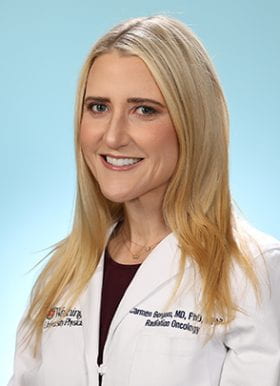
Carmen Bergom, MD, PhD, is an Associate Professor of Radiation Oncology at Washington University School of Medicine (WashU Medicine), where she joined the faculty in 2020. She holds secondary appointments in the Division of Cancer Biology and the Siteman Cancer Center. Her research focuses on leveraging genetic models to improve radiation therapy efficacy while mitigating radiation-induced cardiotoxicity , particularly in breast cancer patients. Key areas include radiation biology , tumor microenvironment , and cardio-oncology . Recent publications highlight her work in genetic mapping of radiation sensitivity (e.g., rat chromosome 3 variants), innovative imaging techniques (e.g., integrin-targeted PET), and clinical trial design for cardiovascular risk stratification. Her laboratory has pioneered the first genetic studies of radiation-induced cardiac dysfunction. Scientific awards include the Michael Fry Research Award (2021) and recognition as a Top Doctor in America (2018, 2019). She serves as Chair of the ASTRO Science Council Scientific Review Panel and co-chair of the Clinical and Experimental Research in Radiation Oncology meeting at ESTRO. Dr. Bergom treats breast cancer patients clinically and mentors students across all levels (undergraduate to postdoctoral). Her work bridges basic research with clinical applications , aiming to develop biomarkers and therapeutic targets for radiation oncology.
Aad van der Vaart is a Professor of Stochastics at Leiden University's Mathematical Institute. He was awarded the prestigious NWO Spinoza Prize in 2015 for groundbreaking work in mathematical statistics, particularly Bayesian methods applied to medical imaging, genetic data, and complex models. His research bridges pure mathematical theory with applied domains like neuroscience and astronomy. Research Interests : Van der Vaart focuses on infinite-dimensional Bayesian statistics, nonparametric models, and statistical genetics. His work emphasizes rigorous mathematical analysis of prior distributions and their impact on data-driven conclusions. Applications include gene network modeling and PET scan image reconstruction. Key Contributions : Authored influential books on estimation theory; pioneered modern Bayesian approaches to high-dimensional data. His Spinoza Prize funds will support interdisciplinary research and hiring new talent in statistical methods. Awards : NWO Spinoza Prize (2015), recognized as a global leader in statistical theory. Future Directions : Expanding into astronomical data analysis and medical applications, leveraging Bayesian frameworks for big datasets.