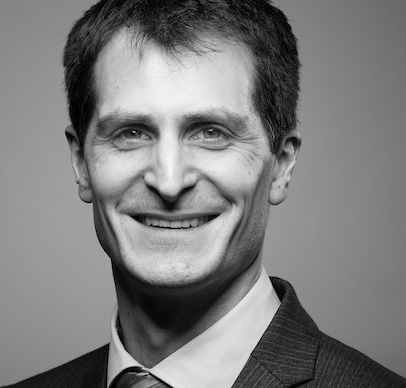
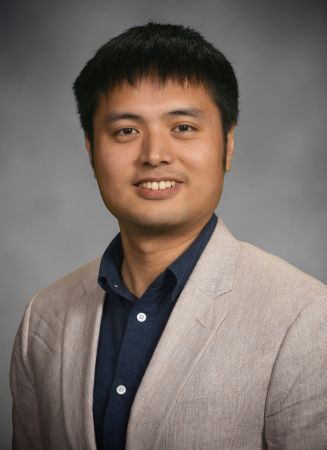
Johannes Tausch is a Professor at Southern Methodist University specializing in numerical approximation and fast methods for boundary integral equations. His research spans computational electromagnetics, optics, fluid mechanics, shape optimization, and high-dimensional quadrature. Applications include heat transfer, anomalous diffusion, wave propagation, and electromagnetic analysis. Research focuses on developing efficient computational techniques for boundary integral reformulations of PDEs. Key methodologies include fast multipole methods, adaptive quadrature, Galerkin formulations, and mesh-free approaches for complex geometries. Current work emphasizes parabolic problems, moving boundaries, and high-dimensional integration. Publications demonstrate consistent focus on accelerating integral equation solvers through hybrid algorithms, matrix compression techniques, and specialized quadrature. Recent advancements target time-dependent domains and multiphysics coupling. No awards or student advising information is provided in the source materials.
Jeff Borggaard is a Professor of Mathematics at Virginia Tech, affiliated with the College of Science and the Interdisciplinary Center for Applied Mathematics (ICAM). His research focuses on numerical analysis, computational science, and control theory, with emphasis on optimization and control of systems governed by partial differential equations (PDEs). He specializes in sensitivity analysis, reduced-order modeling, and their applications in fluid dynamics and engineering systems. His work includes developing computational methods for PDE-constrained optimization, control of fluid flows, and uncertainty quantification. Key collaborations involve researchers at institutions like Florida State University and École Polytechnique de Montréal. Borggaard has been funded by agencies including the Air Force Office of Scientific Research (AFOSR) and the National Science Foundation (NSF), supporting projects on model reduction, flow control, and energy-efficient building systems. Research highlights include advancements in proper orthogonal decomposition (POD) for turbulent flows, nonlinear balanced truncation techniques, and applications of reduced-order models in control and optimization. His contributions also extend to thermal energy modeling in buildings and parameter estimation in groundwater flow systems. Borggaard holds positions at both the Department of Mathematics (McBryde Hall) and ICAM (Wright House), and maintains active involvement in professional societies such as the Society for Industrial and Applied Mathematics (SIAM) and the American Mathematical Society (AMS).
Olalekan Babaniyi is an Assistant Professor in the School of Mathematics and Statistics at the Rochester Institute of Technology (RIT), within the College of Science. His research focuses on inverse problems with applications in biomechanical imaging, computational mechanics, and PDE-constrained optimization. He develops mathematical techniques to improve medical imaging and environmental modeling, including real-time imaging of soft tissue mechanical properties and ice flow prediction. He teaches courses such as Probability and Statistics, Boundary Value Problems, and Partial Differential Equations. His work has been highlighted in media for innovative applications in noninvasive disease diagnosis and climate science. Babaniyi runs the Inverse Problems Seminar at RIT (InvPrS) and has published extensively in journals like The Cryosphere, Journal of Nonlinear and Variational Analysis, and Physics in Medicine & Biology. His research emphasizes uncertainty quantification, image denoising in biomedical contexts, and solving inverse problems in viscoelasticity and geophysics. While no personal awards are listed, his contributions have supported student achievements, such as Quinn Kolt’s Goldwater Scholarship in 2021.
Nathan Cahill is an Associate Professor in the School of Mathematical Sciences and Associate Dean for Industrial Partnerships in the College of Science at Rochester Institute of Technology (RIT). He holds a DPhil in Engineering Science from the University of Oxford and is the Director of RIT's PhD Program in Mathematical Modeling. His research focuses on computer vision, machine learning, medical imaging analysis, and mathematical modeling. He directs the Image Computing and Analysis Laboratory (ICAL), which develops mathematical models for imaging analysis and computer vision tasks like registration, segmentation, and classification. Dr. Cahill has extensive industrial experience, having worked at Eastman Kodak and Carestream Health, earning 26 US patents in computer vision and medical imaging. He teaches advanced courses in numerical analysis, mathematical modeling, and imaging science. His work bridges academia and industry, with collaborations spanning biomedical engineering, neuroscience, and astrophysics. He advises numerous graduate and undergraduate students, many of whom have pursued PhDs or industry roles in tech and healthcare. His research outputs include influential papers in medical image registration, graph theory applications in social networks, and hyperspectral imaging. He actively contributes to open-source tools for image processing, including MATLAB implementations of segmentation and clustering algorithms. Cahill also holds an Erdős number of 3 and has been recognized for his teaching, offering unique incentives to engage students in applied mathematics and computer science. Key affiliations include the Center for Imaging Science and the PhD Program in Computing and Information Sciences. His current projects involve machine learning applications in healthcare analytics, pulsar signal analysis, and improving wastewater surveillance during pandemics. He maintains an active lab environment fostering interdisciplinary research with collaborators at institutions like the University of Rochester Medical Center and the Mind Research Network.
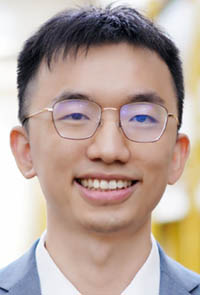
Dehao Liu is an Assistant Professor in the Department of Mechanical Engineering at Binghamton University. He holds a BS from Tsinghua University (2016) and a PhD from Georgia Institute of Technology (2021). Before joining Binghamton in 2022, he was a postdoctoral researcher at Texas A&M University. His research focuses on advanced manufacturing processes, particularly multiscale multiphysics modeling, physics-informed machine learning, and optimization methodologies. He leads the Intelligent Manufacturing & Materials Design Lab and is affiliated with Binghamton’s College of Engineering and Applied Sciences. Education: Bachelor of Science in Mechanical Engineering, Tsinghua University, 2016 Doctor of Philosophy in Mechanical Engineering, Georgia Institute of Technology, 2021 Research interests include: Multiscale multiphysics modeling and simulation Physics-informed machine learning for materials design Process monitoring and control in additive manufacturing Optimization and uncertainty quantification His recent work emphasizes predictive modeling of material microstructures and integrating AI with physical constraints to enhance manufacturing precision. He has contributed to exascale microstructure reconstruction, generative models for large-scale objects, and data-driven process optimization in metal additive manufacturing. Notable collaborations include projects funded by the National Science Foundation and industry partnerships in sustainable energy and biomedical materials. His lab actively explores applications in MEMS devices, microbial fuel cells, and biomaterial scaffolds.
Prof. Charalambos Makridakis is a Professor of Mathematics at the University of Sussex's School of Mathematical and Physical Sciences, and Director of the Institute of Applied and Computational Mathematics (IACM) at the Foundation for Research and Technology - Hellas (FORTH). He holds a PhD from the University of Crete and has held postdoctoral positions at the University of Maryland and the University of Tennessee. His research focuses on numerical analysis, computational mathematics, multiscale modeling, wave propagation, and fluid mechanics. He coordinates the EU-funded ModCompShock network and serves on the editorial board of the IMA Journal of Numerical Analysis. Education: PhD in Mathematics, University of Crete (1990) Postdoctoral Fellowships: University of Maryland (USA), University of Tennessee (USA) Research Interests: Multiscale Adaptive Modeling (atomistic/continuum coupling, kinetic/continuum coupling) Adaptive Methods for Evolutionary Problems (error control, geometric adaptivity) Wave Propagation (shock dynamics, DG methods) Fluid Mechanics (Navier-Stokes equations, turbulent models) Material Defects (dynamic fracture, dislocation motion) Recent Research Trends: His work integrates machine learning (e.g., Physics-Informed Neural Networks) with traditional numerical methods, advancing computational techniques for PDEs and complex systems. Awards & Grants: Coordinator of EU ModCompShock Network (2015-2019) Recipient of grants from the University of Sussex and European Union Labs & Teams: Leads IACM-FORTH, collaborating with global institutions like UCLA, Oxford, and the Mittag-Leffler Institute.
Tristan van Leeuwen is a Professor of Computational Inverse Problems at Utrecht University's Faculty of Science, within the Mathematical Institute's Department of Mathematical Modeling. He holds a MSc in Computational Science (2006) and a PhD in Geophysics (2010). His career includes postdoctoral roles at the University of British Columbia and Centrum Wiskunde & Informatica (CWI), followed by faculty positions at Utrecht University and group leadership at CWI. His research focuses on inverse problems, scientific computing, imaging reconstruction, and computational methods for geophysics and medical imaging. Key areas include wave-equation inversion, tomographic reconstruction, and uncertainty quantification. Notable contributions span seismic inversion techniques, convex optimization frameworks for tomography, and deep learning applications in imaging. His publications emphasize methodologies like wavefield reconstruction inversion, convex programming for shape sensing, and Bayesian approaches for uncertainty analysis. He collaborates with institutions like CWI and the University of British Columbia, contributing to open-source tools like Tomosipo for tomography. His work bridges theoretical mathematics with practical applications in geophysics, medical diagnostics, and industrial inspection.
Prof. Raul Fidel Tempone is a renowned expert in Numerical Analysis and Uncertainty Quantification (UQ) at RWTH Aachen University, where he established the Lehrstuhl für Mathematics for Uncertainty Quantification . His research focuses on developing efficient numerical methods for stochastic models and differential equations, driven by applications in computational mechanics, quantitative finance, biological/chemical modeling, and wireless communication. Research emphasizes a posteriori error estimation, adaptive algorithms, Bayesian model calibration/validation, and optimal experimental design. Key contributions include multilevel Monte Carlo (MLMC) methods, hierarchical/sparse approximation, stochastic optimization, and machine learning integration for UQ. Recent work includes advancements in: MLMC for PDEs/SDEs and McKean-Vlasov equations Bayesian experimental design with nuisance parameters Uncertainty quantification in porous media and wireless networks Machine learning-based segmentation and filtering techniques He has advised numerous PhD/Master’s students and collaborates widely, producing over 150+ publications in top journals/conferences. His applied research bridges theoretical developments with real-world challenges in engineering, finance, and data science.
Tristan Pryer is a Professor and Director of the Bath Institute for Mathematical Innovation (IMI) at the University of Bath. He is affiliated with the Department of Mathematical Sciences and collaborates with the EPSRC Centre for Doctoral Training in Statistical Applied Mathematics (SAMBa) and IAAPS. His interdisciplinary work spans mathematical innovation, computational science, and applied research. Primary Affiliations: Institute for Mathematical Innovation (IMI) Department: Department of Mathematical Sciences Dr. Pryer’s research interests center on numerical methods for partial differential equations, particularly finite element and discontinuous Galerkin techniques. He applies these to diverse fields including fluid dynamics, proton therapy, environmental modeling (e.g., landslides, soil moisture), and data assimilation. His work also extends to machine learning and artificial intelligence, notably through projects like the UKRI AI Research Hub for Real Data. He emphasizes computational efficiency, stability, and error control in numerical simulations. In grants and collaborations, he has secured funding as Principal Investigator (PI) for the Daphne Jackson Trust Fellowship (2024–2026) and as Co-Investigator (CoI) in projects such as the AI4CI Research Hub, Collective Intelligence initiatives, and cannabis harm reduction studies. His contributions include advancing mesh adaptation strategies, developing positivity-preserving frameworks for medical applications, and exploring stochastic models for wireless networks. He leads the IMI, fostering interdisciplinary research and innovation. Collaborations with institutions like UK Research & Innovation and the Engineering and Physical Sciences Research Council underscore his role in bridging academic and applied domains.
Franz Georg Fuchs is an Associate Professor at the Department of Mathematics, University of Oslo. He holds a PhD in Applied Mathematics (2009) from the University of Oslo and a Master's degree in Mathematics from the Technical University of Munich (2006). His research focuses on developing quantum computing algorithms and quantum error correction, with contributions to numerical methods in fluid dynamics and magnetohydrodynamics. Education: PhD in Applied Mathematics, University of Oslo, 2009 Master's in Mathematics, Technical University of Munich, 2006 Research Interests: Quantum computing algorithms, quantum error correction, numerical methods for PDEs, computational fluid dynamics, and operator algebras. His work bridges theoretical foundations with practical applications, including software development for quantum reservoir computing and optimization frameworks like QAOA. Publications: Over 20 peer-reviewed articles in journals like Quantum , Journal of Computational Physics , and SIAM Journal on Scientific Computing . Recent work emphasizes quantum software tools and constrained optimization techniques. Awards: None explicitly listed. Active in research projects like the Gemini Center on Quantum Computing and the QOMBINE initiative. Labs/Teams: Involved in the Mathematics for Quantum Computing and Many-Body Theory (QOMBINE) project, collaborating with SINTEF and international researchers.
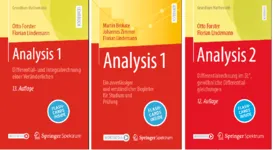
Florian Lindemann is a Lecturer in the Department of Mathematics at the Technical University of Munich (TUM), affiliated with the Mathematical Optimization research group. He holds a PhD in Theoretical and Numerical Aspects of Shape Optimization with Navier-Stokes Flows (2012). His research focuses on optimization, numerical analysis, and fluid dynamics, with contributions to PDE-constrained optimization and computational methods for fluid flow problems. Education: Completed his doctoral studies in 2012 under the supervision of Michael Ulbrich and Stefan Ulbrich. His work bridges theoretical mathematics and applied computational techniques, particularly in fluid dynamics. Research interests include shape optimization, numerical methods for partial differential equations, and optimal control. His teaching emphasizes courses like Numerical Mathematics (EI) and Analysis 3 (EI), where he has received awards for innovative exercise course management. He develops supplementary e-learning materials, such as digital flashcards for analysis textbooks, enhancing student engagement and exam preparation. Notable achievements include the 2021 Golden Circle Award for best exercise course management and the 2020 Lecturer Award for digital teaching excellence. His work has been published in journals like the SIAM Journal on Control and Optimization and book chapters in the International Series of Numerical Mathematics. Collaborations include projects on mathematical optimization and scientific computing within TUM’s interdisciplinary research hubs, such as the TUM-ICL Mathematical Sciences Hub. He contributes to outreach activities through TUM’s School Portal and initiatives like the Data Innovation Lab.
Dr. Christopher Marcotte is an Assistant Professor in the Department of Computer Science at Durham University. His research focuses on High-Performance Computing, Machine-Learning acceleration for physical systems, and computational methods in dynamical systems. He specializes in Exact Coherent Structures, reaction-diffusion models, and cardiac electrophysiology simulations. His work bridges computational mathematics and applied sciences, with recent publications on stable pulse quenching in excitable media and cardiac electrical excitation reconstruction from optical mapping data. He holds an ORCID profile (https://apps.dur.ac.uk/biography/image/712).
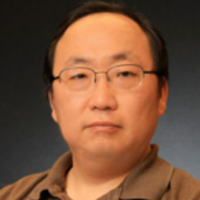
Jung-Han Kimn is an Associate Professor in the Department of Mathematics and Statistics at the University of South Dakota. His research focuses on numerical methods for partial differential equations, domain decomposition techniques, parallel algorithms, and computational physics. He holds a Ph.D. in Mathematics from the Courant Institute (NYU) and has extensive academic experience in applied functional analysis and numerical linear algebra. Education: B.A. in Mathematics, Yonsei University (1992) M.S. in Mathematics, Seoul National University (1994) Ph.D. in Mathematics, New York University (2001) Research Interests: Dr. Kimn specializes in large-scale simulations using domain decomposition methods for engineering and physics problems. His work emphasizes numerical solutions to PDEs, spacetime finite element methods, and high-performance computing applications. Notable projects include analyzing scramjet engine dynamics, ghost field stabilization in quantum systems, and solar energy forecasting models. Teaching Responsibilities: He instructs advanced courses such as Math 321 (Differential Equations), Math 331 (Advanced Engineering Mathematics), Math 751 (Applied Functional Analysis), and Math 770 (Numerical Linear Algebra). He also contributes to academic governance via the Harding Distinguished Lecture Committee and Professional Development Committee. Research Contributions: Recent work spans computational fluid dynamics (impinging jets, biofilm flows), quantum mechanics (Dirac equation solutions), and energy systems (optimal power flow optimization). His methodologies prioritize parallel computing scalability and algorithmic innovation. Professional Activities: Organized the Holistic Summer Undergraduate Research Program in High Performance Computing (2019) and developed frameworks for seismic fragility analysis in civil engineering systems.
Professor Ekkehard Sachs is affiliated with the Department of Mathematics at the University of Trier . His research focuses on optimization, numerical analysis, control theory, and their applications in fields such as partial differential equations (PDEs), mathematical finance, and engineering. He has made significant contributions to PDE-constrained optimization, Riccati feedback control, and reduced-order modeling techniques. His work spans theoretical developments and computational methods, with a strong emphasis on interdisciplinary applications. Notable areas include the analysis of non-monotone line search algorithms, the study of Ramsey models in economics, and the numerical solution of complex systems such as integro-differential equations. Sachs has also contributed to the calibration of financial market models and the design of efficient numerical algorithms for optimal control problems. His publications highlight advancements in optimization theory, numerical methods for PDEs, and computational techniques for high-dimensional problems. While no specific scientific awards or grants are explicitly mentioned, his extensive publication record reflects a prolific and impactful academic career. His involvement in organizing international conferences and editing proceedings underscores his influence in the optimization community.
Xiu Yang is an Associate Professor in the Department of Industrial and Systems Engineering at Lehigh University's College of Engineering. He previously worked at Pacific Northwest National Laboratory (PNNL) as a scientist and holds a Ph.D. in Applied Mathematics from Brown University, along with degrees from Peking University. His research focuses on modern scientific computing, including uncertainty quantification, quantum computing, physics-informed machine learning, and multi-scale modeling. Yang has applied these methods to fluid dynamics, hydrology, biochemistry, and energy storage systems, with recent emphasis on quantum computing algorithms and their applications in scientific computing. He has received notable awards, including the NSF CAREER Award (2022) and PNNL's Outstanding Performance Awards (2015 and 2016). His work bridges computational mathematics and real-world challenges, such as error modeling in NISQ devices and developing quantum algorithms for linear systems. Yang also contributed to the DOE applied mathematics visioning committee in 2019, reflecting his leadership in advancing computational science. His research outputs span interdisciplinary areas, combining quantum computing with machine learning (e.g., Quantum DeepONet) and enhancing Gaussian process regression techniques with constraints. This work underscores his commitment to advancing computational tools for complex scientific problems, from seismic wave equations to power grid systems.