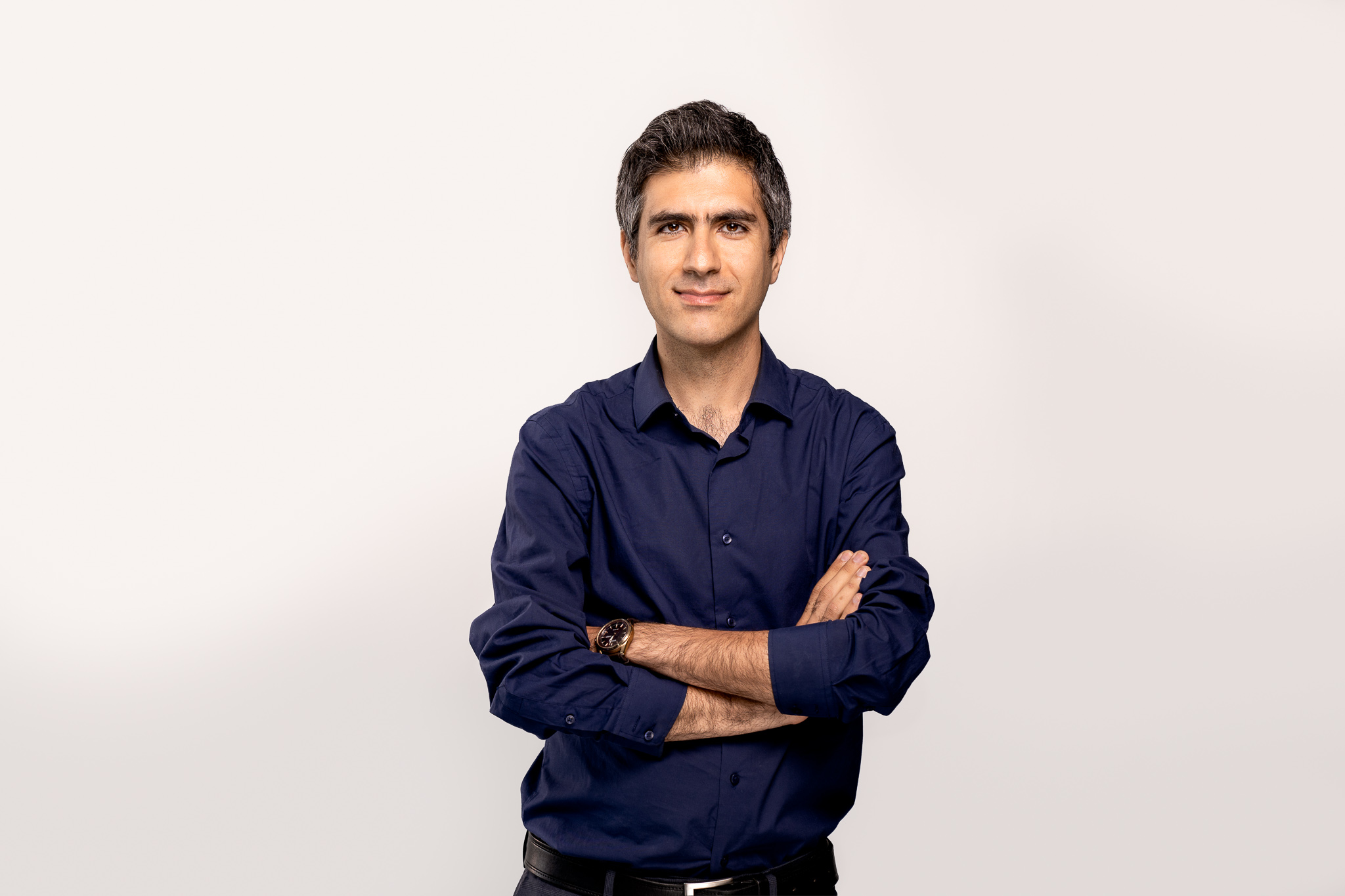
Daniel Roy is a Full Professor at the University of Toronto, holding cross-appointments in the Department of Statistical Sciences, Computer Science, Electrical and Computer Engineering, and the Department of Computer and Mathematical Sciences at UTSC. He is also a Canada CIFAR AI Chair and Research Director at the Vector Institute, reflecting his leadership in AI and machine learning research. His educational background includes a PhD, MEng, and BSc in Computer Science from MIT, where his doctoral work earned the MIT EECS Sprowls Award. Prior to joining Toronto, he was a Newton International Fellow at the Royal Society and a Research Fellow at Emmanuel College, University of Cambridge. His research centers on foundational principles in machine learning, statistics, and probabilistic reasoning. Key interests include statistical learning theory, Bayesian nonparametrics, probabilistic programming, and information-theoretic generalization. His work bridges theoretical computer science, mathematical logic, and applied probability. His recent publications, appearing in ICML, NeurIPS, COLT, and JMLR, reflect a strong focus on theoretical advances in generalization, online learning, and stochastic optimization. Themes include minimax rates, conditional mutual information, and the role of data in PAC-Bayes bounds. His group has made foundational contributions to probabilistic programming, including work on Church and the computability of conditional probability. NSERC Discovery Accelerator Supplement Ontario Early Researcher Award Google Faculty Research Award Newton International Fellowship MIT EECS Sprowls Award Daniel Roy advises numerous PhD students and postdoctoral researchers, many of whom have gone on to prestigious positions in academia and industry. His group actively collaborates with leading researchers in machine learning and statistics. He is also an Action Editor for the Journal of Machine Learning Research and Transactions of Machine Learning Research, underscoring his role in shaping the field. He leads a vibrant research group focused on theoretical machine learning and probabilistic modeling, and maintains active collaborations with institutions such as MIT, Cambridge, and the Vector Institute. He is also the founder and maintainer of the probabilistic-programming.org wiki, a key resource in the community.