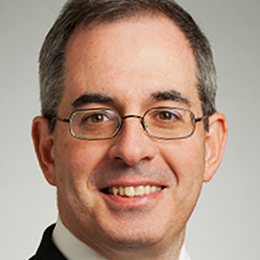
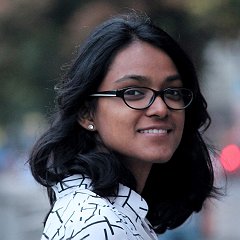
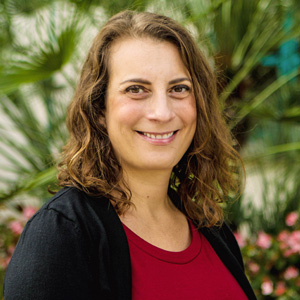
Lawrence Schwartz is the James Picker Professor of Radiology and Chair of the Department of Radiology at Columbia University. He is internationally recognized for pioneering the application of advanced imaging technologies to enhance clinical care and drug discovery, with a focus on oncologic imaging and imaging biomarker development. His work spans computational image analysis, physiologic imaging, and collaborations with industry leaders like IBM and GE. Research Interests: Imaging Biomarkers Artificial Intelligence in Radiology Computational and Functional Imaging Techniques Correlation of Imaging with Molecular Disease Features Applications in Solid Tumors (Chest, Abdomen, Pelvis) Key Collaborations: Founding the Laboratory for Computational Image Analysis at Memorial Sloan Kettering Cancer Center (MSKCC) Developing voice recognition systems with IBM for radiology reporting Co-developing one of the first enterprise-wide PACS with GE Publication Trends: Dr. Schwartz’s recent articles emphasize standardization in cancer imaging (e.g., RECIST/iRECIST guidelines), AI integration in radiology, and biomarker validation across lymphoma, prostate cancer, and desmoid tumors. These works highlight interdisciplinary applications of machine learning, image processing, and clinical trial design.
Desislava Georgieva is an Assistant Professor in the Department of Informatics at New Bulgarian University (NBU), where she has been a full-time faculty member since 2005. She holds a PhD from Technical University of Sofia (2014) and dual Master's degrees in Architecture and Computer Technologies. Her research spans image processing , computer graphics , and 3D animation , with applied work in medical imaging, telemedicine, and cybersecurity. Recent publications demonstrate collaborations on medical device software, adaptive imaging algorithms, and educational methodologies. She teaches courses including Game Design , Animation Techniques , and Computer Animation , and has supervised multiple diploma students. Administrative roles include serving as program director and consultant at NBU. Contact: Office hours Tuesdays/Wednesdays (18:00-20:00, Room 712A) or email dvelcheva@nbu.bg .
Suguman Bansal is an Assistant Professor in the School of Computer Science at Georgia Institute of Technology since January 2023. Her research focuses on applying Formal Methods and Logic to ensure the safety and reliability of AI systems, particularly in Artificial Intelligence , Machine Learning , and Programming Languages . Previously, she held an NSF/CRA Computing Innovation Postdoctoral Fellowship at the University of Pennsylvania under Prof. Rajeev Alur and earned her Ph.D. at Rice University advised by Prof. Moshe Y. Vardi. Her work addresses the theoretical and algorithmic foundations of Formal Methods for Reinforcement Learning , Reactive Synthesis , and Symbolic Quantitative Reasoning . Recent publications highlight advancements in compositional LTLf synthesis , PAC learning with formal guarantees , and quantitative game theory . Her research has been presented at top venues like ICML , NeurIPS , CAV , and POPL . Best Paper Award at ATVA 2023 NSF/CRA Computing Innovation Fellow (2020) MIT EECS Rising Star (2021, 2018) Gold Medal, ACM Student Research Competition at POPL 2016 She advises BansalLab , which explores intersections of Formal Methods and AI , mentoring students like Vignesh Subramanian (Ph.D.), Ramneet Singh (Master’s), and Yash Kankariya (undergraduate). Her teaching includes courses on Logic in Computer Science and Automata and Complexity .
Osbert Bastani serves as an Associate Professor in the Department of Computer and Information Science at the University of Pennsylvania. He leads the trustml@Penn research group and holds affiliations with the ASSET, PRECISE, and PRiML research centers, as well as PLClub. His academic work centers on developing reliable and interpretable artificial intelligence systems through interdisciplinary approaches combining programming languages, formal methods, and machine learning. He earned his Ph.D. in Computer Science from Stanford University under the guidance of Alex Aiken, followed by a postdoctoral position at MIT working with Armando Solar-Lezama. This foundation in both theoretical computer science and practical systems has shaped his research trajectory. Bastani's primary research areas include Trustworthy Machine Learning (focusing on robustness against adversarial attacks, fairness in algorithmic decision-making, and explainable AI), program synthesis, and formal verification. His recent publications address critical challenges in large language models, such as defending against jailbreaking attacks and ensuring trustworthy retrieval-augmented generation. He also develops methods for conformal prediction under distribution shifts and neurosymbolic program synthesis for complex tasks like web question answering. His teaching portfolio features advanced courses including CIS 7000: Trustworthy Machine Learning and CIS 4190/5190: Applied Machine Learning, where he integrates cutting-edge research into the curriculum. Through his research group, he mentors graduate students on projects spanning neurosymbolic programming, uncertainty quantification, and fairness in sequential decision-making. As an active member of Penn's research ecosystem, Bastani contributes to the ASSET center's mission of building secure systems, PRECISE's work on cyber-physical systems, and PRiML's machine learning initiatives, while collaborating with PLClub on programming language innovations.
Rachel Haine-Schlagel is Professor and Associate Dean for Research in the College of Education at San Diego State University, where she serves in the Department of Child and Family Development. She also holds an investigator position at the Child & Adolescent Services Research Center (CASRC), affiliated with University of California, San Diego and Rady Children’s Hospital-San Diego. Previously, she was Assistant Research Professor in SDSU's Department of Psychology. Her educational background includes: Ph.D. in Clinical Psychology from Arizona State University M.A. in Clinical Psychology from Arizona State University B.A. in Psychology (highest honors) from Emory University Dr. Haine-Schlagel's research centers on family participation in child mental health services, with emphasis on evidence-based engagement interventions for community settings. Her work spans development of measurement tools (e.g., Parent Participation Engagement Measure), implementation strategies for evidence-based practices, and analysis of ethnic disparities in service engagement. She investigates how caregiver involvement impacts treatment outcomes through mixed-methods approaches including RCTs, observational assessments, and stakeholder analyses. Analysis of her 15 most recent publications reveals consistent focus on community-based child mental health systems, with recurring themes of caregiver engagement measurement, implementation science, and culturally responsive interventions. Her work bridges clinical practice and research through tools like the Parent And Caregiver Active Participation Toolkit (PACT) and Training Intervention for Engagement in Services (TIES). As a licensed psychologist (PSY20287) and certified TIES trainer, she maintains strong clinical connections while advancing research. Her mentoring is evident through numerous student/trainee co-authors on publications. She leads the PACS lab, which focuses on developing and testing family engagement interventions through community partnerships. Current projects emphasize toolkit implementation, measurement validation, and strategies to reduce disparities in mental health service participation.
Anita Huttner, MD is an Associate Professor of Pathology at Yale School of Medicine with extensive affiliations across Yale's research ecosystem. She holds primary appointments in the Department of Pathology and participates in numerous specialized research centers including the Alzheimer's Disease Research Center (ADRC), Brain Tumor Center, Genomics, Genetics, and Epigenetics Program, and Yale Cancer Center. Her dual expertise spans neuropathology and molecular diagnostic pathology, creating a unique interdisciplinary approach to understanding brain diseases. Dr. Huttner's research focuses on neurological disorders with particular emphasis on Alzheimer's disease, brain tumors, and epilepsy. She employs innovative techniques including subcellular proteomics, induced pluripotent stem cell (iPSC) modeling, and advanced imaging analysis to investigate disease mechanisms. Her work bridges traditional microscopic examination with modern genomic analysis, allowing her to incorporate genetic sequencing results into visual tumor analysis. Recent publications demonstrate her leadership in identifying biomarkers for neurological conditions and developing novel diagnostic approaches for brain disorders. Analysis of Dr. Huttner's recent publications (2023-2025) reveals a strong focus on Alzheimer's disease mechanisms, brain tumor classification using advanced imaging techniques, and neurological conditions like Tourette Disorder and epilepsy. Her work frequently employs cutting-edge methodologies including single-cell transcriptomics, subcellular proteomics, and AI-based analysis of medical imaging. These publications appear in high-impact journals such as Nature Neuroscience, Nature Aging, and Biological Psychiatry, demonstrating the significance of her contributions to the field. Averill A. Liebow Award for Excellence in the Teaching of Pathology Residents (2009) Nomination for the Alice Bohmfalk Teaching Award in Basic Science (2005) Dr. Huttner maintains an active research program with numerous collaborations across Yale and beyond. Her work involves both basic science investigations and clinical applications, with a particular focus on translating laboratory findings into improved diagnostic approaches and potential treatments. She serves as a Sub Investigator for the SV2A PET Imaging clinical trial focused on epilepsy patients, demonstrating her commitment to translational research that directly impacts patient care. Her mentorship extends to pathology residents, with recognition for excellence in teaching. Based at the Brady Memorial Laboratory at Yale, Dr. Huttner's work integrates multiple research approaches to understand brain pathology at both cellular and molecular levels. Her laboratory investigations focus on recreating brain disorders using stem cell technology to model conditions like epilepsy and Alzheimer's disease, with the ultimate goal of developing better treatments for neurological conditions and brain tumors.
Dr. Julie Brown serves as Assistant Professor of Education at McKendree University, Department of Education, with her office located in Piper Academic Center (PAC) 203. Her academic credentials include: Ed.D. in Educational Leadership from Southern Illinois University - Edwardsville Ed.S. in Administration from Southern Illinois University - Edwardsville M.S. in Educational Leadership from Southern Illinois University - Edwardsville B.S. in Elementary Education from Eastern Illinois University Dr. Brown's research and teaching focus centers on Educational Leadership, emphasizing practical administrative skill development for K-12 educational leaders. Her work integrates real-world scenarios with theoretical frameworks to cultivate competencies in communication, conflict resolution, decision-making, and stakeholder engagement. With lifelong immersion in educational systems across multiple roles (teacher, parent, administrator, and mentor), she prioritizes creating inclusive learning environments that foster professional networking and experiential knowledge transfer among adult learners. She maintains active membership in key professional organizations: Illinois Association of School Administrators (Southwestern Region) Illinois Association of School Administrators Illinois Principals Association Association for Supervision and Curriculum Development Illinois Association for Supervision and Curriculum Development Her teaching methodology emphasizes interactive case studies, collaborative discussions, and practical application of leadership principles tailored for working professionals balancing academic pursuits with career and family responsibilities.
Lisa Pittock serves as Senior Lecturer in the Department of AHP and Dental Practice/SIM at the University of Kent, where she has held academic positions since 2011 including Course Director roles for BSc Diagnostic Radiography and MSc Clinical Reporting programs through 2024. Her educational qualifications include a Postgraduate Certificate in Learning and Teaching. Research and professional focus centers on diagnostic radiography and clinical reporting with specialized expertise in musculoskeletal imaging, mammography, MRI, and PACS management across both appendicular and axial reporting domains. Professional recognition includes: Fellow of the Higher Education Academy As an academic leader, she has guided student cohorts through curriculum development and pathway leadership in radiography education, supporting program delivery and student success across clinical reporting specializations.