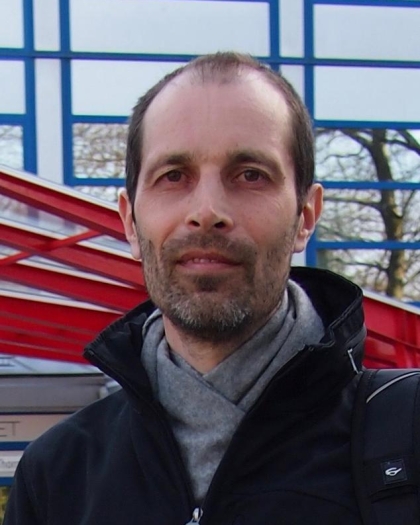
Professor Sander Nieuwenhuis (Leiden University) specializes in Cognitive Neuroscience of Decision Making through behavioral, EEG, and pharmacological approaches. His work bridges prefrontal cortex function and noradrenergic system mechanisms in human cognition. Studied cognitive psychology (Groningen) and earned PhD (Amsterdam, 2001) International experience: Cambridge University (visiting research), Princeton University (postdoc) Research focuses on noradrenaline's role in attention, decision-making, and cognitive control via: Locus coeruleus-norepinephrine system dynamics Phasic vs. tonic alertness effects Cognitive task performance under neuromodulator deficiency Neuroprotective pathways in Alzheimer's models Recent publications analyze DBH deficiency (Jepma et al., 2011) and attentional blink mechanisms (Nieuwenhuis et al., 2005). His Temporal Attention Lab integrates fMRI, genetics, and computational modeling . Teaching leadership includes: Chair of Research Master Program Committee Coordinator of Scientific Writing courses
Jaakko Timo Henrik Järvi is a Professor in the Department of Informatics at the University of Bergen, Norway, with additional affiliations at the University of Turku, Finland. His research focuses on programming language design, generic programming, and human-computer interaction, particularly in GUI frameworks and software reuse. His research interests include generic programming, programming language design (especially the Magnolia language), high-performance computing, array programming, and GUI engineering. He emphasizes formal methods and algebraic specifications to build reusable and efficient software systems. His work bridges theoretical foundations with practical applications in software development and education. The recent publications highlight a strong trend in declarative GUI frameworks, multi-selection models, and generic programming. His work explores domain-specific languages for GUI structure manipulation, reusable selection semantics across platforms, and optimizing array computations using the Mathematics of Arrays. These efforts reflect a consistent focus on software abstraction, correctness, and reusability. Jaakko Järvi has supervised doctoral students, including Tetiana Yarygina, whose dissertation explored microservice security. While no specific grants are detailed, his work on VisAST was supported by the Research Council of Norway (Project 250683), indicating active external funding. He frequently collaborates with researchers like Magne Haveraaen, Knut Anders Stokke, and Sean Parent. He contributes to tools and frameworks such as the MultiselectJS library and the VisAST educational tool. These are outcomes of collaborative research teams focused on improving software development practices and computer science education.
Dr. Valentin Soloiu is the Allen E. Paulson Distinguished Chair of Renewable Energy and Professor in the Department of Mechanical Engineering at Georgia Southern University, where he supervises the Renewable Energy, Combustion, Aerospace, Automotive, and Intelligent Vehicles Laboratories . Expert in advanced combustion technologies for biofuels and synthetic aviation fuels Research focus on heat transfer, emissions control, spray dynamics, and intelligent vehicle systems Research Interests span from first/second generation biofuels to smart engine control strategies and engine tribology . His work employs reactivity-controlled compression ignition (RCCI) and partially premixed combustion for NOx and PM reduction . Recent publications analyze synthetic kerosene (S8) , HEFA fuels , and alternative aviation fuels in combustion chambers. His awards include multiple NSF grants , EPA-P3 Prize , and recognition as Distinguished Associate of ASME Engine Division . Editorial roles: 18 journal/conference reviewer positions Leadership: Councilor of Council of Undergraduate Research (CUR) Labs mentor 15+ graduate students and 30+ undergraduates annually in energy research projects that have won 40+ national awards over the past decade.
Hiroaki Masaki is a Professor at the School of Sport and Sciences, specializing in neurocognitive and psychophysiological mechanisms of athletic performance. He earned his Ph.D. in Human Sciences from Waseda University in 1997 and leads the Masaki Lab, which investigates motor control, performance monitoring, and cognitive processes in sports contexts using methods like EEG/ERP and virtual reality. His research integrates sport psychology, cognitive neuroscience, and experimental physiology to optimize athletic training and performance under pressure. Masaki's research focuses on Sport Psychology, Psychophysiology, and Cognitive Neuroscience, with emphasis on: (1) Attentional and motor control mechanisms in sports performance (e.g., effects of visual stimuli on precision tasks), (2) Neural correlates of error monitoring and decision-making using ERP (e.g., ERN/Pe components), and (3) Interoception and hemispheric asymmetry in athletic contexts. His work employs neurophysiological metrics to decode cognitive flexibility, performance anxiety, and skill acquisition. Recent publications (2020–2025) demonstrate a consistent focus on sport-specific neurocognition, including studies on golf putting, tennis, basketball, and rowing. Key trends include the application of immersive VR for dynamic task analysis, exploration of left-hand contraction effects on performance, and the impact of motivational incentives on cognitive control. Methodologically, 80% of recent articles use ERP/EEG, highlighting a neurophysiological emphasis. Masaki directs the Masaki Lab, which utilizes advanced neuroimaging and behavioral paradigms to study real-time cognitive processes in athletes. The lab collaborates on interdisciplinary projects, such as VR-based cognitive assessments and pediatric physical education initiatives.
Dr. Frances De Blasio is a Lecturer in the School of Psychology at the University of Wollongong, Australia. She specializes in psychophysiology research with a focus on brain dynamics in healthy ageing. Dr. De Blasio has held various academic positions including Career Development Fellow and Associate Research Fellow at the University of Wollongong, and Postdoctoral Research Fellow at Western Sydney University's NICM Health Research Institute. Her educational background includes: PhD in Psychophysiology from University of Wollongong (2009-2018) Bachelor of Psychology (Honors, Class I) from University of Wollongong (2003-2008) Dr. De Blasio's research interests center around psychophysiology and cognitive neuroscience, with particular expertise in brain dynamics across the lifespan. She focuses on the relationship between prestimulus brain states and cognitive processing outcomes, especially in the context of healthy ageing. Her work involves developing and refining advanced electrophysiological measures and methods for application in psychophysiological research. She has made significant contributions to understanding EEG patterns, orienting reflex mechanisms, and the application of frequency principal components analysis in neurophysiological studies. Analysis of Dr. De Blasio's recent publications reveals a strong focus on EEG and ERP methodologies applied to cognitive neuroscience questions. Her work spans multiple domains including mindfulness meditation effects on brain activity, music cognition, aging and cognitive decline, and methodological innovations in EEG analysis. A recurring theme is the investigation of brain dynamics using advanced signal processing techniques, particularly regarding pink and white noise components in EEG data. Her research often bridges theoretical cognitive neuroscience with practical applications in understanding healthy brain function across the lifespan. Dr. De Blasio has served in leadership roles within the Australasian Society for Psychophysiology, including as Treasurer, Past-President, and Executive Committee Member. She is an active journal reviewer for numerous publications including Biological Psychology, Clinical Neurophysiology, and International Journal of Psychophysiology. As a supervisor, Dr. De Blasio currently mentors three PhD students working on projects related to: The Effects of Menstrual Cycle Phase and Sex Hormones on EEG and ERP Components Cardiac responses, EEG dynamics, and cognitive processing during music listening Joining the hemifields, a characterisation of transcallosal connections in human early visual cortex Her research has been supported by various grants, including a pilot phase II trial of SaiLuoTong for cognitive function in older adults with mild cognitive impairment. Dr. De Blasio is actively involved in methodological development, particularly with the PaWNextra technique for extracting pink and white noise from EEG spectra, which has become a significant contribution to the field of quantitative EEG analysis.
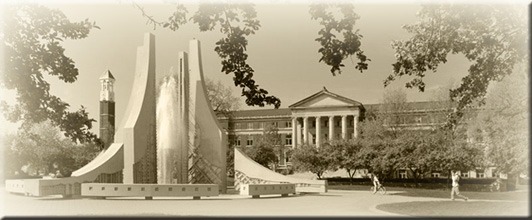
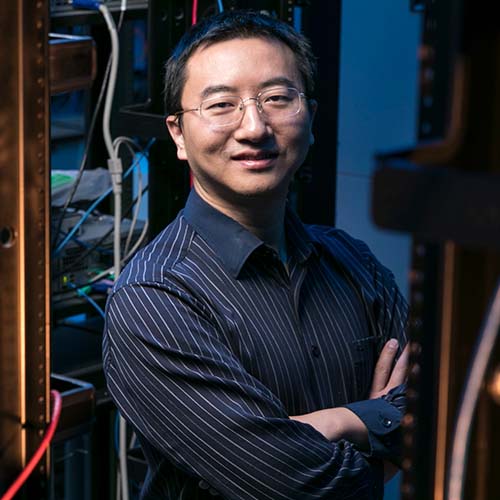
Jun Chen serves as Professor and Associate Head for Facilities and Operations at Purdue University's School of Mechanical Engineering. His career spans experimental fluid dynamics research, academic leadership, and global engineering initiatives focused on sustainable energy solutions for underserved communities. Education: PhD in Mechanical Engineering, Johns Hopkins University (2005) MS in Aerospace Engineering, Beijing University of Aeronautics & Astronautics (1997) BS in Aerospace Engineering, Beijing University of Aeronautics & Astronautics (1994) Professor Chen's research centers on experimental fluid dynamics with emphasis on flow diagnostic techniques including digital holography, tomographic PIV, and interferometry. His work spans fundamental turbulence studies in stratified environments and applied energy systems for wind, hydrokinetic, and cardiovascular applications. Key innovation areas include multiphase flow measurement, low-Mach-number aeroacoustics, and wind energy conversion systems. His 15 most recent publications reveal consistent focus on advanced optical diagnostics for complex flows, with growing emphasis on renewable energy applications (wind/hydrokinetic systems) and biomedical fluid dynamics . The research demonstrates methodological evolution from fundamental turbulence characterization toward practical implementations in energy and healthcare. Scientific Awards: 2018 ASCE Sustainable Development Award for African grain storage system 2016 EPA P3 YCOSST Award for off-grid wind energy in Africa 2014 ASME Robert T. Knapp Award for holography uncertainty quantification 2005 Measurement Science Outstanding Paper Award for PIV peak-locking elimination Professor Chen actively mentors graduate students (16 theses supervised) and leads global engineering initiatives through Purdue's GEPP program, having conducted multiple field deployments in Cameroon for rural energy solutions. His research portfolio includes significant grants from NSF, DOE, and industry partners focused on fluid diagnostics and sustainable energy. His laboratory work integrates optical diagnostics with field-deployable energy systems , maintaining strong industry partnerships while advancing fundamental fluid mechanics knowledge. Current projects emphasize scalable solutions for resource-constrained environments through the Purdue Global Design Teams.
Kai Zeng is a Professor in the Department of Electrical and Computer Engineering at George Mason University's College of Engineering and Computing. He is also affiliated with the Department of Computer Science and Cyber Security Engineering. His research focuses on 5G wireless security, CPS/IoT security, spectrum sharing, machine learning, and physical layer security. Prior to joining Mason, he held faculty positions at the University of Michigan - Dearborn and was a postdoctoral scholar at UC Davis. Education : PhD in Electrical and Computer Engineering from Worcester Polytechnic Institute Research Highlights : Developed WindTexter, a commercialized product for secure covert communication in 5G environments. Lead PI on projects funded by Commonwealth Cyber Initiative, NSA, and NSF, focusing on secure communications, network forensics, and IoT security. Grants & Projects : $1.7M NTIA Wireless Innovation Fund project (2023) leveraging AI for O-RAN component testing. Cyber P3 Scholarship Program (2018-2020) supporting cybersecurity education. Labs/Teams : Engages in interdisciplinary research teams focusing on wireless security, including collaborations with industry partners like Progeny Systems and MITRE.
Prof. Dr. Zübeyir Bayraktaroğlu is a faculty member at the International Faculty of Medicine, Istanbul Medipol University , where he also heads the fiNCAN-MRI Lab . He holds a PhD in Physiology from Istanbul University and completed postdoctoral studies in Germany. His research focuses on MR image analysis , signal processing , and neurodegenerative diseases , with a particular emphasis on fMRI and brain connectivity studies. His work spans clinical applications of neuroimaging, such as evaluating virtual reality therapies for Parkinson’s disease and rTMS interventions for Alzheimer’s and stuttering. Education: Bachelor of Medicine, Istanbul University Faculty of Medicine. PhD in Physiology, Istanbul University. Postdoctoral studies in Germany (specifics not detailed). Research interests include neuroimaging techniques (fMRI, EEG), motor cortex function , neurodegenerative disorders , and neurofeedback applications . His lab, fiNCAN-MRI, explores functional connectivity in neurological conditions like Alzheimer’s and Parkinson’s, as well as clinical high-risk groups for psychosis. Publications highlight advanced methodologies in corticomuscular coherence, BOLD signal analysis, and clinical trials. His work bridges basic neuroscience with translational medicine, aiming to improve diagnostics and therapies for neurological and psychiatric conditions. Labs/Teams: fiNCAN-MRI Lab at Istanbul Medipol University, focusing on neuroimaging and neurophysiological research.
Nicholas Pohlman is a Professor in the Department of Mechanical Engineering at Northern Illinois University (NIU), with a career spanning over 15 years. He holds a Ph.D. from Northwestern University, an S.M. from MIT in Aeronautics and Astronautics, and a B.S. from the University of Dayton. As a Presidential Teaching Professor and ACUE Distinguished Teaching Scholar , his student-centered philosophy emphasizes problem-solving and adaptability, teaching courses like Statics, Fluid Mechanics, and Senior Design. He contributes to cutting-edge research in high-energy physics , granular flow dynamics , and biomass energy , collaborating with Fermilab and Argonne National Laboratories. His publications bridge mechanical engineering and physics, with recent work on muon magnetic moments and granular material behavior. Pohlman has received multiple accolades, including Faculty of the Year awards (2009, 2012), the University Honors Program Great Professor Award (2014), and a Credential in Effective College Instruction (2021). He mentors M.S. and undergraduate researchers, guiding projects for Fermilab's mu2e and muon g-2 experiments. Outside academia, he supports community organizations like Boy Scout Troop 37 and Geneva Baseball Association. Research Trends: Pohlman's recent articles focus on three core areas: High-energy particle accelerator design (e.g., Fermilab experiments), Granular flow analysis (conveyor systems, tumbler dynamics), and Sustainable energy systems (biomass gasifiers, energy optimization). These works emphasize experimental validation, interdisciplinary collaboration, and practical engineering solutions for both scientific and industrial challenges. Scientific Awards Presidential Teaching Professor (2022) ACUE Distinguished Teaching Scholar Faculty of the Year (2009, 2012) Credential in Effective College Instruction (2021) Innovation Certificate of Recognition Great Professor Award (2014) Advising Highlights: Pohlman has mentored notable students like Thomas Corbett (Ph.D. candidate at Penn State) and Matthew McCoy (NSF Graduate Research Fellow at Georgia Tech). His research grants include funding from the Environmental Protection Agency – P3 Award , Sustainable Agriculture Grant Program , and collaborations with Argonne National Laboratory.
Stephanie Raquel Gonçalves Alves is an Assistant Professor at the European University | Laureate International Universities , affiliated with the School of Psychology and Life Sciences and HEI-Lab . Her work focuses on parental mental health, postpartum depression, and emotion-focused parenting interventions. PI for TIK-PT (2025–…) Co-investigator for INTERSECT and Childstress Project Her research explores how partner support during childbirth and dyadic coping influence maternal mental health, with specific interest in posttraumatic stress disorder , depression , and foster care motivations . Publications appear in Midwifery , Journal of Reproductive and Infant Psychology , and Social Science and Medicine . Recent scientific projects include: TIK-PT : Evaluating emotion-focused parenting programs in Portugal INTERSECT : International survey of childbirth-related trauma HiTOP-SR : Modern psychological assessment frameworks She collaborates with institutions across Portugal, Spain, and Australia , contributing to applications of statistical learning in mental health etiology and neuroeconomics in decision-making under uncertainty.
María Rosa Jurado Barba is a Professor at Camilo José Cela University (UCJC), where she serves as Director of the Master's Degree in Neuropsychological Assessment and Rehabilitation. She holds a PhD in Psychology from Complutense University of Madrid, with postgraduate training in Cognitive Neuropsychology and Clinical Psychology. Her teaching spans graduate and postgraduate programs including Psychology, Education, and Speech Therapy. PhD in Psychology (Complutense University of Madrid) Magister in Cognitive Neuropsychology Accredited by ANECA as a Contratado Doctor professor Dr. Jurado Barba's research focuses on neuropsychological and psychophysiological markers in addictive disorders and mental health conditions . Key areas include: Cognitive impairment in alcohol dependence Neurophysiological correlates of addiction Brain connectivity in alcohol-dependent patients Recovery capital assessment tools Neurostimulation in perinatal psychiatry Comorbidity in addiction and mental disorders Her recent publications (2020-2023) demonstrate expertise in neurophysiological assessment of addiction , clinical neuropsychology , and translational neuroscience . She leads the research project ROLE OF COGNITIVE PROCESSES... funded by the Ministry of Science and Innovation (€108,900). Current grants include projects on cannabinoid biomarkers in alcohol dependence (Carlos III Institute) and gambling disorders in youth (€65,913 from National Drug Plan). As Academic Committee member of UCJC's Doctorate in Health Sciences , she contributes to graduate education while maintaining clinical research at Hospital 12 de Octubre since 2001. Her work bridges clinical practice , academic research , and mental health policy through roles in research networks like RIAPAd (Alcohol Addiction Care Network).
Toby Bell is a Senior Lecturer in the School of Chemistry at Monash University, where he leads the Bell Fluorescence Lab. His research is centered on advanced fluorescence techniques applied to complex biological systems. He is actively involved in interdisciplinary projects spanning chemistry, biophysics, and cell biology, with a strong emphasis on single-molecule detection and imaging. Education: While formal educational background is not detailed in the provided text, his senior academic position and research leadership suggest a PhD in a relevant field such as physical chemistry, biophysics, or analytical chemistry. His primary research interests include the development and application of single-molecule fluorescence techniques , particularly super-resolution microscopy , and time- and space-resolved fluorescence spectroscopy , including Förster resonance energy transfer (FRET) . These techniques are leveraged to study biological phenomena such as 'off-target' effects of anticancer drugs, viral manipulation of cellular components, epigenetic modifications in the nucleus, and energy transport in synthetic chromophoric systems like polymers and nanoparticles. The recent publications highlight a strong trend toward biophysics and bioimaging , with applications in oncology, virology, and nanomaterials . His work increasingly integrates structural biology, cellular imaging, and photophysical characterization, reflecting a multidisciplinary approach to understanding molecular dynamics in living systems. Scientific Awards: Dean’s Excellence in Teaching Awards, Faculty of Science, Monash University (2017) Advising and Grants: Dr. Bell is accepting PhD students and has served as Chief Investigator or Primary Chief Investigator on multiple competitive research grants, including those funded by the Australian Research Council (ARC) and the National Health and Medical Research Council (NHMRC) . His projects focus on chromatin dynamics, transcription factor behavior in living cells, and the photophysics of novel dye systems. These grants support both fundamental research and advanced instrumentation acquisition. Labs and Teams: He heads the Bell Fluorescence Lab in the School of Chemistry, which specializes in cutting-edge fluorescence methodologies. His research is highly collaborative, involving partnerships with experts in virology, oncology, structural biology, and materials science, both within Monash and internationally.
Andrey Krasilnikov is a Professor of Biochemistry and Molecular Biology at Pennsylvania State University. His research focuses on the structural and functional analysis of RNA-protein complexes, particularly ribonucleases P and MRP, and their roles in RNA processing and cellular regulation. He holds affiliations with the BMMB Graduate Program and the Center for RNA Biology. Education: 1991: Degree Cum Laude, Moscow Institute of Physics and Technology Research Interests: Structural biology of RNA and RNA-protein complexes, including the mechanisms of catalysis, substrate recognition, and assembly of RNase P and MRP. His work employs advanced techniques like cryo-EM, UV-crosslinking, and X-ray crystallography to understand these complexes' molecular architectures. Key Research Trends: Over 15 years, his publications emphasize structural elucidation of RNase P/MRP components (e.g., P3 domain), interactions between proteins (Pop1, Pop5/Rpp1) and RNA substrates, and comparisons between yeast telomerase and RNase systems. Recent studies (2020) reveal the cryo-EM structure of RNase MRP, advancing understanding of catalytic RNPs. Awards: Notable honors include the 2016 Daniel R. Tershak Award for Excellence in Teaching and the 2006 Beckman Young Investigator Award. His 2007 March of Dimes award was declined but underscores recognition of his early-career contributions. Grants & Advising: While specific grant details aren't listed, his publications reflect sustained NIH/NIGMS (National Research Service Award) and foundation support. No explicit student advisees are named in the provided texts. Labs/Teams: Active in the Center for RNA Biology, collaborating on structural biology projects involving RNA-protein complexes.
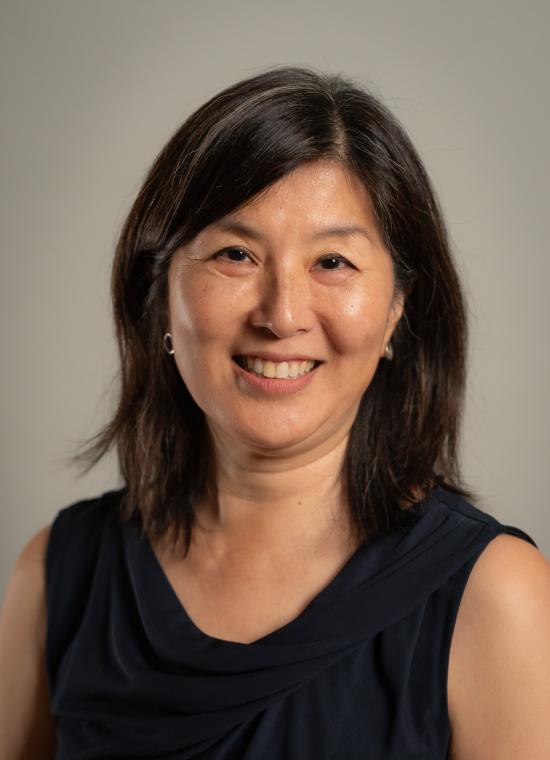
Sharon G. Goto is a Professor of Psychological Science and Asian American Studies at Pomona College, serving as Intercollegiate Department Chair of Asian American Studies (IDAAS) since joining the institution in 1995. Her interdisciplinary work bridges psychological science with critical examinations of Asian American experiences within organizational and societal contexts. Her academic foundation includes a Ph.D. in Social Psychology with minors in Industrial/Organizational Psychology and Quantitative Psychology from the University of Illinois, complemented by an M.A. from the same institution and a B.A. from UCLA. Professor Goto's research program centers on culturally mediated cognitive processes, demonstrating through neural and behavioral measures how interdependent versus independent self-construal shapes attention to contextual information. Her work reveals that collectivists process background context more deeply than individualists, with significant implications for bicultural cognition and workplace dynamics. She investigates Asian American experiences of discrimination, the glass ceiling phenomenon, and intergroup relations through both laboratory and field studies. Analysis of her publication record shows consistent methodological innovation using event-related potentials (particularly N400) to quantify cultural influences on cognition, while expanding into organizational psychology through studies of workplace discrimination and culturally congruent mentoring models. Her work demonstrates how cultural frames dynamically affect information processing in bicultural individuals. Her scientific recognition includes: Sontag Award (2015-2016) for developing N400 protocols to measure cultural context effects Research Fellowship at Doshisha University (2011) Irvine Faculty Fellowship for Student Mentoring (2002-2003) Wig Distinguished Professorship for Teaching Excellence (1998) Professor Goto maintains an active undergraduate research program evidenced by numerous co-authored publications with students, and has secured major funding including an NSF grant establishing Pomona's ERP laboratory and UCSF-funded research on workplace discrimination against Asian Americans. She directs a cognitive neuroscience laboratory at Pomona College that employs neural and behavioral methodologies to investigate cultural influences on information processing, with particular emphasis on bicultural cognition and Asian American populations in organizational settings.
Michael Pitts is an Associate Professor of Psychology at Reed College, affiliated with the Division of Philosophy, Religion, Psychology, and Linguistics. He holds a Ph.D. from Colorado State University (2007) and completed postdoctoral training at UC San Diego's Institute for Neural Computation. His research focuses on the neural substrates of consciousness, employing EEG and behavioral techniques to study conscious vs. unconscious processing. Pitts co-leads the SCALP Lab with Enriqueta Canseco-Gonzalez, investigating sensation, cognition, and language processing. His teaching includes courses on cognitive neuroscience, attention, and consciousness research. Key research interests include electrophysiological correlates of awareness, attention mechanisms, and no-report paradigms. Recent grants include a Kavli Institute Innovative Research Grant (2010-2011) and postdoctoral training support from UCSD. His work has appeared in top journals like Science , Current Biology , and NeuroImage . Pitts collaborates internationally on adversarial testing of consciousness theories and maintains active participation in open science initiatives. Lab activities utilize 64-channel EEG systems to explore visual/auditory perception. Notable contributions include identifying the 'perceptual awareness negativity' ERP marker and advancing methodologies for isolating neural correlates of consciousness. Office hours are appointment-based via scheduling tools.