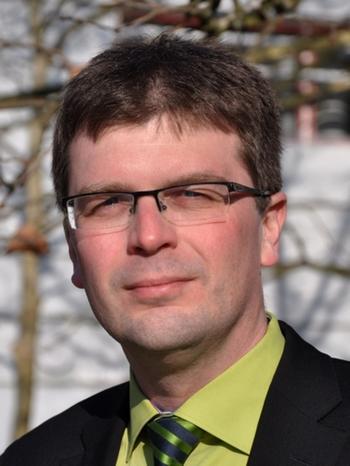
Professor Thomas Bein is affiliated with the Department of Chemistry at Ludwig-Maximilians-Universität München (LMU) , where he leads the Functional Nanosystems research group. His work focuses on synthesizing and characterizing nanostructured materials with applications in energy, catalysis, and biomedical delivery. Mesoporous nanoparticles for drug delivery Semiconductor nano-morphologies for photovoltaics Photoelectrochemical water splitting Metal-organic frameworks (MOFs) Electroactive networks His research emphasizes atomic-scale control of material architectures using self-assembly, hydrogen bonding, and covalent interactions, enabling precise tuning of electronic, optical, and catalytic properties. A review of his recent publications reveals cutting-edge investigations into covalent organic frameworks (COFs), perovskite-inspired solar materials, and functional nanoparticle systems. Key trends include optimizing energy conversion efficiency, enhancing stability in optoelectronic devices, and exploring bio-compatible nanocarriers for targeted therapies. Professor Bein’s group actively contributes to interdisciplinary projects at the intersection of chemistry, physics, and biomedical engineering, with ongoing collaborations in solar energy, sustainable materials, and nanomedicine.
Dr. James McDonald serves as a Lecturer and Research Fellow at the University of New South Wales (UNSW) within the School of Civil and Environmental Engineering's Water Research Centre (WRC). His work at the Vallentine Annexe (H22), Room 102, Kensington Campus focuses on advancing water treatment technologies and understanding contaminant behavior in water systems. His position bridges academic instruction with cutting-edge research in environmental engineering. McDonald's research spans multiple critical areas in water science and engineering, with particular emphasis on trace organic contaminants, membrane technologies, and advanced water treatment processes. His work investigates the fate and removal of pharmaceuticals, personal care products, and industrial chemicals in various water treatment systems. He has made significant contributions to understanding disinfection by-product formation, chiral inversion of pharmaceuticals, and the development of novel membrane technologies for improved water purification. His research combines experimental approaches with computational modeling to address complex water quality challenges. Analysis of McDonald's recent publications reveals a strong focus on emerging contaminants, particularly PFAS compounds and chiral pharmaceuticals, and their behavior in water treatment systems. His work demonstrates expertise in both conventional and advanced water treatment technologies, with increasing emphasis on sustainable approaches including green infrastructure and novel membrane processes. The interdisciplinary nature of his research connects environmental engineering, chemistry, microbiology, and materials science to address contemporary water quality challenges. McDonald actively collaborates with researchers across multiple institutions and has contributed to numerous significant studies on water quality and treatment. His work supports the development of more effective water recycling systems and safer drinking water supplies. While specific grant information isn't detailed in the available text, his extensive publication record suggests sustained research funding in water treatment technologies and contaminant fate studies. As part of UNSW's Water Research Centre, McDonald contributes to one of Australia's leading water research facilities. The WRC provides a collaborative environment for addressing complex water challenges through interdisciplinary research that integrates engineering, chemistry, and environmental science perspectives.
Chris G. Van de Walle is the Herbert Kroemer Distinguished Professor in the Department of Materials at the University of California, Santa Barbara's College of Engineering. As a member of the National Academy of Engineering and fellow of multiple prestigious scientific societies including the American Physical Society and Materials Research Society, he leads the Computational Materials Group which is part of UCSB's strong computational science cluster within the Materials Department. His research interests focus on novel electronic materials, particularly wide-band-gap semiconductors (III-V nitrides, II-VI compounds), transparent conductors, complex oxides, loss mechanisms in light emitters, two-dimensional conductors, quantum information science, and the physics and chemistry of hydrogen interactions with solids. His group uses first-principles computational techniques to study atomic and electronic structure of crystalline, polycrystalline and amorphous materials, interfaces, surfaces, defects, and heterojunctions. Analysis of his recent publications reveals a strong focus on semiconductor materials for quantum technologies, with particular emphasis on GaN, Ga 2 O 3 , and related compounds. His work combines computational materials science with applications in optoelectronics, quantum information, and energy technologies, demonstrating consistent innovation in understanding defects and their role in material properties. Major Awards and Recognitions: Aneesur Rahman Prize for Computational Physics (APS) Materials Theory Award (MRS) Vannevar Bush Faculty Fellowship (DoD) John Bardeen Award (TMS) Medard W. Welch Award (AVS) Highly Cited Researcher (Clarivate Analytics) Professor Van de Walle has mentored numerous successful researchers, including Dr. Fangzhou Zhao (Corbett Prize winner) and Dr. Mark Turiansky (APS Nicholas Metropolis Award recipient). His group maintains strong connections with the UCSB Quantum Foundry and the Solid State Lighting and Energy Electronics Center, demonstrating collaborative research efforts across multiple disciplines. The group actively investigates defects for quantum information science, loss mechanisms in light emitters, nitride semiconductors, halide perovskites, oxides, and hydrogen interactions with materials.
Roles & Affiliations: Ikhlas Khan serves as Director of the National Center for Natural Products Research (NCNPR), Distinguished Professor, and Research Professor of Pharmacognosy at the University of Mississippi's School of Pharmacy. He also leads the FDA Program and coordinates natural products research across multiple initiatives, including the Sino-US TCM Research Center and the Center for Research of Indian Systems of Medicine (CRISM). Education: B.Sc. Chemistry (1980) - Aligarh Muslim University, India M.Sc. Organic Chemistry (1982) - Aligarh Muslim University, India Ph.D. Pharmacy (1987) - Ludwig-Maximilians-Universität, Munich Postdoctoral Studies - Swiss Federal Institute of Technology (ETH), Zurich Research Focus: Dr. Khan specializes in natural products research with emphasis on: Phytomedicine: Standardization of herbal products via analytical fingerprinting, pesticide/herbicide residue analysis, and bioanalytical quality control. Drug Discovery: Isolation of bioactive natural products, development of analytical methods for phytochemical characterization, and chiral separation techniques. Metabolism Studies: Role of metabolism in drug/natural product activity, particularly in aminoquinoline antimalarials. His work bridges academia, industry, and regulatory bodies, shaping policies for botanical supplements. Key Contributions: Over 850 peer-reviewed publications and leadership in high-impact projects like the FDA Center of Excellence. His lab pioneered methods to combat herbal product adulteration and safety issues. Awards & Recognition: UM Distinguished Professor Award (2018) Wiley Award (AOAC International, 2018) Qihuang International Prize (2017) Honoris Causa Doctorate (University of Hamdard, 2012) Labs & Collaborations: Directs the NCNPR, a global leader in natural products research, and collaborates with institutions worldwide. His team develops technologies for herbal product authentication and drug metabolism studies.
Prof. Dr. Ahmet Tutar is a faculty member in the Department of Chemistry at Sakarya University . His academic activities include teaching courses such as Organic Chemistry I/II , Organic Synthesis Design , and Stereochemistry , alongside supervising numerous master's theses in organic synthesis and humic substance applications. Research Interests: Focus on bromination reactions , BODIPY dye synthesis , humic/fulvic acid characterization , computational chemistry , and pharmaceutical applications of organic compounds. Key Article Trends: Recent publications emphasize photobromination methods , metal-organic frameworks , and biological activity of brominated derivatives , with keywords spanning organic synthesis , biochemistry , and environmental chemistry . Thesis Supervision: Guided 35+ master's theses (2007-2013) on topics like synthesis of brominated indan derivatives , humic acid extraction , and photobromination of terpenes .
David John Procter is a Professor of Organic Chemistry and Head of the Department of Chemistry at the University of Manchester. His career includes academic roles at the University of Glasgow (Lecturer, Senior Lecturer) and a Readership at the University of Manchester, where he became a Professor in 2008. His research focuses on developing new synthetic methods, catalysis, and materials chemistry, with applications in drug discovery, biocatalysis, and organic electronics. Education: BSc Chemistry (University of Leeds, 1992), PhD (1995, supervised by Prof. Christopher Rayner). Postdoctoral work: Florida State University (Prof. Robert Holton, Taxol analog synthesis). Research interests include samarium diiodide-mediated reactions, metal-free coupling processes, and sustainable synthesis methods. He leads projects funded by EPSRC, Industry (30 grants), and international collaborations. Awards include the EPSRC Established Career Fellowship (2015–2020), Bader Prize (2014), and Young Heterocyclic Chemist Award (2015). Key contributions: Total synthesis of natural products (e.g., pleuromutilin), development of copper-catalyzed multicomponent couplings, and innovative methods for organic materials. His work aligns with UN Sustainable Development Goals related to affordable and clean energy and responsible consumption. Collaborations span academic and industrial partnerships in chemistry, physics, and biology. He supervises 60+ students and contributes to the Organic Materials Innovation Centre (OMIC). His group’s research is detailed at proctergroupresearch.com .
Robert J. Hamers is a Professor of Chemistry and the Steenbock Professor of Physical Science at the University of Wisconsin-Madison . He serves as the Director of the Center for Sustainable Nanotechnology , a multi-institutional collaboration, and is a Senior Editor for Accounts of Chemical Research . Additionally, he co-founded the startup Silatronix, Inc. and leads the ACS/UW-Madison Bridge to the Chemistry Doctorate Program . B.S. in Chemistry, University of Wisconsin-Madison (1980) Ph.D. in Chemistry, Cornell University (1986) Hamers' research focuses on surface chemistry, nanotechnology, and renewable energy , with specific interests in electrochemical energy storage, photoelectron emission mechanisms, and environmental impacts of nanomaterials . His group develops ultra-stable surface chemistries for energy devices and investigates charge-transfer processes at material interfaces . Recent publications highlight advances in diamond-based materials , organosilicon electrolyte additives , and environmental fate of nanomaterials . Scientific recognitions include the Wisconsin Distinguished Professor title. His work bridges fundamental surface science with applied technologies through collaborations with academic institutions, national laboratories, and industry partners like Dow Chemical . The Hamers Group actively trains graduate students and postdoctoral researchers in multidisciplinary approaches.
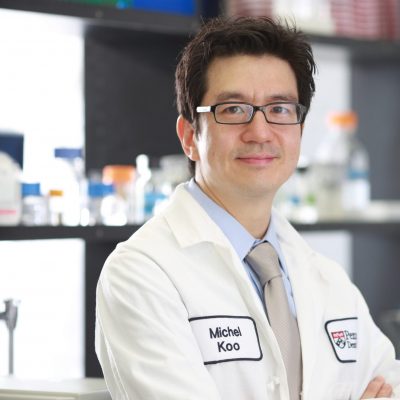
Hyun (Michel) Koo is a Professor at the University of Pennsylvania School of Dental Medicine , with affiliations in the Department of Orthodontics , Division of Community Oral Health , and Division of Pediatric Dentistry . As Co-Founder and Co-Director of the Center for Innovation & Precision Dentistry (CiPD) , he leads interdisciplinary efforts merging bioengineering, nanotechnology, and oral health research. Education : DDS and PhD Research Focus : Biofilms, bacterial-fungal interactions, and nanotechnology for oral disease prevention Leadership : Co-Director of CiPD; key roles in training programs like NIDCR-sponsored R90 and T90/R90 Dr. Koo’s research explores biofilm mechanisms in oral infectious diseases, particularly childhood caries, through engineering methods and microrobotics . His team developed micron-scale robots for automated biofilm eradication and FDA-approved nanoparticles for caries prevention. Collaborations with Penn Engineering, including Dr. Daeyeon Lee and Dr. Kacy Cullen, emphasize translational approaches. The 15 most recent publications highlight his work in nanorobotics , interkingdom biofilms , and precision diagnostics . Articles span 2025–2024 and address topics like adaptive micromotors , biofilm matrix degradation , and single-cell microbial interactions . These emphasize his focus on targeted therapies and biofilm microenvironment engineering . Key Awards : Elected Fellow, American Association for the Advancement of Science (AAAS) IADR Distinguished Scientist Award for innovative dental research Dr. Koo trains next-generation researchers through the CiPD NIDCR T90/R90 Postdoctoral Training Program , mentoring fellows like Smruti Nair (ACE2 Chewing Gum development) and Zhi Ren (K99 awardee). His work intersects with Penn Health-Tech, CT3N , and Penn Institute for Biomedical Informatics , fostering transdisciplinary innovation.
Tanja Narancic is an Assistant Professor at the School of Biomolecular and Biomedical Science at University College Dublin (UCD). She is also an academic collaborator at the Bioeconomy Research Centre BiOrbic, where she coordinates multiple research projects among PIs, PostDocs, PhD students, and designs projects proposed by industrial partners. Dr. Narancic earned her PhD in Applied Microbiology from the University of Belgrade, Serbia in 2012, followed by postdoctoral research at the Institute of Molecular Genetics and Genetic Engineering in Belgrade. In 2013, she joined University College Dublin as a Postdoctoral Research Fellow under Prof. Kevin O'Connor, where she investigated microbial metabolic pathways using proteomics, metabolomics, and synthetic biology tools as part of FP7 and H2020 projects. She became a Research Fellow at BiOrbic in 2019 before advancing to her current position as Assistant Professor. Her research focuses on elucidating bacterial metabolism and leveraging synthetic biology tools to exploit bacteria for producing high-value products. Key research areas include: Proteomics, Metabolomics, and Transcriptomics for microbial pathway analysis Metabolic engineering for bioproduction Biocatalysis and enzyme optimization Protein engineering and purification Polyhydroxyalkanoate (PHA) production from waste streams Plastic upcycling and biodegradation technologies Dr. Narancic's publication record demonstrates a strong focus on converting plastic waste into valuable biodegradable materials through innovative biotechnological approaches. Her recent work has centered on developing microbial systems for upcycling polyethylene terephthalate (PET), polyolefins, and other recalcitrant plastics into polyhydroxyalkanoates (PHAs) and other high-value products. She has made significant contributions to understanding the metabolic pathways involved in plastic monomer conversion and has developed engineered strains with enhanced capabilities for plastic upcycling. As a principal investigator, Dr. Narancic leads multiple significant research projects including the Ad Astra Studentship (2023-2028), the UPLIFT project on sustainable plastics for food packaging (2021-2025), and the PROMOFER project (2024-2028) on optimizing PHB production. She also serves as a reviewer for numerous prestigious journals including Enzyme and Microbial Technology, Journal of Applied Microbiology, and Microbial Biotechnology. Her teaching portfolio includes coordination of multiple modules such as Bioprocessing, Metabolism and Disease, and SynBio for Bioeconomy, demonstrating her commitment to educating the next generation of scientists in both fundamental and applied aspects of biomolecular science.
Jun Liu is a distinguished scientist and academic, serving as a Battelle Fellow at Pacific Northwest National Laboratory (PNNL) and holding the position of Campbell Chair Professor at the University of Washington. His career spans over three decades in materials science and energy storage research, with significant leadership roles including Director of the Battery500 Consortium, a major DOE initiative focused on developing next-generation battery technologies. Dr. Liu earned his Bachelor's degree in Chemical Engineering from Hunan University, followed by a Master's degree in Ceramic Engineering and a Ph.D. in Materials Science and Engineering, both from the University of Washington. His educational background provided the foundation for his extensive career in advanced materials development. Dr. Liu's research focuses on the development, synthesis, and characterization of new materials for energy applications, with particular emphasis on battery technologies. His work spans lithium-ion batteries, lithium-sulfur systems, redox flow batteries, and magnesium-based energy storage solutions. He has pioneered approaches to improve energy density, cycle life, and safety of battery systems through innovative materials design and interface engineering. Analysis of Dr. Liu's recent publications reveals a strong focus on practical battery applications, with particular attention to lithium metal anodes, solid electrolyte interphases, and high-energy battery systems. His research increasingly addresses the challenges of translating laboratory discoveries into commercially viable battery technologies, with growing emphasis on pouch cell development and real-world performance metrics. Distinguished Inventor of Battelle (2007) PNNL's Inventor of the Year (2012, 2016) Electrochemical Society Battery Division Technology Award DOE EERE Exceptional Achievement Award PNNL Lifetime Achievement Award Fellow of the American Association for the Advancement of Science Fellow of the Materials Research Society Member of the Washington State Academy of Science Dr. Liu has secured substantial research funding through his leadership of the Battery500 Consortium and other DOE initiatives. He has mentored numerous researchers and students throughout his career, contributing to the development of the next generation of energy storage scientists. His research group at PNNL collaborates extensively with academic institutions, national laboratories, and industry partners to advance battery technology. Dr. Liu leads the Battery500 Consortium, a major collaborative effort involving multiple national laboratories, universities, and industry partners focused on developing lithium-metal batteries with significantly higher energy density than current technologies. His research group at PNNL maintains state-of-the-art facilities for materials synthesis, characterization, and battery testing, enabling comprehensive investigation of next-generation energy storage systems.
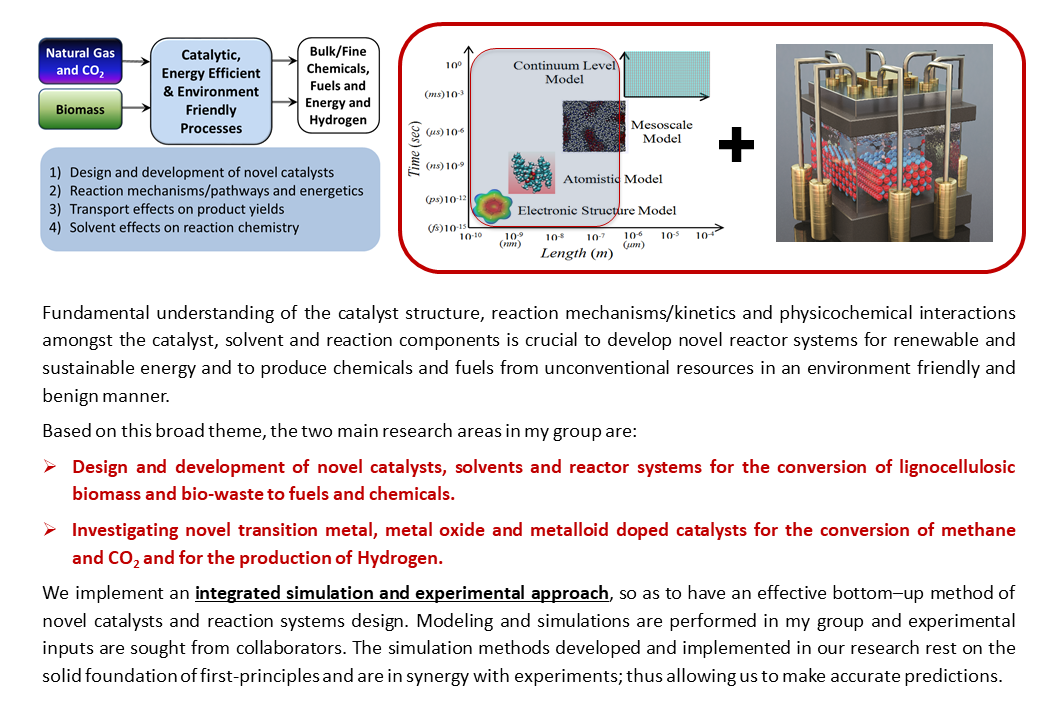
Dr. Samir H. Mushrif is a Professor in the Department of Chemical and Materials Engineering at the University of Alberta . Prior to this role, he served as faculty at the School of Chemical and Biomedical Engineering at Nanyang Technological University (NTU), Singapore . He holds a PhD in Chemical Engineering from McGill University and completed postdoctoral research at the University of Delaware, USA . Education : PhD (Chemical Engineering, McGill University), Postdoc (University of Delaware) His research focuses on computational catalysis , molecular modeling , and reaction engineering for biomass conversion and CO2 reduction . He develops novel catalysts, solvents, and reactor systems using integrated quantum mechanical and classical molecular simulations , synergized with experimental data to enable sustainable energy and chemical production . Recent publications highlight trends in condensed phase chemistry for biomass reactions, machine learning applications in solvent configuration prediction, and mechanistic studies of lignin-carbohydrate complex deconstruction. His work bridges methane activation on metal oxides, hydrodeoxygenation of bio-oil compounds, and polymerization pathways in lignin structures. Scientific Awards include: NSERC Doctoral and Post-doctoral Fellowships Discovery International Award 2017 (Australian Research Council) NANYANG EDUCATION AWARD 2016 (Singapore) SCBE Teaching Excellence Awards (Silver 2015, Gold 2016) Bharat Gaurav (Pride of India) Award 2014 Dr. Mushrif's NSERC Discovery Grant (2018), CFI John R. Evans Leaders Fund Grant (2022), and AcRF Tier-2 Grant (Singapore, 2015) have advanced his work. Current PhD and Master's students include José Carlos Velasco Calderón , Arul Mozhi Devan Padmanathan , and Sagar Bathla , among others. The CARES Lab (Catalysis Research for Sustainability) under his leadership combines ab initio molecular dynamics , machine learning potentials , and Density Functional Theory to design materials for renewable energy . Collaborations span institutions in France , Canada , India , and the UK .
Prof. Dr. Oliver Reiser is a full Professor at the Institute of Organic Chemistry within the Faculty of Chemistry and Pharmacy at the University of Regensburg. His research group focuses on cutting-edge developments in organic synthesis, particularly in the areas of photocatalysis and visible light chemistry. He leads the Collaborative Research Centre CRC 325 on "Assembly Controlled Chemical Photocatalysis," which aims to develop new frontiers in photocatalysis for organic synthesis through designed control of catalyst-substrate interactions. University of Hamburg (PhD, 1989) IBM Research Center (Postdoc) Harvard University (Postdoc) University of Göttingen (Habilitation, 1995) Prof. Reiser's research spans multiple interconnected fields with a strong emphasis on sustainable chemistry. His group extensively utilizes modern techniques for organic synthesis including flow reactors, microwaves, and high-pressure systems. The primary research thrusts include catalysis (both metal and organocatalysts), unnatural amino acids and peptide foldamers, and natural product synthesis. His work on visible light photocatalysis has been particularly influential, with numerous publications in high-impact journals like Angewandte Chemie and Nature Catalysis. The group's research integrates experimental, spectroscopic, and computational techniques to analyze catalyst-substrate interactions for more rational design of photochemical reactions. Analysis of Prof. Reiser's recent publications (2023-2025) reveals a strong focus on copper-based photocatalysis, sustainable chemistry using earth-abundant metals, and innovative approaches to heterocycle synthesis. His work demonstrates a clear trend toward developing more efficient and environmentally friendly catalytic processes, with particular emphasis on visible light activation, catalyst immobilization for recyclability, and applications in medicinal chemistry. The research spans from fundamental mechanistic studies to practical applications in synthesis. German Academic Scholarship Foundation Minerva Foundation NATO Fellowship German Research Foundation Support Karl Winnacker Foundation Prof. Reiser has supervised numerous doctoral students, with recent PhD theses focusing on copper photoredox catalysis, magnetic nanoparticle-supported catalysts, and the synthesis of bioactive compounds. His research is supported by multiple collaborative projects, including the Collaborative Research Centre CRC 325, and involves extensive national and international collaborations with institutions such as the University of Kansas, the National Institute of Chemistry in Pune, the Institut Chimie de Coordination du CNRS in Toulouse, and the University of Zaragoza. The group maintains strong ties with pharmaceutical research through collaborations with Prof. A. Beck-Sickinger in Leipzig on neuropeptide ligands. The research group operates well-equipped laboratories with capabilities for advanced organic synthesis and characterization. They have developed specialized expertise in flow chemistry, high-pressure techniques, and magnetic nanoparticle-based catalyst systems. The CRC 325 initiative has provided significant infrastructure for collaborative research in photocatalysis, bringing together multiple research groups with complementary expertise in organic synthesis, spectroscopy, and computational chemistry.
Charlotte Jacobsen is a Professor and Head of the Research Group for Bioactives – Analysis and Application at the National Food Institute, Technical University of Denmark (DTU). Her research focuses on lipid oxidation, antioxidants, and sustainable utilization of marine resources. She leads multiple interdisciplinary projects and supervises PhD students in food science and technology. Research Interests: Antioxidant chemistry in food systems Oxidative stability of omega-3 fatty acids Valorization of fish and seafood by-products Microalgae as sustainable sources of bioactives Functional foods and nutraceuticals Green extraction technologies Recent Research Trends: Her recent publications (2021–2025) reflect a strong focus on sustainable food systems, including the recovery of bioactive compounds from fish side-streams, stabilization of omega-3 lipids, development of anti-obesity peptides from seaweed, and cultivation of microalgae using industrial waste streams. The work spans food chemistry, marine biotechnology, and green processing, with applications in functional foods and nutrition. Scientific Awards: Danisco Award, 2003 Edwin Frankel Best Paper Award, 2010 and 2011 La Médaille Chevreul, 2010 Marcuse Lecturer grant, 1999 Advising and Grants: Professor Jacobsen actively supervises PhD students and leads multiple funded research projects, including 'Utilization of fish side-streams for production of novel food ingredients' and 'Sustainable Production of Microalgae Proteins'. She is involved in national and international collaborations, securing research funding for projects on omega-3 extraction, microalgae cultivation, and seafood quality. Labs and Teams: She leads the Research Group for Bioactives – Analysis and Application at DTU, which is part of the DTU Microbes Initiative. The group specializes in analytical methods for bioactive compounds, lipid oxidation analysis, and development of sustainable food ingredients.
Prof. Dr. Mathias Christmann is a faculty member at the Institute of Chemistry and Biochemistry, Freie Universität Berlin , leading the research group in Organic Chemistry . His work focuses on strategic and methodological challenges in synthetic chemistry, particularly in total synthesis, organocatalysis, and renewable resource transformations. Position: Professor Contact: mathias.christmann@fu-berlin.de Location: Takustr. 3, Room 24.16, 14195 Berlin Research Interests include: Natural product-inspired small molecule synthesis for biological pathway modulation Minimizing C-C bond formations through selective functionalization of terpene building blocks Organocatalytic and metal-catalyzed reactions in multistep sequences Flow chemistry applications for scalable and sustainable synthesis Biological evaluation of TRPC channel agonists/antagonists for cancer therapy Publication Trends highlight expertise in total synthesis of complex terpenoids, organocatalysis for stereocontrolled reactions, flow chemistry for late-stage transformations, and TRPC4/5 channel modulation in renal cancer studies. His group pioneers asymmetric desymmetrization , photo-oxidation protocols , and electrosynthesis methods with minimal reagent waste. Advisees include PhD candidates Jan-Hendrik Dickoff , Mayar Elbendary , Nadine Kreidt , Tobias Olbrisch , Kamar Shakeri , and Zhen Wang , focusing on terpene-based drug discovery and catalytic reaction design.
Lars Eriksson is a researcher at the Department of Chemistry, Stockholm University, affiliated with the Faculty of Science. He is part of Gunnar Svensson's group, which focuses on solid-state inorganic chemistry, including the synthesis of energy-related compounds and their crystal structure analysis. Research interests span inorganic chemistry, solid-state chemistry, crystallography, energy applications, organic synthesis, catalysis, and chemical education. His work bridges experimental and computational approaches, with recent publications exploring molecular design for energy storage, asymmetric synthesis, triplet-to-singlet energy transfer, and pedagogical strategies in chemistry education. Trends in his research highlight applications in materials science, environmental chemistry, and educational methodologies. While no formal scientific awards are mentioned in the provided texts, his contributions include collaborative studies on catalysis, molecular structure, and student learning processes. He has no listed grants or students, but his publications emphasize tutor-student interactions and practical epistemology analysis. The research group he belongs to investigates fundamental properties of synthesized compounds, often with energy-related applications, and maintains strong ties to the broader chemistry community through peer-reviewed publications and educational studies.