Judith West-Mays is a Professor in the Department of Pathology & Molecular Medicine at McMaster University . Her research focuses on: Molecular mechanisms of eye development and disease Role of transcription factors (AP-2β, AP-2α) in ocular morphogenesis Transforming Growth Factor Beta (TGF-β) signaling in epithelial-mesenchymal transition (EMT) Matrix Metalloproteinases (MMPs) in vision disorders Biomaterials for intraocular pressure management Key scientific contributions include: Elucidating AP-2β's role in trabecular meshwork formation and glaucoma Characterizing MMP-9's impact on aqueous humor drainage Developing conditional knockout mouse models for vision research Investigating YAP signaling in lens fibrosis Creating mucoadhesive micelles for glaucoma therapy Scientific awards : Brockhouse Canada Prize (2025) for interdisciplinary vision health research Teaching : Biomedical Engineering II (2018) at McMaster University. Collaborators include Taiyab, Sheardown, and Ball. Research hubs involve McMaster's interdisciplinary vision science team.
Jason E. Ybarra serves as a Teaching Assistant Professor and Director of the WVU Planetarium and Observatory at West Virginia University. His academic home resides within the Astronomy and Astrophysics department, where he integrates observational astronomy with innovative educational practices. As coordinator for the Sloan Digital Sky Survey (SDSS-V) Faculty and Student Team (FAST) program, he bridges research infrastructure with undergraduate development. Dr. Ybarra's educational background includes: Ph.D. in Astronomy from University of Florida (NASA GSRP Fellow) M.S. in Physics from San Francisco State University (co-discoverer of precessing jet evidence) His research spans galactic star formation in regions like the Rosette Molecular Cloud, protostellar outflow dynamics , and physics education with special focus on neurodiversity inclusion . Historical astronomy investigations feature prominently, particularly in rediscovering early variable star observations. His educational philosophy emphasizes neurodivergent accessibility, reflected in publications on inclusive STEM pedagogy. Recent publications reveal interdisciplinary trends merging astronomical research with computational methods (CNN analysis of historical records) and social sciences (neurodiversity studies). The Sloan Digital Sky Survey serves as a unifying thread across observational, educational, and historical investigations. Scientific recognition includes: NASA Graduate Student Researchers Program (GSRP) fellowship NASA Florida Space Grant Consortium fellowship As an educator, Dr. Ybarra has taught across diverse settings from Davidson College to Drepung Loseling Monastery in India through the Emory-Tibet Science Initiative. His FAST program coordination creates sustained undergraduate research pathways within SDSS-V. Current projects integrate planetarium outreach with neurodiversity-aware instructional design. The WVU Planetarium and Observatory serves as his primary research and educational hub, while SDSS-V provides large-scale collaborative infrastructure. His work uniquely connects historical astronomical practices with modern neuroinclusive education frameworks.
Chris Forde is Professor of Employment Studies at the University of Leeds , affiliated with the Leeds University Business School and Department of People, Work and Employment . He co-directs the Centre for Employment Relations Innovation and Change and serves as Deputy Director of the ESRC Digital Futures at Work Research Centre . His career spans multiple leadership roles, including former Head of the Work and Employment Relations Division. BA Economics and Management (First Class Honours), University of Leeds (1993) MA Economics, University of Leeds (1994) PhD, Leeds University Business School (1998) Forde's research investigates the evolution of work structures , focusing on temporary work , migrant labor dynamics , platform economy challenges , and labour market regulation . His work examines intersections between job quality , worker well-being , and business policy lobbying , employing mixed-method approaches across sectors like healthcare and aerospace. His recent publications and projects include analyses of NHS migrant workforce adaptations during Brexit and pandemic crises, union responses to post-Brexit labor shortages , and labour market reforms in Saudi Arabia. As Co-Director of the Digit Data Observatory , he leads digital work futures research. Co-investigator, ESRC Labour Mobility in Transition (LiMITS) project Co-investigator, EU Horizon 2020 Skills4Justice Project 20+ successfully supervised doctoral students Founding member, Leeds Migration Research Network
Craig J. Chaya, MD , is Associate Professor (Clinical) of Ophthalmology at the University of Utah and serves as Division Chief of Global Ophthalmology at the John A. Moran Eye Center. He practices anterior segment ophthalmology and surgery across multiple clinical sites including the University of Utah flagship campus, Redwood and Midvalley Health Centers, Salt Lake Veterans Medical Center, and Primary Children’s Medical Center. Education & Training: MD – Loma Linda University School of Medicine, Loma Linda, CA BS – La Sierra University, Riverside, CA (Human Biology) Residency – Internal Medicine, West Los Angeles VA Medical Center Residency – Ophthalmology, Texas Tech University Health Sciences Center Fellowship – Glaucoma, University of Utah / John A. Moran Eye Center Fellowship – International Ophthalmology, Himalayan Cataract Project/Freedom Foundation (Kathmandu & Hetauda, Nepal) Clinical & Research Focus Dr. Chaya specializes in the medical and surgical management of complex cataracts and glaucoma, emphasizing micro-invasive glaucoma surgery (MIGS) and novel surgical devices. He is deeply engaged in global ophthalmology, directing international outreach and blindness-prevention programs across Guam, Micronesia, Ghana, Haiti, Thailand, and Nepal. His research portfolio includes prospective surgical outcome studies, epidemiologic analyses of exfoliation syndrome, and innovative techniques such as gonioscopy-assisted transluminal trabeculotomy (GATT). Selected Publication Themes Recent peer-reviewed work spans three major domains: (1) refinement of trabeculotomy and cyclodialysis techniques to improve safety and efficacy in glaucoma surgery, (2) epidemiologic and genetic investigations into exfoliation syndrome and glaucoma among underserved populations, and (3) development of global ophthalmology training curricula and COVID-19-adapted outreach models. Scientific & Professional Recognition Board Certified, American Board of Ophthalmology Associate Professor (Clinical), University of Utah Department of Ophthalmology & Visual Sciences Division Chief, Global Ophthalmology, John A. Moran Eye Center Teaching & Mentorship Dr. Chaya supervises residents and fellows in complex anterior segment surgery and global ophthalmology rotations. He contributes to Moran CORE educational videos and lectures on MIGS techniques and international surgical outreach.
Patrick A. Rafter is an Assistant Professor in the Chemical Oceanography department at the University of South Florida College of Marine Science . His research focuses on marine carbon cycling , isotope geochemistry , and paleoceanography , with specific interests in understanding carbon dynamics across geological timescales and developing methods for marine carbon dioxide removal (mCDR) . Key Research Themes Carbon cycling in modern and ancient oceans Application of stable and radiocarbon isotopes Biogeochemical impacts of climate change Deep-sea circulation and carbon sequestration Marine carbon removal strategies Recent Work explores carbonate dissolution fluxes, glacial-interglacial CO2 cycles, and alkalinity enhancement in the California Current System. His Ocean and Climate Lab integrates field measurements with modeling to trace carbon pathways. Contact : prafter@usf.edu
Dr. Zhaoxia Pu is a Professor in the Department of Atmospheric Sciences at the University of Utah and an Adjunct Professor at the School of Computing . Recognized as a Fellow of both the American Meteorological Society and the Royal Meteorological Society, she serves on the NOAA Science Advisory Board and has led 38 federally funded projects from agencies including NOAA, NASA, NSF, DOE, and ONR. Specializes in numerical weather prediction , data assimilation , and AI/machine learning for high-impact weather systems Developed advanced methods integrating satellite/radar data (GOES-R, CYGNSS, TROPICS) with Earth system models (UFS, E3SM, WRF) Recipient of the 2024 Excellence in Research Award and 2023 Provost's Banner Project recognition Research Trends : Her recent publications focus on: Machine learning approaches for precipitation retrieval using GOES-R data Cold fog microphysics and visibility parameterization in complex terrain Tropical cyclone dynamics through radar and lidar data assimilation Boundary layer turbulence in landfalling storms Drought mechanisms linked to synoptic-scale circulation New particle formation in mountainous regions Scientific Leadership : Lead scientist for CFACT NSF field campaign (2021–2025) Editorial board member of leading journals Active reviewer for NSF, DOE, NOAA, and NASA Teaching & Mentorship : Teaches Numerical Weather Prediction , Atmospheric Dynamics , and Introduction to Atmospheric Sciences courses. Has supervised 28 graduate students to completion.
Robert Hall is an Associate Professor in the School of Environmental Sciences at the University of East Anglia, affiliated with the Centre for Ocean and Atmospheric Sciences and Collaborative Centre for Sustainable Use of the Seas. He holds a PhD in Physical Oceanography from University of Liverpool (2009) and MOcean degree from University of Southampton (2005). His research focuses on shelf sea and deep ocean fluid dynamics with emphasis on flow-topographic interactions, internal wave generation, turbulent mixing processes, and interdisciplinary impacts on biogeochemical fluxes. He utilizes autonomous platforms like ocean gliders and leads international field campaigns in challenging environments including Antarctica and the Galápagos. His recent publications demonstrate strong focus on polar processes, ocean mixing mechanisms, and climate interactions, with consistent themes in ice shelf dynamics, internal wave impacts, and advanced observational techniques across 15+ studies. Awards: Challenger Society for Marine Science Fellow (2021) Research Leadership: Principal Investigator for multiple NERC projects including MISSING LINK, eSWEETS3 and PISCES Coordinates PhD students working on internal wave dynamics, carbon cycling, and Antarctic processes Leads the UEA Glider Group conducting worldwide missions
Ashley Villar is an Assistant Professor of Astronomy at the Center for Astrophysics at Harvard University. Her research focuses on the intersection of astrophysics and machine learning, particularly in the study of supernovae, transient phenomena, and circumstellar interactions. She is actively involved in time-domain surveys and the development of advanced algorithms for classifying and analyzing astronomical transients. Current Position: Assistant Professor of Astronomy Affiliation: Harvard University Center for Astrophysics Her work integrates observational data from facilities like the Hubble Space Telescope (HST), James Webb Space Telescope (JWST), and the Vera C. Rubin Observatory to study supernova progenitors, explosion mechanisms, and circumstellar environments. Key research areas include pulsational pair instability models, binary progenitor systems, and the application of neural networks for rapid transient classification. Dr. Villar has pioneered methods such as the SPLASH classifier, Superphot+, and Maven framework to enhance automated analysis of transient events. Her contributions to the Young Supernova Experiment (YSE) have resulted in large-scale datasets and photometric classifications of over 1,500 supernovae. Notable Projects: YSE DR1 Data Release, Rubin Observatory Target-of-Opportunity programs, LIGO/Virgo follow-up campaigns Her research also addresses kilonova light-curve interpolation, gravitational wave follow-up strategies, and the detection of anomalies in variable star catalogs. She collaborates widely on multimessenger astronomy and next-generation survey strategies for transient detection.
Mi Youn Paek serves as a Senior Lecturer in the Finance Department at the University of Colorado Denver Business School, having joined the institution in Fall 2023. Prior to her position at CU Denver, she was an Assistant Professor of Finance at Georgetown College and previously worked as a research fellow and instructor at the University of Cincinnati. Before transitioning to academia, Dr. Paek spent six years as a financial effects analyst and international trading specialist in a multinational corporation. Dr. Paek earned her PhD in Finance and MA in Finance from Pusan National University, establishing a strong academic foundation for her career in finance education and research. Her educational background has directly informed her expertise in multiple finance domains. Dr. Paek's research program centers on mutual fund markets and public/private pension systems, with additional exploration of behavioral finance and empirical corporate finance. She investigates investment decision-making processes, which are essential for effective portfolio management and risk mitigation strategies that ensure post-retirement income security. Her work spans multiple international contexts, with particular attention to Asian financial markets including China, Korea, and the broader Asia Pacific region. She has published extensively on fund flow-performance relationships, pension fund management, and comparative analyses of equity fund performance across different market environments. Dr. Paek demonstrates a strong commitment to student development, actively engaging with students through mentoring, academic advising, and career guidance throughout their educational journey and beyond graduation. Her industry experience combined with academic expertise allows her to provide practical insights that bridge theoretical finance concepts with real-world applications in the finance profession.
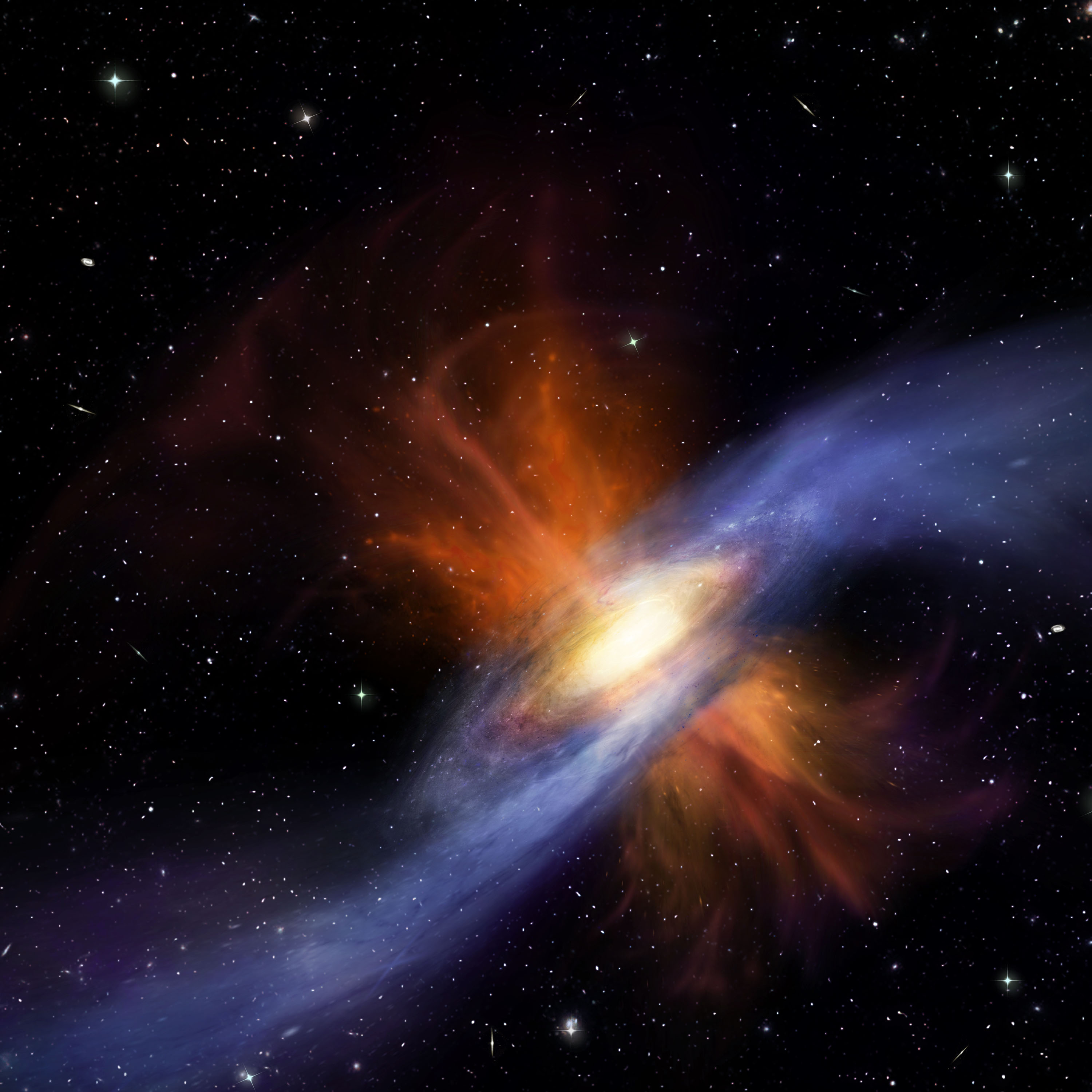
Nadia Zakamska is a Professor in the Department of Physics & Astronomy at Johns Hopkins University and serves as Vice Chair for Academics. She holds a PhD from Princeton University and has held fellowships at the Institute for Advanced Study and Stanford University. Her research focuses on observational and theoretical astrophysics, including quasar-driven galactic winds, stellar variability, binary systems, and the co-evolution of supermassive black holes and galaxies. Her work leverages cutting-edge facilities like the James Webb Space Telescope (JWST) and the Atacama Large Millimeter/submillimeter Array (ALMA). Key research areas include: (1) Discovery of galactic winds powered by supermassive black holes, which influence galaxy formation and star formation suppression. (2) Exploration of variable astrophysical phenomena using surveys like LSST and WISE, with a focus on binary stars, white dwarfs, and neutron star mergers. (3) Analysis of dual quasars and their role in galaxy mergers. Recent achievements include detecting extreme outflows in 'extremely red quasars' and using JWST to study starburst galaxies. Zakamska has mentored over 30 graduate and undergraduate students, many of whom have pursued postdoctoral roles at prestigious institutions. She leads the JWST Early Release Science Program Q3D and collaborates on projects like the Sloan Digital Sky Survey (SDSS-V). Awards include the Newton Lacy Pierce Prize (2014), Alfred P. Sloan Fellowship (2011–2013), and JHU Catalyst Award (2016).
Dr. Nikole Nielsen is an Adjunct Associate Professor at Swinburne University of Technology and an Assistant Professor at the University of Oklahoma. She holds dual appointments in the Centre for Astrophysics and Supercomputing (Swinburne) and the Homer L. Dodge Department of Physics and Astronomy (OU). Her research focuses on the circumgalactic medium (CGM) of galaxies, studying gas kinematics, ionization states, and metal content to understand galaxy evolution processes like accretion and outflows. She has held roles including ASTRO 3D Fellow and Postdoctoral Research Associate at Swinburne from 2015–2024. Education: PhD in Astronomy (New Mexico State University, 2015), M.S. in Astronomy (2013), B.S. in Astrophysics (Michigan State University, 2009). Awards include the Swinburne Director's Outstanding Achievement Award (2022) and multiple recognitions for research excellence. She supervises PhD students in areas like galactic outflows and CGM dynamics. Research highlights include mapping the transition between galactic disks and CGM using emission-line data (Nature Astronomy, 2024), resolving outflow properties in starburst galaxies (Monthly Notices of the Royal Astronomical Society, 2024), and studying gas kinematics in multiphase CGM (2024). Her work bridges observations with simulations, emphasizing resolved spatial data to understand galaxy evolution. Grants include an NSF East Asia-Pacific Summer Institute fellowship (2012) and ASTRO 3D funding. Teaching includes courses on extragalactic astronomy and cosmology at OU. Outreach efforts include coordinating public astronomy events and mentoring students. Current team includes postdocs and graduate students at OU.
Antonio Sorgente is an Adjunct Professor at the Universiteit Ziekenhuis Brussel (UZ Brussel) , affiliated with the Observational Clinical Sciences school and the Heart Rhythm Research department. He also serves as a Physician in Hearthrhythm management at UZB. His work focuses on cardiac arrhythmias, particularly Brugada Syndrome, Atrial Fibrillation, and advanced catheter ablation techniques. He has co-authored over 127 publications and received the Paul Dudley White International Scholar Award-Belgium in 2023 for impactful contributions to cardiovascular research. Research Focus: Atrial Fibrillation mechanisms, Brugada Syndrome diagnosis, and electrophysiological innovations. Awards: Highlighted by the Paul Dudley White Award for collaborative research in Belgium. His recent articles explore novel ablation technologies, echocardiographic mechanics in atrial fibrillation, and genetic correlations in arrhythmias.
Dr. Amir Keshmiri is an Associate Professor/Reader in Computational Fluid Dynamics (CFD) and Head of Business Engagement & Innovation in the Faculty of Science & Engineering at the University of Manchester. He leads the ManchesterCFD research group and has founded multiple companies including Helical Ridge Graft and Affordable Health Technologies. His expertise spans CFD, biomedical engineering, turbulence modeling, and energy systems. Keshmiri holds a PhD in CFD from the University of Manchester and has secured over £2m in research funding since 2010. Education: BEng in Mechanical Engineering (2005, University of Manchester) MSc in Thermal Power & Fluids Engineering (2006, University of Manchester) PhD in Computational Fluid Dynamics (2010, University of Manchester) Professional Qualification in Entrepreneurship & Innovation (2016, LSE) Research Interests: His work focuses on CFD applications in biomedical devices, energy systems, and fluid-structure interaction. Notable contributions include breakthroughs in vascular prostheses (Helical Ridge Graft) and aerodynamic optimization of winglet designs. He also explores turbulence modeling impacts on energy sectors and hydrogen storage innovations. Key Awards: EPSRC Doctoral Prize (2010) IMechE Thomas Common Award (2013) RAEng Making a Difference Award (2019) Collaborate to Innovate Award (2017) Grants & Projects: Principal Investigator (PI) on 85% of £2m+ research grants from EPSRC, MRC, and industry. Active in projects like 'Fluids Research Group' and 'Engineering Sustainable Solar Energy.' Labs & Teams: Leads the ManchesterCFD team, a CFD research and consultancy group, and collaborates with industry partners like AECOM. His work contributes to UN Sustainable Development Goals in healthcare and energy sustainability.
Elena D'Onghia is an Associate Professor in the Department of Astronomy at the University of Wisconsin-Madison. Her research focuses on unraveling the dynamical processes that shape the stellar structure of the Milky Way and nearby galaxies using analytical models and high-resolution numerical simulations. She leverages data from the GAIA satellite to study galactic evolution, emphasizing the importance of understanding our cosmic environment beyond the Solar System. University: University of Wisconsin-Madison Department: Astronomy Contact: edonghia@astro.wisc.edu | 4504 Sterling Hall Research Interests D'Onghia's work spans galactic dynamics, stellar structure formation, and interstellar medium processes. She investigates how gravitational interactions, stellar bars, and supernova-driven outflows influence galactic morphology. Her studies often integrate multi-wavelength observations with cosmological simulations to trace the evolution of galaxies like the Milky Way and Magellanic Cloud analogs. Recent Publications Her recent articles highlight galactic disk corrugations, starburst outflows in the LMC, and the role of classical bulges in shaping stellar bars. Collaborative projects include the Sloan Digital Sky Survey and ALMA-based studies of high-redshift galaxies. Scientific Awards 2018-2020 Vilas Associate Professor Research Fellow 2013-2017 Alfred P. Sloan Research Fellow 2013 Kavli Fellow Frontiers of Science 2009-2012 Keck Fellowship (Harvard) 2005-2006 Max-Planck Research Fellowship
Rajib Ganguly is an Associate Professor of Physics and Program Director in the Department of Applied and Engineering Physics at the College of Innovation and Technology , University of Michigan-Flint. He previously held roles in the Department of Computer Science, Engineering, & Physics under the College of Arts and Sciences from 2009 to 2021. Education : Ph.D. in Astronomy & Astrophysics (2002) from The Pennsylvania State University. Research Interests : Focus on quasar outflows , supermassive black holes , intrinsic absorption lines , and circumgalactic medium using observational data from Hubble Space Telescope and other instruments. Grants : Multiple NASA-funded projects on quasar outflows, including Mapping the Multiphase High Velocity Clouds (2012-2015) and The Geometry of Quasar Outflows (2012-2015). Professional Contributions : Published extensively in journals like Monthly Notices of the Royal Astronomical Society and The Astrophysical Journal , with a focus on quasar winds , gas dynamics , and galactic halo studies .