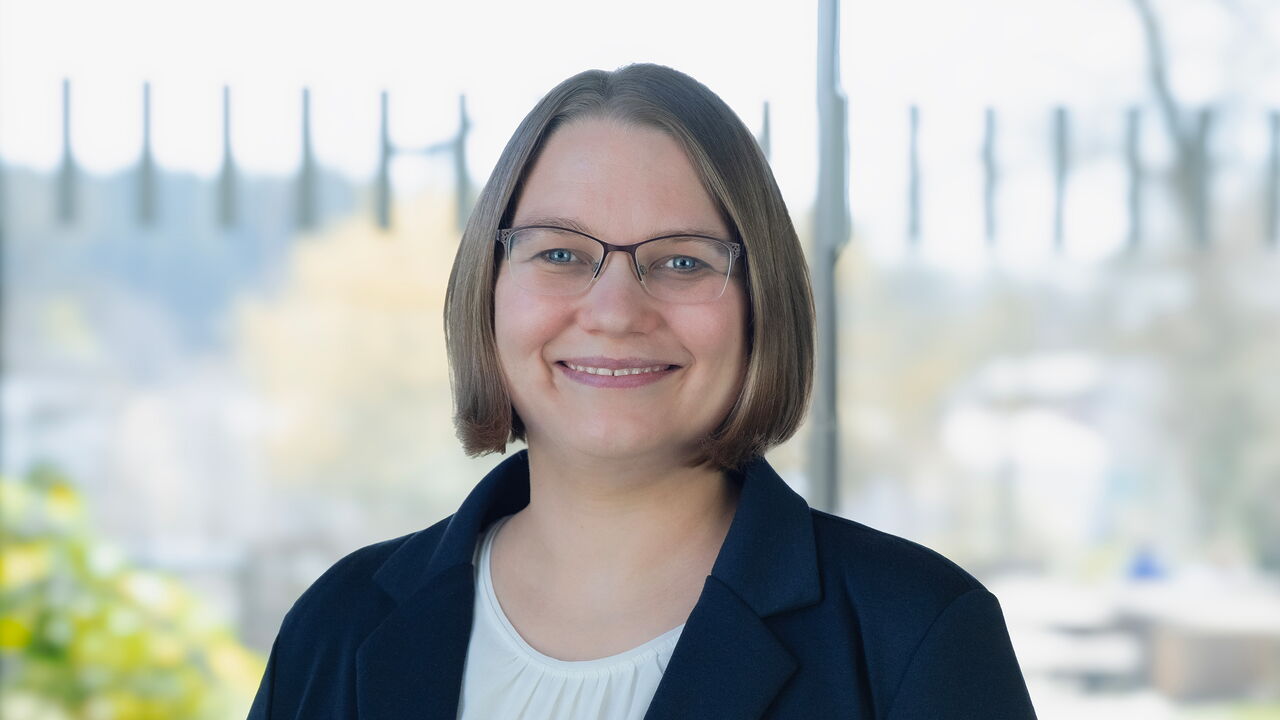
Dr. Kristiina Kumpulainen is a Professor and Head of the Department of Language and Literacy Education in the Faculty of Education at the University of British Columbia. Previously, she served as Associate Dean, Academic and Faculty Development at Simon Fraser University and Associate Dean, Research at University of Helsinki, Finland. She has also worked for the Finnish National Agency for Education and held visiting professorships at the University of California, Santa Barbara, University of Warwick, and University of British Columbia. Dr. Kumpulainen received her PhD in education from the University of Exeter, UK. Her research scholarship is grounded in relational and cultural-historical inquiries into communication, learning and education, focusing on how social, historical, political, cultural and material contexts shape educational opportunities for diverse learners. She has extensively researched how digitalization transforms young people's communication and learning across various settings including formal education, museums, science centers, libraries, outdoors, and homes as well as in digital and immersive worlds. Her work spans several important areas including critical and digital literacies, multiliteracy and multimodality, place-based literacies, storytelling/narrative inquiry, identity, and imagination. She has actively engaged in interdisciplinary research with academic, industry and community partners to co-develop playful, imaginative and participatory pedagogies for early childhood, K-12, and teacher education. Her research has illuminated how knowledges, agency and identities are valued and negotiated across space and time, with particular attention to STEAM learning, multiliteracies, health literacies, and children's ecological literacies and climate change education. She has developed methods for visual, participatory, and multimodal research, and researching with children and teachers, increasing knowledge of democratic and ethical forms of inquiry. Dr. Kumpulainen's recent publications reflect a strong focus on the intersection of digital technologies, environmental education, and children's learning. She has pioneered work on children's ecological imagination using augmented storying techniques, exploring how digital mediation transforms children's relationships with the more-than-human world. Her research increasingly incorporates posthuman perspectives to examine child-environment relations, aesthetic experiences, and multispecies encounters, while maintaining a strong commitment to equity and social justice in educational contexts. She has also made significant contributions to maker education, particularly in school-based makerspaces, examining how these environments foster digital literacy, creativity, and collaborative problem-solving among young learners. Dr. Kumpulainen has received numerous prestigious awards including: Fellow of the Finnish Academy of Science and Letters (2019) Immersive Learning Pedagogy Award from the Immersive Learning Research Network (iLRN 2022) BJET Editors' Choice Award for her work on teacher interventions in collaborative learning Outstanding Publication Award from the European Association for Research on Learning and Instruction (EARLI) Shortlisted by UKLA for the 2021 Academic Book Award for 'Enhancing digital literacy and creativity. Makerspaces in the early years' Dr. Kumpulainen has supervised numerous graduate students and has been Principal Investigator or Co-PI on dozens of major research grants. Her current projects include 'Children's ecological imagination with augmented storying' (SSHRC Insight Grant, 2023-2025), 'Re-storying community: Arts-based digital storytelling for community inquiry' (SSHRC Canada New Frontiers in Research Fund, 2023-2025), and 'Understanding and assessing learning in makerspaces' (SSHRC Insight Development Grant, 2022-2024). She has received funding from diverse sources including SSHRC, Academy of Finland, Horizon 2020, EU HORIZON RISE program, and others. She is Co-Editor of Elsevier's journal Learning, Culture and Interaction and leads several research networks including the Nordic research network on digitalising childhoods (DigiChild). Her work bridges academic research with practical applications in educational settings, particularly through her development of methods for visual, participatory, and multimodal research with children and teachers, emphasizing democratic and ethical forms of inquiry.