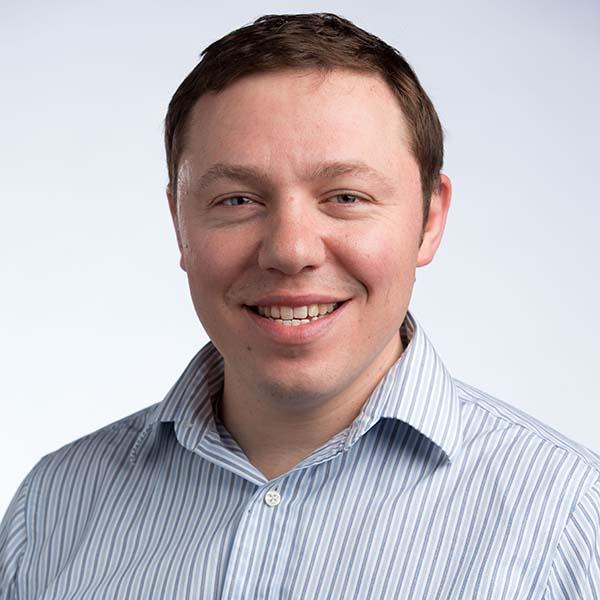
Johannes Larsch is a tenure-track Assistant Professor at the Center for Integrative Genomics within the Faculty of Biology and Medicine at Université de Lausanne (UNIL). His research focuses on understanding the neuronal mechanisms underlying social interactions, using larval zebrafish as a model organism. He employs advanced techniques like virtual reality and optical imaging to study how social signals are processed in the brain. Education: Bachelor of Biology, University of Konstanz, Germany PhD in Neurobiology, Rockefeller University, USA (lab of Cori Bargmann) Postdoc at Max Planck Institute of Neurobiology, Germany (with Herwig Baier) Research interests center on neuronal circuits driving group behavior, social recognition, and the interplay between genetics and environment in shaping behavior. His lab investigates how individual brains coordinate collective social behaviors through studies of neuronal activity and circuit dynamics. Current lab openings include fully funded PhD and PostDoc positions focused on social neuroscience and neurogenomics. Contact: johannes.larsch@unil.ch .
N.K. Anand is a Distinguished Professor of Mechanical Engineering at Texas A&M University, holding the James J. Cain III Regents Professorship. He leads research in advanced computational methods and thermal-hydraulic systems, with affiliations to Multidisciplinary Engineering and Nuclear Engineering programs. His work focuses on physics-informed machine learning, finite volume methods, and aerosol transport in nuclear reactor contexts. Education: PhD (Mechanical Engineering, Purdue University, 1983), M.S. (Kansas State University, 1979), and B.E. (Bangalore University, 1978). Awards include the ASME James Harry Potter Gold Medal (2020) and multiple teaching/administrative excellence awards from Texas A&M. Research emphasizes fluid dynamics modeling (e.g., PINNs for periodic flows, turbulent deposition studies), heat pipe systems, and nuclear reactor thermal-hydraulics. His Versatile Test Reactor (VTR) contributions include cartridge loop designs and aerosol transport experiments. Active in high-temperature reactor safety, with facilities studying pebble beds, helical coil exchangers, and HTGR upper plenum dynamics. Publications span physics-informed ML applications, finite volume techniques, and nuclear thermal systems. Grants supported development of advanced CFD tools and reactor safety infrastructure. His lab collaborates on international nuclear energy projects and emerging AI-driven simulation methodologies.
Associate Professor Wenhua Zhao is a globally recognized expert in offshore hydrodynamics and renewable energy technologies at The University of Queensland , School of Civil Engineering. With over 110 publications and 30 million AUD in secured research funding, his work bridges theoretical and practical advancements in marine engineering. Research focuses on Clean Energy , Artificial Intelligence , and Climate Change , specifically floating wind energy, floating solar, offshore aquaculture, and green hydrogen production. His 15 most recent articles (2024-2025) emphasize wave-structure interactions, gap resonance dynamics, and AI-driven wave prediction, published in top journals like Journal of Fluid Mechanics and Ocean Engineering . Scientific awards include the prestigious ARC Future Fellowship (2024-2028) and DECRA Fellowship (2019-2022) , recognizing his contributions to academia and industry. He teaches the 'Design of Offshore Energy Systems' course , training hundreds of students in coastal and ocean engineering, and serves as Deputy Editor for Ocean Engineering and Associate Editor for ASME's Journal of OMAE . Available for research supervision, Zhao actively collaborates with editorial boards of Applied Ocean Research and other Q1 journals.
Yasushi Sakurai is a Professor in the Department of Translational Datability at Osaka University's Institute of Scientific and Industrial Research, co-leading the Sakurai and Matsubara Laboratory within the Center for Industrial Science and AI. His research mission focuses on transforming society through real-time prediction of natural and social phenomena using large-scale data analytics, with emphasis on practical technological implementation. His research spans time-series big data analysis, dynamic learning systems, and real-time information provision. Key areas include tensor stream mining, EEG-based healthcare applications, cybersecurity anomaly detection, and multi-omics cancer subtyping. The lab specializes in developing deployable technologies that optimize social activities through predictive modeling of evolving data streams. Recent publications (2023-2025) reveal concentrated innovation in time-series data stream processing, with dominant themes in tensor analytics, frequency-domain forecasting, and causal modeling. His team produces high-impact work accepted at premier AI venues (ICLR, AAAI, KDD, WWW), consistently featuring oral presentations that highlight technical novelty and societal relevance. Scientific Awards: FY2024 Minister of Education, Culture, Sports, Science and Technology Award for Science and Technology (Research Category) for dynamic learning and real-time data stream analysis Professor Sakurai mentors graduate students including Naoki Chihara (DEIM2024 Outstanding Paper Award winner), Yuka Tamura (DEIM2024 Student Presentation Award winner), and Ren Fujiwara. His lab maintains active industry-academia partnerships focused on practical technology deployment, with research directly addressing real-world challenges in healthcare monitoring and cybersecurity. The Sakurai and Matsubara Laboratory operates as a dynamic research unit within Osaka University's Center for Industrial Science and AI, structured around specialized teams for tensor stream analysis, medical data mining, and network dynamics. Current projects emphasize real-time prediction systems with immediate societal applications, supported by strong industry collaboration frameworks.
Gaetano Valenza is an Associate Professor of Bioengineering at the University of Pisa, Italy, where he leads the Neuro-Cardiovascular Intelligence Lab at the Enrico Piaggio Research Centre. He holds affiliations with the Neuroscience Statistics Research Laboratory at MIT and has served as a Research Fellow at Harvard Medical School and Massachusetts General Hospital. His academic work spans bioengineering, computational physiology, and affective computing. His research focuses on statistical and nonlinear biomedical signal and image processing , cardiovascular and neural modeling , and physiologically interpretable artificial intelligence . He develops wearable systems for physiological monitoring, with applications in autonomic nervous system assessment, brain-heart interactions, and mental health. His work has led to novel metrics such as the Sympathetic and Parasympathetic activity indices derived from ECG. The 15 most recent publications reflect a consistent trend in brain-heart interplay , complexity analysis of physiological signals , explainable AI in healthcare , and virtual reality applications in mental health . His work integrates advanced signal processing, nonlinear dynamics, and machine learning to decode emotional and cognitive states from physiological data. Dr. Valenza is a Senior Member of IEEE and serves on several technical committees. He is an active editorial leader, currently serving as Associate Editor for IEEE-EMBC , Plos One , Complexity , and Scientific Reports , and has guest-edited special issues in Philosophical Transactions of the Royal Society A and IEEE Journal of Biomedical and Health Informatics . He has led or participated in numerous international research projects, including FP7 and H2020 initiatives such as NEVERMIND and EXPERIENCE. He teaches courses in Biostatistics, Probability & Biostatistics, and Advanced Image Processing at the University of Pisa. As lab head and project coordinator, he leads a multidisciplinary team working on neuro-cardiovascular intelligence, wearable systems, and AI-driven mental health interventions.
Betsy Stovall is a Professor of Mathematics at the University of Wisconsin–Madison and holds the Letters and Science Mary Herman Rubenstein Professor chair. She serves as the AMS Associate Secretary for the Central Section . Education : Not explicitly stated in provided text. Appointments : Regular faculty at UW–Madison since at least 2012 Organizer of graduate analysis seminars Research Interests : Stovall specializes in harmonic analysis , focusing on operators involving curvature, oscillatory integrals, and Fourier restriction phenomena. Her work intersects with partial differential equations (PDEs) through the study of dispersive equations and geometric analysis problems. Teaching : Complex Analysis (Math 623) - Fall 2021 Calculus III (Math 234) - Fall 2020 Graduate Analysis Seminar - Spring 2022 Organized UW Madison undergraduate summer school in Analysis (2018) Scientific Contributions : Sole or joint author of 15+ publications NSF RTG grant in Analysis and PDE Active in harmonic analysis seminars and educational initiatives Administrative Roles : AMS Associate Secretary Co-organizer of RTG/Student seminars Summer school director
Isabella Guido is a Senior Lecturer in Experimental Soft Matter Physics at the University of Surrey's School of Mathematics and Physics. She holds a PhD from TU Berlin (2010) and has conducted postdoctoral research at Peking University and the Max Planck Institute for Dynamics and Self-Organization. Her research focuses on synthetic biology, active bioinspired systems, and microtubule-motor protein dynamics. Guido's work bridges active matter physics and synthetic biology, aiming to develop minimal systems mimicking natural cellular structures. Key projects include synthetic beating structures resembling cilia, 3D active nematics, and investigations into cellular symmetry breaking via biomimetic systems. Her education includes a PhD on dielectrophoretic effects in mammalian cells, followed by postdoctoral studies on cell mechanics, microfluidics, and electroporation. Guido's interdisciplinary approach combines experimental biophysics with synthetic biology to uncover principles governing living matter. She leads the Synthetic Active Systems group and collaborates internationally on projects such as light-powered artificial cells and motor-driven microtubule networks. Her work addresses sustainable development goals through bio-inspired material design and active matter applications. Publications highlight contributions to electrotaxis mechanisms, live-cell imaging techniques (e.g., MIET), and microtubule network dynamics under depletion forces. Guido's research has advanced understanding of ciliary beating patterns, synthetic axoneme models, and biopolymer self-organization under mechanical stress.
Vitaly Kheyfets, PhD, serves as Associate Professor in the Department of Pediatrics-Critical Care Medicine at the University of Colorado Anschutz Medical Campus School of Medicine, where he directs research at the intersection of pediatric critical care and cardiopulmonary pathophysiology with emphasis on pulmonary arterial hypertension (PAH). His primary research focuses on right ventricular adaptation to pulmonary hypertension, utilizing machine learning-driven multi-omics analysis to identify disease biomarkers and molecular networks. He pioneers computational fluid dynamics approaches for hemodynamic modeling in congenital heart conditions like Glenn physiology, while also investigating sleep oscillatory patterns as neurodegenerative biomarkers. His methodology integrates proteomics, spatial transcriptomics, and pressure waveform analysis to dissect vascular remodeling mechanisms. Publication trends reveal a strong emphasis on translating computational models into clinical applications for PAH prognostication, with recent work developing AI-cooperative diagnostic platforms and characterizing microvascular changes in the right ventricle. Cross-disciplinary collaborations span proteomics, imaging, and sleep neuroscience, demonstrating consistent innovation in both pulmonary hypertension and neurodegenerative disease biomarker discovery.
Christian Bick is an Associate Professor at the Department of Mathematics, Vrije Universiteit Amsterdam (VU Amsterdam). He holds visiting roles as a Visiting Research Fellow at the University of Oxford's Mathematical Institute, Honorary Associate Professor at the University of Exeter, and Visiting Fellow at the Institute for Advanced Study (TUM-IAS), Technische Universität München. His research focuses on dynamical systems and applications, particularly in network dynamics, coupled oscillator networks, and higher-order interactions. He has received prestigious awards such as the Marie Curie Intra-European Fellowship (2015) and the Hans Fischer Fellowship (2019). Education and Career: Bick obtained his PhD from Georg-August-Universität Göttingen (2012) and held postdoctoral positions at Rice University and the University of Exeter. His work bridges theoretical and applied mathematics, with interdisciplinary collaborations in neuroscience, physics, and engineering. Research Interests: Bick explores dynamics of coupled oscillator networks, asynchronous networks, and higher-order interactions. His recent work includes studies on heteroclinic networks, chimera states, and synchronization phenomena in complex systems. He leads projects like BeyondTheEdge (Marie Skłodowska–Curie Doctoral Network) and has contributed to grants such as the EPSRC New Investigator Award (2020–2023). Teaching: He teaches Dynamical Systems at VU Amsterdam and has lectured on Stochastic Processes, Mathematical Methods, and Dynamical Systems and Chaos at the University of Exeter and Oxford. Awards and Grants: His honors include the DAAD Doktorandenstipendien (2010, 2012) and Fulbright support (2008). Active grants include projects on higher-order networks and neurodegenerative disease modeling.
Gustav Amberg is a Professor at KTH Royal Institute of Technology, affiliated with the Flow Mechanics research group within the School of Engineering Sciences. His primary appointment is in the Department of Mechanics, where he focuses on fluid dynamics, multiphase flow, and interfacial phenomena. He holds a permanent full professorship with no indication of兼职 roles. Research interests center on dynamic wetting mechanisms, phase-field modeling, and computational fluid dynamics applied to complex fluid systems. His work explores contact line behavior, microstructured surface interactions, and material phase transformations. Notable areas include rapid droplet spreading, viscoelastic fluid dynamics, and boiling heat transfer on engineered surfaces. Recent studies investigate the interplay between surface topography and wetting dynamics, oscillatory contact line phenomena, and numerical benchmarking across molecular and continuum models. He has pioneered methods for simulating surfactant effects in multiphase flows and developed novel approaches for analyzing weld pool behavior during sintering processes. No academic awards or grants are explicitly listed in the provided materials. His advising record remains undisclosed, though his prolific publication history suggests active research supervision. Laboratory affiliations are not detailed, but his work aligns with KTH's broader initiatives in computational mechanics and materials science.
Marta Molinas is a Professor at the Department of Engineering Cybernetics within the Faculty of Information Technology and Electrical Engineering at the Norwegian University of Science and Technology (NTNU). Her research spans multiple interdisciplinary domains with a focus on EEG technology and brain-computer interfaces. She actively supervises numerous Master's projects and maintains extensive international collaborations with institutions including Kavli Institute for Systems Neuroscience, RIKEN Center for Brain Science, University of Tsukuba, Juntendo University, and several European universities. Professor Molinas' research interests center on developing innovative EEG technologies, particularly her FlexEEG concept for reduced-channel EEG systems with brain imaging capabilities. Her work integrates signal processing, artificial intelligence, and neuroscience to create practical applications in mental health, sleep research, neurorehabilitation, and human-computer interaction. She specializes in EEG source imaging, machine learning for brain signal analysis, and the development of brain-computer interfaces for various applications including locked-in syndrome communication, ADHD treatment, and driver monitoring systems. Her publication portfolio demonstrates strong trends in interdisciplinary research combining neuroscience with electrical engineering and artificial intelligence. The work shows particular emphasis on developing practical EEG-based systems that minimize invasiveness while maintaining analytical power, with applications spanning healthcare, rehabilitation, and human augmentation. Her research bridges theoretical signal processing with real-world implementations through numerous student projects and international collaborations. Professor Molinas actively supervises a large team of Master's and PhD students across multiple projects, with each project typically requiring two students working collaboratively. Her research is supported through numerous international collaborations with institutions in Japan, India, and Europe, indicating substantial research funding and project leadership. She has developed a pipeline of student projects that build upon previous work, creating a cumulative knowledge base within her research group. She leads the EEG ITK research team at NTNU, which focuses on developing the FlexEEG headset prototype featuring flexible, wireless, dry electrodes designed to move across the scalp. This team works at the intersection of neuroscience, electrical engineering, and computer science, developing applications for sleep research, mental health monitoring, neurorehabilitation, and brain-computer interfaces. The team collaborates extensively with international partners including the Kavli Institute for Systems Neuroscience, the International Institute of Integrative Sleep Medicine at University of Tsukuba, and several engineering departments across Europe and Asia.
Dr. Xin Zhou is an Oxford-Bristol Myers Squibb Fellow at the Department of Computer Science, University of Oxford. Her research integrates computational modeling, clinical data, and experimental findings to investigate cardiac disease mechanisms and develop human-based simulations for drug evaluation. BSc and MSc in Life Sciences, Beijing Normal University DPhil in Computational Biology, University of Oxford Her work focuses on multi-scale cardiac modeling , particularly in ischemic heart disease and heart failure, exploring ionic currents, tissue conduction, and organ-level dynamics. She develops electromechanical simulations to study cardiac alternans and arrhythmic risks, translating these into clinical applications for patient stratification and pharmaceutical testing. Recent publications emphasize in silico clinical trials , sex-specific cardiometabolic analysis, and Purkinje network modeling. Collaborative efforts with clinicians and pharmaceutical partners highlight her translational approach to regulatory science. Model of the Year 2024, BioModels EPSRC Impact Acceleration Account Microsoft Research Project Award Recognition Award, University of Oxford She supervises PhD and MSc students in computational cardiology, while serving on the editorial board of Frontiers in Physiology . Her current projects involve digital twinning and predictive cardiac safety models to reduce animal testing reliance.
George R. Mangun is a Distinguished Professor of Psychology and Neurology at the University of California, Davis and Co-Director of the Center for Mind and Brain. He founded the UC Davis Center for Mind and Brain in 2002 and served as Dean of Social Sciences (2008-2015). Education: Ph.D. in Neurosciences (UC San Diego, 1987), B.S. in Chemistry and Life Sciences (Northern Arizona University, 1981) His research focuses on the neuroscience of attention , combining EEG and fMRI to explore how the brain selects and processes sensory stimuli. Key areas include attentional control, brain networks, and neural oscillations. Recent studies investigate hierarchical attention control, decoding spatial attention, and the role of theta/alpha oscillations in cognitive tasks. His work has implications for understanding neurological disorders like ADHD. Scientific Awards : Fulbright U.S. Distinguished Scholar (2025), Society for Neuroscience Education Award (2024), AAAS Fellow (2010), APS Fellow (2007) He has led the Neural Mechanisms of Attention Lab , funded by NSF, NIH, and international organizations, and co-authored the leading textbook Cognitive Neuroscience: The Biology of the Mind (6th ed., 2025).
Regina Ragan is a Professor in the Department of Materials Science and Engineering at the Samueli School of Engineering, University of California, Irvine. Her research focuses on nanomaterials, self-assembly, and surface-enhanced Raman scattering (SERS) for applications in optical communication, energy systems, and biomedical diagnostics. Education: Ph.D. in Applied Physics, California Institute of Technology, 2002 M.S. in Applied Physics, California Institute of Technology, 1998 B.S. in Materials Science and Engineering, University of California, Los Angeles, 1996 Her work integrates scanning probe microscopy and first-principles calculations to study thermodynamic driving forces in self-assembly and structure-function relationships. Recent publications highlight applications in antimicrobial susceptibility testing, environmental monitoring, and plasmonic device fabrication. The Ragan group develops low-cost diagnostic tools using SERS for telemedicine applications. Current lab members include graduate students and postdoctoral researchers working on nanoscale systems from atomic to mesoscale. Scientific Awards: NSF CAREER Award for fundamental studies of biological/inorganic interfaces Research Trends: Recent articles show a focus on SERS-based diagnostics, plasmonic nanoantennas, machine learning-assisted spectral analysis, and scalable synthesis of 3D graphene architectures. Subfields span quantum plasmonics, stress-activated materials, and biofilm monitoring.
Xiaochun Li is a Professor of Mathematics at the University of Illinois at Urbana-Champaign, affiliated with the Department of Mathematics within the College of Liberal Arts & Sciences. His research focuses on Harmonic Analysis, with expertise in multilinear oscillatory integrals, Hilbert transforms along vector fields, and multilinear Carleson theorems. He earned his Ph.D. from the University of Missouri at Columbia in 2001. His recent work explores topics such as pointwise convergence of cone multipliers, Stein-Tomas restriction theorems, and polynomial Roth theorems. These studies bridge functional analysis, Fourier analysis, and operator theory, contributing to foundational advancements in mathematical analysis. No scientific awards or grants are explicitly listed in the provided materials. His research is supported through his academic appointment, and he maintains an active publication record in prestigious journals such as the Journal of Functional Analysis and Mathematische Annalen.