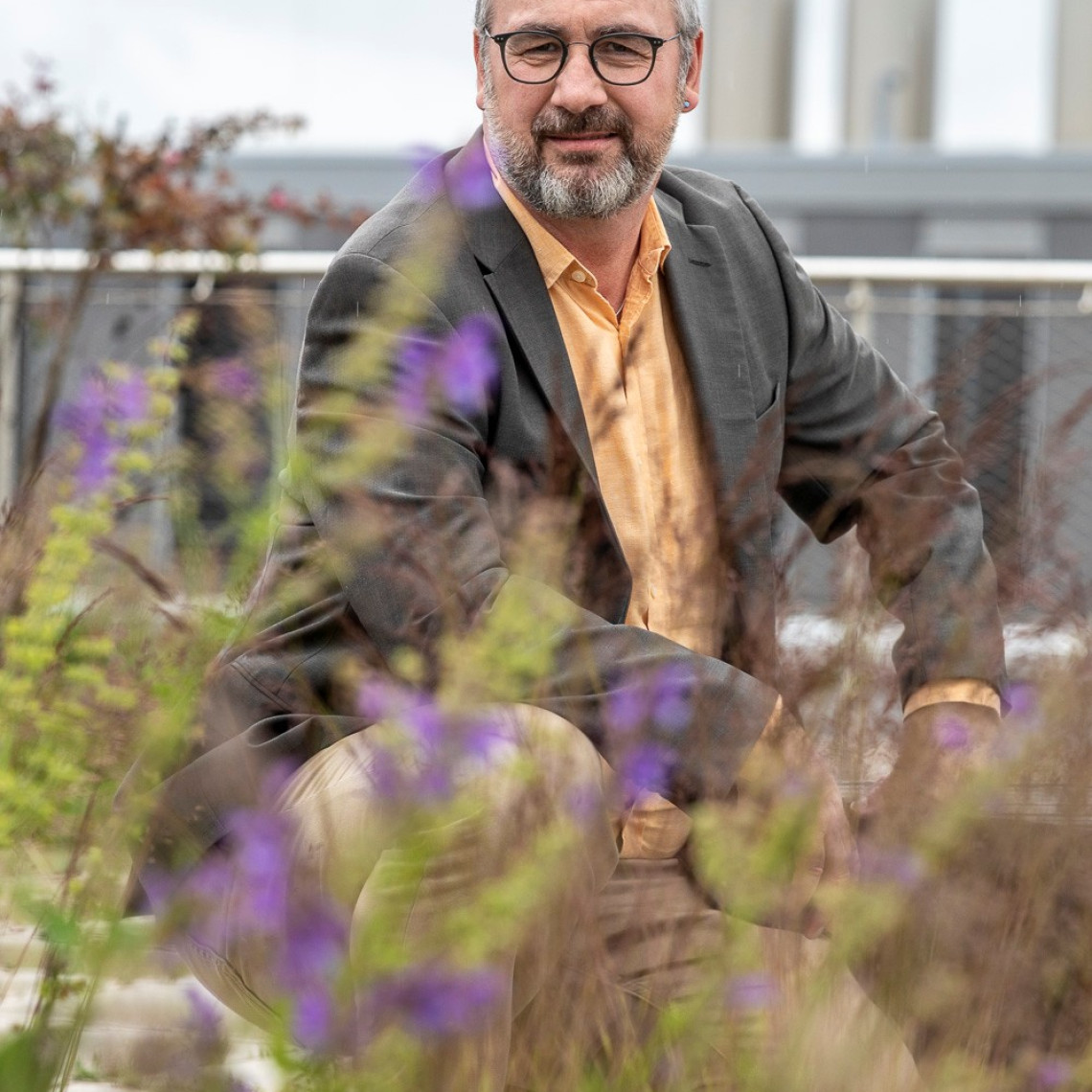
Prof. Dr. Klaus Mayer serves as Director of the Plant Genome and Systems Biology (PGSB) research group at Helmholtz Zentrum München and holds an Honorary Professorship at the Technical University of Munich (TUM) School of Life Sciences since 2015. His work bridges environmental health research and academic instruction, focusing on genomic solutions for global food systems under climate stress. His academic foundation includes: PhD in Plant Developmental Biology from Eberhard-Karls-Universität Tübingen (1994-1997) Postdoctoral research at Max Planck Institute for Biochemistry (1997-1999) Mayer's research decodes genomes of staple crops (wheat, rye, barley, sorghum) to develop climate-resilient varieties, enhance food security, and investigate plant allergen-human health interactions. His team employs advanced bioinformatics and big data analytics to study genetic diversity in orphan crops and plant-microbe ecosystems, prioritizing translational applications for sustainable agriculture under extreme environmental conditions. Scientific Recognition: IWGSC Outstanding Leadership Award (2015) for wheat genome sequencing leadership Leading the PGSB group, Mayer coordinates international consortia including the International Wheat Genome Sequencing Consortium. His current DFG-funded projects explore plant-microbe interaction genomics and virtual research data infrastructure, demonstrating commitment to interdisciplinary collaboration for planetary health solutions.
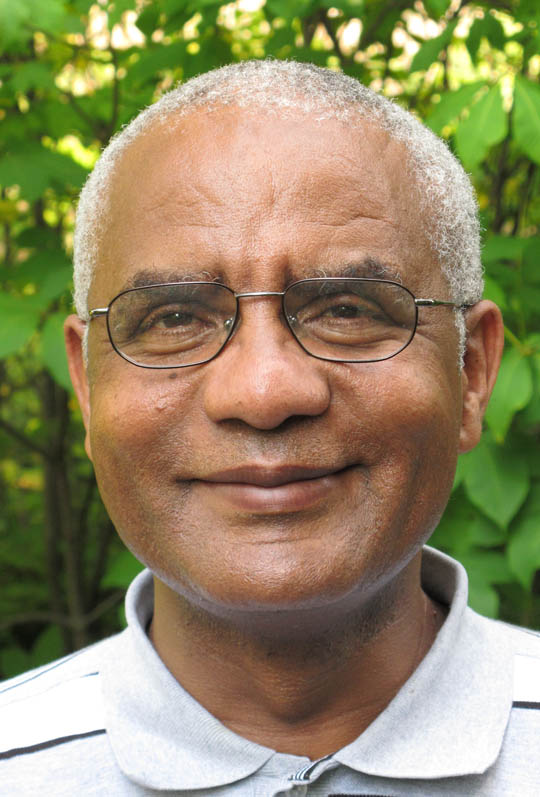
Prof. Zerihun Tadele is a Professor and Group Leader in the Department of Crop Breeding and Genomics at the University of Bern's Institute of Plant Sciences. His research focuses on improving the orphan African cereal Eragrostis tef (tef) through genomic, agronomic, and biotechnological approaches. Key areas include drought tolerance, genetic diversity, and sustainable agricultural practices. He leads projects on tef variety development, mutant breeding, and mycorrhizal symbiosis effects. Research emphasizes Genetic improvement of tef and other underutilized crops Omics technologies for crop resilience Climate-smart agricultural techniques Seed systems and policy for orphan crops Recent work highlights innovations like somatic embryogenesis for Ethiopian potato and nitrogen-use efficiency studies. His team collaborates on global initiatives to enhance food security through underutilized crops. Publications (2022–2025) span over 50 peer-reviewed articles, focusing on tef genetics, breeding strategies, and environmental adaptation. He actively promotes tef as a strategic crop for Africa's food systems.
Manish N. Raizada is a Professor in the Department of Plant Agriculture at the University of Guelph's Ontario Agricultural College, serving as International Relations Officer. His research spans fundamental and applied studies in crop probiotics and sustainable agriculture for small-scale farmers. His research focuses on three core projects: (1) Plant Microbiome Inheritance, where his lab discovered seed-borne microbiomes and pollen microbiome selection; (2) Evolving Bacteria for Farmers, developing nodule-crushing techniques for legume inoculation; and (3) Empowering Small Scale Farmers through Sustainable Agriculture Kits (SAKs) impacting 272,000 people. His work integrates microbial ecology with practical farming solutions, emphasizing indigenous knowledge systems and democratization of agricultural technologies. Raizada's publications reveal strong trends in plant-microbe interactions (particularly maize and legumes), sustainable intensification for smallholders, and microbiome engineering for pathogen resistance. His work spans agricultural science, microbiology, and development studies with emphasis on real-world implementation in Nepal, Haiti, and Africa. He actively mentors graduate students and postdocs, with alumni securing faculty positions globally. His lab has developed practical resources including Farmpedia (an online encyclopedia for small-scale farmers in 108 languages) and SAKBooks (picture-based agricultural lessons). Raizada collaborates extensively with international organizations including UN FAO (where he's delivered keynote addresses), IFA, and CGIAR. His work has been featured in BBC World Service, CBC Radio, and Canadian Geographic, demonstrating significant policy and public impact.
Prof. Nadia Kamal is an Assistant Professor in Computational Plant Biology at the Technical University of Munich (TUM), affiliated with the TUM School of Life Sciences. Her research focuses on plant genome analysis, particularly using computational tools to study genetic diversity in crops like barley, oat, and lablab. She aims to enhance climate resilience in crops through understanding drought tolerance and genomic variations. Education: She earned her biology degree from the Free University of Berlin and a doctorate in molecular cell biology from Bielefeld University under Prof. Bernd Weisshaar. Postdoctoral research (2018–2023) at Helmholtz Zentrum München under Prof. Klaus Mayer preceded her TUM appointment. Research Interests: Prof. Kamal’s work spans comparative genomics, pangenome analysis, and orphan crop improvement. Her ERC Starting Grant (2023) supports projects like genome assembly for lablab and oat, advancing sustainable agriculture. Awards: Recipient of the highly competitive ERC Starting Grant in 2023. Grants & Labs: Leads the Computational Plant Biology lab at TUM, actively involved in pan-genome projects and crop resilience initiatives. Her research bridges computational methods with agricultural challenges, emphasizing open-access genomic resources for global crop improvement.
Ian Dawson is a Senior Lecturer at Scotland's Rural College (SRUC), where he holds roles in the Principal’s Research Group Agriculture & Business Management and the Biorefining And Advanced Materials Research Centre. His research focuses on crop domestication, agroforestry, and tree genetic resources, with a particular emphasis on orphan crops and climate adaptation. He has extensive international experience, collaborating in over 20 tropical/sub-tropical countries and contributing to global initiatives like the CGIAR Research Program on Forests, Trees and Agriculture. Education: PhD (Molecular Ecology and Population Genetics of Gliricidia) from University of Dundee (1995), MSc (Plant Genetic Resources) from University of Birmingham (1991), and BSc (Biochemistry) from University of Oxford (1989). Research Interests: Crop domestication processes, integrating genetics with food systems, tree genetic resources for forest restoration, and policy development for sustainable agriculture. Notable contributions include developing guidelines for seed systems and leading the Tree Genetic Resources flagship program under the CGIAR initiative. Recent work emphasizes mainstreaming nutritious crops into African diets and addressing global forest restoration challenges through better seed sourcing strategies. He has co-authored over 80 publications and supervised multiple PhD/MSc students, including Jon Bančič (SRUC/Roslin Institute) and researchers in Nairobi. Funding: Co-investigator in projects like the £2.2M RESAS 22-27 project on novel crops and the BBSRC-funded study on orphan crop value chains. His work bridges academic research with practical applications in international development. Labs/Teams: Active in SRUC’s globally-oriented research teams and CIFOR-ICRAF collaborations, promoting interdisciplinary approaches to agroecology and biodiversity management.
Anna Treydte is an Associate Professor in Nature and Environmental Management with a focus on Sustainable Development at Stockholm University's Department of Physical Geography. She also holds Adjunct Professor positions at the University of Hohenheim (Ecology of Tropical Agricultural Systems) and the Nelson Mandela African Institution of Science and Technology (Department of Life Sciences and Bioengineering). Her work spans multiple continents, addressing biodiversity conservation and human-wildlife coexistence across temperate climates (Germany, Sweden, Italy), desert environments (Mongolia, Saudi Arabia), savanna systems (eastern and southern Africa), mountain regions (Andes), and tropical forests (China, Vietnam, Thailand, Tanzania). Dr. Treydte's research centers on biodiversity and conservation challenges in human-impacted, changing environments. She investigates how climate change and human activities alter structural, species, and functional biodiversity in natural and agro-ecological systems. Her work examines plant-animal interactions, animal population management, human-wildlife coexistence, and livestock impacts on rangelands. She specifically studies shifts in nutrient cycling, carbon stocks, and species diversity in landscapes under varying human land use pressure, including corridors, buffer zones, protected lands, and cultivated areas facing climate-induced weather extremes. She integrates socio-ecological aspects into her research, emphasizing that sustainable human-wildlife coexistence requires local stakeholder involvement in resource use decision-making. Analysis of her recent publications reveals a strong focus on landscape ecology, rangeland management, and human-wildlife conflict across diverse ecosystems. Her work combines field observations, GPS tracking of wildlife and livestock, socio-ecological surveys, and advanced spatial modeling techniques. Key thematic areas include pastoral mobility patterns, invasive species management, pollination networks in rangelands, and the impacts of land use change on wildlife habitat suitability. Her research consistently addresses the intersection of ecological processes and human livelihoods in changing environments. Dr. Treydte actively supervises numerous PhD, MSc, and BSc students across multiple institutions, with current projects investigating human-wildlife coexistence in Sweden and Tanzania, rangeland restoration techniques, and invasive plant species management. She leads several major research projects including 'Human-Wildlife Coexistence: Reaching a sustainable human-wildlife coexistence by understanding patterns, predicting conflict hotspots and improving communication' and 'Rangeland Ecology: Adapting to change – co-management scenarios of local pastoralists and protected area management to maintain cultural and biological diversity in the Dzungarian Gobi, Mongolia.' Her laboratory, 'NG| Landscape Ecology,' focuses on how landscape patterns, climate, and land use influence ecological processes, biodiversity, and ecosystems. The group employs interdisciplinary approaches that bridge natural and social sciences to address contemporary environmental challenges in a changing world.
Philipp Bayer is an Adjunct Research Fellow at the University of Western Australia (UWA) and a Principal in the OceanOmics project at the Minderoo Foundation. His roles include computational biology research focused on plant genomics, machine learning applications in genomics, and environmental DNA (eDNA) methods for ocean biodiversity monitoring. He holds a PhD from the University of Queensland (UQ) and has held positions such as a Forrest Fellowship and DECRA fellowship, focusing on wheat breeding and evolutionary genomics. Bayer is a member of the UWA Data Institute's Research Committee and the Scientific Advisory Committee for the ARDC Machine Learning CoP. Education and Career Highlights: PhD in Plant Genomics, UQ (2016) DECRA Fellowship at UWA (2021–2023), studying plant gene evolution Forrest Fellowship (2018–2020) on wheat genomics and machine learning Principal, Computational Biology, Minderoo Foundation (2022–present) Research Interests: Plant pangenomics and genome evolution Machine learning for crop improvement and biodiversity analysis eDNA-based marine biodiversity monitoring Genetic mechanisms underlying crop domestication Grants and Collaborations: GRDC: Machine learning for canola disease resistance ARC DECRA: Evolutionary genomics of plant genes Collaborations with BASF, Intergrain, and the OceanOmics initiative Awards: Finalist in the 2019 WA Premier’s Science Award. Labs/Teams: Leads the OceanOmics project and organizes Hacky Hour (code/data support sessions).
Professor Penelope Bebeli holds the position of Professor of Plant Breeding and Biometry at the Agricultural University of Athens (AUA), affiliated with the Faculty of Crop Science's Department of Plant Breeding and Biometry. She specializes in crop genetic resources conservation, molecular diagnostics for cultivar identification, and drought tolerance mechanisms in crops like durum wheat, tomato, and Vicia faba. Her work emphasizes landrace preservation and low-input farming practices. Prof. Bebeli's research focuses on evaluating genetic diversity through morphological and molecular markers, with notable contributions to understanding crop wild relatives' potential for climate resilience. She has coordinated national and EU-funded projects, published extensively, and received the Academy of Athens Award (2003) and Fulbright Scholarship. Active in academic leadership, she served as Greek Scientific Society of Plant Breeding President (2008-2010). She organizes national workshops promoting landrace cultivation and has delivered talks across Greece. Her team investigates orphan crops like Lathyrus spp., combining agronomic research with socio-economic adoption strategies.
Eleni Tani is an Assistant Professor in the Department of Crop Science at the Agricultural University of Athens, affiliated with the Faculty of Crop Science and the Laboratory of Plant Breeding and Biometry. Her research focuses on molecular breeding for stress tolerance in crops, epigenetic mechanisms underlying environmental adaptation, and genetic variability in cultivated species and their wild relatives. Her work emphasizes the application of '-omics' technologies to improve crop resilience against abiotic and biotic stresses, including drought, salinity, and parasitic weeds like broomrape. She collaborates extensively on projects such as BENEFIT-Med and ZeroParasitic , targeting sustainable solutions for agricultural challenges. Dr. Tani has authored over 49 peer-reviewed articles and edited volumes, contributing to journals like Agronomy , Frontiers in Plant Science , and International Journal of Molecular Sciences . Her research trends highlight interdisciplinary approaches, integrating genomics, epigenetics, and AI-driven methodologies for crop improvement. She supervises 4 PhD candidates and has mentored over 10 postgraduate and 30 undergraduate students. Her teaching portfolio includes courses on plant breeding techniques, biotechnology, and experimental design. Office hours are held daily between 12:00 and 15:00 by appointment. Dr. Tani’s laboratory focuses on translational research bridging basic science and agricultural practice, with ongoing collaborations in Mediterranean crop sustainability and orphan legume revitalization.
Steve Hoad is a Professor at Scotland's Rural College (SRUC), holding the position of Reader in Crop and Soils within the CSS: Crop Improvement & Agronomy Food Security Challenge Centre. His primary affiliations include SRUC's Peter Wilson Building in Edinburgh. Hoad specializes in cereal improvement, grain quality assessment, and crop diversity research. He advises the cereals sector through roles in the National List Seeds Committee and Malting Barley Committee, contributing to variety evaluation and agronomic standards. Education: Hoad earned a PhD in Crop Physiology from the University of Reading in 1990. His research focuses on cereal genetics, remote sensing applications in agriculture, and sustainable crop production. Key projects include the RESAS-funded initiatives exploring barley diversity and novel crops' environmental impacts, as well as AHDB's Recommended List trials for cereals. Teaching and Consultancy: He teaches Advanced Agronomy and Arable Crop Production, and provides agronomic guidance for industry events. His consultancy work includes advising on barley variety selection and malting quality. Research Output: Over 100 publications span cereal variety evaluations, fertilizer management, and crop modeling. Recent work emphasizes genomic characterization of crops like finger millet and the agronomic performance of barley landraces under high-yield conditions. Awards and Recognition: No specific scientific awards are listed, though his extensive contributions to cereal research and industry engagement highlight his expertise in the field. Grants and Projects: Active in securing funding for multi-year projects (e.g., £6.8M RESAS 2022-2027), focusing on crop resilience, diversity, and sustainable farming technologies. Collaborations include the James Hutton Institute and industry partners like AHDB.
Professor Jill Farrant is a leading authority in plant desiccation tolerance at the University of Cape Town's Molecular and Cell Biology Department. She holds the prestigious NRF SARChI Chair and has received international recognition including the L'Oreal-UNESCO Award for Women in Science and TWAS fellowship. Research Focus: Investigating resurrection plants' ability to survive extreme water loss through molecular physiology, omics approaches, and biochemical analysis Key Applications: Developing climate-resilient crops for food security in Africa through targeted breeding rather than GMOs Her recent publications examine: Genomic insights into Myrothamnus flabellifolia Root microbiome interactions in resurrection plants Polyploidy advantages in drought tolerance Metabolomic responses during desiccation Scientific Honors: L'Oreal-UNESCO Laureate (2012) Harry Oppenheimer Fellow (2010) NRF A-rating (first female Life Sciences researcher at UCT) SAAB Silver Medal (2008) Mentoring is central to her work, with active supervision of 18 postdoctoral and graduate researchers. Her lab collaborates internationally across institutions in Sweden, France, Germany, the US, and Ethiopia. Current research explores translating resurrection plant mechanisms to economically important crops like maize and bambara groundnuts.
Dr. Aiswarya Girija is a Strategic Research Fellow at the Institute of Biological, Environmental & Rural Sciences (IBERS), Aberystwyth University, where she conducts cutting-edge research in plant stress biology, metabolomics, and functional grain development. Her work focuses on climate-resilient crops such as oats and tef, utilizing multi-omics approaches to enhance nutritional quality and stress tolerance. Education: PhD in Plant Biotechnology, Kerala University, India Newton-Bhabha Fellow, IBERS, Aberystwyth University (2015) Post-doctoral researcher, MIGAL Galilee Research Institute, Israel Marie Skłodowska-Curie Individual Fellow (SUPERTEFF project, 2020–2023) Her research interests span metabolomics, phenomics, epigenetics, and sustainable agriculture, with a strong emphasis on orphan crops like tef and nutrient-dense cereals such as oats. She investigates stress memory, priming, and drought adaptation mechanisms using advanced molecular and analytical tools. Her work contributes to UN Sustainable Development Goals related to food security and sustainable agriculture. Dr. Girija's recent publications demonstrate a strong trend in applying metabolomic and phenomic pipelines to understand drought and salinity responses in tef and oats, identifying key metabolic pathways and regulatory nodes. She also explores biofortification strategies, sourdough fermentation, and genomic approaches for crop improvement. Scientific Awards: AberCollab (2024) Joy Welch Research Grant (2024) She actively mentors undergraduate and master's students and welcomes PhD and postdoctoral candidates interested in plant stress, nutrition, and functional food development. Dr. Girija is involved in externally funded projects such as DeepDetect and BBSRC International Institutional Awards, and she contributes to public engagement through invited talks and media appearances on orphan crops and sustainable food systems. Labs and Teams: She collaborates with Prof. Luis Mur, Prof. Rajiv Yadav, and others at IBERS, and is part of the Grains4Health strategic research program. She also contributes to international consortia on tef genomics and crop resilience.
Professor Dave Edwards holds a position at the University of Western Australia (UWA) within the School of Biological Sciences and the Institute of Agriculture. He completed a BSc (Hons) at the University of Nottingham (1989) and a PhD at the University of Cambridge (2000). Previously, he served as Professor at the University of Queensland (2011–2015) and Associate Professor (2007–2011). His research focuses on crop genomics, bioinformatics, and translational genomics in wheat, Brassica, and chickpea, addressing climate change impacts and crop improvement. Awards include recognition as a Highly Cited Researcher (2019–2021). Education: BSc (Hons), University of Nottingham, 1989 PhD, University of Cambridge, 2000 Research interests emphasize genomic structure, gene expression, and crop adaptation. He leads projects on pangenomics, climate resilience, and invasive species in agricultural systems. His work spans 378 publications, including high-impact journals like Nature Genetics and Science , and over $10M in research grants. Awards: Highly Cited Researcher (2019) Highly Cited Researcher (2020) Highly Cited Researcher (2021) Grants & Advising: Principal investigator in projects like the ARC Training Centre in Predictive Breeding and Effective Control of Blackleg of Canola. Advised numerous students and trained staff in bioinformatics and genomics. His lab group operates via appliedbioinformatics.com.au .
Bernice Waweru is an Associate Tutor affiliated with the School of Biological Sciences at the University of East Anglia , holding a Doctor of Philosophy degree. Her research focuses on genomics and agricultural science, particularly in orphan crops and plant disease management. Her work includes chromosome-level genome assembly for lablab breeding and studies on fungal pathogens in rice cultivation in Kenya. These contributions reflect her expertise in population genomics , agricultural biotechnology , and plant pathology . Scientific Awards and grants are not explicitly mentioned in the available data.
Francesco Mercati is a Senior Researcher at the Institute of Biosciences and BioResources (IBBR-CNR) in Palermo, Italy. His work focuses on plant genetics, bioinformatics, and biodiversity conservation, leveraging next-generation sequencing (NGS) and molecular markers to study species like grapevine, citrus, and asparagus. He has collaborated internationally, including work at the University of Georgia (USA), and contributed to advancements in nitrogen use efficiency (NUE) and DNA barcoding. Education: PhD in Biology Applied to Agri-Food and Forest Systems (2012), University of Reggio Calabria Bachelor’s Degree in Cell Biology and Development (2003), University of Pisa Research Interests: NGS applications in plant genetics DNA barcoding for species identification Genetic diversity and population structure analysis Transcriptomics of stress responses NUE in crops like eggplant and durum wheat Somatic embryogenesis in citrus Collaborations and Projects: LIMSEED Asparagus project (sex determination genes) Italian wine database development European Community-funded genetic polymorphism studies Publications: Recent work spans grapevine domestication, caper genomics, and Citrus somatic regeneration Key themes: stress adaptation, symbiotic interactions, gene family evolution